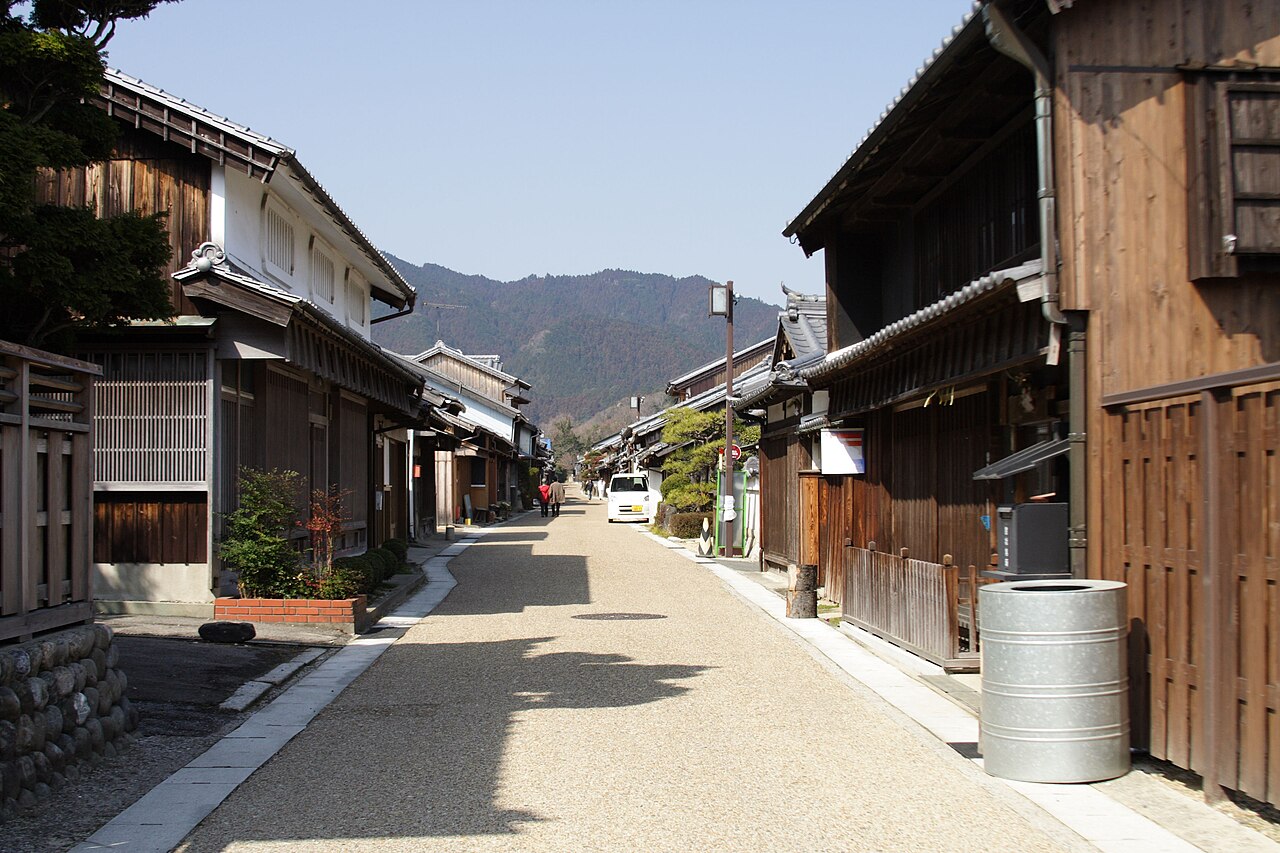
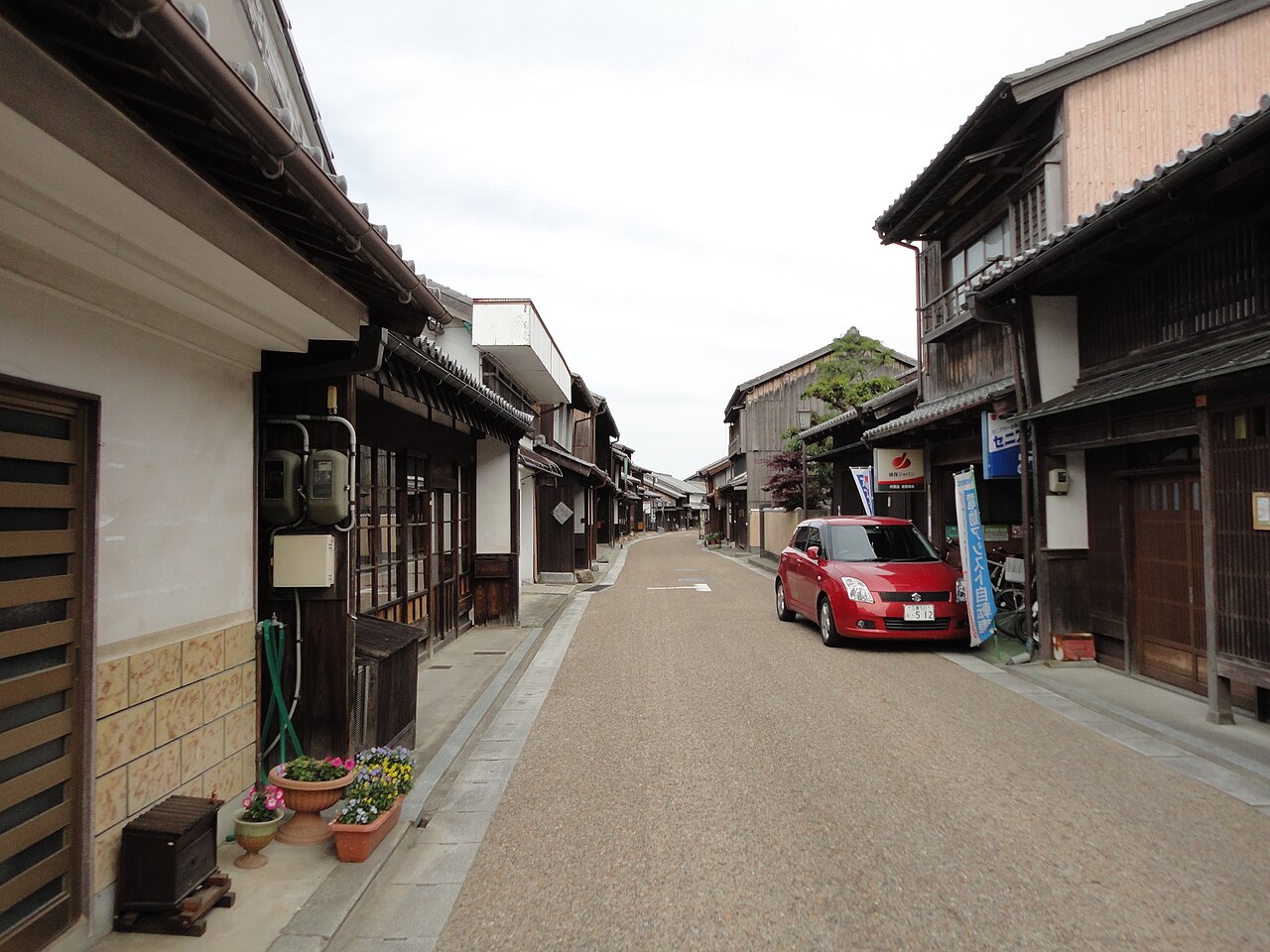
Seki-juku is the forty-seventh post town of the fifty-three Tokaido post towns, counting from Edo. Its old Tokaido street is selected as a national Important Preservation District for Groups of Traditional Buildings. It extends about one point eight kilometres between the east and west oiwake forks, and about two hundred old townhouses built from the Edo to Meiji periods remain.
The Old Tokaido Street: Forks, Districts and a Lookout
At Higashi-no-Oiwake the Tokaido forks from the Ise Betsu Kaido, and a large torii stands there for travellers to bow toward Ise Jingu from afar. Beyond the Ichi-no-torii, the Ise Betsu Kaido runs through Tsu city and connects to the Inner and Outer Shrines of Ise Jingu. The Yamato Kaido branches off from the west oiwake.
The preservation area divides broadly into four districts, Kizaki, Nakamachi, Shinjo and Kitaura, each with its own character. The western side of Shinjo holds mostly small single-storey houses in the shimotaya style, giving it a rather plain, calm streetscape. Visitors can see temple gates and main-hall roofs at the end of the lanes leading north from the highway.
The Hyakurokuri garden is a small park that takes its name from the distance from Edo, just over one hundred and six ri. The Chokantei building stands inside the garden facing the street, with benches near its entrance. From its second floor, visitors can view the whole street of Seki-juku and its row of townhouses.
Inside the Machiya: Earthen Floors and Merchant Houses
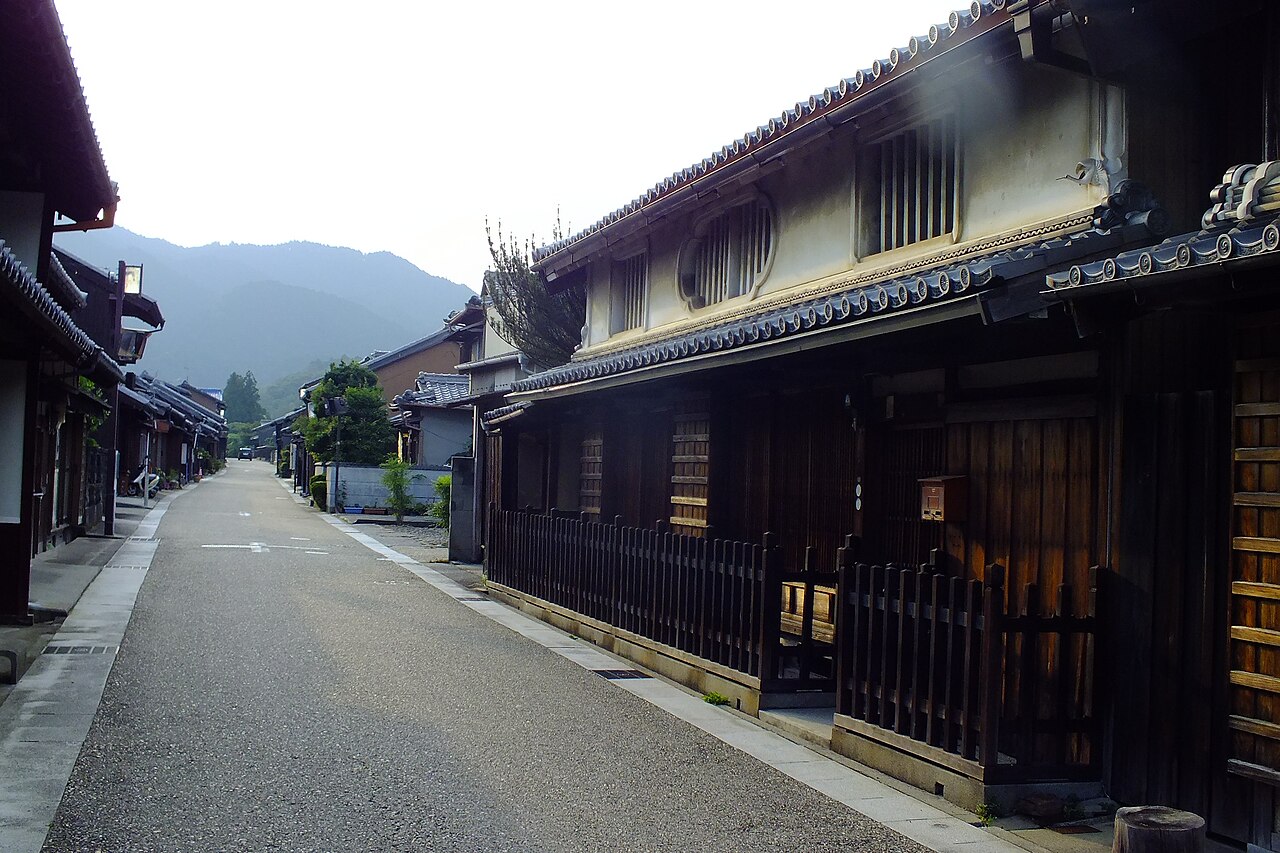
A Seki townhouse plot runs narrow in frontage and long in depth, in the shape of a strip. Each main building faces the highway without leaving spare space, and behind it stand the tsunoya, a detached room and storehouse or shed buildings.
An earthen passage, the toori-doma, usually runs from the entrance to the back of the main building, and at its far end a kamado stove and a well form the kitchen, the katte. The rooms take their names from the front: Mise, Nakanoma and Okunoma, the zashiki.
The Iwakiya main building shows a plastered large wall on the second floor and a lattice in front of the tatami room, the form of a typical Meiji-period merchant house. The Hashizume family ran a money-changing business from the early Edo period and kept a branch shop in Edo.
The Yokanya house prospered as a raw-silk wholesaler in the Meiji era, and the Western-style windows on its second floor retain a Meiji-era atmosphere.
The Hatago Tamaya, the Machinami Museum and the Float Hall
The Seki Hatago Tamaya History Museum keeps a restored Edo-period inn building, a city cultural property and a former large inn used by samurai and commoners. It displays tools used in the inn and historical documents from the Edo period.
The Seki Machinami Museum exhibits photographs that show the changes in the Seki-juku townscape through townscape preservation work. A box staircase stands on display just inside the entrance, and visitors can actually climb it to the document room on the second floor. On the second floor of the storehouse, panoramic photographs show the Seki-juku streetscape in different eras.
The Seki Float Hall permanently displays two real floats. In its float exhibition building, visitors can view the Seki floats used at the festival up close.
Seki Jizo-in and the Folk Tales of the Street
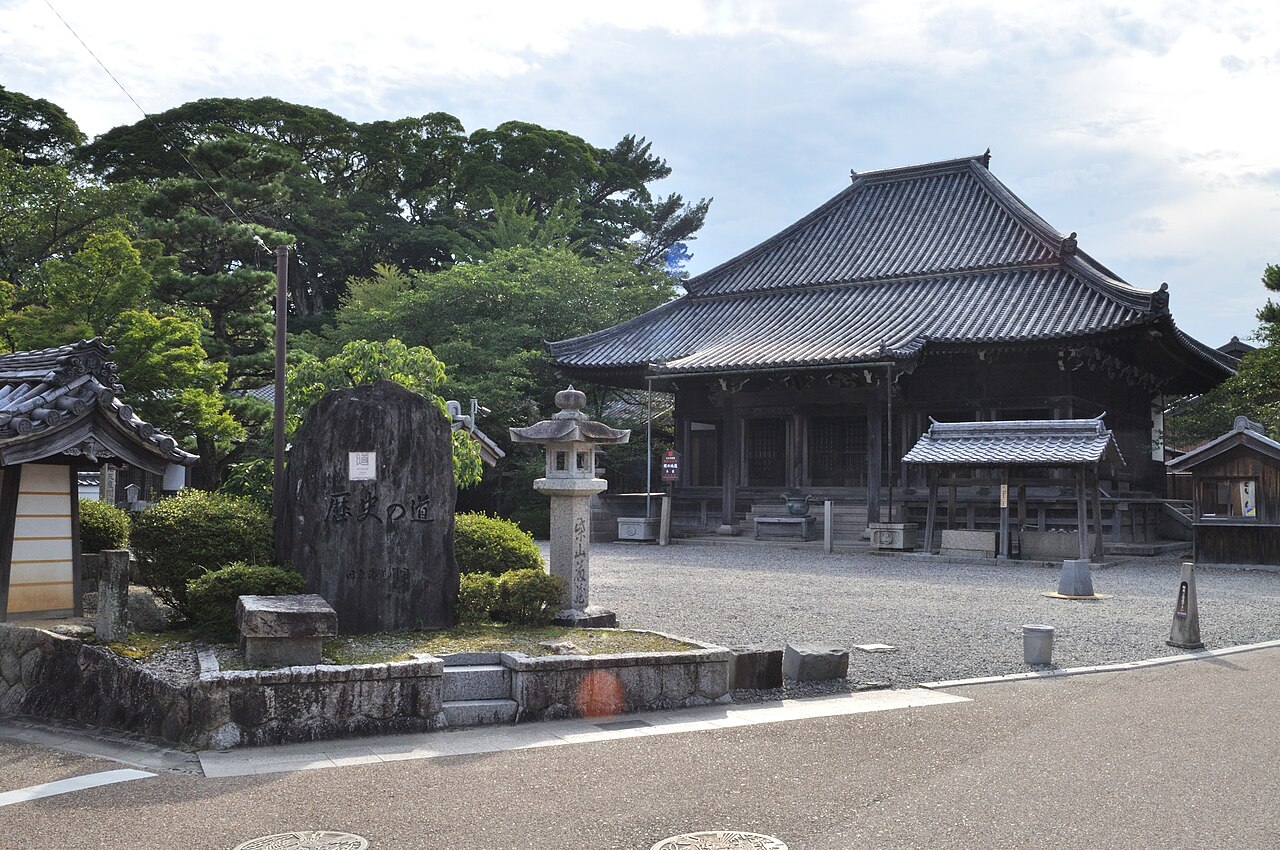
Seki Jizo-in stands almost in the middle of Seki-juku, and its precinct faces the old Tokaido. Three buildings in the precinct, the main hall, the bell tower and the Aizendo, are designated Important Cultural Properties.
The temple is said to have been founded by the priest Gyoki, and it began when a monk of Todai-ji placed a Jizo Bosatsu to save many people from smallpox. The Seki Jizo is said to wear a hemp cloth around its neck because of the story of the monk Ikkyu's loincloth.
Packhorse drivers who crossed Suzuka Pass sang the Suzuka Magouta, and the song became known across the country through Chikamatsu Monzaemon's jōruri plays.
Seki-no-To, Okowa and a Candle Workshop
Seki-no-To wraps smooth-textured adzuki bean paste in a gyuhi rice-cake skin and dusts it with Awa wasanbon sugar. Its appearance is said to be modeled on white snow piled on the peaks of Suzuka.
Fukawaya Seki-no-To Honpo keeps ninja manuscripts, and it is said to be a confectionery shop that served as a cover for ninja. Inside the shop, furnishings of a merchant house of the time stand on display.
Aizuya has been one of the representative inns of Seki since the Edo period. Its mountain-vegetable okowa steams over a Taisho-era kamado fed with firewood, using groundwater. The restaurant serves the okowa, steamed with strong heat to a chewy texture, and street soba made with attention to the broth.
At the Akari workshop, visitors can do handmade activities: candle making with Kameyama candle wax, flower arrangement, herbarium and decoupage. The Koman-no-Yu footbath draws on Seki-juku hot spring water, carried by pipe, diluted and circulated with heating before use.
If you would like more time in the area than a day allows, browse places to stay in Kameyama.
Getting to Seki-juku
New to rural buses and one-man trains? See how to ride them, step by step.
| Route | Time |
|---|---|
| JR Seki Station to Seki-juku on foot | ten-minute walk |
| JR Seki Station to Michi-no-Eki Sekijuku on foot | about one minute |
| JR Seki Station to the Seki Float Hall on foot | about six minutes |
| JR Seki Station to the Seki Hatago Tamaya History Museum on foot | about ten minutes |
| Meihan Expressway Seki IC to Seki-juku by car | about ten minutes |
| Higashi-Meihan Expressway Kameyama IC to Seki-juku by car | about ten minutes |
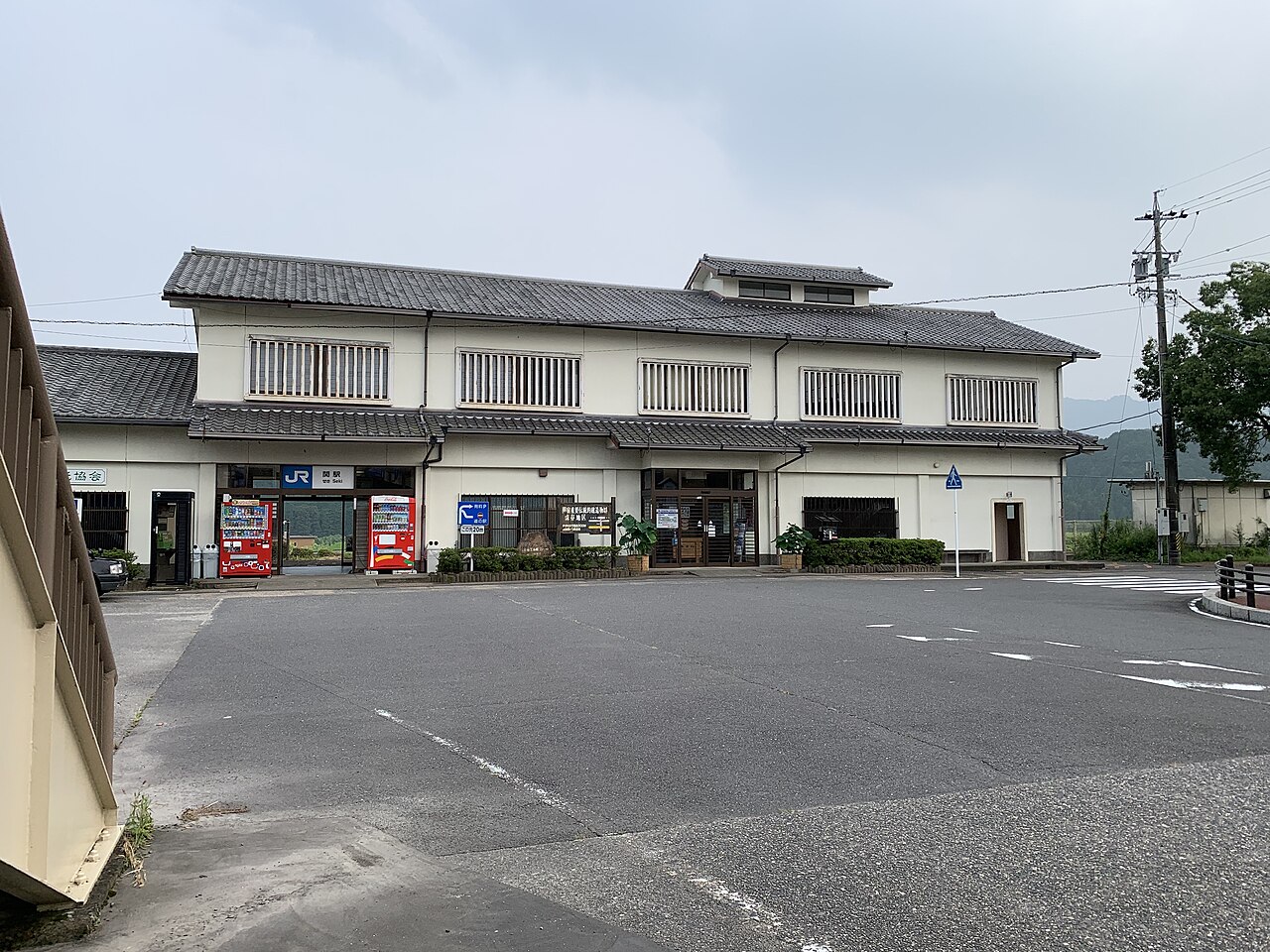
Seki-juku is a ten-minute walk from JR Seki Station.
Hours and Fees
| What | Detail |
|---|---|
| Two-museum shared admission (Seki Hatago Tamaya History Museum and Seki Machinami Museum), adults | three hundred yen |
| Two-museum shared admission, students, pupils and children | two hundred yen |
| Three-museum shared admission (adds the Seki Float Hall), adults | five hundred yen |
| The museums, opening hours | nine in the morning to half past four in the afternoon |
| The museums, closed days | Mondays (the following day if Monday is a public holiday or substitute holiday) and December twenty-ninth to January third |
| Seki Jizo-in, listed fee including matcha | eight hundred yen |
| Seki Jizo-in, open | nine in the morning to four in the afternoon, with no closing days |
| Hyakurokuri garden and Chokantei, open | ten in the morning to five in the afternoon, listed with no regular closing day |
Fees and hours were checked against official sources between 13 October 2026 and 13 November 2026.
The two-museum shared admission is three hundred yen for adults.
Thinking of staying overnight?
Compare places to stay near Kameyama, Mie, Japan →
Disclosure: This post may contain affiliate links. If you book through them, we may earn a commission at no extra cost to you.