The historical notes in this article draw on Shinsen Meishō Chishi (新撰名勝地誌), a gazetteer of famous places compiled in the Meiji era. They are offered as colour for the walk rather than as its plan; the plan itself, meaning what to see first, where to linger, and how to shape the return, is the main matter of what follows.
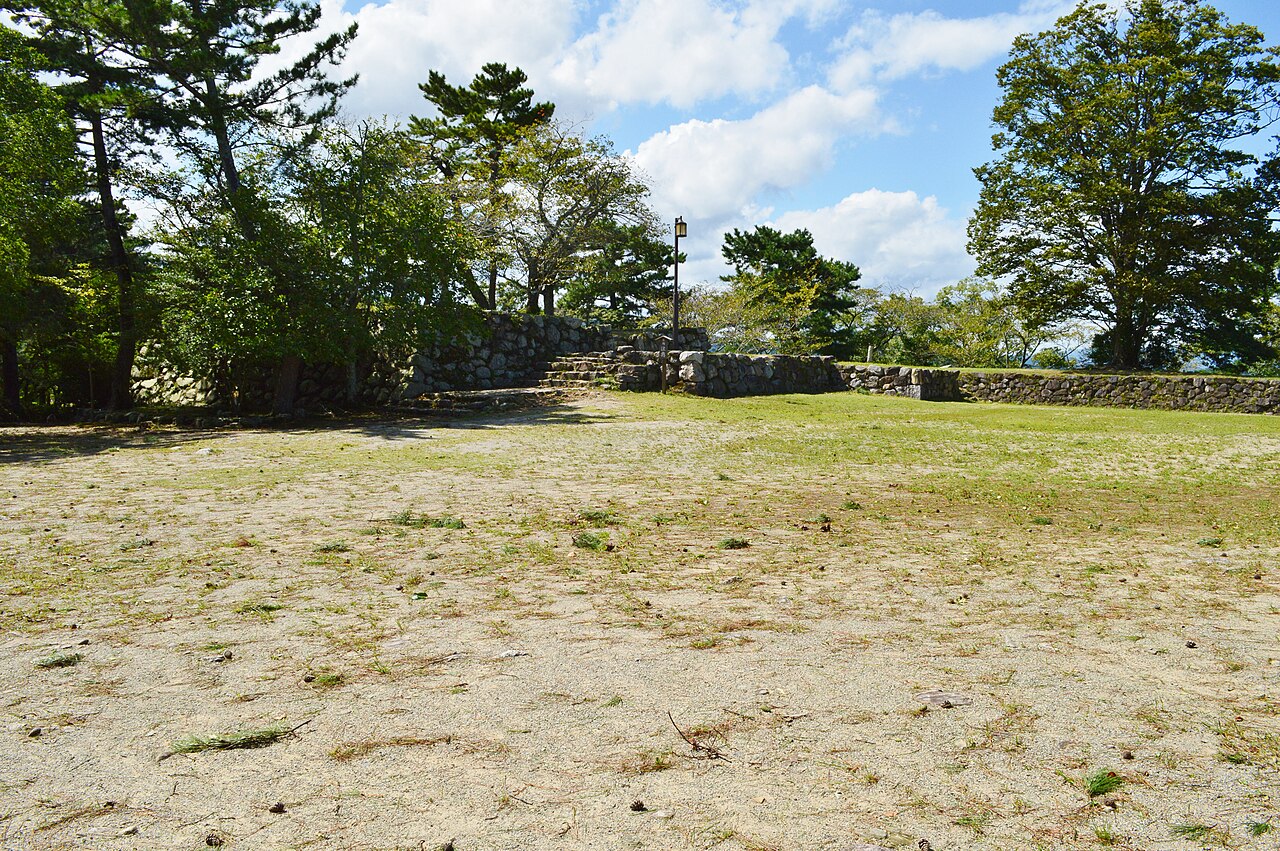
Matsusaka Castle was rebuilt by Gamō Ujisato in the Tenshō era, and the town later passed into the Kishū domain, which kept a resident castle warden here for generation after generation. What that history leaves you today is a hill of stone facings above a compact town, walkable end to end in a single unhurried day.
The park on the castle hill sits on dry, raised ground where old and giant trees shut out much of the sky, and the whole rise is held between two rivers, the Sakanai and the Atago. It is a quiet place by nature, and this day trip is shaped around keeping it that way: hill first, town second.
Getting there, and what the day costs
Matsusaka Station is served by both JR and Kintetsu, and from there the Motoori Norinaga Museum is about a fifteen-minute walk; a taxi covers the same ground in roughly seven minutes. The figures below are the ones worth writing down before you set out, and the list is mercifully short.
| What | Figure |
|---|---|
| Matsusaka Station (JR and Kintetsu) to the Motoori Norinaga Museum, on foot | about fifteen minutes |
| The same stretch by taxi | about seven minutes |
| Combined ticket for the museum and the Suzunoya, adult | four hundred yen |
| Combined ticket, university student | three hundred yen |
| Combined ticket, child (fourth year of elementary school through high school) | two hundred yen |
| Groups of thirty or more | one hundred yen off |
The order that works is stone walls first, while the light is still low and the paths are quiet, then the guards' row, then the two shrines, and only afterwards the Suzunoya and the museum on their shared ticket. That places the paid part of the day in the middle, when attention is still fresh for manuscripts and bells.
For the return, give the merchant streets the last part of the afternoon rather than the first, since the museum's day ends at half past four while the lanes of Nakamachi can still be walked at dusk. If you would rather not watch the clock, places to stay in Matsusaka let you split hill and town across two mornings.
Stone walls where a keep once stood
Under the Tokugawa shogunate's rule of one castle per province, Matsusaka's keep and gate towers were pulled down, and what stands today is the stone facing alone. There is no reconstruction to queue for and no interior to walk through, which is why the hill rewards an early start: it is all outdoors, and the light does the work.
The ruins were laid out as Matsusaka Park in May of the fourteenth year of Meiji, and the gazetteer records a view east across Ise Bay dotted with sailing ships. Whether the present-day view still matches that description is something to test from the top of the walls, and the eastern side is the one to save for last.
Give the walls the first part of the morning and no more. Walk the circuit of the facing once at ground level, then go up for the bay side, and time your descent so that you reach the guards' row around ten, when it begins its day, rather than waiting outside it with the walls already behind you.
Where to stay
Places to stay near Matsusaka →
Disclosure: This post may contain affiliate links. If you book through them, we may earn a commission at no extra cost to you.
The guards' row, and two shrines in the park
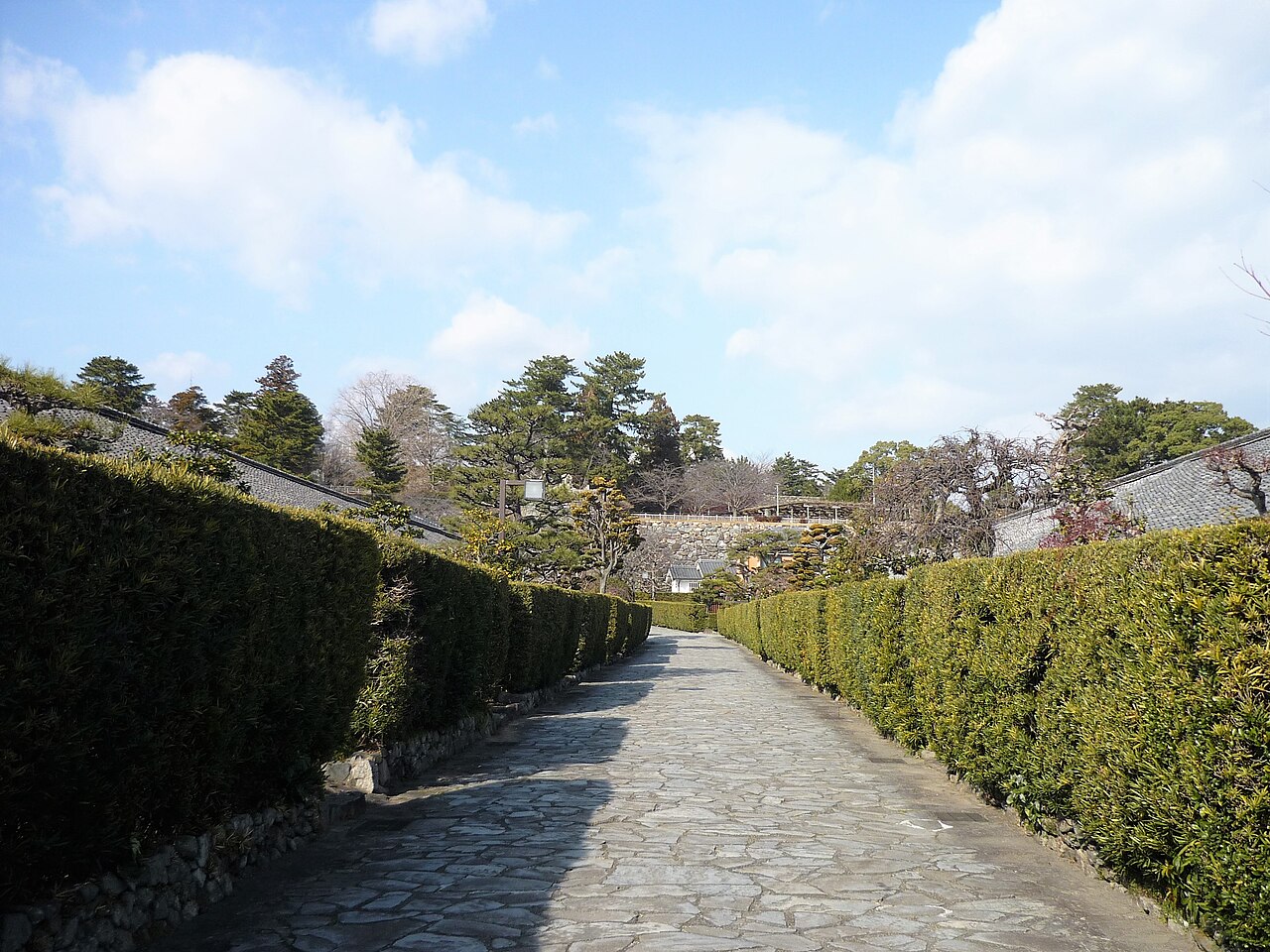
- Gojōban Yashiki (御城番屋敷): open from ten in the morning to four in the afternoon.
The guards' row, Gojōban Yashiki, is the first stop on this route with a fixed window, so it sets the rhythm of the late morning. Its stone-paved lane between hedges asks for a slow pace rather than a long one, and the point of arriving at the start of its day is to have that lane to yourself.
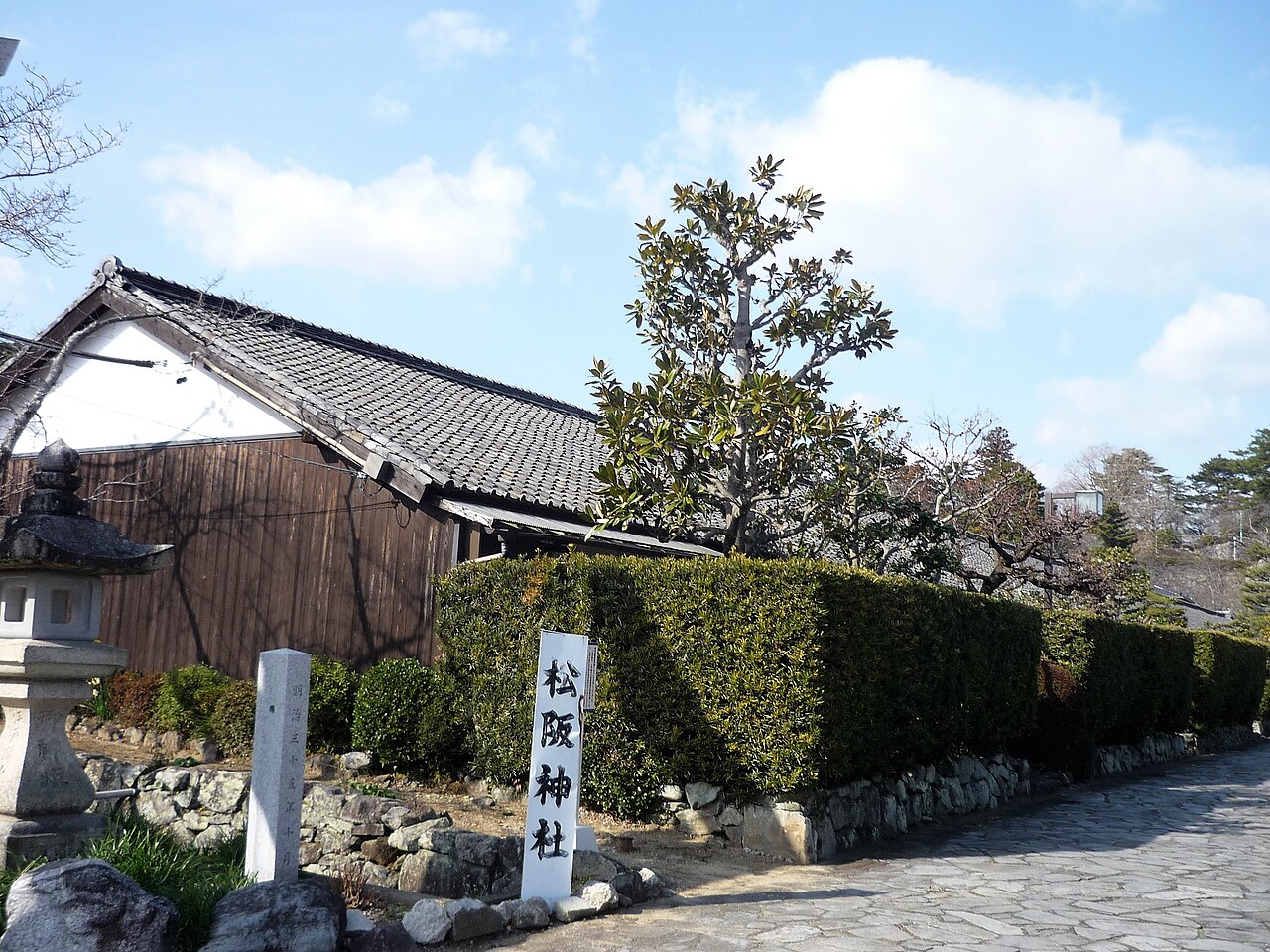
Back inside the park, two shrines share the hill with the walls: Ihi Shrine (意悲神社) and Nanryū Shrine, the latter dedicated to the spirit of Tokugawa Yorinobu. Neither asks for long, and both are best taken as pauses on the way across the park rather than as destinations in their own right.
A third shrine, Yamamuroyama Shrine, stands at the north-eastern foot of the park and enshrines Motoori Norinaga, the scholar whose house comes next; it was founded on Mount Yamamuro in the eighth year of Meiji and later moved to its present place. Save it for when you leave the park, if your way into town lies on that side.
Motoori Norinaga and the Suzunoya
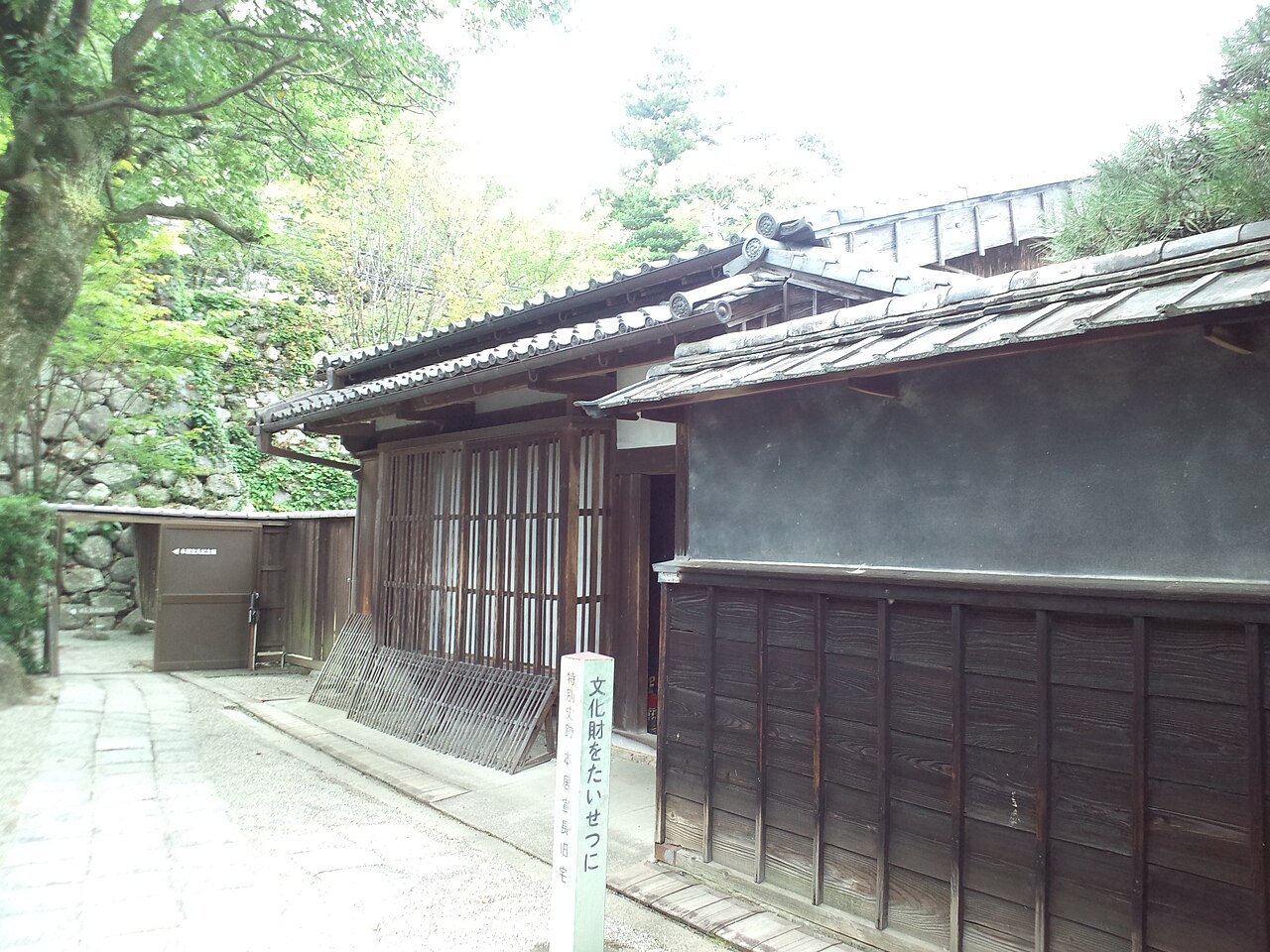
- Motoori Norinaga Museum (本居宣長記念館): open from nine in the morning to half past four in the afternoon.
- Combined ticket with the Suzunoya: four hundred yen for adults; other rates are in the table above.
Motoori Norinaga was the town's own scholar of kokugaku, the study of Japan's native learning; he was born here in the fifteenth year of Kyōhō and died in the first year of Kyōwa at the age of seventy-two. His old house, the Suzunoya, once stood in Uomachi and has since been moved into the park.
Inside are a self-portrait in Norinaga's own hand, with his inscription, the old bells he treasured, and his manuscripts. This is where the shared ticket earns its price and where the afternoon should slow down: make this the longest stop of the day, and keep an eye on half past four, when the museum's day ends.
According to the cited book, his grave, the okutsuki, lies at Myōrakuji in Yamamuro, about four kilometres south of town, with a cherry on the mound and a monument beside it carved with a memorial poem by his pupil Hirata Atsutane. At that distance it is a separate outing, and on a single day it is the first thing to let go.
The merchant town beyond the park
Matsusaka's wealth came from cloth: in the Edo period it was the principal producing district of Matsusaka cotton, and the ancestors of the Mitsui house are said to have come from here. The merchant streets are the afternoon's second act, walked at a slower pace than the hill, with three stops in Nakamachi worth threading together.
Seikōji, in Nakamachi, is said to have been founded by the monk Gyōki and is known as the family temple of Gamō Ujisato, who rebuilt the castle where your day began; Tokugawa Yorinobu later restored it. Nearby Keishōji (岡寺山継松寺) keeps a Kannon of protection from misfortune as its principal image; take these two first, and the shrine last.
Two dates change the whole character of these streets. On the first Day of the Horse each year, the hatsu-uma, Keishōji fills with worshippers from near and far and is very crowded indeed; and from the seventh of June, for one week, the Gion festival of Yakumo Shrine sends floats out from every part of the city.
Yakumo Shrine stands within the grounds of Mirokuin in Nakamachi and is said to have enshrined Susanoo in the Jōgan era. Come on either date for crowd and colour, or on any other day for streets quiet enough to hear footsteps; for the festival week, places to stay in Matsusaka are worth settling early.