Kuwana, an old Tokaido post town in Mie, gathers a Western-style house with a four-storey tower, a large torii rebuilt in step with the Ise Jingu shrine relocation, and a hall of festival carts. Between them come the town's clams, grilled with the hinge cut so the shell does not part and the umami stays inside. The order matters: house and garden, gateway and guardian, then the food that fed pilgrims bound for Ise.
Rokkaen, a Western House with a Tower
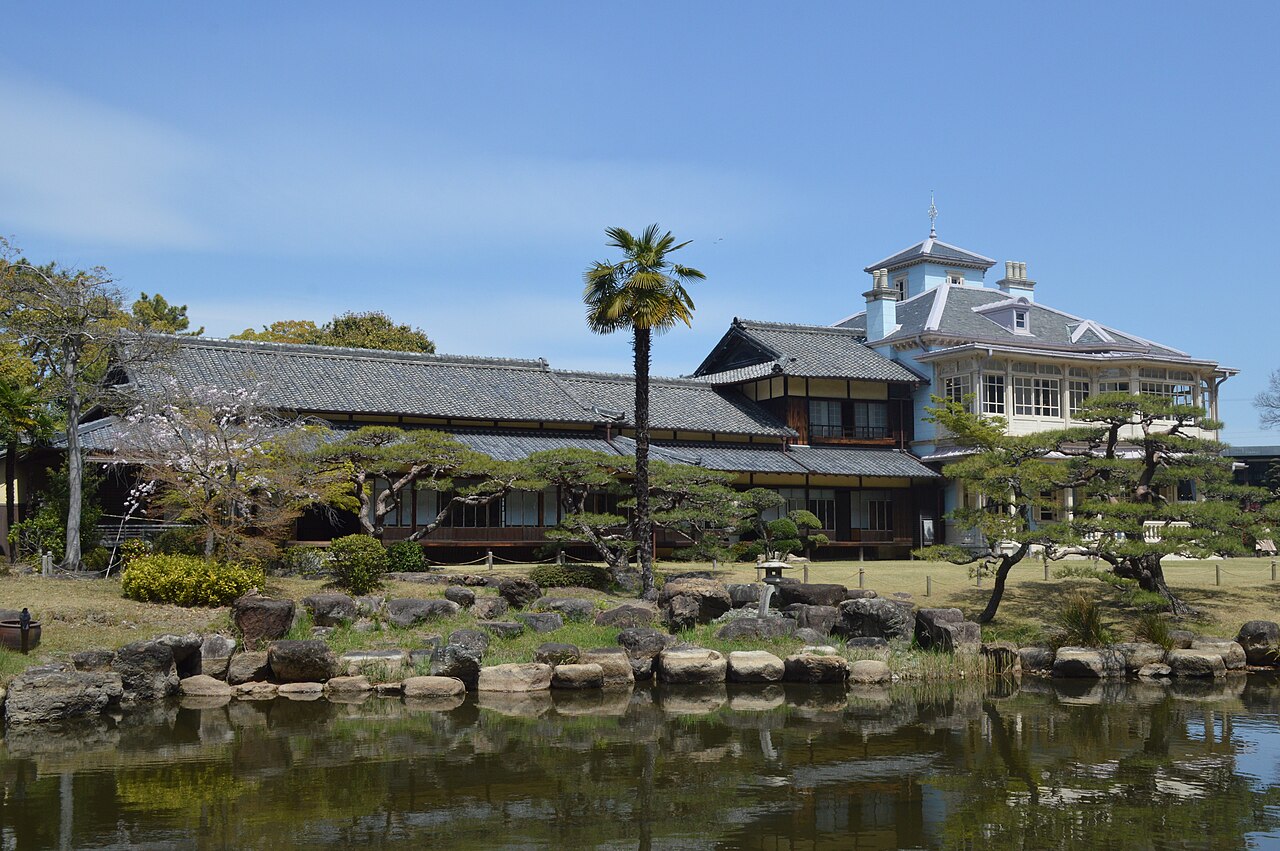
Rokkaen greets visitors with a wooden two-storey Western-style house, its four-storey tower and natural slate roof designed by the British architect Josiah Conder, built as the residence of the second-generation Moroto Seiroku. The tower was planned with three floors, and Seiroku had a fourth added so that the river could be seen well, which is why it rises higher than its two storeys suggest.
A Japanese-style house, storehouses and a pond-circuit garden share the grounds, and visitors can fold linked cranes from one sheet of paper to take home. Moroto Garden, meanwhile, has a pond that takes in the tide, and its scenery changes with the ebb and flow of the sea water. Seeing the house before the garden puts the fixed tower first and the shifting pond last.
A Torii and a Turret at the Old Ferry Landing
Shichiri no Watashi, the old ferry landing where visitors now stand, takes its name from the seven ri of sea that boats crossed from Miya post town to reach Kuwana. At this eastern gateway of the Ise road, the large torii raised in the mid-Edo period is called the Ise Province first torii, since travellers step onto the Ise road from here. It is rebuilt in step with the Ise Jingu shrine relocation from the torii at the Uji Bridge entrance at Naiku, so the gate before you came from the shrine itself.
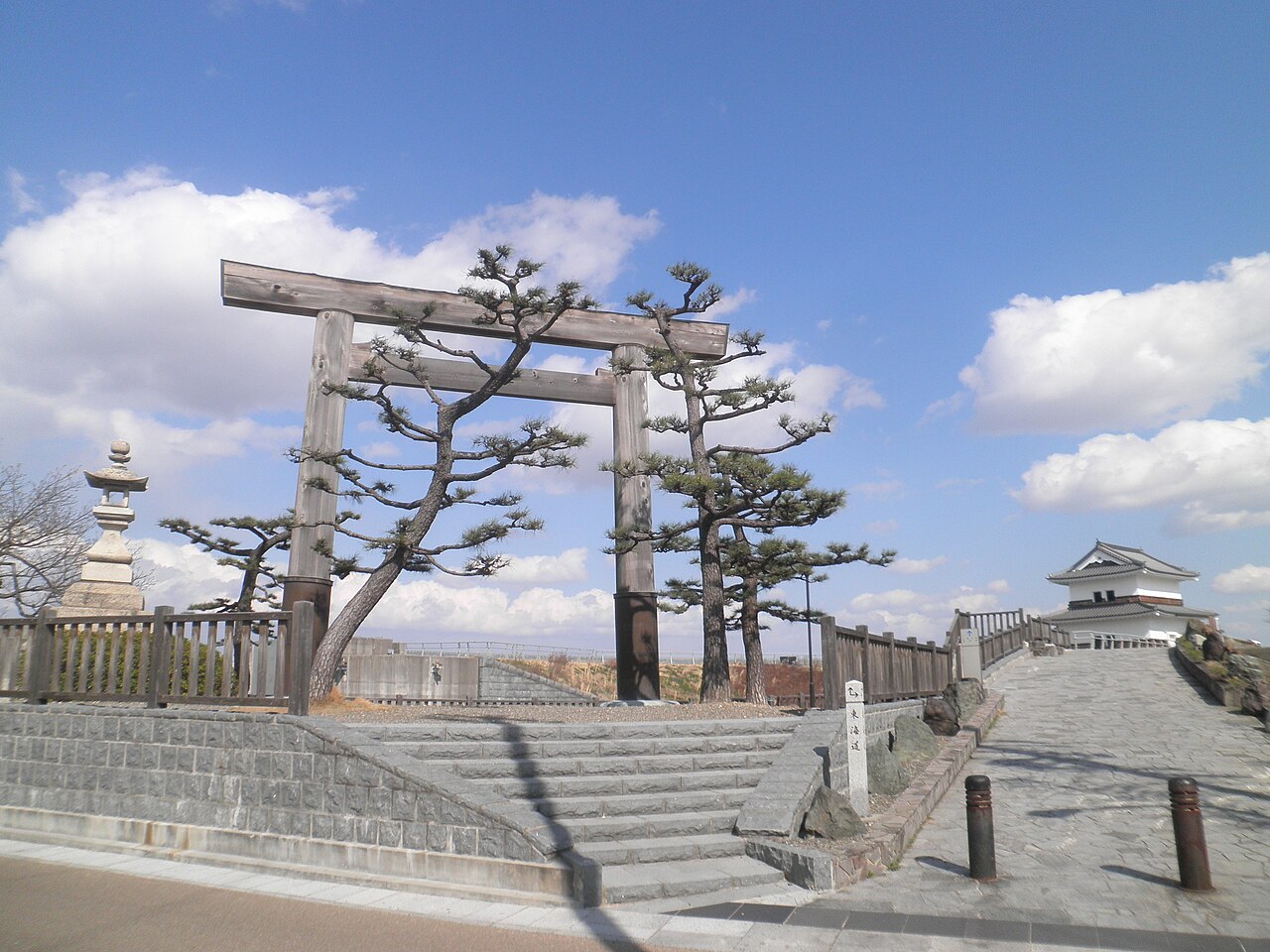
The Banryu-yagura turret stands facing Shichiri no Watashi, and visitors can climb to a second-floor window to see the banryu, the turret's symbol, up close. Banryu means a dragon crouching before it rises to the heavens, and the turret is thought to have been set here as a guardian deity of sea voyages, so the figure at the window was meant to protect the boats that landed here.
The Old Tokaido, the Castle Wall and the Moat
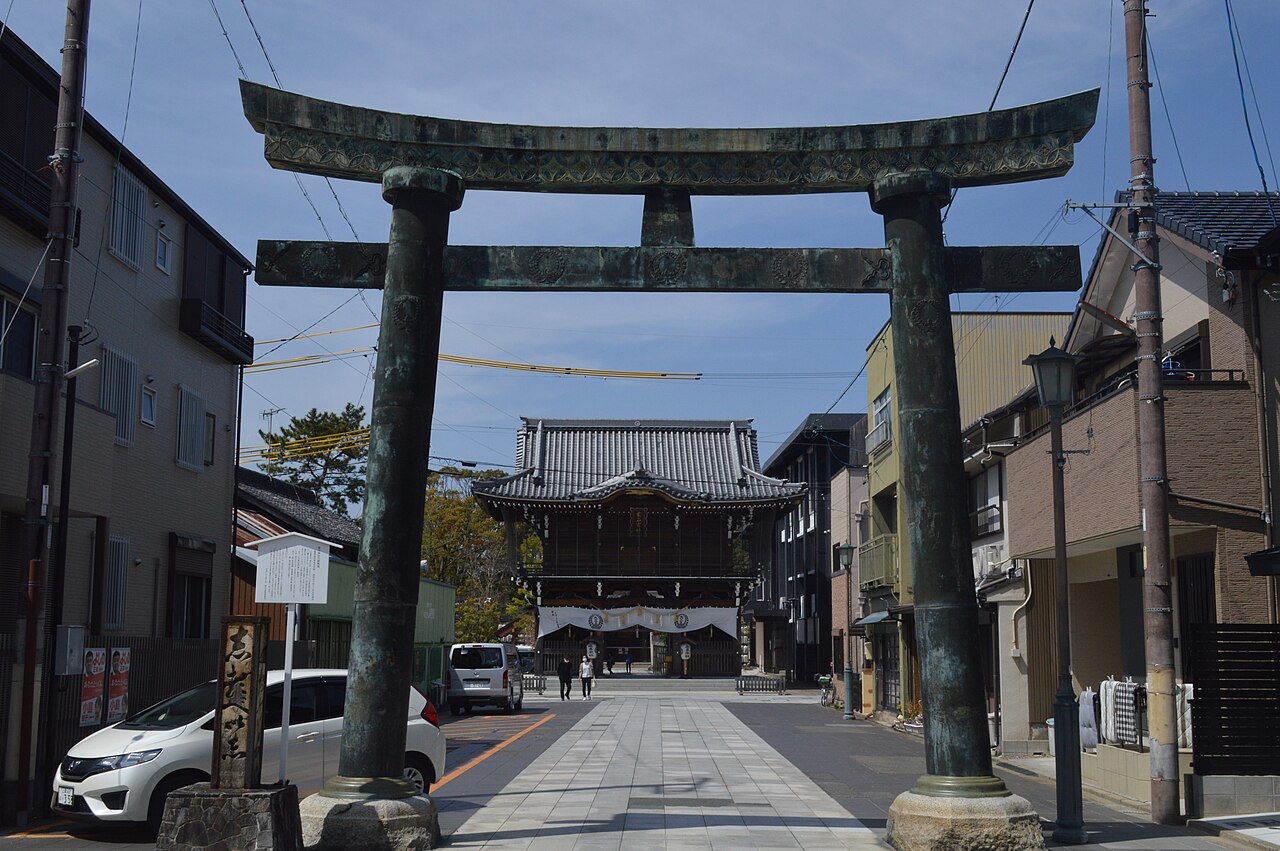
Kuwana Soja draws walkers through its rebuilt tower gate and past a bronze torii, beside which a guidepost stone stands carved on its front and both sides. The stone served as a message board for finding people who had gone missing, and its carved faces are still there to read beside the torii.
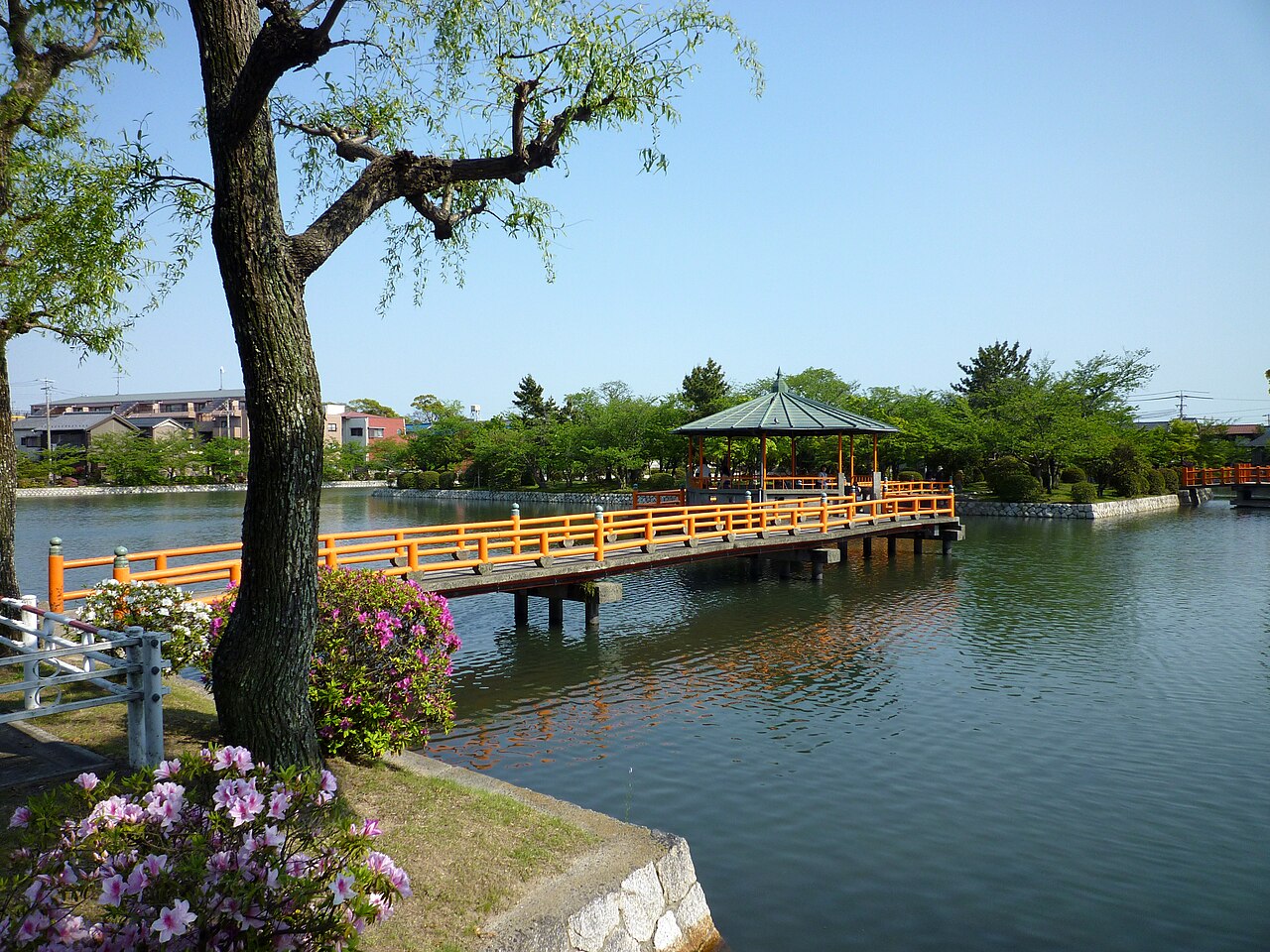
A surviving stone wall of the Kuwana Castle enclosure runs at Katamachi from the Kawaguchi sluice gate, with the castle moat along its east side. Part of the moat was filled to make a park laid out to recall the Tokaido, and its road markers and information boards turn the stroll into a small echo of the old highway.
Kuwana post town kept two honjin and four waki-honjin, and the Otsuka honjin stood where THE FUNATSUYA is now. The state barge could land at the Otsuka honjin, so a daimyo stepped straight from boat to lodging where the sea leg of the Tokaido met the land. Matsuo Basho's collected haiku put him in Kuwana three times, and the post town he crossed is the one visitors walk today. After the stone wall and the Tokaido markers, anyone who wants to stay on can look at places to stay in Kuwana.
A Festival Cart Hall in a Former Bank
Ishitori Kaikan shows visitors the carts of the Kuwana Ishitori Festival in a building put up as a bank and later renovated to display them, so the cart stands inside a former bank. The building is a national registered tangible cultural property, and the festival can be watched on video beside the carts.
The lacquer-finished cart on display is presumed to date from the late Edo period, and its carvings are all peonies, so the detail to look for is the flower work rather than the lacquer alone. Seeing the cart before the building works well: the peony carving holds the eye first, and the bank architecture reads better once you step back.
Grilled Clams, Shigure and Croquettes
Grilled clams are the dish to start with: in the Edo period they were set on pine cones from roadside pines and grilled over them, and today they come with the hinge cut so the shell does not part and the umami stays inside. A clam hotpot gives about ten clams, depending on size, while the clam shabu-shabu uses a golden kelp and bonito broth, and an aroma rises when the pot is uncovered.
Shigure, shellfish simmered down, has been a Kuwana specialty since the Edo period, and the Shigure Niku-maki Onigiri is one way to eat it now: shigure rice wrapped in pork, grilled until browned and coated in sauce. Kuwana croquettes use clam, nabana, tomato and bamboo shoot, with the fluffy bite of Danshaku potatoes and a lightly Japanese seasoning, and with many kinds on offer, visitors can compare several.
Kyuka Coffee, roasted by a Kuwana-born owner who won the Japan Barista Championship in the siphon division, is the cup to finish with, and the Sanpachi market lines up shigure shops with souvenir and food stores. Taking the clams first, shigure second and croquettes last moves from the whole shellfish to its simmered form to the fried snack.
Rice Cakes, Manju and Senbei
Yasunaga-mochi was the sweet Ise pilgrims bought in the Edo period, and the one sold now is still a grilled mochi stretched long and thin around chunky sweet bean paste, with a fragrant scorched surface and a refined bean taste. Miyako-manju, wheat-flour dough with sugar, egg and honey around smooth bean paste and black sesame, pairs a fragrant surface with a moist inside. Hamaguri-shiruko is a pocket-size sweet red bean soup in a clam-shaped monaka filled with fine sarashi-an.
Tamari senbei, a specialty of the Tokaido post town of Kuwana, are grilled by hand one sheet at a time over charcoal; the hand work shows in darker and lighter patches, draws out the depth of the tamari soy sauce and keeps the grainy texture of the rice. Kaburasenbei is shaped like a turnip and branded with a line from a classical Chinese text, with a castella batter that tastes faintly sweet; small ones are light, large ones let the batter come through.
THE FUNATSUYA, on the site of the old Otsuka honjin, spreads cream and rolls its roll after the order comes in, so it arrives fluffy, and its Deko-pon tart sets a layer of crisp tart dough across the bottom. For the baked things, going from senbei to mochi to roll runs from the firm to the soft.
Getting to Kuwana
| Leg | How | Time and estimate |
|---|---|---|
| Tokyo Station to Kuwana Station | Tokaido Shinkansen to Nagoya Station, then the JR Kansai Line or Kintetsu Nagoya Line | About 2 hours 30 minutes |
| Shin-Osaka Station to Kuwana Station | Tokaido Shinkansen to Nagoya Station, then the JR Kansai Line or Kintetsu Nagoya Line | About 1 hour 30 minutes |
| Nagoya Station to Kuwana Station | JR Kansai Line or Kintetsu Nagoya Line | About 20 minutes |
| Kuwana Station and Kintetsu Nagoya Station | Tokuwari round-trip ticket for adults (a round-trip ticket, not a one-way fare) | 900 yen; valid for 2 days from the first boarding |
| Nagoya to Kuwana by car | Expressway to Kuwana IC | About 30 minutes |
| In front of Kuwana Station to the town | K bus (city community bus) | 100 yen |
| Nearest bus stop to Shichiri no Watashi, Banryu-yagura and Moroto Garden | On foot | About 5 minutes each |
| Nearest bus stop to Ishitori Kaikan | On foot | About 2 minutes |
New to rural buses and one-man trains? See how to ride them, step by step.
Hours and Fees
| Place | What | Hours or fee |
|---|---|---|
| Rokkaen | Admission, high school students and older | 460 yen |
| Rokkaen | Admission, junior high school students | 150 yen |
| Rokkaen | Hours and closing days | 9:00 to 17:00 with entry until 16:00; closed Mondays (the next weekday if Monday is a holiday) and from December 29 to January 3 |
| Moroto Garden | Hours | 10:00 to 17:00 with entry until 16:00; public-opening periods are set by the garden, and it is closed on Mondays during them |
| Banryu-yagura | Second-floor observation room | 9:30 to 15:00; closed Mondays (the next day if Monday is a public holiday) and from December 28 to January 4 |
| Ishitori Kaikan | Hours and closing days | 10:00 to 16:00; closed Mondays and Thursdays (open on Thursdays from July until the end of the festival) and from December 29 to January 3 |
| Sanpachi market | Market days | The 3rd, 13th, 23rd, 8th, 18th and 28th of each month, and public holidays; closed on January 3 |
| THE FUNATSUYA | Hours and closing days | 11:00 to 15:00 with last order at 13:30; closed Saturdays, Sundays and public holidays |
Where to stay
Places to stay near Kuwana, Mie, Japan →
Disclosure: This post may contain affiliate links. If you book through them, we may earn a commission at no extra cost to you.