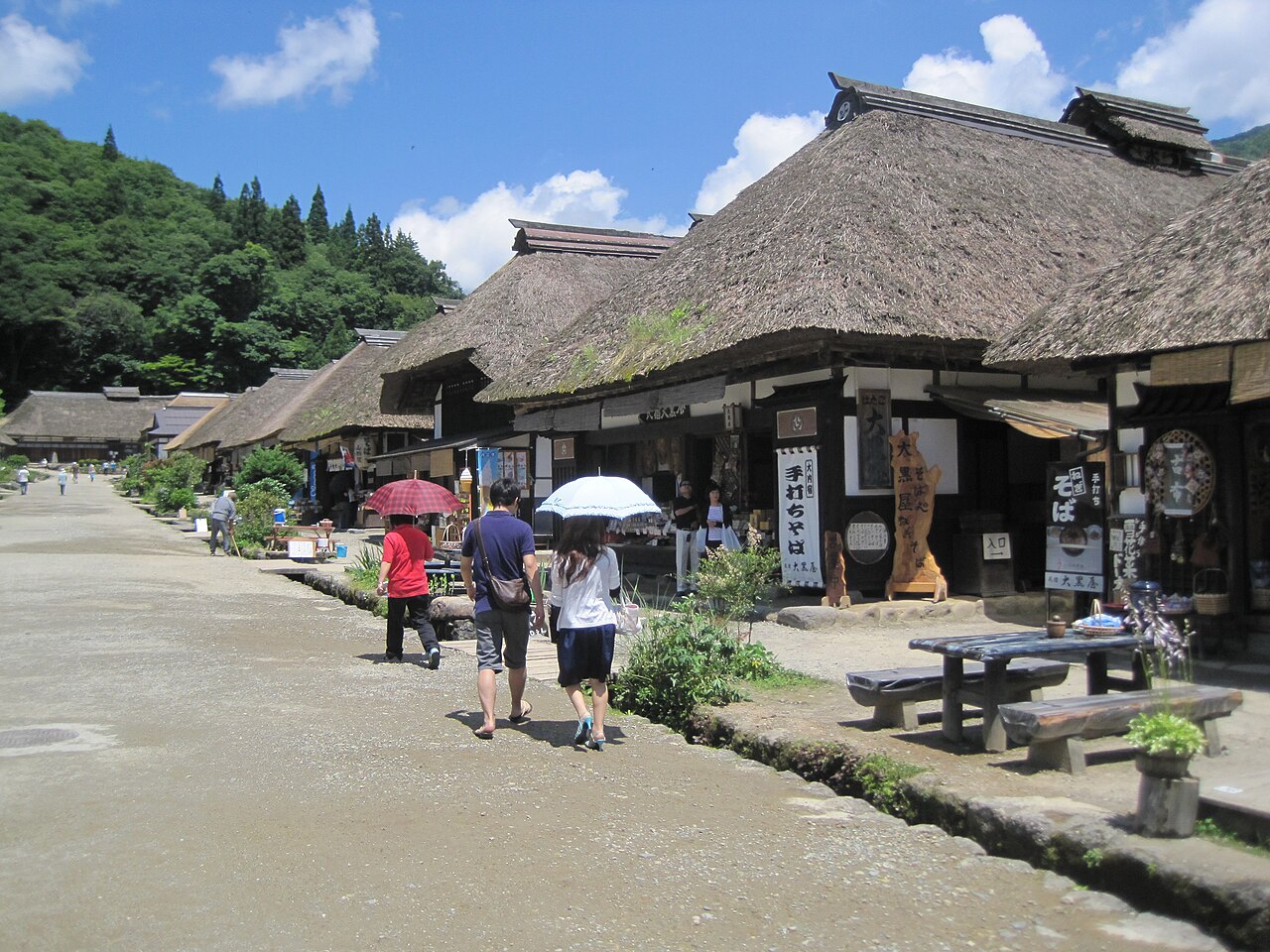
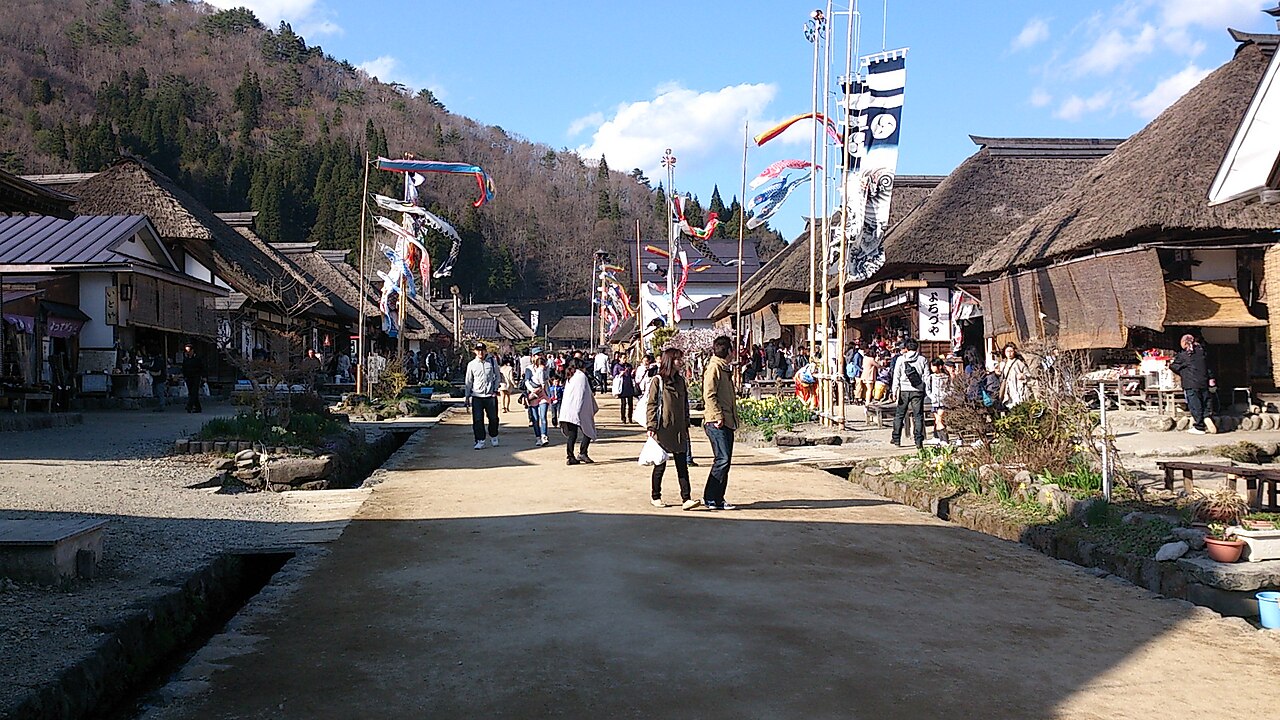
Ouchi-juku is a former post town whose street of thatched houses keeps a townscape like that of the Edo period. The village is designated an Important Preservation District for Groups of Traditional Buildings. In January the settlement becomes a snowy landscape. At the snow festival, fireworks go up behind the snow-covered thatched roofs while candles burn in lanterns made of snow.
Soba and Local Sweets on the Old Post Road
Soba is the meal to build the day around. One shop's recommended dish is soba made with flavorful local flour, topped with mochi from home-grown glutinous rice that has been fried in oil. Another shop serves walnut soba, a local dish in which ground walnuts were mixed into the soba for celebrations and New Year.
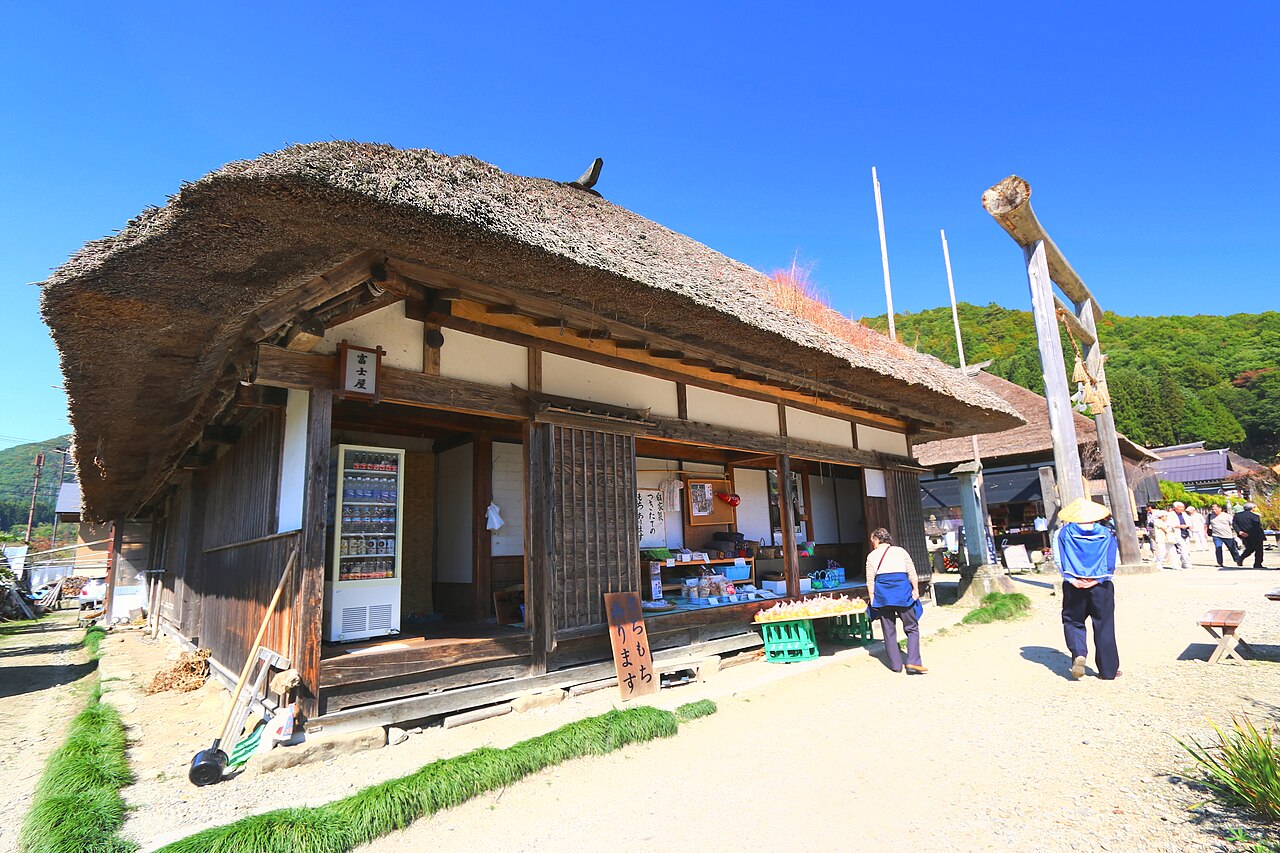
One shop serves soba that is eaten with a single leek. Another tradition is soba with grated radish as the base, a way of eating with its own local name. One shop makes soba with no binding flour at all, alongside a version with one part binding. One shop describes dining amid the old townscape and the smell of the irori hearth.
For something sweet, the town of Shimogo lists two specialties worth knowing by name. Kurumi yokan is a yokan with roasted walnuts inside and a moderate sweetness. Kuramura manju are steamed one by one and wrapped by hand around homemade bean paste. Both are the kind of thing to look for by name.
Painting an Akabeko and Other Hands-On Stops
If you want something to take home that you made yourself, one shop in the village lets you paint an Akabeko and an Okiagari-koboshi. Okiagari-koboshi painting is also available at the same shop. The staff advise gently so that even small children can try the painting easily. Painting an Akabeko takes about forty minutes, including the time it needs to dry.
Kokeshi are a second option, offered at a workshop. Visitors paint their own original kokeshi with brushes, in any design they like, so the doll that goes home is one nobody else has. A pottery studio also offers a session, which runs longer than either painting stop.
The Prince Legend and the Hange Festival
A legend remains in the settlement that Prince Mochihito escaped the capital, reached Ouchi, stayed several days, and then set out again. The village, under its earlier name, is said to have been named Ouchi after the inner palace of the imperial court. Takakura Shrine enshrines the prince, the second son of Emperor Go-Shirakawa.
The Hange Festival, the ritual of Takakura Shrine, comes early in July every year; it was once held in May, but that overlapped with rice planting, so it was moved. After a Shinto ritual at the shrine, village men in white robes and black eboshi hats walk in procession around a portable shrine, praying for their households and a good harvest.
On the night before the festival, the leaders gather at Takakura Shrine and confirm the next day's duties by the light of lanterns, andon lamps and candles, and until late at night festival music and drums ring out through the settlement. May has another occasion, when the Koyasu Kannon at the lookout is unveiled, with sacred sake and red rice served.
Snow Lanterns, Fireflies and Green Fields
Winter brings the snow festival, when fireworks go up into the clear winter sky. The festival includes a ceremonial lighting of a sacred fire by the men of the village. If you can pick one date in winter, make it this one.
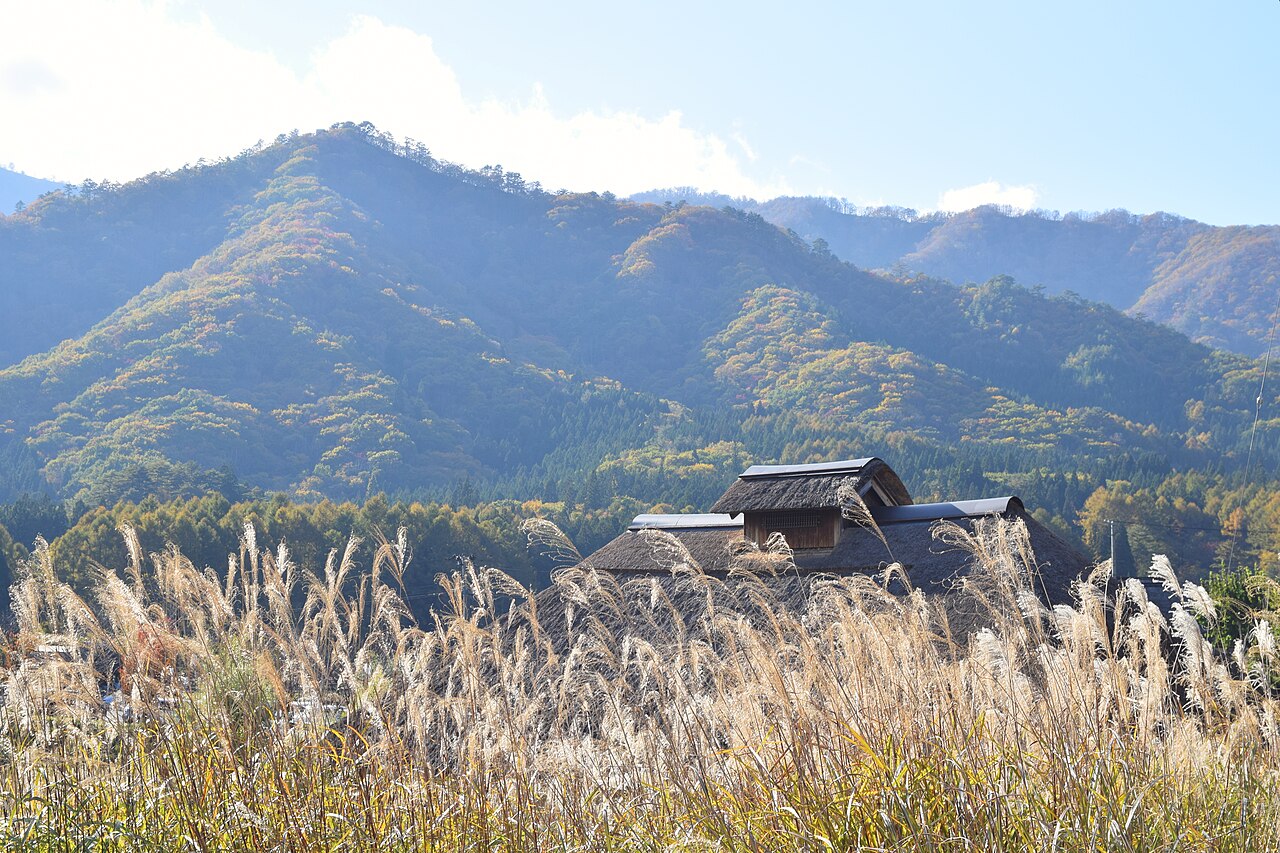
In May, carp streamers are put up, and the fresh green of Ouchi-juku is described as being coloured more vividly. In August, fireflies fly about Ouchi-juku at night, a reason to stay on after dark rather than head back in daylight.
At the end of summer, the buckwheat fields on the Sarugaku plateau spread out like a carpet of green leaves and white flowers. In autumn, after the harvest, the buckwheat stalks turn red and the land itself goes red. The plateau is worth adding to the day if the fields are in flower.
Rock Towers, a Waterfall and the Ozatoro Train
Along the river continue rock walls shaped like towers, which the river and the wind shaped over a million years, and the name of the spot is explained by them. The formation is designated a national natural monument. The viewing season is listed as late October to early November.
Higurashi Falls is a two-tier waterfall. It flows in a deep forest while throwing up spray. The name comes from a story that Kato Akinari, the second lord of the Aizu domain, was so charmed by the waterfall seen from across the river that he sat on a rock and watched it until the sun set.
For a longer day, the Ozatoro observation train runs with three types of seat in a two-car train. The torokko seats run with the window frames taken out, the tatami-seat cars are in a horigotatsu style, and the observation seats recline from a higher position than usual. From June to September, the torokko seats have no window frames at all. On-board sales are available.
Getting to Ouchi-juku from Aizu-Wakamatsu
New to rural buses and one-man trains? See how to ride them, step by step.
Yunokami-Onsen Station is the nearest station to Ouchi-juku.
| Leg | How | Time or fare |
|---|---|---|
| Asakusa to Yunokami-Onsen Station | rail | 3 hours 45 minutes |
| Aizu-Wakamatsu Station to Nishi-Wakamatsu Station | rail | 200 yen |
| Nishi-Wakamatsu Station to Yunokami-Onsen Station | rail | 860 yen one way, 1,720 yen round trip |
| To the Ouchi-juku stop | Aizu Bus regular route | 510 yen |
| Yunokami-Onsen Station to Ouchi-juku | taxi | about 10 minutes |
| Yunokami-Onsen Station to Ouchi-juku | taxi, one way | about 2,000 yen |
| Yunokami-Onsen Station to the lookout at Koyasu Kannon | car | about 15 minutes |
| Parking at Ouchi-juku, ordinary car | car park | 500 yen |
| Parking at Ouchi-juku, microbus | car park | 1,500 yen |
| Parking at Ouchi-juku, large bus | car park | 3,000 yen |
Hours and Fees
| What | Fare or time | Note |
|---|---|---|
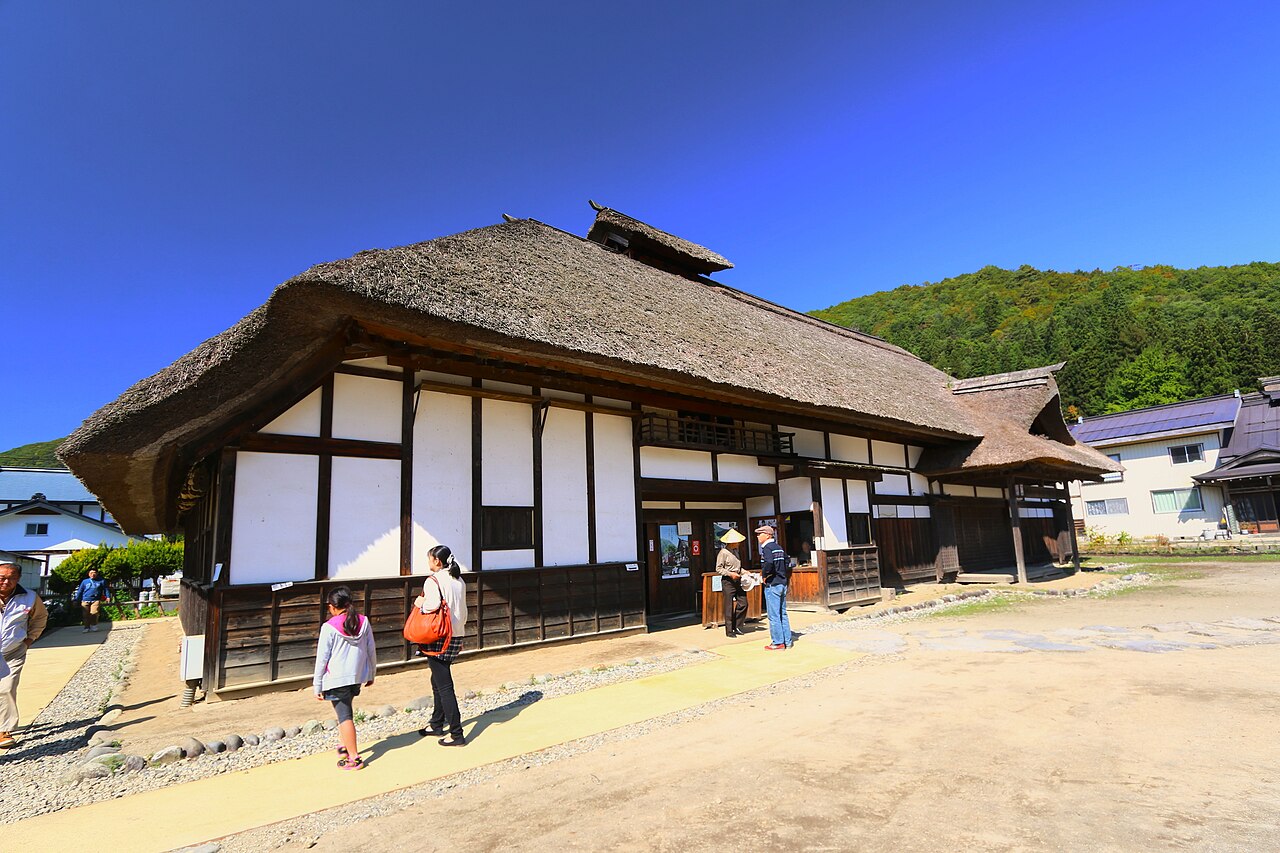
| Ouchi-juku Machinami Tenjikan, individual admission | 250 yen adult, 150 yen elementary and junior high school students | per person |
| Ouchi-juku Machinami Tenjikan, group admission (30 or more people) | 200 yen adult, 100 yen elementary and junior high school students | per person |
| Ouchi-juku Machinami Tenjikan, opening hours | 9:00 to 16:30 | daily hours |
| Ouchi-juku Machinami Tenjikan, year-end closure | December 29 to January 3 | closed |
| Painting experience (Akabeko and Okiagari-koboshi) | 9:00 to 16:00 | inquire in advance |
| Painting shop closing days | irregular | December to March also listed as irregular |
| Ozatoro observation reserved-seat ticket | 500 yen adult, 250 yen child | same price for one stop or the whole section |
| Yunokami-Onsen Station, staffed | 8:30 to 17:00 | staffed window |
Fees and hours were checked against official sources between 12 October 2026 and 28 October 2026.
If you are giving Aizu more than one day, Aizu-Wakamatsu's Tsuruga Castle and Iimoriyama and Kitakata's storehouse streets each have a guide of their own.
One example: at Iseya (伊勢屋), a thatched-roof farmhouse inn, a one-night stay with two meals starts from eight thousand yen. That figure covers a room with meals included rather than a bed alone, and it is a baseline for the valley. For more time in the valley than the journey from Asakusa allows, browse places to stay in Ouchi-juku and Shimogo.
Thinking of staying overnight?
Compare places to stay near Ouchi-juku and Shimogo, Fukushima →
Disclosure: This post may contain affiliate links. If you book through them, we may earn a commission at no extra cost to you.