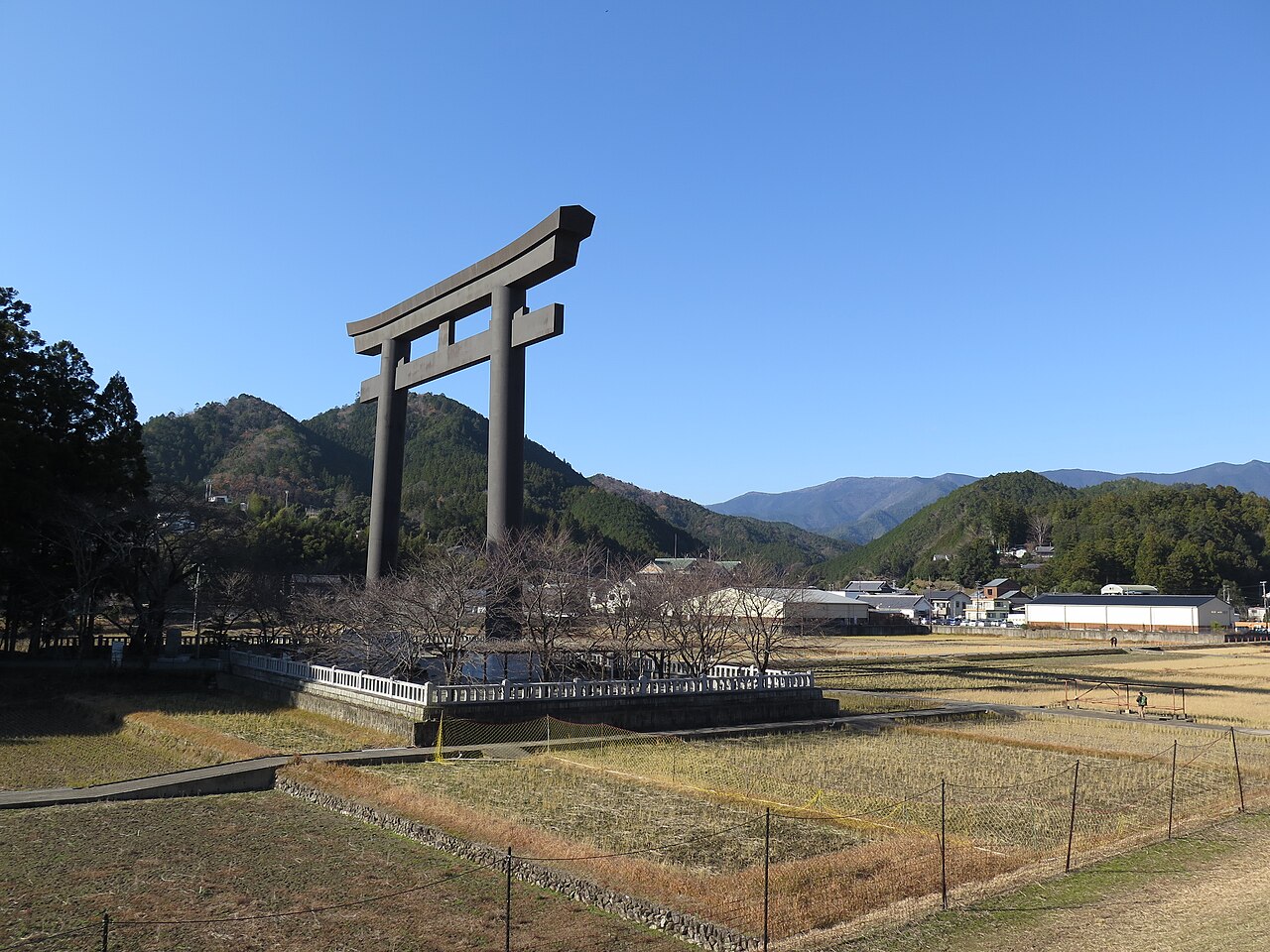
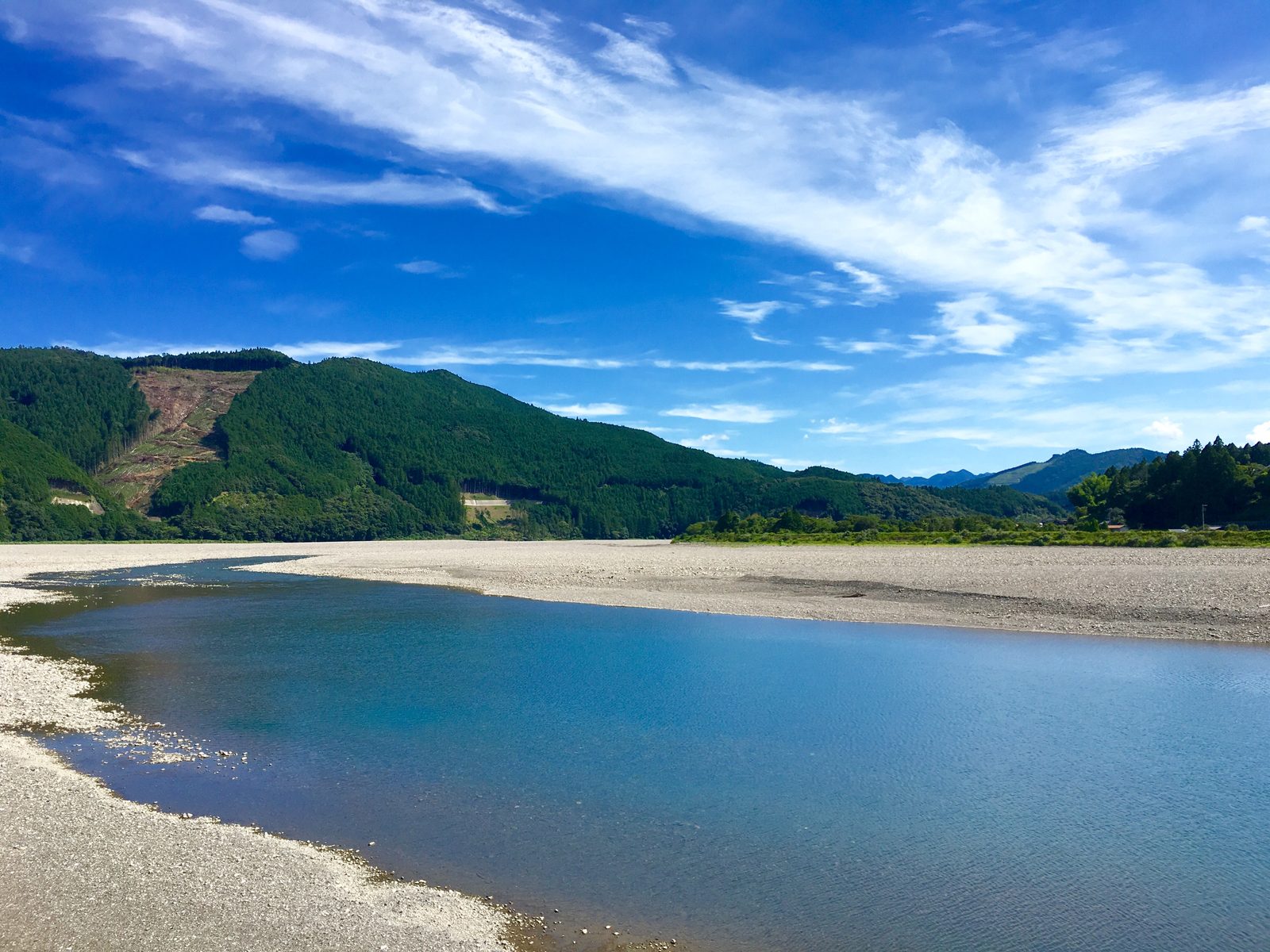
Kumano Hongu Taisha once stood on a sandbar called Oyunohara, at the confluence of the Kumano, Otonashi and Iwata rivers. At Yunomine Onsen, Tsuboyu is a natural hot spring rock bath registered as a World Heritage Site as part of the pilgrimage route, and at Kawayu Onsen the Sennin-buro outdoor bath measures forty metres wide. This guide to a day trip to Kumano Hongu covers all three: the old shrine ground, the rock bath and the riverbed bath.
Kumano Hongu Taisha and Oyunohara: Stone Steps and the Old Shrine Ground
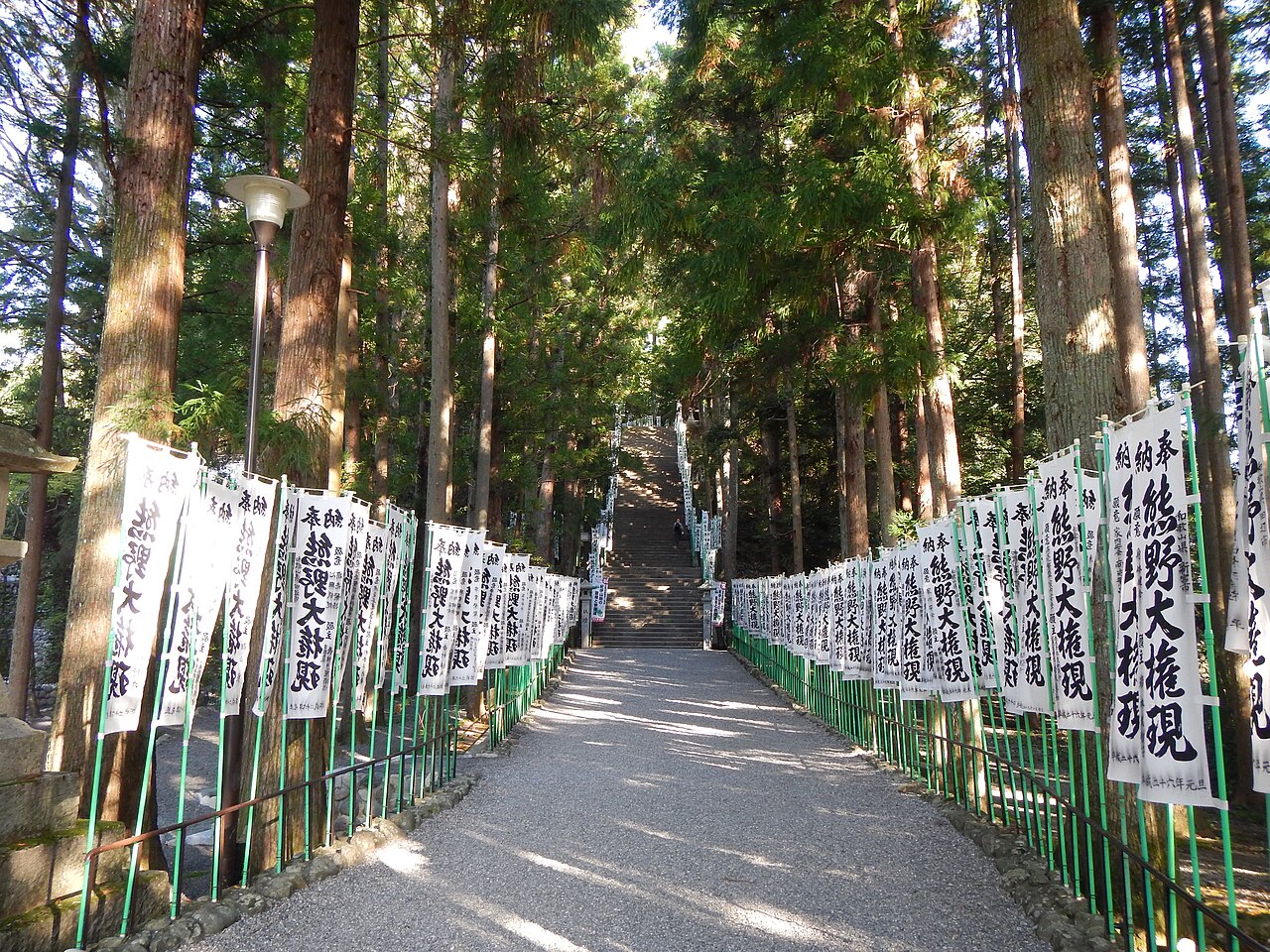
One hundred fifty-eight stone steps lead up to the main shrine building of Kumano Hongu Taisha, and beyond the shrine gate the shrine buildings with their cypress-bark roofs come into view. That makes the approach part of the visit in its own right, with the climb up the steps first and the roofed buildings as the view that waits beyond the gate.
The old shrine ground, Oyunohara, is about five hundred metres from Kumano Hongu Taisha. The walk there from the main sanctuary, crossing the national road, takes about ten minutes on foot. The giant torii seen across the road from the shrine is about thirty-four metres high and about forty-two metres wide.
At Oyunohara, small stone shrines were built to enshrine the washed-away middle four and lower four shrines, which gives the former site a story of its own. With the walk from the main sanctuary so brief, the two belong in a single visit, the shrine and the ground that holds its earlier history. The Hongu branch of the Chinchoan tea room serves matcha with a rice-cake sweet.
Kumano Kodo: Walking Downhill from Hosshinmon Oji to Hongu Taisha
The course from Hosshinmon Oji to Kumano Hongu Taisha is a gentle downhill of about seven kilometres, a shape that suits walkers who want to enjoy a stretch of the Kumano Kodo that ends at the shrine. Hosshinmon Oji can be reached by local route bus from in front of Kumano Hongu Taisha.
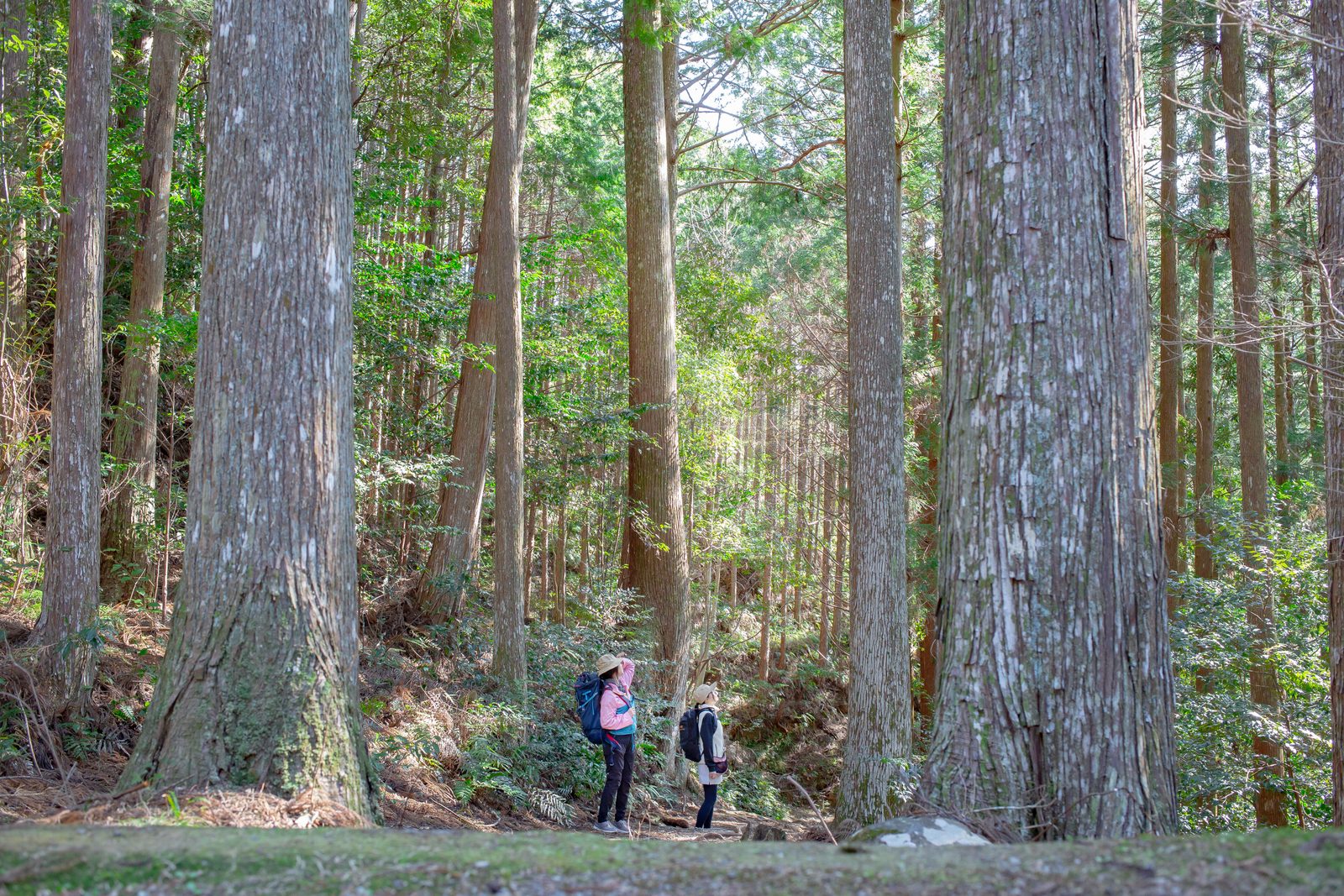
A guided walk covers the route from Hosshinmon Oji to Kumano Hongu Taisha. It meets at nine in the morning. It ends around half past two in the afternoon. On a gentle downhill, that makes an unhurried day's walk rather than a climb. The table below gives the distance and total time for the course.
Yunomine Onsen and Tsuboyu: A Rock Bath in Half-Hour Shifts
Tsuboyu is a natural rock bath that wells up in a valley. It is enclosed only by boards, and it becomes full when two or three people enter, which makes it a bath for a couple or a small family rather than a group soaking together.
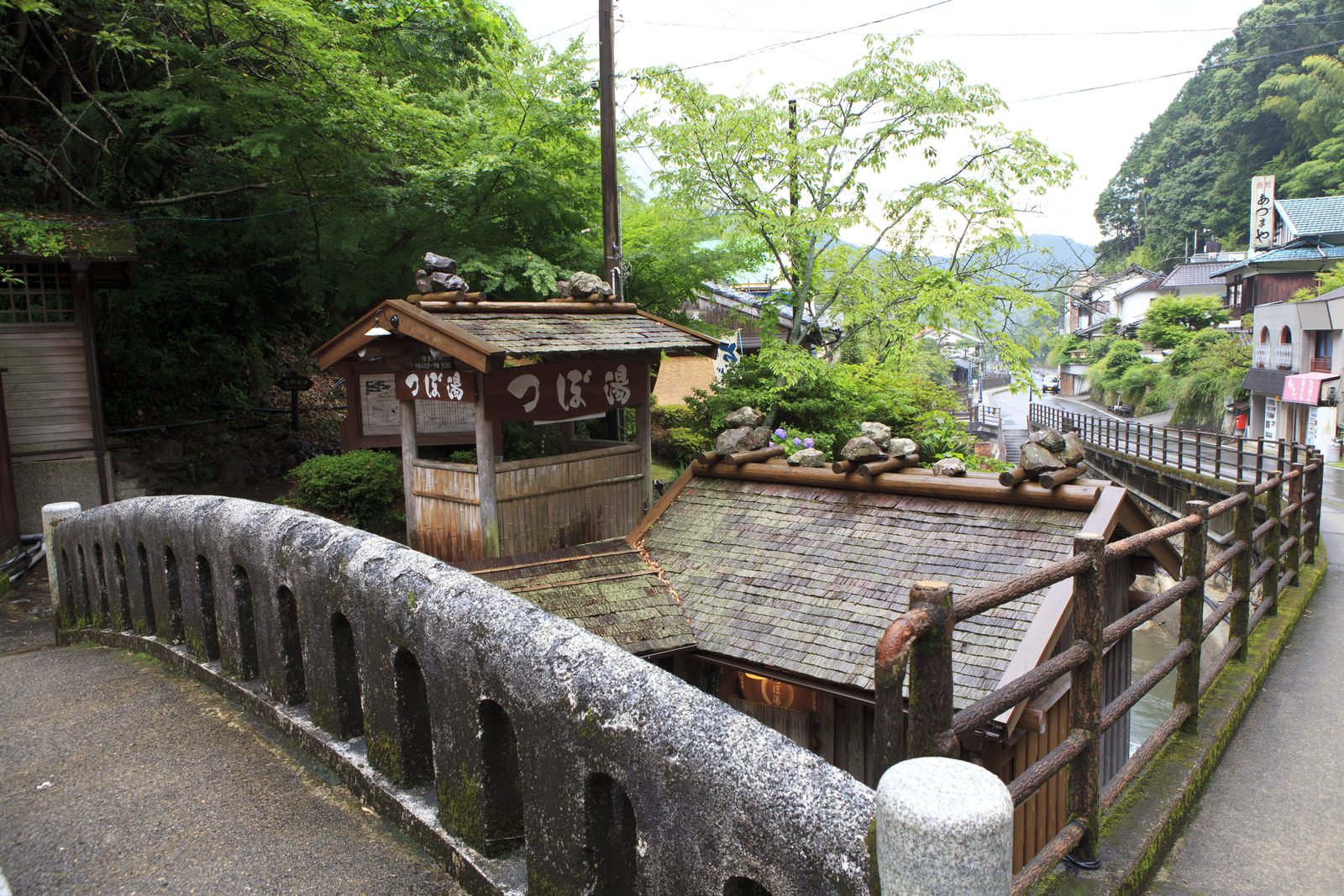
The bath is operated in half-hour shifts. Visitors take a numbered ticket at the public bath counter and wait their turn when it is crowded. With room for only two or three people at a time, a larger party should expect to wait through more than one shift before its soak.
By the river, a hot spring bubbles up where visitors can boil eggs and vegetables, the hands-on part of a visit to Yunomine Onsen and a second use of the hot water alongside the soak in the rock bath. For a party waiting its turn at Tsuboyu, boiling eggs and vegetables is a way to enjoy the hot water in the meantime.
To find the bath on arrival, use Tsuboyu on Google Maps.
Kawayu Onsen: A Riverbed Bath and the Winter Sennin-buro
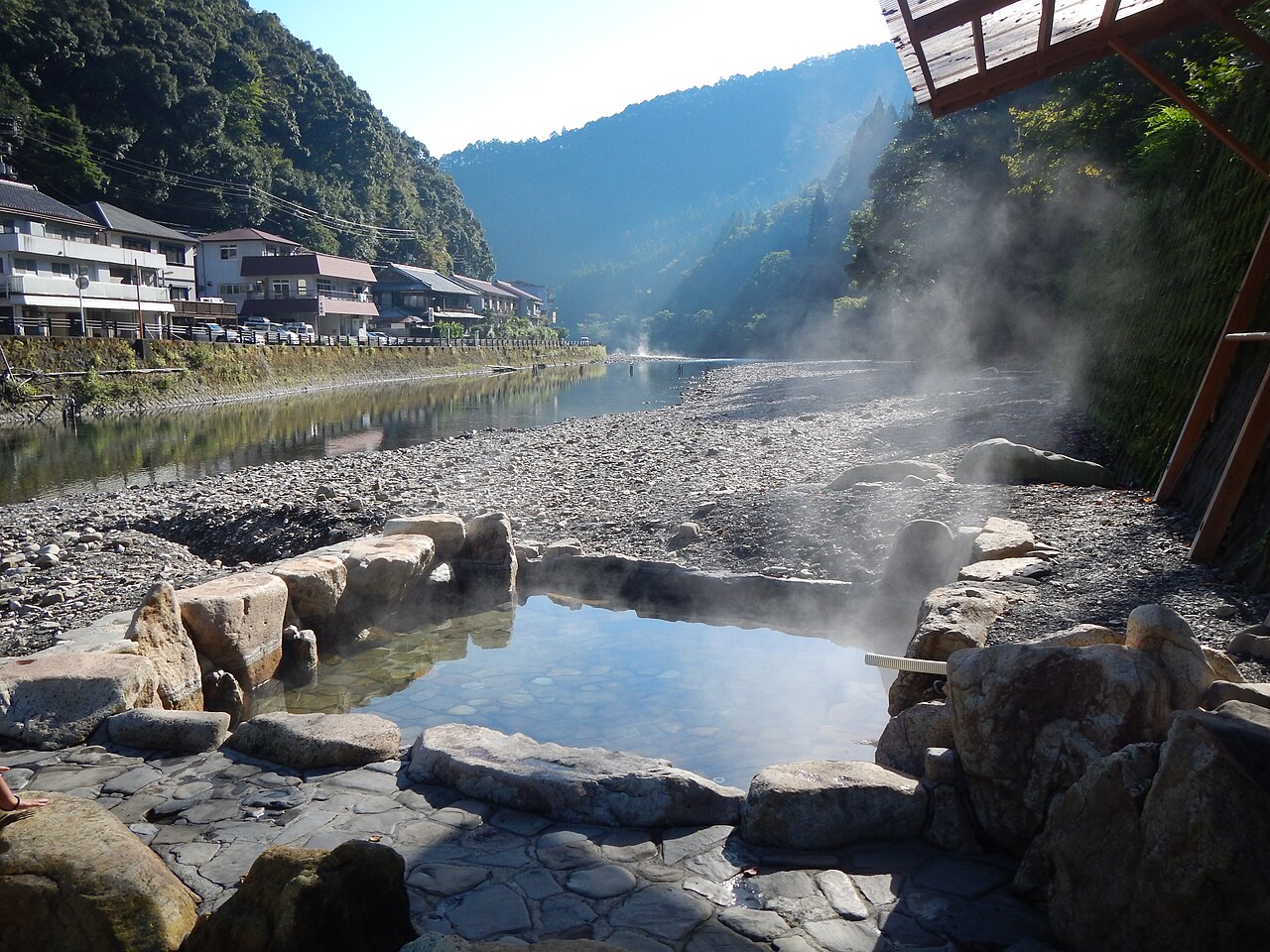
At Kawayu Onsen the hot spring is in the riverbed, and to bathe there means digging in the riverbed rather than stepping into a ready-made tub. The Sennin-buro, the large outdoor bath, usually opens from December to February. That makes winter the season to plan around when a soak in that bath is the reason for coming.
Visitors not staying overnight at Kawayu Onsen are asked to bring their own shovel for digging in the riverbed. The request is addressed to day visitors, one practical difference between passing through and staying the night. Swimwear is required for bathing. A public bath is located very close to the riverbed hot spring, a second way to bathe at Kawayu Onsen for anyone who arrives without a shovel.
To stay overnight near the baths, browse places to stay in Hongu.
Festivals Through the Year: Reitaisai in April, Kenyu-sai in September
The Reitaisai annual grand festival of Kumano Hongu Taisha is held on April thirteenth to fifteenth, and the Yunobori and Miyawatashi rituals are held on April thirteenth. At the old shrine ground, rituals including miko dance, a rice-planting ritual, rice-cake throwing and goma fire rites are performed.
The Kushizaki Daishi festival is held on March twenty-first, and the Kenyu-sai hot spring offering festival is held on September twenty-sixth. For a trip with flexible dates, those festival days give three points in the year to aim for, with the grand festival running over three days.
Outside the annual festivals, a memorial ceremony for Ippen Shonin is held on the twenty-third of every month in front of the Ippen Shonin monument at Oyunohara, which makes it the ceremony a visit in any season can be timed to.
If one day feels too short for both the shrine and the baths, compare places to stay in Hongu and give Yunomine the evening.
Getting to Kumano Hongu
New to rural buses and one-man trains? See how to ride them, step by step.
The legs to Kumano Hongu come first, then the Hosshinmon Oji course.
| Route | Detail |
|---|---|
| Shin-Osaka Station to Kii-Tanabe Station | About one hundred thirty minutes by JR limited express Kuroshio |
| Kii-Tanabe Station to Kumano Hongu by local bus | About one hundred twenty minutes |
| Kii-Tanabe Station to Kumano Hongu by Meiko Bus rapid Kumano Kodo-go | About one hundred minutes |
| Nanki-Shirahama Airport to Kumano Hongu by direct bus | One hundred forty minutes |
| Hosshinmon Oji to Kumano Hongu Taisha, walking distance | Six point nine kilometres |
| Hosshinmon Oji to Kumano Hongu Taisha, total time for the course | About three and a half hours |
Before you ride, locate the shrine stop with Kumano Hongu Taisha on Google Maps.
Hours and Fees
| What | Detail |
|---|---|
| Tsuboyu | Open six in the morning to nine at night; reception until half past eight |
| Tsuboyu, adults | Eight hundred yen admission |
| Tsuboyu, children under twelve | Four hundred yen admission |
| Yunomine Onsen public bath | Open six in the morning to nine at night; reception ends at half past eight |
| Yunomine Onsen public bath, general bath | Four hundred yen for adults, two hundred yen for children under twelve |
| Kawayu Onsen public bath | Open half past six in the morning to eight at night; reception until half past seven |
| Kawayu Onsen public bath, admission | Two hundred fifty yen for adults (junior high school students and older), one hundred thirty yen for children |
| Kumano Hongu Taisha treasure hall | Three hundred yen for adults, one hundred yen for children; group discounts available |
| Chinchoan tea room, Hongu branch | Nine in the morning to four in the afternoon |
Fees and hours were checked against official sources between 10 October 2026 and 19 November 2026.
Thinking of staying overnight?
Compare places to stay near Hongu, Wakayama, Japan →
Disclosure: This post may contain affiliate links. If you book through them, we may earn a commission at no extra cost to you.