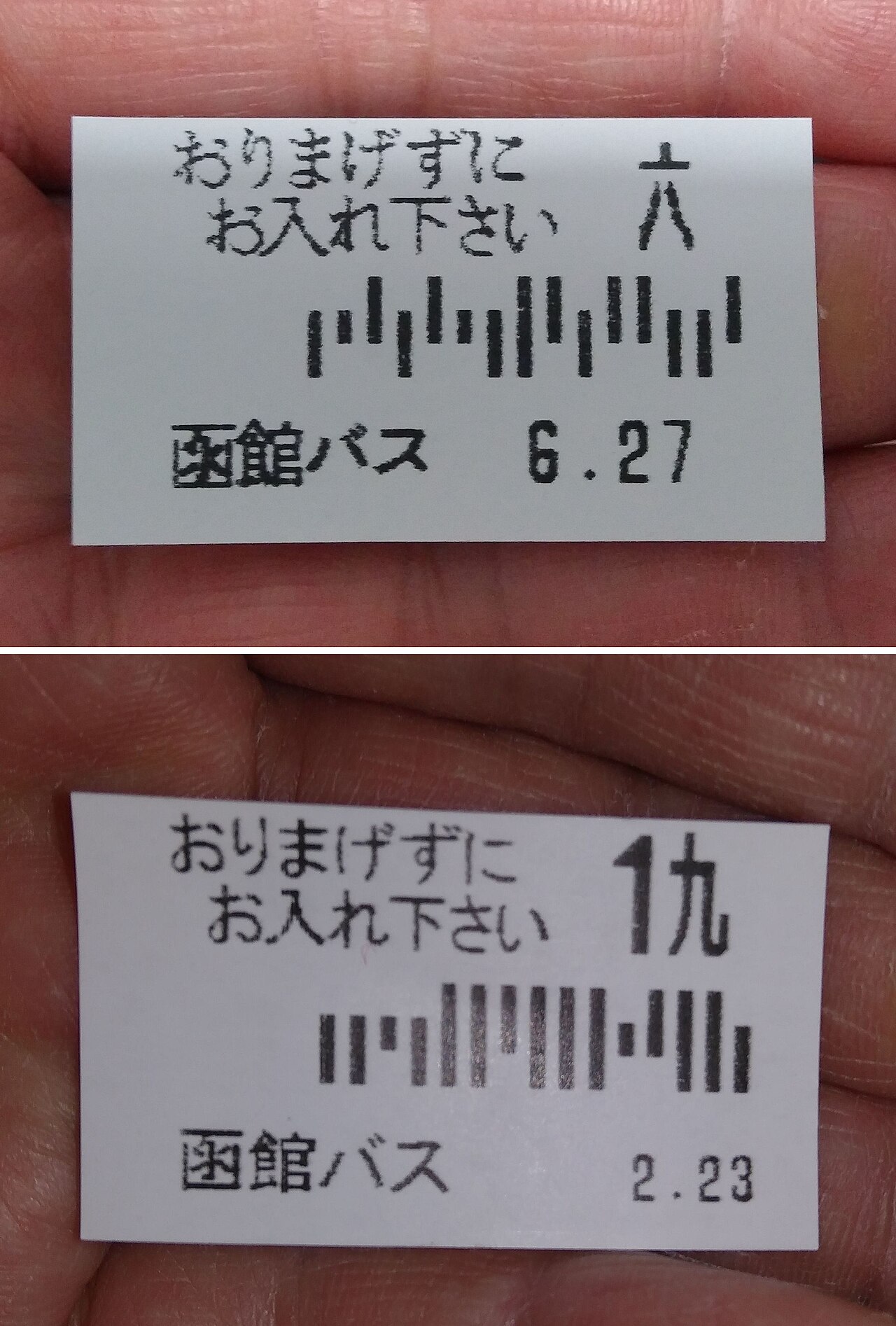
Many rural bus routes and one-man trains in Japan are paid for after the ride: you take a numbered ticket or touch an IC card when you board, then read the fare on the display and pay at the fare box when you get off. An IC card does not work on every route: Shimabara Railway does not take transport IC cards on its one-man train.
This guide draws on the websites of Ichibata Bus, Iyotetsu, Miyazaki Kotsu, Shimabara Railway and Toyama Chiho Railway, and on the ICOCA pages of JR West and JR Shikoku and the TOICA page of JR Central. It does not describe other operators or rules for the whole country.
Where an IC Card Stops Working
On the one-man train run by Shimabara Railway, transport IC cards, which are electronic money, cannot be used. Ichibata Bus does not take PiTaPa postpay on its buses, and the card has to be charged in advance before you board.
In the ICOCA area of JR West, ICOCA cannot be used for a trip that exceeds 200 km in business kilometres, with exceptions such as travel within the Osaka suburban zone. On JR Shikoku, travel within the ICOCA area is limited to 200 km or less in business kilometres from the entry station to the exit station.
If you ride past the edge of the usable area with an IC card on JR Shikoku, you tell the station staff or the conductor at the station where you get off, and the fare from the boarding station is paid in cash.
In the ICOCA area, a card with a balance of 0 yen cannot enter the gates. In the manaca area, entry is possible even with a balance of 0 yen. In some areas, including PiTaPa, nimoca and SUGOCA, entry is not possible when the card balance is under 10 yen.
Boarding: Take a Numbered Ticket or Touch In
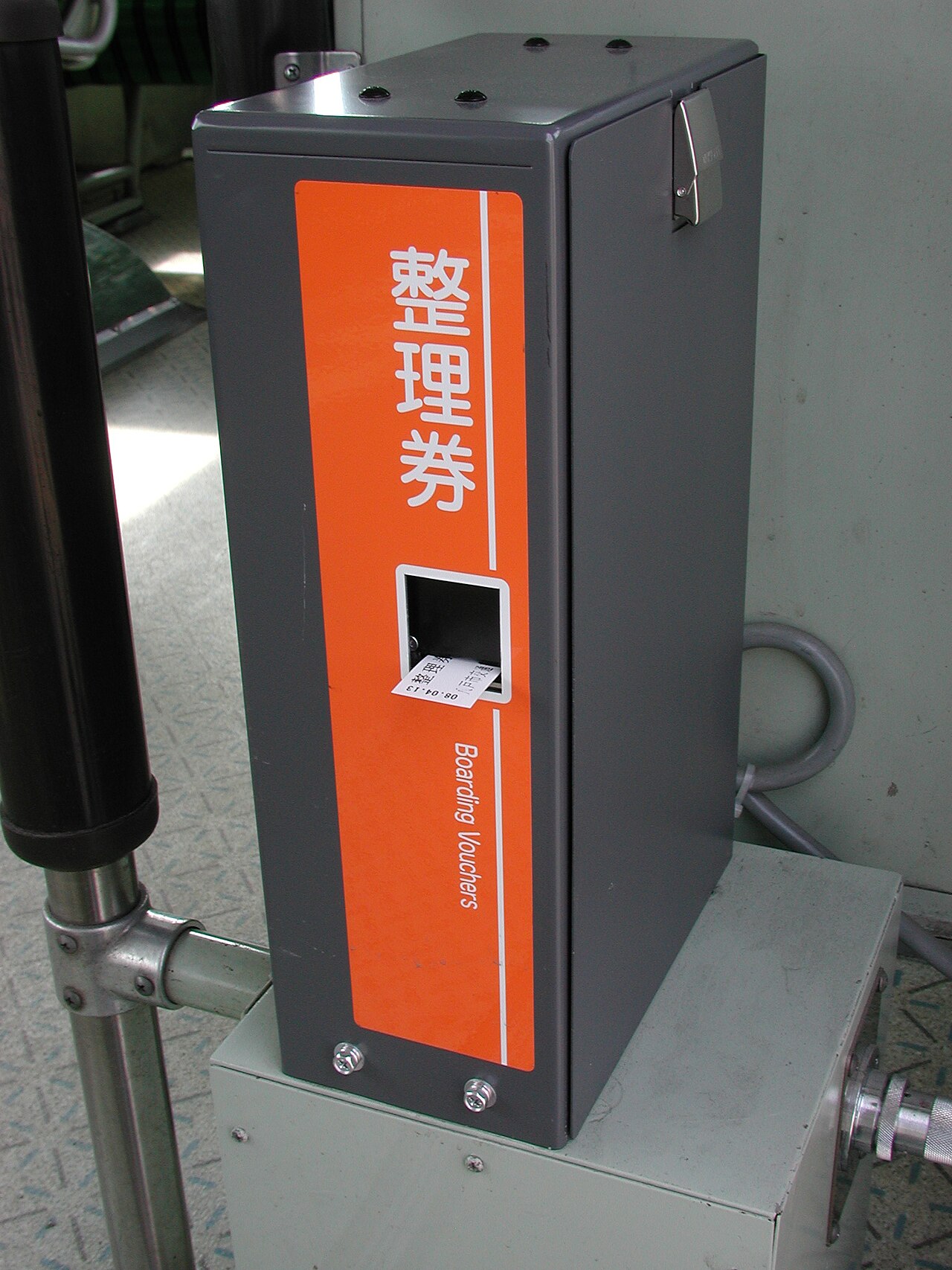
- Take a numbered ticket when paying with cash or a paper ticket. On Ichibata Bus, when you board with cash, coupon tickets, a paper commuter pass or another ticket, you take a numbered ticket from the ticket dispenser.
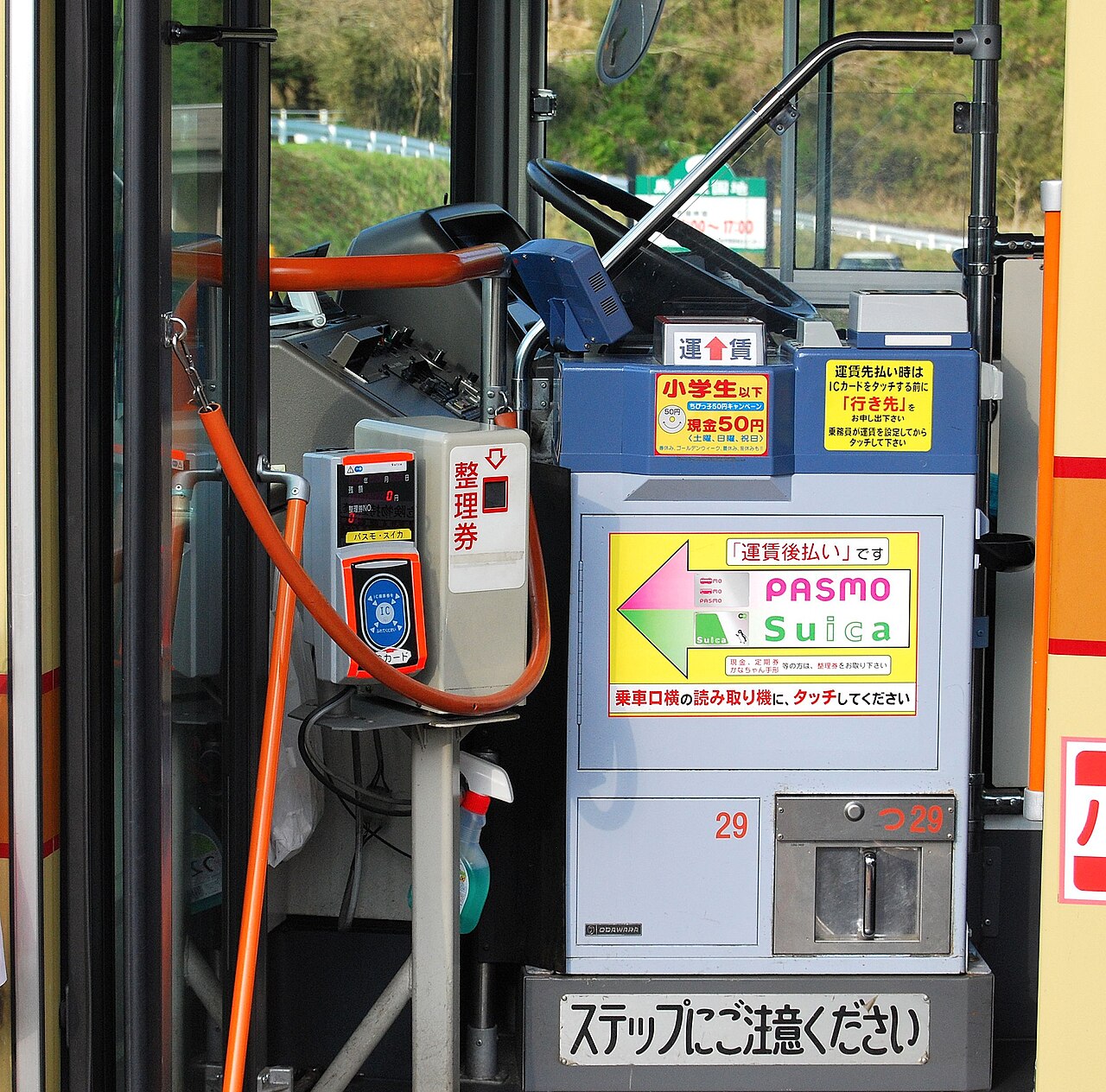
- Touch in with an IC card. On Ichibata Bus, when you board with an IC card, you touch it to the blue IC card reader.
- On Iyotetsu, take the ticket at the boarding door. On Iyotetsu route buses, excluding expressway buses, passengers take a numbered ticket at the boarding door.
- On Miyazaki Kotsu, touch in or take a ticket. When you board a Miyazaki Kotsu local bus, you touch your transport IC card, or you take a numbered ticket if you are paying in cash.
On a one-man train of Shimabara Railway, passengers always take a numbered ticket when they board at a station without station staff. Passengers who hold a ticket, a coupon ticket or a commuter pass also take a numbered ticket when they board the one-man train.
On Toyama Chiho Railway, you take a numbered ticket from the ticket machine near the boarding door after you board. On Toyama Chiho Railway, at stations without station staff, the doors of the first car alone open; passengers board through the rear door of that car and get off through the front door.
Compare options
See partner pricing and availability →
Disclosure: This post may contain affiliate links. If you book through them, we may earn a commission at no extra cost to you.
Reading the Fare Display and Paying When You Get Off
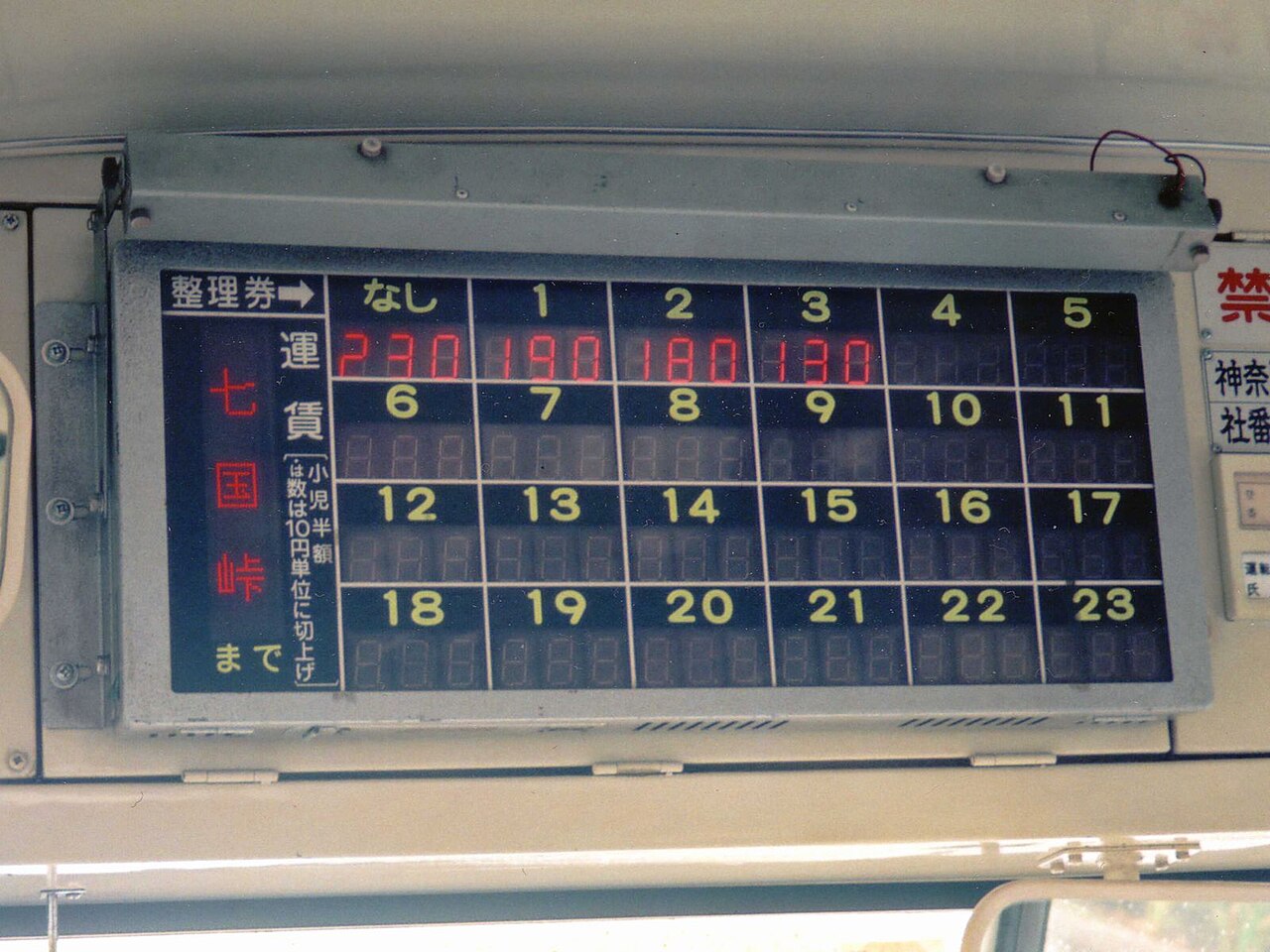
- Watch the fare display. On Ichibata Bus, once your stop appears on the display, you compare the fare display with the number on your numbered ticket to check the fare.
- Match the number on your ticket. On Iyotetsu route buses, you check the fare by matching the number on the numbered ticket you hold with the fare display at the front.
- Put the ticket and the fare in the box. On Ichibata Bus, when you pay with cash or coupon tickets, you put them into the fare box together with the numbered ticket.
- Touch out with an IC card. On Ichibata Bus, when you pay with an IC card, you touch the card you used at boarding to the yellow IC card reader.
| Operator | When you get off |
|---|---|
| Iyotetsu | Route buses: the numbered ticket and the fare go into the fare box when you get off |
| Miyazaki Kotsu | Local buses, paying cash: the numbered ticket and the prepared money go together into the fare box when you get off |
| Toyama Chiho Railway | The numbered ticket and the fare go into the fare box at the front of the vehicle, and no change is given |
| Shimabara Railway | The fare box is next to the driver's seat by the front alighting door, and fares are paid there when you get off |
On Miyazaki Kotsu local buses, the fare is paid after riding, when you get off, by transport IC card or in cash. For Iyotetsu city trams, the fare is paid after riding as well, and it goes into the fare box when you get off.
On Ichibata Bus, the child fare is half of the adult fare, with fractions under 10 yen rounded up. On the one-man train of Shimabara Railway, the fares shown on the fare table are adult fares, and the child fare is half, with fractions rounded up to 10 yen units.
Change Machines and Coins
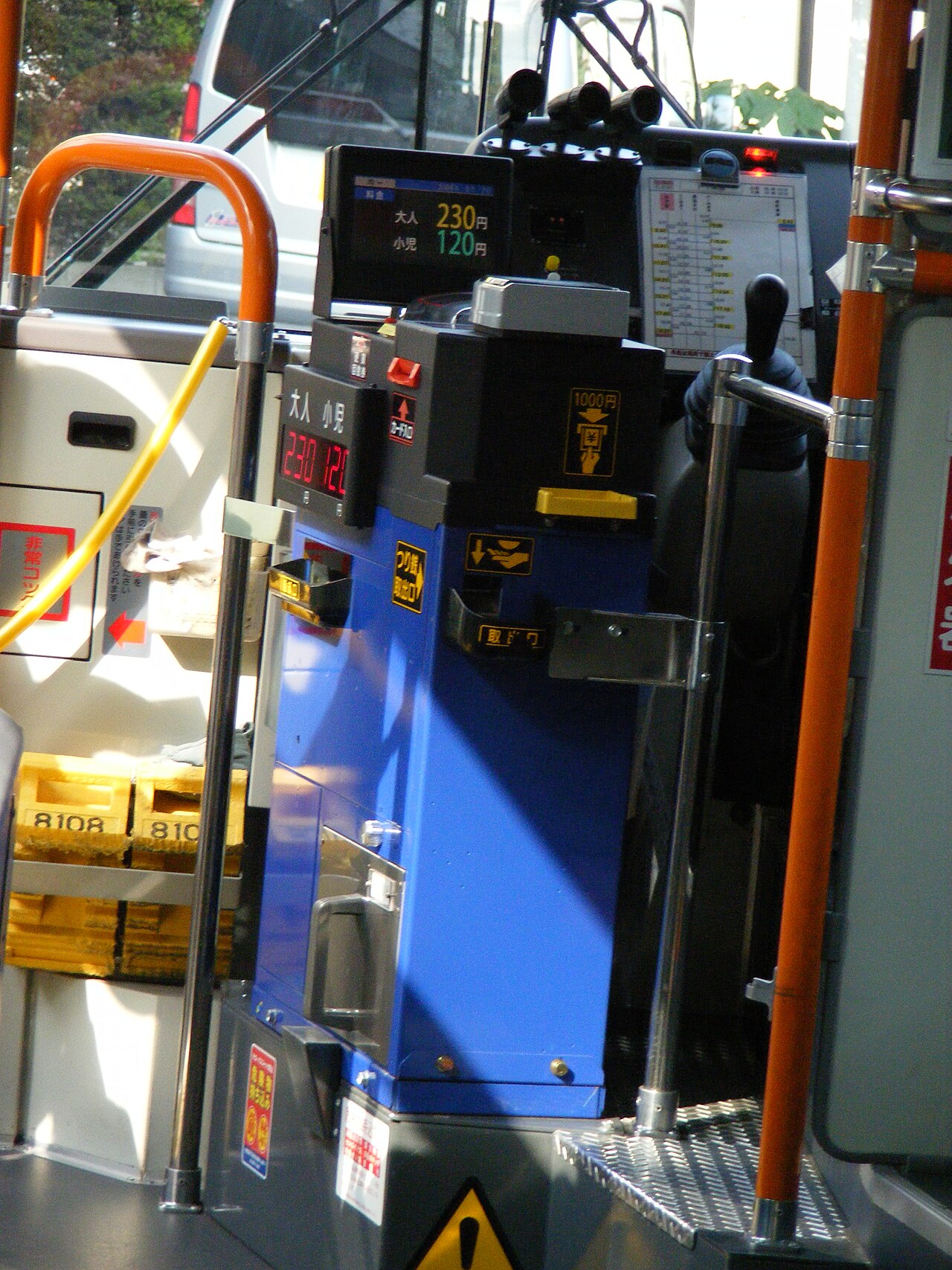
On Ichibata Bus, no change is given on the bus, so you exchange money in advance. On Ichibata Bus, charging ICOCA on board the bus is done with cash alone. On Iyotetsu route buses, no change is given either, and passengers use the change machine on the fare box before putting money in.
Miyazaki Kotsu local buses use a change-machine system, and if you need change you use the change machine at the front when the bus is stopped. The change machine on Miyazaki Kotsu local buses cannot change a new 500 yen coin, a 5,000 yen bill or a 10,000 yen bill.
On Shimabara Railway's one-man train, no change comes back when cash or a ticket goes into the fare box with the numbered ticket. The change machine on the front fare box is for exchanging money. This machine exchanges 1,000 yen, 500 yen, 100 yen and 50 yen. On Toyama Chiho Railway, you exchange money when the train is stopped.
Buying and Topping Up ICOCA in Shikoku
A SHIKOKU ICOCA card is sold for 2,000 yen per card, including a 500 yen deposit. On JR Shikoku, ICOCA cannot be charged with anything but cash, except for SMART ICOCA quick charge. A charge that would bring the balance on the card above 20,000 yen is not possible.
On JR Shikoku, the ICOCA charge amounts that can be selected at the charge machine are 1,000 yen, 2,000 yen, 3,000 yen, 5,000 yen and 10,000 yen. For SMART ICOCA quick charge, the amounts that you can select are 3,000 yen, 5,000 yen and 10,000 yen.
Related Guides
For more on riding and paying, see our rural transport guide, our guide to cash and ATMs and the last departures of the day. You can also read about a day around Shimabara Castle. Fares, card acceptance and charge amounts can change. Check official information before visiting. If your trip starts in Tokyo, you can browse day trips from Tokyo.