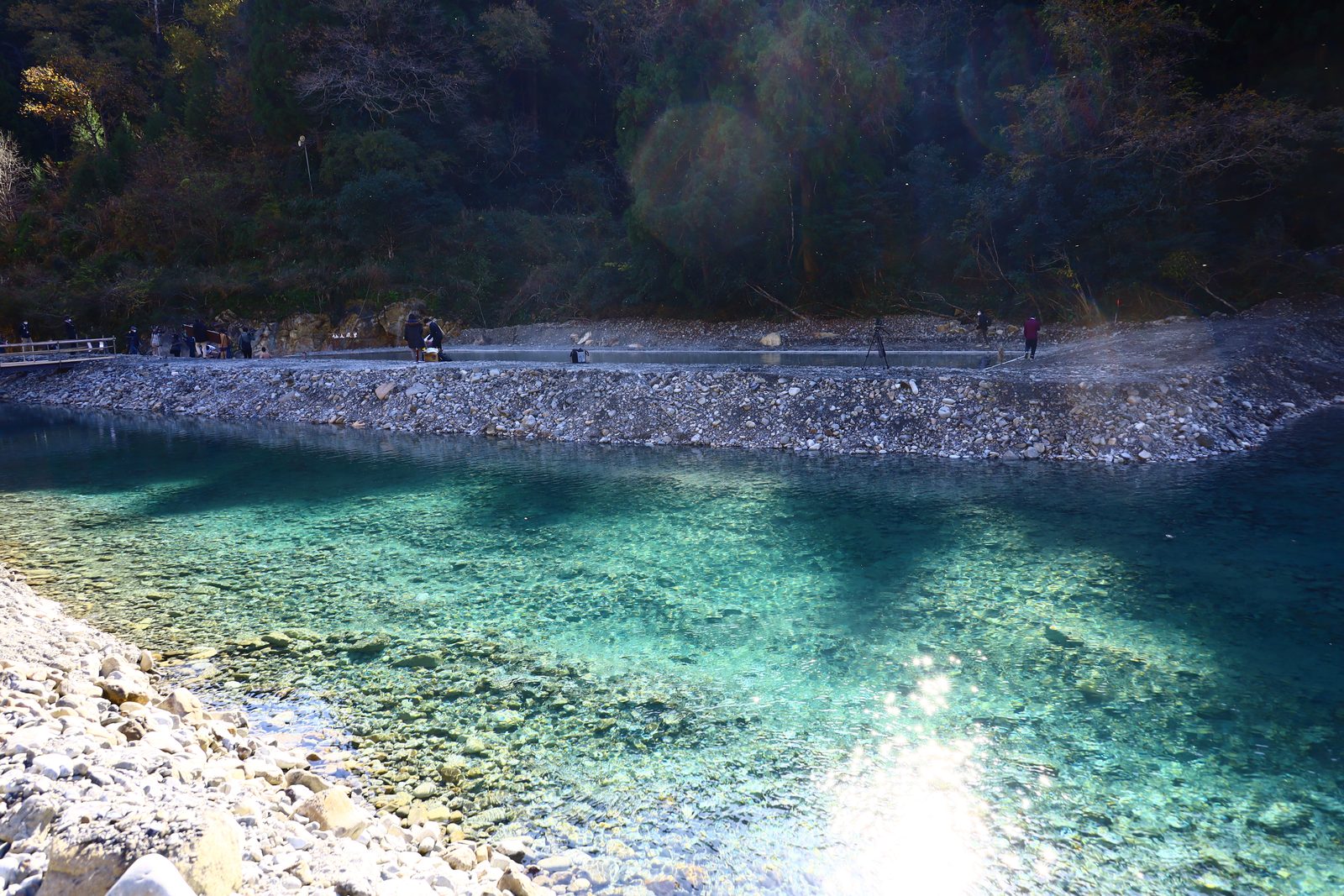
At Kawayu Onsen, digging into the river bed makes hot water well up at once, and each hole dug in the riverbank becomes a tub to soak in. In summer the hot water warms a body chilled by river play. In winter the large outdoor bath called the Sennin-buro appears.
Digging Your Own Bath in the Kawayu Riverbed
Source water of over seventy degrees keeps welling up from the river bed, and the Ohtou River, a tributary of the Kumano River, mixes with it to make a suitably warm hot spring. Dig a hole in the gravel anywhere along the riverbank and hot thermal water percolates in to form a bath for a soak. Diverting cold river water into the mix regulates the temperature of the warm water.
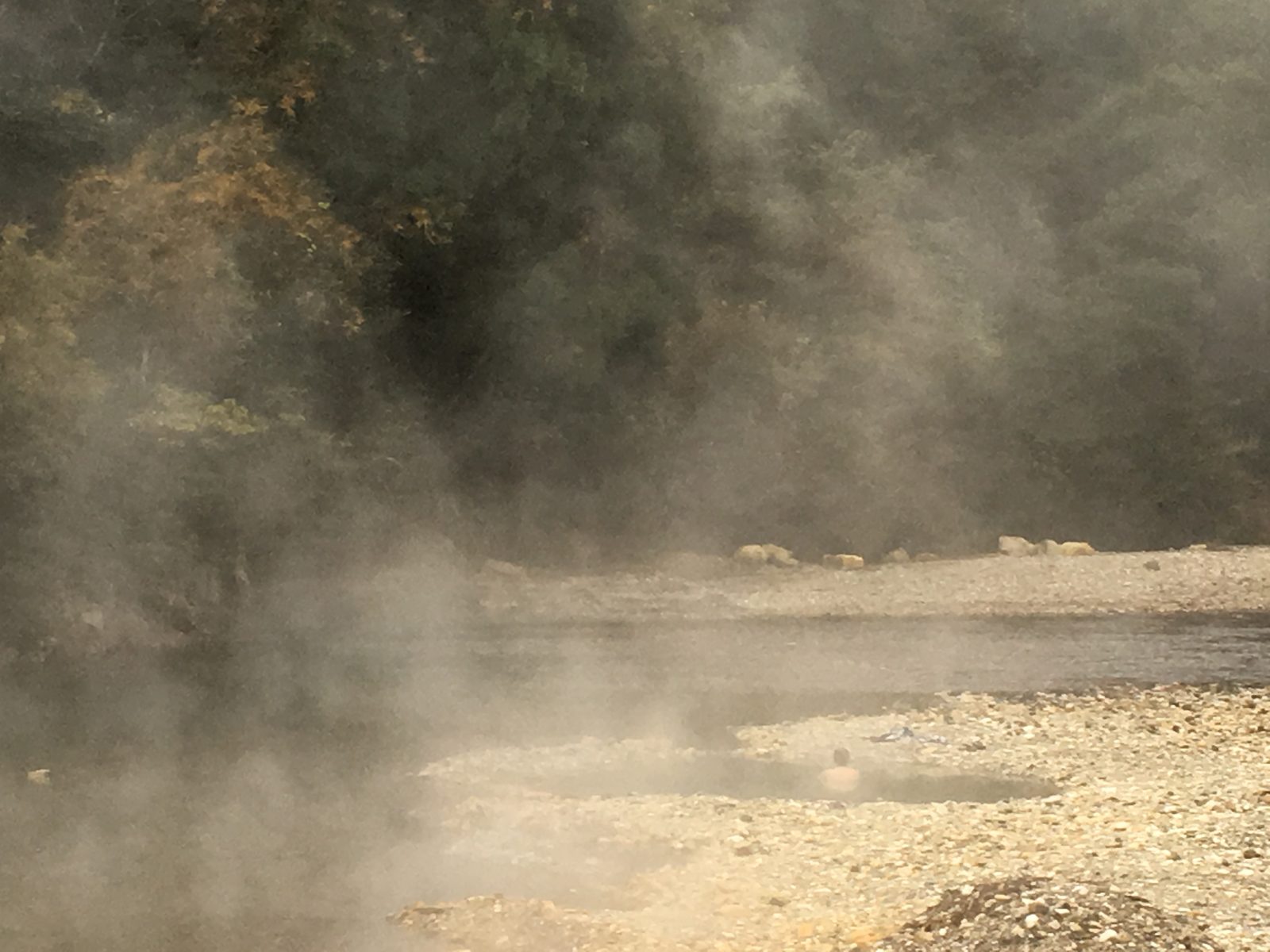
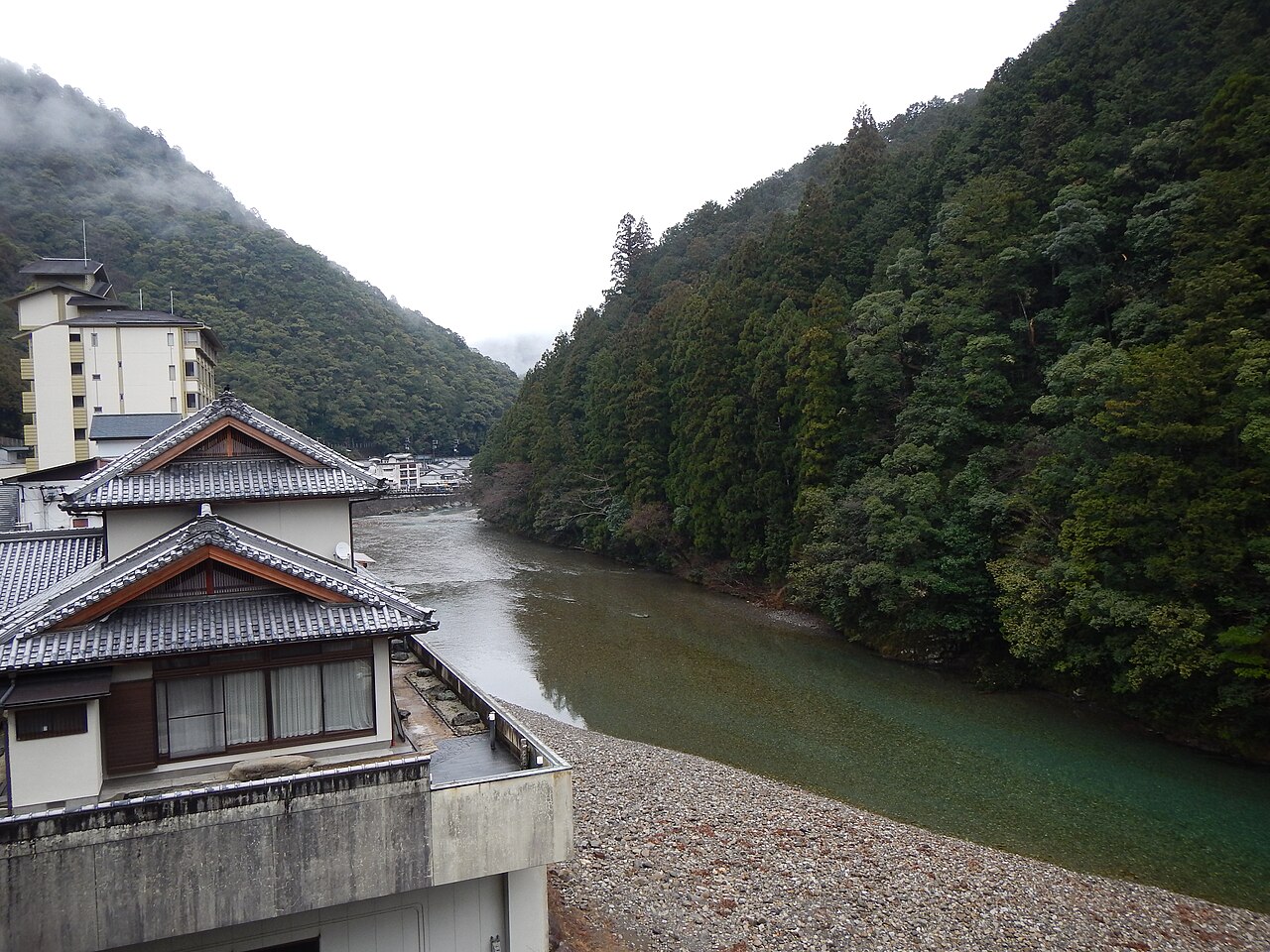
In summer, people play in the pristine currents of the Ohtou River while soaking in the warm waters of the onsen. On the south side of the river is a green forested mountainside. Visitors who would rather not dig can soak in one of the basins that have already been dug.
Visitors who are not staying at one of the local lodgings are asked to bring a shovel and dig in the river bank, while many of the accommodations in Kawayu have shovels for their guests to use. Swimwear is required for the river-bed bath.
The Sennin-buro, a Winter Bath Dammed from the River
The Sennin-buro is a large outdoor bath made by damming the Ohtou River, and its size changes from year to year because it depends on nature. Source water welling up from the riverbed at seventy-three degrees is mixed with clear water from the river and adjusted to around forty degrees for a warm soak.
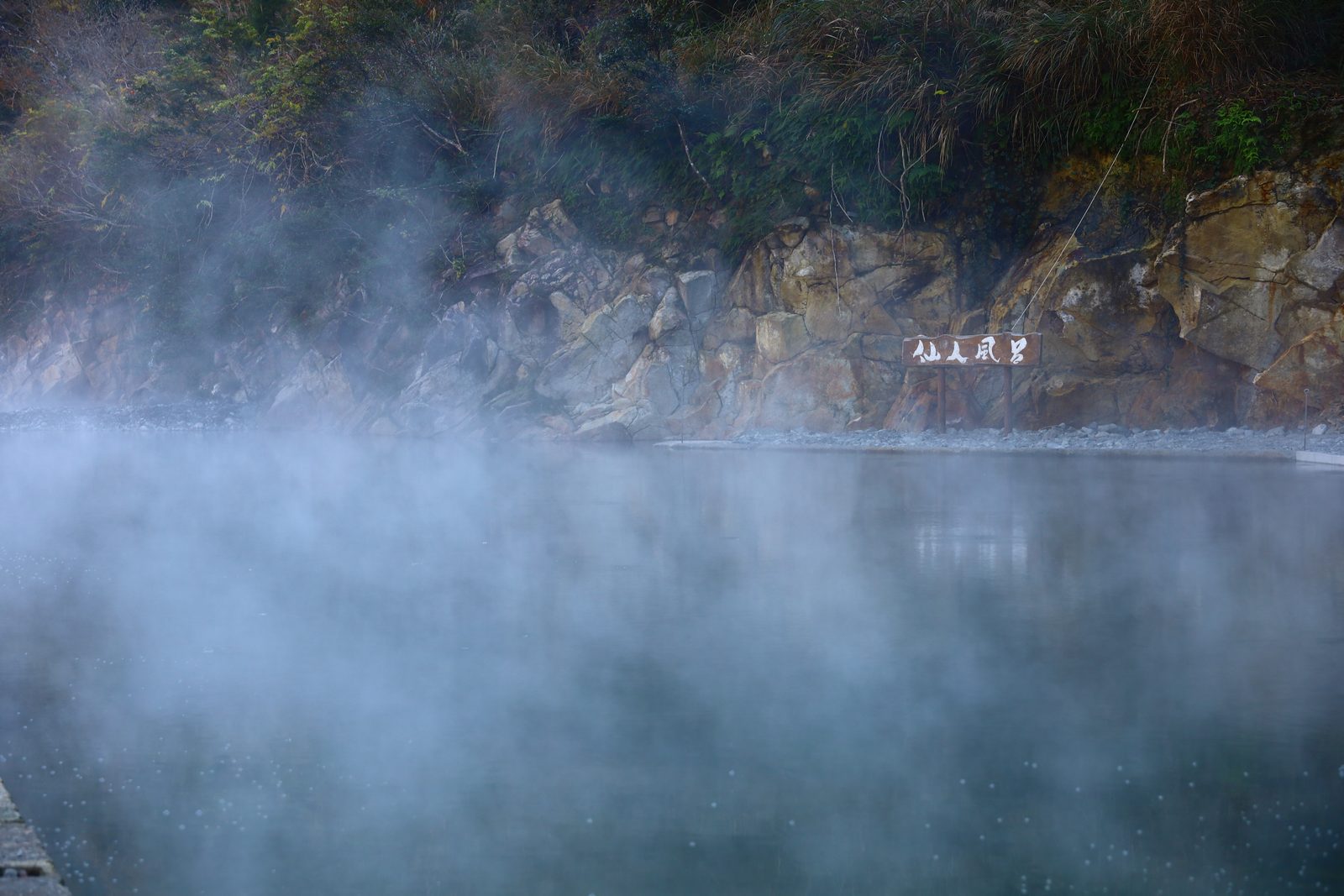
The bath is surrounded by nothing more than a reed-screen enclosure, and bathers look up at the blue sky and the stars. At the lantern evenings, bamboo-tube lanterns are lined up and the river bed is wrapped in a fantastic light.
During the Sennin-buro season, digging a bath of your own is not allowed. Soap and shampoo are prohibited at the Sennin-buro.
Kawayu's Bathhouse, Wataze and the Guardian Deity
Kawayu's old-fashioned, simple public bathhouse pipes in source water that wells up from the river bed, so visitors can soak in fresh hot water at any time. The local suggestion is to soak there after river play in summer, and to use it together with the Sennin-buro in winter.
Juni Yakushi is the guardian deity of Kawayu Onsen, said to be beneficial for prayers for recovery from neuralgia and internal diseases. Once a year a rope is stretched across to the opposite bank and fried foods are hung on it as offerings to the deity. At the festival, the fried offerings on display include ones that look about to start dancing and ones themed on the zodiac animal.
At Wataze, day visitors can also bathe in the large outdoor bath, and the bathing facilities include a bubble bath and a lying bath. There is a dining hall serving noodles and rice-bowl dishes, and a souvenir shop.
Yunomine: Steaming Eggs at the Yuzutsu and the Rock Bath Tsuboyu
Yunomine Onsen, another hot spring town of Kumano, is a small collection of inns tucked into a small valley in the sacred mountains. Steam rises from the stream running past the row of simple inns. By the stream is the Yuzutsu, a hot well where spring water at ninety degrees bubbles up with a gopogopo sound and eggs and vegetables can be boiled.
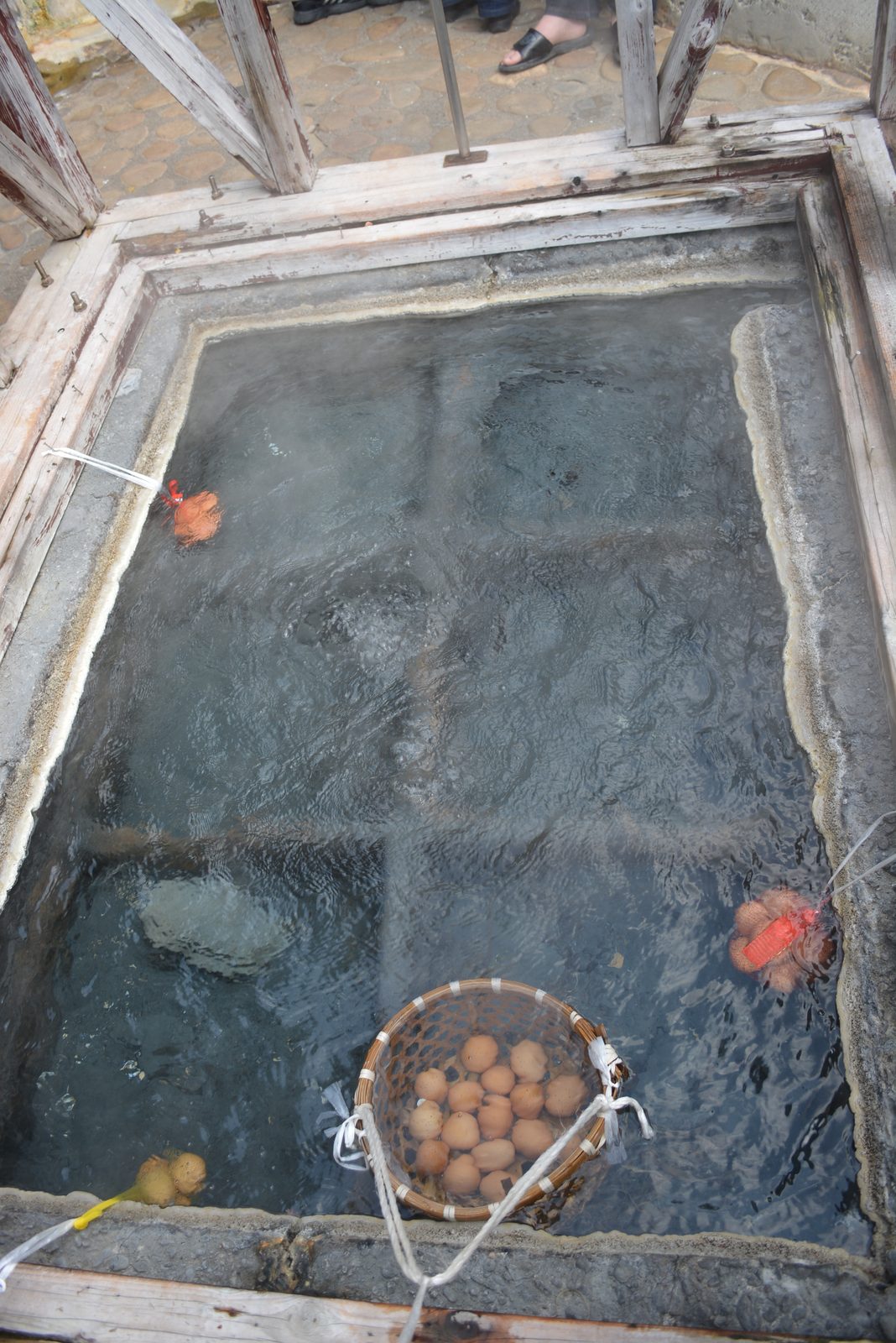
Everyday eggs and vegetables can be seen boiling in nets dangled from the wooden frame around the hot well. Eggs and vegetables for boiling can be bought at souvenir shops and similar places.
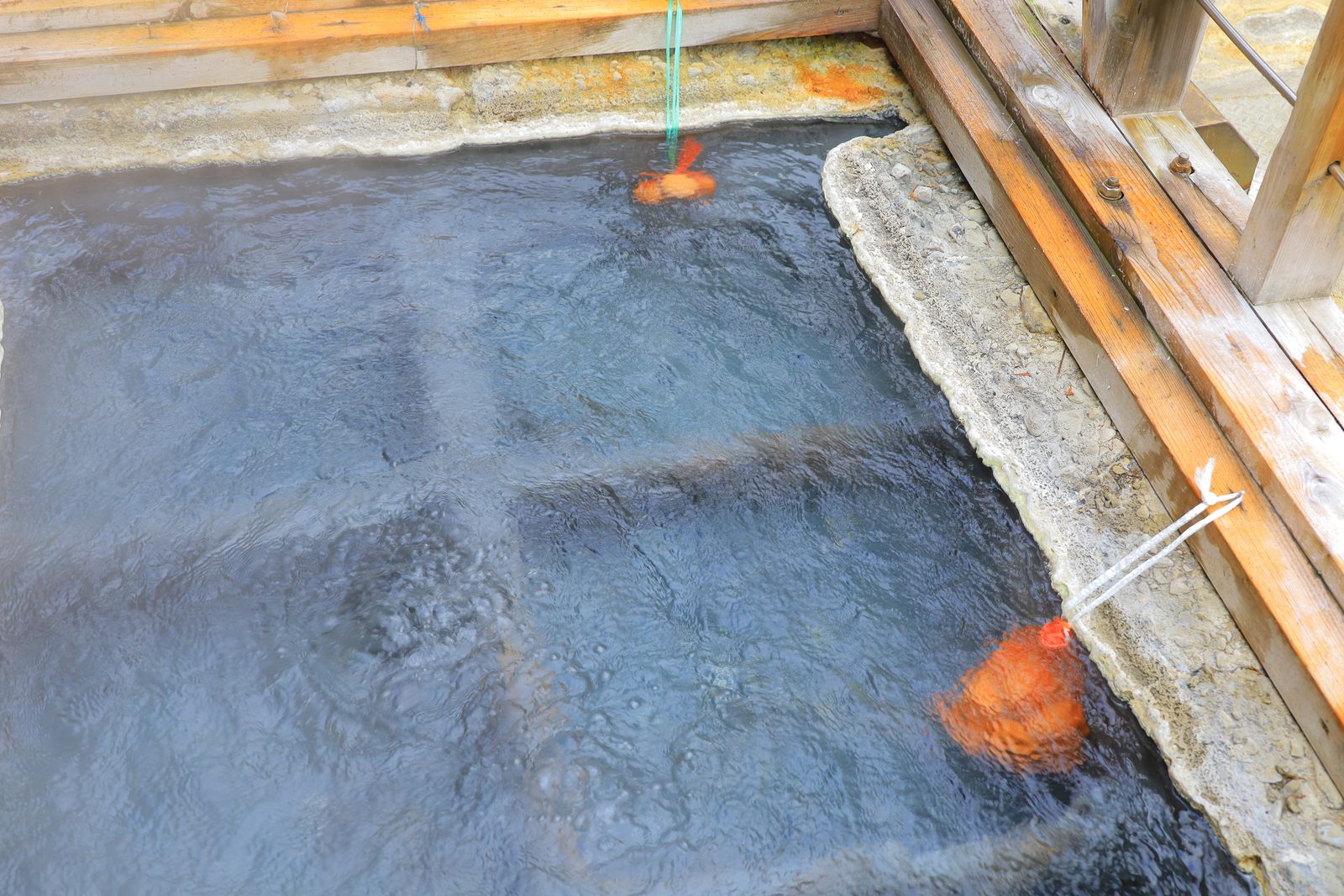
Tsuboyu is a bathing spot of natural rock enclosed only by boards, it fills up when two or three people enter, and its water is said to change colour seven times a day. Pilgrims of old performed yukagori, hot-water purification, at Yunomine during the Kumano pilgrimage, and Tsuboyu was registered as a World Heritage site as a purification place for that pilgrimage. It is said that Hangan Oguri was restored to health in the waters of Tsuboyu.
A Detour to Kumano Hongu: Shrine Steps, Falls and Flowers
At Kumano Hongu Taisha, banners flutter on both sides of the long flight of stone steps leading to the main hall, and thick cedar trees grow there. The shrine once stood on the sandbar of Oyunohara, where the gods are said to have descended. Until the Edo period no bridge was built to the sandbar, and worshippers walked across the river and wet the hems of their kimono before worshipping.
On the old road, visitors can listen to the sound the clear streams make, and the light on the Kumano Kodo changes colour between morning and evening. The falls that hang in a tributary valley of the Kumano River are said to be elegant, and can be seen only from the top of the falls. Many kinds of wild flowers and grasses show up beside the old road in each of the four seasons. Once the cherry blossoms come out, Kumano Hongu is dressed in pink and the season is fully spring.
Meals in Kawayu and Hongu
A cafe in Kawayu serves a wild sweetfish set meal and home-made mehari sushi. In Hongu, a tea house serves siphon-brewed coffee, home-made Kumano beef dry curry and cake sets while the great torii of Oyunohara can be seen. A restaurant serves Kumano beef, udon and rice bowls with the Kumano River seen from its windows.
To stay overnight in the area, browse places to stay around Hongu.
Getting to Kawayu Onsen
New to rural buses and one-man trains? See how to ride them, step by step.
| Leg | How | Time or fare |
|---|---|---|
| Hongu Taisha-mae to JR Kii-Tanabe Station | Ryujin Bus | About two hours |
| Hongu Taisha-mae to Shingu Station | Kumano Gobo Nankai Bus or Nara Kotsu route bus | Eighty minutes |
| Tanabe city area or Nankishirahama Airport to Kawayu Onsen, via Nakahechi, Yunomine Onsen and Wataze | Kumano Hongu line bus | Stops at Kawayu Onsen |
| Yamato-Yagi Station to Kawayu Onsen | Yagi-Shingu line bus | Adult one-way fare four thousand eight hundred fifty yen |
Hours and Fees
| Place | What | Hours and fee |
|---|---|---|
| Sennin-buro | Winter river bath, December to February | Half past six in the morning to ten at night; last entry half past nine at night |
| Sennin-buro | Notes | Bathing may be stopped depending on the weather and on the state of the river and the water temperature; opening may be delayed with the weather; lantern evenings every Saturday from eight to ten at night during the bath's open period; free parking, about thirty-six spaces, about two hundred metres downstream |
| Kawayu public bathhouse | Public bath | Half past six in the morning to eight at night, last entry half past seven; adults three hundred yen; children two hundred yen |
| Wataze large open-air bath | Bathing for visitors not staying overnight | Six in the morning to ten at night, last entry half past nine at night; adults one thousand yen; children five hundred yen |
Fees and hours were checked against official sources on 11 November 2026.
Thinking of staying overnight?
Compare places to stay near Hongu, Wakayama, Japan →
Disclosure: This post may contain affiliate links. If you book through them, we may earn a commission at no extra cost to you.