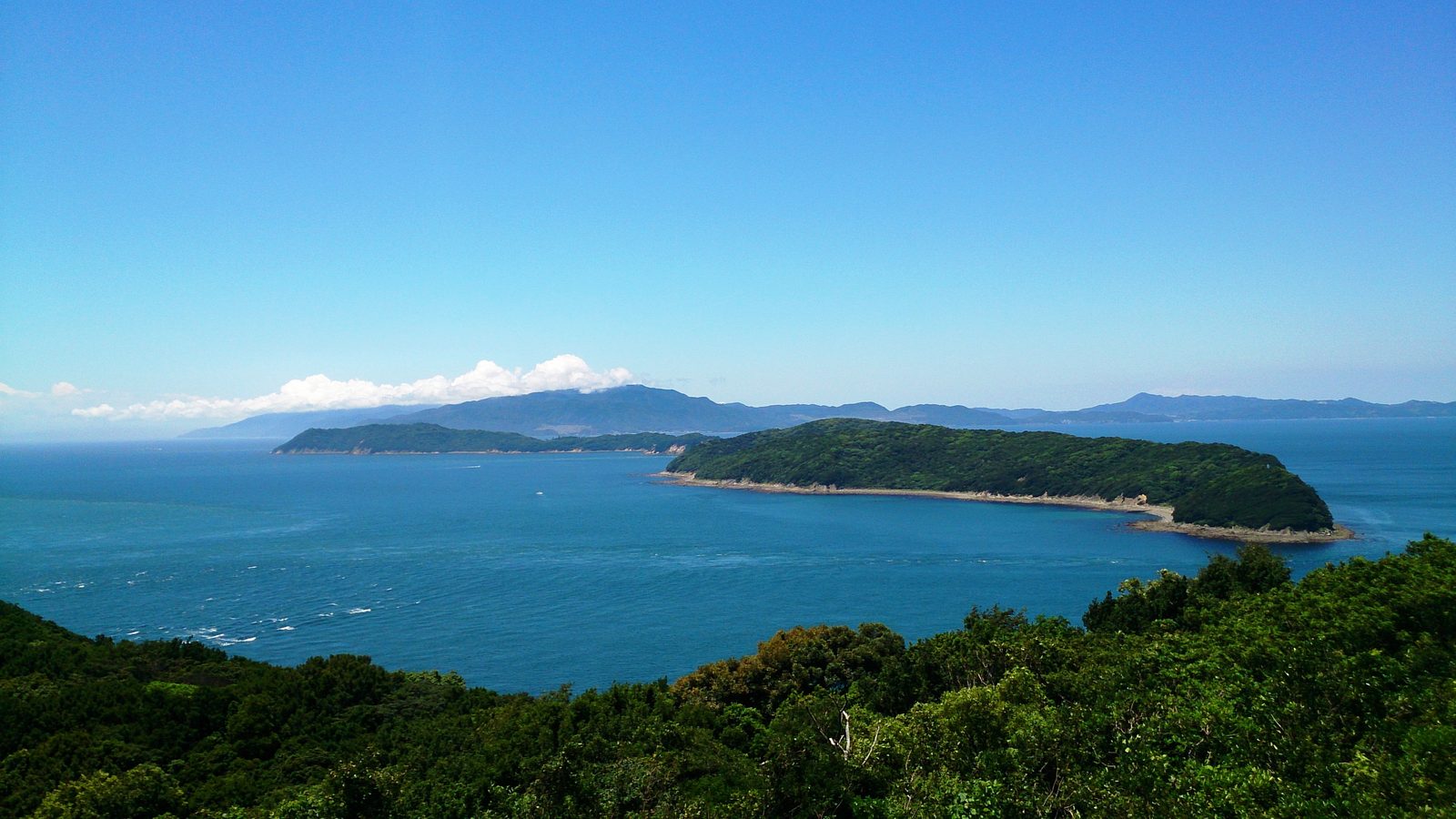
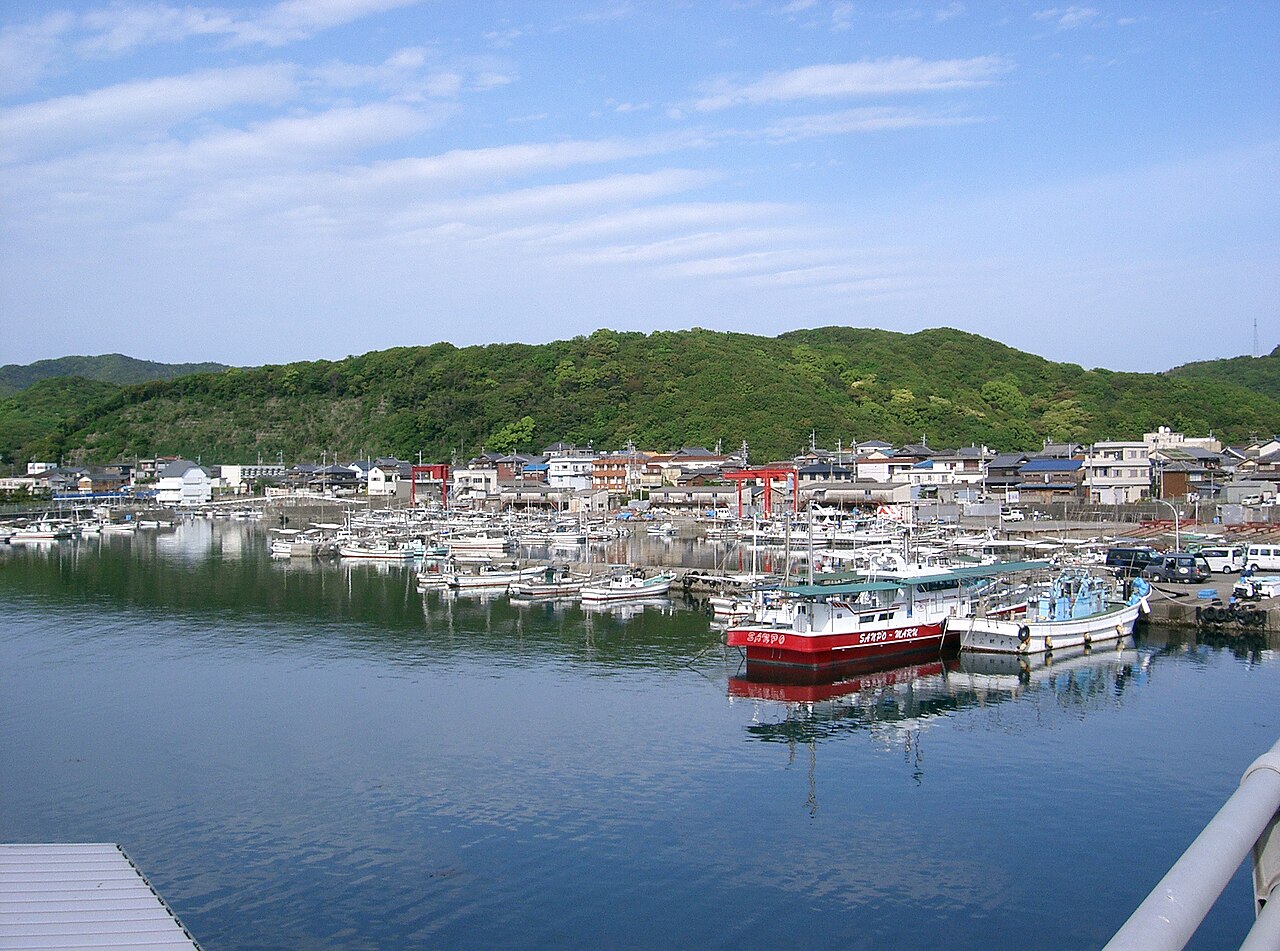
An old gazetteer places Kada in the west-northwest of Wakayama city, a port town at the northeastern corner of the Kii Channel. From its port a boat crosses to Tomogashima, a cluster of islands where, as guidebooks describe, weathered gun batteries remain from its years as a fortress, and back on the mainland Awashima Shrine fills its grounds with dolls sent from across Japan. Here is how a Tomogashima day trip from Kada, Wakayama, fits together.
Getting to Kada and across to Tomogashima
Getting to Tomogashima from Wakayama city works in three legs. From Nankai Wakayamashi Station the Kada Line takes about twenty-five minutes to Kada Station. From Kada Station it is about a twenty-minute walk to Kada Port. The Tomogashima Kisen boat from Kada Port then takes about twenty minutes. A guidebook notes the nickname Kada Sakana-sen, the fish line, and lists five kinds of sightseeing cars running between Kinokawa and Kada. Tomogashima is described as busy enough, above all at weekends, that numbered boarding slips are handed out for the boat.
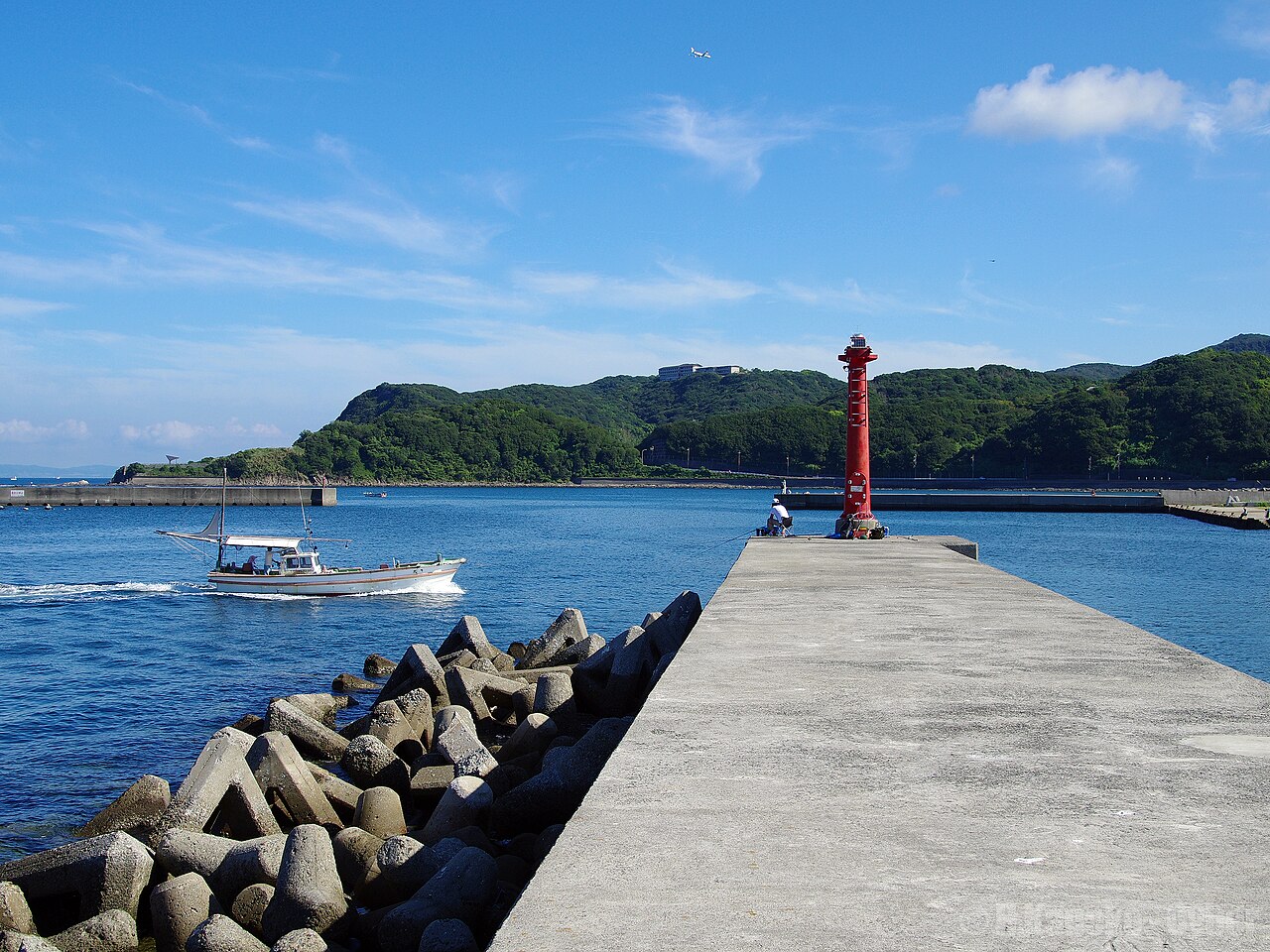
The port has long been a point of departure: in a gazetteer written when the forts across the water were still garrisoned, a boat is said to have crossed each day from Kada Port through the Yura Strait to Awaji Island, with steamers bound for Osaka calling here too.
| Item | Figure |
|---|---|
| Kada Line, Nankai Wakayamashi Station to Kada Station | about 25 minutes |
| Kada Station to Kada Port on foot | about 20 minutes |
| Tomogashima Kisen boat from Kada Port | about 20 minutes |
| Tomogashima Kisen boat, adult | 2,800 yen round trip (1,400 yen one way) |
| Tomogashima Kisen boat, child | 1,250 yen round trip (620 yen one way) |
| Kada sightseeing digital ticket, adult | 2,120 yen |
| Kada sightseeing digital ticket, child | 1,040 yen |
| Kada sightseeing digital ticket with Limited Express Southern round-trip seat ticket, adult | 2,670 yen |
| Kada sightseeing digital ticket with Limited Express Southern round-trip seat ticket, child | 1,330 yen |
| Kada Port parking lot | 700 yen per day |
Okinoshima: battery ruins and a lighthouse over the strait
Guidebooks describe Tomogashima as a group of four islands: Jinoshima, Torajima, Kamishima and Okinoshima. An older gazetteer records three, written as Jishima, Okishima and Kamishima, all of Izumi sandstone, thick with green pines and carrying the air of an enchanted land.
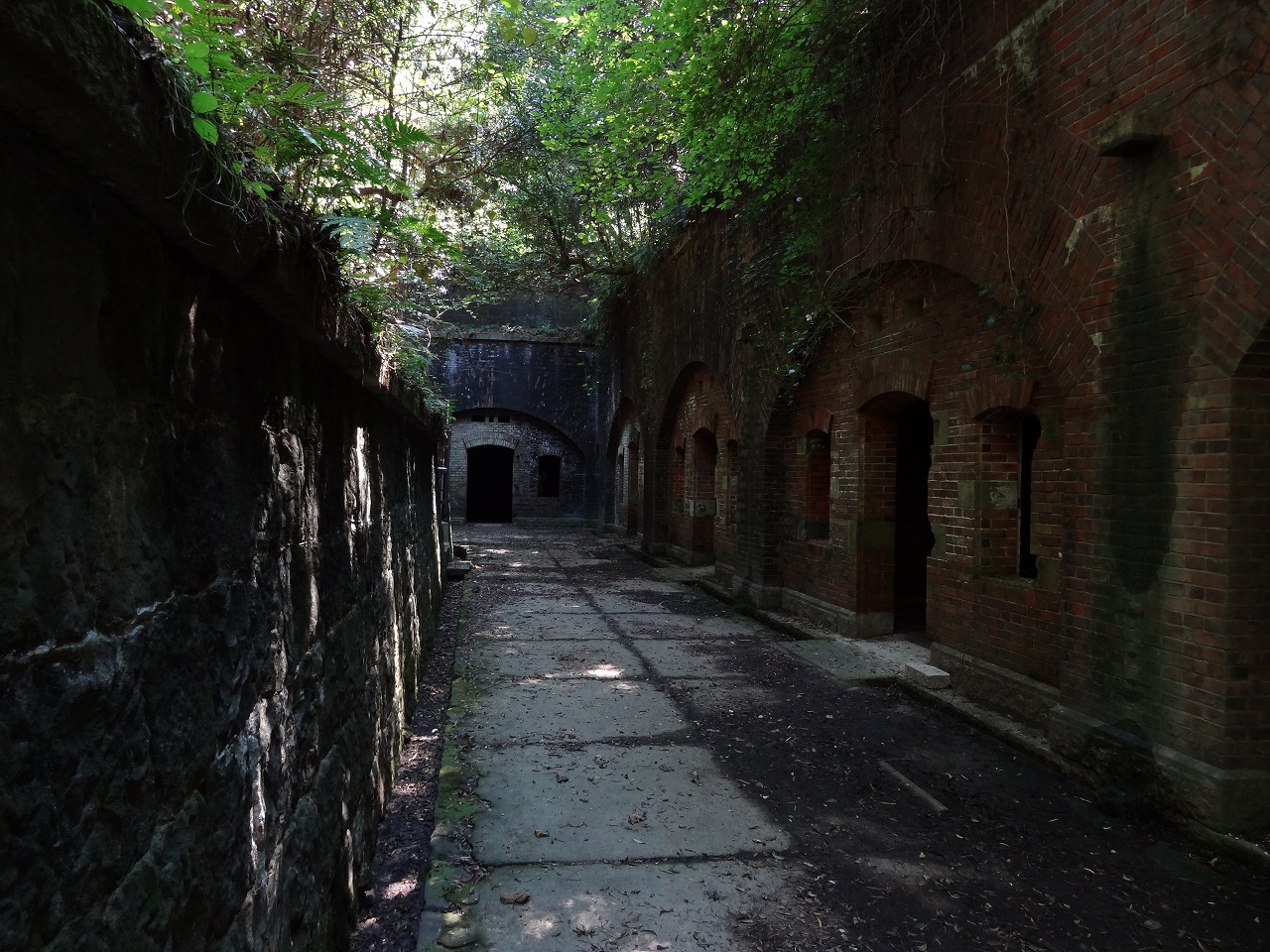
Okinoshima carries the history. Guidebooks describe it as a military fortress from the Meiji era until the end of the Second World War, and note that more than seventy years on, weathered battery ruins still stand at points across the island. The gazetteer puts their purpose bluntly: the batteries on Okishima commanded the key point of the Kitan Strait, gripping it, in its words, by the throat. The same gazetteer records batteries built around Kada on the mainland too, with a battalion of heavy artillery garrisoned there and the town counted a strategic point on the Kitan Strait.
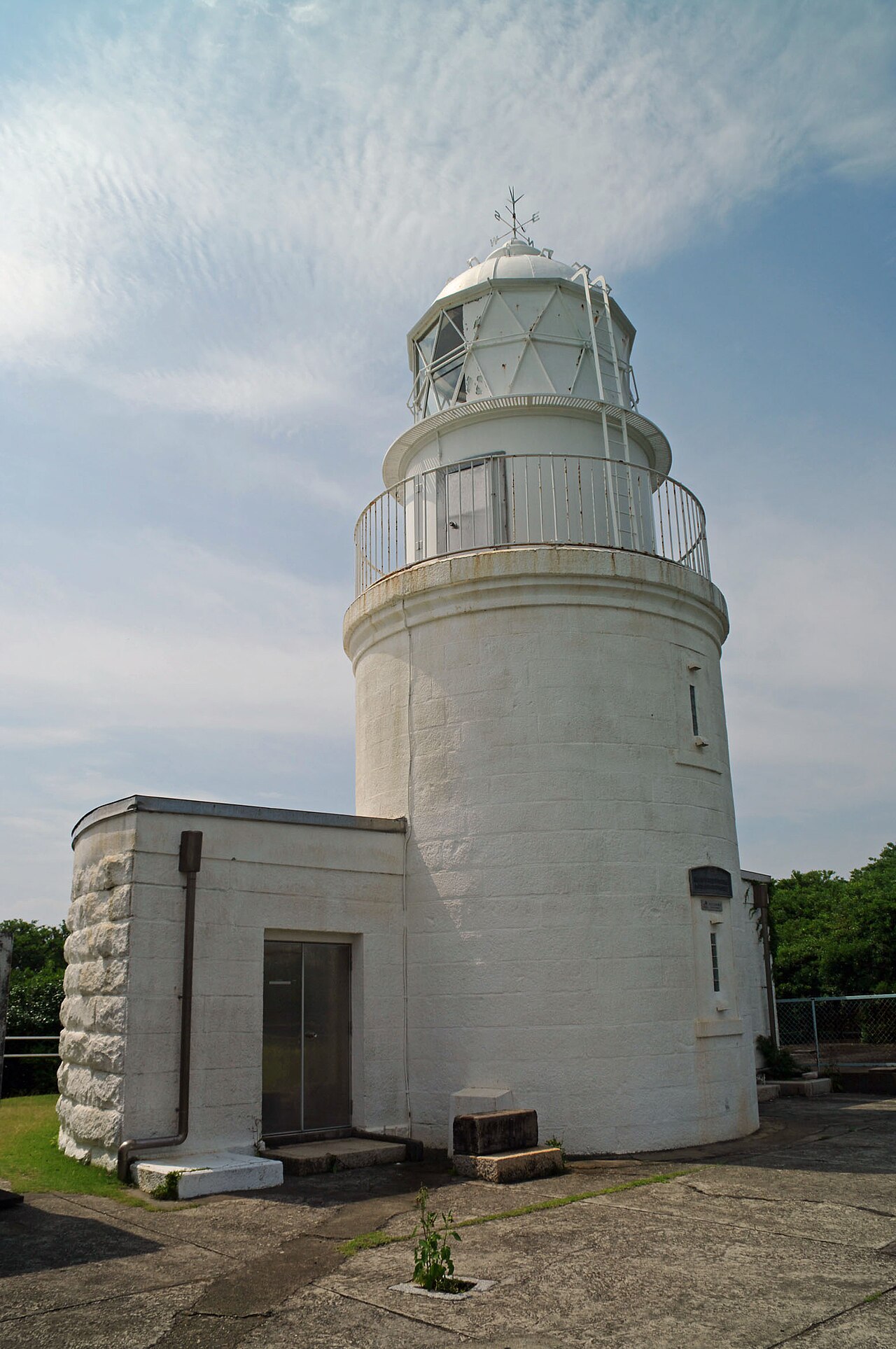
A lighthouse stands on the hilltop at Okinoshima's western tip; the gazetteer notes that in clear weather its light carried far out to sea. The same record describes the channel between Jinoshima and the Miyama Peninsula, the Kada Strait, with small boats bound for Osaka constantly passing through it. All three islands are described as uninhabited in those years, ringed by sheer rock, with strange stones standing out of the sea. One cape, Doho-ga-saki, is said to be named for a monk, Doho, who moved there for the view; the gazetteer praised it as the finest scenery on Tomogashima.
Where to stay
Places to stay near Kada, Wakayama →
Disclosure: This post may contain affiliate links. If you book through them, we may earn a commission at no extra cost to you.
Names and legends: old names and Awashima
Tomogashima is said to have once been called Imo-ga-shima (妹ヶ島), and in local speech Kushi-ga-shima or Toma-ga-shima (苦ヶ島, 苫ヶ島). The latter name is said to come from Empress Jingū: returning from the three Korean kingdoms, her ship lost its way in wind and waves, so she cast an object called a kushi (苦) into the sea, steered after it as it drifted, and so reached the island. The gazetteer records Kada's old name as Katami-ga-ura (形見ケ浦), a place sung as Imo-ga-shima and Katami-no-ura in the Man'yōshū, the Gyokuyōshū and the Shin-goshūishū.
Kamishima, the smallest of the group, has old pines leaning over its rock faces and a small pond, Kō-no-ike, where the ascetic En no Gyōja is said to have received divine power. The Awashima named in the Kojiki and Nihon Shoki is said to be this Kamishima, a reading the gazetteer passes on. Awashima Shrine, also called Kada Shrine, ties into this: by its own tradition it is said to have stood on Awashima in Tomogashima before being moved to Kada in Emperor Nintoku's reign, the age in which its founding is also placed.
Awashima Shrine and its dolls
The gazetteer places Awashima Shrine on the southwestern side of Kada, an ancient shrine listed in the old imperial register, enshrining Sukunabikona, Ōnamuchi and Empress Jingū together. The same record notes its restoration by the Asano clan and later work by Tokugawa Yorinobu, founder of the Kishū domain. The main hall is described as nagare style, painted a bright vermilion. Among its treasures are said to be a sword of Empress Jingū and a helmet presented by Prince Moriyoshi. The treasure hall is shown to groups who have arranged a visit beforehand.
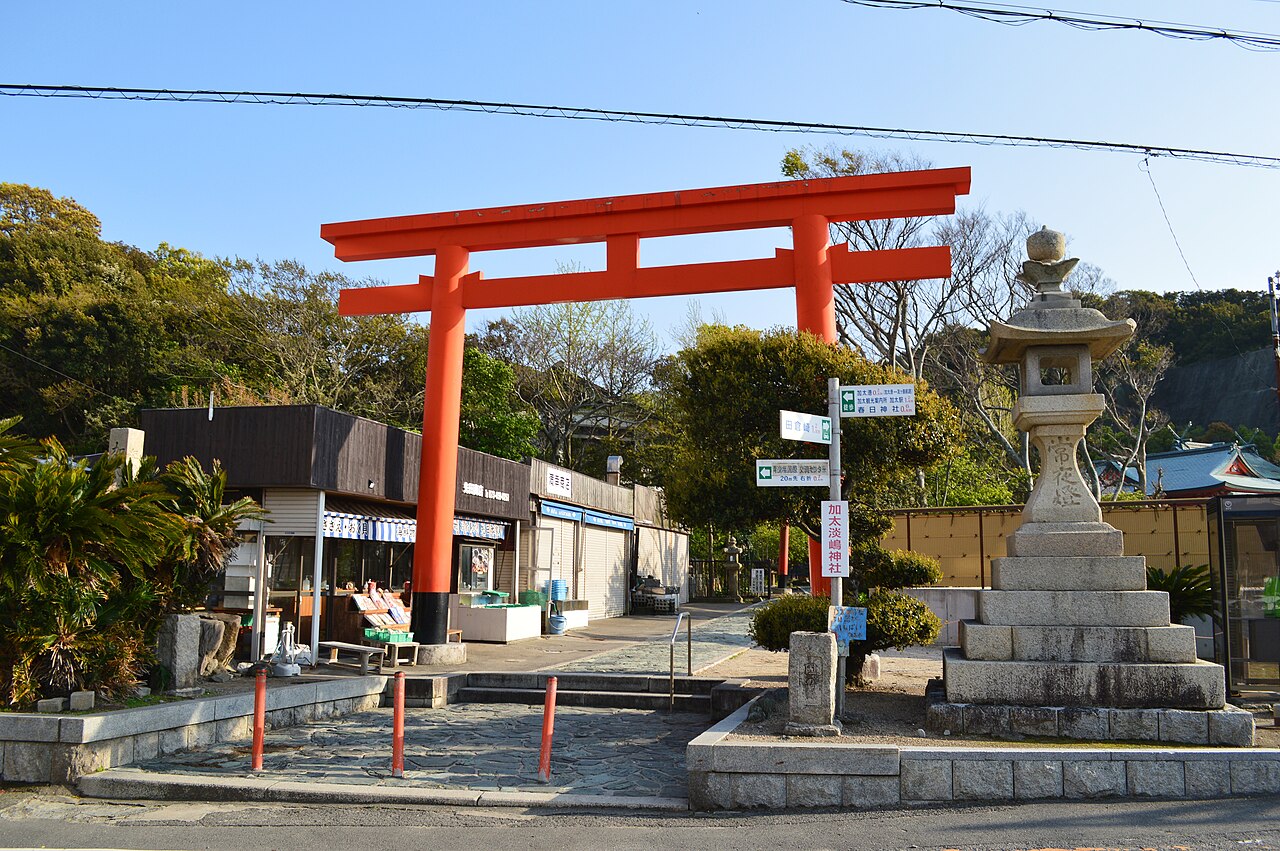
What people notice first, though, are the dolls. The shrine is widely known for its doll memorial rites, and the grounds are described as set out in great numbers with hina dolls, ichimatsu dolls, zodiac figures and noh masks sent from all over the country, sorted by type, where visitors may look at them after the rites. The shrine is said to be the birthplace of Hinamatsuri, and on the third day of the third month it holds the hina-nagashi, the rite of sending dolls off on the water. Even the goshuin is described as a stamp alone, with the seals of a male and a female hina doll and no brushwork.
The shrine is described as a guardian of women's happiness in general, from marriage ties and the granting of children to an easy childbirth and recovery from women's ailments, and as popular with women for those blessings. At a small subsidiary shrine at the rear left of the main hall, offering an ema together with one's own underwear is said to bring a wish to fulfilment. The sea in front of the shrine is described as rich fishing water known for fatty red sea bream, and there are eateries inside the grounds serving seafood.
Back in Kada: a mugwort sweet, a seaside bath and an old port's memory
In the gazetteer that counted the forts, Kada itself is described as a flourishing place of merchant houses and inns and a summer bathing resort with a view westward to Awaji Island and Tomogashima; its listed specialities were wakame seaweed and nibe, a kind of croaker.
A few more stops round out the day. A sweet shop in Kada, 小嶋一商店, is described as making yomogi daifuku from wild Kada mugwort with no additives at all; the sweets keep only about a day and a half, so each day's batch is made in that day's quantity. Osakaya Hiina-no-yu is described as an inn with more than two hundred years behind it that takes day visitors for its bath, a sodium-bicarbonate-chloride spring with viscous water. At Kyukamura Kishu-Kada the day-use bath Tenku no Yu includes a face towel, and the à la carte menu runs to sea bream and turban shell dishes. On Tomogashima, Rapyu Cafe rents barbecue space and offers two plans that come with a meat and vegetable set.
Prices and times at a glance
The figures below are the ones to plan the day around.
| Item | Figure |
|---|---|
| Awashima Shrine, worship | 9:00–17:00 |
| Awashima Shrine, doll reception | 9:00–16:00 |
| Awashima Shrine treasure hall | 300 yen adults, 200 yen children; groups by prior arrangement only |
| Kyukamura Kishu-Kada day-use bath (Tenku no Yu) | 12:00–15:50, last admission 15:00 |
| Kyukamura Kishu-Kada day-use bath admission | 1,500 yen adults, 700 yen children (age 4 and over), face towel included |
| Kyukamura Kishu-Kada, sea bream sashimi (鯛のお造り) | 1,700 yen |
| Kyukamura Kishu-Kada, turban shell grilled in the shell (サザエのつぼ焼き), 2 pieces | 1,200 yen |
| Kyukamura Kishu-Kada, simmered sea bream head and bones (鯛のあらだき) | 1,450 yen |
| Rapyu Cafe on Tomogashima | 9:30–16:00 as listed |
| Rapyu Cafe barbecue space rental | 2,000 yen |
| Rapyu Cafe barbecue plan A with meat and vegetable set | 3,500 yen per person |
| Rapyu Cafe barbecue plan B with meat and vegetable set | 2,500 yen per person |
To turn the day trip into an overnight, look at places to stay in Kada.
You can also compare activities around Kada and Tomogashima before you set out.