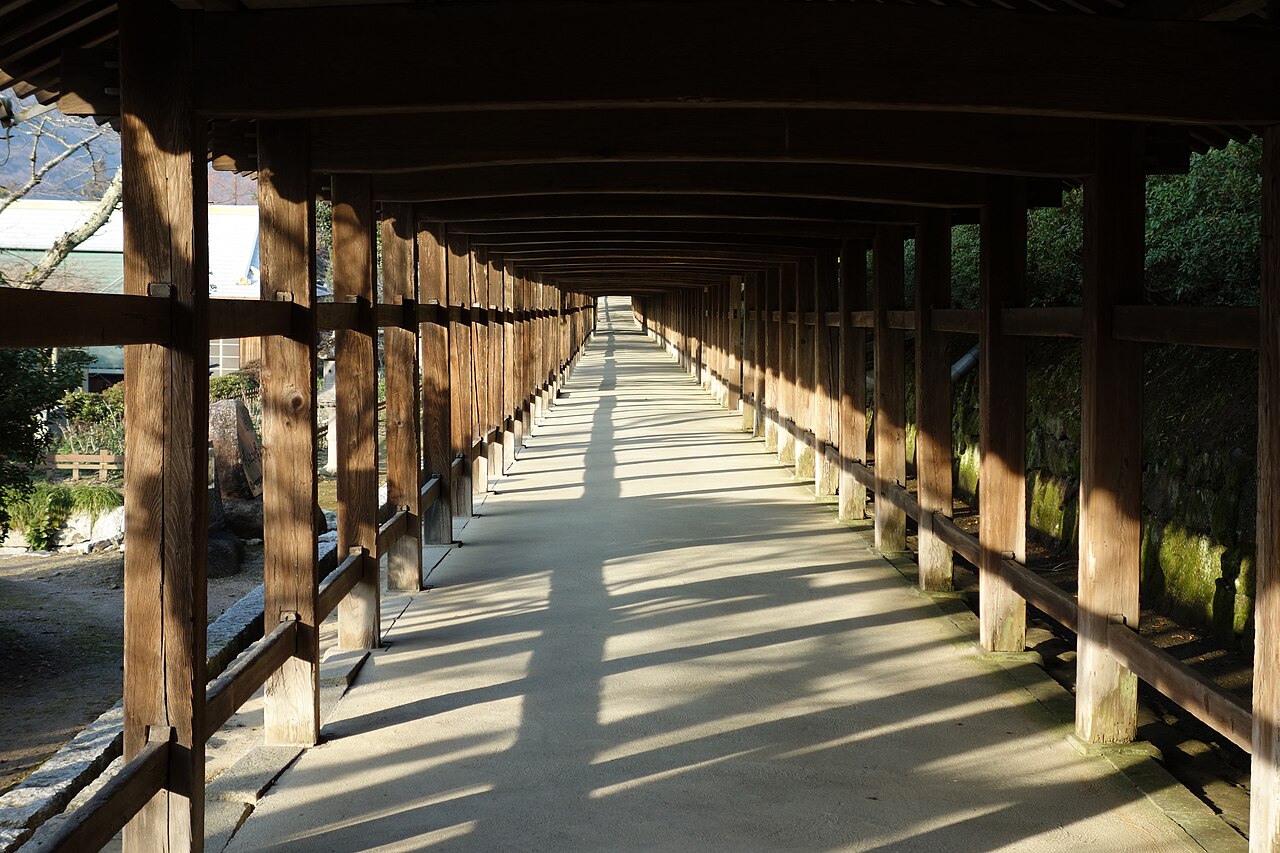
At Kibitsu Shrine, a covered corridor runs from the main hall in a straight line that follows the natural terrain. Partway along it, a branching passage ends at the cauldron hall (Mikamaden), where the Narukama ritual divines by the sound of a cauldron whether a wish made to Kibitsuhiko-no-Mikoto will be granted. The reason to come is that the National Treasure main hall, the corridor and the cauldron hall all lie on a connected route, so a visit moves from architecture to flowers to a ritual without leaving the grounds.
Entering by the North Approach: Lanterns, Gravel and the Main Hall
Entering by the north approach gives the walk a ready-made order: the north Zuishin gate, then the stone steps, then a gravel path toward the main hall. The north Zuishin gate stands on this approach and is designated an Important Cultural Property. Visitors pass the gate and climb the steps of the same approach.
Climbing the steps on an early visit, soon after the gate opens and before daylight, visitors see lanterns and stone lanterns that are lit. On a cold morning, breath shows white. After that, the path to the raised ground at the top runs over gravel that sounds underfoot. The sound of the gravel rings out along this stretch.
Heading back from such a visit, visitors take the pine-lined approach. It is dark on arrival at that hour, and by morning light the pines cast shadows across it. Visitors are asked not to make loud noises on the grounds. The shrine describes itself as a sanctuary of prayer where people worship with a quiet heart.
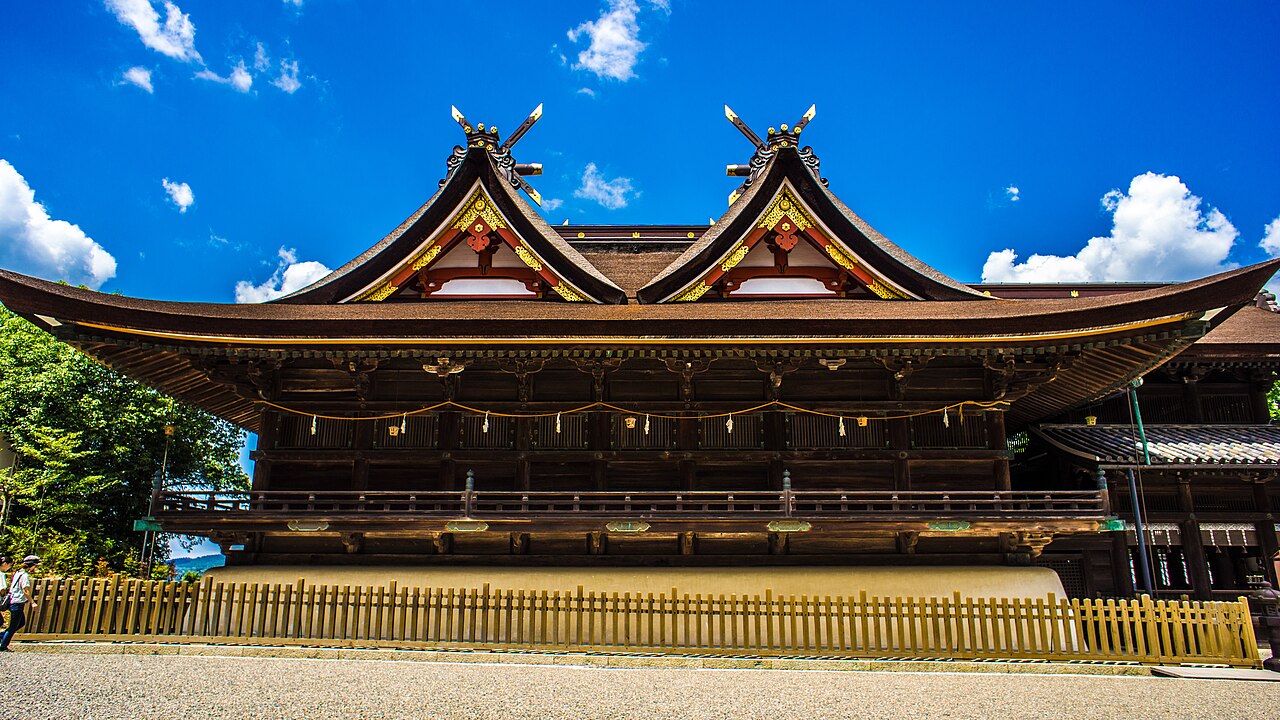
Looking at the main hall and the worship hall from outside, visitors see the hiyoku-irimoya-zukuri style, also known as Kibitsu-zukuri, in a pair of buildings designated a National Treasure. The main hall stands on a white-plaster base and faces north. Its exterior is unpainted plain wood. The main hall and the worship hall were rebuilt in the Muromachi period.
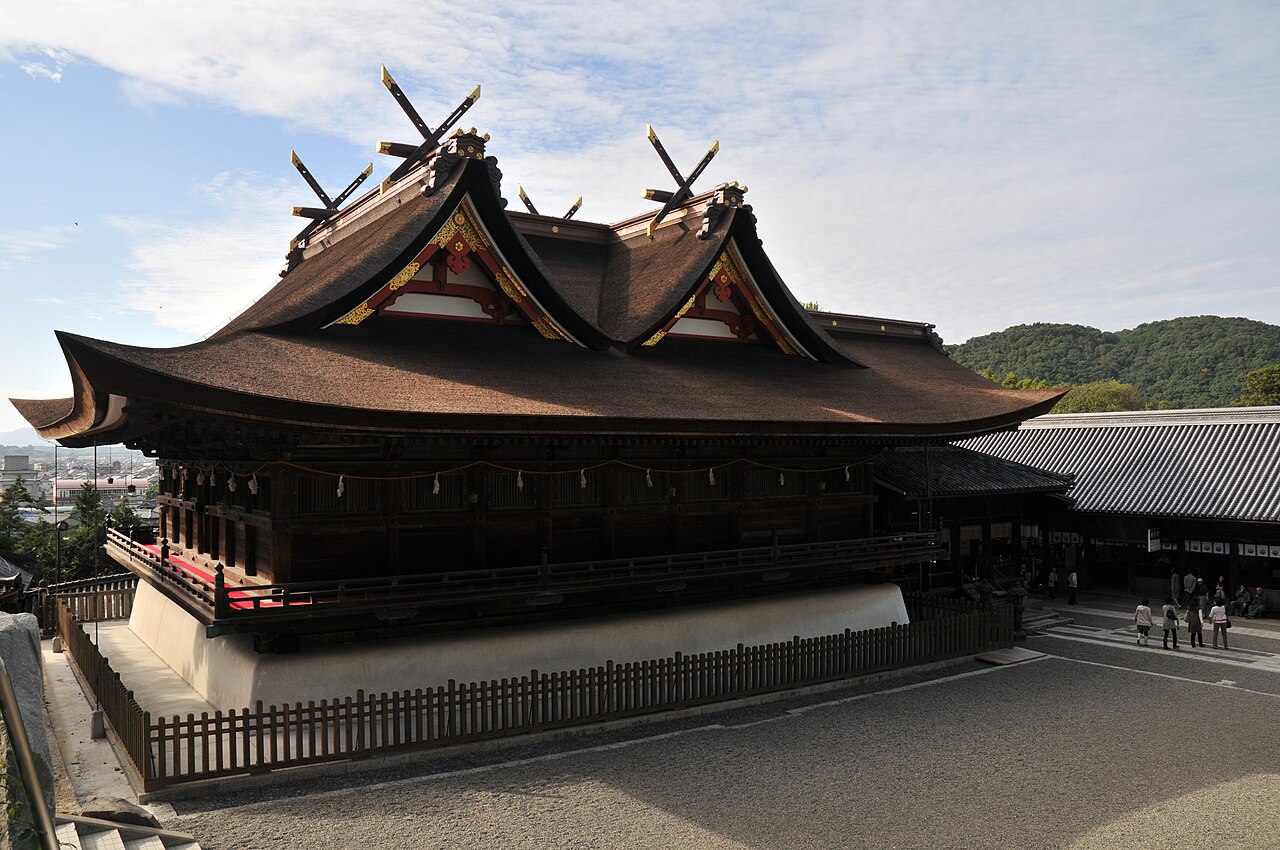
Looking next at the worship hall, visitors see round pillars of the same thickness as those of the main hall, under a roof of cypress bark. A wooden staircase at the boundary connects the worship hall to the main hall. Inside the main hall, the floor and the ceiling become higher toward the center, and the ceiling patterns differ.
Walking the Corridor: Gates, Hydrangeas and Flowers Through the Year
Walking the corridor by fixed points suits visitors who want markers, because the south Zuishin gate and the branch to the cauldron hall both come partway along it. The covered corridor is built along the natural terrain as it lies. It is designated a Prefectural Important Cultural Property. Visitors walk it from the main hall past both markers.
Passing the south Zuishin gate, visitors walk through a structure that stands partway along the corridor and is designated an Important Cultural Property. The Hongu-sha shrine enshrines the parent deities of Kibitsuhiko-no-Mikoto. Partway along the corridor, a path also branches off toward the Iwayama shrine on the slope of Kibi no Nakayama.
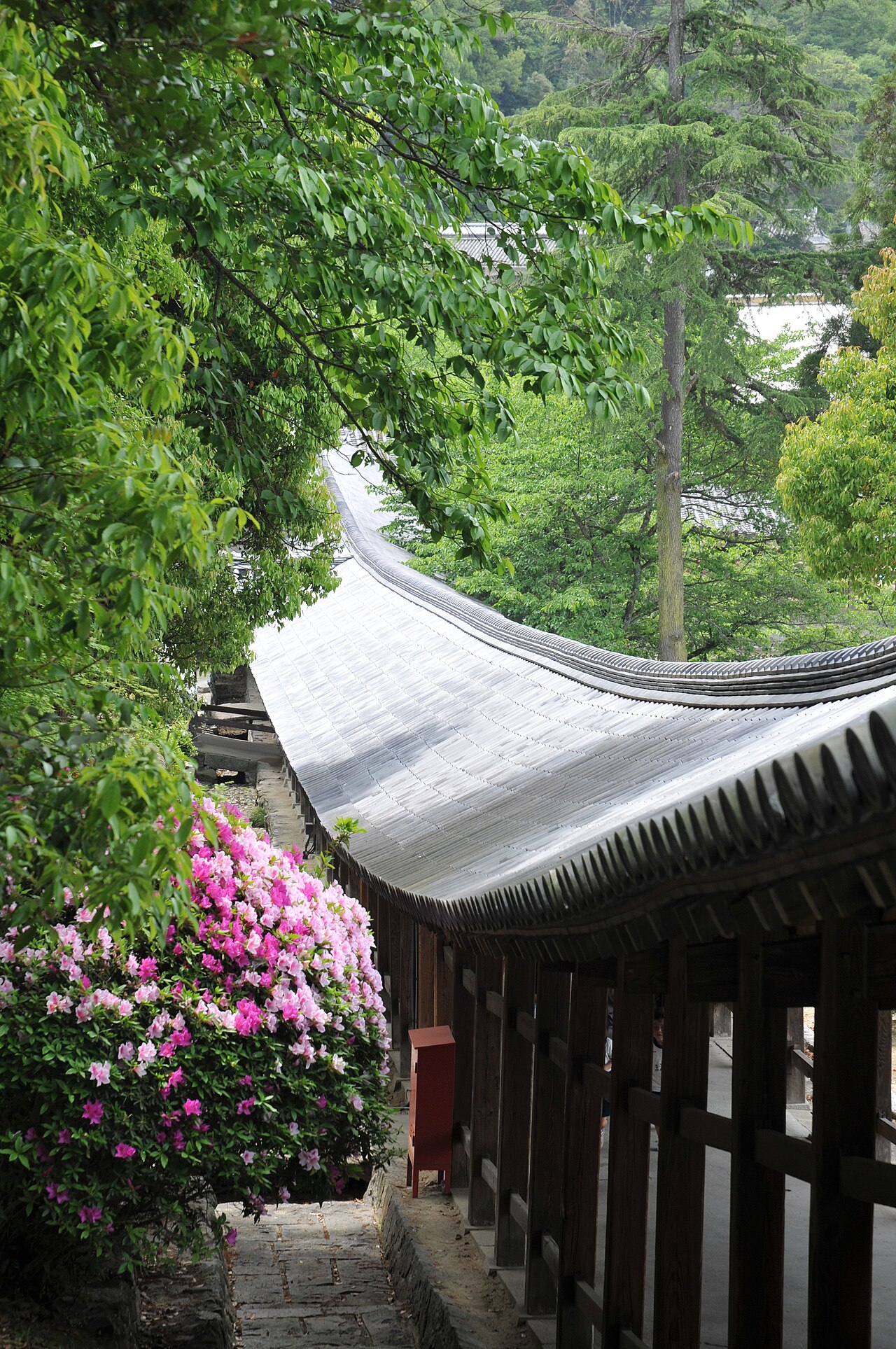
Following the path toward the Iwayama shrine, visitors walk between hydrangeas of various colors. Near the torii steps they are dark reddish purple, while light blue spreads along the side path. The hydrangea garden, on the east side of the corridor's central area, has benches and peaks in late June. A watercolor-style hydrangea goshuin is limited to the rainy season.
Walking the corridor outside the hydrangea weeks still brings flowers into view. Cherry, plum, camellia and peony are planted along the corridor, and flowers can be seen all year round. The peony garden is listed as at its peak in late April.
At the Cauldron Hall: How the Narukama Ritual Works
Visitors who want a wish divined by the sound of a cauldron can build the visit around the Narukama ritual at the cauldron hall. The cauldron hall stands at the end of a branching passage partway along the corridor, and it is designated an Important Cultural Property. The ritual divines whether a wish made to Kibitsuhiko-no-Mikoto will be granted.
Taking part begins with a votive tag. The wish tag is placed before the cauldron, and the Azome fills it with water and boils it as steam rises from the steamer above. The priest and the Azome then sit facing across it. While the priest recites the norito, the Azome shakes brown rice in a vessel inside the steamer.
Listening for the cauldron comes next. A sound like an ogre's growl rings out, and it stops around the end of the norito recitation. The outcome is judged from the loudness and the length of the sound from the cauldron. Neither the priest nor the Azome states an answer about the sound.
Following the cycling road that runs between Kibitsu Shrine and Kibitsuhiko Shrine takes the visit beyond the corridor. The Momotaro fairy tale is said to be based on the myth in which Kibitsuhiko subdues Ura. A day that continues past the shrine can be planned from the city, and places to stay in Okayama are listed for the area.
Getting to Kibitsu Shrine, Hours and Offerings
New to rural buses and one-man trains? See how to ride them, step by step.
| Item | Details (as listed) |
|---|---|
| JR Okayama Station to Kibitsu Station | about seventeen minutes by train, then about a ten-minute walk |
| JR Kurashiki Station to Kibitsu Station | about forty minutes by train, then about a ten-minute walk |
| By car | about fifteen minutes from Okayama Soja Interchange |
| Shrine gate | opens at five in the morning and closes at six in the evening |
| Amulet and goshuin office | nine in the morning to four in the afternoon |
| Prayer offering | five thousand yen or more per request; reserve on the web up to three days before, and check in thirty minutes early |
| Narukama ritual hall | closed every Friday |
Photography inside the shrine buildings is declined, and photography, audio recording and video recording are not allowed during prayer rituals.
Thinking of staying overnight?
Compare places to stay near Okayama, Okayama, Japan →
Disclosure: This post may contain affiliate links. If you book through them, we may earn a commission at no extra cost to you.