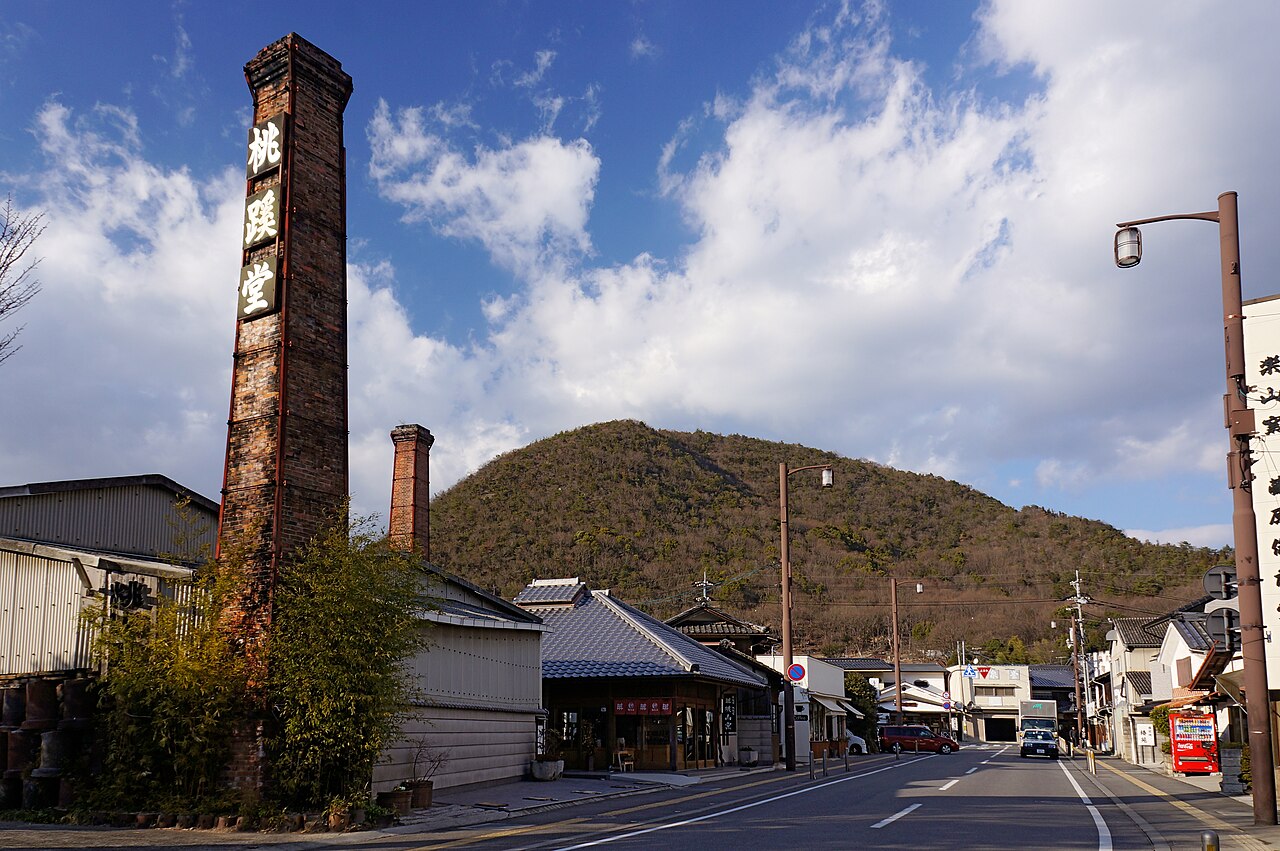
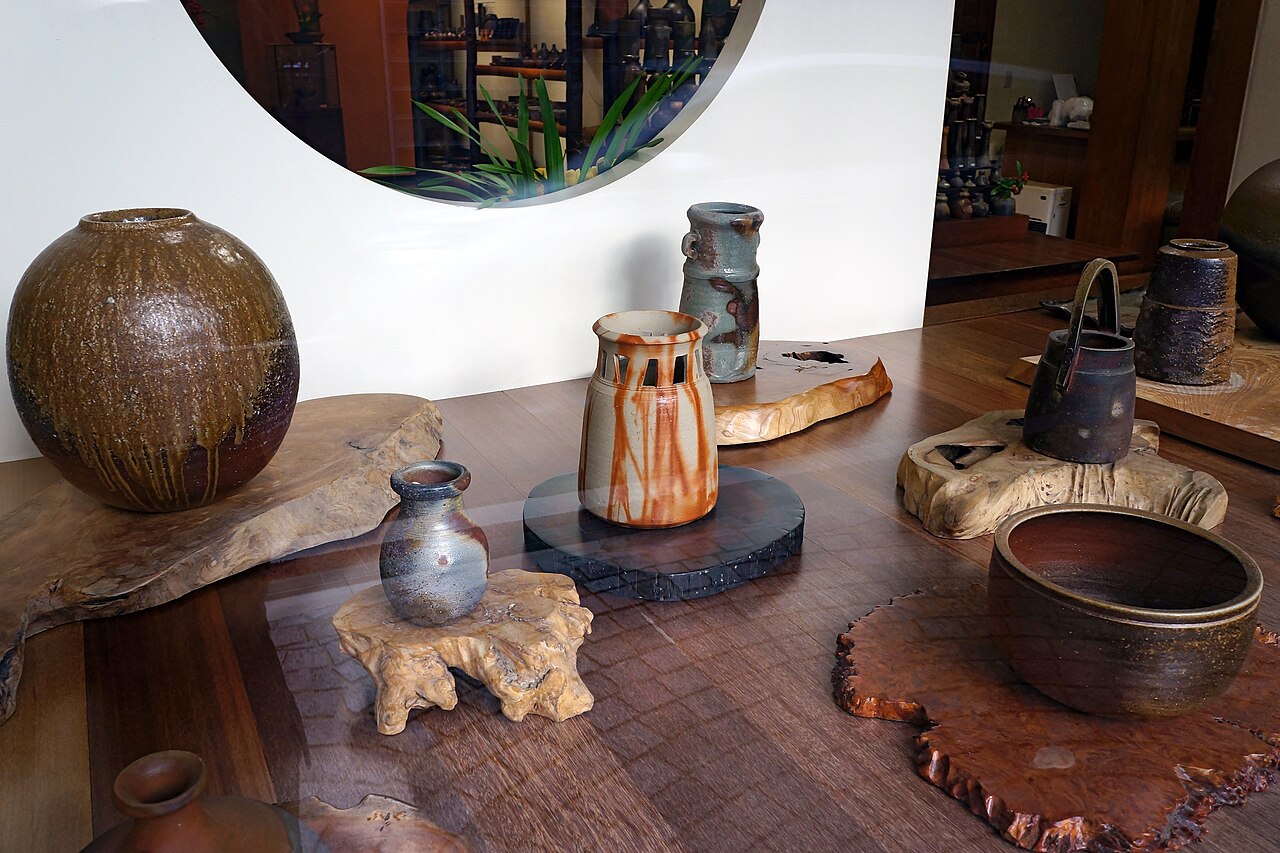
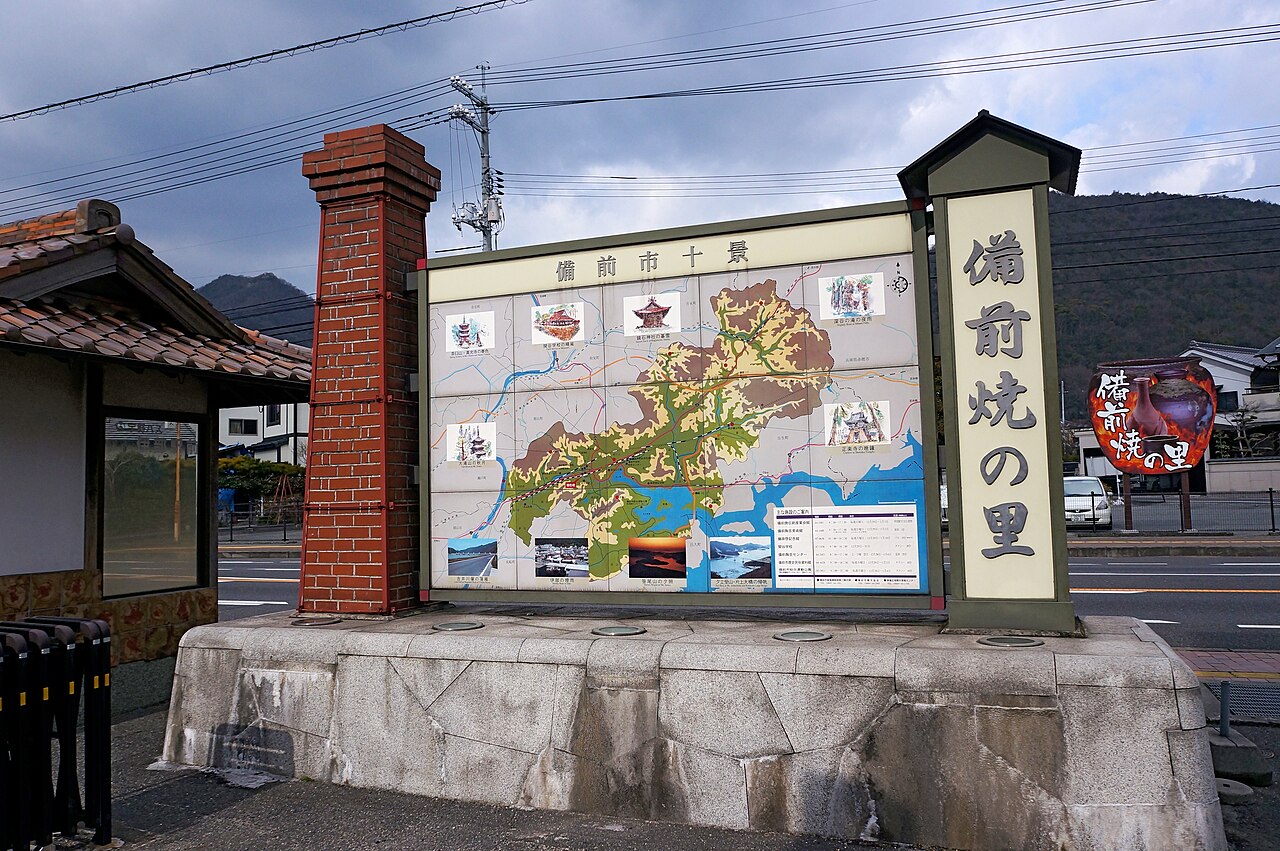
Imbe in Bizen, Okayama, is a Bizen-yaki pottery village, one of the Six Ancient Kilns of Japan, and the pottery is the reason to come. Bizen-yaki carries no glaze and no painted decoration; it is simply fired in a kiln, and the color and pattern of each piece come from the clay and the shifts in temperature, so each piece takes its own color and pattern. You can see that pottery on the roof of a shrine, in a museum of contemporary ceramics and in galleries around the town, and you can also take soft clay in your hands and shape a form by feel alone.
Shape Clay by Hand: the Bizen-yaki Traditional Industry Hall and Mugenan
At Mugenan, a clay-shaping workshop, visitors take soft clay in their hands and work a form out of it by feel alone. The session happens in a quiet workshop a little away from the central area, which makes it a pause in the day rather than one more stop on the walk. Afterwards, visitors can stop at Cafe Mugenan, the attached cafe.
The Bizen-yaki Traditional Industry Hall, a hall whose whole building is shaped like a climbing kiln and which includes the JR Imbe Station building, is the other place in Imbe to try pottery yourself. Its lower floor is a tourist information center and its upper floor displays and sells work by artists and kilns of the Bizen-yaki potters' cooperative, so you can look at finished pieces before or after making your own.
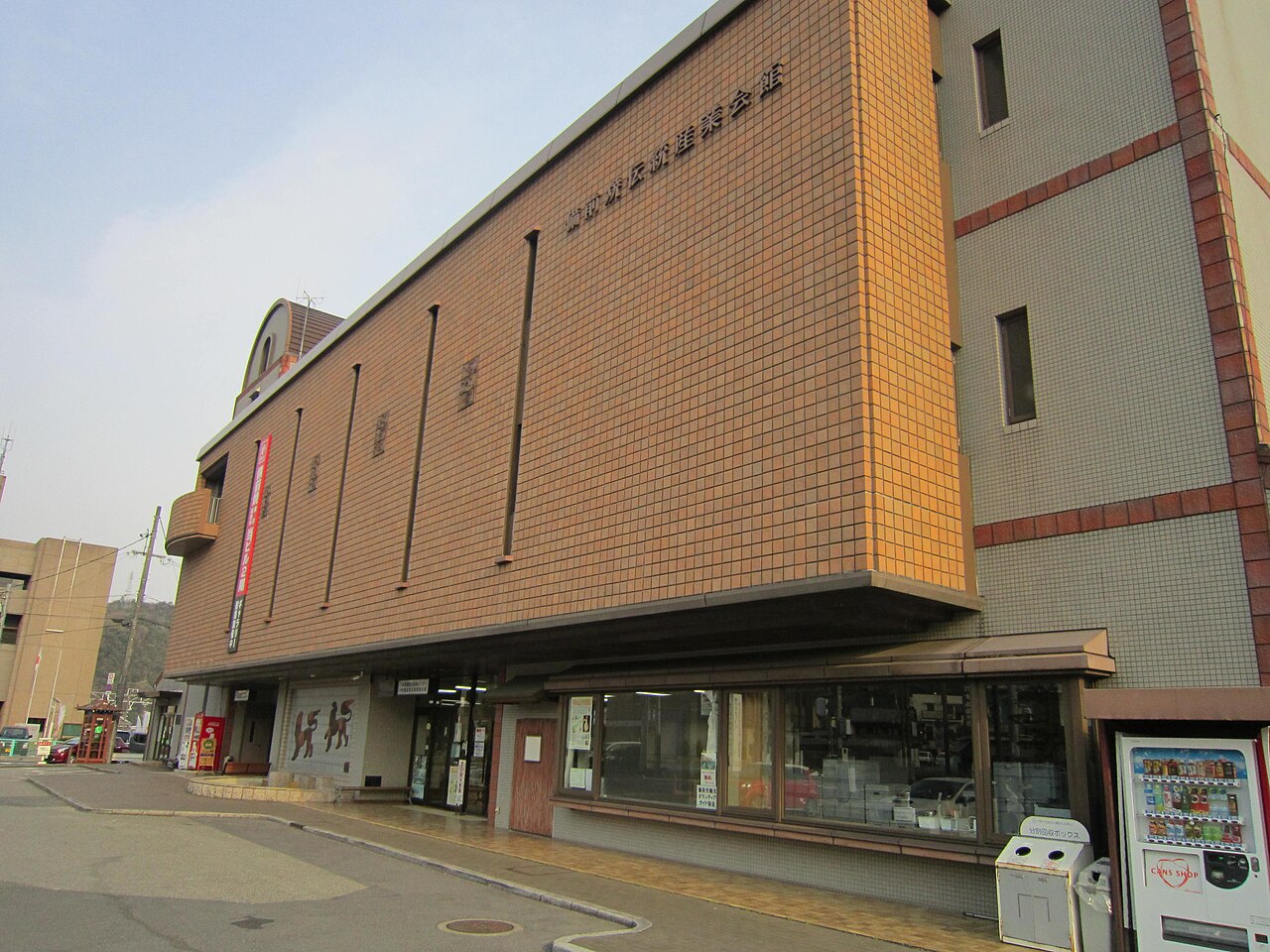
If you want to try pottery and still have an afternoon left for the town, the pottery experience at the Hall takes about one hour; if you would rather end with a stop at the attached cafe, Mugenan is the one to choose. At Mugenan the shaping is done by hand and by feel, which is the point of coming to a pottery village.
Kilns and Chimneys: Walking Past Tenpo-gama
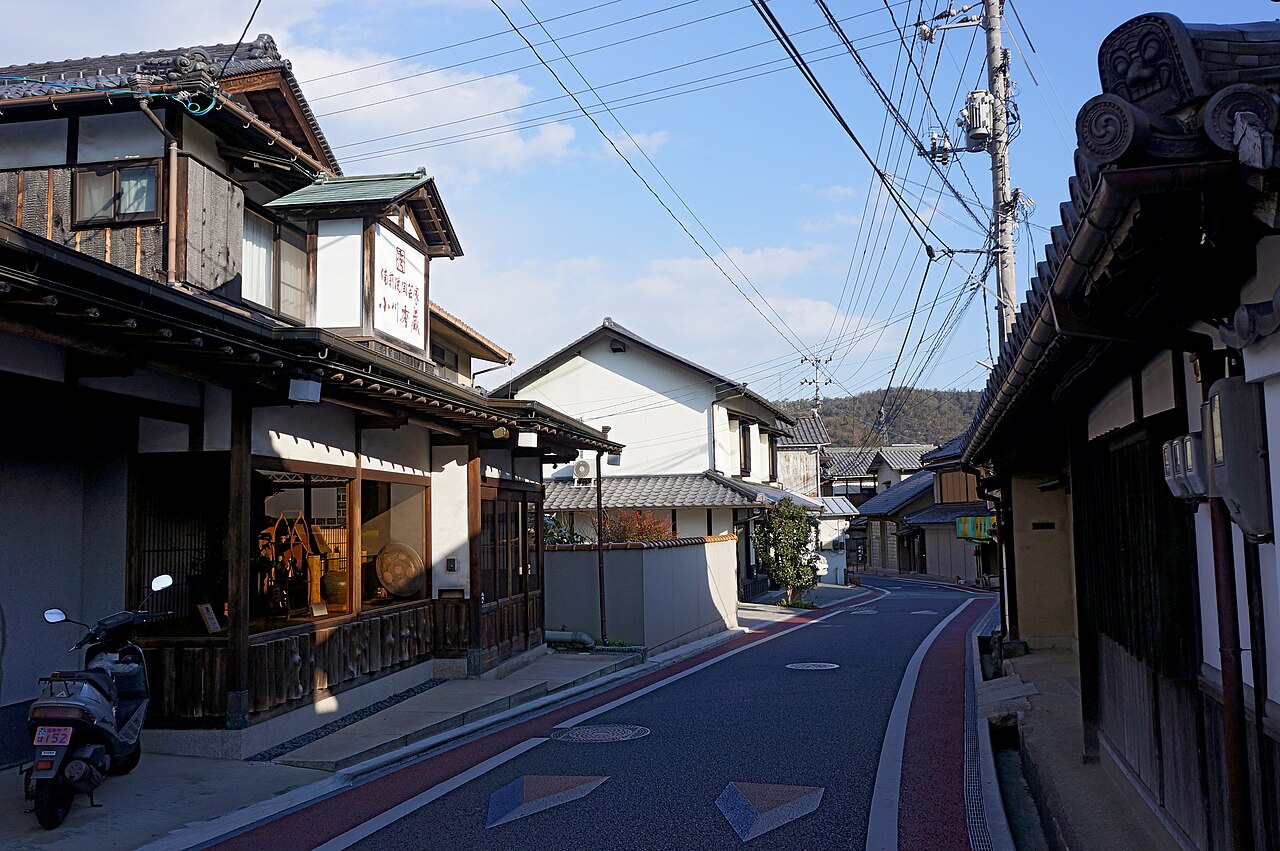
Walking through Imbe, a Bizen-yaki pottery village, you pass kilns, workshops and galleries displaying pottery scattered across the town, and the chimneys of noborigama, or climbing kilns, come into view as you go. A walk around the town takes in kiln ruins, working kilns and the shrines and temples tied to them, so the chimneys and the shrine roofed in pottery belong to the same craft.
Tenpo-gama, a climbing kiln, is one of three small kilns built after the scale of the large kilns was reduced, and these small kilns fired small pieces: old Bizen jars, tea utensils, flower vases and square sake bottles. What stands at the site is a noborigama of that smaller size, so the walk out to it is a look at where those jars and vases came from.
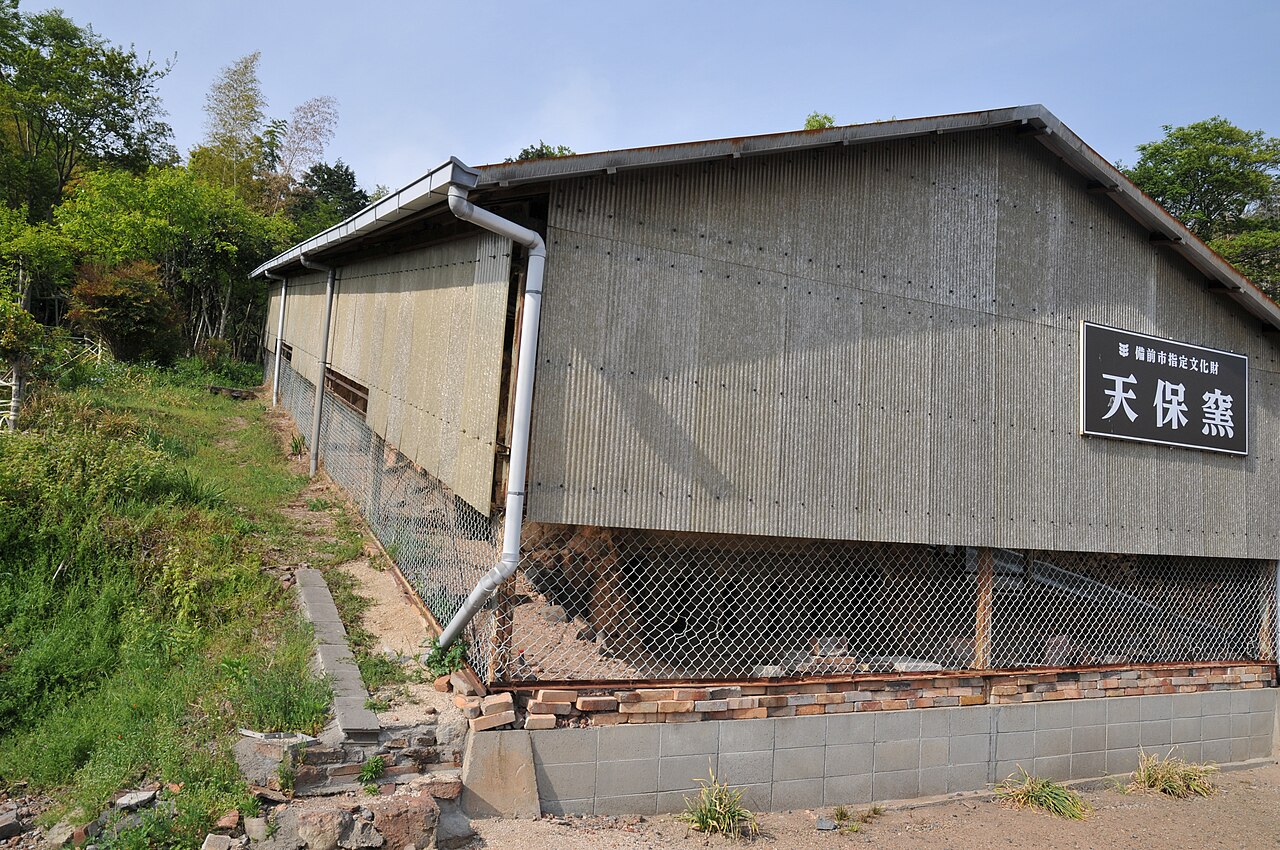
Tenpo-gama is about ten minutes on foot from JR Imbe Station. For a look at a kiln itself, make Tenpo-gama the aim of the walk; the chimneys, workshops and galleries along the walk are the reason to walk the rest of the town instead of heading straight there.
Amatsu Shrine and the Bizen City Museum of Art
Amatsu Shrine, a shrine with a history of a thousand years, puts Bizen ware underfoot and overhead: the roof tiles, the guardian dogs (komainu), the paving stones of the approach and the ceramic plates in the wall along it are all Bizen ware. The shrine enshrines Sugawara no Michizane, and votive plaques (ema) made of Bizen ware are sold here, so the pottery is something you can buy as well as walk across.
The Bizen City Museum of Art, a museum of contemporary ceramics, presents current ceramic work, including Bizen ware, to audiences in Japan and abroad, so it shows the present-day side of the craft after the old kiln and the shrine. The museum has a cafe and a museum shop on site, so it serves as a break between stops as well as a visit.
The museum is about one minute on foot from JR Imbe Station. If you want to see Bizen ware built into a place, the shrine is the stop; if you want to see it shown as contemporary ceramics, the museum is.
Food and Seasons: Bizen Ware Tableware, Hinase Oysters and the Autumn Festival
Bizen ware is said to keep food from drying out and to keep it from cooling easily, which is a reason to eat from it as well as look at it.
The Bizen Yaki Festival is held every autumn, on the third Sunday of October and the Saturday before it. Kiln makers, artists and galleries line up as exhibitors, and the festival adds a potter's wheel trial, kiln viewing, a kids' park, lucky-bag sales, history and sightseeing guides and local food stalls, so the town's working side is on show in one place.
Hinase, a town where visitors come for kaki-oko, an oyster okonomiyaki, is crowded above all in winter, and freezing technology means kaki-oko can be eaten in summer as well. Start with shell-on oysters, grilled or steamed, for the scent of the shore and a rich savory taste; shucked oysters suit kaki-fry, hot pot and making kaki-oko at home. At the market in Hinase, shell-on oysters are grilled over charcoal.
For pottery, autumn is the season of the festival; for oysters, Hinase is a winter stop that also serves kaki-oko in summer. If you would rather stay overnight, places to stay in Bizen is a place to start.
A Day in Imbe, Stop by Stop
JR Imbe Station is where the Imbe town walking course starts, and the course takes about five hours. The Bizen City Museum of Art, where you look at contemporary ceramics, is about one minute on foot from the station. The course's shopping stop, where you look for vessels by individual artists, is about five minutes on foot from the museum.
A lunch stop serving food in Bizen ware is about five minutes on foot from the shopping stop. Tenpo-gama, where you look at a small climbing kiln, is about ten minutes on foot from the lunch stop. Amatsu Shrine, where you walk over Bizen ware paving and can buy an ema, is about five minutes on foot from Tenpo-gama. A cafe stop, about five minutes on foot from the shrine, ends the course.
If time is short, Tenpo-gama is about ten minutes on foot from JR Imbe Station. Amatsu Shrine is likewise about ten minutes on foot from the station. The two are about five minutes apart, so both fit a short visit. If you want to make something by hand, the Hall's pottery experience takes about one hour and fits at either end of the walk.
Getting to Imbe
| Leg | How | Time or distance |
|---|---|---|
| Okayama Station to Imbe Station | JR Akou Line | About 40 minutes |
| Imbe Station to Bizen City Museum of Art | On foot | About 1 minute |
| Imbe Station to Tenpo-gama | On foot | About 10 minutes |
| Imbe Station to Amatsu Shrine | On foot | About 10 minutes |
| Uno Bus stop in front of Imbe Station to the museum | On foot | 2 minutes |
| Wake IC on the Sanyo Expressway to Imbe | By car | About 15 minutes |
| Bizen IC or Wake IC to the Hall | By car | About 15 minutes |
| North exit parking at Imbe Station | For tourists | Free of charge |
JR Imbe Station is on the JR Akou Line from JR Okayama Station.
New to rural buses and one-man trains? See how to ride them, step by step.
Hours and Fees
| Place | What | Hours or fee |
|---|---|---|
| Bizen-yaki Traditional Industry Hall, first floor | Hours | 9:30 to 17:00 |
| Bizen-yaki Traditional Industry Hall, second floor | Hours | 10:00 to 17:00 |
| Bizen-yaki Traditional Industry Hall | Closing days | Tuesdays, and the year-end and New Year period |
| Bizen-yaki Traditional Industry Hall | Pottery experience, time needed | About 1 hour |
| Mugenan, clay-shaping | Fee, from, tax included | 2,750 yen |
| Mugenan, clay-shaping | Listed hours | 10:00 to 15:00 |
| Bizen City Museum of Art | Adult admission | 500 yen |
| Bizen City Museum of Art | Hours | 9:00 to 17:00 |
| Bizen City Museum of Art | Closing day | Mondays |
Bizen-yaki pieces are listed from about one thousand yen.
Where to stay
Places to stay near Bizen, Okayama, Japan →
Disclosure: This post may contain affiliate links. If you book through them, we may earn a commission at no extra cost to you.