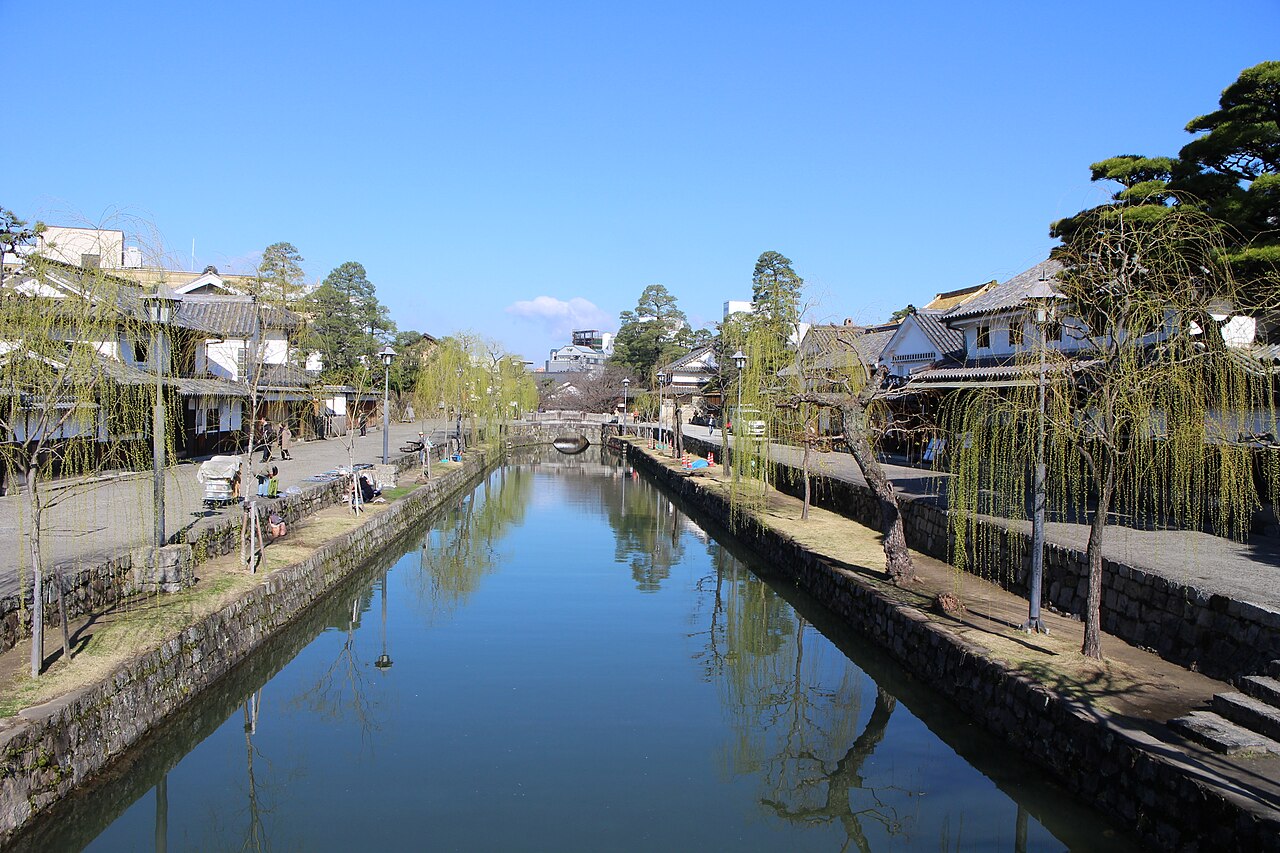
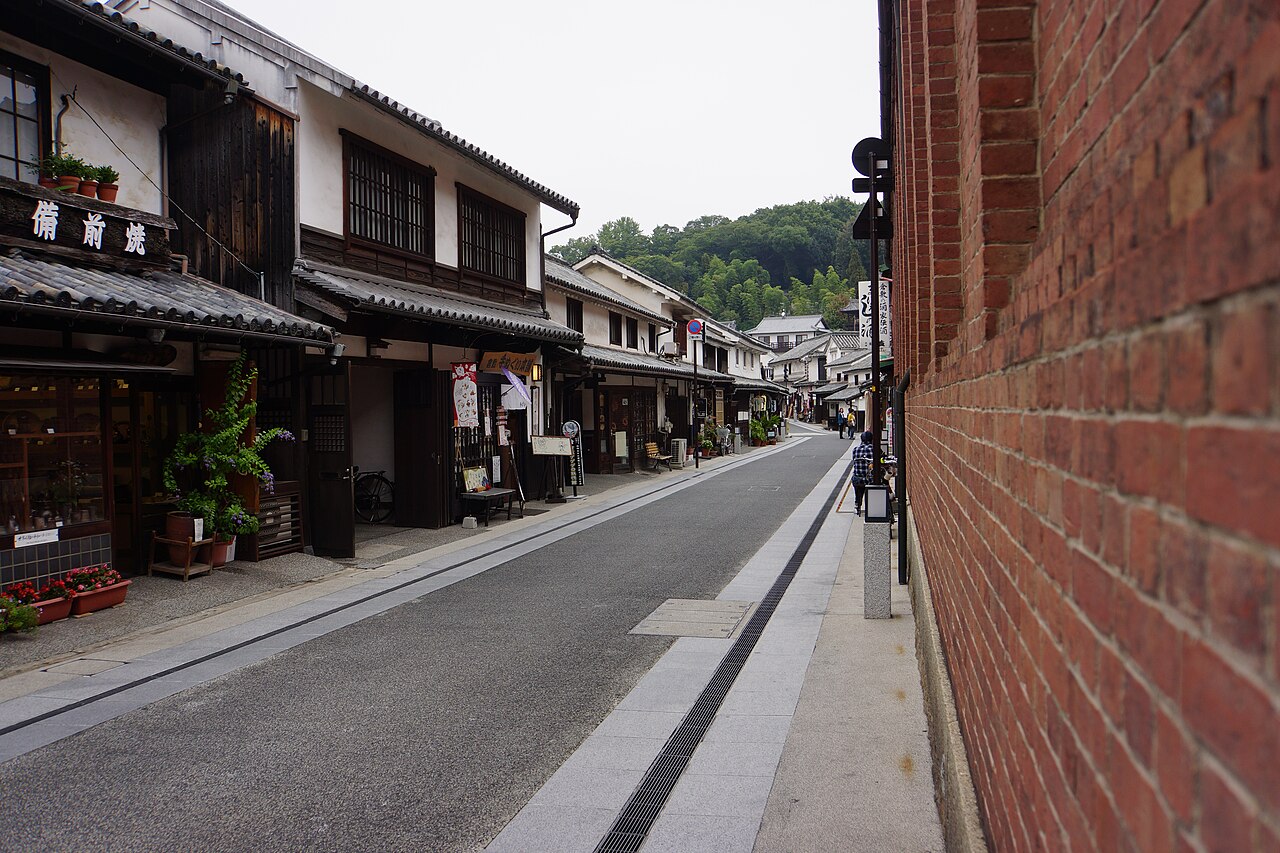
Early in the morning, the Kurashiki Bikan Historical Quarter is quieter than you might expect, and its white-walled storehouses, namako-kabe walls and willow-lined streets can be walked without hurry. A river boat modelled on the craft that carried goods in the Edo period shows the same white walls from the water. After sunset the quarter is lit, and the white-walled buildings are reflected on the surface of the river.
The Bikan Quarter in the Early Morning
Arriving early puts you in the quarter while it is quieter than expected, and the white walls and Edo-period townscape that survive here are easier to take in before the day gets going. Shutters go up and signboards are carried outside as the shops get ready for the day, so you see the district being set up for the day.
The scenery that defines the district is all on view at that time: white-walled storehouses, namako-kabe walls and streets lined with willows. Kurashiki Ivy Square, a brick building, has very few people in the morning, while in the daytime it is always crowded, so the morning is the time to see it with room to move.
For a view of the whole, a shrine reached by a long flight of stairs looks out over the entire quarter, and from that high point the row of white-walled storehouses stands out clearly. Seen from a high place like this, the storehouses line up in a row, which gives a sense of the district as a whole.
Along the Canal and Honmachi Street
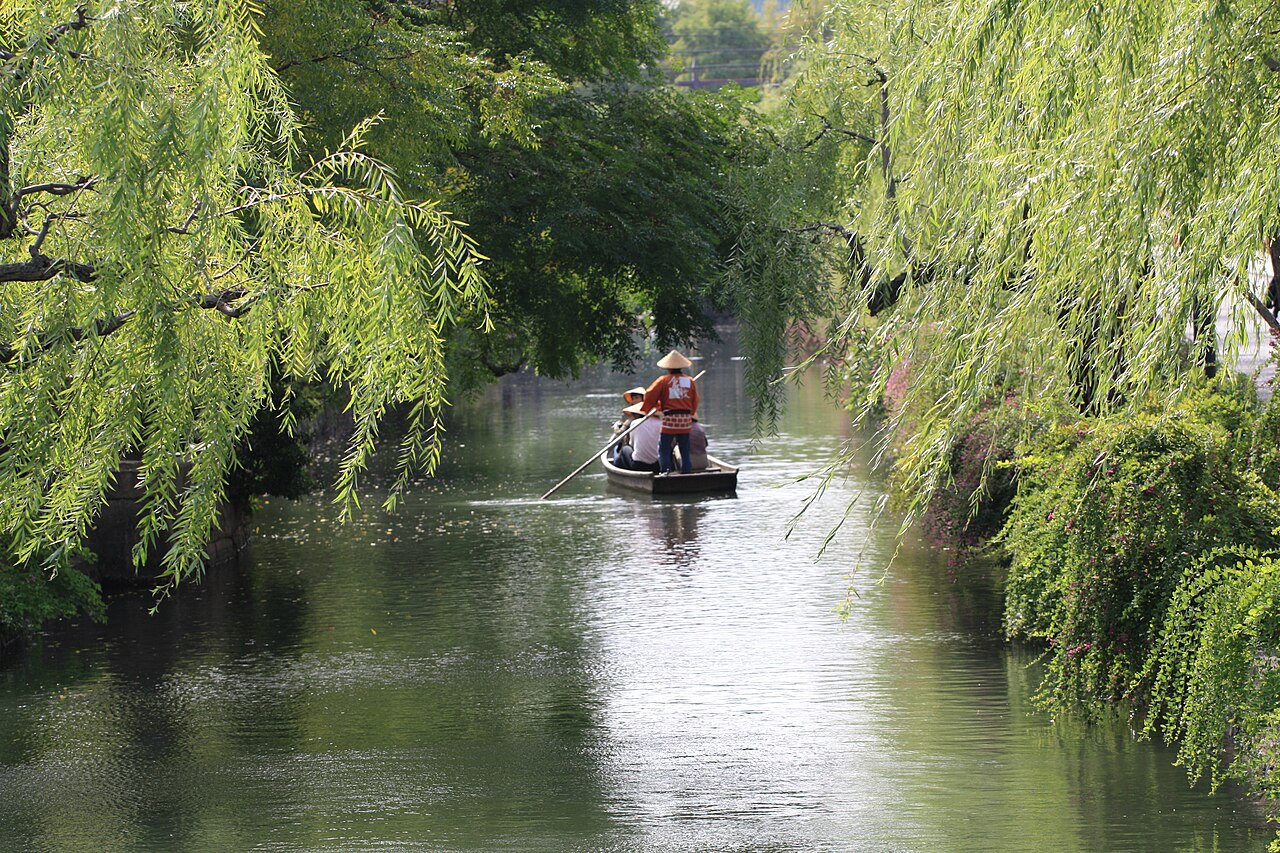
Along the Kurashiki River, the canal-side scenery that visitors photograph while strolling the town is the combination of white walls, rows of willows and river boats. The boat ride gives a second angle: it reproduces the river boats that carried goods in the Edo period, and lets you see the white-walled townscape from the water instead of the street. Where Imabashi, an arched bridge, crosses the river, look for the dragon carvings on its balustrade.
On the north side of the river, Honmachi street is lined with townhouses and keeps much of its Edo-period appearance, and some of those townhouses now hold cafes and general-goods shops. Also on Honmachi street, a gallery in an old private house exhibits and sells ceramics, glass, woodwork, cord and teddy bears by makers from inside and outside the prefecture. A shop with a three-storey observation deck gives a view over the townscape and the Bikan Historical Quarter.
Kurashiki is also the birthplace of decorative masking tape, and specialty shops within the quarter carry many kinds of it. The tape began as curing tape for construction and other work; a factory's special technique then made it possible to print designs on it, and stationery followed.
The Ohara Museum and the Art Around It
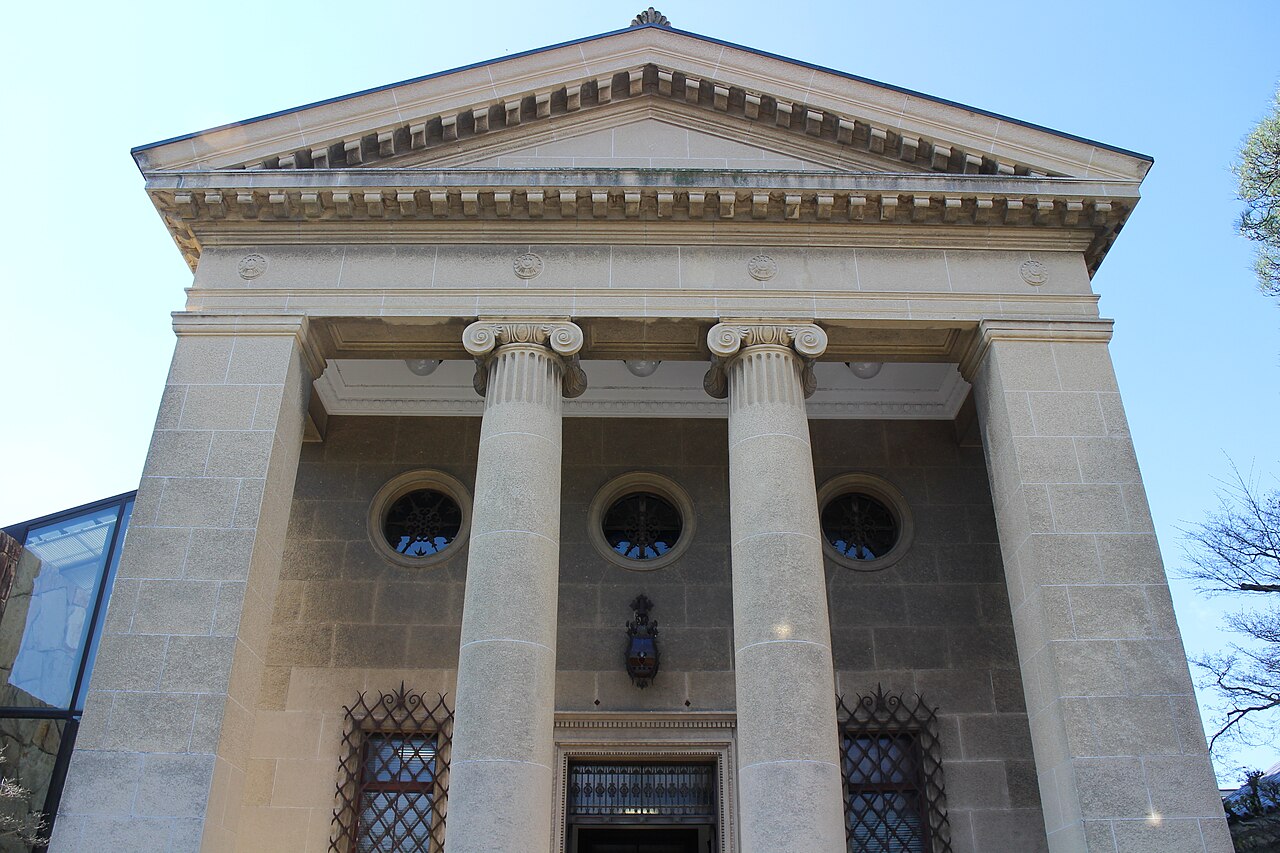
The Ohara Museum of Art, inside the Bikan area, was founded by a businessman who contributed to Kurashiki's cultural development, and its building has an exterior modelled on the appearance of a Greek temple. The collection runs to about three thousand works, from ancient Egyptian art to Western contemporary art and modern and contemporary Japanese art.
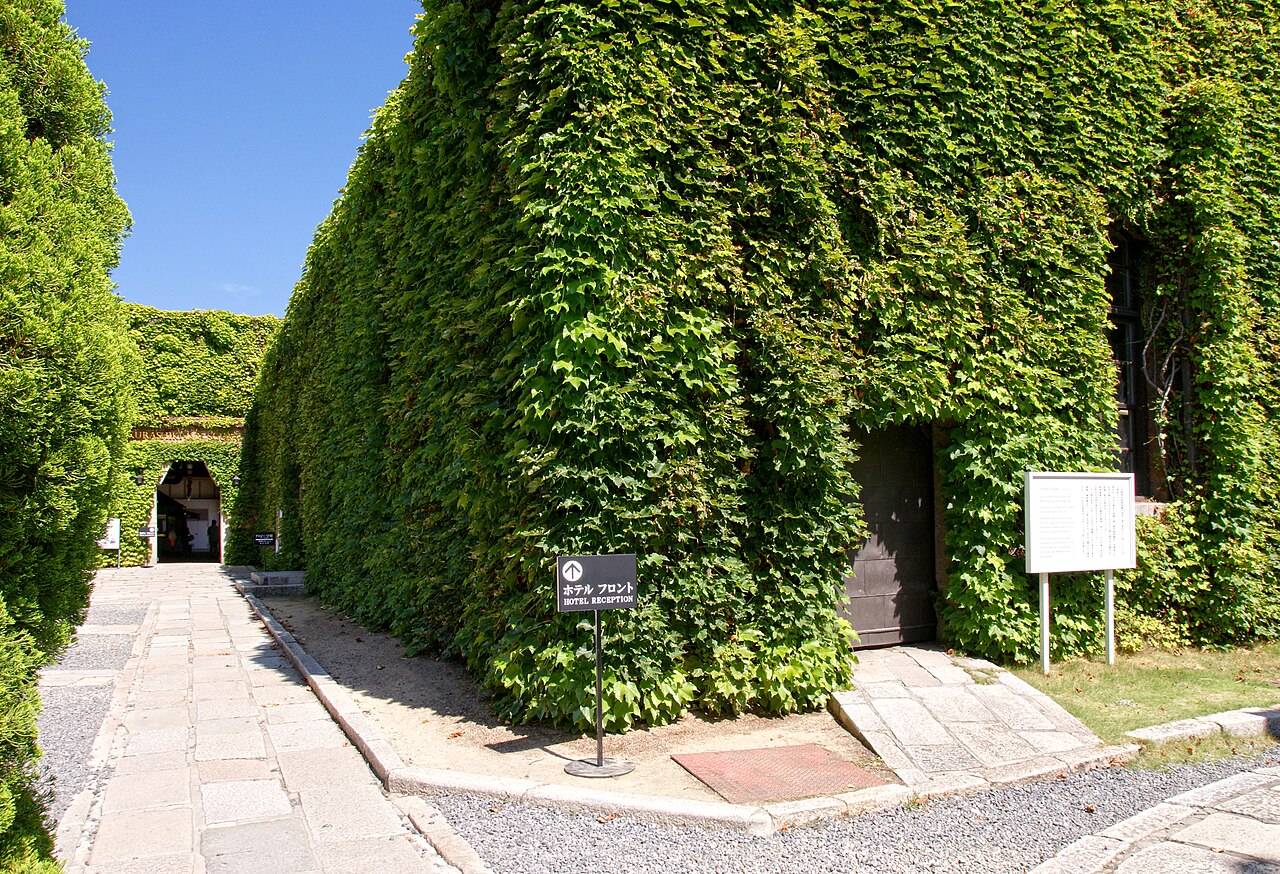
In the main building, the works to look for are El Greco's "The Annunciation" and Claude Monet's "Water Lilies", alongside works by Picasso, Renoir and Gauguin that a painter collected in Western Europe. Pass through the ivy-covered stone-wall gate and Rodin's sculptures are there to greet you.
Two houses tied to the founding family extend the visit: a former family residence, a National Important Cultural Property where successive heads of the family lived, presents the family's collection and history. The family's former villa, known for its green roof tiles, is opened to the public twice a year, in spring and autumn, so a visit in either season can take it in.
UKIYO-E KURASHIKI shows about one hundred selected works by a woodblock-print artist and his disciples, including a work depicting a giant skeleton. The quarter has many cultural sightseeing facilities, the Ohara Museum of Art and Kurashiki Ivy Square among them.
After Sunset: the Lit-Up Quarter
After sunset the whole quarter begins to be wrapped in gentle light, the white-walled buildings are reflected on the river surface, and the townscape changes in appearance. From dusk the district is wrapped in soft lights, and staying past that point gives you a second version of the streets you walked in the morning.
The night lighting was produced by a lighting designer, and it began through cooperation between Kurashiki City and nearby residents. The illumination of the townscape and buildings makes the wooden structure and white walls stand out with shadows, and that contrast is the thing to look for as you walk.
Lighting events are held each summer and again toward spring, lighting the whole quarter, so a visit in those seasons can be planned around an evening. The regular lighting runs daily; the end times by season are in the table below.
Beyond the Canal: Tamashima
Tamashima, a port town within Kurashiki, was a port of call for the ships of the Kitamae-bune trade in the Edo period, and its nostalgic Showa-era scenery remains. Five dense shopping streets run through the town, with Showa-retro scenes scattered among them, and long-established shops selling Japanese sweets remain around those streets.
A shrine reached by climbing a few steps looks down over the town, and its grounds are very quiet. A local bridge sways a little with each step as you cross it, and on the harbour side the air carries the scent of the sea.
Rush-grass ice cream, sold at a shop in the town, carries a faint scent of rush grass. At a long-established shop you can take part in a tea gathering where tea is prepared for you. The harbour morning market draws about two thousand visitors.
Getting to Kurashiki
New to rural buses and one-man trains? See how to ride them, step by step.
| Leg | How | Time or charge |
|---|---|---|
| Tokyo to Okayama | Shinkansen (Nozomi/Sakura) | About 3 hours 20 minutes |
| Shin-Osaka to Okayama | Shinkansen (Nozomi/Sakura) | About 50 minutes |
| Hiroshima to Okayama | Shinkansen (Nozomi/Sakura) | About 40 minutes |
| Okayama to Kurashiki | Conventional line | 17 minutes |
| Okayama Momotaro Airport to Kurashiki Station north exit | From the airport | About 35 minutes |
| JR Kurashiki Station to the Kurashiki Bikan Historical Quarter | On foot | About 15 minutes |
| Kurashiki Station to Honmachi street | On foot | About 15 minutes |
| JR Kurashiki Station south exit to Hayashi Genjuro Shoten | On foot | About 15 minutes |
| Kurashiki City Hall main building east parking lot to the Kurashiki Bikan Historical Quarter | On foot | About 1 km, about 15 minutes |
| Kurashiki Bikan Historical Quarter to Tamashima | By car | About 20 minutes |
Shin-Osaka and Hiroshima are the shorter Shinkansen approaches to Okayama, and from Okayama the conventional line reaches Kurashiki in seventeen minutes. If the connection at Okayama leaves time to spare, Okayama Korakuen and the castle in the morning fits before the onward ride. To be in the quarter early in the morning, look at places to stay in Kurashiki for the night before.
Hours and Fees
| What | Fare or time | Note |
|---|---|---|
| Ohara Museum of Art, March to November | 9:00-17:00 | Last admission 16:30 |
| Ohara Museum of Art, December to February | 9:00-15:00 | Last admission 14:30 |
| Ohara Museum of Art, closing days | Mondays, and the year-end and New Year period | Open on public holidays and in August |
| Ohara Museum of Art, general admission | 2,000 yen | |
| Ohara Museum of Art, under 18 (high school, junior high and elementary school students) | 500 yen | |
| UKIYO-E KURASHIKI, admission | 1,300 yen general, 1,000 yen high school and university students, 500 yen elementary and junior high school students | |
| UKIYO-E KURASHIKI, times | 10:00-18:00 | Closed on Tuesdays (open if the Tuesday is a public holiday) |
| Kurashiki river boat, adult | 1,000 yen | Same-day tickets and web reservations |
| Kurashiki river boat, child (ages 5 to elementary school) | 500 yen | Children under 5 ride free of charge |
| Kurashiki river boat, departures | 9:30 to 17:00, every 30 minutes | Tickets sold at the tourist information office on the day of travel |
| Kurashiki river boat, days off | Second Monday, March to December (excluding holidays) | January to February: runs on Saturdays, Sundays and public holidays |
| Kurashiki Bikan quarter lighting | Sunset to 21:00, October to March; sunset to 22:00, April to September | Every day |
Fees and hours were checked against official sources between 12 October 2026 and 2 November 2026.
For a guided walk or an activity arranged ahead of time, you can compare Kurashiki tours and activities on GetYourGuide. For a second destination in the same prefecture, Takahashi's castle town, also in Okayama Prefecture makes a similar day.
Thinking of staying overnight?
Compare places to stay near Kurashiki, Okayama, Japan →
Disclosure: This post may contain affiliate links. If you book through them, we may earn a commission at no extra cost to you.