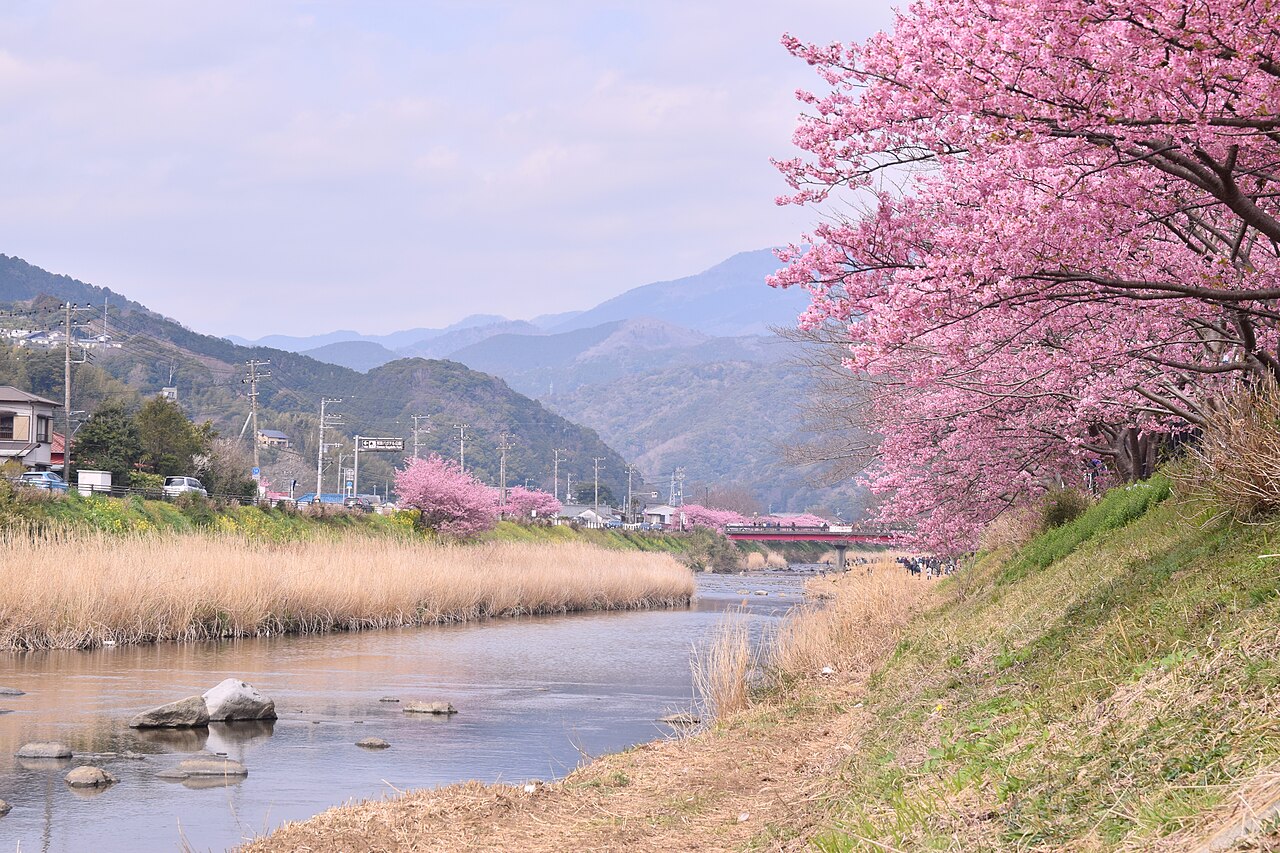
In Kawazu, pink Kawazu-zakura colour the town during the Kawazu Cherry Blossom Festival held each year. Inland, Kawazu Nanadaru has seven waterfalls, and at the geyser visitors can watch the eruption while soaking their feet in the foot bath. Kawazu suits travelers who want blossom, a waterfall walk and onsen water in the same trip rather than a single sight.
Kawazu-zakura Along the River: Pink Trees, Stalls and the Original Tree
If a trip can be set for the bloom, which begins from early February each year, build it around a walk beside the cherry trees on the Kawazu River.
Walking the river bank puts visitors beside the rows of cherry trees that bloom along the water. The flowers are pink, and the trees are managed mainly by a volunteer group. A spring walk along the river takes in views of the riverside scenery.
Visiting during the festival adds many food stalls, cherry tree illumination and various events. The festival's own guide covers daytime strolls, night cherry blossoms and meals. Returning after dark shows the trees under illumination.
Looking for the original tree leads to the garden of a private home in Tanaka, Kawazu. Kawazu-zakura is an early-blooming cherry that was discovered by chance in the town. It is thought to be a natural hybrid of the Oshima cherry and the Kanhi cherry lineages.
Walking the Seven Waterfalls of Kawazu Nanadaru
Rather than stopping at a single waterfall, follow the promenade through, since the suspension bridge and the Kamadaru viewing deck both belong to the trail.
Walking the waterfall trail promenade lets visitors see the waterfalls along the way. Member shops of the Kawazu Nanadaru tourist association lend wheelchairs, and visitors can reach Shokeidaru by wheelchair. Crossing the suspension bridge on the trail gives a view of Ebitaki. The shape of its flow resembles a shrimp's tail fin, which is the origin of its name.
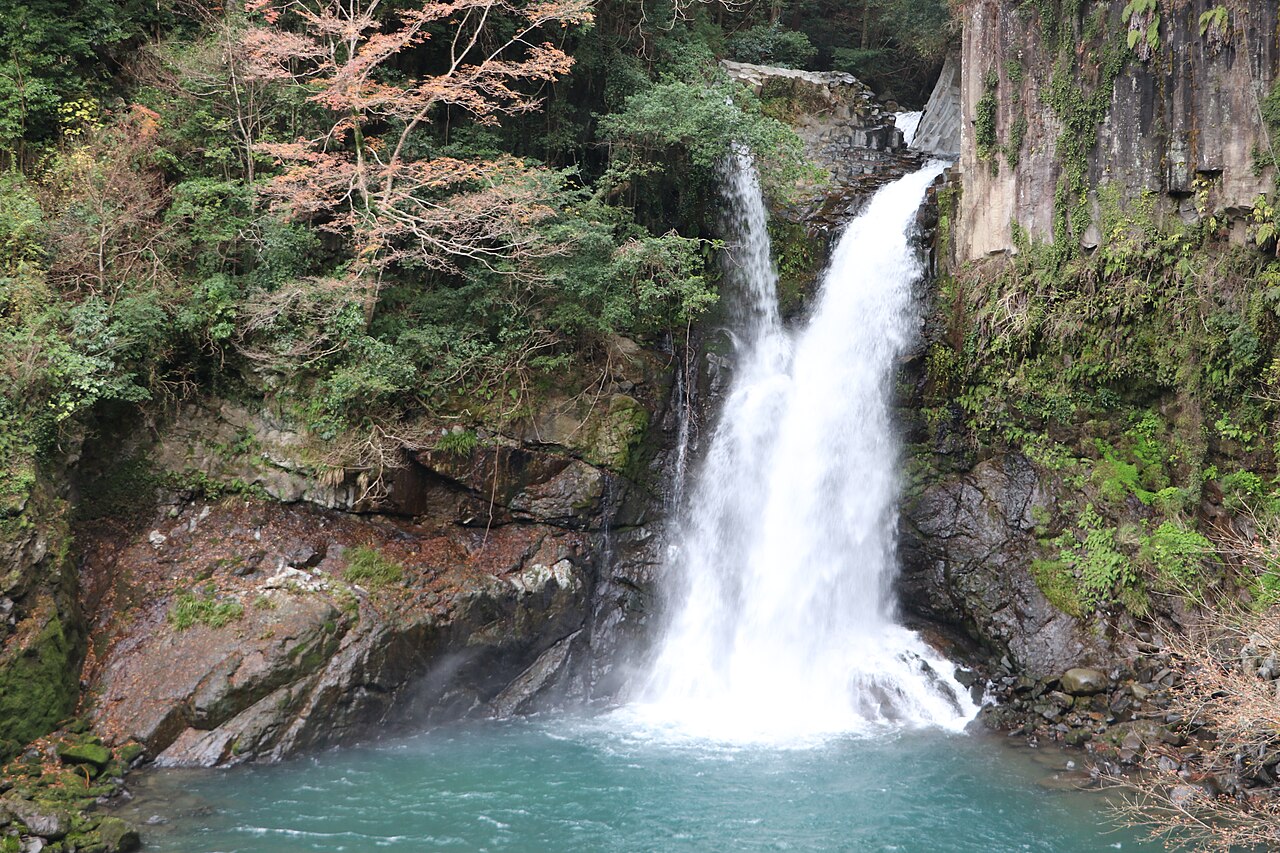
Standing on the viewing deck at Kamadaru brings visitors close to the waterfall. The deck is close enough that spray from the falls reaches them. Along the trail there is the sound of flowing water and of the wind passing through the trees.
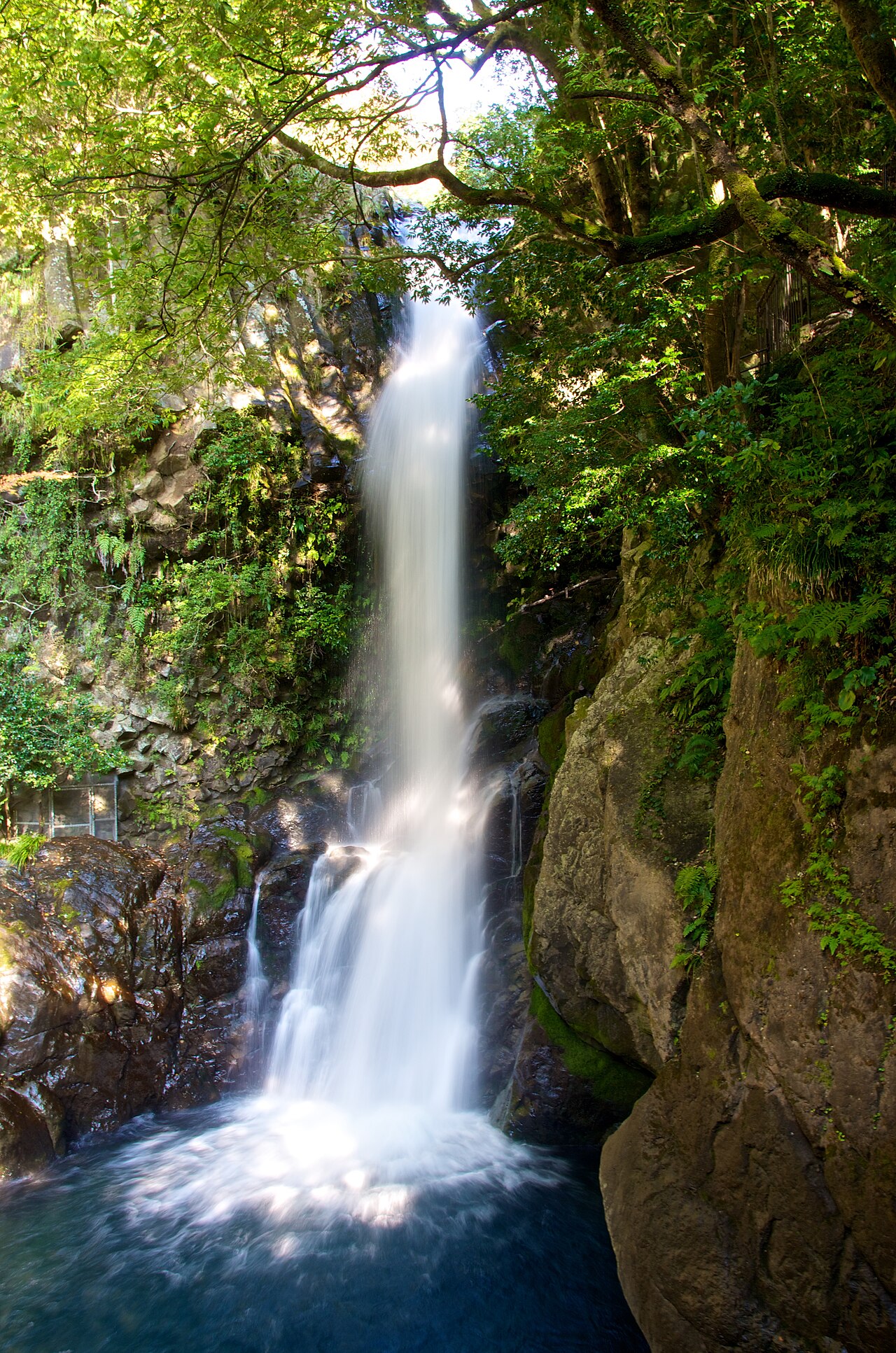
Looking at Deaidaru shows separate streams meeting and becoming a single stream. The water there is a clear blue colour. Hebitaki is named for a rock pattern that resembles snake scales, and its basalt rock surface is something to look at. Kanidaru is a small waterfall where visitors see the contrast between the white flow of water and the surrounding green.
Old-road Falls, Wasabi Fields and Tea Houses on the Nanadaru Road
For a contrast with the named falls, look for the waterfall between Nikaidaru and Kamadaru, which lies a short walk past the wasabi fields.
Walking to Nikaidaru brings visitors to a waterfall that drops in steps just below the Kanten bridge along the old road. Many trees grow thickly around it. Between Nikaidaru and Kamadaru, a further waterfall spreads over a large single rock. Visitors reach it by walking a short distance past the wasabi fields.
Passing the fields shows where wasabi is grown, because they are made in places with clean spring water. The wasabi flowers are small and white, and in spring they bloom across the whole field. Daruma Chaya, a soba restaurant, stands inside the town-run parking lot at Kawazu Nanadaru.
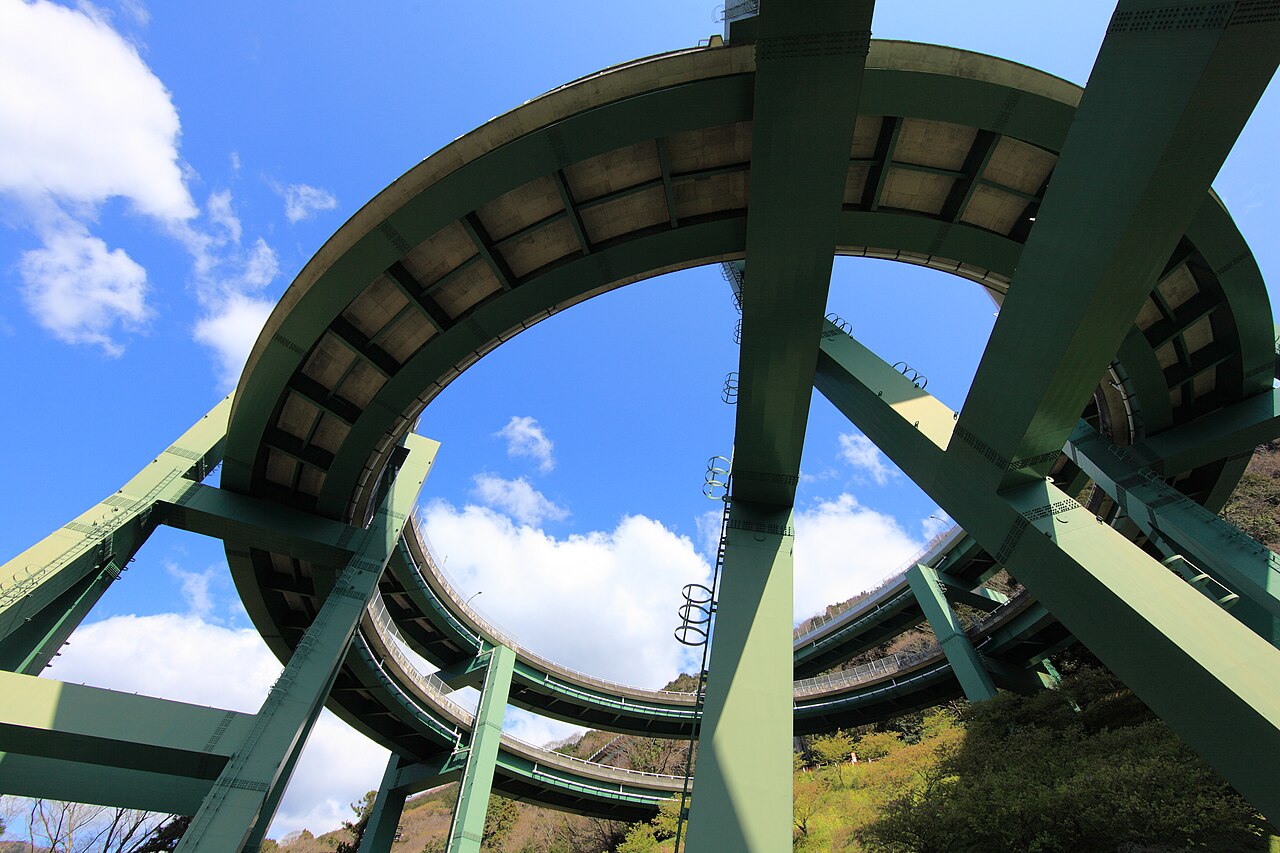
Taking a break between walks at the tea house brings a charcoal scent. The hearth there is lit in the cold season. Another dining place among the Nanadaru shops introduces crushed strawberry and boar hot pot dishes. The Kawazu Nanadaru Loop Bridge is a large double loop bridge.
Mine Onsen Geyser and Foot Baths
Travelers with no time for a full bath can still watch the geyser while soaking their feet, and can carry onsen water home from Hot Station.
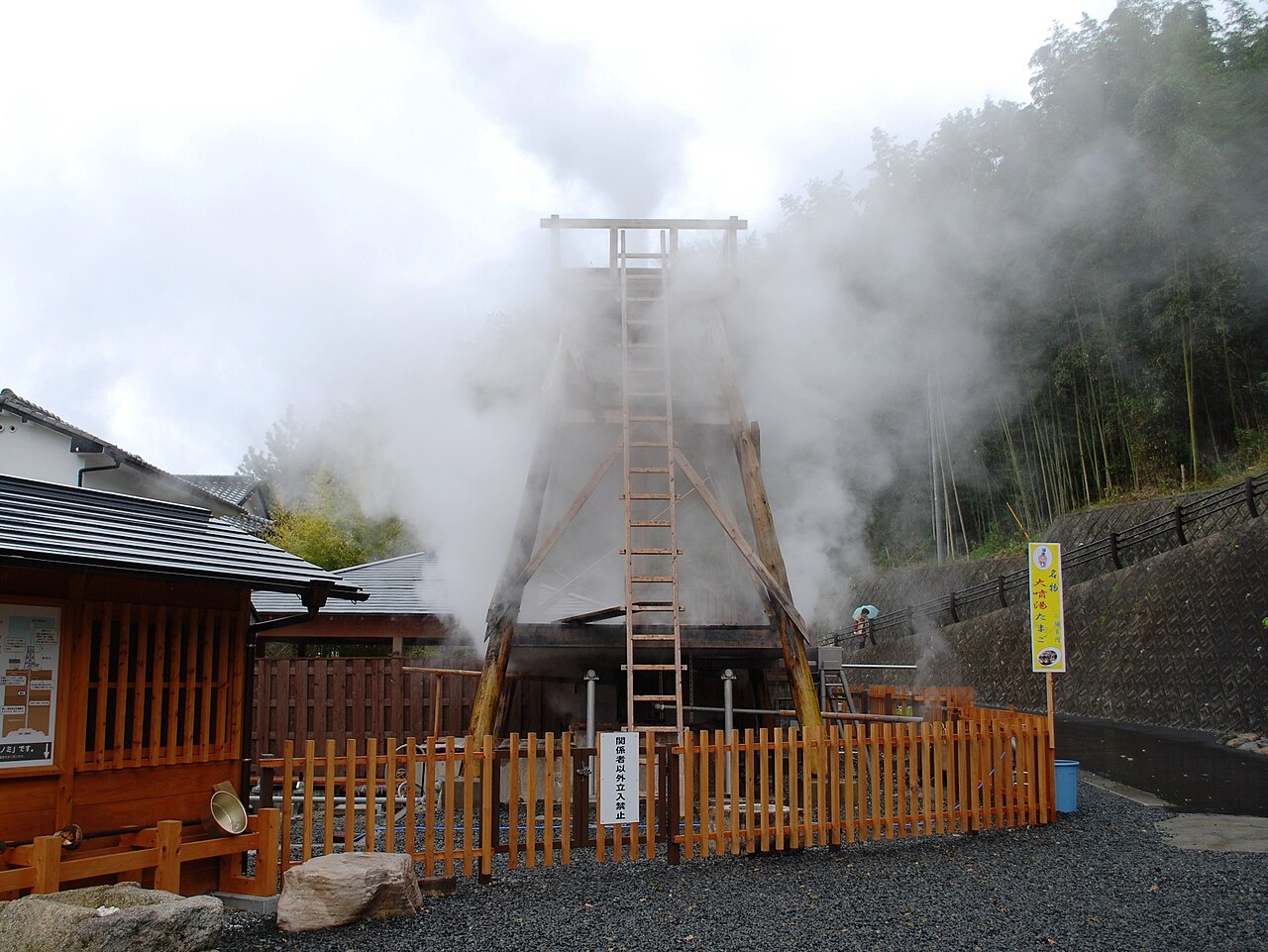
Soaking feet in the foot bath at Mine Onsen Fountain Park, visitors can watch the geyser's eruption. The geyser is self-flowing. Visitors can also make eggs in the hot spring.
Putting money in at Hot Station makes hot water come out of a hose. Hot Station is an unmanned sales system for hot-spring water produced by centralized management of the hot springs. Visitors then put the water in a container, take it home and use it as a hot-spring bath at home.
River-sound Baths, Funado no Banya and Local Tastes
From autumn to winter, plan a stop around taste as well as bathing, since that is when mokuzu crab carry roe and miso.
Soaking in the roofed, gazebo-style open-air bath of a bathhouse in Kawazu, visitors hear the murmur of the Kawazu River. That bathhouse, a separate facility from Funado no Banya, also has a bubble bath. When the cherry trees are in bloom, cherry blossoms can be seen from its open-air bath.
Using the open-air bath at Funado no Banya itself means leaving soap and shampoo aside, because they cannot be used there. Bathers are asked to use the shower room inside the building. A foot bath is available at the facility as well.
Buying at the facility's shop covers locally caught seafood, local farm products and processed goods. Funado no Banya's seafood barbecue includes turban shells, dried fish, squid, shrimp and seasonal vegetables. Nature experience programs are offered here too.
Looking for mokuzu crab is a matter of season, because they reach their egg-laying season from autumn to winter, when they are full of roe and miso. Wasabi-based dishes are sold in Kawazu. In summer, blueberry all-you-can-eat sessions are held at local farms. Travelers who want more than a single meal can compare places to stay in Kawazu.
Beyond the Falls: a Great Camphor, Stone Buddhas, Forest Walks and Greenhouses
On a rainy day choose the greenhouse, and on a dry day take the camphor tree and the stone Buddhas of Kannonyama instead.
Facing the main hall of one of Kawazu's shrines, visitors find its camphor tree at the back left. The tree is designated a national natural monument. On the mountainside of Kannonyama, in the mountains of Nashimoto, stands a set of Kannon figures. The stone Buddhas are carved from tuff stone and show a variety of expressions.
Following the hiking course in a park here takes visitors through a cypress forest and abundant plants. The course is designed with a gentle path width and slope for easy walking. Visitors can do forest bathing along it.
Looking at carnations at the Kawazu Carnation Sample Garden happens inside a warm greenhouse. Visitors can view them even on cold days and rainy days. The plants include test-cultivated varieties that are not on the market.
Visiting Kawazoo is a visit to frogs. The facility exhibits and keeps them. Many are always on display, from rare frogs of various countries to familiar frogs.
Getting to Kawazu, Hours and Fees
New to rural buses and one-man trains? See how to ride them, step by step.
Kawazu Station sits on the Izukyu line from Atami, and a customizable private tour from Atami that includes the Kawazu falls is one way to reach the waterfalls.
| Item | Details (as listed) |
|---|---|
| Odoriko from Tokyo to Kawazu Station | about two hours forty minutes, no transfer |
| From Kawazu Station to the cherry avenue | about three minutes on foot |
| From Kawazu Station to Kawazu Nanadaru Onsen | twenty to thirty minutes by bus or taxi |
| By car from Numazu IC | about eighty kilometers; about one hour twenty minutes |
| Seven falls trail | promenade about one hour one way; walkway eight to eighteen June to September, eight to seventeen October to May |
| Mine Onsen geyser | eruptions hourly from nine thirty to three thirty, about one minute each |
| Funado no Banya open-air bath | nine to five; three hundred yen for adults, one hundred for elementary students; shop closed Tuesdays |
Thinking of staying overnight?
Compare places to stay near Kawazu, Shizuoka, Japan →
Disclosure: This post may contain affiliate links. If you book through them, we may earn a commission at no extra cost to you.