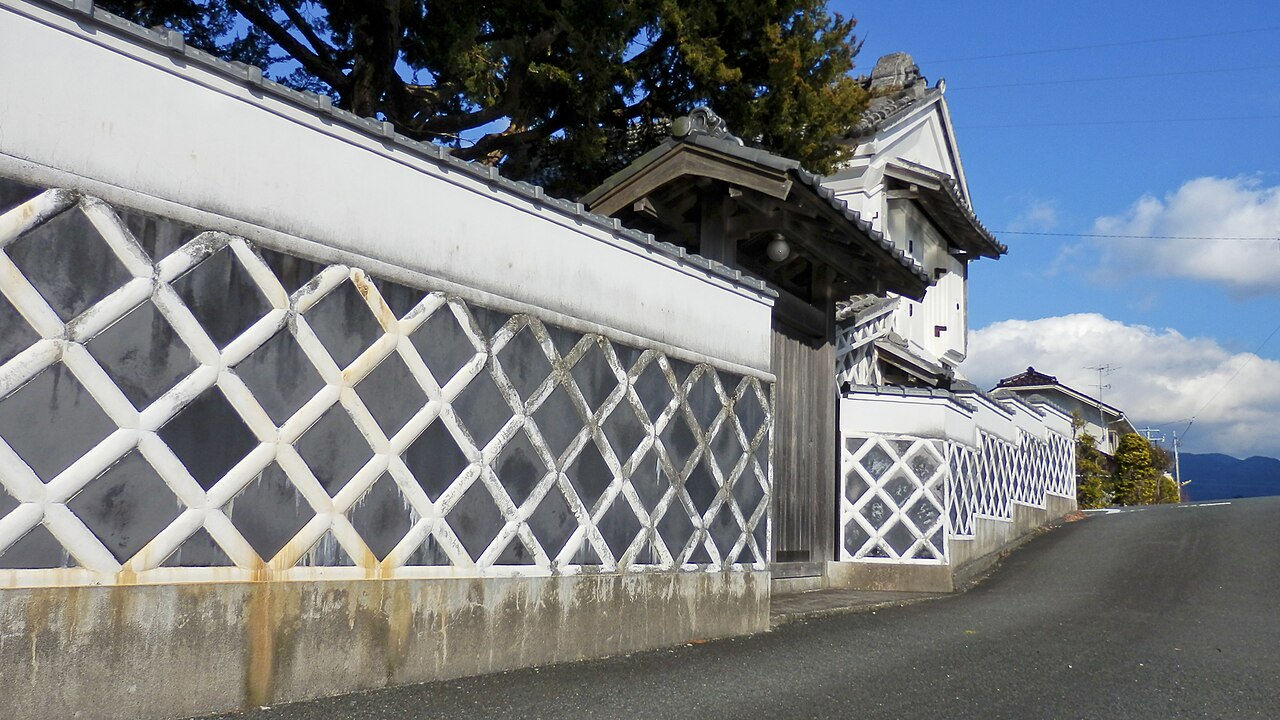
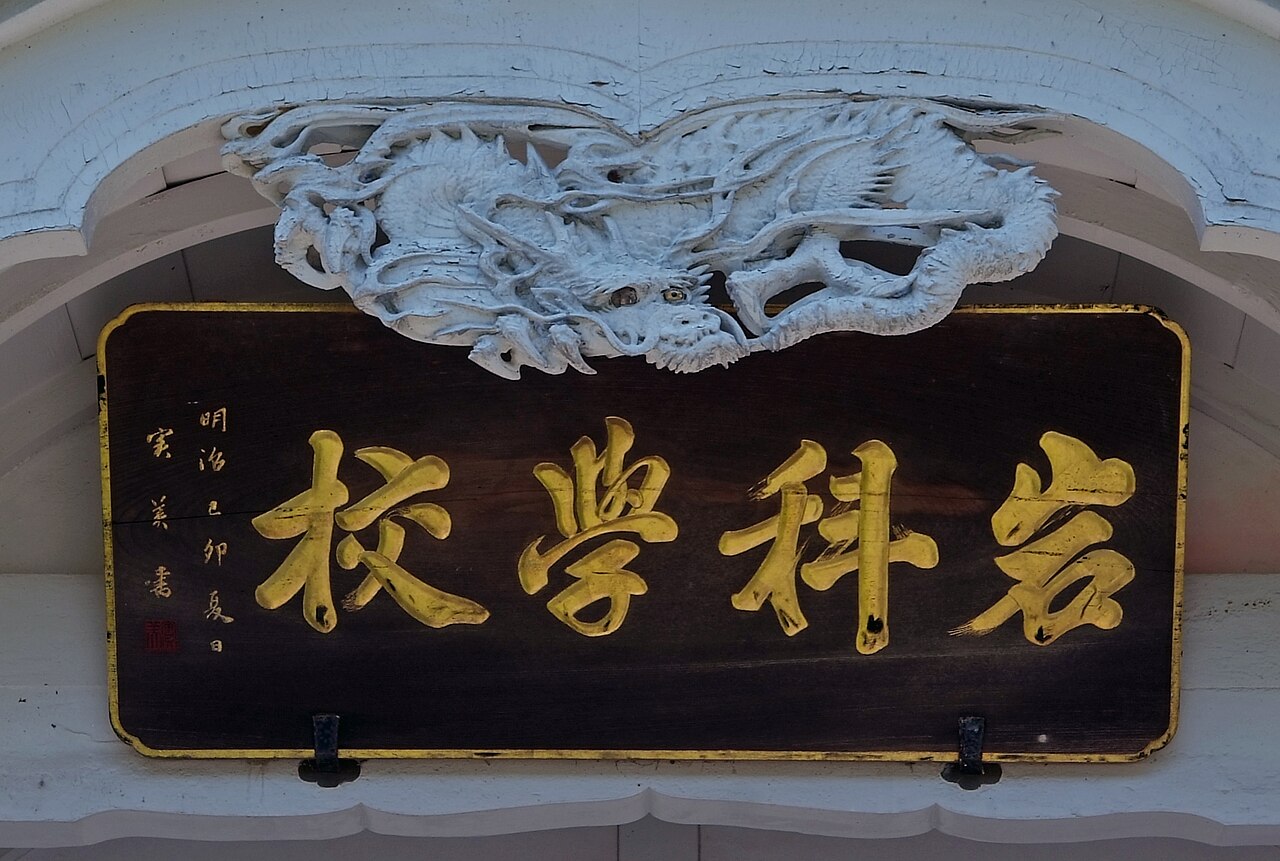
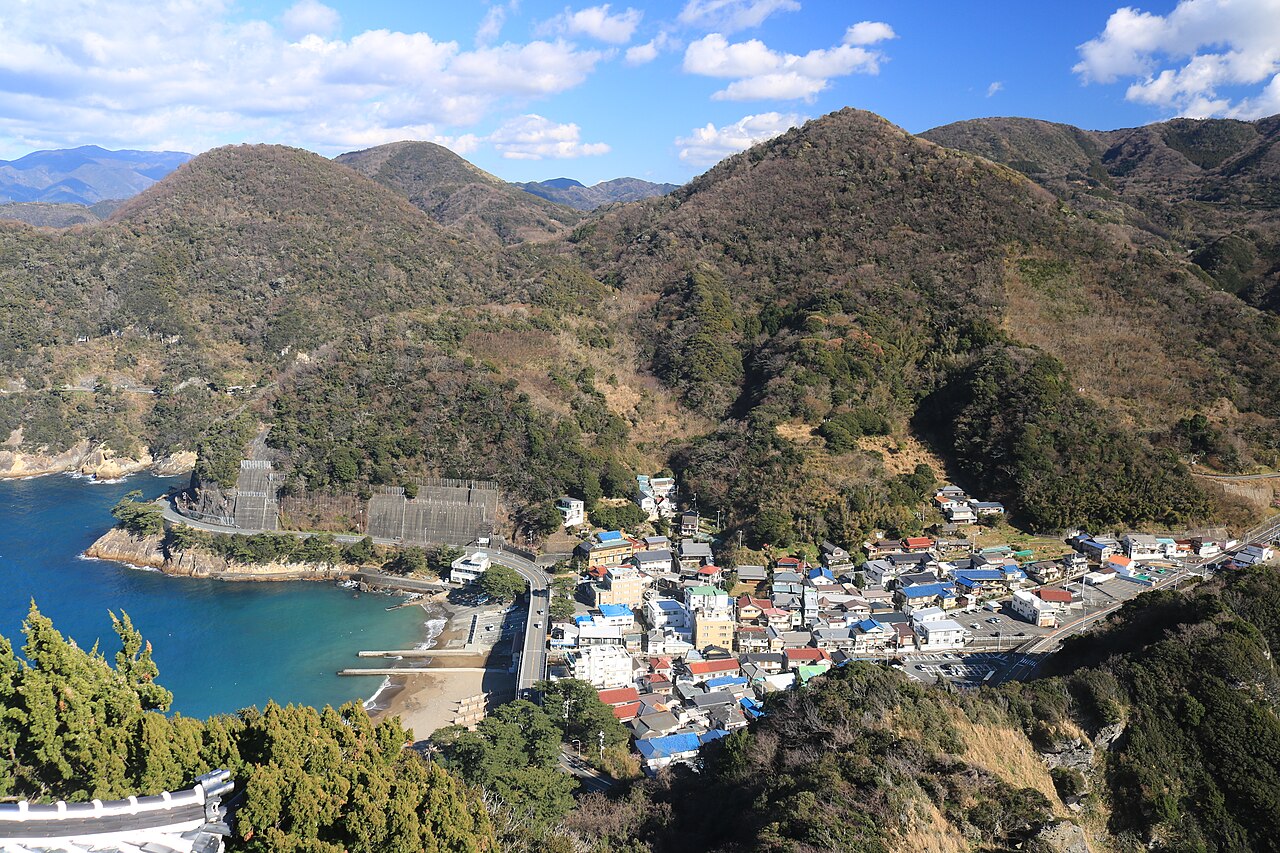
Matsuzaki is a harbour town in West Izu where some old houses keep namako-kabe walls and storehouses, white plaster against black roof tiles. Above the Iwashina School entrance, a dragon is said to have been carved by Irie Chohachi with a borrowed chisel. The leaves around sakuramochi come from Oshima cherry, native to Izu, and in spring Somei-Yoshino trees line the Naka River.
Namako Walls and the Historic Walk
In the harbour town, narrow alleys run in a tangle and the houses stand packed close together, so the walk is more a wander than a straight line. Some old houses keep namako-kabe walls and storehouses, where white plastered walls and black roof tiles set each other off.
The pattern is simple to read: square flat roof tiles are laid across the wall, and the joints between them are coated in white plaster raised into a rounded, half-cylinder ridge. It is the detail to look for first.
A historic walking course links the town's historic sites. Walked once without stopping, the course takes about thirty minutes; with time to linger, a loop runs about an hour and a half, or closer to two if you stop often. When time is short, walk it straight through; with an afternoon to spend, the full loop leaves room to linger at each site.
Iwashina School and Chohachi's Plaster Art
Construction of the Iwashina School began in April of the twelfth year of Meiji and was completed in September of the following year. The design was the work of two carpenter master builders from Iwashina village, Kikuchi Ushitaro and Takagi Kyugoro.
The plaque reading Iwashina School at the front entrance was written by the Grand Minister Sanjo Sanetomi, and the dragon carving above it is said to have been carved by Irie Chohachi with a chisel borrowed from the master builder.
In the west room of the second floor, the transom carries Chohachi's thousand cranes, each drawn in a different shape. If you can step inside only one building in town, the school repays it with the carved plaque and the cranes; add the Izu no Chohachi Art Museum when you want to try plaster work yourself.
The museum runs hands-on sessions in shining mud balls, plaster kote-e pictures and straps. Both the school and the museum are closed on Thursdays, or the previous day when a national holiday falls on a Thursday, but open at New Year, Golden Week and Obon.
Sakura Leaves, Monaka and Bentennabe
The cherry leaves used for sakuramochi come from Oshima cherry, a white-flowered mountain cherry native to Izu, whose leaves lack the fine down of other cherries and carry the aromatic compound coumarin. Here the trees are planted in fields and are kept from flowering, because they are grown for their leaves.
Picked leaves are salted, and after about half a year they turn amber and take on a sweet fragrance. The Chomeiji style has a skin of joshinko rice flour with a chewy bite and comes wrapped in two leaves. One version is filled with smooth koshian made from naturally farmed Hokkaido adzuki beans.
The Domyoji style has a dough with a distinct grain of rice and a coarse bean paste with some beans left whole, again wrapped in two leaves. For savoury food, the public lodge Izu Matsuzaki-so serves bentennabe hotpot, seaweed tempura and a spiny lobster set meal.
Baigetsuen, the main shop for Matsukasa monaka, a local speciality, sits near the shopping streets from Enahama-dori to Ginza-dori. Eirakudo, next to the town office, sells Yokomichi manju and Izu no Chohachi. In one corner of that shop, a small room with a sunken hearth serves yakimochi and shiruko. Choose the lodge for a sit-down meal, Eirakudo for a short stop.
Blossoms, Flower Paddies and the Ishibu Terraces
Along the Naka River, about twelve hundred Somei-Yoshino cherry trees are planted over a six-kilometre stretch. In blossom season, bamboo strips with haiku are hung on the trees. The blossoms are also lit up at night during the blooming period.
In the flower fields made in fallow rice paddies, blooms of many colours continue through May. They begin flowering around mid-February in a typical year and can be enjoyed until the fifth of May. A free flower-picking event runs from the first to the fifth of May. A foot bath is installed at the fields.
The Ishibu terraced rice fields owe their present form to residents who led a restoration effort in the twelfth year of Heisei to revive the region. In March the ridges between the paddies are cut and their lines stand out sharply, and in mid-May the planting goes in and young seedlings fill the terraces.
From late September to early October red spider lilies bloom in many places across the terraces, and in autumn the paddies shine gold. On clear days the observation deck shows the Southern Alps across Suruga Bay and Mt Fuji over the mountain to the right. Spring suits the river and the paddies; late September suits the lilies, and autumn the gold.
Sengan-mon, Kumomi and the Sea
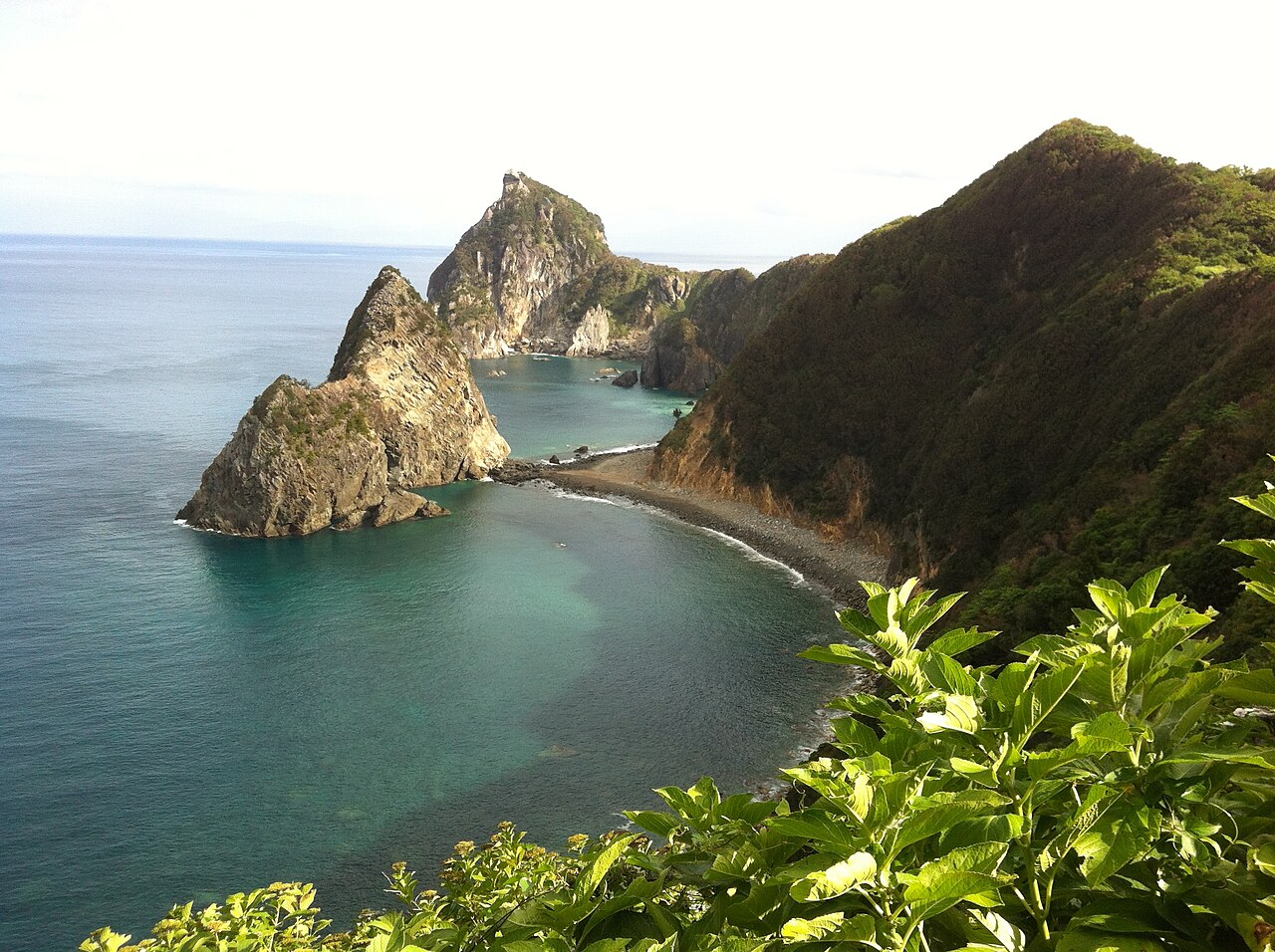
The trail to Sengan-mon starts by crossing a bridge over a river, then follows a four-hundred-metre concrete path to the coast. A two-hundred-metre flight of stairs, a forty-metre climb in all, leads to a viewpoint at the midpoint, and from there a two-hundred-metre descent brings you to the shore.
The sea-eroded arch appears after a hundred-metre walk over rough, uneven stones. The rock has a tunnel through its middle, a fifteen-metre-high and ten-metre-wide opening. The walk suits those who can take the stairs and the rough stones at the end; the concrete path itself is short.
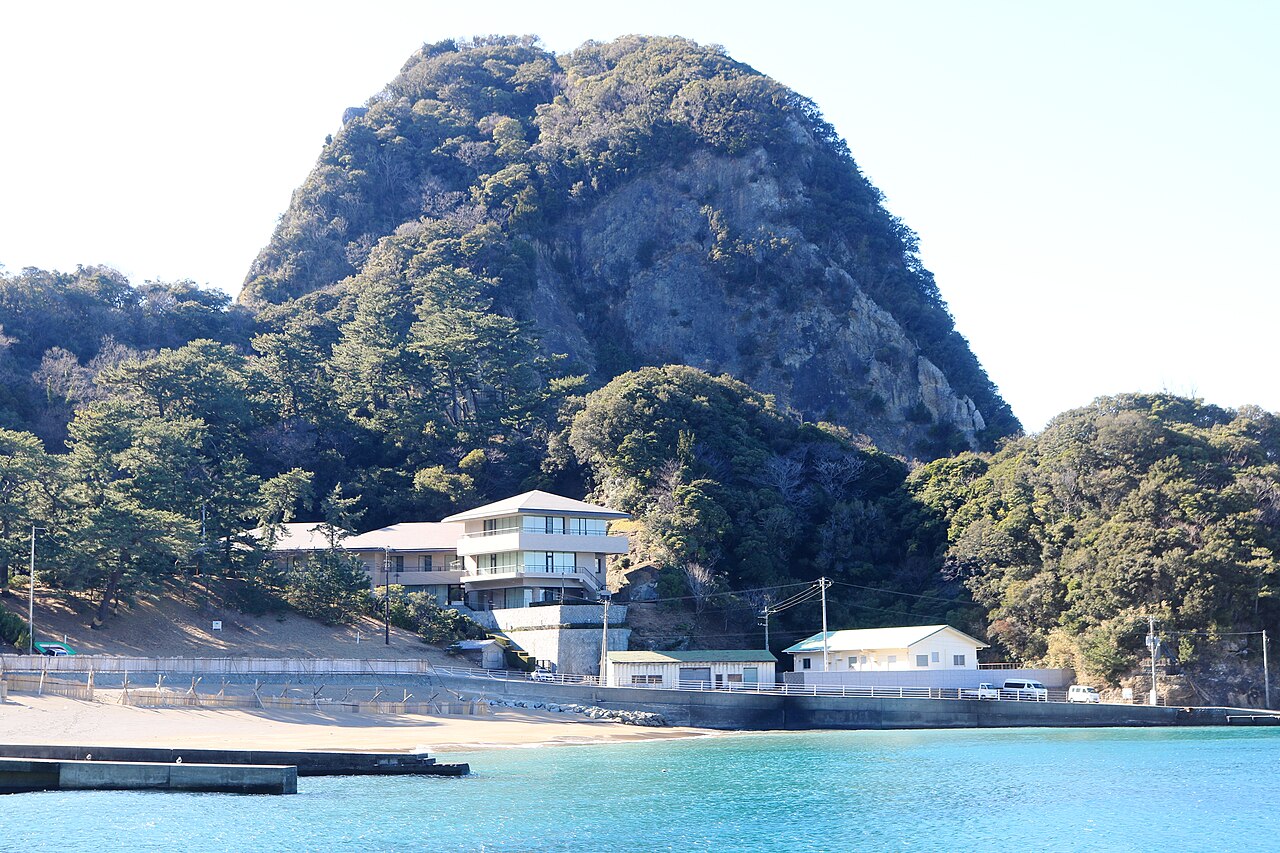
At Kumomi beach you can swim and snorkel while looking at Mt Fuji. In summer four swimming beaches are set up, Iwachi among them. The sandy beach at Matsuzaki itself is shallow and serves as a swimming beach in summer. Rows of pine trees stand behind the embankment and run partway along that beach.
From February to March, Kawazu cherry blossoms bloom early at Kumomi. In Matsuzaki, a local autumn festival in November brings out portable shrines and floats. Kumomi Asama Shrine is open for worship twenty-four hours, with caution advised at night. As of the eighth of September, twenty twenty-six, Murooka-do cannot be entered for the time being after a large rockfall.
Getting to Matsuzaki
| Leg | How | Time |
|---|---|---|
| Shinagawa Station to Matsuzaki | Limited express Odoriko to Izukyu-Shimoda Station, then Tokai Bus | About 2 hours 30 minutes, then about 50 minutes |
| Tokyo to Izukyu-Shimoda Station | Limited express Odoriko | 2 hours 40 minutes |
| Tokyo to Atami | Shinkansen | 55 minutes |
| Atami to Izukyu-Shimoda Station | Izukyu Line | 90 minutes |
| Izukyu-Shimoda Station to Matsuzaki Bus Terminal | Bus bound for Matsuzaki and Dogashima | 50 minutes |
| Matsuzaki Bus Terminal to the Chohachi Museum stop | Tokai Bus bound for Kumomi-Iriya or Yagiyama, then a 1 minute walk | About 10 minutes |
| Matsuzaki Bus Terminal to Iwachi Onsen | Tokai Bus bound for Kumomi-Iriya and Irozaki Lighthouse | 12 minutes |
| Matsuzaki to Ishibu Onsen | Tokai Bus bound for Kumomi-Iriya | 15 minutes |
| Ishibu Onsen to the Ishibu Terraces Exchange Hall | On foot | 40 minutes |
| Ishibu district entrance to the terraces | On foot, or by car | About 40 minutes on foot, or about 10 minutes by car |
At the terraces, the observation deck car park holds about twenty vehicles. The former Miura Elementary School car park holds about fifty; check official information before visiting.
New to rural buses and one-man trains? See how to ride them, step by step.
Hours and Fees
| Place | What | Hours or fee |
|---|---|---|
| Iwashina School | Opening hours | 9:00-17:00, last admission 16:30 |
| Iwashina School | Closed | Thursdays, or the previous day if a national holiday falls on Thursday; open at New Year, Golden Week and Obon |
| Iwashina School | Admission | 300 yen for adults; junior high school students and younger free |
| Iwashina School | Groups of 20 or more | 240 yen per adult |
| Izu no Chohachi Art Museum | Opening hours | 9:00-17:00, last admission 16:30 |
| Izu no Chohachi Art Museum | Closed | Thursdays, or the previous day if a national holiday falls on Thursday; open at New Year, Golden Week and Obon |
| Izu no Chohachi Art Museum | Admission | 500 yen for adults; junior high school students and younger free |
| Izu no Chohachi Art Museum | Shining mud-ball workshop | 700 yen per person |
| Izu no Chohachi Art Museum | Plaster kote-e workshop | 1,000 yen per person |
| Izu no Chohachi Art Museum | Strap workshop | 500 yen per person |
| Chohachi Memorial Hall (Jokan-ji) | Opening hours | 9:00-16:00, reception until 15:30 |
| Chohachi Memorial Hall (Jokan-ji) | Admission | 500 yen for adults |
| Nakase-tei (Meiji merchant house) | Opening hours | 9:00-17:00, no regular closing day |
| Former Yoda Residence | Opening hours | 10:00-16:00 from April to September; 10:00-15:00 from October to March |
| Roadside station Hana no Sanseien | Shop | 9:00-17:00 |
| Roadside station Hana no Sanseien | Dining | 11:00-14:30, closed Thursdays |
| Yoda no Sho (Osawa Onsen) | Bathing hours | 10:00-20:00, reception until 19:30 |
| Yoda no Sho (Osawa Onsen) | Bathing fee | 700 yen for adults |
| Noten-buro Yama no Ie (Osawa Onsen) | Bathing hours | 9:00-21:00, last reception 20:30 |
| Izu Matsuzaki-so | Walk-in bathing | 14:00-20:00, no regular closing day |
| Izu-Bun foot bath | Availability | 24 hours |
| Kumomi Asama Shrine | Worship | Open 24 hours; caution advised at night |
| Ishibu terraces | Viewing | Accessible 24 hours; caution advised at night |
| Flower paddies | Season | Around mid-February to May 5 |
| Murooka-do | Entry | Not possible for the time being after a rockfall |
The Izu-Bun foot bath is listed as available twenty-four hours. In winter the air is clear enough for stargazing. Both fall after dark, so they suit a night in town; for that, compare places to stay in Matsuzaki.
Where to stay
Places to stay near Matsuzaki, Shizuoka, Japan →
Disclosure: This post may contain affiliate links. If you book through them, we may earn a commission at no extra cost to you.