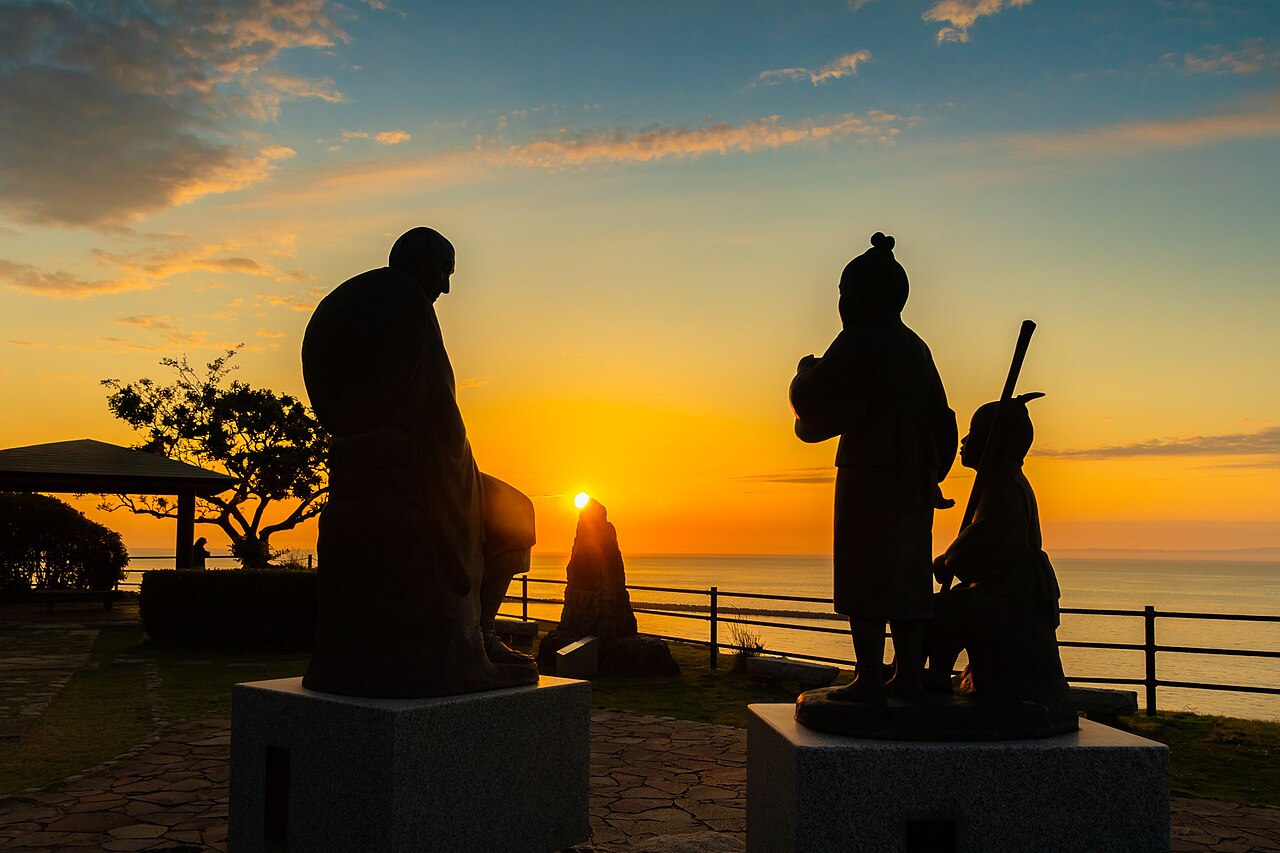
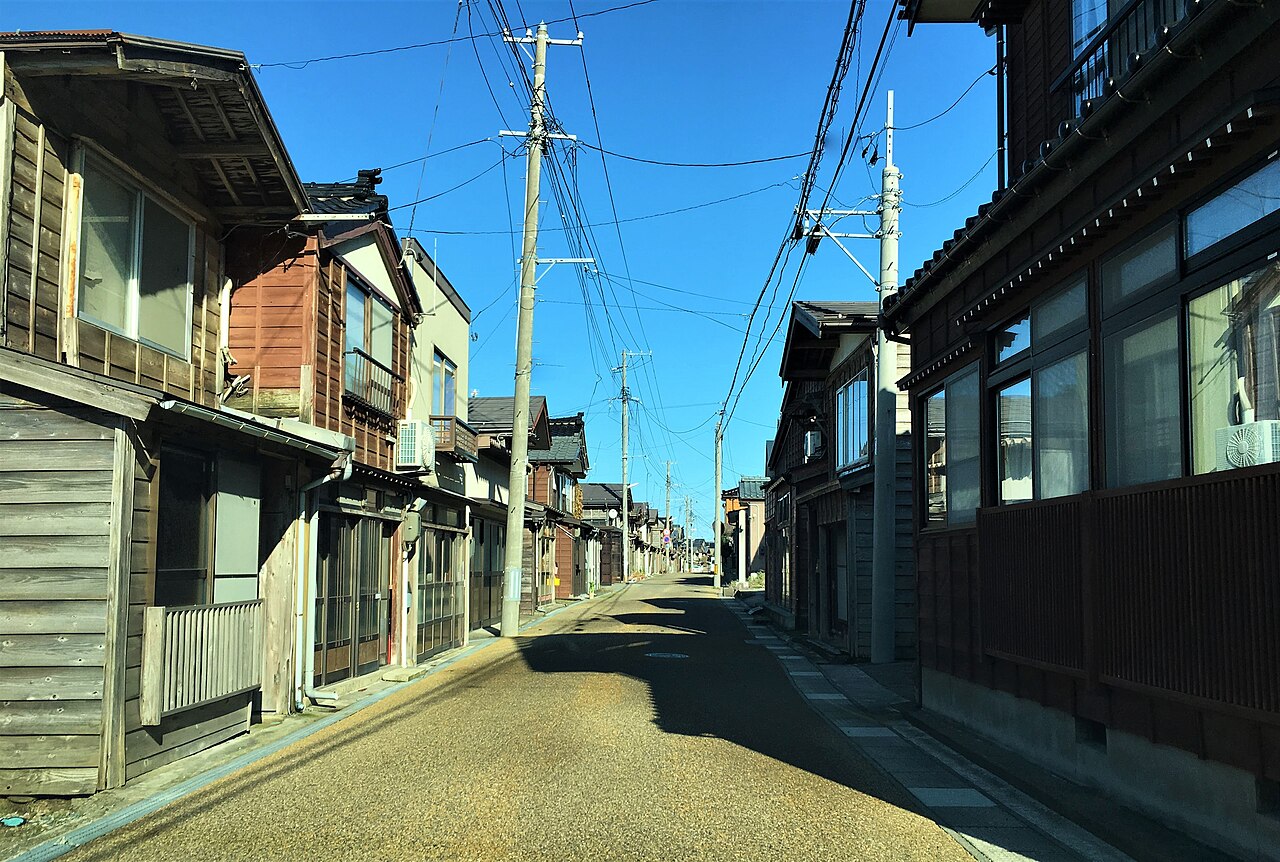
In the Edo period Izumozaki prospered as a Tenryo (shogunal) territory, as the landing port for Sado gold and silver and as a port of call for the Kitamaebune ships. A townscape of long townhouse (nagaya) buildings still retains traces of the past.
What Can You See at the Ryokan Memorial Museum?
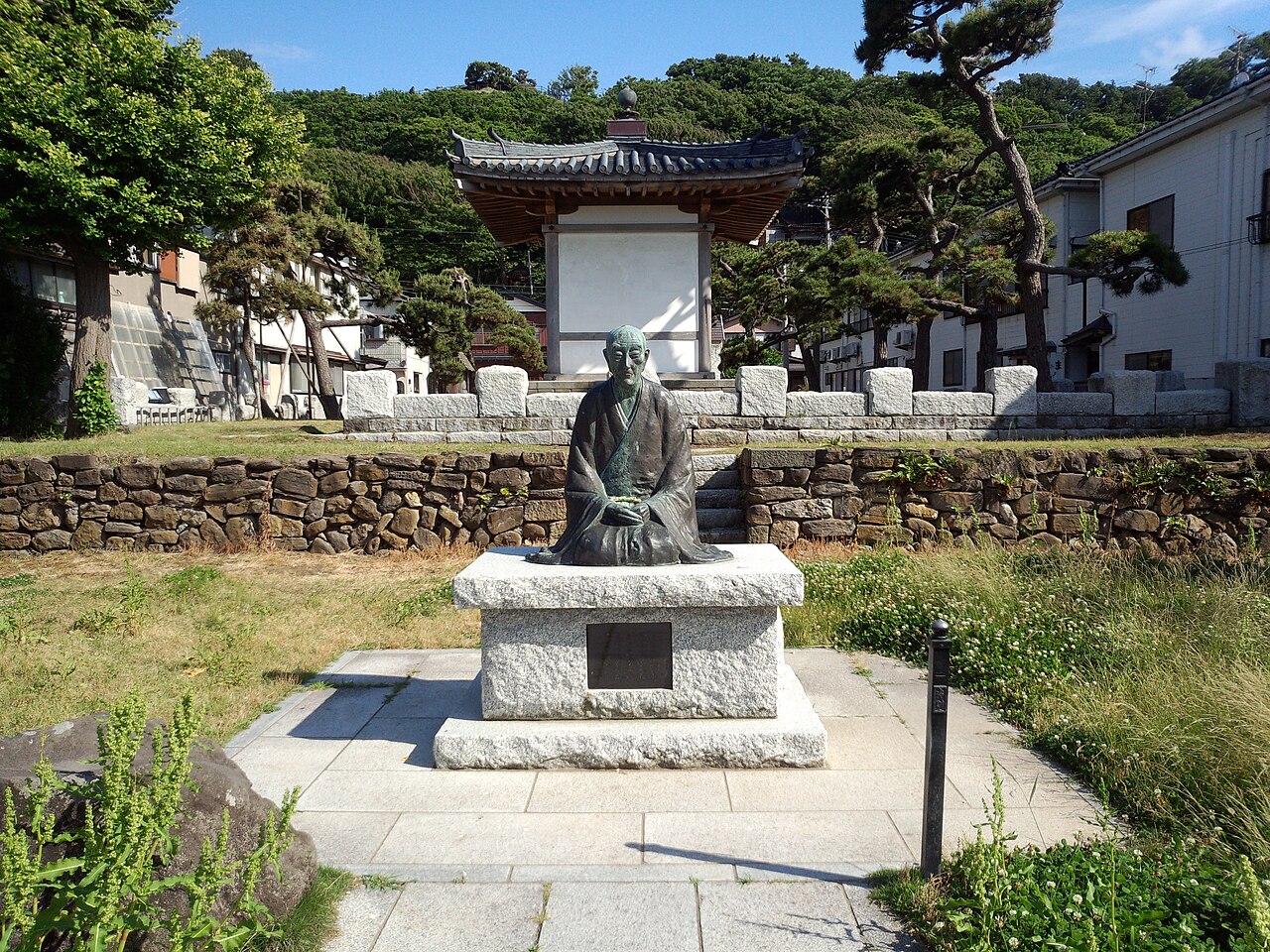
The Ryokan Memorial Museum stands on the Torageoka hill and was designed by Yoshiro Taniguchi. The approach path to the reception is designed to evoke a river's flow, leading from downstream to upstream.
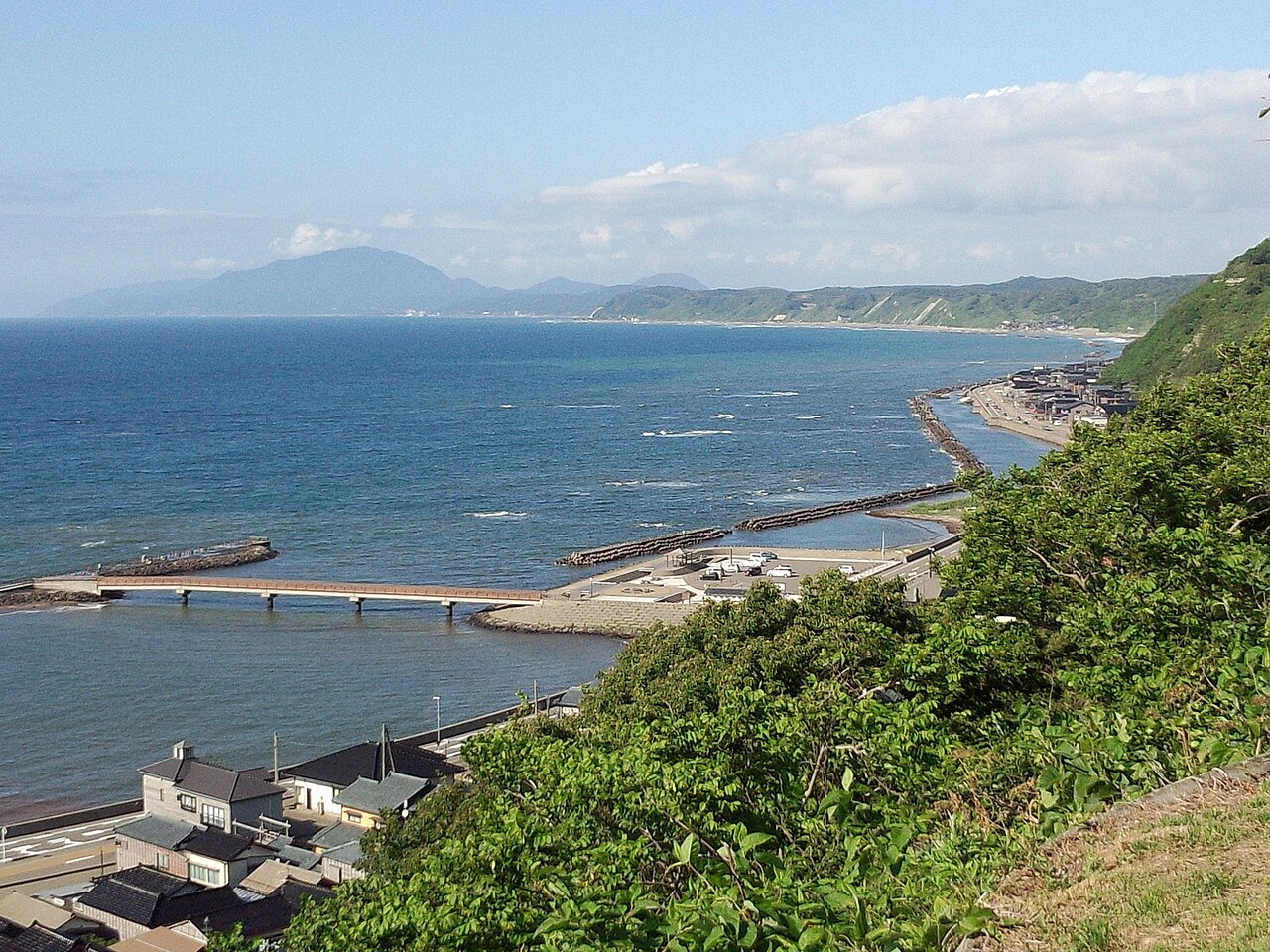
After reception, visitors walk a long corridor with the Sea of Japan and Sado Island on the right to reach the exhibition hall. Crossing it, visitors exclaim that the sea can be seen and what floats on the horizon seems to be Sado Island. A rest area next to the museum has a view of the sea and Sado Island below it.
Many of Ryokan's handwritten works, belongings and documents are on display inside the museum. Just inside the gate on the left stands a replica of the Gogoan, the hermitage where Ryokan trained in Buddhism. The museum grounds contain the grave of the literati painter Sen Unsen of Shimabara.
The garden was moved from a private residence and has heavy stone lanterns and garden stones. Cherry, garden wisteria, rose of Sharon, gardenia and bush clover show different appearances through the four seasons.
What Does Izumozaki Celebrate? Okesa, Lion Dances and Summer Festivals
The lion dance is a New Year tradition of Izumozaki town that has been carried out since the Genroku era of Edo.
Every year on January second and third, lions carried by young men from the shrines of each neighbourhood go round the houses of the tsumairi townhouse street one by one to ward off evil, to the sound of drums, flutes and conch shells.
The name Okesa is said to come from the word kesa. The Kyushu Ushibuka Hanya-bushi is said to have been carried by sea routes, blended with it and settled as Izumozaki Okesa.
The Izumozaki Taisen festival is held every year on June seventeenth. Its portable shrine procession starts from Ryokan-do at two in the afternoon. The Izumozaki Funamatsuri and fireworks festival is held every year on August fifteenth.
What Do People Eat in Izumozaki? Sazae Rice, Hamayaki and Fresh Fish
Izumozaki's sazae (turban shell) takikomi rice won the grand prix at an international local gourmet grand prix. The turban-shell rice is described as combining turban shells with a good texture, kombu broth with a savory taste and the scent of the shore, and Koshihikari rice.
The sazae rice can be eaten at Izumozaki restaurants, and the way it is served differs by shop, so visitors are asked to contact each shop beforehand. A sazae rice mix made with Izumozaki sazae and without food additives or chemical seasonings is sold at shops in the town.
A fishermen's dish is made of sea bream filleted into three pieces, cut into chunks, skewered and deep-fried without batter. For hamayaki, fresh fish landed at Izumozaki port is grilled one by one over traditional charcoal.
The Izumozaki Okesa song even sings of eight hundred eight kinds of fish landed at the port, a measure of how varied the catch is. At the fishing port, a fish auction is held in the evening. Seasonal seafood dishes listed include flounder sashimi, grilled rockfish with salt, sazae grilled in the shell, grilled nodoguro with salt, simmered nodoguro and cod soup.
A shop sells home-style dishes made with local fish, from small quantities. A sweets shop sells Japanese confectionery including senbei and monaka. The tourist product center at the Michi-no-Eki Echigo Izumozaki Tenryo no Sato stocks Izumozaki's local products and many souvenirs.
What Can You Do Outdoors in Izumozaki? The Ogi-no-jo Hill and the Sea
The Ogi-no-jo hill remained a mountain castle for two hundred sixty years until it was abandoned after Uesugi Kagekatsu was moved to Aizu. From the castle ruins the Echigo plain and the Sea of Japan can be seen in full, and hiking and camping take place from spring to autumn.
The fan-shaped zelkova grove at the summit was used by fishermen for confirming boat positions and fishing grounds. Local residents joined a planting effort and planted a total of one thousand flowering peach trees at the foot of Ogi-no-jo hill.
The Akasaka azalea, the town flower, blooms from late April to early May. A rural landscape spreads through the stream valley among the mountains. Rice planting in the rural area is around early May and rice harvesting is around mid-September.
The Aida-side trailhead road to the town forest products sales office is extremely narrow (about two metres) and has no guardrail on the valley side.
The DIO SUP experience operates from April to the end of November.
Getting to Izumozaki
New to rural buses and one-man trains? See how to ride them, step by step.
| Route | Time |
|---|---|
| JR Izumozaki Station to Ryokan-do-mae by bus | Eight minutes, then about a ten-minute walk |
| Niigata to JR Izumozaki Station, JR Echigo Line | About one hour forty minutes |
| Kashiwazaki to JR Izumozaki Station, JR Echigo Line | About forty minutes |
| Tokyo to Nagaoka, Joetsu Shinkansen | About one hour forty minutes |
| Bus from Nagaoka Station to the Izumozaki depot | About fifty-five minutes |
| Bus from the front of Kashiwazaki Station to Izumozaki | About sixty minutes |
| Car from Niigata to Izumozaki, about fifty-five kilometres | About one hour fifteen minutes |
| Car from the Hokuriku Expressway Nishiyama IC to Michi-no-Eki Echigo Izumozaki Tenryo no Sato | Twenty minutes |
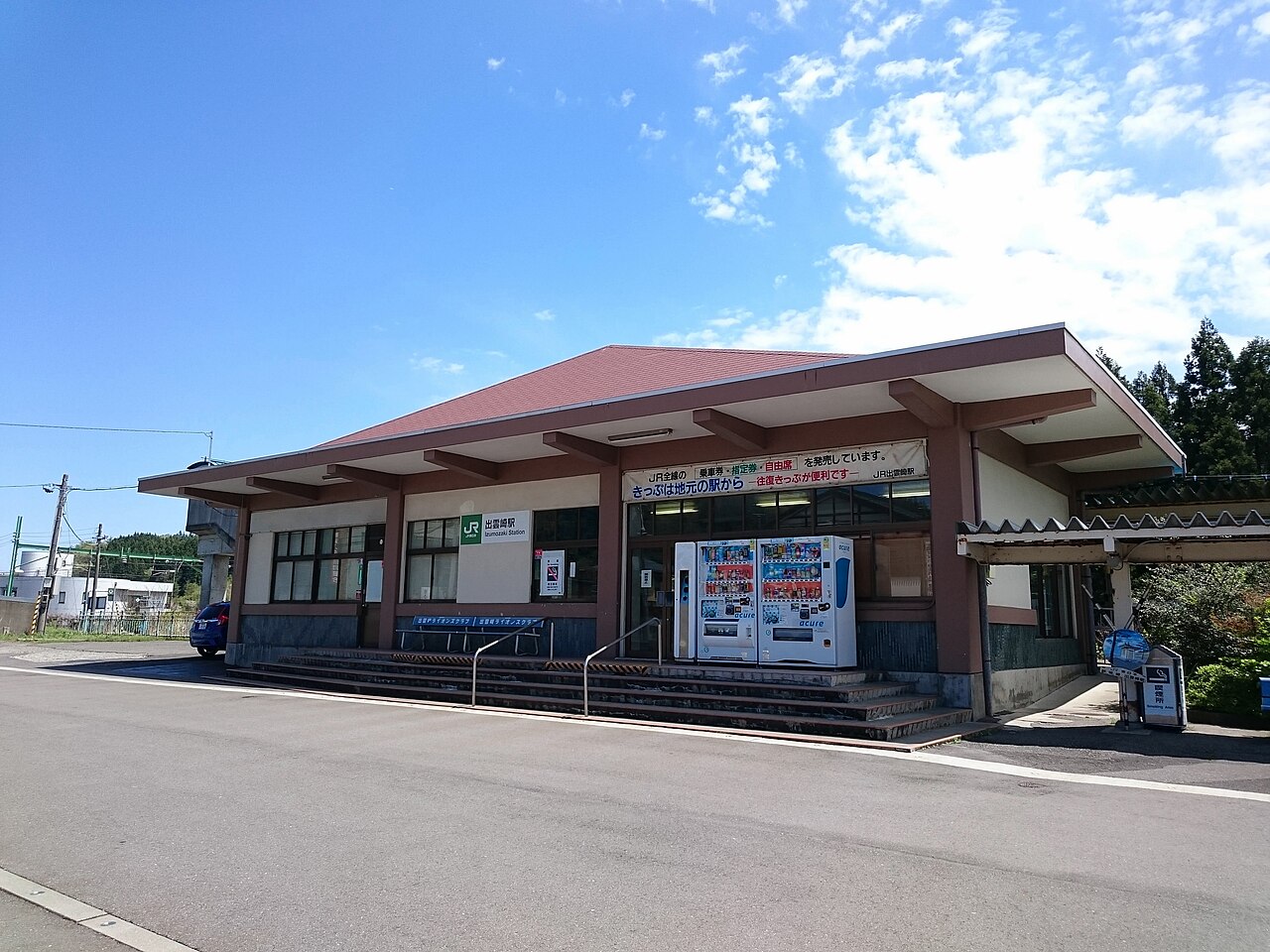
Search Izumozaki Ryokan Memorial Museum on Google Maps to place the museum. To stay overnight, browse places to stay in Izumozaki.
Hours and Fees
| What | Detail |
|---|---|
| Ryokan Memorial Museum hours | Listed as nine in the morning to five in the afternoon |
| Ryokan Memorial Museum closing days | None from April to October; every Wednesday (the next day if it is a holiday) from November to March |
| Ryokan Memorial Museum year-end and New Year closing | December twenty-ninth to January third |
| Ryokan Memorial Museum admission | Individuals: general four hundred yen, high school students two hundred yen, elementary and junior high school students one hundred yen |
| Tenryo Izumozaki Jidaikan admission | Listed as general five hundred yen, elementary and junior high school students four hundred yen |
| Izumozaki Retro Museum admission, adult | Six hundred yen (high school student or older) |
| Izumozaki Retro Museum admission, child | Four hundred yen (junior high school student or younger) |
| Machinami Tokoton guided walk | About three hours; three thousand five hundred yen per guide, insurance included |
| The shorter guided walk | About two hours; two thousand five hundred yen per guide, insurance included |
| Guided walk booking | Tourism association, at least one week before the tour |
| DIO SUP experience, one hour | Two thousand eight hundred yen per hour including tax |
Fees and hours were checked against official sources between 11 October 2026 and 18 November 2026.
Thinking of staying overnight?
Compare places to stay near Izumozaki, Niigata, Japan →
Disclosure: This post may contain affiliate links. If you book through them, we may earn a commission at no extra cost to you.