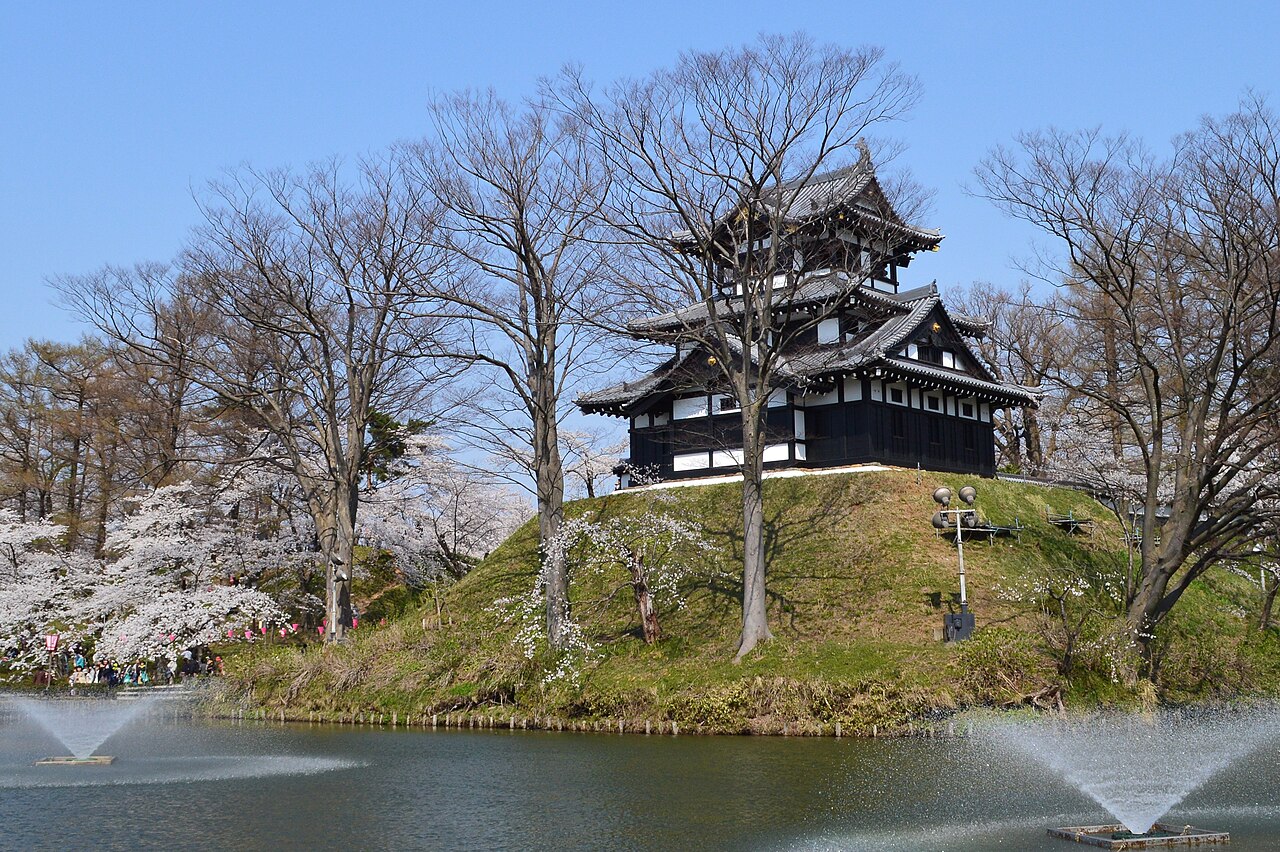
Joetsu in Niigata pairs a hilltop castle site tied to the warlord Kenshin with the castle town of Takada. The castle ruins keep their dry moats, earthwork banks and large well, while Takada keeps a restored three-story turret, gangi arcades along machiya townhouses and a working cinema. Start on the Kasugayama side with the castle ruins, the shrine and the Kenshin exhibits, then move down to Takada for the castle park, the gangi townhouses and the cinema, and finish with the local dishes. The warlord on the hill also reaches the table, in a Sengoku meal reconstructed from period documents.
Kasugayama Castle Ruins and Shrine
Kasugayama castle ruins meet walkers with the features of a mountain castle, since dry moats, earthwork banks and the large well still remain on the hill. The outer enclosure of moats and earthwork banks at the foot of the mountain, where residences and dry moats spread out, is part of what remains to walk. From the main enclosure site, the Sea of Japan, the Kubiki plain and the surrounding mountain ranges appear in one view, the reward for the climb.
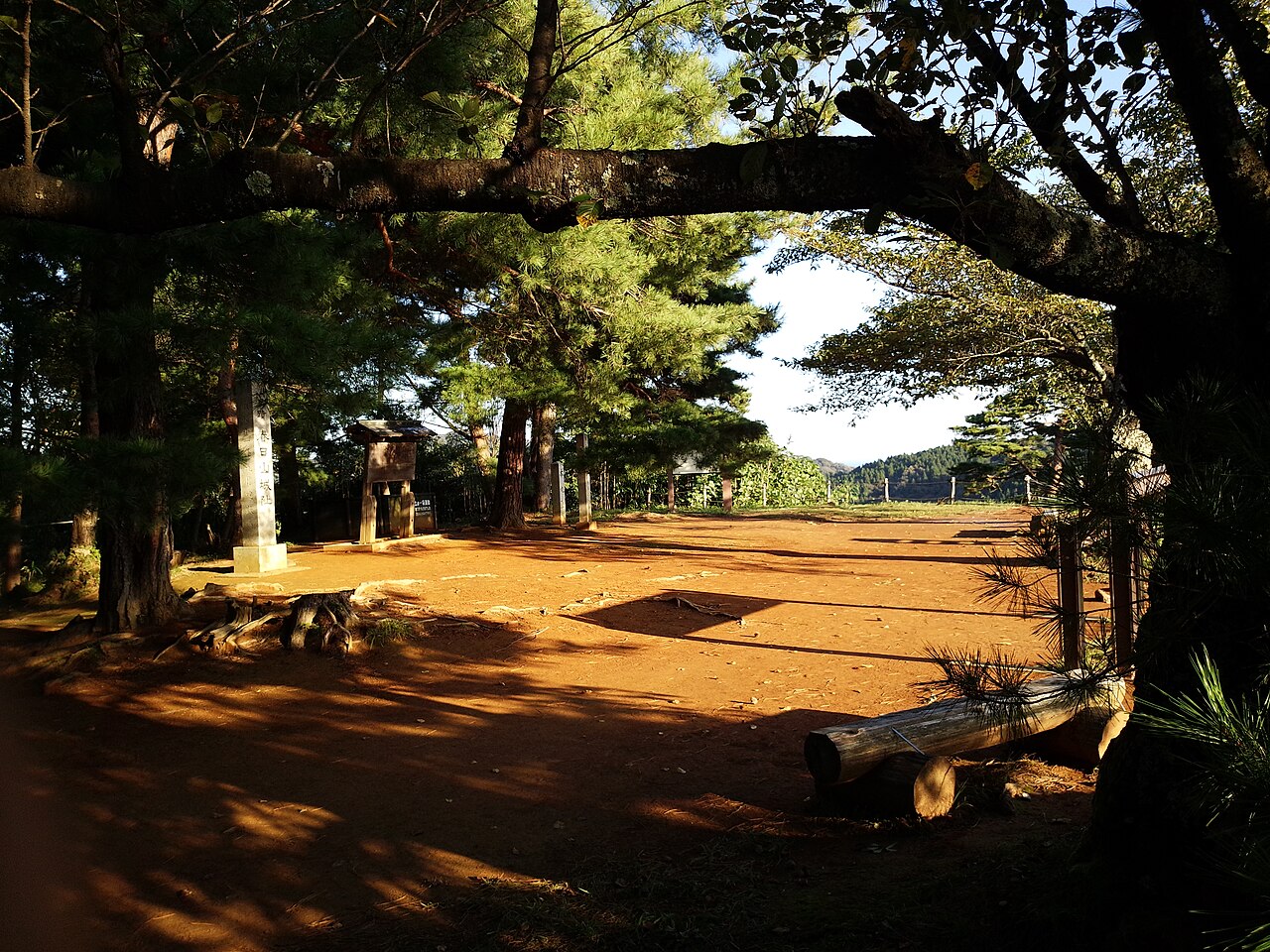
Kasugayama Shrine, founded in the Meiji era by the father of a children's author, stands today as a straight-lined, sturdy shinmei-style building, and the adjoining memorial hall displays Kenshin's relics and materials. Visitors also find a stone monument carved with the author's poem and stone statues based on fairy tales.
Walk the earthworks first and the memorial hall second, because the moats and banks show the scale of the fortress and the relics then put a person behind it. Visitors with little interest in military history can still make the walk for the view alone.
Kenshin Exhibits Below the Castle Hill
The visitor hall at the castle site sets out a diorama of the whole of Kasugayama Castle, so the enclosures walked on the hill come together as one plan. Kenshin's life is presented in detail on a timeline and touch panels, and armor of warlords connected with him is on display.
The hall is also the headquarters of a hospitality troupe that performs for visitors, and the troupe offers guidance inside the hall and commemorative photos. At the cultural properties center, a large window onto the research room lets visitors watch excavated finds being sorted and restored.
The center researches, stores and shows the buried cultural properties of Joetsu, so its exhibits trace the city's history from the finds, while the Kenshin exhibition hall covers Kasugayama castle and the life of Kenshin. Seen after the walk, the diorama and the research window turn scattered earthworks into a readable castle, which is why these halls work well as the second stop.
Takada Castle Park and the Three-Story Turret
Takada Castle Park spreads over the site of Takada Castle, built as the residence of Matsudaira Tadateru, sixth son of Tokugawa Ieyasu, and the whole park is a historic site of Niigata Prefecture where the restored three-story turret now stands. The park also holds a history museum, the Kobayashi Kokei Memorial Museum, Takada Library with a literature museum inside it, and a promenade around the outer moat.
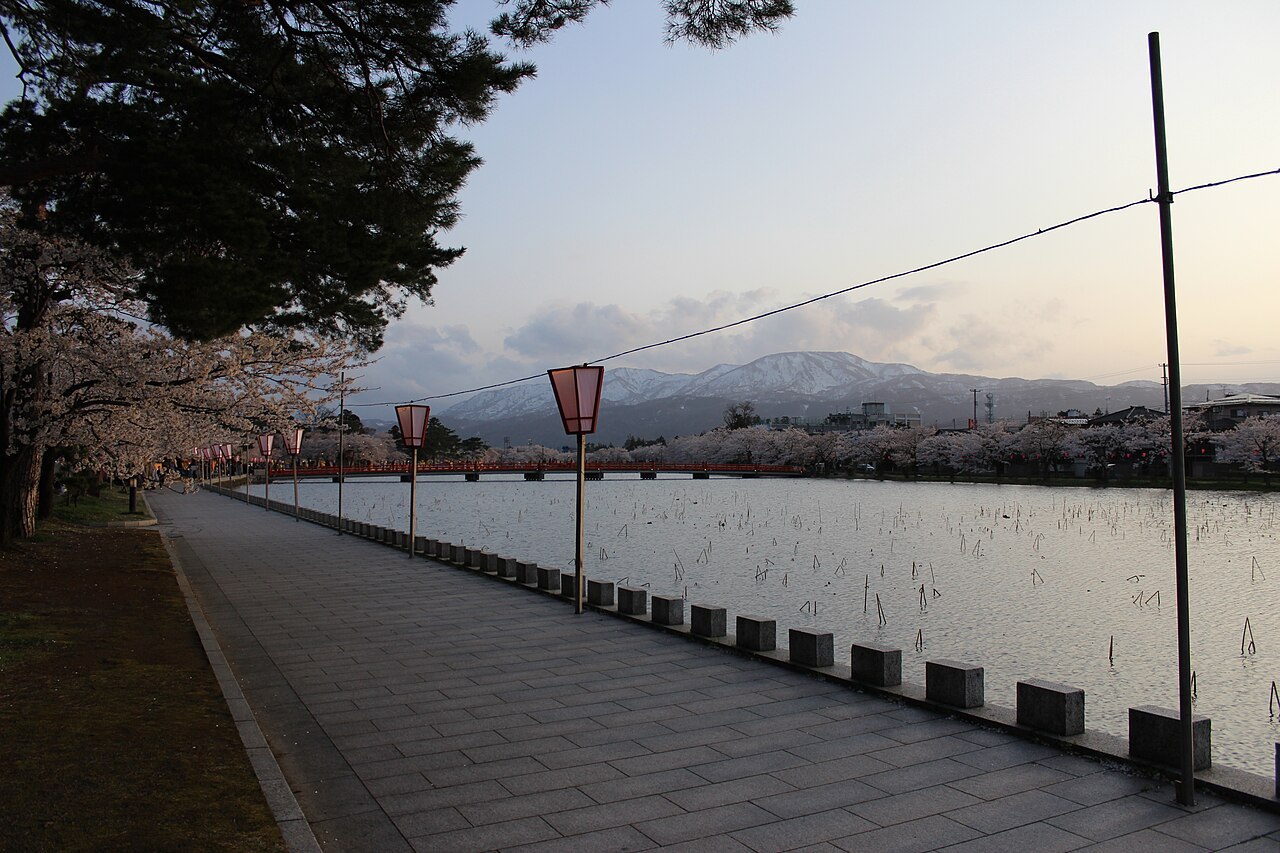
The painter Kobayashi Kokei's residence and the Gokuraku bridge between the main and second enclosures have been restored as well. About four thousand cherry trees grow in and around the park, lit by lanterns together with the turret when they bloom, and the moat holds a spread of lotus that in flower covers it from bank to bank.
Inside the turret, the first and second floors are exhibition rooms about Takada Castle and the third floor is an observation room, so a climb through the displays ends with the park laid out below. With limited time, head for the turret and the moat promenade; the museums reward a longer stay.
Gangi Arcades and Machiya Townhouses
The former Imai dyehouse, built in the late Edo period, fronts the street with a gangi, a covered arcade, of the old tsukurikomi type, and the space above the passage was used for storage and living, so what shelters walkers today was once part of the house itself.
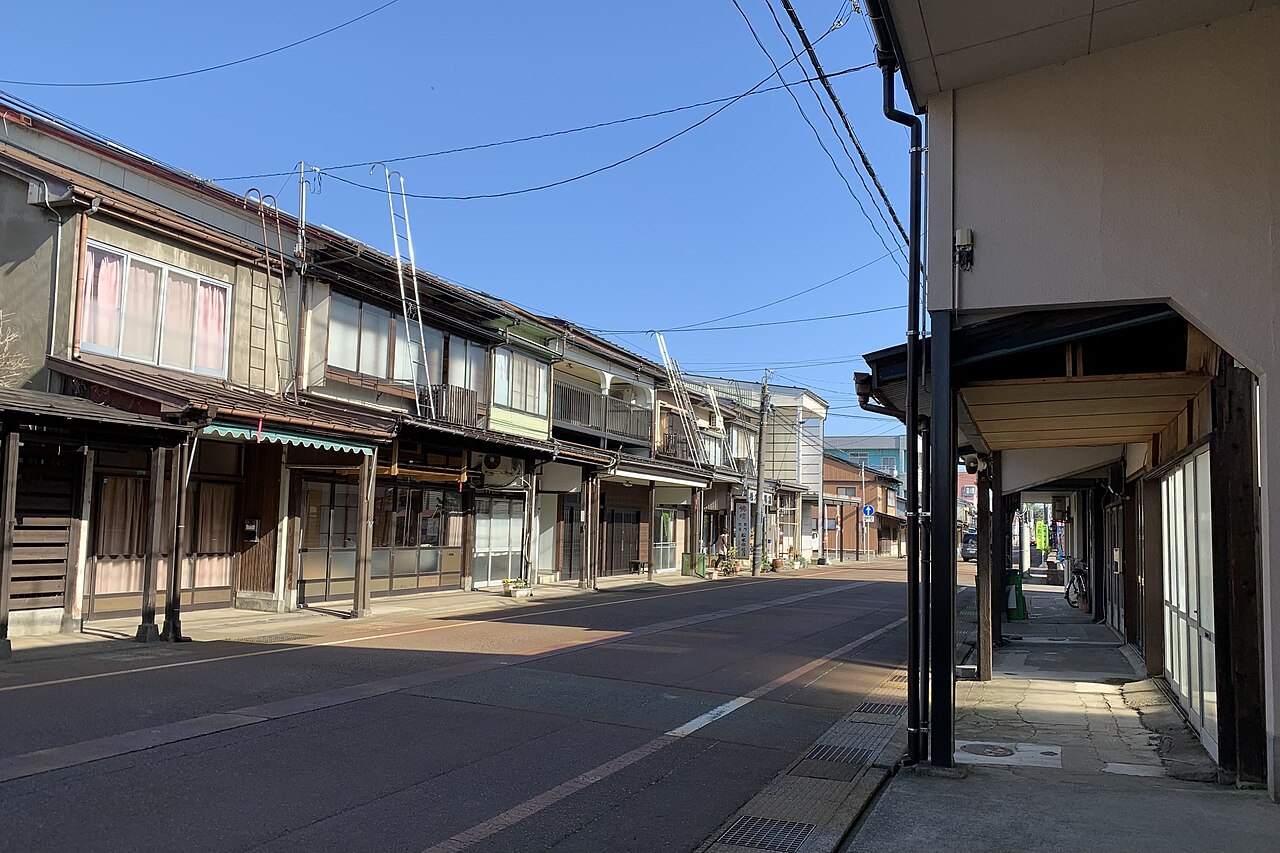
Step inside and the chanoma living room rises into a large atrium framed by a beam structure of relatively thin members and neatly assembled nuki tie beams. From outside, the house keeps a low ridge and a gently sloped roof, and a permanent batten lace workshop now has its home in the dyehouse.
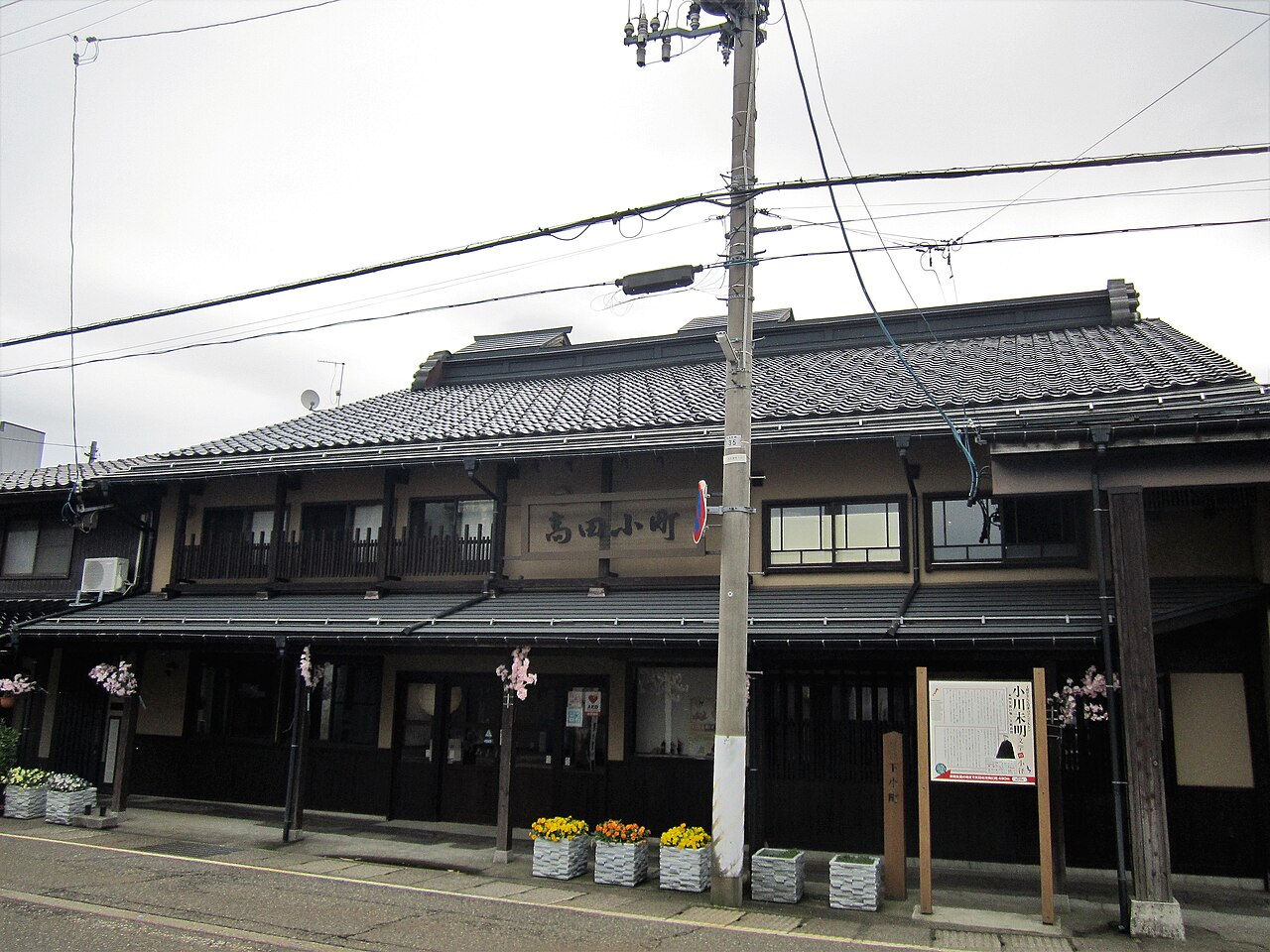
Elsewhere in the old town, a Meiji-era machiya townhouse has been renovated for reuse, and visitors can view its atrium and storehouse, the two features that mark Takada machiya. Walk under the gangi first and go indoors second, because the arcade shows the street side of the townhouse while the atrium and storehouse show the depth behind it.
Takada Sekaikan Cinema and the Kobayashi Kokei Museum
Takada Sekaikan still works as a cinema, with a program from recent releases to older classics, so the building is met in use, not as a museum piece. Inside, the pillars carry a Greek Doric-style design, a detail worth a slow look whether or not a film is on.
A short look around the hall takes in its highlights and fits into the interval between films, so visitors who come for the architecture alone can see it without sitting through a screening.
The Kobayashi Kokei Memorial Museum collects and exhibits the works of Kobayashi Kokei, a Japanese-style painter from Joetsu, alongside artists connected to the city. The Kokei Memorial Room holds a permanent display of his paintings, a second room shows varied art centered on Joetsu, and the Ninomaru Hall hosts lectures and workshops. On the grounds stand the painter's residence, a registered cultural property moved here and restored, and a recreation of his studio. Together, the Doric pillars and the painter's studio pair a borrowed European style with a workroom grown in Joetsu.
Suruten, Megisu and the Kenshin Victory Feast
Suruten is found at restaurants and supermarkets across Joetsu; at one restaurant, salt and white sesame go into the batter, and the sesame aroma lifts the flavor. Megisu, soft-fleshed and mild, is eaten deep-fried or as tempura; one tempura restaurant rolls it with vegetables, wasabi and a special sauce into sweet-savory hand-rolled sushi.
The Kenshin victory-feast meal uses black rice because unpolished rice was the rice of the Sengoku period, and it follows period documents in ingredients and methods, without soy sauce or sugar. Atsume-jiru is a soup of vegetables such as zuiki, burdock and green onion, with dried fish, and the grilled dishes, duck with walnut, kisu, river shrimp and skewered taro, come with pine-nut miso.
The Sengoku sashimi pairs two kinds of white fish washed in vinegar with jellyfish, wasabi and ginger as condiments, eaten dipped in zunda vinegar of mashed zunda beans. After the relics and the diorama, this meal puts the same period on the tongue, and those who would linger over it and return for suruten can look at places to stay in Joetsu.
Getting to Joetsu
| Leg | How | Time and estimate |
|---|---|---|
| Kasugayama Station to Kasugayama Shrine and the Kenshin statue | On foot (Echigo Tokimeki Railway, Myoko Haneuma Line to the station) | About 40 minutes |
| Kasugayama Station to the visitor hall at the castle site | On foot | About 20 minutes |
| Joetsu IC (Hokuriku Expressway) to the Kasugayama castle ruins | By car | About 15 minutes |
| Takada Station to the Kobayashi Kokei Memorial Museum | On foot (Echigo Tokimeki Railway, Myoko Haneuma Line) | About 15 minutes |
| Takada Station to the restored machiya townhouse | On foot | About 10 minutes |
| Takada Station to Takada Sekaikan | On foot | About 10 minutes |
New to rural buses and one-man trains? See how to ride them, step by step.
Hours and Fees
| Place | What | Hours or fee |
|---|---|---|
| Visitor hall at the Kasugayama castle site | Castle-site exhibits | 9:00-16:30 |
| Cultural properties center | Exhibits on Joetsu history | 9:00-17:00 (exhibition room until 16:30) |
| Kobayashi Kokei Memorial Museum | Japanese-style paintings | 9:00-17:00 (10:00-16:00 from December to March) |
| Takada Sekaikan | Look around the hall | 500 yen per person |
| Restored Meiji-era machiya townhouse | Atrium and storehouse | 9:00-22:00 |
| Former Imai dyehouse | Gangi and batten lace workshop | 10:00-17:00 |
General admission to the Kobayashi Kokei Memorial Museum is five hundred and ten yen. The visitor hall is closed on Mondays and from December to February, the cultural properties center on Tuesdays, the restored machiya townhouse on the fourth Monday of the month, and the former Imai dyehouse on Mondays.
Where to stay
Places to stay near Joetsu, Niigata, Japan →
Disclosure: This post may contain affiliate links. If you book through them, we may earn a commission at no extra cost to you.