This guide draws on the Hokuriku volume of Shinsen Meisho Chishi, the Meiji-era gazetteer edited by Tayama Katai, together with visitor information published by Murakami City and by the managers of the castle ruins.
Murakami sits near the northern edge of Niigata Prefecture, where the Miomote River meets the Sea of Japan. It is a town that built its name on salmon, kept its castle hill and its merchant streets, and has a hot-spring district by the sea. All of it fits into one unhurried day from Niigata city.
The plan below runs from the station to the salmon museum by bus, follows the river on foot, climbs the castle hill, wanders the old town, and ends at Senami Onsen for the sunset. Iwafune, the shrine town on the coast, is an optional detour if the connections line up and you still have daylight.
Getting to Murakami and shaping the day
Trains on the JR Uetsu Line run up the coast from Niigata to Murakami Station, and the station is where the day starts. From there, a local bus runs to the Kosukejima stop; the fare is one hundred fifty yen one way and the ride takes about five minutes, so there is no reason to walk this first leg.
From Kosukejima it is about three minutes on foot to Iyoboya Kaikan, the salmon museum, which makes it the obvious first stop. Do the museum while you are fresh, then let the river, the castle hill and the old town follow in that order, with Senami Onsen kept for the end of the afternoon.
Keep in mind that the castle trailhead is about twenty to thirty minutes on foot from the station, so the walking adds up; comfortable shoes matter more than a tight schedule. If you are basing yourself in Niigata city for several days, guided tours around the wider Niigata area can fill the days on either side of this one.
Iyoboya Kaikan, where the salmon story is told
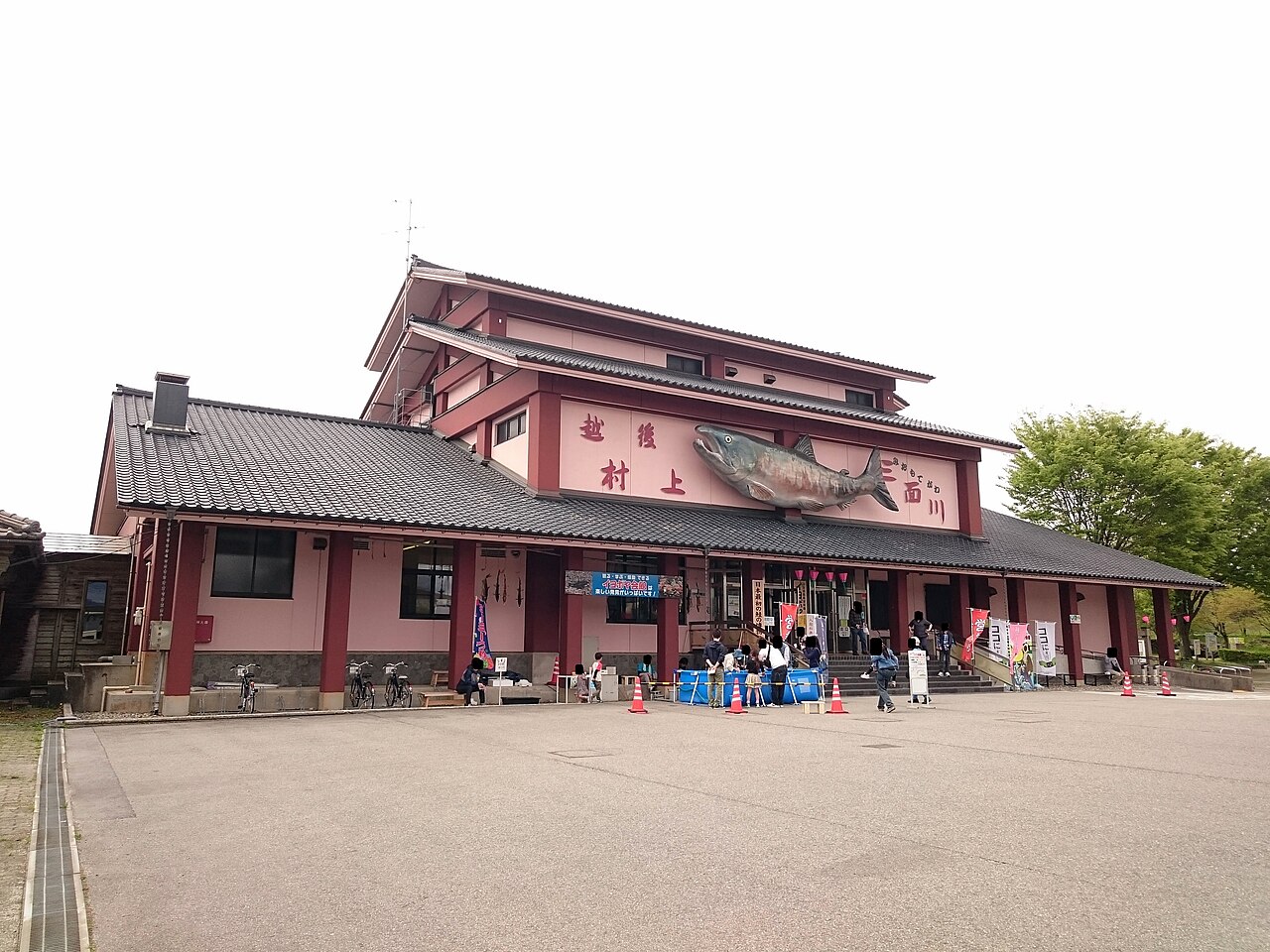
The museum is easy to spot: a pink-walled building with tiled roofs and a large sculpted salmon fixed to the front. Adult admission is seven hundred yen, and groups of twenty or more pay six hundred yen a head. Budget an hour or so, and more if you like to read the displays slowly.
What you get inside is the town's side of the salmon story: the river, the catch, and the culture that grew up around the fish over generations. It is the context that makes the rest of the day make sense, which is why it belongs at the start rather than tacked on at the end.
Outside, the forecourt with its tubs is where visitors tend to gather, and it is a good spot for a pause before the walk. From here the day turns toward the river, so check the return bus times for Kosukejima now if you plan to ride back to the station later instead of walking.
The Miomote River and the autumn run
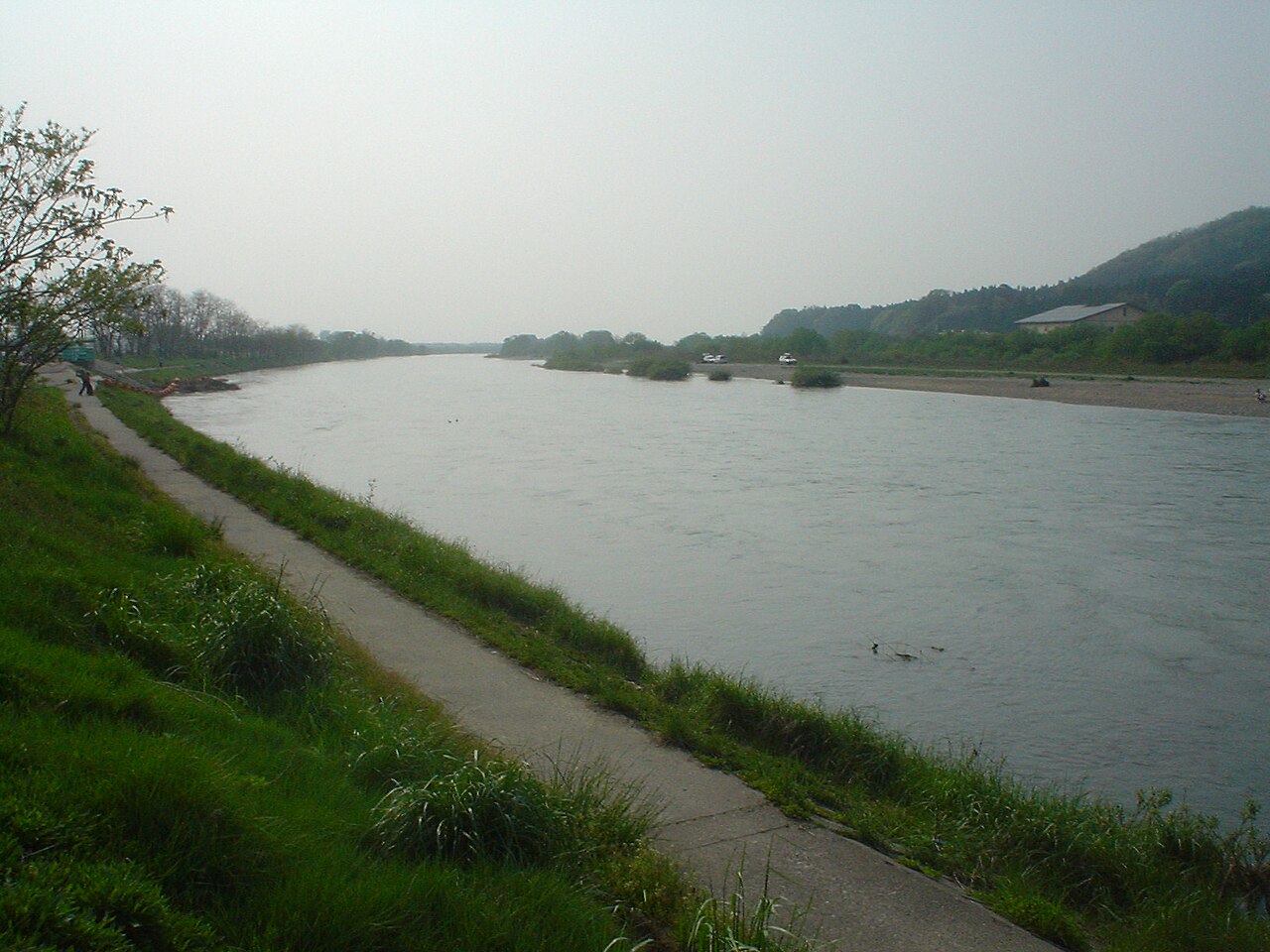
The Miomote is a broad, slow river, and a paved path runs along the grassy embankment with low wooded hills on the far bank. It is flat, easy walking, the kind you can do at whatever pace the day allows. Give it half an hour and you will have seen what the town is built around.
Late autumn is the season the river is known for: the salmon run upstream from the sea in numbers, and the gazetteer records a catch of thousands of fish in a single day. Come then if you can; in other seasons the river is simply a pleasant walk with the museum's story still in your head.
The river also points the way to the coast. Senami, the hot-spring town where this day ends, sits on the south bank of the river mouth, about one ri northwest of the town centre in the old measure, roughly four kilometres. The water you walk beside now is the same water you will see meeting the sea at sunset.
Where to stay
Places to stay near Murakami →
Disclosure: This post may contain affiliate links. If you book through them, we may earn a commission at no extra cost to you.
Walking up to the castle ruins
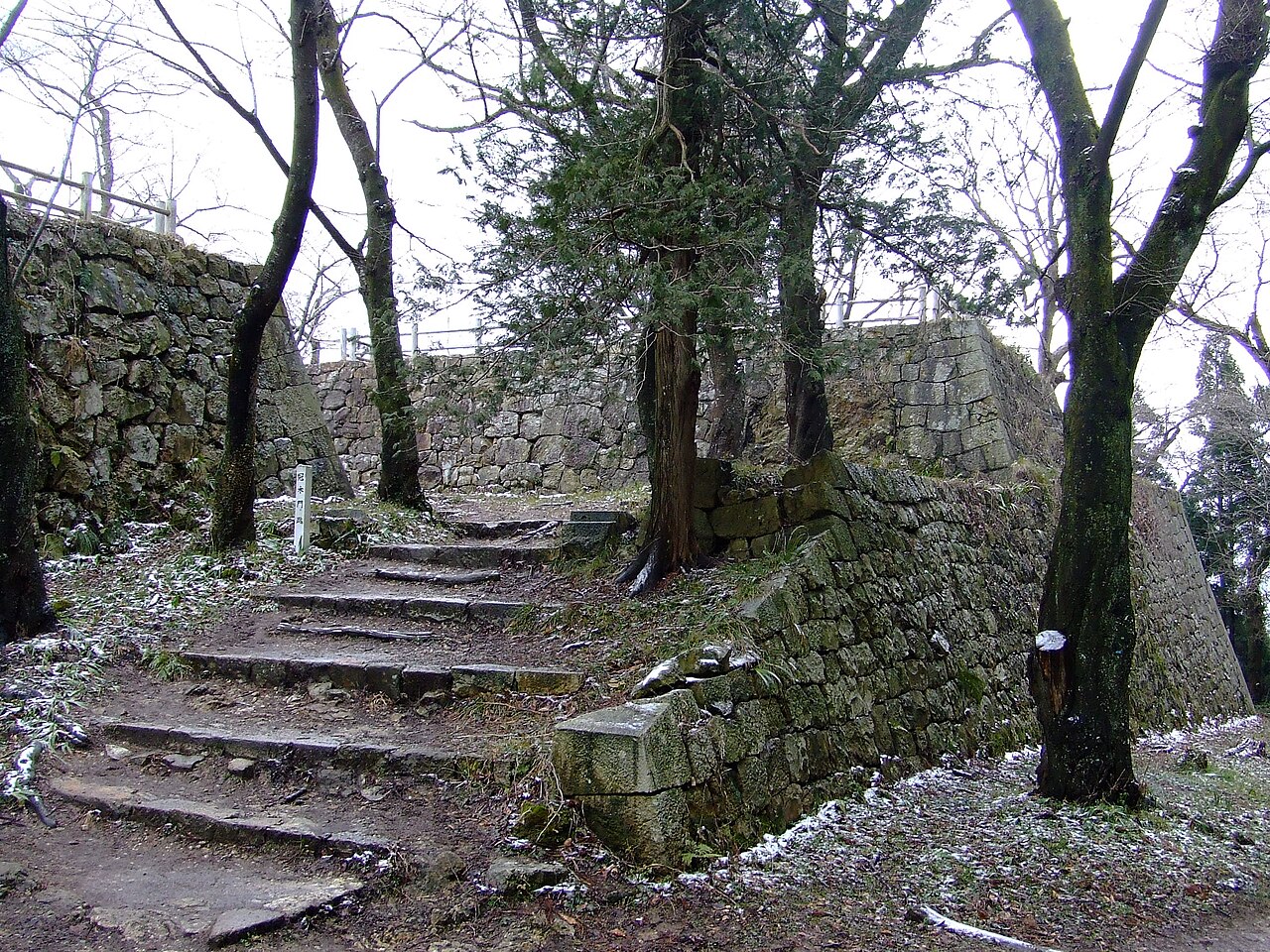
The trailhead is about twenty to thirty minutes on foot from JR Murakami Station, so save some energy for the hill itself. The ruins stand at the southern end of the town, so you will be walking through the streets to reach them rather than along the water.
What waits is a firm climb up worn stone steps between moss-covered dry-stone ramparts, under old trees that have had the hill to themselves for a long time. This is a ruin, not a rebuilt castle; the stonework is the point. In winter a dusting of snow sits on the steps, so allow extra time and take it slowly.
The history, briefly: the Naito clan held the castle and the town below it until the Restoration. Before that the place was called Honjo, and it took the name Murakami when Murakami Yoshiaki was granted the domain in the Keicho years. Two names, one hill, and a set of ramparts that outlasted both of them.
The castle town below the hill
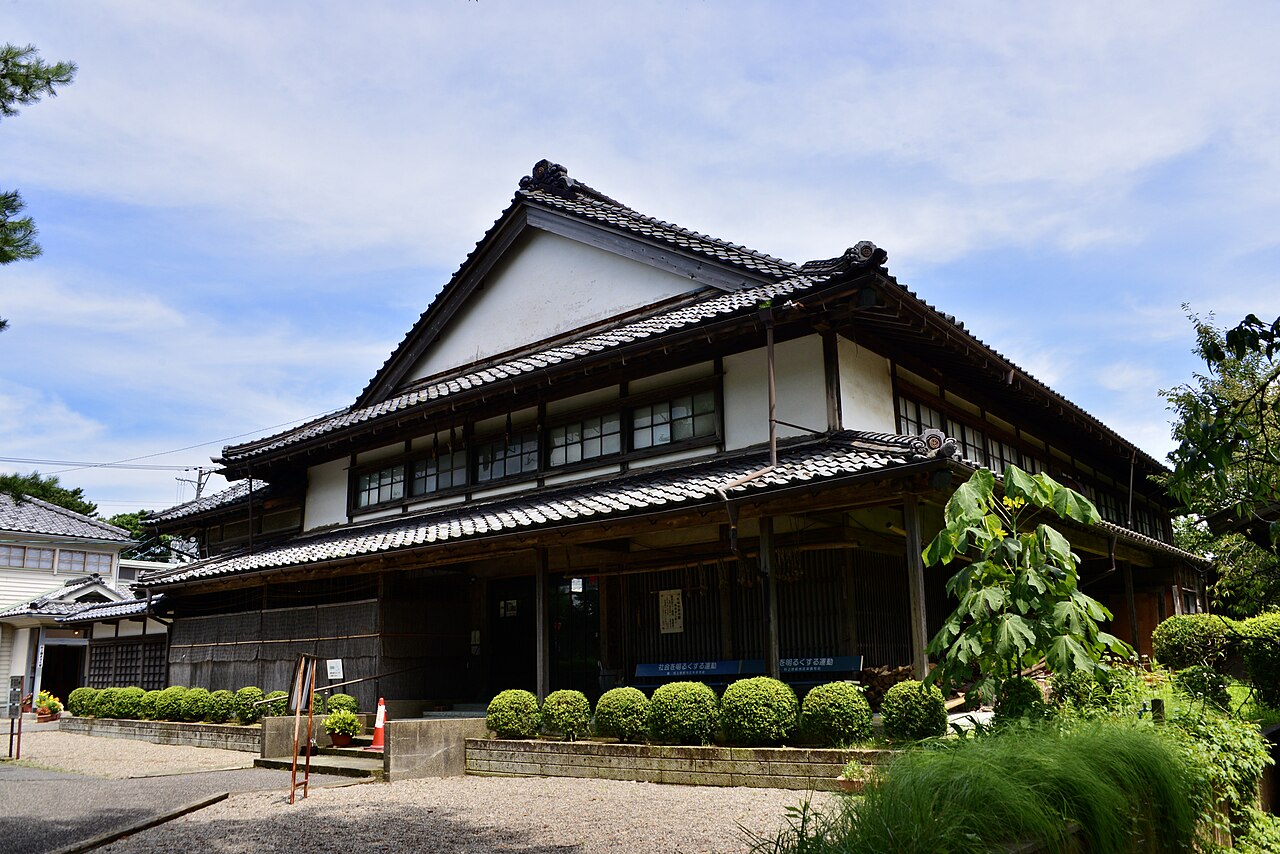
Back down at street level, the old town is where you slow down. Look for the merchant houses: two-storey wooden buildings with white plaster gables and deep tiled eaves, some with clipped shrubs along a gravel forecourt, lining streets that grew up under the castle. Walk them without a fixed route; they reward wandering more than a checklist.
This is also the place to eat and to shop. Salmon is the town's calling card, so expect it on lunch menus and on the shelves, and treat a salmon lunch here as part of the itinerary rather than a break from it. Give the district an hour between the castle hill and the trip out to the coast.
For scale, the gazetteer put the population at around ten thousand at the end of the Meiji era, when Murakami was the seat of Iwafune district and the northernmost town where the Hokuriku highway met the coast road. With an extra half day, Kounji, a Soto Zen temple, sits about one ri east in the Monzen River gorge.
Iwafune and the shrine on the headland
Iwafune is the optional detour. It was one of the post towns on the coast road, and its western edge faces the Sea of Japan directly, which tells you what the light does there in the afternoon. Check the connections from Murakami Station before you commit, and skip it without guilt if the day is already full.
The reason to go is Iwafune Shrine, which stands on a rise called Myojinyama with its main hall facing south. Walk round to the southwest side of the grounds and the view widens over the Sea of Japan. Go for the view and the stillness rather than for any single building; the setting is the attraction here.
The shrine's tradition says its deity, Umashimaji-no-mikoto, arrived aboard a boat of stone, which fits a name that reads as stone boat. The main festival is on the nineteenth of October, with spring and autumn festivals on the nineteenth of May and of November, when the grounds fill with visitors and the stillness gives way to a crowd.
Senami Onsen and the coast
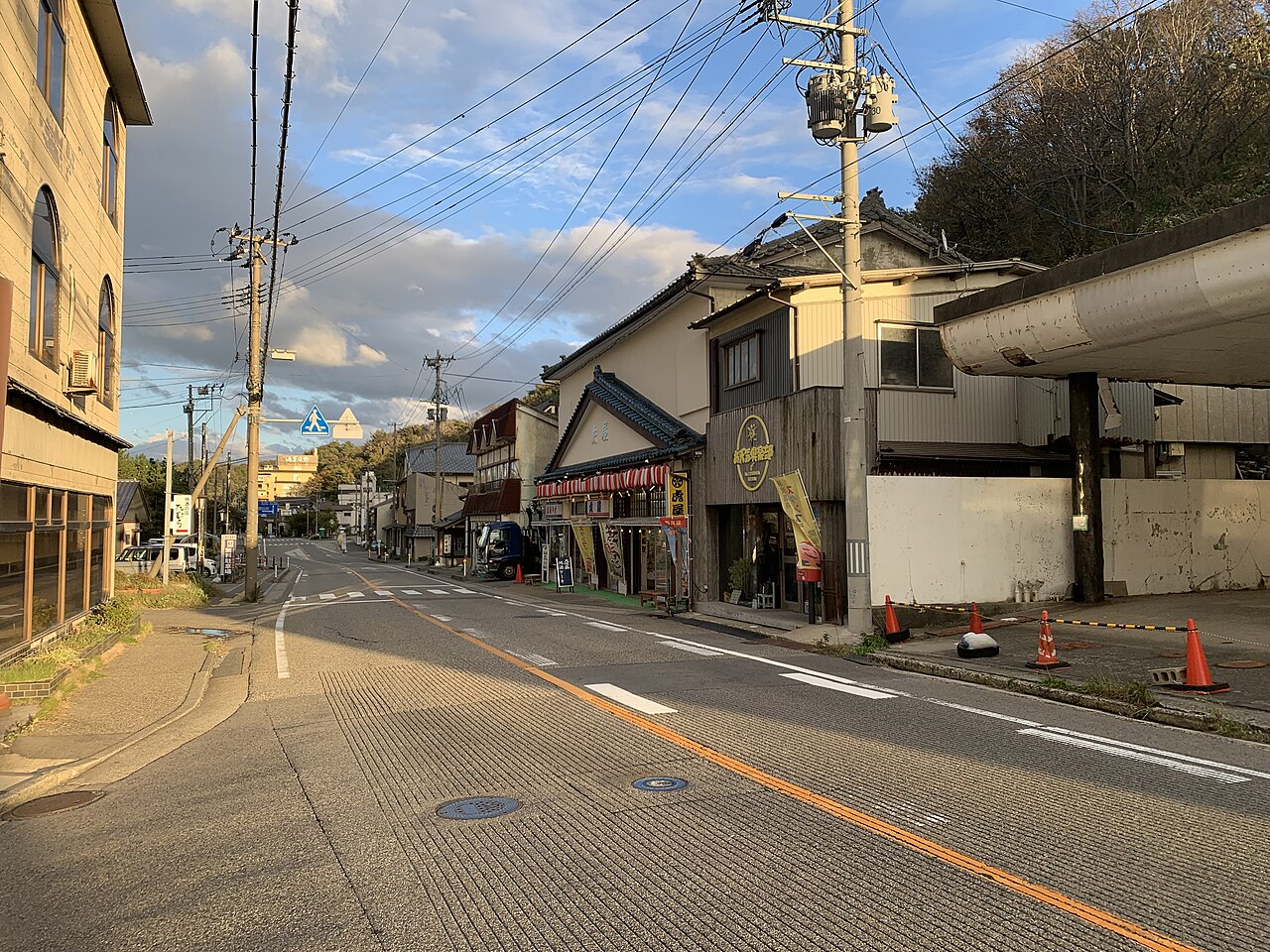
End the day at Senami Onsen, the hot-spring town on the south bank of the Miomote river mouth, northwest of the centre. The street is low-key: tiled shopfronts under striped awnings, hanging banners, wires overhead, and wooded slopes rising behind. Arrive in the late afternoon, when the light is on the buildings and the sea is ahead of you.
The sea is the point. Senami faces west, so the sunset drops into the Sea of Japan in front of the town, and the natural rhythm is a bath first, then the shore as the light goes. Senami Shrine, one of the old shrines listed in the Engishiki, sits in the town if you want a short walk beforehand.
Boats once ran north from here along the Kaifu coast and on to Nezugaseki in what was then Uzen, a reminder that Senami was a departure point before it was a place to soak. The modern version is simpler: find a place to stay in Murakami, watch the sun go down, and take the train back in the morning.