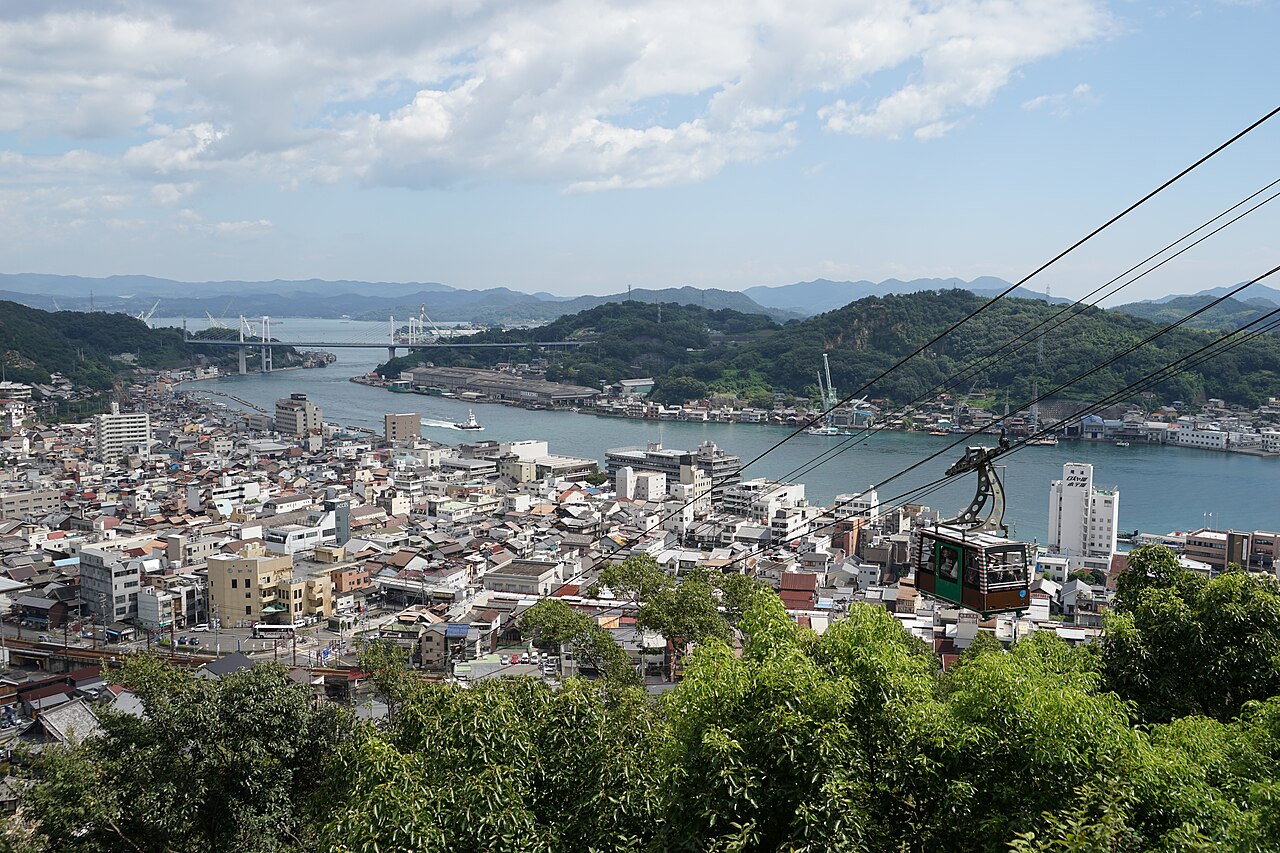
Onomichi packs its whole townscape into a small pocket of ground between the sea and the mountains. Many temples line the middle of the hillside, and narrow steps and lanes thread between them, so walking here means climbing as much as strolling. From the observation deck at the summit you see the whole town below you and the islands of the Seto Inland Sea across the water. On a fine day the view runs past the Onomichi Channel and the islands of the Shimanami Kaido to the mountains of Shikoku.
Up the Ropeway to the Summit Park
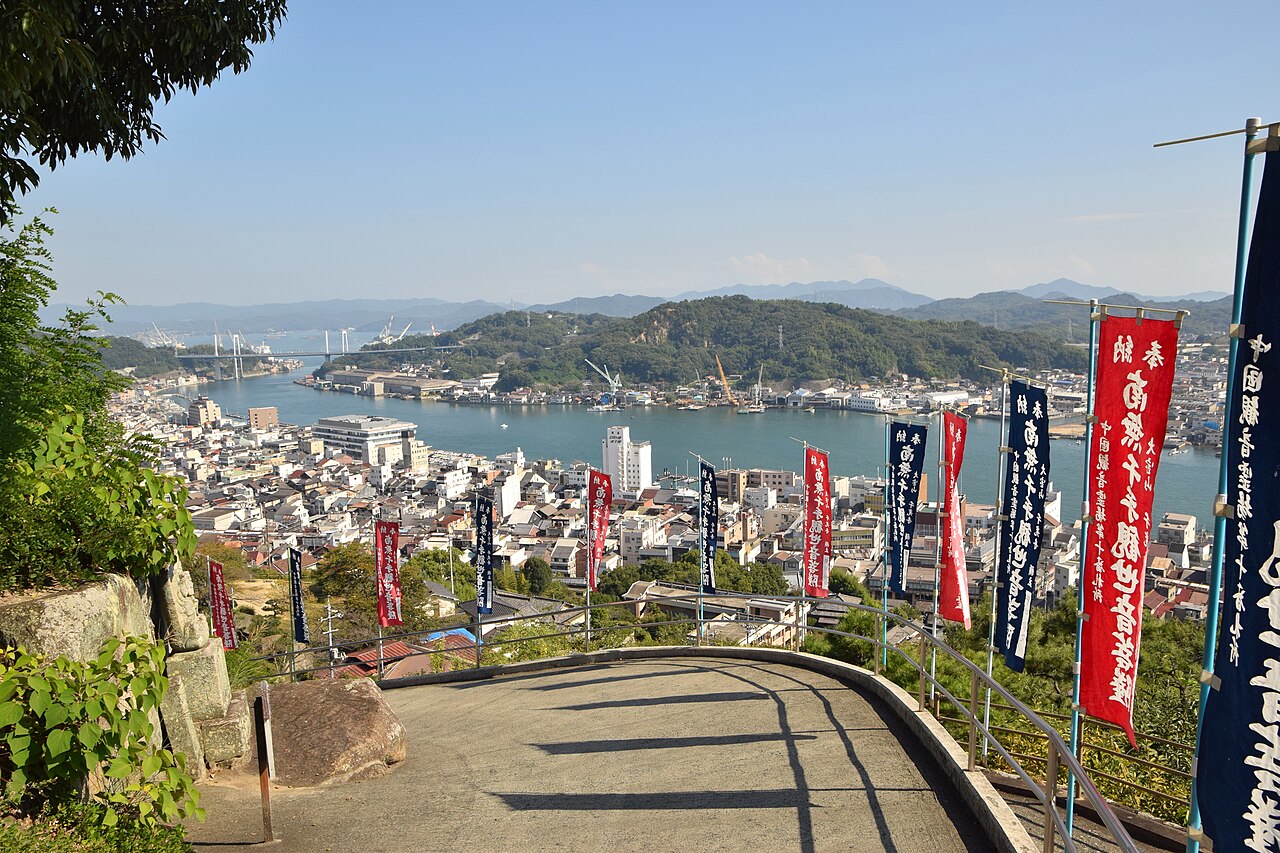
A short ride on the Senkoji Mountain Ropeway carries you to the summit of Senkoji Park, and the strolling begins at the top. From the observation deck you see the whole of Onomichi city at once, with the islands of the Seto Inland Sea spread across the water, and on a clear day the Shikoku mountain range shows far beyond them.
An elevator inside the deck makes the view easy to reach for anyone who would rather ride than climb. Below the park the townscape runs along the Onomichi Channel, and past it the islands of the Shimanami Kaido make a seascape of many islands. After dark the park turns into a night-view spot, looking out over the Onomichi Channel.
In spring cherry blossoms and azaleas bloom across the park, and in early summer wisteria hangs in purple and pink. The park holds more than the view: the Onomichi City Museum of Art stands within it, and the Literary Path begins at the summit. Several points around the park, among them the area near the west observation deck, are recognised sketching spots where painters have set the view down on paper.
The Literary Path to Senkoji
From the summit, the way down to Senkoji is the Literary Path, a mountain path where twenty-five natural stones stand carved with verses. Each stone carries a passage or poem left by a writer connected with Onomichi, so the descent becomes a slow reading as much as a stroll. The temple itself sits on the mid-slope of the hill, and the park is laid out around it, so you wander through parkland on the way down to it.
Senkoji belongs to the Shingon sect and is said to have been founded by Kobo Daishi. Its main hall is a vermilion-lacquered building raised in the stage style, and the precincts also hold a Daishi-do hall and a rock with a name of its own. The main hall is said to enshrine an image of the thousand-armed bodhisattva of compassion, which tradition attributes to Prince Shotoku.
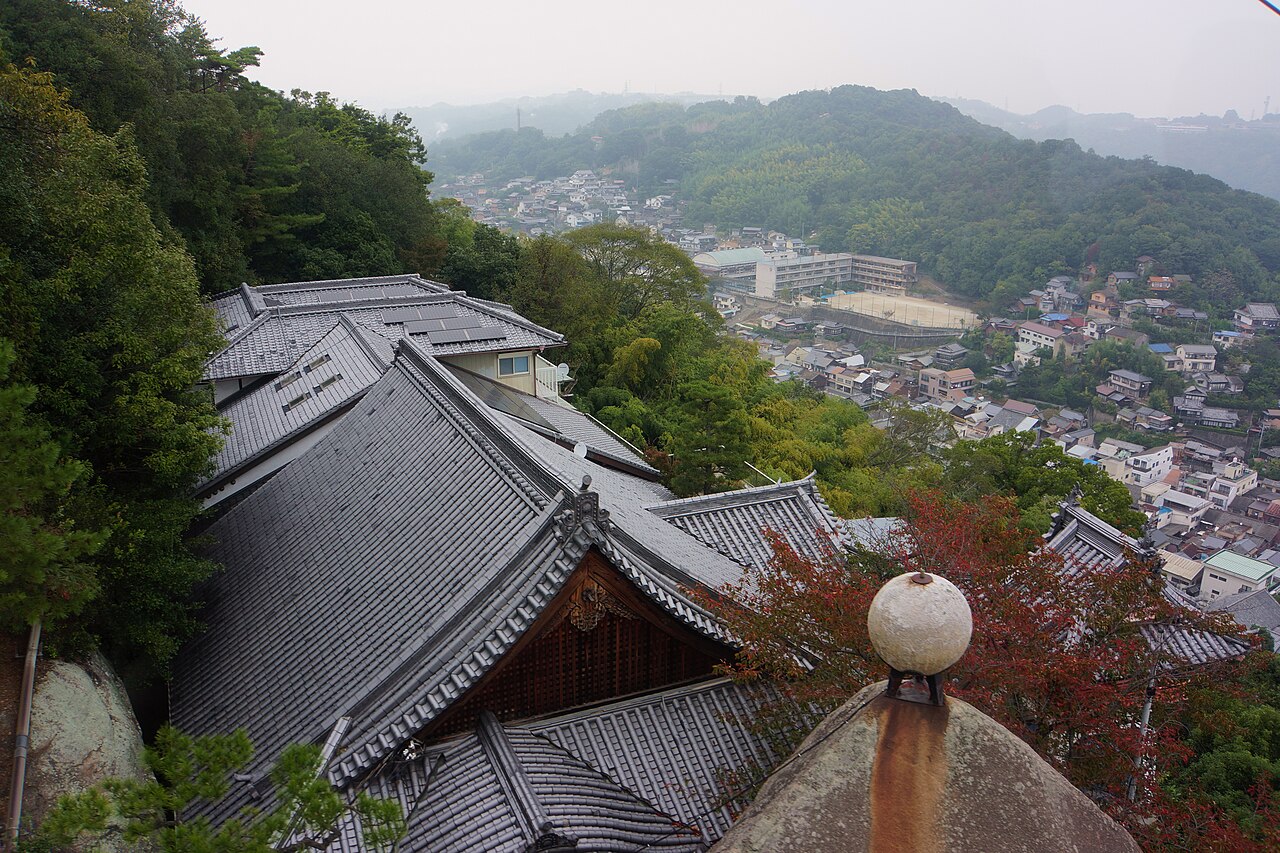
Listen for the bell: the sound from the temple's bell tower was chosen as one of the hundred soundscapes of Japan. Wander the precincts and you see a group of boulders of many shapes; several slope paths and stairways link the town below with the temple hill, so there is more than one way to stroll down. Guided tours of Onomichi are another way to take in the temple hill.
A Pagoda, Many Faces and the Old Temple Walk
On the slope below Senkoji stands a three-storied pagoda belonging to a temple on the hillside, designated a National Important Cultural Property. Views framed through this pagoda appear again and again as the representative scene of Onomichi, so the first sight of it may already look familiar. It is said to have been a five-storied pagoda when it was built, though three storeys stand today.
At the same temple you see five hundred and twenty-six statues, every face rich in expression and each one different from the next. Visitors wander among them looking for the statue that resembles themselves, a small game that turns the gathering of figures into a mirror. In spring peonies bloom in the grounds, and the temple holds regular early-morning Zen meditation sessions.
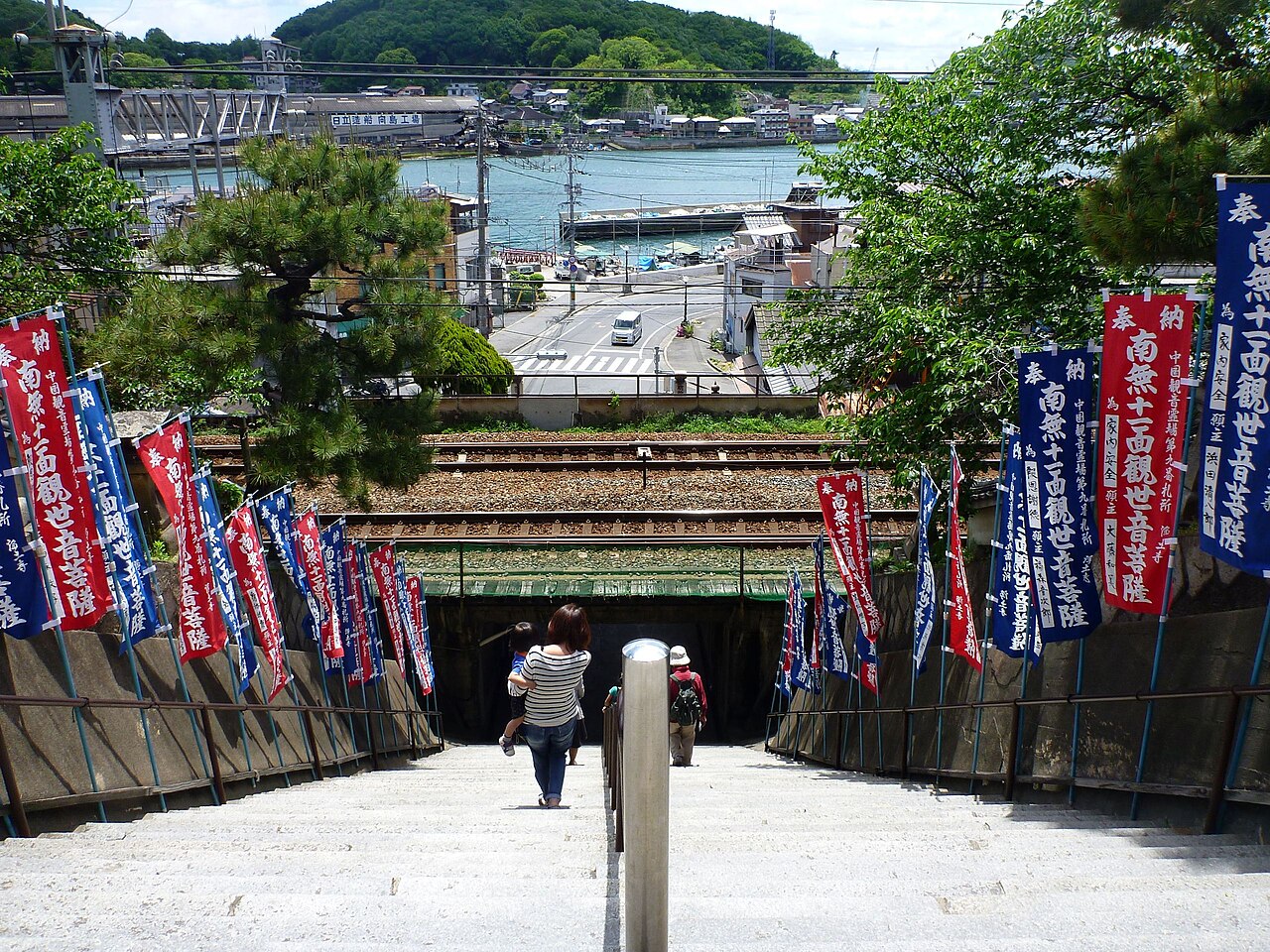
The Old Temple Walk strings the temples of the town together along a stone-paved lane, and stone pillars stand along it to show which temple to wander toward next. A seven-temple circuit adds a purpose to the strolling: at the first temple you buy a stamp book, at each of the seven you collect a stamp or a bracelet of prayer beads, and a commemorative gift waits for anyone who completes the set.
Jodo-ji and a Clay Buddha of Your Own
Jodo-ji is said to have been founded by Prince Shotoku, and its story continues in the rear garden, where a tea house is said to have been moved here from Fushimi Castle in Kyoto. Standing before it, you are looking at a building that tradition carries from a castle to a temple garden.
At Jiko-ji the visit becomes something you make with your own hands and feel taking shape. The temple offers Nigiri-botoke, a clay Buddha you shape yourself: you grip clay set on a stick and feel the squeeze of your fingers give the figure its form, then draw a face to complete it. The head priest teaches the steps kindly, even to people who have never tried, and temple staff show you how the figure is made.
Once your Buddha is finished, it is fired at the temple and sent on to your home, so what arrives later is a small figure holding the shape of your grip and the story of the day you made it. The session takes about thirty minutes, short enough to fit between two temples on the same walk.
A Film Storehouse, a Merchant Hall and Noodles
Step into the Onomichi Film Archive and you see a storehouse that once served as a warehouse, renovated into a museum of film materials. Inside, the exhibits are the working materials of film-making, set out within walls that were built to hold goods.
The Onomichi Chamber of Commerce and Industry Memorial Hall is a renovated and restored building that you can wander from floor to floor. On the first floor you see an exhibition of materials and a tourist information corner; on the second and third floors the building rises into an atrium, with an assembly hall arranged in tiered steps.
Eat before you leave. Onomichi ramen is built on a seafood-based soup with plenty of pork back fat floating on the surface, and the octopus caught in nearby waters comes firm and plump. For one more indoor stop, you can view exhibitions at the Onomichi City Museum of Art inside Senkoji Park.
Getting to Onomichi
| From | To | Time |
|---|---|---|
| JR Onomichi Station | Senkoji Mountain Ropeway base station | about 15 minutes on foot |
| Onomichi Station bus stop 1 or 5 | Nagae-guchi bus stop | about 5 minutes by bus |
| Ropeway base station (Sanroku Station) | Ropeway summit (Sancho Station) | 3 minutes by ropeway |
| JR Onomichi Station | Senkoji Park | about 10 minutes by taxi |
| Senkoji Park parking lot | Summit observation deck and Senkoji | about 5 to 10 minutes on foot |
| JR Onomichi Station | Old Temple Walk | about 1 minute on foot |
| JR Onomichi Station | Temple with the three-storied pagoda | 15 minutes on foot |
| Ropeway base station | Temple with the three-storied pagoda | 3 minutes on foot |
| Ropeway base station | Jodo-ji | about 20 minutes on foot |
| JR Onomichi Station | Jodo-ji (bus stop in front of the temple) | about 7 minutes by eastbound bus |
| JR Onomichi Station | Jiko-ji | 5 minutes on foot |
| JR Onomichi Station | Onomichi Chamber of Commerce and Industry Memorial Hall | 5 minutes on foot along the shopping street |
| Onomichi city hall | Onomichi Film Archive | 1 minute on foot |
New to rural buses and one-man trains? See how to ride them, step by step.
Hours and Fees
| What | Fare or time | Note |
|---|---|---|
| Senkoji Mountain Ropeway, one-way | 500 yen adult, 250 yen child | |
| Senkoji Mountain Ropeway, round trip | 700 yen adult, 350 yen child | |
| Bus, Onomichi Station to Nagae-guchi | 150 yen adult, 80 yen child | |
| Elevator inside observation deck PEAK | 9:00 to 17:15 | |
| Senkoji Park parking, standard car | 800 yen per day | 1,000 yen on weekends and holidays |
| Literary Path, walking time | about 30 minutes or more | |
| Jodo-ji, regular interior admission | 300 yen adult | 150 yen elementary and junior high school students |
| Jodo-ji, special interior admission | 800 yen adult | 400 yen elementary and junior high school students |
| Jodo-ji treasure hall | 400 yen | |
| Jodo-ji hours | 8:00 to 17:00 | |
| Nigiri-botoke clay Buddha at Jiko-ji | 2,000 yen | shipping charged separately |
| Nigiri-botoke session hours | 8:00 to 16:30 | |
| Nigiri-botoke session length | about 30 minutes | |
| Old Temple Walk temples | roughly 8:00 to 17:00 | varies by temple |
| Seven-temple course | about 3 hours or more | |
| Onomichi City Museum of Art, feature exhibition | 310 yen general | |
| Onomichi City Museum of Art, feature exhibition | 210 yen student | |
| Onomichi City Museum of Art hours | 9:00 to 17:00 | last admission 16:30 |
| Onomichi Film Archive, general admission | 520 yen | junior high school students and younger free |
| Onomichi Film Archive, groups of 20 or more | 420 yen | |
| Onomichi Film Archive hours | 10:00 to 18:00 | admission until 17:30 |
| Onomichi Film Archive, closed | Tuesdays | next day if Tuesday is a holiday; also December 28 to January 3 |
| Onomichi Chamber of Commerce and Industry Memorial Hall, admission | free | use of the 2F assembly hall is paid |
| Onomichi Chamber of Commerce and Industry Memorial Hall hours | 10:00 to 18:00 |
If one day on the slope leaves temples unvisited, places to stay in Onomichi are listed for a second day.
Where to stay
Places to stay near Onomichi →
Disclosure: This post may contain affiliate links. If you book through them, we may earn a commission at no extra cost to you.