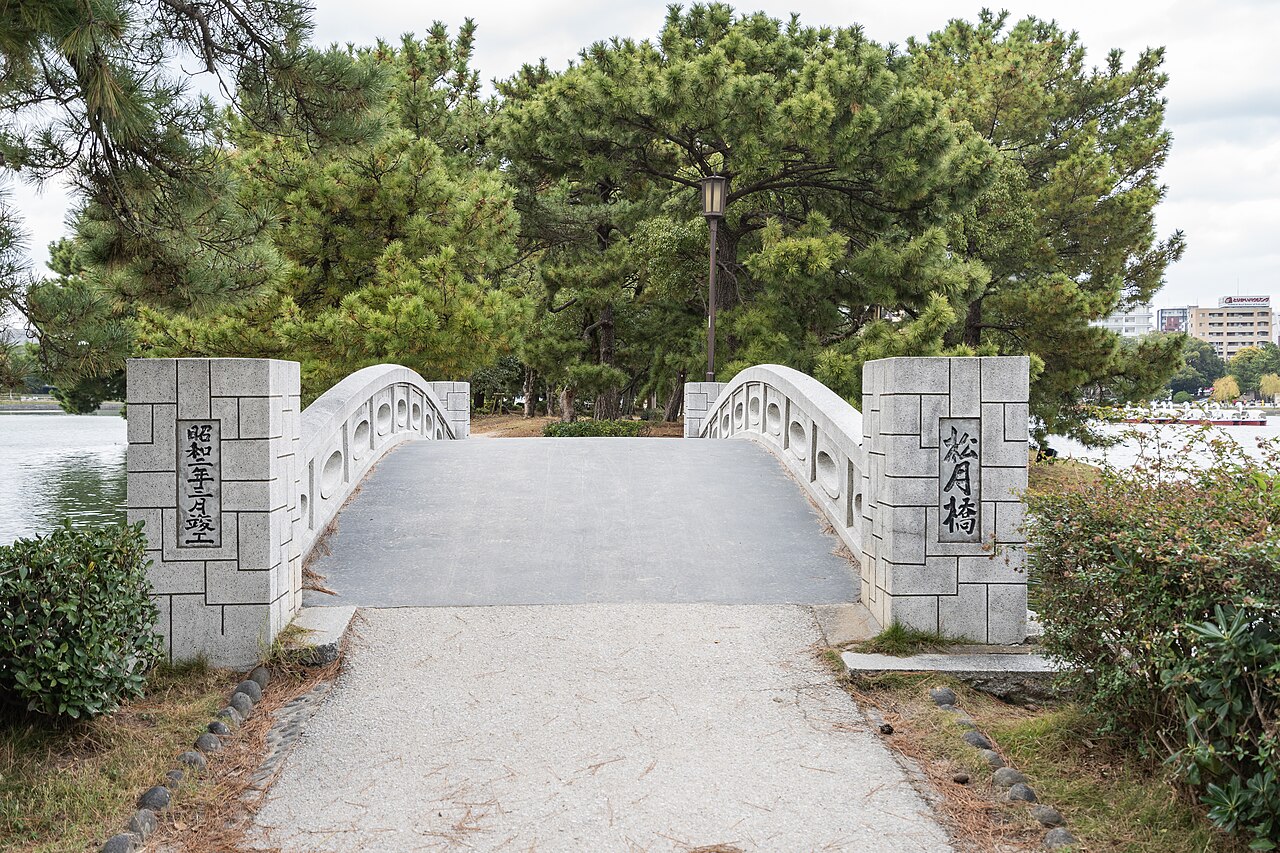
Central Fukuoka offers a walk around the pond of Ohori Park, a round of the temples and shrines of Hakata, and dinner at a yatai food stall. Ohori Park grew out of an inlet of Hakata Bay that Kuroda Nagamasa used as the outer moat of Fukuoka Castle, and its walking path now circles the pond. As dusk falls, the yatai stalls add colour to the city streets, serving ramen as well as yakitori, oden and creative dishes.
With limited time, put the park path and the castle ruins first and keep the evening for the yatai, since the stalls come out as dusk falls.
Walking Around Ohori Park and the Fukuoka Castle Ruins
The walking path in Ohori Park circles the pond, so a single lap takes in all of it. The park also holds a wild bird forest, a children's play area, a Noh theatre, a Japanese garden and a boat house. An island and a floating pavilion are linked by four bridges, so both can be reached on foot. The park takes its name from the castle moat that Kuroda Nagamasa made by filling in an inlet of Hakata Bay.
The Fukuoka Castle ruins preserve two nationally designated historic sites, the castle itself and the ancient diplomatic facility Korokan. Kuroda Nagamasa built the castle after receiving Chikuzen Province from Tokugawa Ieyasu for his achievements in the Battle of Sekigahara. Inside the stone walls, visitors can tour the tenshudai and the Tamon turret, both nationally designated Important Cultural Properties, and the prefecturally designated Shiomi turret on the Ohori Park side.
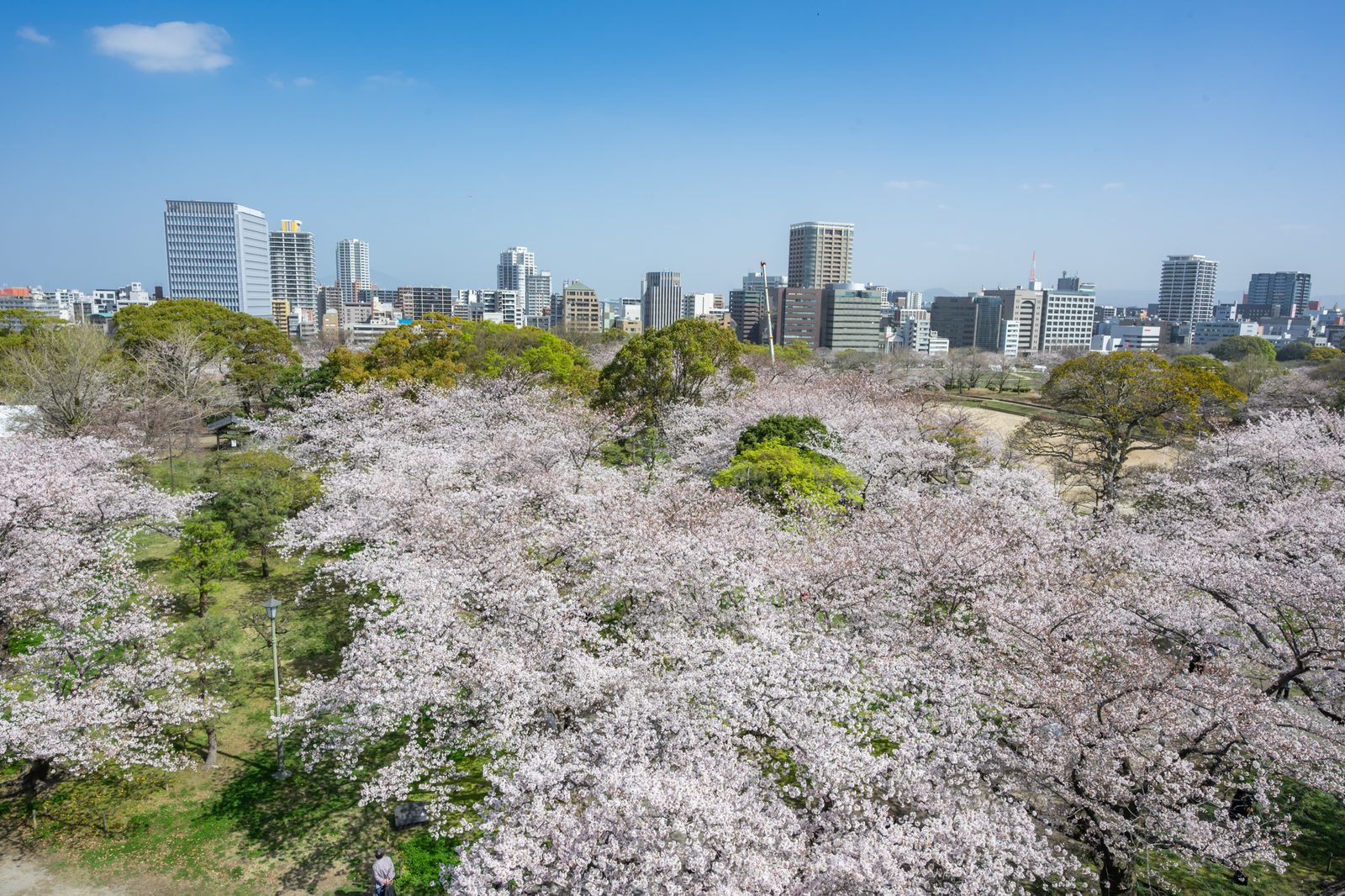
The Korokan received missions from the Chinese continent and the Korean Peninsula from the Asuka to the Heian period and also lodged Japanese envoys. Art lovers can add the Fukuoka City Museum of Art, where photography is possible in parts of the collection exhibition rooms. With time for only one, choose the pond loop for the bridges or the ruins for the turrets.
Hakata Temples and Shrines Around Kushida Shrine and Tochoji
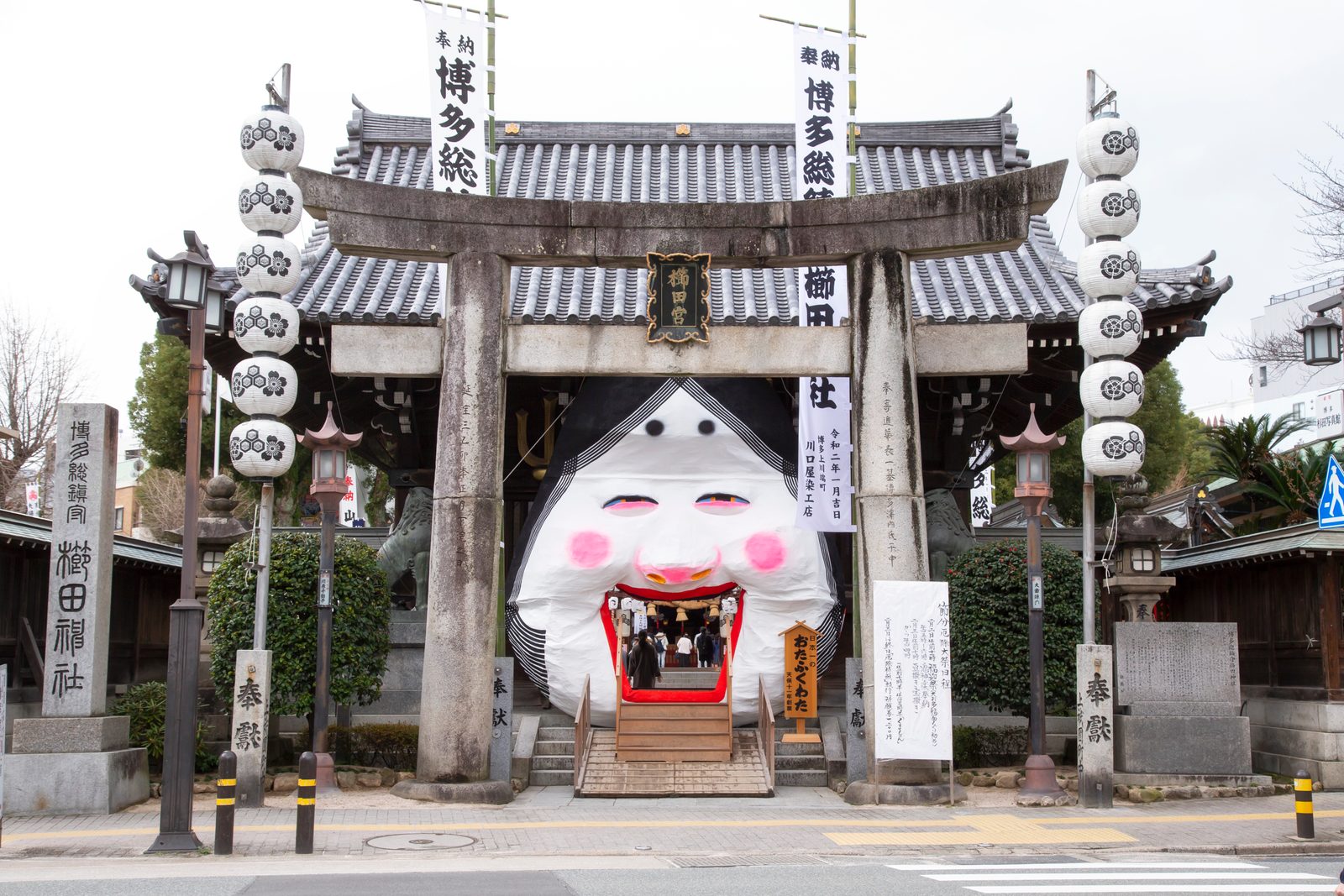
Kushida Shrine keeps a sacred ginkgo tree on its grounds, with two Mongol anchor stones lying at its base. Its shrine buildings were built and donated by Toyotomi Hideyoshi together with the re-planning of the town of Hakata. A townhouse museum in Hakata shows miniature displays of each festival and screens video of Hakata Gion Yamakasa. The Kawabata-dori shopping street has an arcade holding about one hundred and thirty shops, so browsing there happens under a roof.
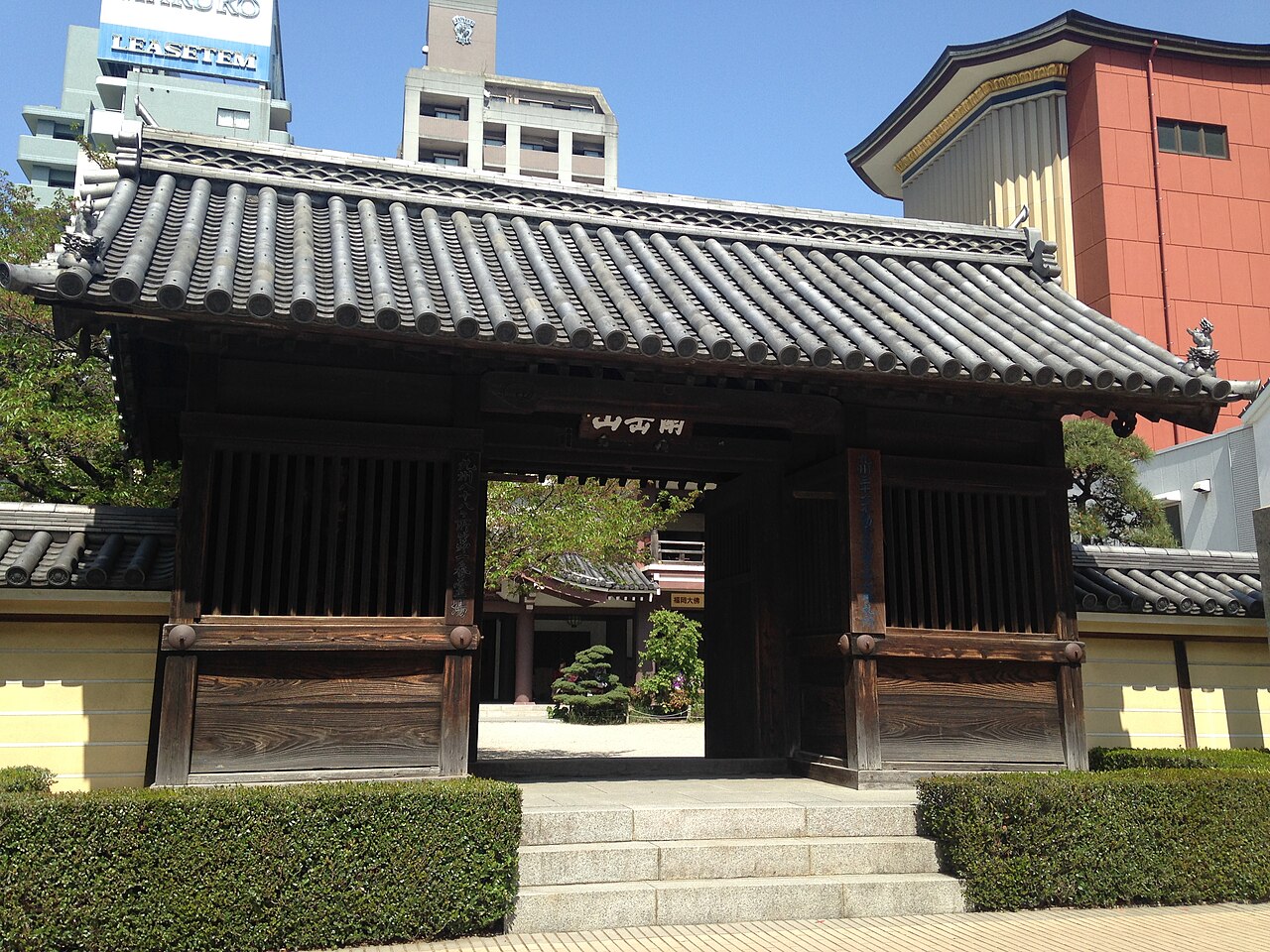
Tochoji holds a Senju Kannon Bosatsu statue from the Heian period, carved from a single piece of maki wood. The temple also has a halo carved with seven buddhas and thirteen buddhas, and five thousand small Buddha statues are enshrined on the rear wall, so there is carved detail to look for on the halo and on the rear wall. Hakata Sennenmon is the gate that guides visitors into the temple and shrine town, where many historic cultural properties remain. Its door boards are made from a thousand-year-old camphor tree, and its transom carvings show Hakata-ori kenjo patterns.
At Shofukuji, the earthen wall known as the Hakata wall was made by embedding stones and roof tiles left in burned ruins. At Jotenji, founded by the Rinzai monk Shoichi Kokushi, a stone monument marks the birthplace of udon and soba. For a short visit, Kushida Shrine and Tochoji cover one shrine and one temple; the gate, the wall and the monument are for travellers with more time.
Eating at the Yatai Food Stalls of Nagahama and Beyond
Fukuoka has about one hundred yatai stalls, which hang colourful noren curtains and appear around the city at night, so a stall is something to look for across the city in the evening. The menus go beyond ramen to multinational dishes and bars. In the Nagahama area, which has returned as a yatai district, the stalls stand in a row, each with its own flavours and story. Nagahama is also the birthplace of Nagahama ramen.
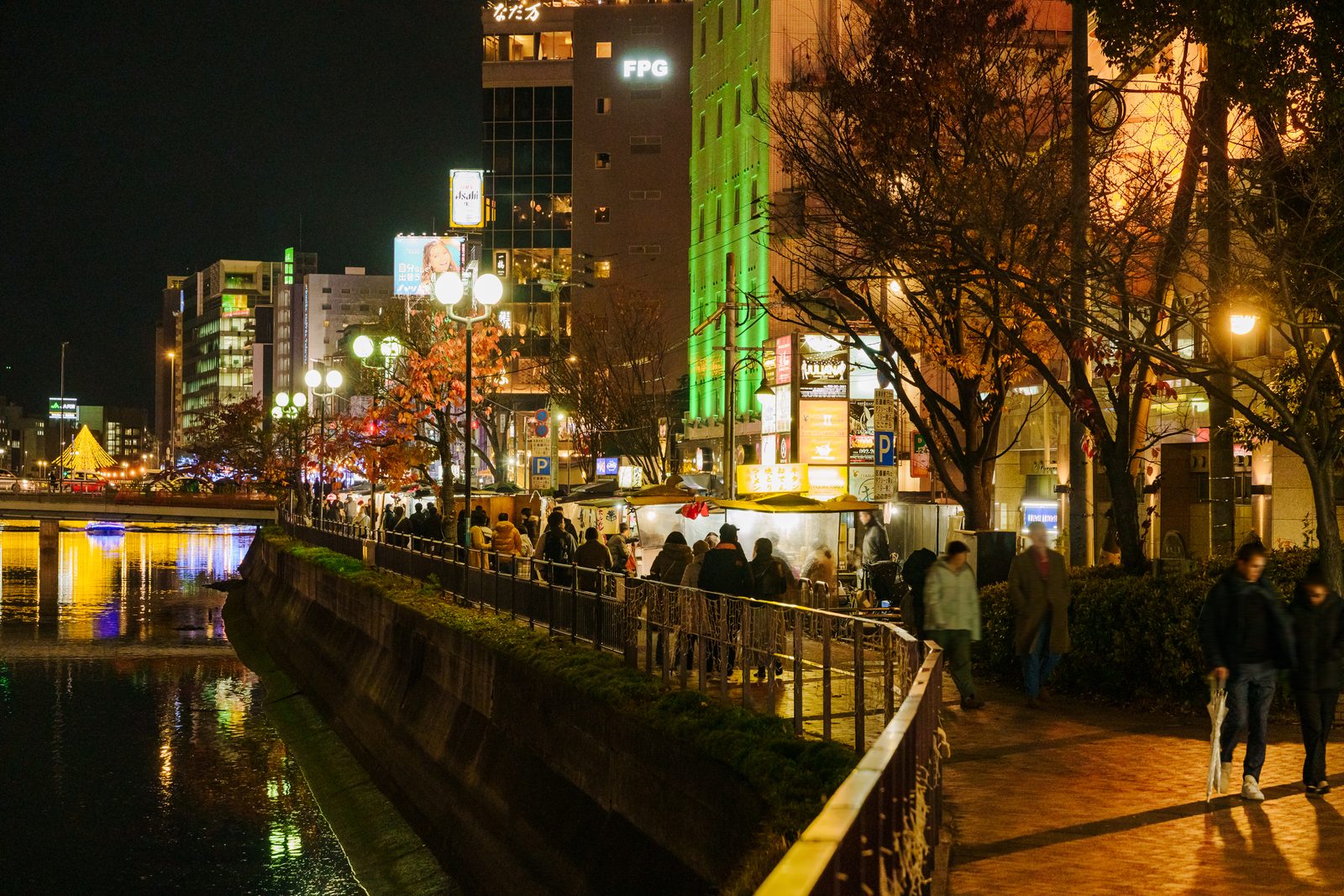
Ramen, oden and yakitori are the main items at one Nagahama stall, served as classic yatai dishes. There the tonkotsu ramen uses only pork bones, simmered in a pressure cooker into a mild, white, cloudy soup without odour, while the yakitori is grilled skewer by skewer and the oden has a gentle taste of flying fish stock. At a Nagahama stall, domestic lettuce is wrapped around pork belly and grilled over charcoal, which keeps the lettuce crisp against the savoury pork. A potato and macaroni salad topped with cheese is seared with a burner until it turns soft and creamy like gratin.
Approaching one Nagahama stall, the sound of a baseball broadcast can be heard, and on game days customers can watch the game on a tablet while eating and drinking. Conversation starts naturally there among baseball fans and others sitting together. At another stall the scent of dashi stock spreads through the space. A yatai suits travellers who like to talk with neighbours over dinner as much as those who come for the food.
Hakata Ramen, Hot Pots and Seafood Markets
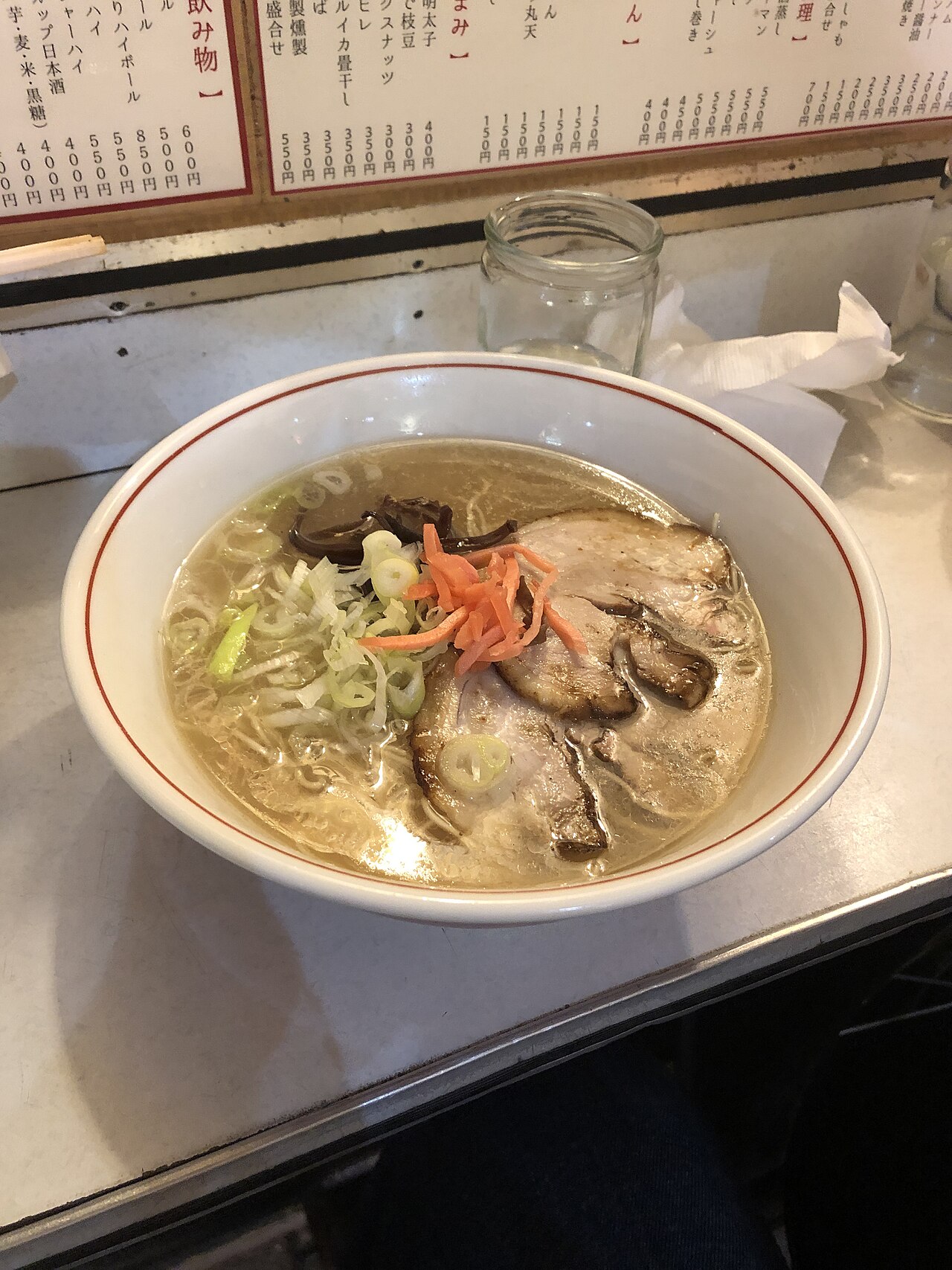
Hakata ramen comes in a cloudy white pork-bone soup with thin noodles that have a firm bite. Customers can choose the firmness of the noodles and order kaedama, an extra serving of noodles added to the remaining soup. Hakata udon goes the other way and is characterized by soft noodles.
Mizutaki is a hot pot eaten with a light soup made by simmering chicken. Motsunabe is said to have its roots in offal and chives simmered in an aluminum pot with a soy-sauce flavor after the Second World War. At Hakata yakitori restaurants, cabbage with sauce is served as soon as customers sit down, before they order.
A city fish market began in the early Showa period as individual shops selling fresh fish carried in on handcarts, and neighbouring shops then gathered one after another. At a small fishermen's evening market, four to six local fishers set up stalls and sell some local seasonal seafood directly, so the market is small and the sellers are the people who caught the fish. Clams, shrimp, octopus and conger eel are caught in large quantities in midsummer, and turban shells and abalone also come in from autumn. Good items sell out as the starting signal sounds, and the roof means purchases can be made even on rainy days.
Festivals and Seasons: Yamakasa Floats and the Ginkgo at Kushida Shrine
Hakata Gion Yamakasa is said to have begun when Shoichi Kokushi, the founder of Jotenji, sprinkled prayer water to ward off disease. In the festival, runners carry the kakiyamakasa and sprint through Hakata at the signal of a big drum, watched by spectators gathered at midnight. Decorative yamakasa floats also go on display at fourteen places in the city, so a visitor has more than one place to see them.
At Kushida Shrine a decorative yamakasa is displayed in the grounds, and visitors can walk the route along which the carried floats pass. In autumn the sacred ginkgo in the shrine grounds changes colour. The Fukuoka Castle ruins hold a Fukuoka Castle Cherry Blossom Festival, during which the tenshudai is lit up. Autumn travellers can plan around the ginkgo, and festival-goers around the dates in the last table.
Getting to Fukuoka and Around Central Fukuoka
New to rural buses and one-man trains? See how to ride them, step by step.
| Route | Item | Detail |
|---|---|---|
| Fukuoka Airport to Hakata | Subway | Five minutes from Fukuoka Airport Station to Hakata Station |
| Fukuoka Airport to Tenjin | Subway | Eleven minutes from Fukuoka Airport Station to Tenjin Station |
| Airport terminal to subway | Connection | The domestic passenger terminal building is directly connected to the subway station |
| Airport (domestic) to Hakata Station area | Bus | About fifteen to twenty minutes |
| Airport domestic terminal to the centre | Taxi (not a subway fare) | About twenty minutes to Hakata Station, from one thousand five hundred yen; about thirty minutes to Tenjin, from two thousand yen |
| Tenjin to Ohori Park | Subway and walk | About five minutes by subway from Tenjin Station to Ohorikoen Station; Ohori Park is a seven-minute walk from Ohorikoen Station |
| Hakata temples and shrines | Walk | Kushida Shrine is a two-minute walk from Kushida-jinja-mae Station; Tochoji is a one-minute walk from Gion Station |
| Fukuoka City Subway | One-day pass | Adults six hundred and forty yen, children three hundred and twenty yen |
To add a guided food or city tour, browse tours and activities in Fukuoka.
Hours and Fees
| Place | Item | Time or fee |
|---|---|---|
| Ohori Park Japanese Garden | Hours | Nine a.m. to six p.m. from May to September, entry until five forty-five p.m.; nine a.m. to five p.m. from October to April, entry until four forty-five p.m. |
| Ohori Park Japanese Garden | Admission and closed days | General admission two hundred and fifty yen; child admission (under fifteen) one hundred and twenty yen; closed every Monday (the following day when Monday is a holiday) and from December twenty-ninth to January third |
| Fukuoka City Museum of Art | Hours and admission | Nine thirty a.m. to five thirty p.m.; general admission two hundred yen; closed Mondays and from December twenty-eighth to January fourth |
| Fukuoka Tower | Hours | Nine thirty a.m. to ten p.m., last entry nine thirty p.m. |
| Fukuoka Tower | Observation deck admission | Adults (high school students and older) one thousand yen; elementary and junior high school students five hundred yen; young children aged four and over two hundred yen |
| Korokan site exhibition hall | Construction closure | Closed for construction from October twenty twenty-six to March twenty twenty-seven |
| Kushida Shrine | Worship and shrine seal | Main hall worship four a.m. to ten p.m.; shrine seal reception nine a.m. to five p.m. |
| Fish markets | Hours | Yanagibashi Rengo Market eight a.m. to six p.m., differing by shop; Izaki evening fish market every Saturday from three p.m. |
| Hakata Dontaku and Hakata Gion Yamakasa | Dates | Hakata Dontaku on May third and fourth each year; Hakata Gion Yamakasa from July first to fifteenth each year |
| Hojoya at Hakozaki Shrine | Dates | September twelfth to eighteenth each year |
Fees and hours were checked against official sources on 18 November 2026.
Compare options
See partner pricing and availability →
Disclosure: This post may contain affiliate links. If you book through them, we may earn a commission at no extra cost to you.