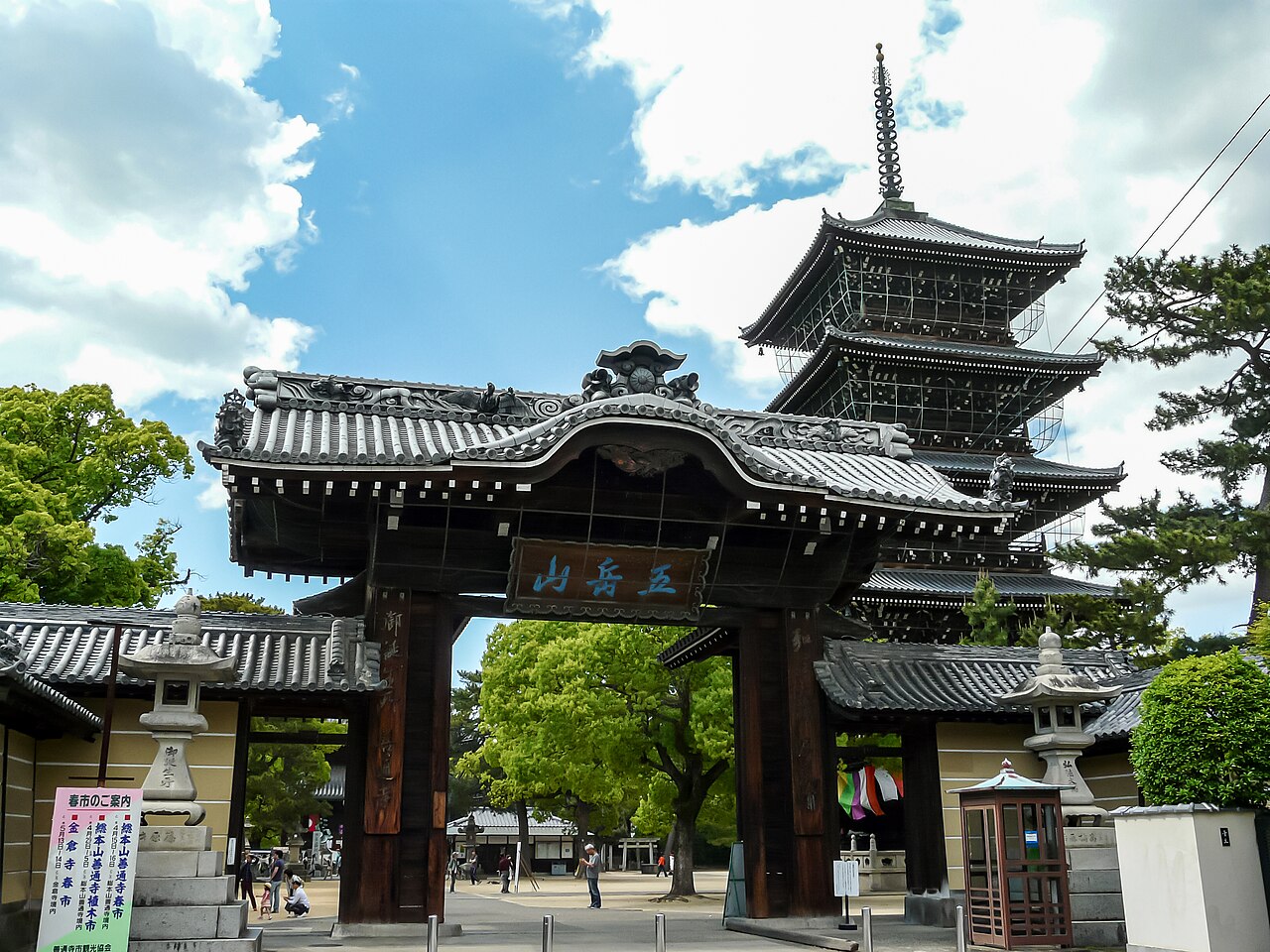
Zentsuji in Kagawa is the temple where Kobo Daishi Kukai was born, and its Miedo hall rises on the ground where the Saeki family house stood at the time of that birth. The grounds spread across about forty-five thousand square metres in two courtyards, the Garan to the east and the Tanjoin to the west. Under the Miedo lies the Kaidan-meguri, a passage walked in pitch darkness from one end to the other. In the temple town, one udon shop brings its kamaage dipping broth to the table in a tokkuri.
The Two Courtyards of Zentsuji
Walk Zentsuji's grounds and you cross two courtyards, the Garan on the east and the Tanjoin on the west, which together make up a precinct of about forty-five thousand square metres. The Garan's main hall, the Kondo, is said to follow the model of the Qinglong temple in Chang'an in Tang China, the place Kukai went to study esoteric Buddhism. The Tanjoin, to the west, began on the Saeki family's land; Kukai was born into that family.
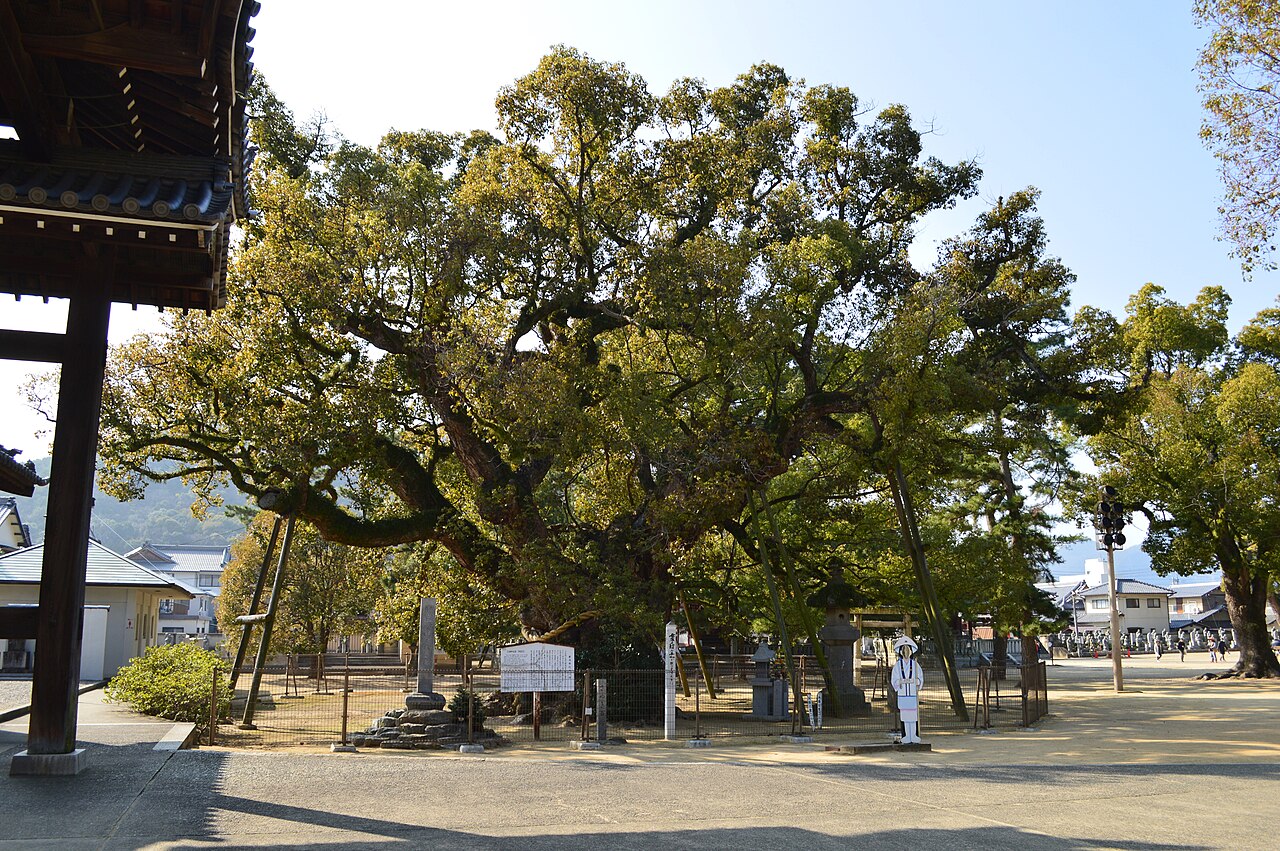
The whole precinct is designated a national historic site as part of the Sanuki Henro Michi, the pilgrimage route of Sanuki. The timber that raised the temple was brought down from Mount Obose. If your time is short, begin with this walk between the two courtyards: the Kondo stands in the Garan, the Miedo stands in the Tanjoin, and the Kaidan-meguri waits beneath the Miedo, so the ground between them already covers much of what follows.
The Pitch-Dark Kaidan-meguri and the Treasure Hall
Go down into the Kaidan-meguri beneath the Miedo hall and the way is pitch black from the first step to the last. The passage runs for about one hundred metres. Its centre sits right under the Miedo's Okudono, so the walk passes directly beneath the hall at its midpoint.
If the darkness is the part you have come for, give the passage your full attention first; the birth-water well and the Treasure Hall, where the temple's treasures are kept, are there to see when you come back up.
Kukai Was Born Here, and the Mountains Behind the Temple
Stand in the Miedo hall and you are on the spot of Kukai's birth, for the Saeki family house stood here. The whole of the Tanjoin, the western courtyard, began as the site of that family's residence.
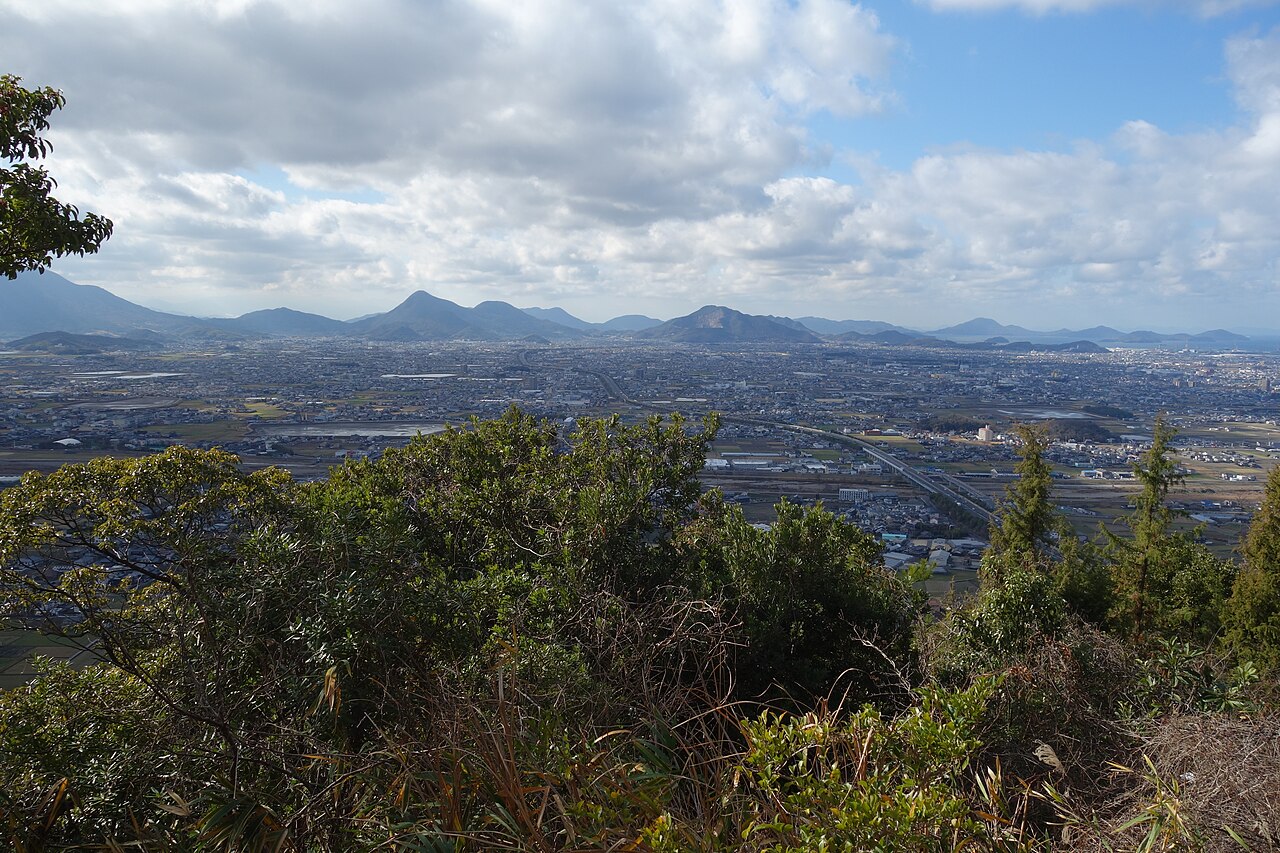
West of the town a range of five mountains stands behind the temple. Between two of them lie what is left of a Heian-period mountain temple, together with a burial mound in the keyhole shape. One of the five carries a legend on its summit: it is there, the story goes, that the child Kukai threw himself from the peak above the town.
Udon in the Temple Town
Sit down at Miyagawa Seimenjo and you do the work yourself: you boil the noodles and you pour on the broth, with every step of it self-service. The smell of iriko dashi fills the shop. There are twenty seats.
At a kamaage udon shop in the town, the dipping broth, made from kombu, bonito and Ibuki iriko, is brought out in a tokkuri, a sake flask. The flask is set in a bath of hot water so the broth stays warm. The noodles themselves are soft outside and firm at the core, eaten through a dipping broth that leans sweet and savoury. To finish, what remains of the broth is thinned with the water the noodles were boiled in, the way soba-yu is taken at the end of a soba meal.
At Yamashita udon the dough is trodden by foot in the traditional way, and every strand is hand-cut on the premises. Its bukkake udon began as a staff meal: instead of being dipped, the noodles had the broth poured straight over them. Its kake udon arrives under thick fried tofu that comes from a tofu shop, with a sweet-and-salty seasoning. Which to choose comes down to how you like to eat: ladling your own bowl at Miyagawa Seimenjo, a broth kept warm in a tokkuri at the kamaage shop, or hand-cut noodles under sweet-and-salty tofu at Yamashita udon.
Festival Days, Sutra Copying and the Sand-Treading Hall
Come on the third of November and the Kukai Festival brings Kobo Daishi's statue out of the Miedo on a palanquin, to be carried through the streets of the town in procession. Children accompany it through the town's streets and return with it to the Garan. Before the Saeki Sobyo, where Kobo Daishi's parents are enshrined, a memorial rite takes place. That day a market fills the Garan, with a lion dance and crying sumo among the offerings. The Treasure Hall marks the date with a special showing of a national-treasure sutra. The festival day adds a procession and a market to the usual walk between the two courtyards.
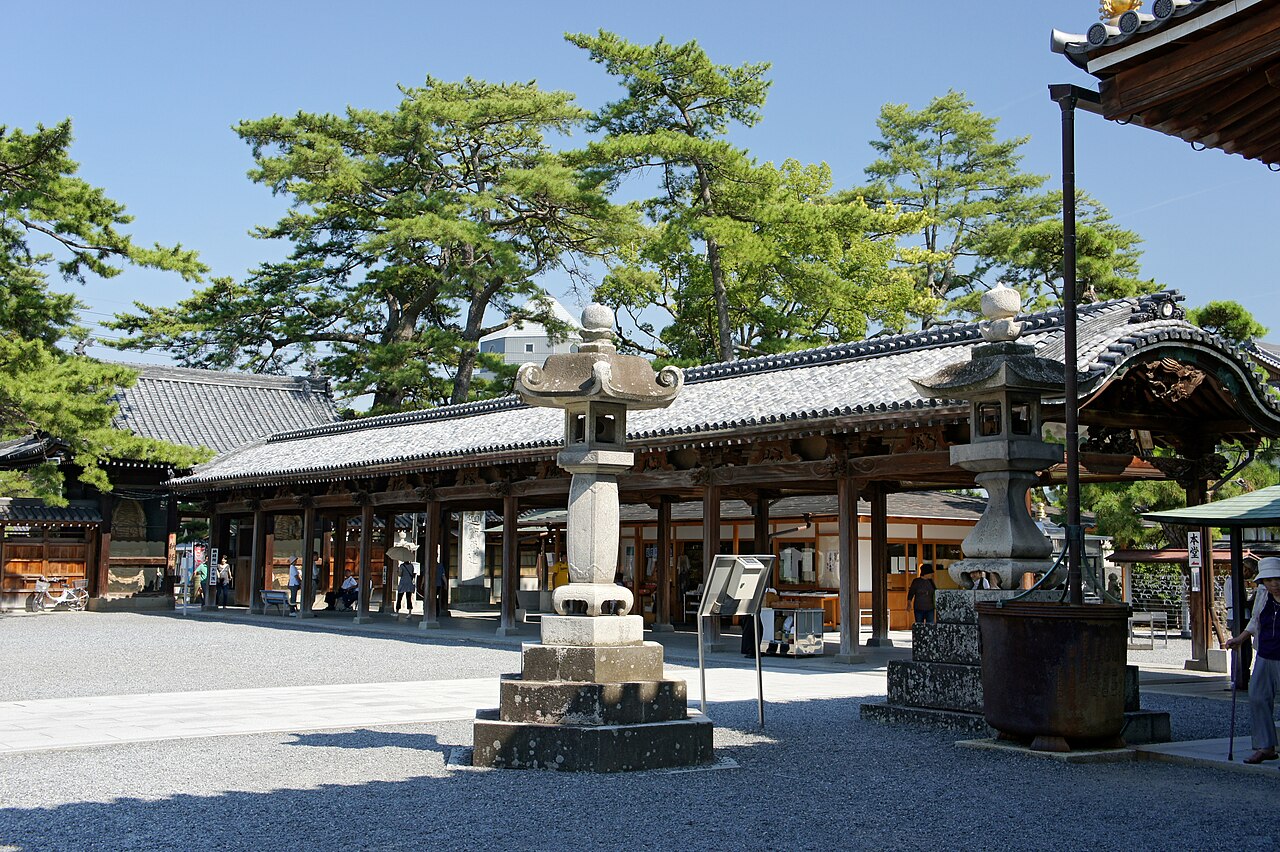
On the twenty-first of each month the temple holds a sutra copying meeting. It meets upstairs in the building whose lower floor holds the sand-treading hall. Brushes, ink and the other tools are things each participant brings along, while the paper and the sample sheets are sold at the temple for anyone who does not bring their own. On the same day the monks hold a memorial service and give a Dharma talk.
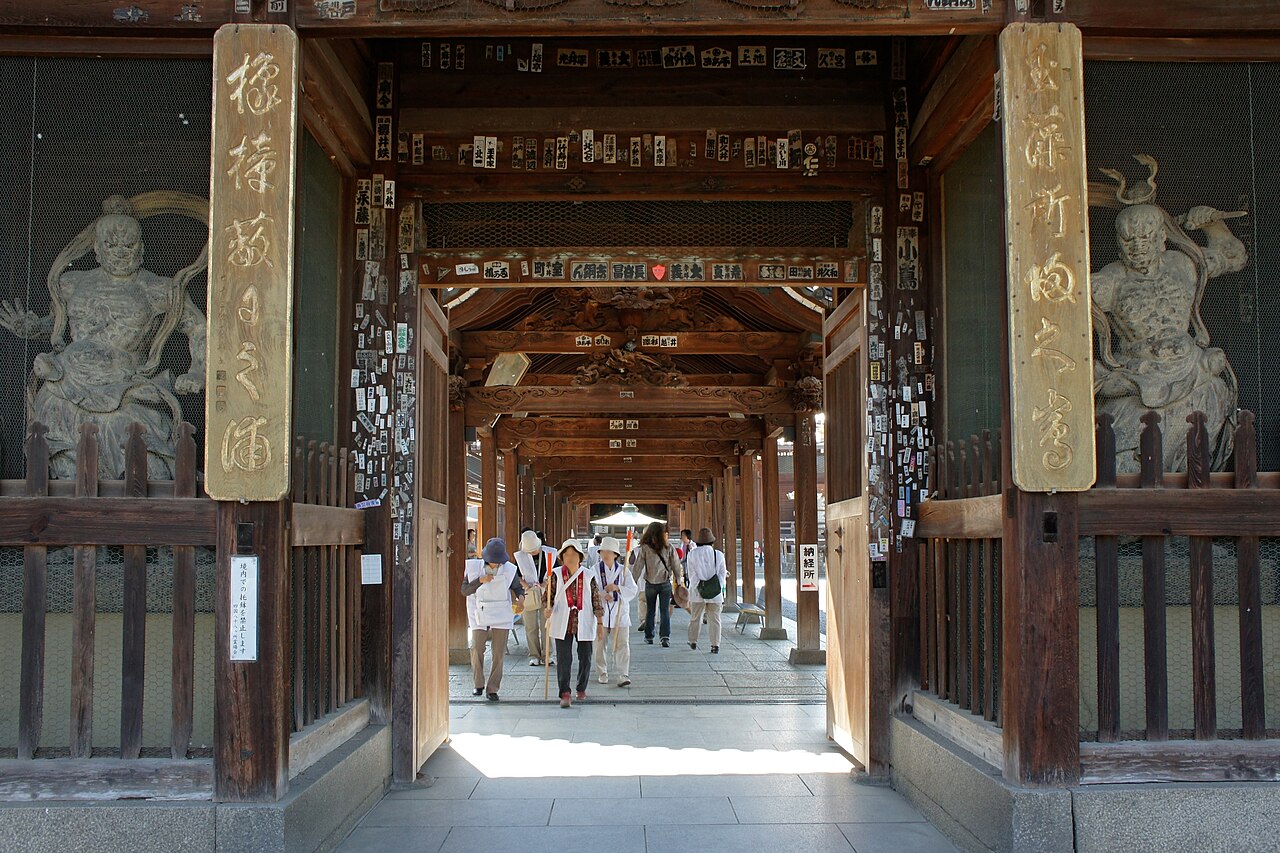
The sand-treading hall itself can be used in any season. It was set up on a permanent footing to mark the twelve hundredth anniversary of the temple's founding. Inside, you can stand close to the principal images of all eighty-eight temples of Shikoku, among them hidden Buddhas that are not shown at their home temples. The Gojunoto, the five-storey pagoda, is opened to visitors on special occasions. With the procession moving through the town on the third of November, the festival is a date to plan without hurrying back, perhaps with a night at one of the places to stay in Zentsuji.
Getting to Zentsuji
| Leg | How | Time and estimate |
|---|---|---|
| Okayama Station to Zentsuji Station | JR limited express on the Seto-Ohashi Line and Dosan Line | About 50 minutes |
| Tokyo to Takamatsu Airport, then on to Zentsuji | Flight, then onward from the airport | About 70 minutes by air, then about 40 minutes |
| Okayama to Zentsuji I.C. | Car | About 60 minutes |
| Tokushima to Zentsuji I.C. | Car | About 120 minutes |
| Kotohira to Zentsuji I.C. | Car | About 10 minutes |
| Zentsuji Station to Nikoniko Rent-a-Car | On foot | About 5 minutes |
New to rural buses and one-man trains? See how to ride them, step by step.
Hours and Fees
| Place | What | Hours or fee |
|---|---|---|
| Kaidan-meguri and Treasure Hall | Adult admission, sold as a set | 700 yen |
| Kaidan-meguri and Treasure Hall | Child admission (elementary to high school), set | 300 yen |
| Kaidan-meguri and Treasure Hall | Hours | 8:00-17:00; reception closes at 16:30 |
| Kondo (main hall) | Hours | 7:00-17:00 |
| Sand-treading hall | Hours | 9:00-16:00 |
| Temple grounds | Entry | Nothing to pay to walk the grounds; some facilities charge |
| Worshippers' car park | Parking | 300 yen for an ordinary car; 1,000 yen for a microbus or large bus |
| Miyagawa Seimenjo | Udon shop hours | 8:00-18:00 until the noodles run out; closed on Sundays |
Where to stay
Places to stay near Zentsuji, Kagawa, Japan →
Disclosure: This post may contain affiliate links. If you book through them, we may earn a commission at no extra cost to you.