The historical notes in this article draw on Shinsen Meishō Chishi (新撰名勝地誌), a Meiji-era gazetteer of famous places edited by the novelist Tayama Katai (田山花袋).
Kotohira is a town in Nakatado District, in the old province of Sanuki that is now Kagawa Prefecture. It sits at the foot of Mount Kotohira, once called Zozusan, and the gazetteer describes it as the town with the next railway station after Zentsuji. Everything here is arranged around one shrine: Kotohira-gu (金刀比羅宮), known to everyone as Konpira-san.
Getting there is the easy part. The JR Dosan Line limited express Shimanto covers the run from Takamatsu Station to JR Kotohira Station in about thirty-five minutes, short enough that an early start is realistic even if you are based in the city, and the rest of this guide is about using that head start well.
Getting to Kotohira from Takamatsu or Okayama
You have two railways and three sensible ways to use them. The fastest is the JR limited express Shimanto on the Dosan Line, about thirty-five minutes from Takamatsu Station to JR Kotohira Station. Check the departure board before you buy, though: if the next express is a long way off, a local train may still get you there sooner.
That local train takes about sixty minutes and may require a change at Tadotsu. From Okayama, on the Honshu side, the JR Seto-Ohashi Line connects to the Dosan Line, and the journey to JR Kotohira Station is also about sixty minutes, so Kotohira works as a day trip from either side of the Inland Sea.
The second railway is the private Kotoden Kotohira Line, which leaves Takamatsu-Chikko Station every thirty minutes and takes about sixty minutes to Kotoden-Kotohira Station, a separate station from the JR one. The one-way adult fare is seven hundred and thirty yen. It is slower, but the regular timetable means you rarely stand around waiting.
The stone stairway to the main hall
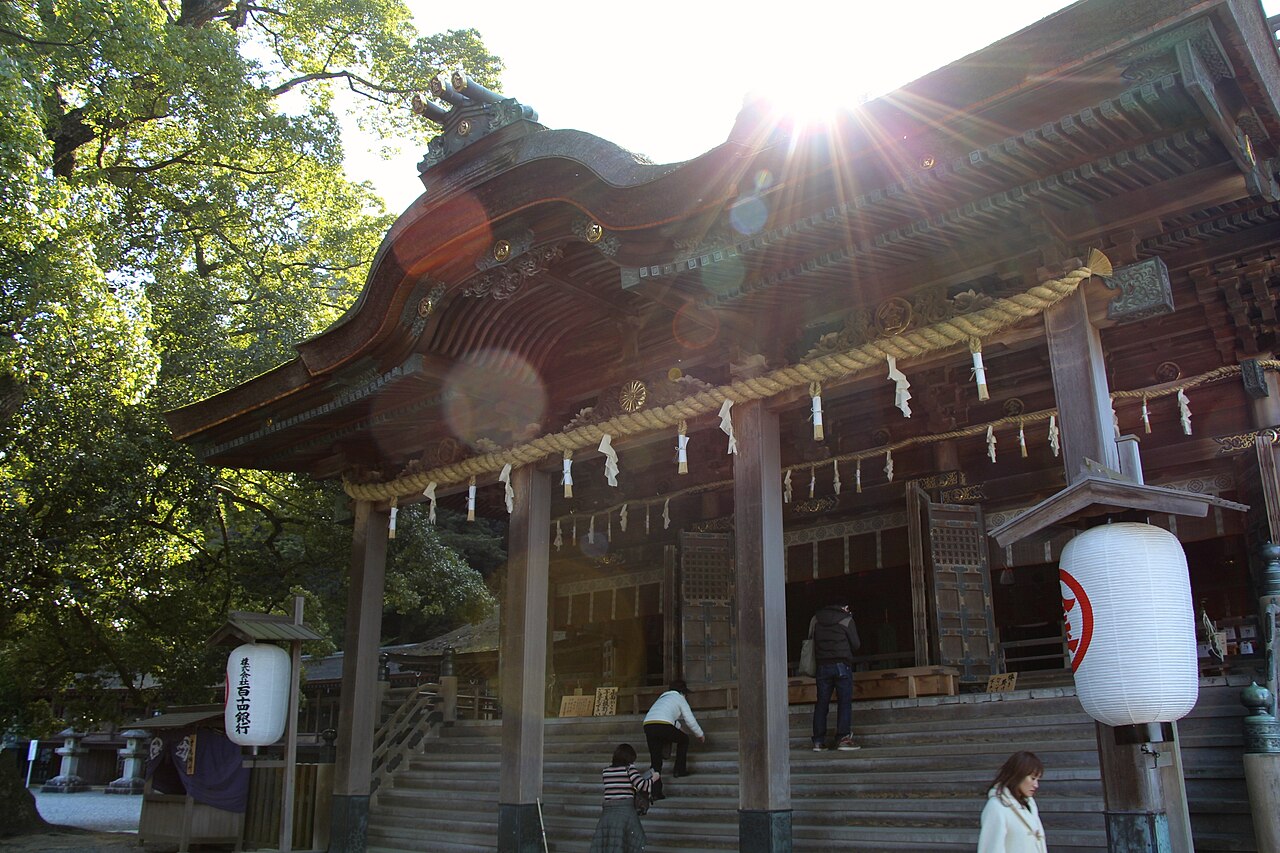
From Omotesando, the approach street at the foot of the hill, the stone steps climb to the main shrine, Gohongu. The one-way count is seven hundred and eighty-five steps and the walk takes about thirty minutes. Allow roughly the same again for coming down, and more if you plan to go inside any of the buildings on the way.
The hill's older name, Zozusan, means Elephant Head Mountain. Tradition says it came from the outline of the mountain seen from a distance, which was thought to resemble an elephant's head. Look up at the ridge as you walk in from the station and judge the likeness for yourself.
The gazetteer describes the main hall of its day as built in the eleventh year of the Meiji era: knot-free timber throughout, cherry-blossom lacquer work on the wall boards and ceiling, and gilding that shone enough to overwhelm the worshippers. The shrine at the top of the climb was already a showpiece well over a century ago.
Omote Shoin, the reception hall beside the approach
Beside the approach stands Omote Shoin, the shrine's reception hall, marked by the two large crest lanterns in front of its curved gable. Regular admission costs eight hundred yen for adults and four hundred yen for high school and university students. Because there is a charge, decide before you start climbing whether the interior is on your list.
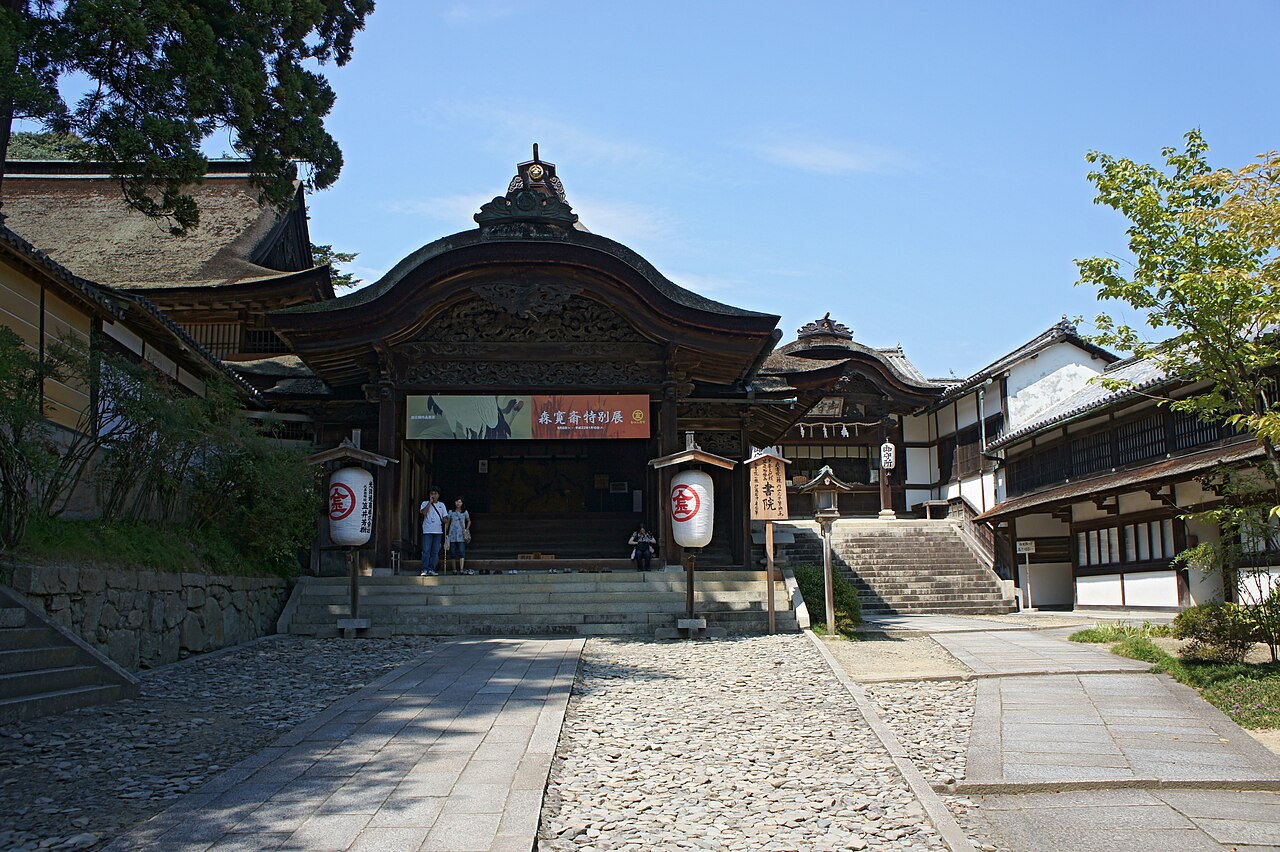
The pricing tells you something useful: adults pay exactly double the student rate, so a couple travelling with two high school students spends two thousand four hundred yen here rather than three thousand two hundred. Add the fee up with the other paid sites the night before, and the day's spending will hold no surprises.
Where to stay
Places to stay near Kotohira →
Disclosure: This post may contain affiliate links. If you book through them, we may earn a commission at no extra cost to you.
Kanamaruza, the old playhouse at the foot of the hill
Back at the foot of the hill is Kanamaruza, formally the Kyu-Konpira Oshibai, the Old Konpira Playhouse. Inside, rows of lanterns hang above boxed floor seating, the classic layout of a kabuki house. Admission is five hundred yen for adults, three hundred yen for junior high and high school students, and two hundred yen for children.
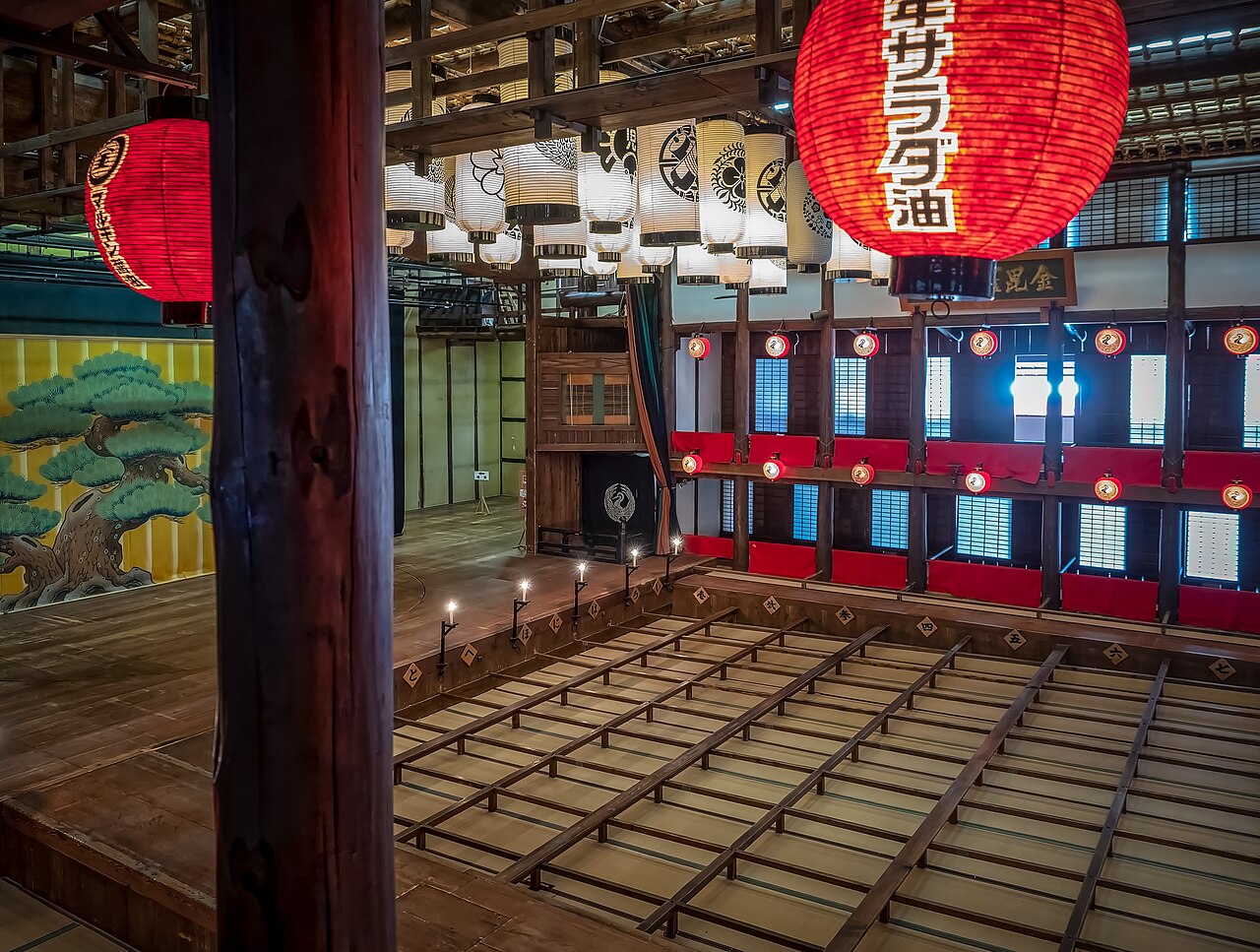
The playhouse opens at nine in the morning and shuts at five in the afternoon. Those two times shape the whole day. Take an early train, climb the steps first while the indoor sites are still shut, then come back down and give the middle of the day to the theatre and the museum.
The maritime museum on the way up
The Kotohira Maritime Museum stands on the way up the approach: a museum about the sea, set on the path to a mountain shrine. General admission is five hundred yen for adults, three hundred and fifty yen for middle and high school students, and two hundred and fifty yen for elementary school children.
It keeps the same pattern as the playhouse, from nine in the morning until five, but with one catch: last admission is at half past four. If you mean to visit on the way down, check your watch as you pass it going up and be honest about whether you will be back before half past four.
The sums are worth doing. Between the museum and the playhouse an adult spends one thousand yen on tickets; add Omote Shoin and the day's admissions come to one thousand eight hundred yen. Hold those figures against the train fare when you decide how much of the hill to see indoors.
When the approach is busy, and when it is not
The gazetteer calls Kotohira-gu the foremost pilgrimage shrine of Shikoku. It describes roughly a kilometre of stone steps from the foot of the hill to the main shrine, and pilgrims packed so tightly that shoulders brushed, a bustle it ranks second only to Ise. That was the Meiji era, but the approach was clearly built for crowds.
The same source records the town's other side. Some fifteen hundred inns and merchant houses once lived entirely off pilgrims, until trains and steamships shortened visits, the port of Tadotsu drew away the trade, and the inns and teahouses shrank to a tenth of their peak. Travellers stopped staying the night, and the town felt it.
Staying over is still the simplest way to be on the steps before the first trains from Takamatsu and Okayama have arrived, and it lets you take the climb at the start of the day rather than in the middle of it. If that appeals, look at places to stay in Kotohira and book a night in town.
The gazetteer also records the shrine's calendar: a grand festival every October that kept its old ceremonial forms, plus the Shiokawa rite, middle and minor festivals, monthly rites, a cherry-blossom festival and an autumn-leaves festival. If a quiet stairway is the goal, October is the month to check before you book; if the festival is the goal, book early.
If you arrive by car
Driving is straightforward to budget. The town runs a car park called Ekimae Nishi, a name that simply means the west side of the station front. For ordinary cars the charge is two hundred yen per hour, with a ceiling of one thousand yen within any twenty-four-hour period; when that period ends, the cycle starts again.
That structure rewards a long day. After the fifth hour you have reached the ceiling, so anything beyond it costs nothing more until the twenty-four-hour clock resets. Compare that with the seven hundred and thirty yen Kotoden fare per person each way and, for a couple or a family, the car comes out cheaper before fuel and tolls.
However you arrive, the stairway is the same seven hundred and eighty-five steps, and the museum and playhouse keep a nine-to-five day. Build the plan around those fixed points: climb first, museums after, the train home or a room in town. The shrine that once drew crowds second only to Ise can still be walked at your own pace.