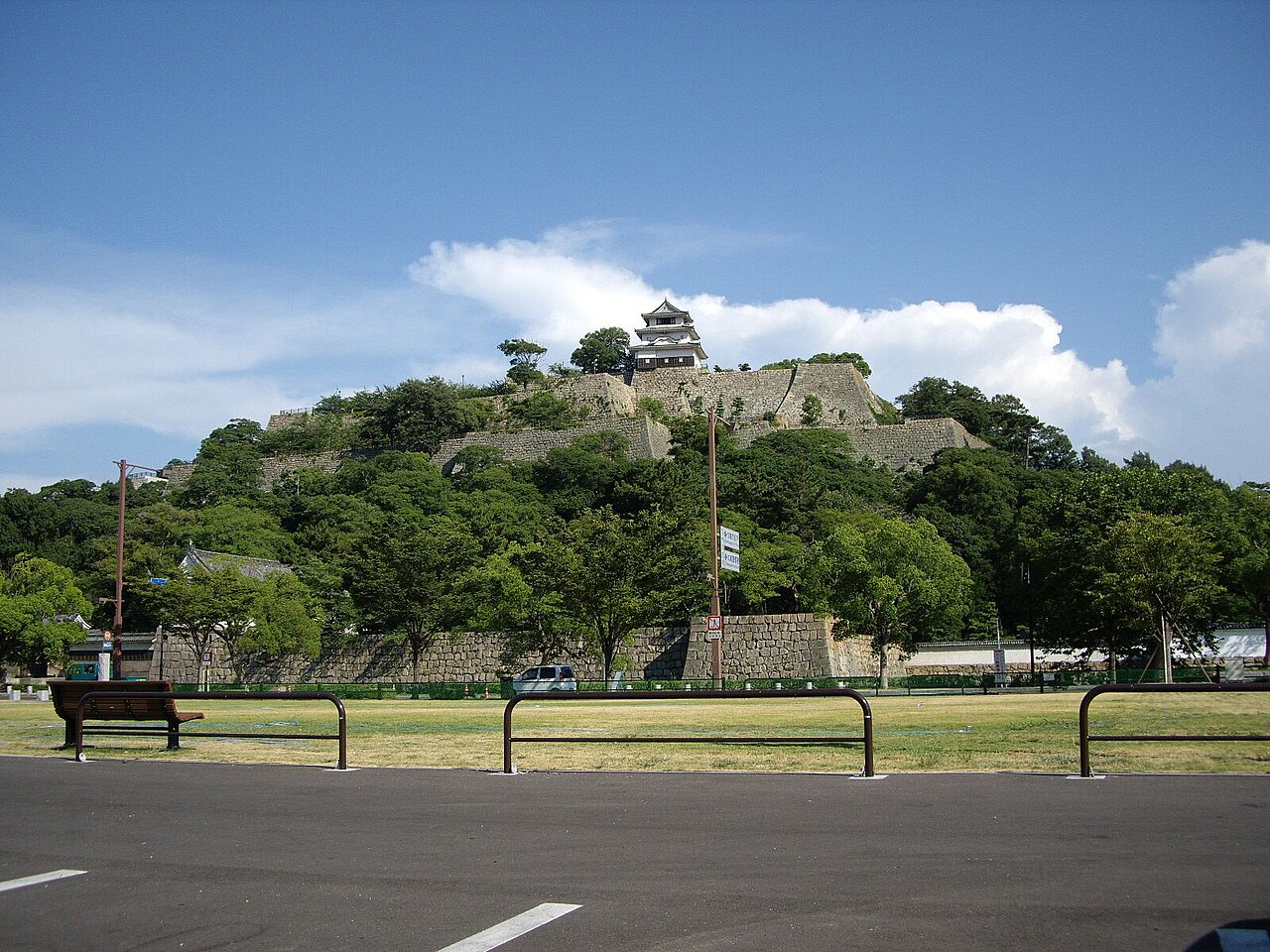
Marugame lies in the central west of Kagawa, the prefecture's second city, and its history runs on two tracks: castle town at the foot of Marugame Castle, and port of call for pilgrims bound for Konpira-gū.
Most itineraries hurry past on the way to bigger names, which is exactly why a slow day here feels like a quiet reward. The castle hill lifts straight out of the streets, and the town below carries on at its own pace, unbothered by anyone's expectations.
Walls the size of a hillside, a keep the size of a house
The ramparts stack up in four tiers and rise about sixty metres in all — the tallest castle stone walls in Japan — and their outward curve is graceful enough to have earned its own name, the fan slope, for the way it spreads like a folding fan.
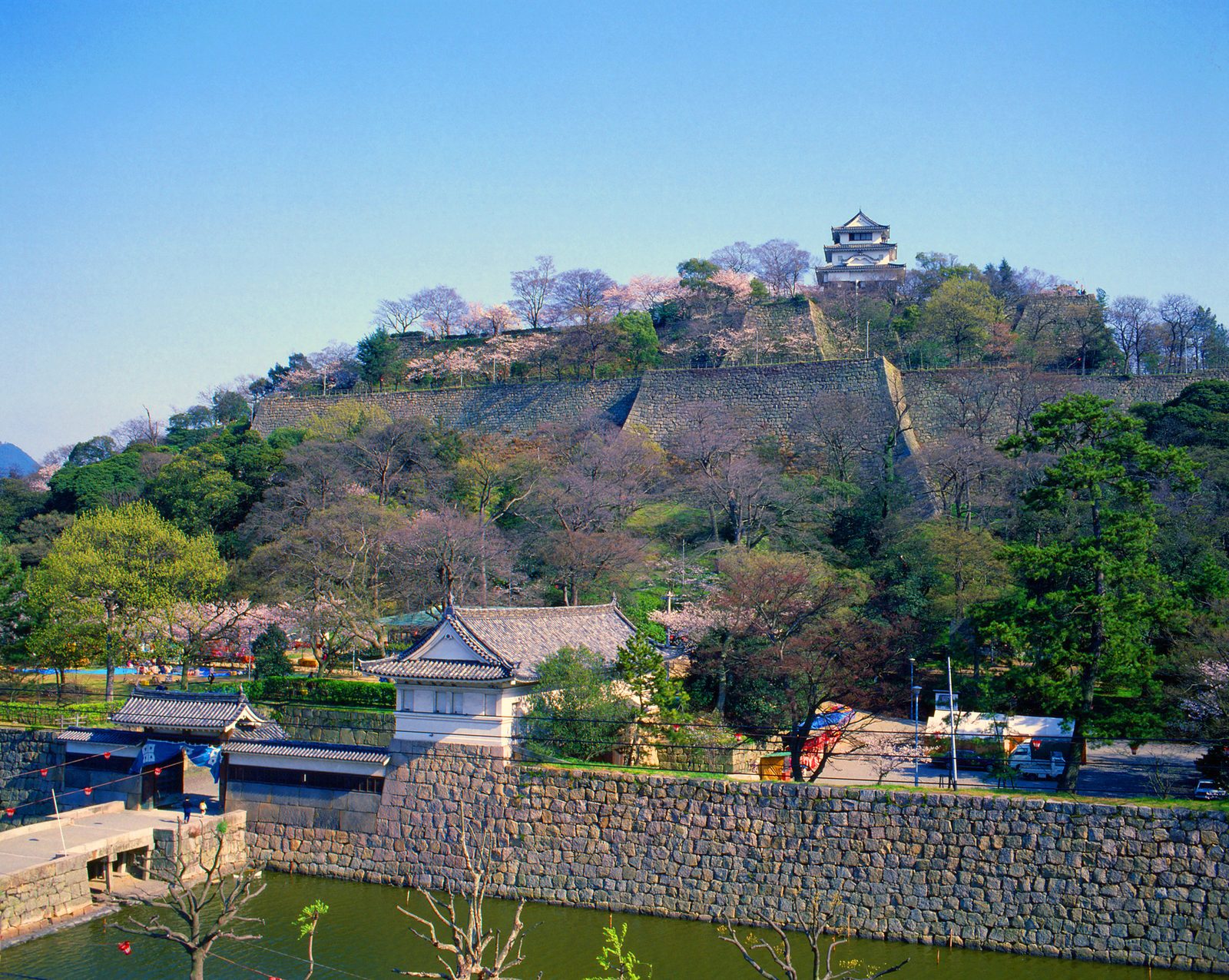
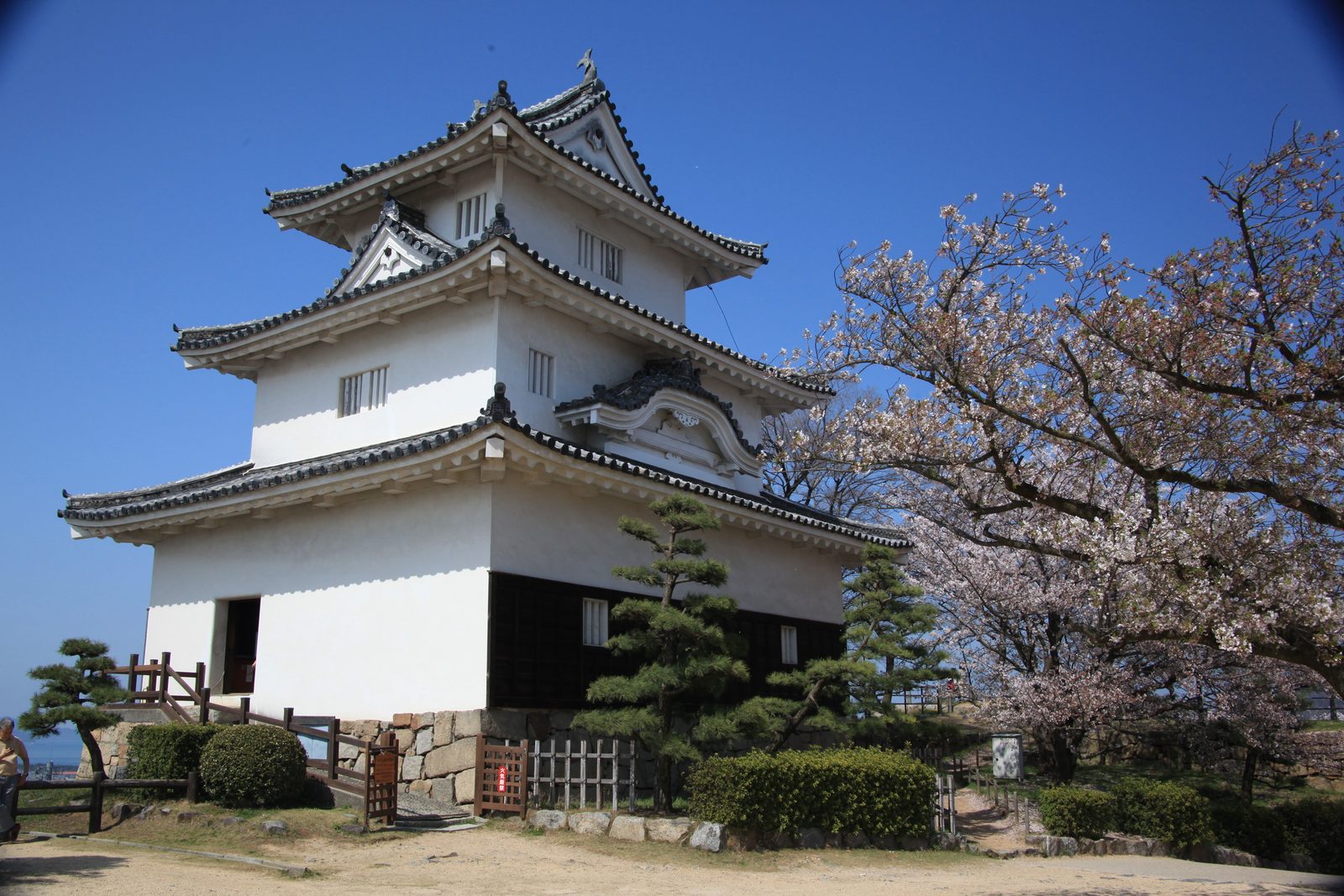
At the summit the scale flips. The keep is a wooden tower of three storeys, one of only a dozen original wooden keeps left standing in the country, and a designated Important Cultural Property. That contrast — hillside-sized stonework carrying a house-sized tower — is the whole point of the walk up.
Admission to the castle keep costs 400 yen for adults. Groups of 20 or more people, adults and children combined, receive a 20% discount off the standard fee per person. Travelling light helps on the walls, and the coin lockers at the castle take care of the rest. The small lockers cost 300 yen each, with 8 available. The large lockers cost 500 yen each, with 4 available.
*Rather see the castle with everything arranged in advance? Compare tours and tickets around Marugame.*
Where to stay
Places to stay near Marugame →
Disclosure: This post may contain affiliate links. If you book through them, we may earn a commission at no extra cost to you.
What the guidebooks promise from the top
Guidebooks describe the view from the keep's top floor as taking in the whole of the town and the Seto Inland Sea beyond — and they note that a second national superlative hides in the grounds, a well in the second bailey said to be the deepest in Japan, giving the castle two boasts of being first in the country. They also point inland to Iino-yama, the tidy cone nicknamed the Sanuki Fuji, which anchors the view on the landward side.
Two smaller traditions complete the picture. In the Edo period a great drum was beaten at the main gate to tell the town the time of day, and guidebooks note that visitors can now try striking it themselves. And set into the stonework by that same gate is a heart-shaped stone said to bring good fortune in love to those who touch it.
An Edo-period garden and a town of paper fans
Marugame keeps a second landmark in reserve: Nakazu Banshōen, a strolling garden laid out at the close of the seventeenth century by the second lord of the Kyōgoku family, its ponds and islands modelled on the celebrated Eight Views of Ōmi and its name borrowed from a phrase meaning all things in creation.
Its trees do the quiet showing off. A great umbrella pine spreads wide like a parasol held over the path, ancient pines are said to have stood for centuries, and a preserved pavilion here is held to be the oldest sencha tea room surviving in Japan.
The garden is also where the town's signature craft now lives. The Marugame uchiwa, the flat round fan that began in the Edo period as a souvenir for Konpira pilgrims, still accounts for the great majority of the uchiwa made in Japan. In recent years the museum devoted to it has moved into the garden grounds, where its history is shown alongside demonstrations by working fan-makers.
Admission to the garden alone costs 800 yen. A combined ticket covering both the garden and the castle keep costs 900 yen. The pairing is the natural shape of a Marugame day.
The unromantic details
Drivers are well looked after. Otemachi No. 1 parking lot is open 24 hours, has about 170 spaces, and is free for the first hour after entry. The Ekimae underground lot, with 263 spaces, is likewise free for the first hour. Otemachi Nishi, with 137 spaces, charges 100 yen per 30 minutes. Getting your parking ticket validated at the resource museum, the castle keep, or the tourist information centre makes the designated municipal pay lots free for 2 hours.
One detail worth writing down for anyone without a car: the community bus from Kawanishihara to JR Marugame Station takes approximately 15 minutes when it runs counterclockwise, on the left loop.
*Prefer to have the day mapped out for you? Browse tours and tickets around Marugame.*
Marugame does not ask much of a visitor — an unhurried morning on the walls, an afternoon among the pines, a paper fan to carry home — and it returns the kind of quiet that the famous-name castles rarely manage anymore.