Yanaizu, in the Aizu region of Fukushima, is called the birthplace of the Akabeko because of a local legend. In this town by the Tadami River, Akabeko parent-and-child figures greet visitors at the roadside rest area and at various places around town. Enzoji Temple, the awa manju shops, the dace pool of Uobuchi and Tsumujikura Falls in autumn colour are the four stops below.
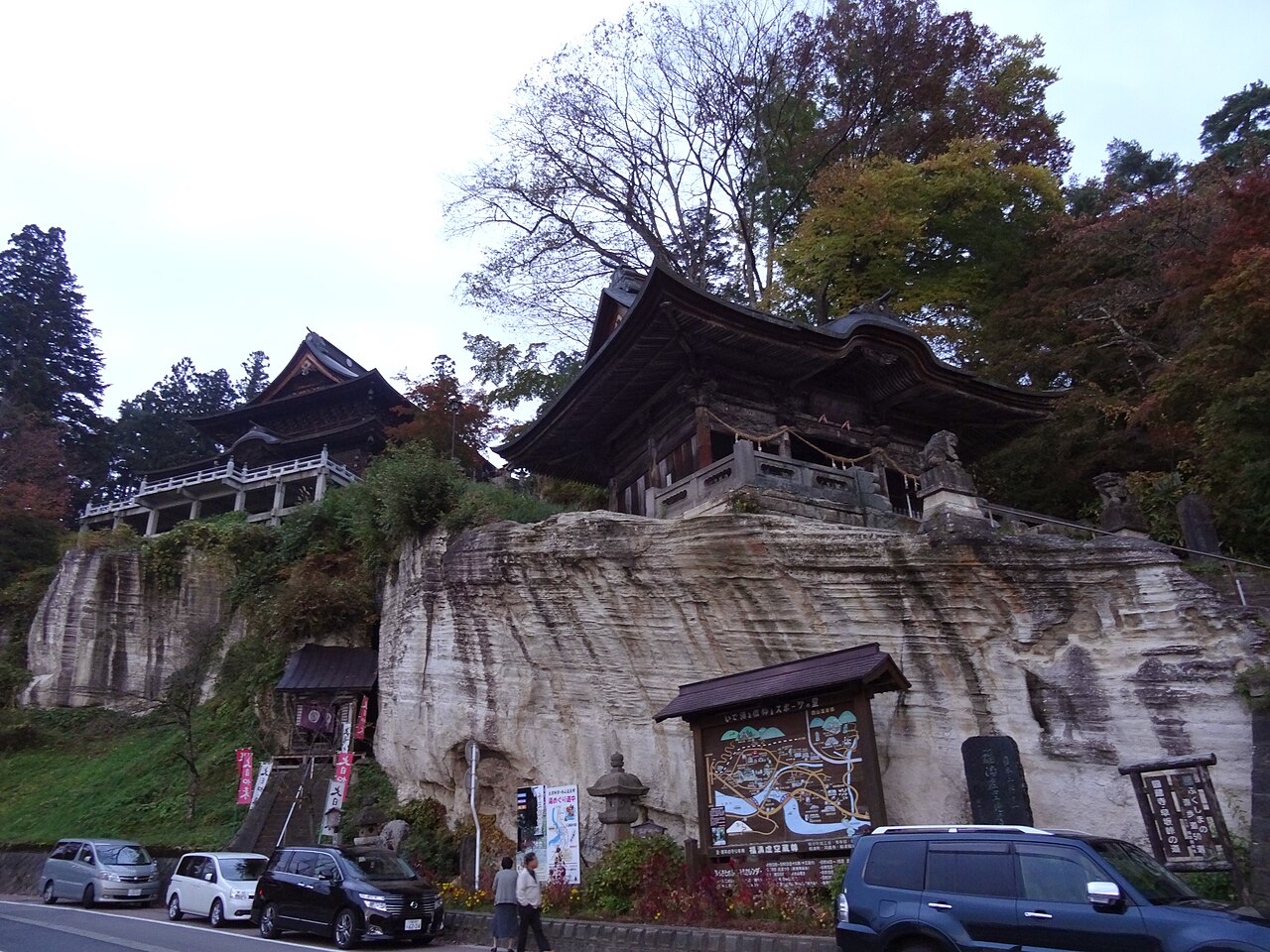
Enzoji Temple and Kokuzo Bosatsu
Enzoji Temple is said to have been founded by the Hosso monk Tokuitsu, and it has endured repeated floods and fires. According to the legend, an old man with white hair appeared in a fisherman's dream and said the driftwood was a sacred log from India. Enzoji is counted as one of the three Kokuzo Bosatsu sites of Japan, alongside sites in Chiba and Ibaraki.
A large earthquake struck the Aizu region and brought down the Kokuzo hall together with the monks' quarters and the houses, and Yanaizu suffered heavy damage. After the earthquake the main hall was built for the first time on its present site on the rock. In Aizu, people have long called Enzoji by an affectionate name taken from Kokuzo Bosatsu.
Okunoin Bentendo, the inner-sanctuary hall, is a building of the mid-Muromachi period in the Zen style and is designated a national important cultural property. The hall takes the shorter name Bentendo from Benzaiten, the Buddhist image enshrined inside. From Kiyohime Park the whole of Enzoji Temple can be seen in one view, and the park is also a photo spot.
The Akabeko, the Red Cow of Yanaizu
The Akabeko is the red cow of the Yanaizu legend, and its name comes from beko, the word for a cow in the Tohoku region. The red-haired cattle that helped in the legend were called Akabeko and became familiar to many people as bringers of fortune conveying patience and strength. The stroking-cow statue at Enzoji Temple is the origin of the Aizu folk craft Akabeko, and stroking it has long been said to bring happiness.
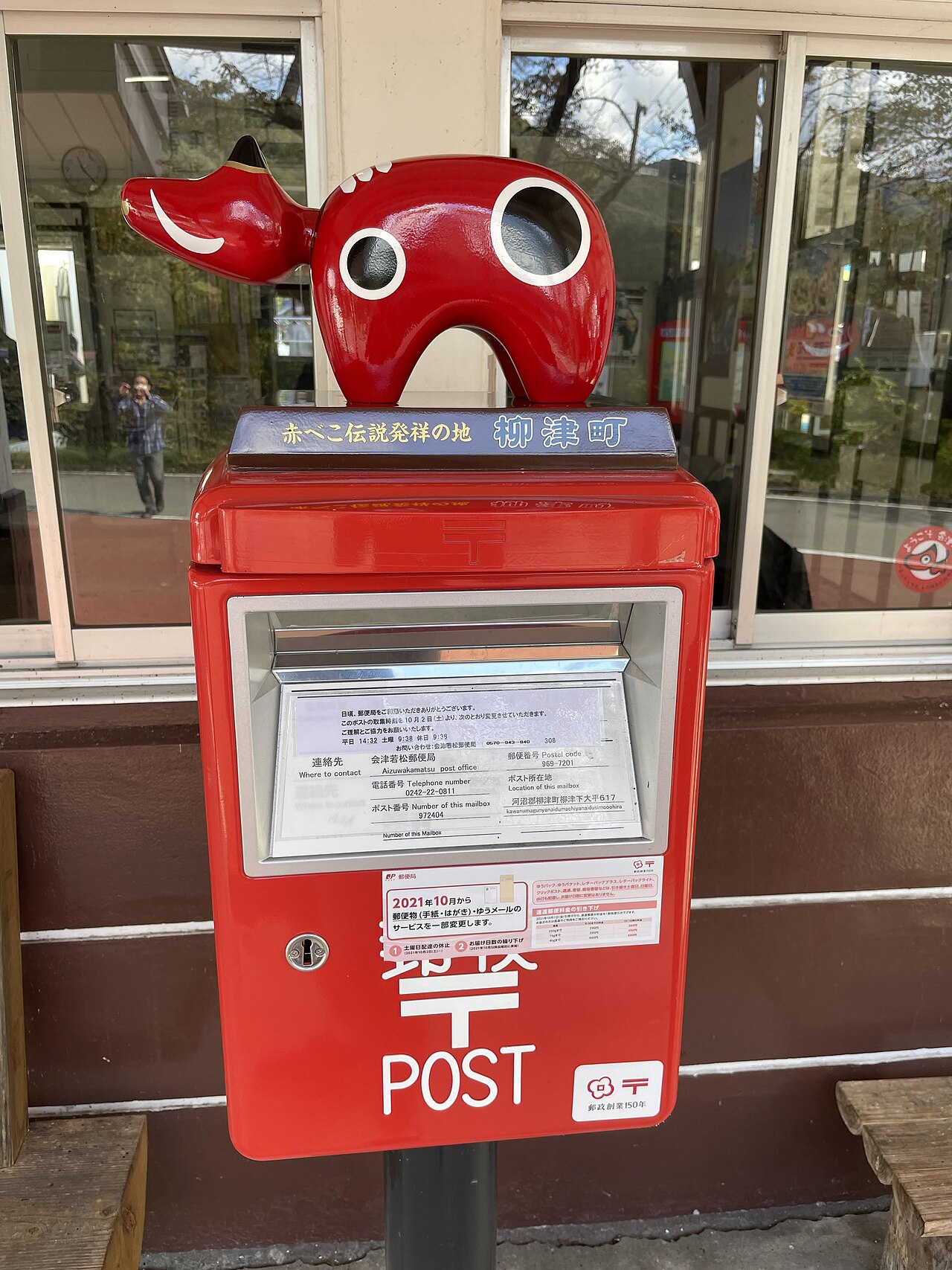
The Akabeko family of the town's figures is a father, a mother and three children. Spotting all five of them, from the roadside rest area to the various places around town, turns the walk through Yanaizu into a small game.
Awa Manju, Soba and Sweets in the Hot Spring Town
Awa manju is the sweet that people offered to Enzoji Temple when it suffered repeated disasters, wishing not to meet (awa) with calamity. In the Yanaizu hot spring town the awa manju shops stand in a row, and a tasting challenge invites visitors to compare each shop's awa manju.
Iwaiya is said to be the original shop of Yanaizu awa manju and also sells chestnut manju. Koike Kashiho makes its awa manju entirely with local millet and glutinous rice from contracted farmers, and its own bean paste uses domestic red beans. Its seasonal awa manju include sakura, yamashio made with mountain salt from Kitashiobara, and a chestnut version limited to autumn.
Inabaya serves awa manju with both chunky red bean paste and white bean paste, and a seasonal sakura awa manju as well. In the chestnut manju at Inabaya the chestnut is so large that the white bean paste inside cannot be seen. At Hasegawaya the wife who took over from her husband keeps the taste of the awa manju, and the shop spends on ingredients rather than advertising. Hasegawaya's seasonal manju come in sakura, yomogi, sesame and pumpkin varieties.
Seiryuen, the roadside rest area, serves hand-made soba from one hundred percent buckwheat flour grown and harvested at the foot of Mount Hakashi. Seiryuen also recommends an awa soft-serve ice cream topped with Yanaizu millet, sells locally harvested fresh vegetables, and offers soba-making demonstrations and hands-on soba-making.
Kobo Daishi, the Dace and the Tadami River
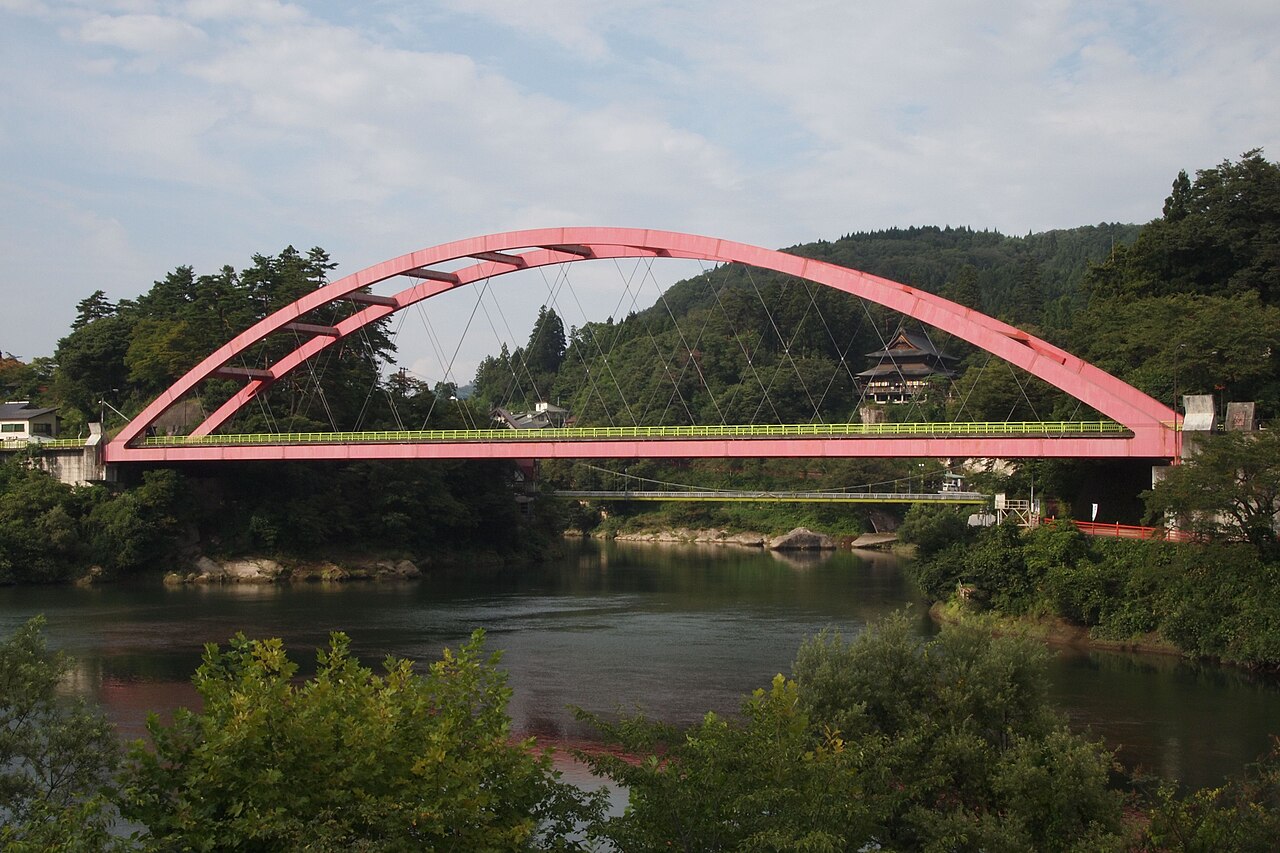
Every stream in Yanaizu that flows into the Tadami River runs clear, and anglers are a constant sight. Dace do not usually live in groups in a large river such as the Tadami River. Yet Uobuchi, a pool in the river where the dace can be seen, is designated a national natural monument. Even after repeated floods the dace always return to Uobuchi, so they are treated as valuable fish guarded by Kokuzo Bosatsu.
According to the legend, Kobo Daishi carved the Kokuzo Bosatsu from a beloved tree, threw the leftover pieces into the river, and they turned into fish. It is handed down that a fisherman who took fish home from this pool found them turned into wood shavings overnight.
Kobo Shimizu, the spring in Yanaizu, has kept welling up through drought and earthquakes, and the townspeople cherish it. A legend remains that cold water welled up where a staff struck a rock, in thanks to the people who had honoured and hosted Kobo Daishi. The dace at Uobuchi can be seen from spring to autumn, down the steps near Kiyohime Park, where a memorial monument also stands.
Tsumujikura Falls and Autumn Colour
Tsumujikura Falls lies at the foot of Mount Hakashi, and in the autumn foliage season the trees there are brightly coloured. In the afternoon light a rainbow can sometimes be seen at the falls, so the afternoon is the time to reach Tsumujikura Falls.
In the Nishiyama district, Tsumujikura Falls is the representative autumn-leaf spot. Besides the white earthen wall of Enzoji Temple, a riverside park along the Tadami River is lit up during the autumn-leaf season.
The climbing route to Mount Hakashi is surrounded by primeval beech forest, and rhododendrons grow in clusters along it. From the summit of Mount Hakashi, Mount Bandai and the Aizu plain appear in one view, and on clear days Mount Chausu in Nasu as well. Tsumujikura Falls and the lit-up riverside park are the autumn pair, while the beech forest of Mount Hakashi is for those who want the summit view.
To stay overnight in the area, browse places to stay in Yanaizu.
Getting to Yanaizu
New to rural buses and one-man trains? See how to ride them, step by step.
| Leg | How | Time or cost |
|---|---|---|
| Aizu-Wakamatsu Station to Aizu-Yanaizu Station | JR Tadami Line | About 1 hour |
| Aizu-Yanaizu Station to Enzoji Temple | On foot | About 10 minutes |
Hours and Fees
| Place | What | Hours or fee |
|---|---|---|
| Enzoji Temple gate | Hours | 6:30 to 17:00 from April to November. 7:00 to 16:30 from December to March |
| Koike Kashiho | Hours | 8:00 to 20:00; closes when the awa manju run out |
| Awa manju shop (Inabaya) | Hours | 9:00 to 17:00 |
| Awa manju shop (Hasegawaya) | Hours | 8:00 to 17:00 |
| Roadside rest area (Seiryuen) | Hours | 9:00 to 18:00; 9:00 to 17:00 from December to March |
| Akabeko painting at two venues | Fee | 2,000 yen at either venue |
Fees and hours were checked against official sources on 9 November 2026.
Thinking of staying overnight?
Compare places to stay near Yanaizu, Fukushima, Japan →
Disclosure: This post may contain affiliate links. If you book through them, we may earn a commission at no extra cost to you.