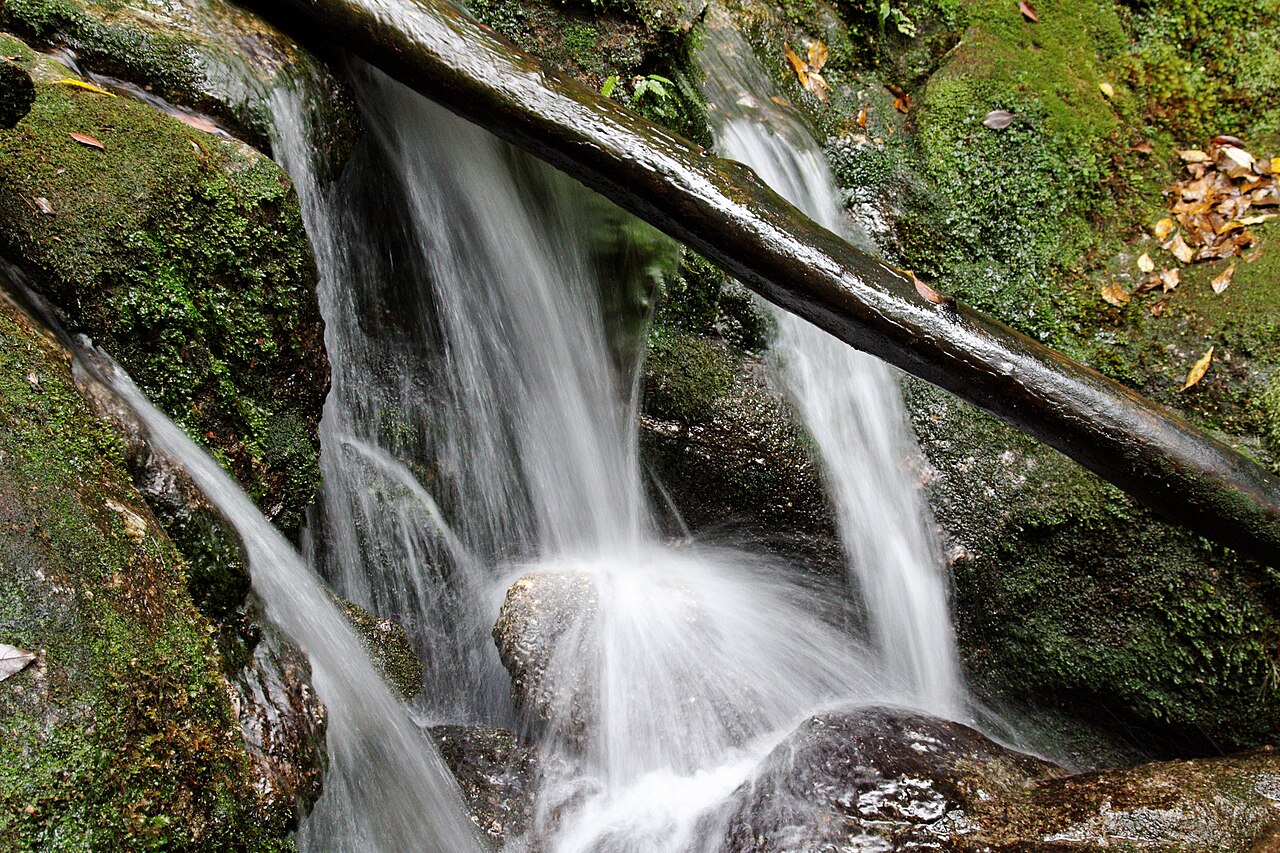
Yakushima sits alone in the sea south of Kyushu, a round island that gathers clouds and turns them into forest. Rain shapes everything here: the rivers, the granite, and above all the cedars, some of which have stood since long before anyone thought to name them.
For travelers who find the famous sights of Japan too loud, this island offers the opposite: long, damp trails where the loudest thing is water moving under moss.
Why the island feels different
Most islands are beaches. Yakushima is a mountain range that happens to be surrounded by water, and its interior stays wet nearly all year. Islanders joke that it rains almost every day of the month, and the forest wears that weather proudly.
The payoff is moss — deep, layered, glowing moss. Travel guides note that it is at its most vivid just after rain, when every stone and root seems freshly painted. A wet forecast, in other words, is not a reason to cancel; it is the best light the forest has.
Underfoot, the island is granite. The rock is dense and smooth, and guidebooks are frank that it asks for sure footing once the rain has passed through. Good shoes matter more here than on almost any other walk in Japan.
The moss forest of Shiratani Unsuikyo
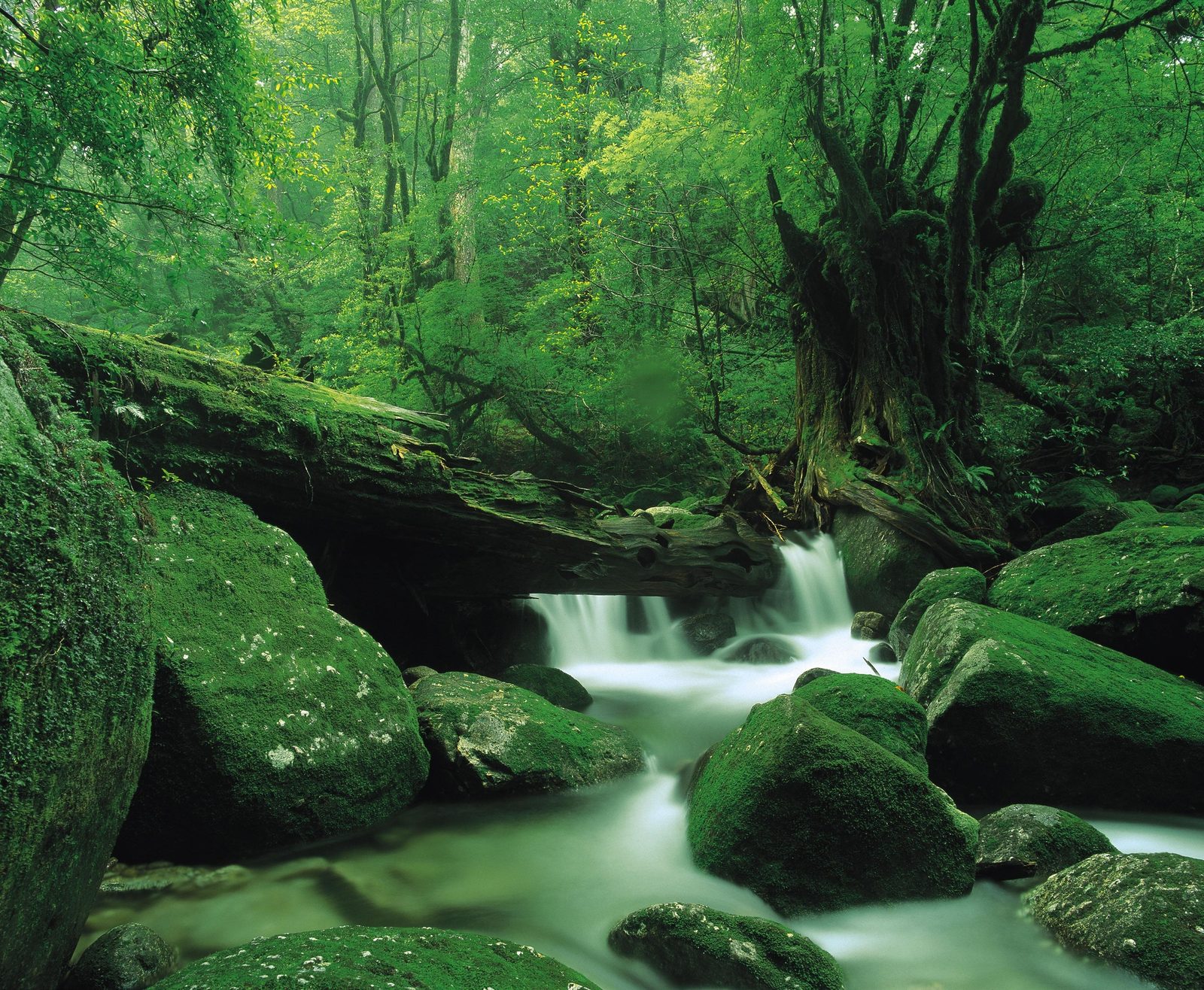
Shiratani Unsuikyo is a ravine of old cedars and boulders on the island's north side, and it is the closest thing Yakushima has to a signature landscape. Streams cut between rocks that have been green for centuries, and the trail threads through it all at an unhurried pace.
This is the forest most often described as the reference for the forest scenes in Princess Mononoke, and standing in it, the connection explains itself. The deeper stretches are the ones guides single out for photographs, where the moss closes over everything and the light turns green.
Above the ravine sits Taiko-iwa, a bare granite shoulder with a wide view over valleys of cedar. It is the natural turning point of the walk: forest below, clouds moving through the middle distance, and no sound but wind.
Yakusugi Land and the named cedars
In the island's mountainous interior, Yakusugi Land gathers several marked walking courses into one forest park, from a short stroll on boardwalks to a much longer circuit into the old growth. As the courses stretch deeper, travel guides describe the mood shifting from pleasant to solemn — the trees older, the spacing wider, the silence heavier.
The oldest cedars have names. Guides point out Kigen-sugi, an ancient tree that can be reached by road; Buddha-sugi, named for the figure people see in its swollen trunk; and the buried logs — cut trees left behind by earlier generations of loggers that never rotted, thanks to the resin-rich wood. By local convention, only the truly ancient trees count as yakusugi; the merely old are kosugi, "small cedars." Almost anywhere else in Japan, a kosugi would be a monument.
Elsewhere on the island, walkers seek out Sandai-sugi, where new trunks have grown from the stumps of older ones, generation upon generation; Daio-sugi, the "great king"; and Meoto-sugi, a pair of cedars joined by a branch like a couple holding hands. The most celebrated of all, Jomon-sugi, demands a full day of walking to reach — which, as every guidebook admits, is exactly why the crowds thin the farther in you go.
Getting there
The crossing itself sets the pace of the trip. Boats leave from Kagoshima Port, and the island receives you at either of its harbors, Miyanoura or Anbo.
From Kagoshima to the island
- High-speed boat, Kagoshima Port to Miyanoura Port: about 2 hours
- High-speed boat, Kagoshima Port to Anbo Port: about 2 hours 30 minutes
- Ferry, Kagoshima Port to Miyanoura Port: about 4 hours
Ferry fares, one way
- Second class, adult: 6,500 yen
- Second class, child: 3,200 yen
- Second class with student discount: 5,800 yen (a student discount certificate is required)
- First class, adult: 9,000 yen
- First class, child: 4,500 yen
The ferry is the slower and cheaper way across; the high-speed boat trades money for time. If the sea is calm and you are not in a hurry, the long crossing makes a fine decompression chamber between the mainland and the forest.
New to rural buses and one-man trains? See how to ride them, step by step.
Where to stay
Places to stay near Yakushima →
Disclosure: This post may contain affiliate links. If you book through them, we may earn a commission at no extra cost to you.
What it costs on the island
Much of Yakushima — the trails, the viewpoints, the moss — costs nothing beyond the effort of walking. The one indoor stop worth budgeting for is the Yakusugi Museum, which tells the story of the island's cedars and the people who logged, revered, and finally protected them.
- Adults: 600 yen
- High school and university students: 400 yen
- Elementary and junior high school students: 300 yen
Photographing the forest
Rain is the photographer's friend here. The moss saturates, the mist softens the backgrounds, and the granite darkens into something out of an ink painting.
Guides mark out particular spots: a position for framing Meoto-sugi so that the joined branch reads clearly, and the stretches of Shiratani Unsuikyo where the green closes in on every side. Travel writers also mention the view from the bridge over the Arakawa, a reminder that the island's rivers are as photogenic as its trees.
Planning a quiet visit
The quiet scales with distance. Island guides are consistent that the longest walking courses see the fewest visitors, so if your goal is to be alone with the trees, pick the longest route your legs will accept and start early.
If you would rather hand the logistics to someone local, you can find tours and activities on Yakushima.
Bring rain gear you trust, expect the weather to change its mind, and let the forest set the tempo. The cedars have been waiting a very long time; there is no reason to hurry past them.