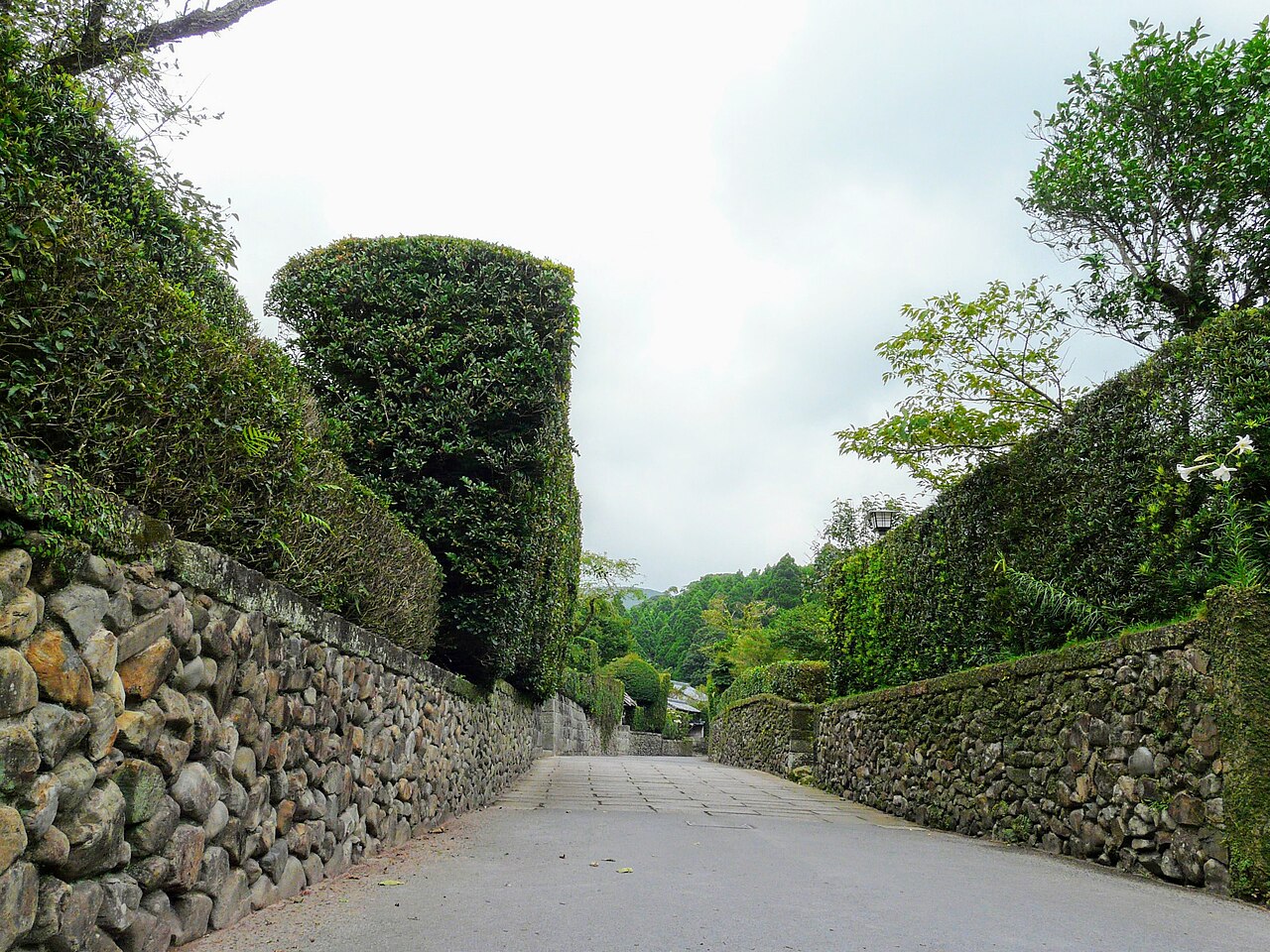
Chiran, in Minamikyushu City, Kagoshima Prefecture, was once one of the outer-castle towns of the Satsuma domain. Along its old samurai street, seven residence gardens are designated together as a national Place of Scenic Beauty, and every one of them draws the ridge of Mount Hahagatake into its design. Stone walls, clipped hedges, and bending lanes make it a calm day out from Kagoshima city.
Getting to the Chiran samurai gardens
The gardens stand in Chiran town, Minamikyushu City, Kagoshima Prefecture. You arrive either by car or by bus from Kagoshima-Chuo Station, and both routes deliver you to the same samurai street. The entrances to the gardens are only a short walk from where you park or step off the bus.
By car
- From Kagoshima Airport, follow the Kyushu Expressway and then the Ibusuki Skyline, leave at the Chiran interchange, and continue toward Chiran.
- Driving time is about ten minutes from the Chiran interchange on the Ibusuki Skyline, or about five minutes from the Chiran Kanayama Suisha interchange on the Nansatsu Jukan road.
- Free parking is available around the gardens.
By bus
- From Kagoshima-Chuo Station, board the Kagoshima Kotsu bus bound for Chiran (Tokko Kannon Iriguchi).
- Get off at the Bukeyashiki Iriguchi stop, or at the Nakagori stop; both are a short walk from the gardens.
Seven gardens, one borrowed mountain
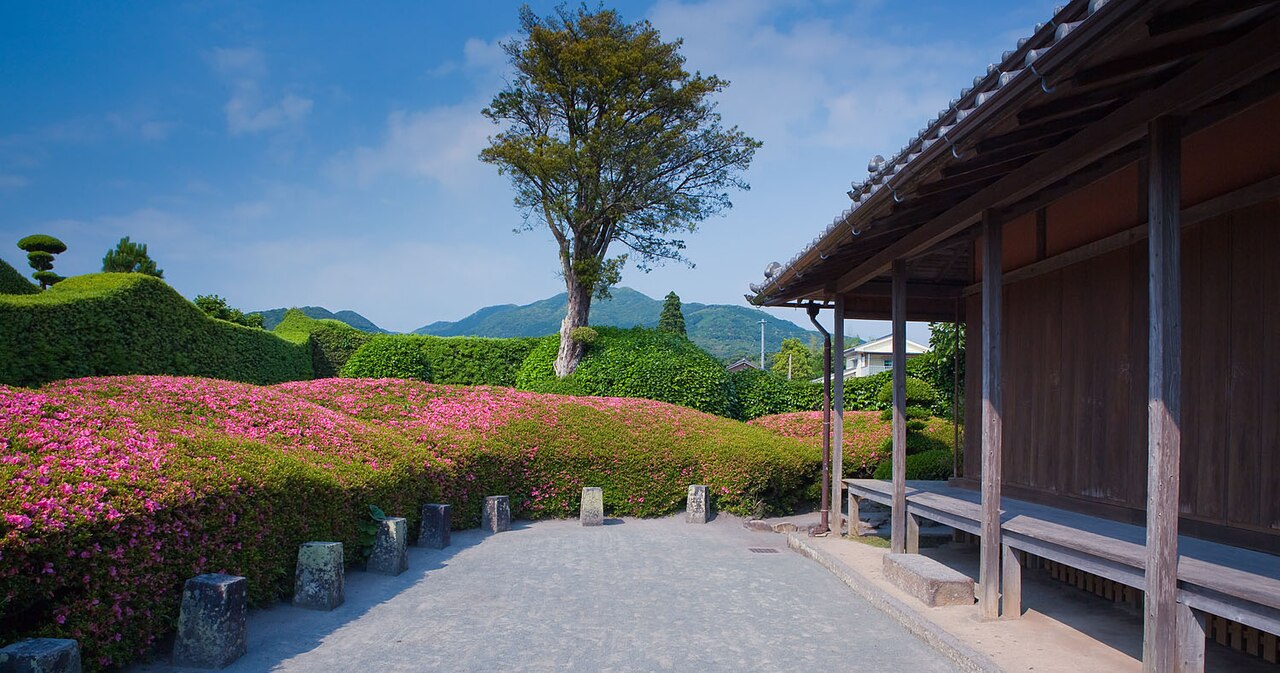
What you notice first is not the gardens but the mountain behind them. All seven gardens in the Chiran Fumoto district are laid out so that the ridge of Mount Hahagatake, rising at their back, becomes part of the composition. The shape of the mountain is built into each design rather than added as a backdrop.
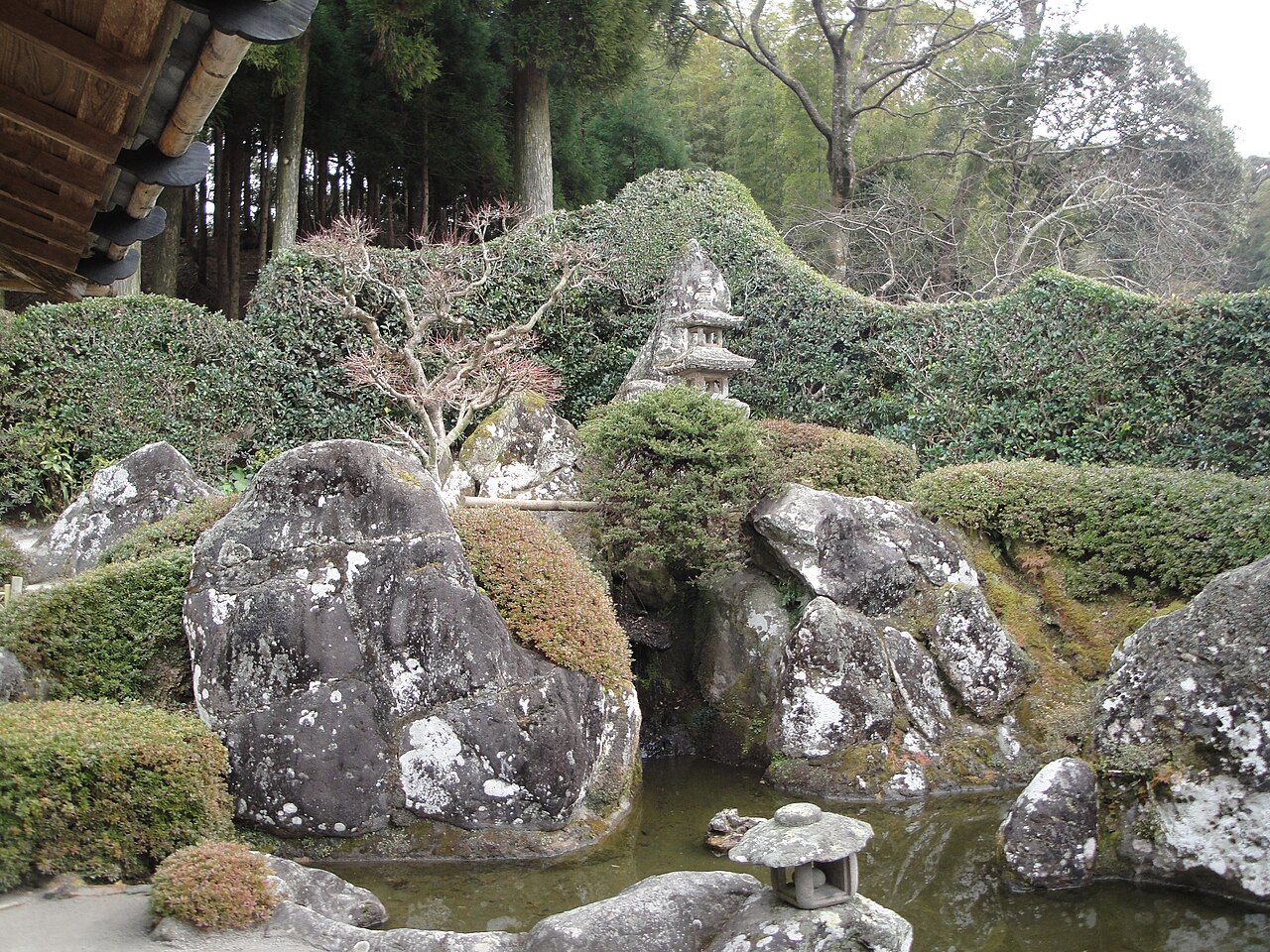
Together the seven are designated a national Place of Scenic Beauty under the formal name Chiran Fumoto Gardens. Six of them are dry landscape gardens, composed without a pond. Only one, the garden of the Morishige Residence, is a pond garden with real water, so it makes a natural place to slow down and linger.
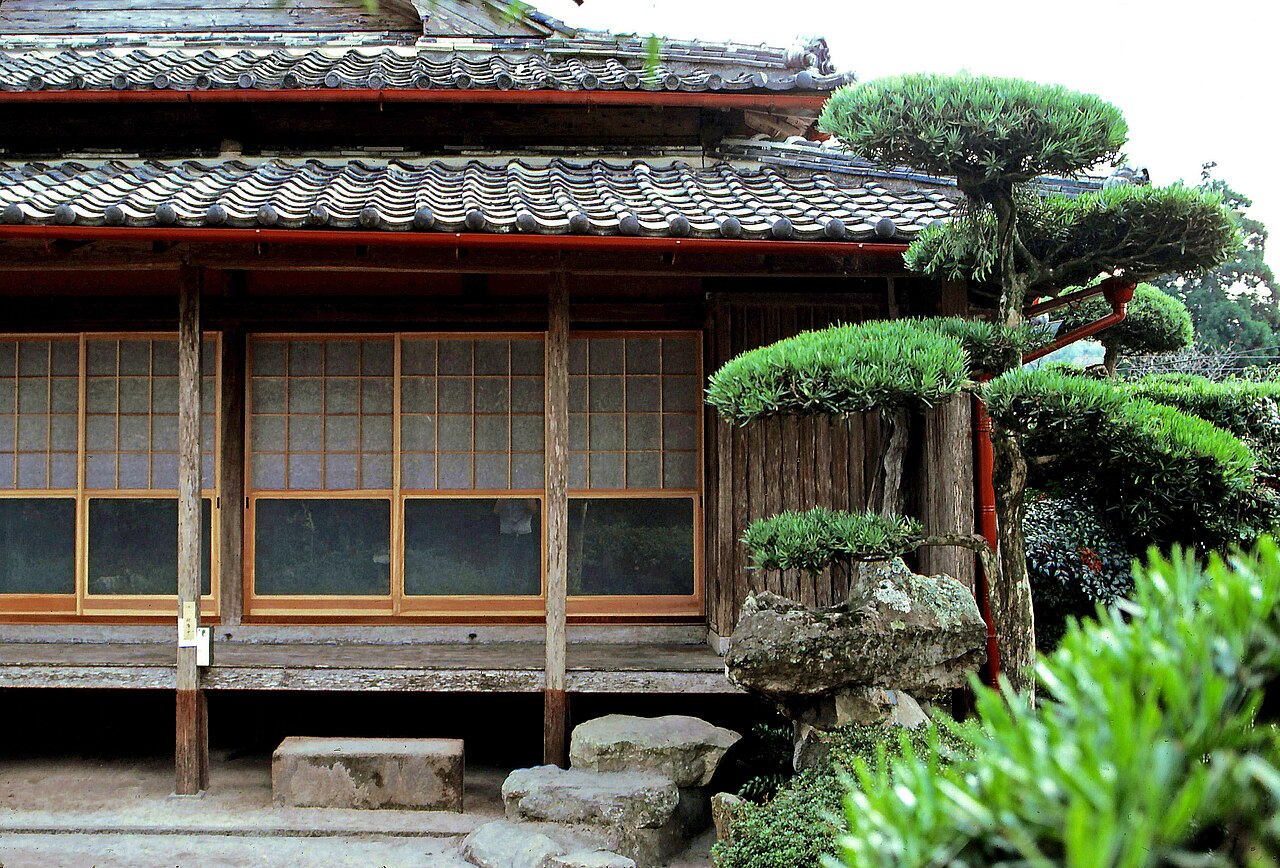
Walking the row from one gate to the next, you can compare how each household worked the same mountain into a different arrangement of stones, hedges, and pruned trees. The gardens are small, and the pleasure is in the repetition and variation rather than in any single grand view.
An outer-castle town with Ryukyu traces
In the Edo period the Satsuma domain did not gather its samurai in the castle town of Kagoshima. Instead it divided its territory into one hundred and two districts called outer castles and settled its warriors in a samurai village, a fumoto, in each of them. Chiran was one of those outer castles, and the street you walk today is its fumoto.
At first Chiran was governed as a land steward's post by the Sata family, a branch of the ruling Shimazu house. The Sata produced a succession of capable heads, and in the time of the sixteenth, Hisamichi, the family was granted Chiran as a private holding together with the right to use the Shimazu name.
Look closely at the gateways and you will find traces of Ryukyu culture. Small stone tablets carved as charms against evil, of a kind common in Okinawa, still stand by the lanes. At some entrances a screening wall of stone blocks the view of the house from the street, much like the hinpun of an Okinawan home.
Where to stay
Places to stay near Chiran, Kagoshima →
Disclosure: This post may contain affiliate links. If you book through them, we may earn a commission at no extra cost to you.
Visiting hours, admission, and practical details
The gardens are open every day of the year, from nine in the morning to five in the evening. Admission fees and other practical points are listed below.
- Adult admission: five hundred and thirty yen.
- Child admission: three hundred and twenty yen.
- Adult group rate: four hundred and thirty yen.
- Child group rate: two hundred and fifty yen.
- Visitors who bring a physical disability certificate, a rehabilitation certificate, or a mental health welfare certificate pay a reduced adult fee of three hundred and twenty yen, and one accompanying carer enters at the same rate.
- An audio guide delivered over free Wi-Fi is available at all seven gardens.
- The garden office is in Chiran town, Minamikyushu City, Kagoshima Prefecture.
These details come from the garden office and the city, but they do change from time to time, so check official information before visiting.
If you would rather see the gardens at the quieter ends of the day than return to the city the same evening, consider places to stay in Chiran and give the town a slower pace.
The quiet town beyond the gardens
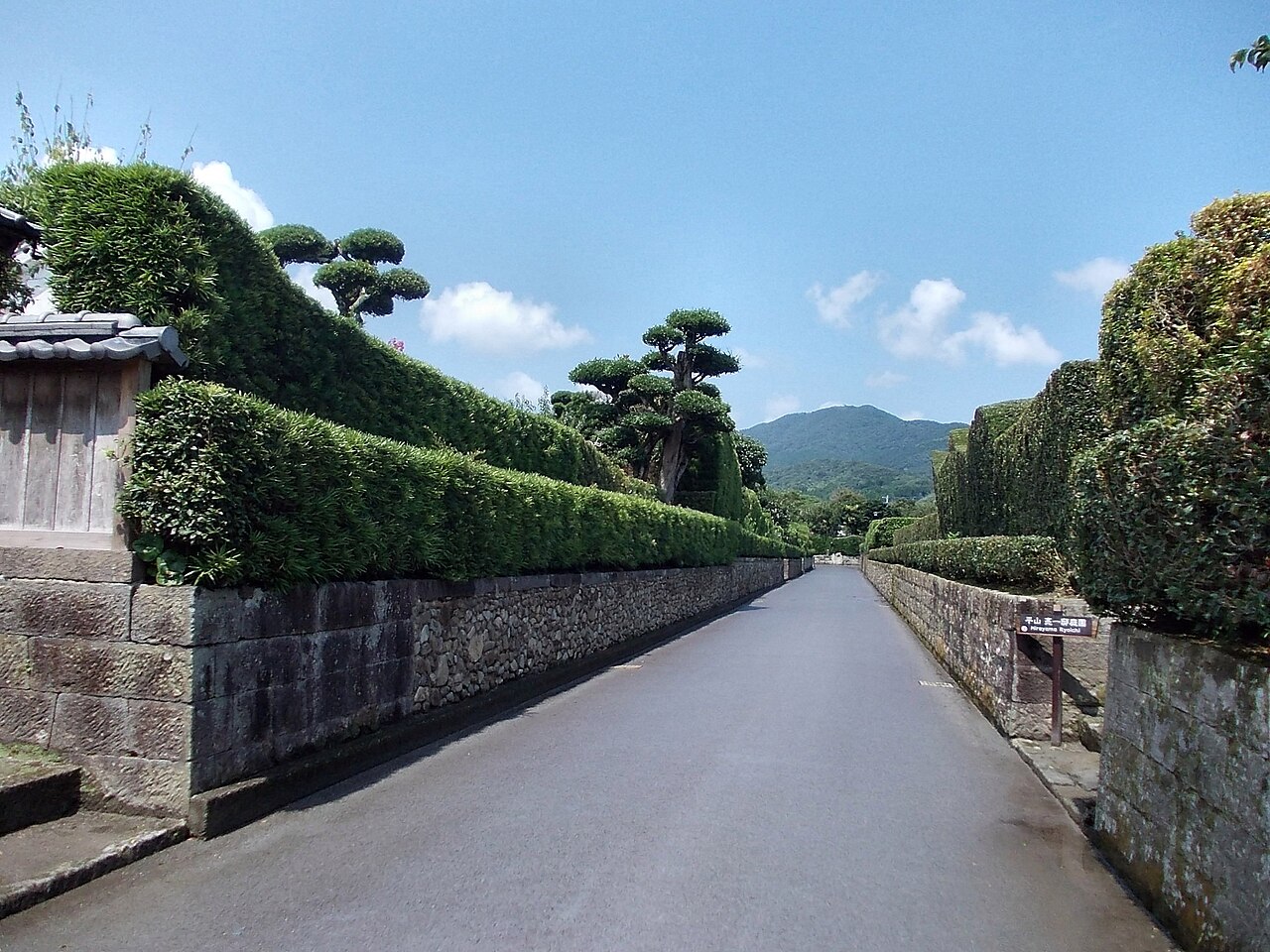
The seven gardens are the reason most people come, but the district around them rewards a slow walk. The whole Fumoto area, where the residences stand in rows, is selected as a national Important Preservation District for Groups of Traditional Buildings, so the streetscape is preserved along with the gardens themselves.
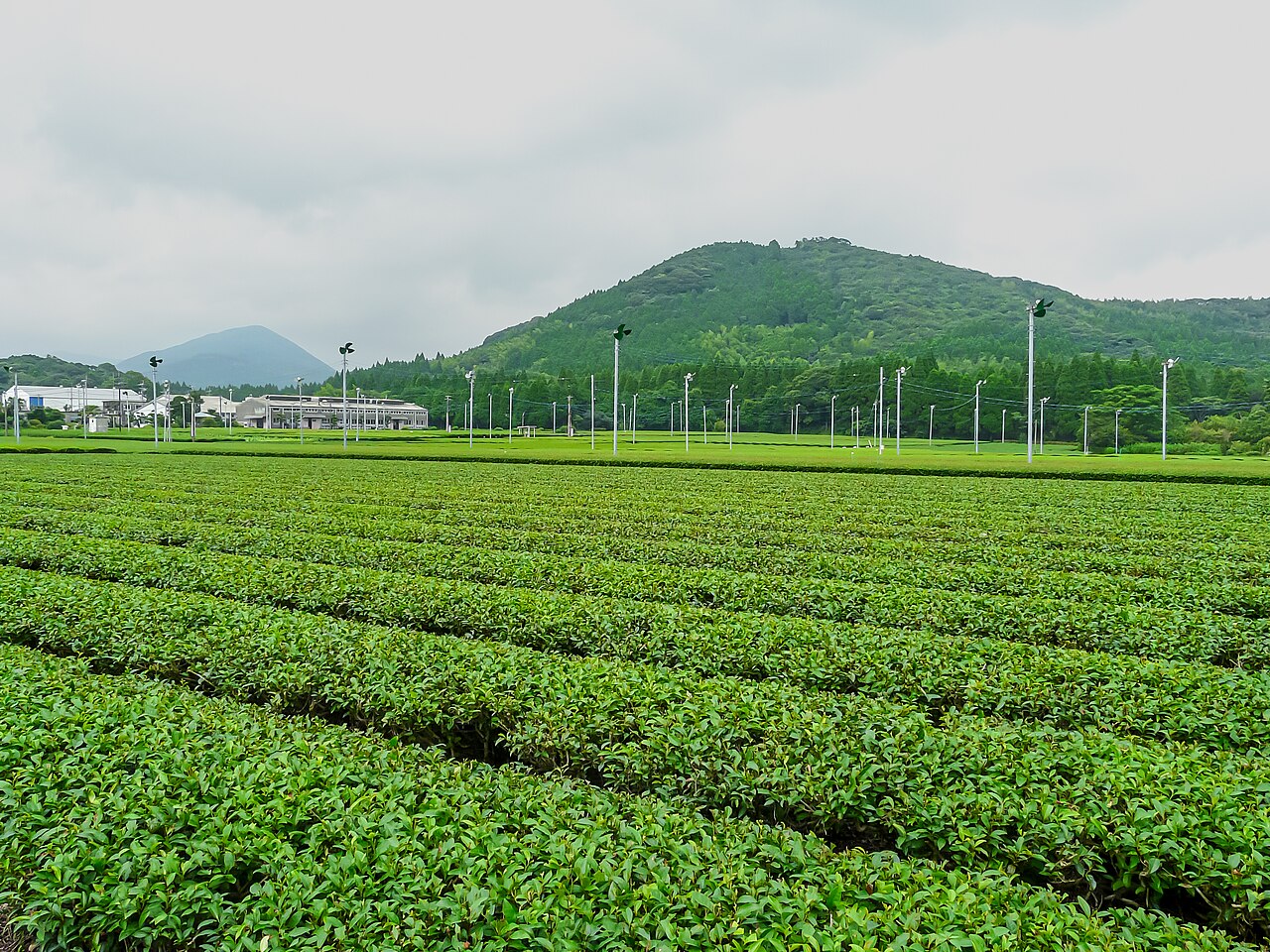
From the samurai street, the view unfolds into a miniature landscape with Mount Hahagatake as borrowed scenery behind it. The road bends and turns, and stone walls topped with hedges give the street its particular character. Step through a gate and you find garden and residence arranged much as a samurai household of the Edo period would have known them.
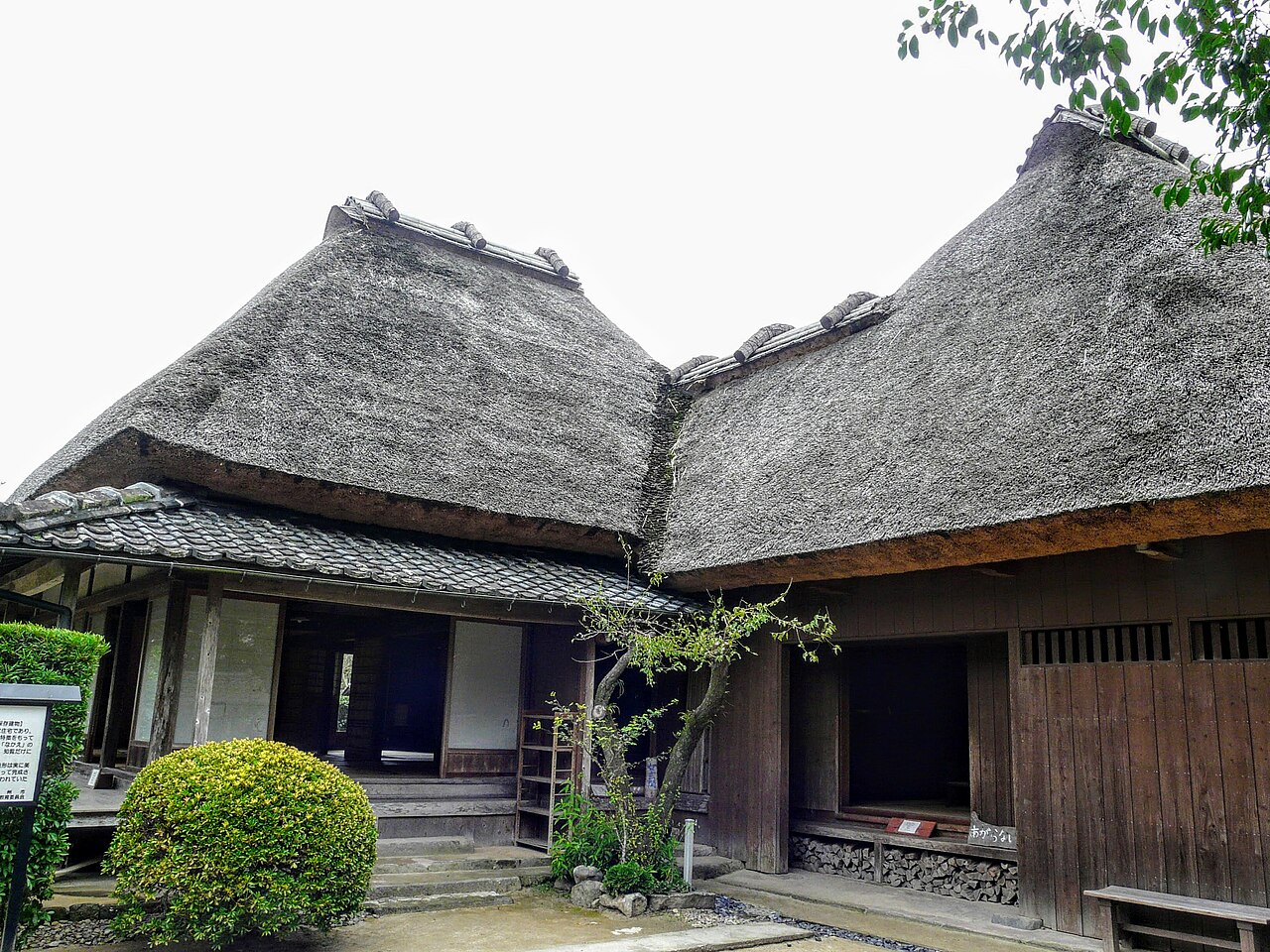
Chiran is often called the little Kyoto of Satsuma for this townscape. The samurai residences also served as a filming location for the NHK year-long historical drama Segodon, so a few corners may look familiar even on a first visit.
Who keeps the gardens
The gardens are looked after by a limited liability partnership, the Chiran Bukeyashiki Teien Partnership. Its roots go back to a voluntary preservation society founded in nineteen seventy-five; in May twenty ten that society was reorganised and established as the present partnership, which continues to keep the gardens in order.
That continuity is part of what you are looking at. The hedges are clipped, the stones stay in place, and the mountain still sits where the designers wanted it, because a local organisation has kept the work going year after year.