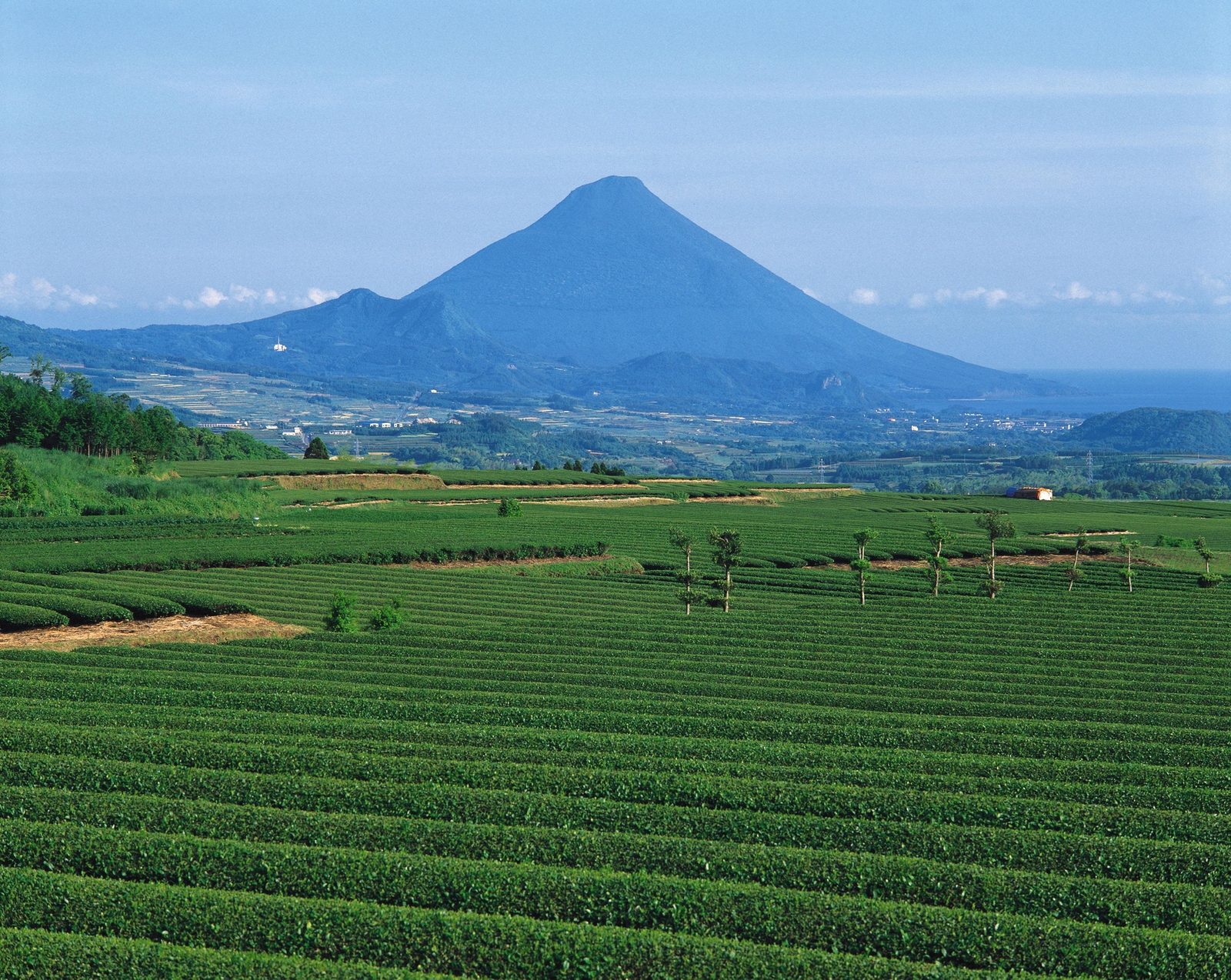
At Ibusuki Onsen, on the southern tip of the Satsuma Peninsula, you lie in sand and bathe in the steam of the hot spring. Around Ibusuki, the compound volcano Kaimondake and Lake Ikeda form the landscape of the area. At Nishi-Oyama you stand on the platform and watch Kaimondake, called Satsuma Fuji, rise beyond spreading rural fields.
Kaimondake and the Lake Below It
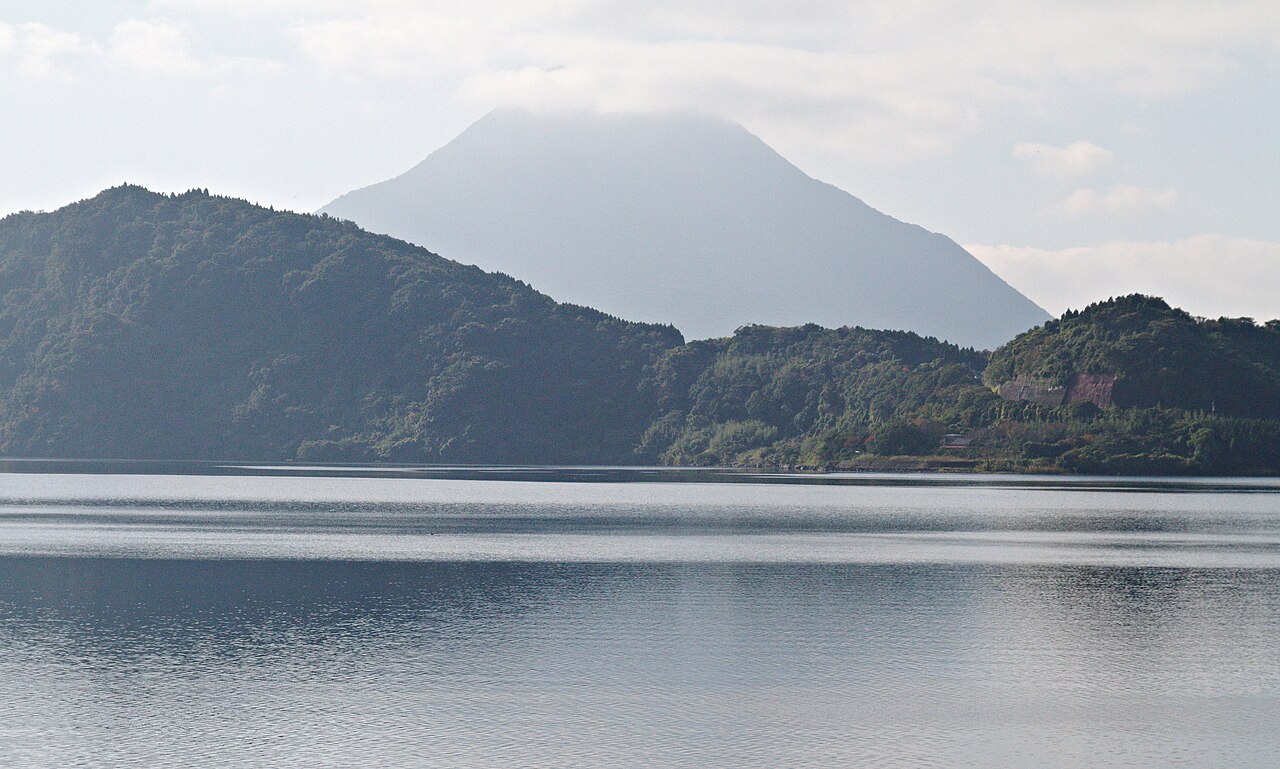
Kaimondake, which also goes by the name Satsuma Fuji, stands on the Satsuma Peninsula, and from the summit you look out in every direction, to Sakurajima, the Kirishima mountains, the Osumi Peninsula and Yakushima.
Lake Ikeda is a caldera lake with indigo-blue, clear water, and you see Satsuma Fuji from the lake. Flowers of the four seasons bloom in the flowerbeds along the lakeshore, with Kaimondake rising beyond the water.
From the hiking trail you see traces of volcanic activity such as columnar joints. Giant eels live in the lake, and operators on the shore offer swan boats and kayaks, two ways of getting out on the water yourself.
At the Golden Torii you throw coins toward a gold basket above the torii, pass through a small torii and feed the carp of Lake Ikeda. The torii ties to a gold mine that once existed at the lake and to the Ryugu legend of Lake Ikeda.
Sand Steam and a Bath Facing the Volcano
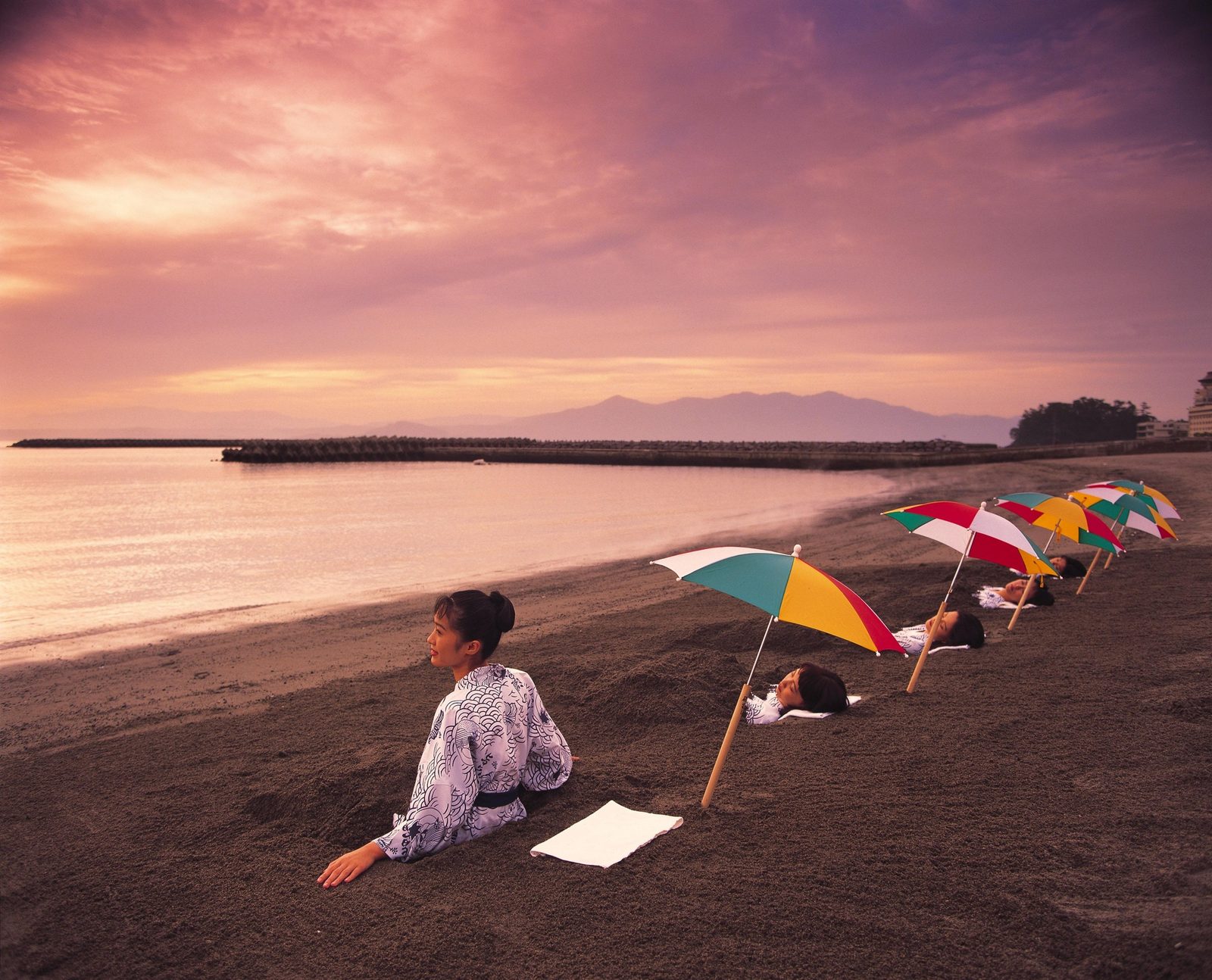
The sand steam bath you bathe in here draws on geothermal heat. At Tamatebako Onsen you soak in a Japanese-style outdoor bath facing Kaimondake and the East China Sea, or a Western-style one looking out over the bamboo hill and the sea. On clear days you see Yakushima, Takeshima and Iojima from the baths.
The Japanese-style bath lies on the west side, toward Kaimondake, and women bathe there on odd-numbered days and men on even-numbered days. The Western-style bath lies on the east side, toward the bamboo hill, and men bathe there on odd-numbered days and women on even-numbered days. The date decides which view you bathe with.
Before you soak, pour water over your body to wash off dirt and let it get used to the temperature. Soak up to the chest and pour water over your shoulders by hand, go in and out of the hot water two to three times, and rest for a while once you are out.
Nagasakibana, Ryugu Shrine and Uomidake
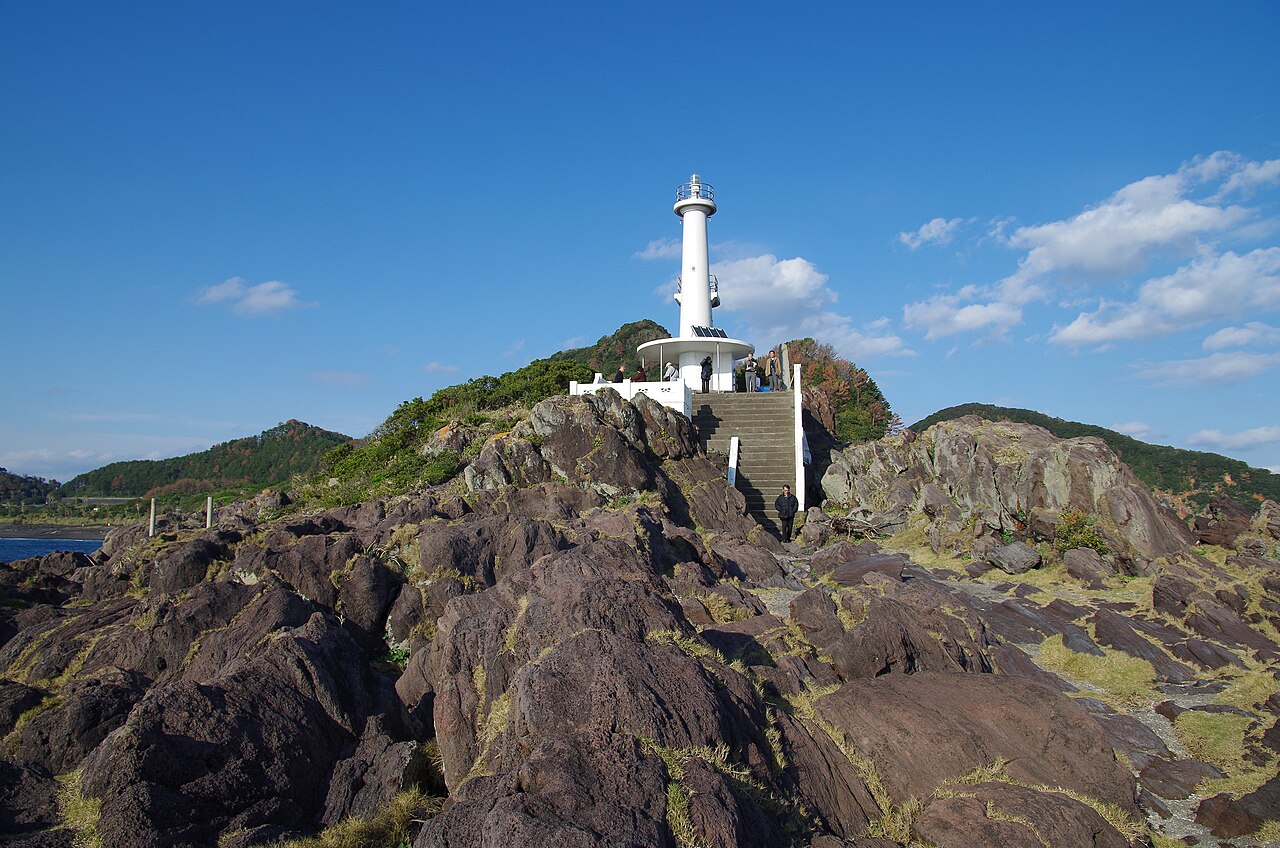
Ryugu Shrine stands at Cape Nagasakibana and enshrines a deity.
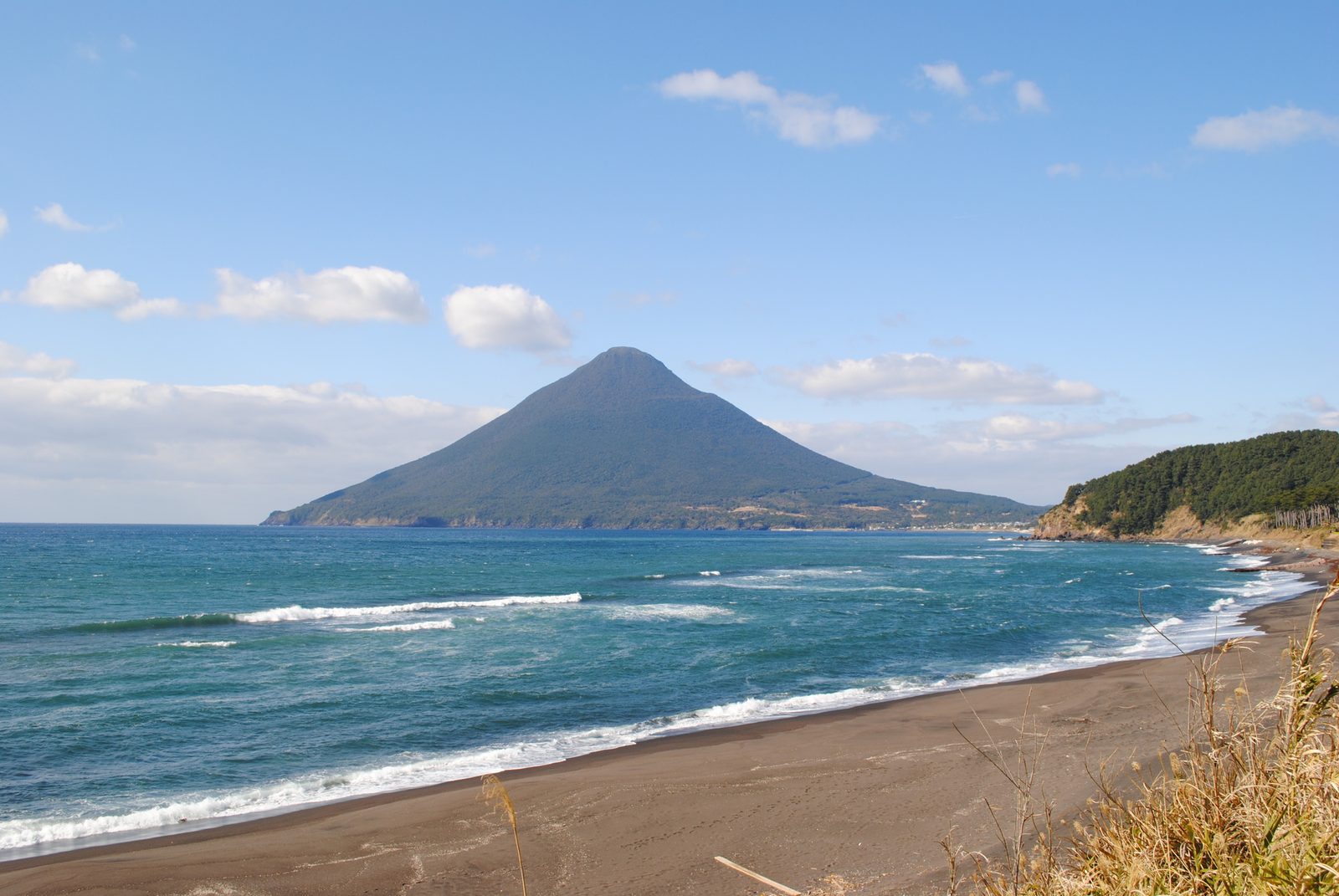
You can drive up to the summit of Uomidake, where an island and Kinko Bay spread out at the foot of the mountain and Sakurajima and Cape Sata come into one view.
Nishi-Oyama and the Volcano Behind It
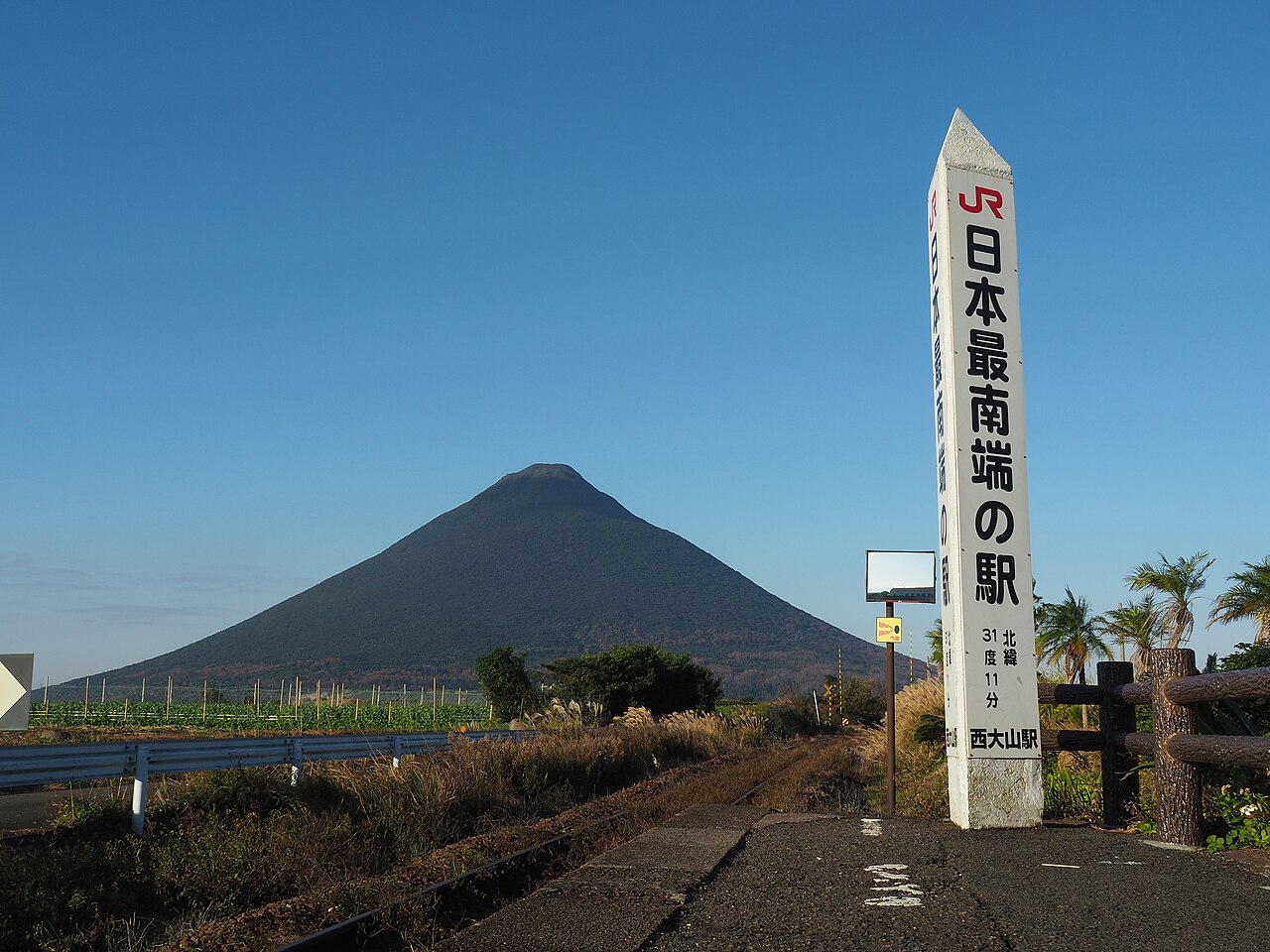
Nishi-Oyama is a small unstaffed stop at the southernmost point of JR in Japan, and Satsuma Fuji stands in front of the platform, over rural fields, the volcano you watch from where you get off.
A travel memory notebook sits on the platform for visitors to write in. The yellow post on the grounds is a working one, and mail you drop in it actually goes out.
The direct-sales shop next to Nishi-Oyama sells picture postcards of the stop and issues a certificate of arrival at the southernmost stop.
Hirakiki Shrine and the Foothill Park
Hirakiki Shrine keeps a lacquered comb box in its treasure hall, and the box is designated an Important Cultural Property.
The park on the eastern foot of Kaimondake grows thick with subtropical plants, and from its lookout you take in Cape Nagasakibana, Cape Sata, Lake Ikeda and Sakurajima in one view. Tokara horses, a native Japanese breed designated a natural monument of Kagoshima Prefecture, graze in the park, and you watch them directly in front of you.
If a single bath is not enough, sleeping in Ibusuki lets you take the sand bath again when reception opens the next morning; compare places to stay in Ibusuki on Booking.com. For day activities around the sand baths and Kaimondake, browse Ibusuki activities and experiences on GetYourGuide.
Getting to Ibusuki
New to rural buses and one-man trains? See how to ride them, step by step.
| Leg | How | Time or fare |
|---|---|---|
| Kagoshima-Chuo to Ibusuki | Limited express, adult, reserved seat | 2,950 yen (fare plus regular-season reserved-seat express fee) |
| JR Ibusuki Station to Sunamushi Kaikan Saraku | On foot | 20 minutes |
| JR Ibusuki Station to Sunamushi Kaikan Saraku | Bus | 5 minutes |
| JR Yamakawa Station to Tamatebako Onsen | Car / bus | 10 minutes / 14 minutes |
| JR Yamakawa Station to Nagasakibana | Car | About 15 minutes |
| JR Ibusuki Station to Uomidake | Car | 15 minutes |
| JR Ibusuki Station to Lake Ikeda | Car | 20 minutes |
| JR Ibusuki Station to Kaimondake | Car | About 30 minutes |
| JR Kaimon Station to Kaimondake | Car / on foot | 3 minutes / about 20 minutes |
| JR Kaimon Station to Hirakiki Shrine | On foot | 10 minutes |
The lake, the capes and the volcano are a car ride from the JR stations at Ibusuki, Yamakawa and Kaimon, while Sunamushi Kaikan Saraku and Hirakiki Shrine are within a walk.
Hours and Fees
| What | Hours or fare | Note |
|---|---|---|
| Sunamushi Kaikan Saraku, sand bath, adults (junior high and older) | 1,500 yen; onsen only 800 yen | Regular period |
| Sunamushi Kaikan Saraku, sand bath, children (elementary and younger) | 800 yen; onsen only 400 yen | Regular period |
| Sunamushi Kaikan Saraku | 8:30-21:00 | Reception ends 20:00 |
| Yamakawa Sand Steam Bath Sayuri | 8:30-17:00 | Last admission 16:30 |
| Yamakawa Sand Steam Bath Sayuri, sand bath, adults (junior high and older) | 1,100 yen | Yukata included |
| Tamatebako Onsen | 9:30-19:30 | Reception ends 19:00; closed Thursdays (next day if a public holiday) |
Fees and hours were checked against official sources between 6 October 2026 and 7 November 2026.
Sunamushi Kaikan Saraku prices the sand bath by age, Sayuri includes the yukata in its adult fee, and Tamatebako Onsen closes on Thursdays.
Thinking of staying overnight?
Compare places to stay near Ibusuki, Kagoshima →
Disclosure: This post may contain affiliate links. If you book through them, we may earn a commission at no extra cost to you.