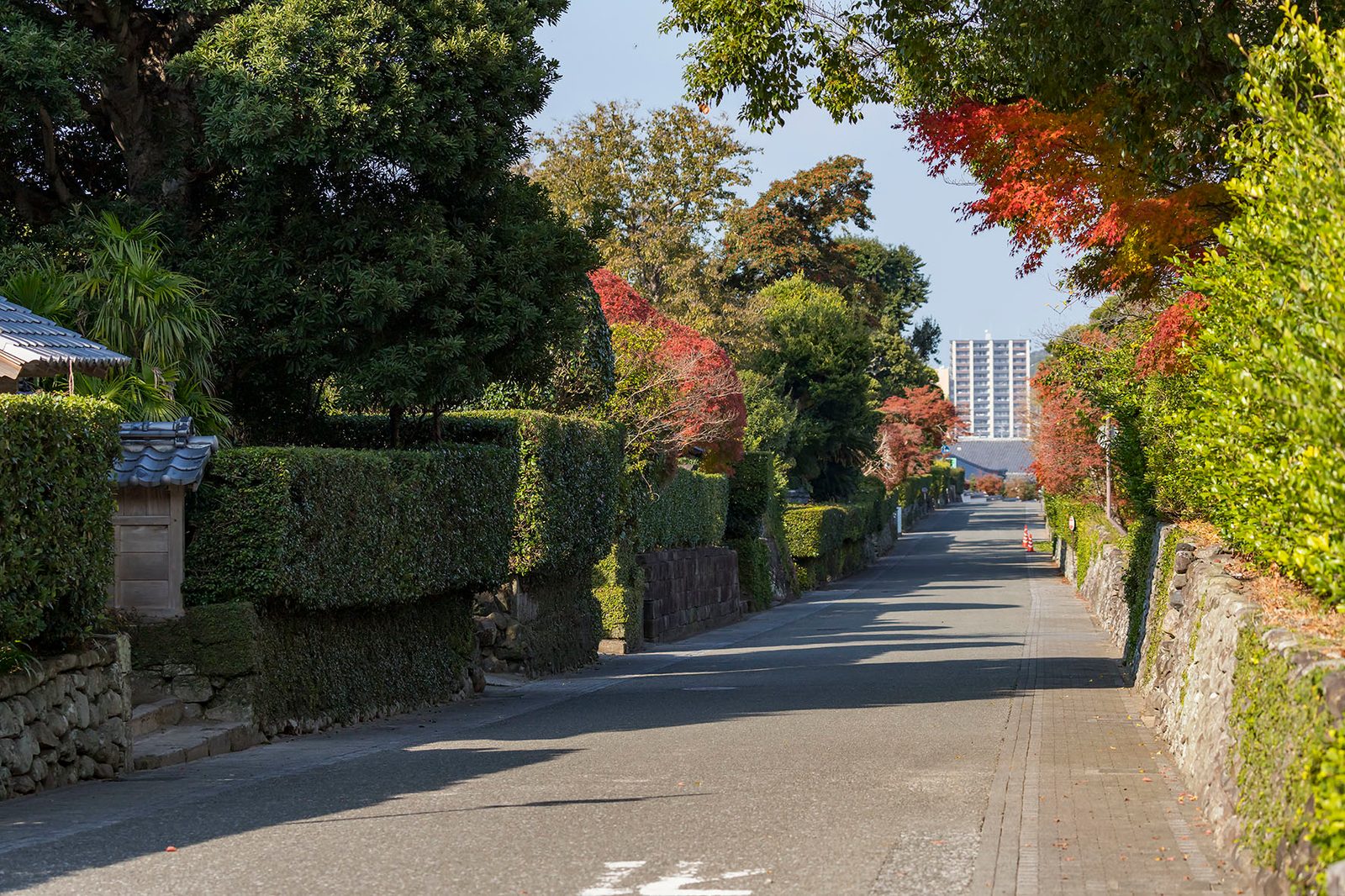
This guide covers how to reach the Fumoto samurai district, what its preserved houses hold and when they can be visited, the Kyushu Olle course and rental bicycles, the wintering grounds of the cranes and the observation center, and the winter rules for entering the crane fields.
Izumi has a samurai district and a crane wintering ground in the same city. The Fumoto district keeps its lanes of stone walls and hedges, and the reclaimed farmland becomes the wintering ground of cranes. The sections below go through the district and its houses, then the crane grounds and the observation center, with practical details gathered in tables.
Getting to Izumi Fumoto from Izumi Station
Izumi Station is the starting point, and the Fumoto district is close enough to reach on foot. The table below gives the time for each way of getting there, plus the fare for the shuttle from the airport.
| Item | Detail |
|---|---|
| Distance, Izumi Station to the Fumoto district | about 2 km |
| On foot, Izumi Station to the Fumoto district | about 25 minutes |
| By bicycle, Izumi Station to the Fumoto district | about 10 minutes |
| By taxi, Izumi Station to the Fumoto district | about 5 minutes |
| By car, Izumi Station to the Fumoto district | about 5 minutes |
| By the Fureai bus, Izumi Station to the Fumoto district | about 10 to 30 minutes, depending on the route |
| By car, Izumi Station to the Takezoe residence | about 5 minutes |
| By car, Izumi Station to the Saisho residence | about 5 minutes |
| Airport shuttle bus, Kagoshima Airport to Izumi Station | 1,650 yen one way |
A bicycle makes the same trip quicker than walking. By car or taxi it is a short ride. The Fureai bus also links the station with the district, and the ride length depends on which route the bus is running. Rental bicycles can be picked up at the general tourism station inside the Izumi Station tourist and local-products hall.
The Preserved Streets of Izumi Fumoto
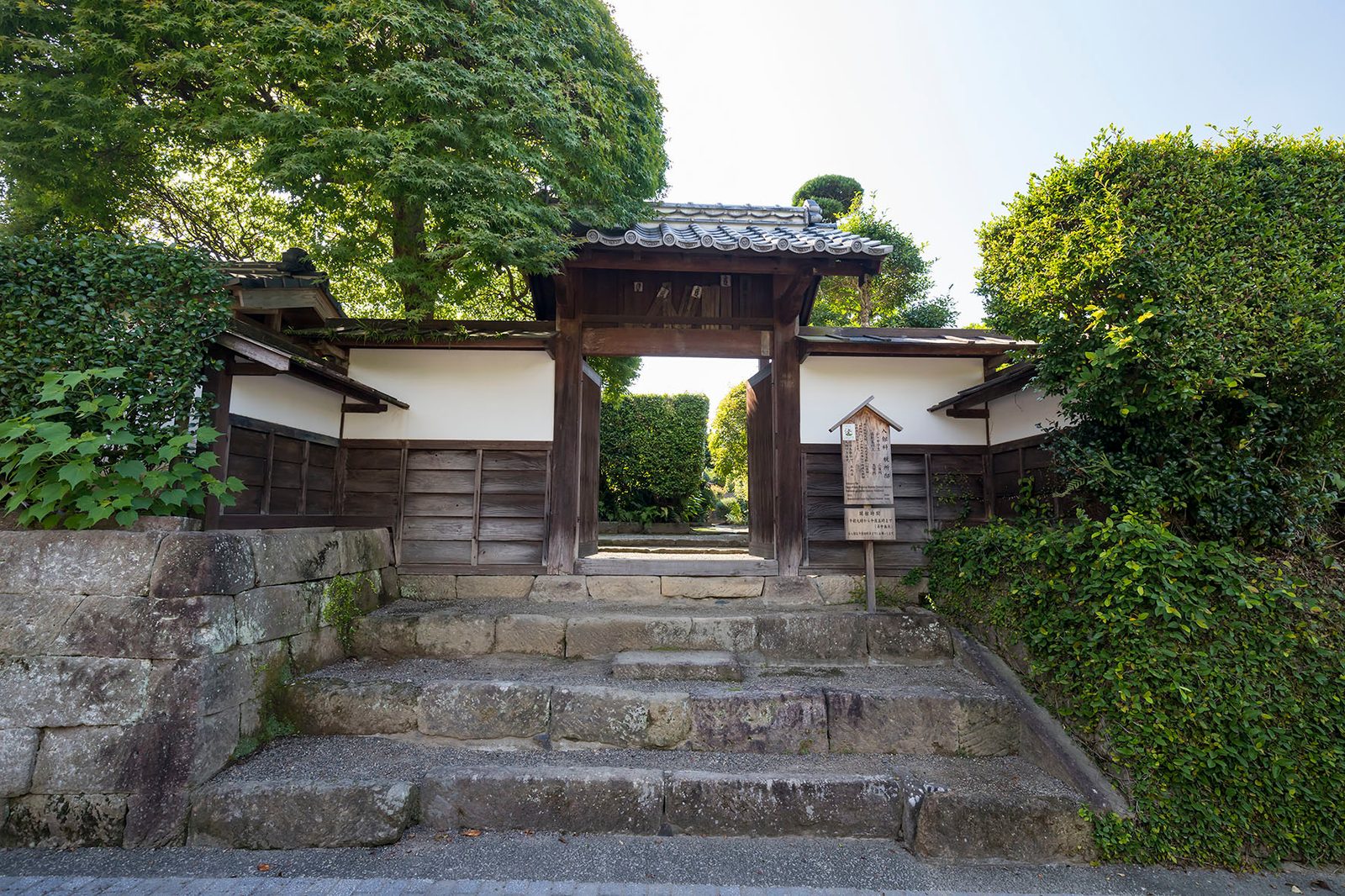
The Fumoto district is a nationally designated Important Preservation District. The houses along its lanes were reconstructed, but the grid-like town layout, the river-stone walls and the green hedges have remained almost unchanged for centuries. The table below sums up the district's status and how much of it still stands.
| Item | Detail |
|---|---|
| Status | a nationally designated Important Preservation District |
| Samurai houses that remain | about 150 houses |
| Houses you can enter | 2, the Takezoe and Saisho residences |
Inside the Takezoe and Saisho Residences
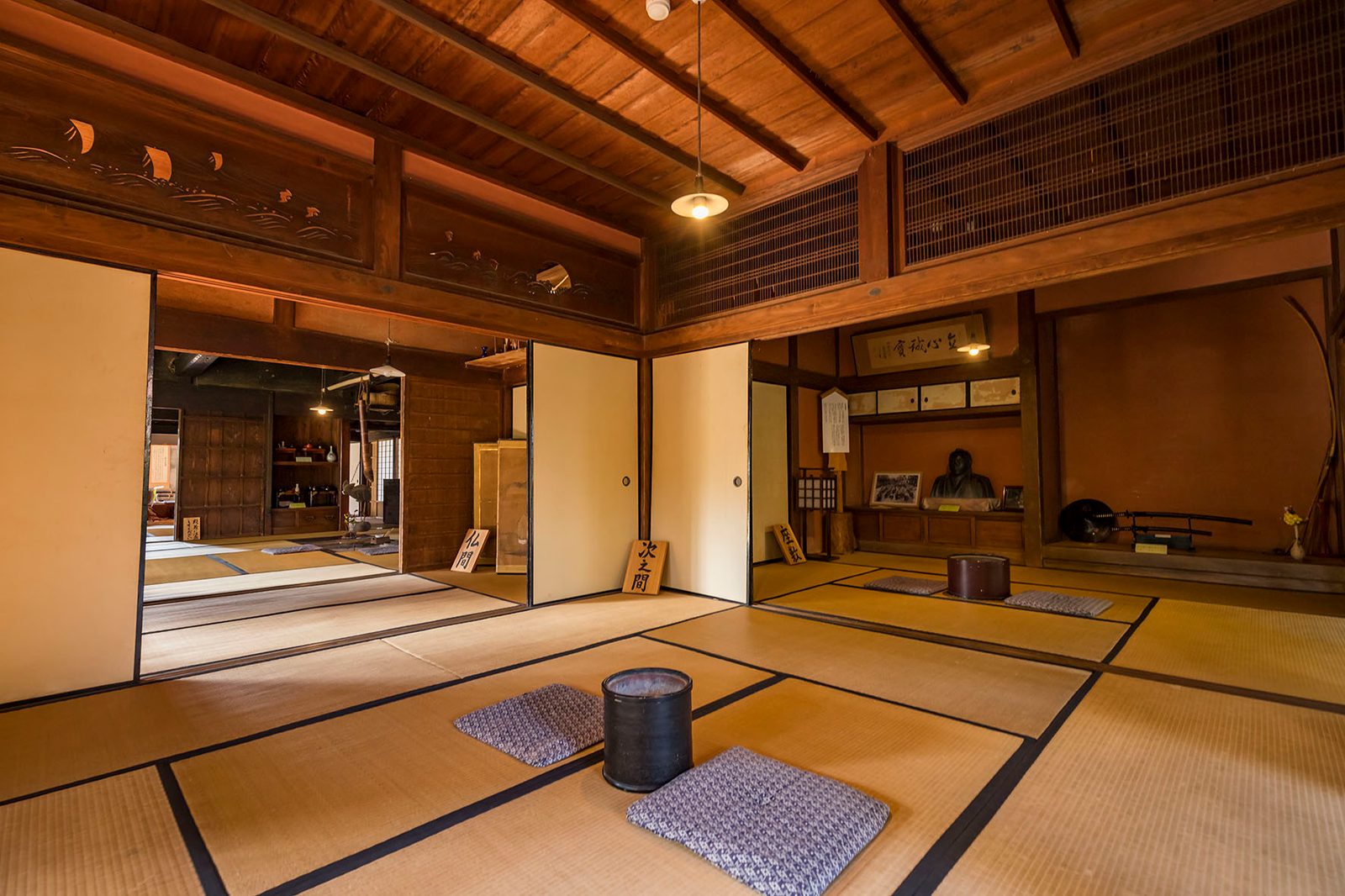
The Takezoe family moved to the Fumoto area in the Edo period and held hereditary posts. The residence was lost to a great fire at the end of the Edo shogunate and rebuilt between late Edo and Meiji. Its roof is tiled; Edo-period samurai residences were thatched. The main tatami room's wall is painted with bengara, a red pigment.
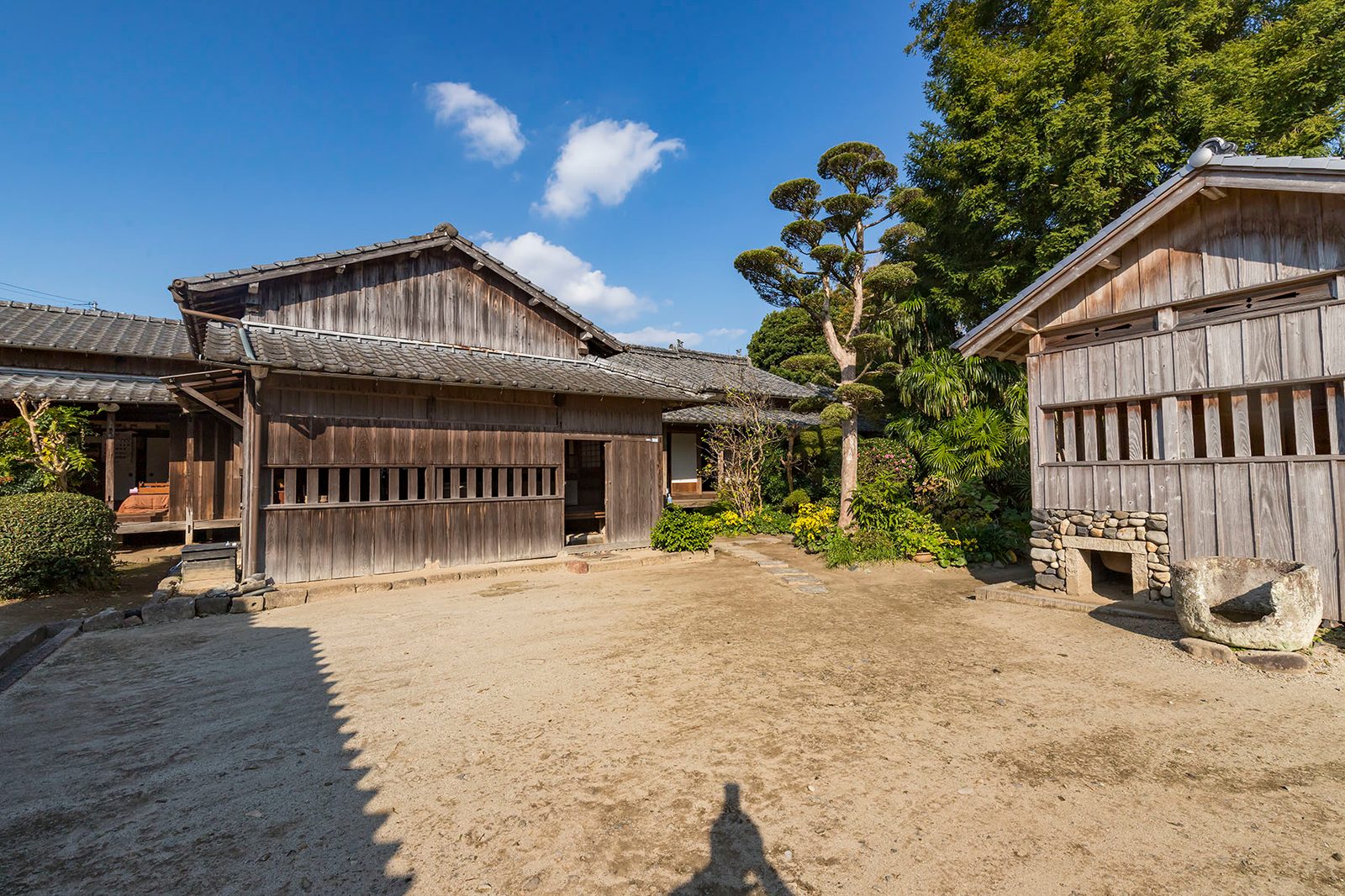
The Saisho family was ordered to move from Kaseda the year before the Battle of Sekigahara and held important posts in Izumi for generations. The residence keeps a rainy-weather archery practice area, a concealed room and a concealed passage from its era. An escape passage was dug so that a person at the hearth could get outside.
- 1637: the Takezoe family moved to the Fumoto area.
- Heisei 23: the Saisho residence opened to the public, 4 years after the city bought it.
Hours, Admission and Parking at the Samurai Houses
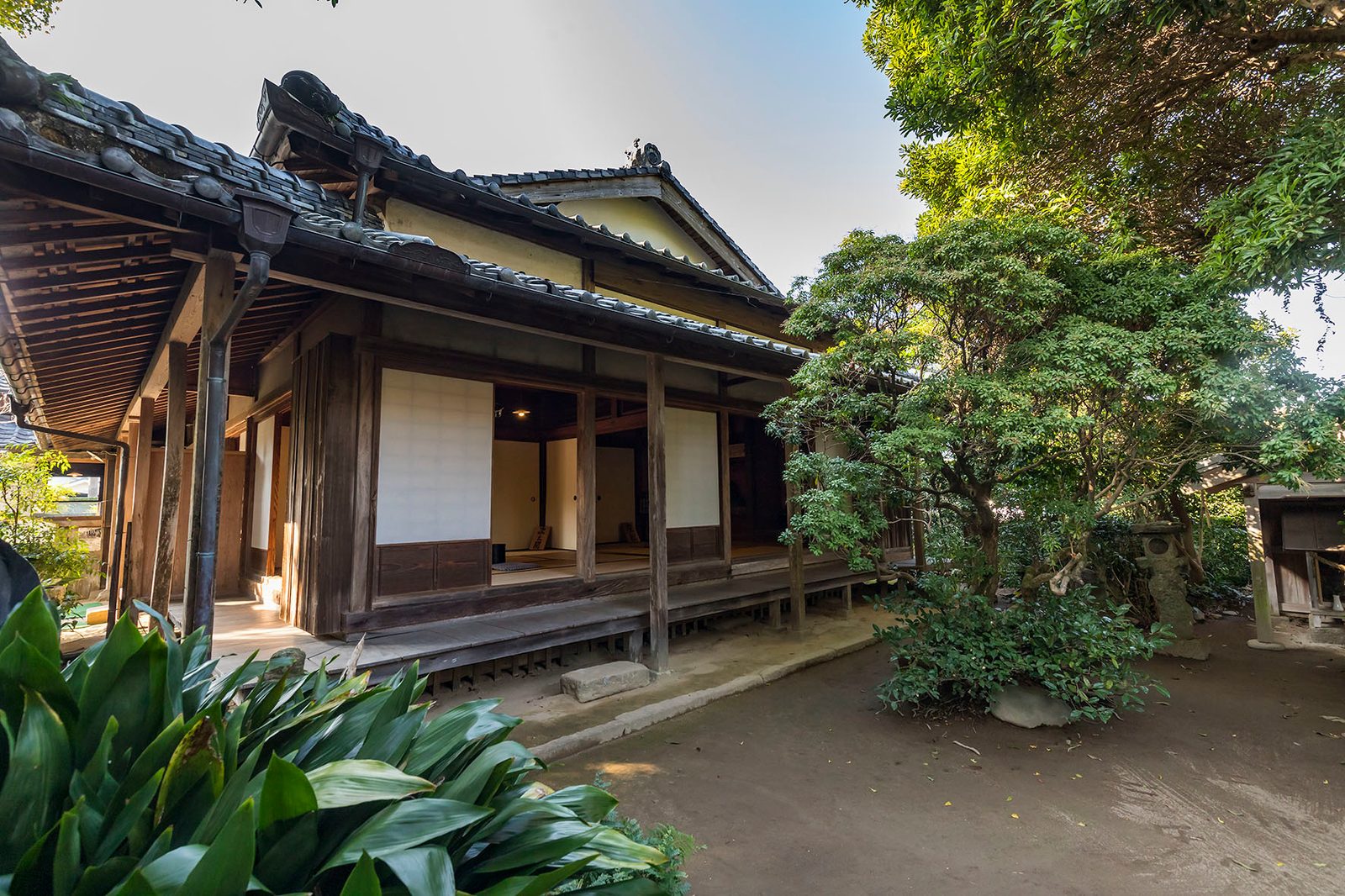
The history hall, the Takezoe residence and the Saisho residence share a combined admission fee. The times, the closing day of the hall and the shared ticket are set out in the table below, with the location and parking details under it.
| Item | Detail |
|---|---|
| Fumoto history hall, hours | 9:00 to 17:00 (last entry 16:30) |
| Takezoe residence, hours | 9:00 to 17:00 (last entry 16:30) |
| Saisho residence, hours | 9:00 to 17:00 (last entry 16:30) |
| Fumoto history hall, closed | the third Wednesday of each month (the next day if that day is a holiday) |
| Admission for the three facilities including the VR experience, high school students and older | 510 yen |
| Admission for the three facilities including the VR experience, elementary and junior high school students | 300 yen |
| Group rate at the samurai houses | for groups of 20 or more people |
- Address and phone of the Fumoto history hall: 10-39 Fumoto-cho, Izumi City, Kagoshima Prefecture; 0996-68-1390.
- Parking next to the Fumoto history hall (free): 12 passenger cars, 3 large buses and 2 spaces for visitors with disabilities.
- Parking in front of the Saisho residence: 32 standard cars, 4 kei cars and 1 space for visitors with disabilities.
Compare options
See partner pricing and availability →
Disclosure: This post may contain affiliate links. If you book through them, we may earn a commission at no extra cost to you.
On the Olle Course, by Bicycle and at the Table
The Kyushu Olle Izumi course ends in the old townscape of the Fumoto samurai residences, which still remains. It begins at Itsukushima Shrine in Okawachi. Its length and the fixed fares for walkers are set out in the table below, followed by the rates for the HIRARIN rental bicycles.
| Item | Detail |
|---|---|
| Kyushu Olle Izumi course, from Itsukushima Shrine in Okawachi to the Fumoto district | 13.8 km |
| Fixed taxi fare for Olle walkers, Izumi Station to Itsukushima Shrine | 4,000 yen (4,300 yen normally) |
| Fixed taxi fare for Olle walkers, Fumoto history hall to Itsukushima Shrine | 3,800 yen (4,100 yen normally) |
| Fixed taxi fare for Olle walkers, Fumoto history hall to Izumi Station | 1,000 yen (1,100 yen normally) |
| Bus, the Izumi Honmachi bus stop to the Itsukushima-mae bus stop | 200 yen |
- Regular bicycle: 500 yen for 4 hours, plus 100 yen for each additional hour.
- City cycle: 500 yen for 4 hours, plus 100 yen for each additional hour.
- Cross bike: 1,000 yen for 4 hours, plus 200 yen for each additional hour.
- Pickup hours: 9:00 to 17:00 at the general tourism station inside the Izumi Station tourist and local-products hall.
At the table, the Izumi oyako steak rice set uses the Izumi brand chicken. It comes as chicken steak grilled on the spot, egg-on-rice made with Izumi eggs, chicken salad and egg soup.
The Wintering Grounds of the Cranes
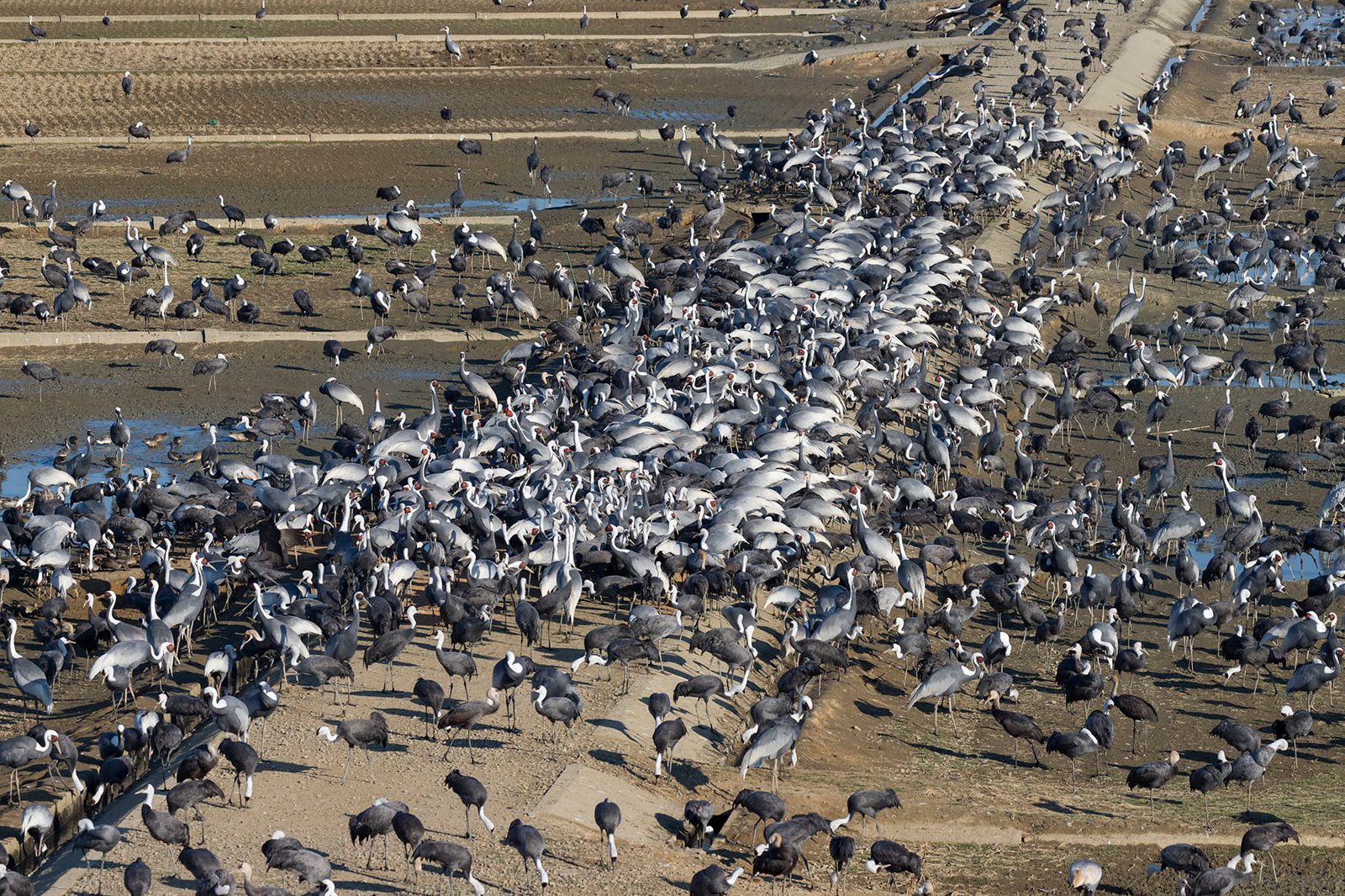
The wetland area takes in the paddy fields of Arasaki, the eastern reclaimed land and the western reclaimed land, and part of the Takaono River estuary. It is mainly reclaimed land, with paddies that grow early-season and ordinary rice. The breeding grounds of East Asian cranes lie in Russia, Mongolia and China.
| Item | Detail |
|---|---|
| Ramsar Convention wetland status | added in 2021 |
| Reclamation | began in the Edo period and took about 300 years to reach its present form |
| Wild bird species with observation records in Izumi | about 300 species |
| Crane species with arrival records in Izumi | 7 of the world's 15, plus 1 hybrid |
The Crane Observation Center
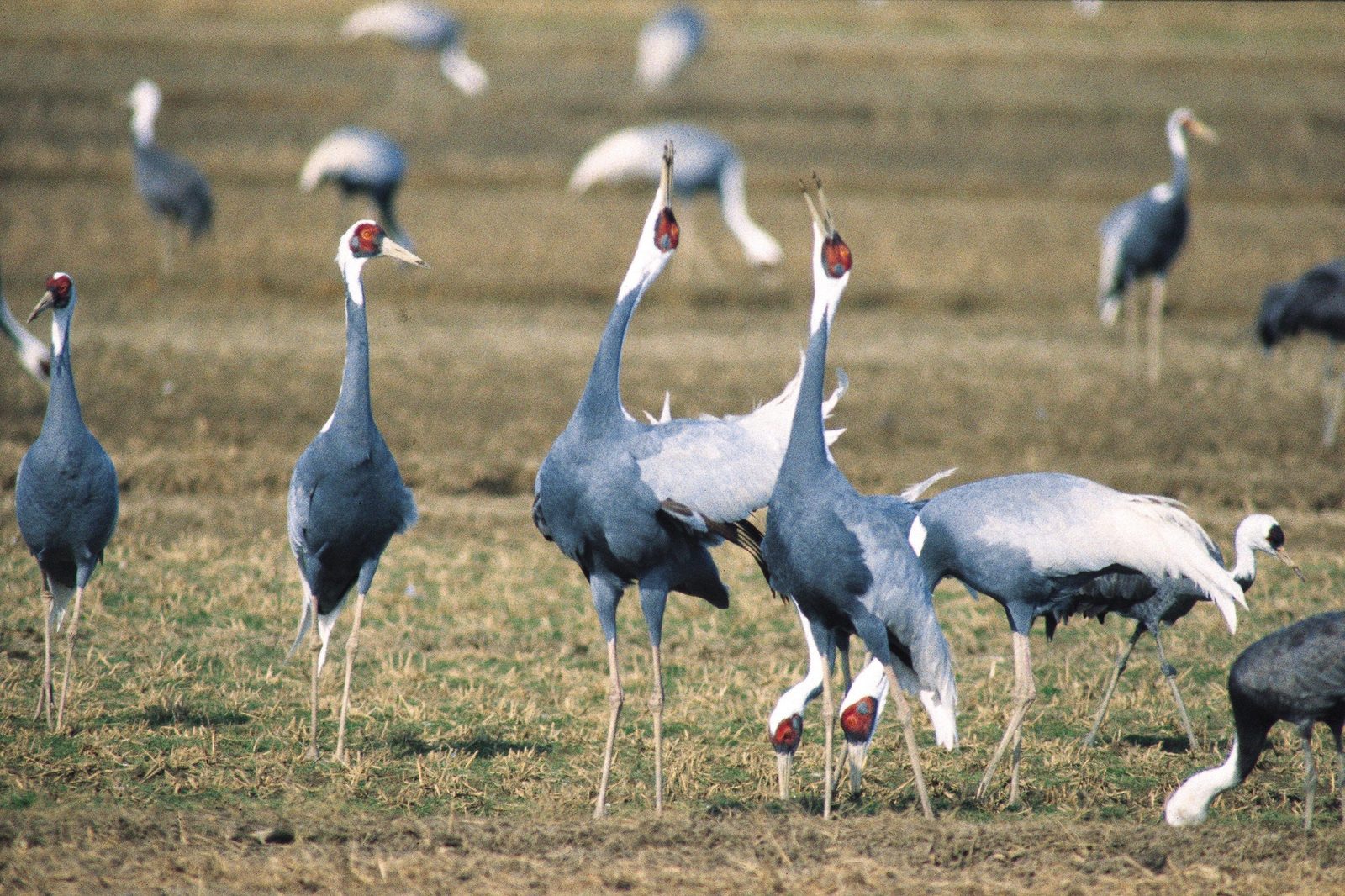
The observation center stands directly in front of the reclaimed land where the cranes roost. Cranes can be watched from the upstairs observation room. The center opens only in the winter crane season. Its period, times, parking and phone number are in the table below.
| Item | Detail |
|---|---|
| Opening period | November 1 to the second Sunday of March |
| Observation center hours | 9:00 to 17:00 (last entry 16:30) |
| Outdoor toilets | 6:30 to 17:00 during the opening period |
| By car, Izumi Station to the observation center | about 20 minutes |
| Parking at the observation center | 172 passenger cars and 3 large buses |
| Building | reinforced concrete, 2 stories |
| Observation center phone | 0996-85-5151 |
| Group rate at the observation center | applies to groups of 20 or more people |
Winter Entry Rules and Contributions
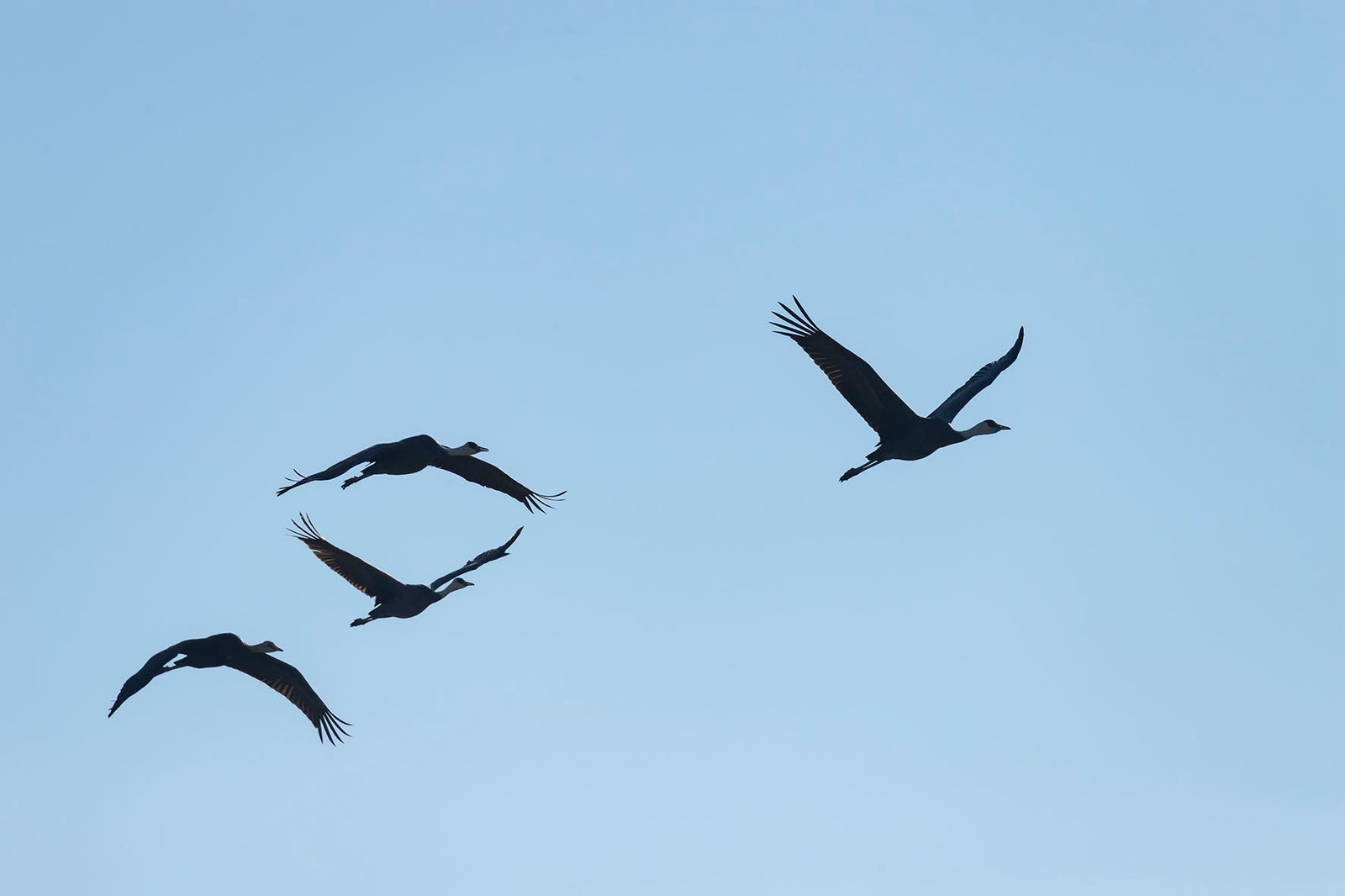
During the wintering season, visitors to the crane grounds are asked to follow special guidelines designed to look after the cranes, other wildlife and the local community. The period, the times of day set for the wintering ground, the early entry to the center and the contribution for each way of arriving are in the table below.
| Item | Detail |
|---|---|
| Winter visitor guidelines period | November 1, 2026 to March 14, 2027 (the winter season) |
| Hours during the use-adjustment period | 6:30 to 16:30 |
| Early access to the observation center for visitors who pay the conservation contribution | 6:30 to 9:00 |
| Contribution, passenger car, taxi or van (up to 10 seats) | 1,000 yen per vehicle per day |
| Contribution, motorcycle or bicycle | 1,000 yen per vehicle per day |
| Contribution, on foot | 1,000 yen per person per day |
| Season pass for the car, motorcycle, bicycle and on-foot categories | 3,000 yen |
| Contribution, minibus (11 to 29 seats) | 3,000 yen per day |
| Contribution, large bus (30 or more seats) | 5,000 yen per day |
If you want to add an activity to the trip, look at tours and activities around Kagoshima.