
This article follows one day on foot from JR Uwajima Station to Uwajima Castle, the Tenshaen garden and Warei Shrine. Fees and opening hours follow the current listings published by Uwajima city and the sites themselves, while descriptions of the town and its setting draw on the Meiji-era gazetteer Shinsen Meisho Chishi, in its volume on Iyo province.
Getting to Uwajima and walking into the castle town
Everything in this plan begins at JR Uwajima Station. From the station it is about a fifteen-minute walk, roughly one kilometre, to the foot of Uwajima Castle. If you keep going up to the tenshu, the main keep, allow about thirty-five minutes from the station in total; the difference is the climb up the castle hill.
JR Uwajima Station, with its arcaded ground floor, a line of palm trees along the forecourt and the hotel block rising above it; the walk to the castle starts from here.
The Meiji gazetteer sketches the ground the town stands on: high peaks closing in to the north and east, Uwajima Bay opening to the west, and the island of Kushima standing across the mouth of the bay like a screen, which made it a good harbour. The Suka River cuts through the middle of the town below the castle hill.
Climbing to the keep at Uwajima Castle
Entry to the keep costs two hundred yen for an adult. Visitors aged sixty-five and over pay one hundred and sixty yen, and the same reduced fee of one hundred and sixty yen applies to groups of twenty or more and to anyone holding one of the city's preferential discounts. It is noticeably cheaper than the garden that follows.
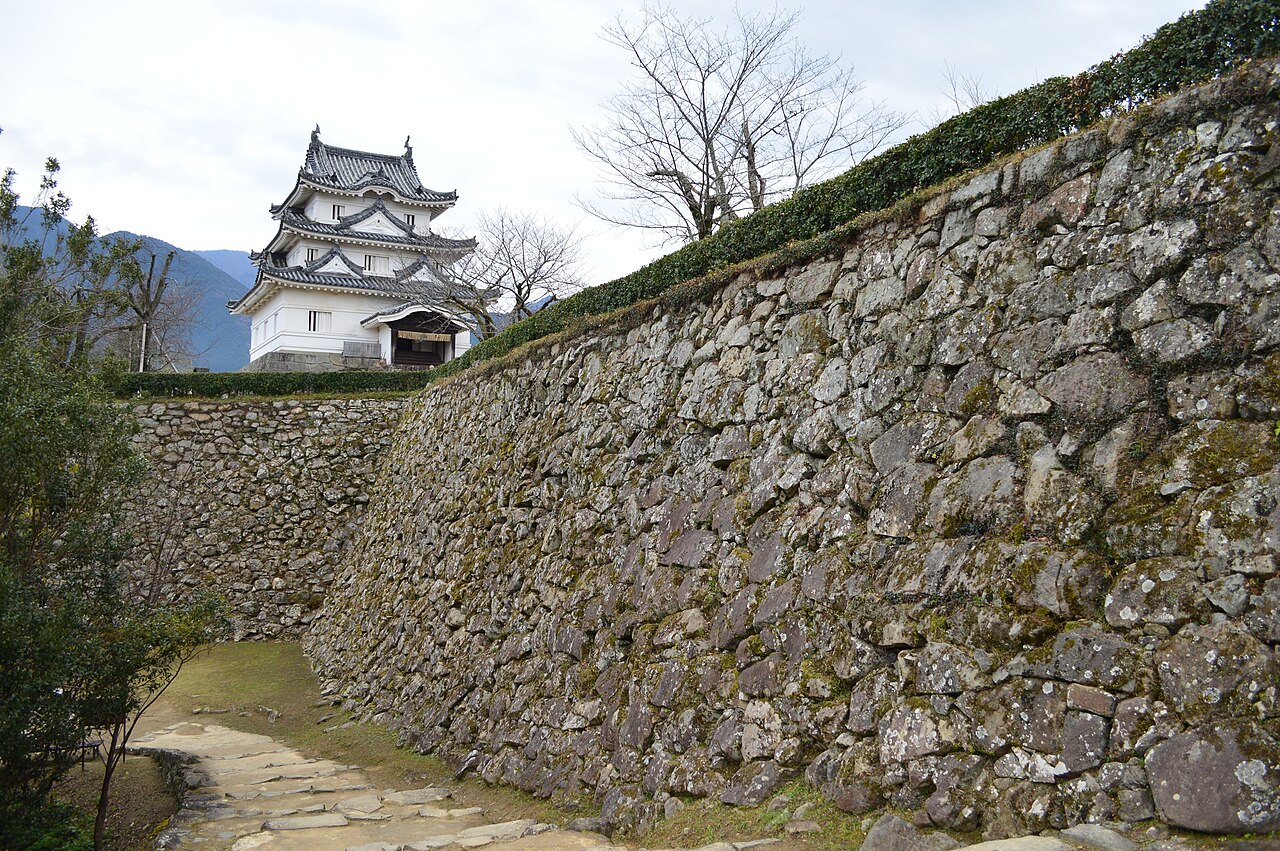
The white keep of Uwajima Castle seen from below the long dry-stone wall, with a hedge along the top of the wall and the hills behind.
One piece of history will do while you climb. In the early sixteen-hundreds the castle passed to Date Hidemune, eldest son of Date Masamune, who was granted the whole of Uwa district, rated at one hundred thousand koku. The Date name stays with you for the rest of the day, at the garden and again at the shrine.
Tenshaen, the garden the Date family kept
Tenshaen is the day's second paid stop. Between April and June the garden is open from half past eight in the morning until five in the afternoon, and those are the only hours covered here. Check the city's current listing before an autumn or winter visit, and plan the castle climb around whichever end of that window suits you.
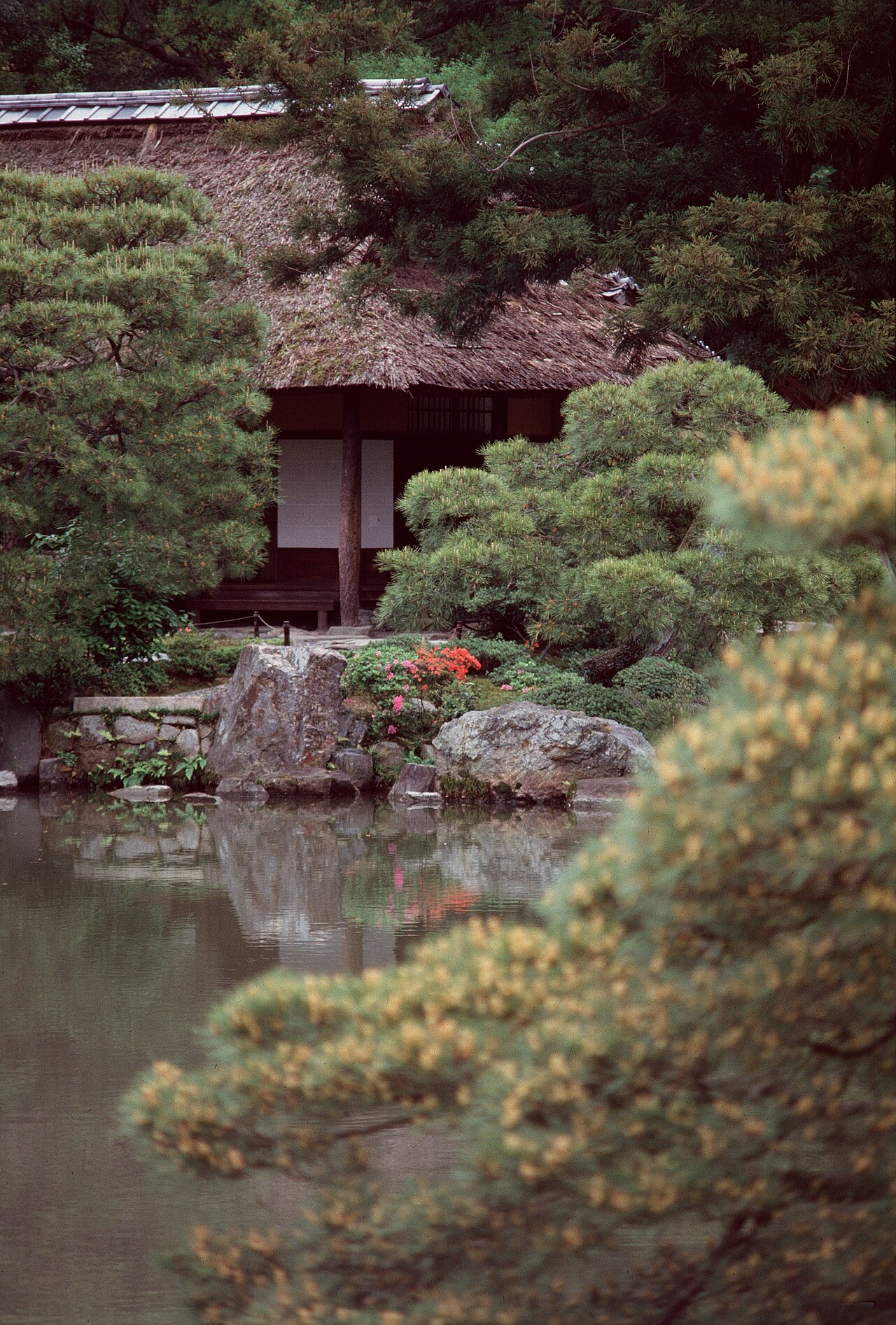
A thatched pavilion at Tenshaen behind clipped pines and garden rocks, with azaleas in flower at the edge of the pond.
Admission is five hundred yen for adults. High-school students and visitors sixty-five and over pay three hundred yen. Junior-high students pay two hundred yen. Primary-school children pay one hundred yen. Groups of twenty or more pay four hundred yen per person. For a family with children of school age, the total is worth adding up before you reach the gate.
Compare options
See partner pricing and availability →
Disclosure: This post may contain affiliate links. If you book through them, we may earn a commission at no extra cost to you.
Warei Shrine and the story the town keeps telling
Warei Shrine is dedicated to Yamaga Seibei Kinyori, chief retainer to Date Hidemune, the lord you met at the castle. The record is plain: Kinyori was killed in the sixth year of the Genna era, around sixteen twenty, after he was slandered to his lord. What the town has made of that death is why the shrine exists.
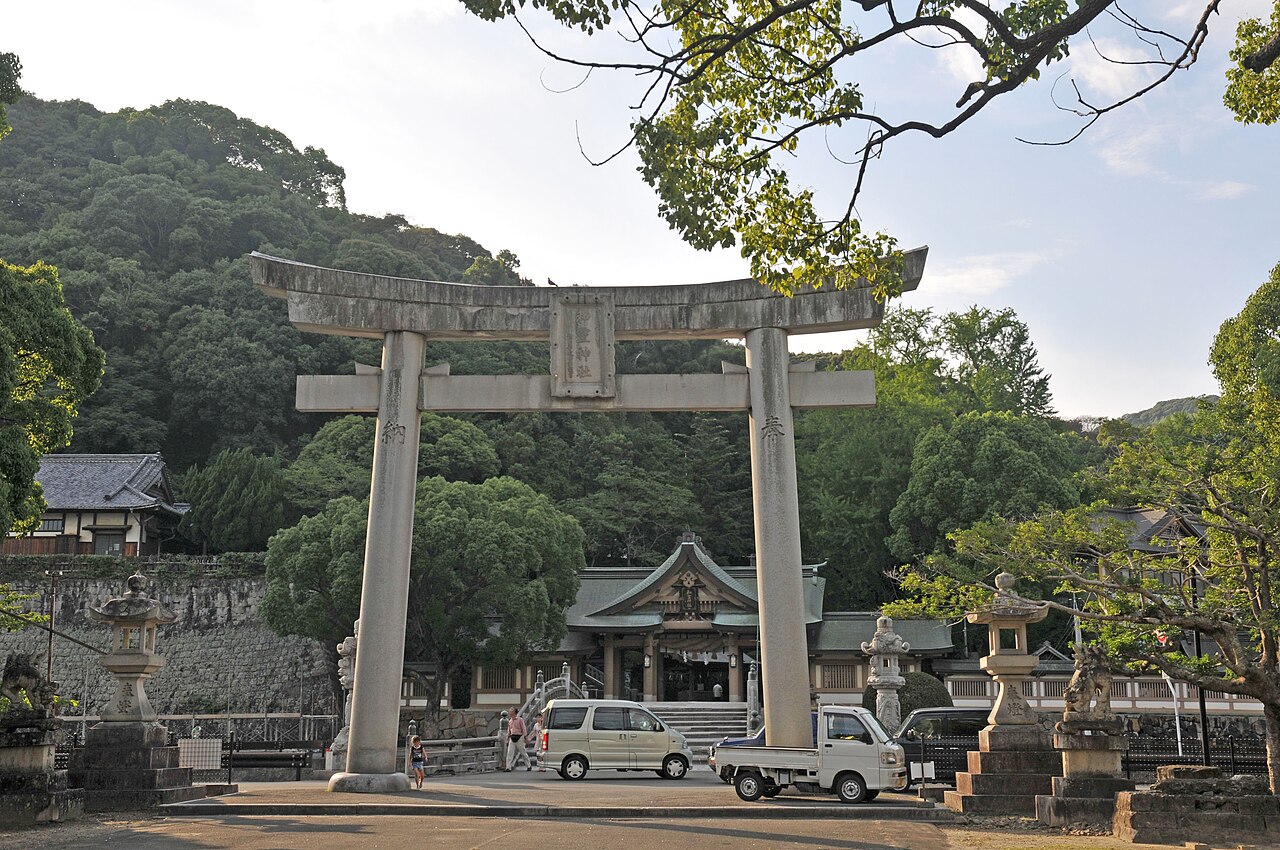
The tall stone torii of Warei Shrine, with stone lanterns on either side and the main hall on its stepped platform beyond, against the wooded hillside.
The story goes that Kinyori's spirit did not rest. It is said that misfortune came to the men who had slandered him, and to their families too, and that the town came to enshrine the spirit as a god so that it would be calmed. The name Warei is explained as meaning to soothe and settle a spirit.
The shrine's treasures include letters in Kinyori's own hand and a note written by Date Masamune. In the sixteen-fifties the shrine was moved to a grove known as Hiwada and given a formal name. Take the story as the town tells it, and keep the shrine for the last stop of the afternoon, after the castle and the garden.
Shaping the day around Uwajima
Take the castle first, while your legs are fresh for the climb of about thirty-five minutes from the station; walk back down for the garden around midday, inside its spring opening of half past eight to five; and keep the shrine for the afternoon.
With daylight to spare, the gazetteer offers two more. Uwatsuhiko Shrine stands facing the castle, which lies to its west, and looks down over the town and Uwajima Bay; it was noted for blossom in spring and coloured leaves in autumn. Farther out, the port town of Yoshida went to Hidemune's fifth son and keeps a shrine to his retainer.
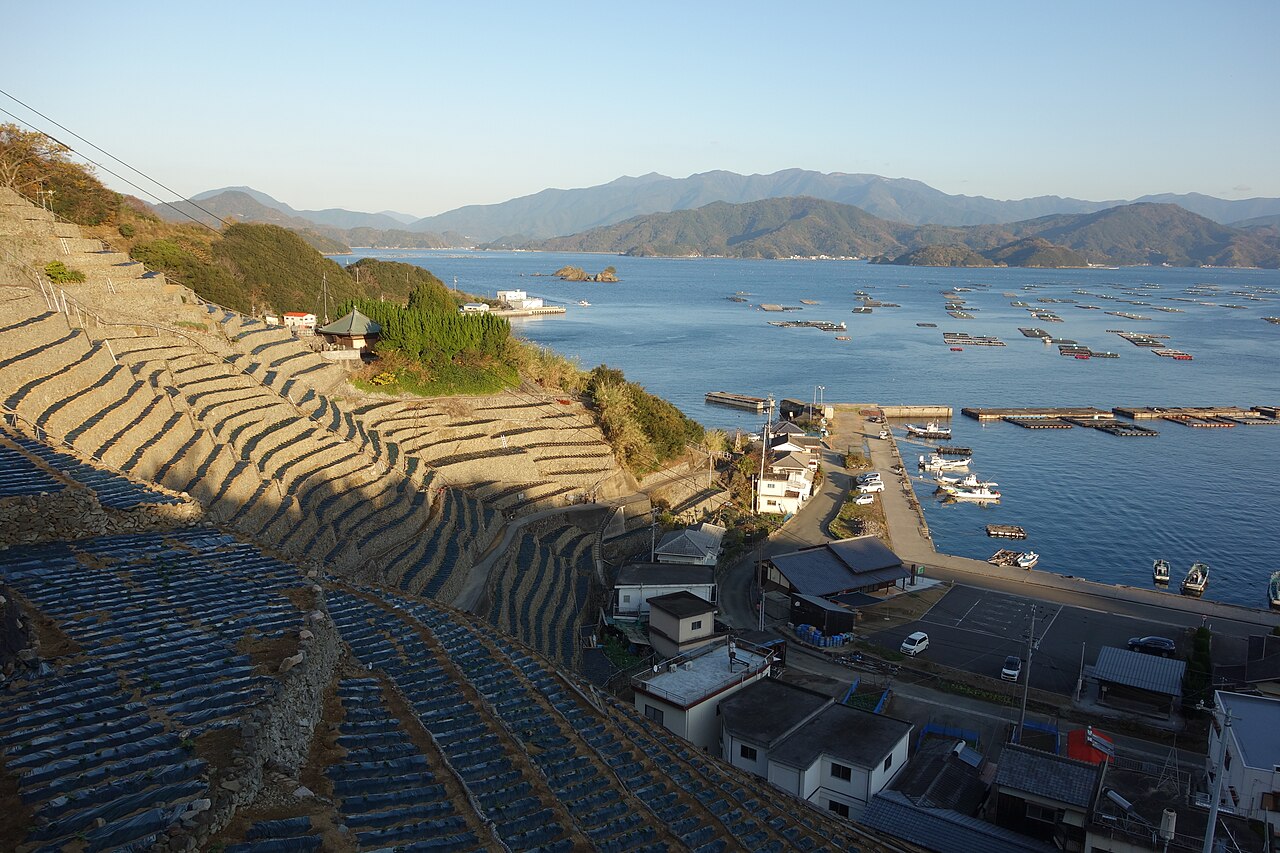
The stone-walled terraces at Yusu Mizugaura step down toward a small harbour, with rafts moored across the bay and hills on the far shore.
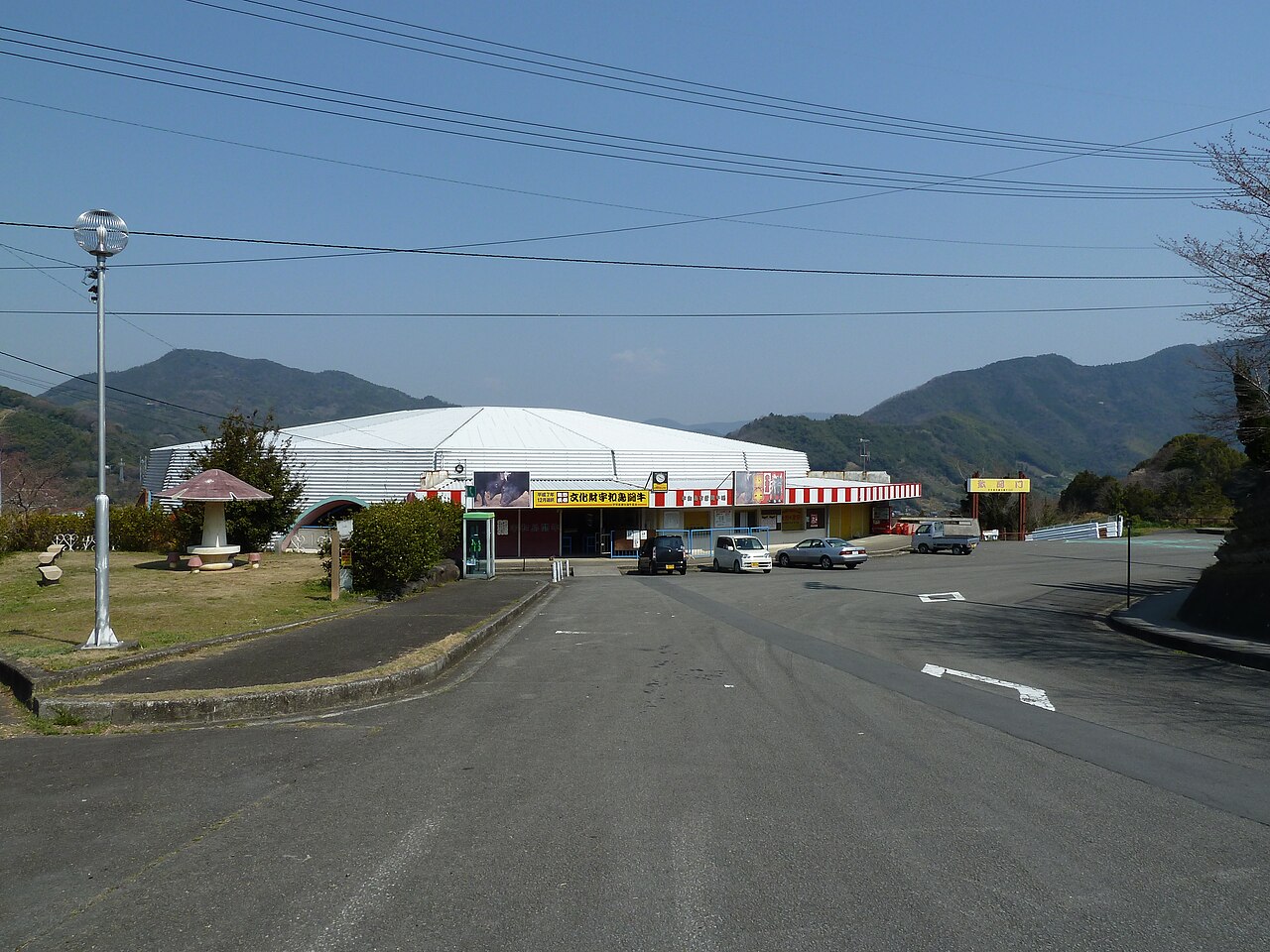
The white dome of the municipal bullring, with its striped entrance canopy and car park, set against the hills on the edge of Uwajima.
Two things in the photographs above are not on this walk: the terraced stone fields at Yusu Mizugaura and the municipal bullring. They belong to a longer stay in the area, and a guided tour or day trip from Uwajima is one way to fold them in. Otherwise the walk ends where it began, back at JR Uwajima Station.