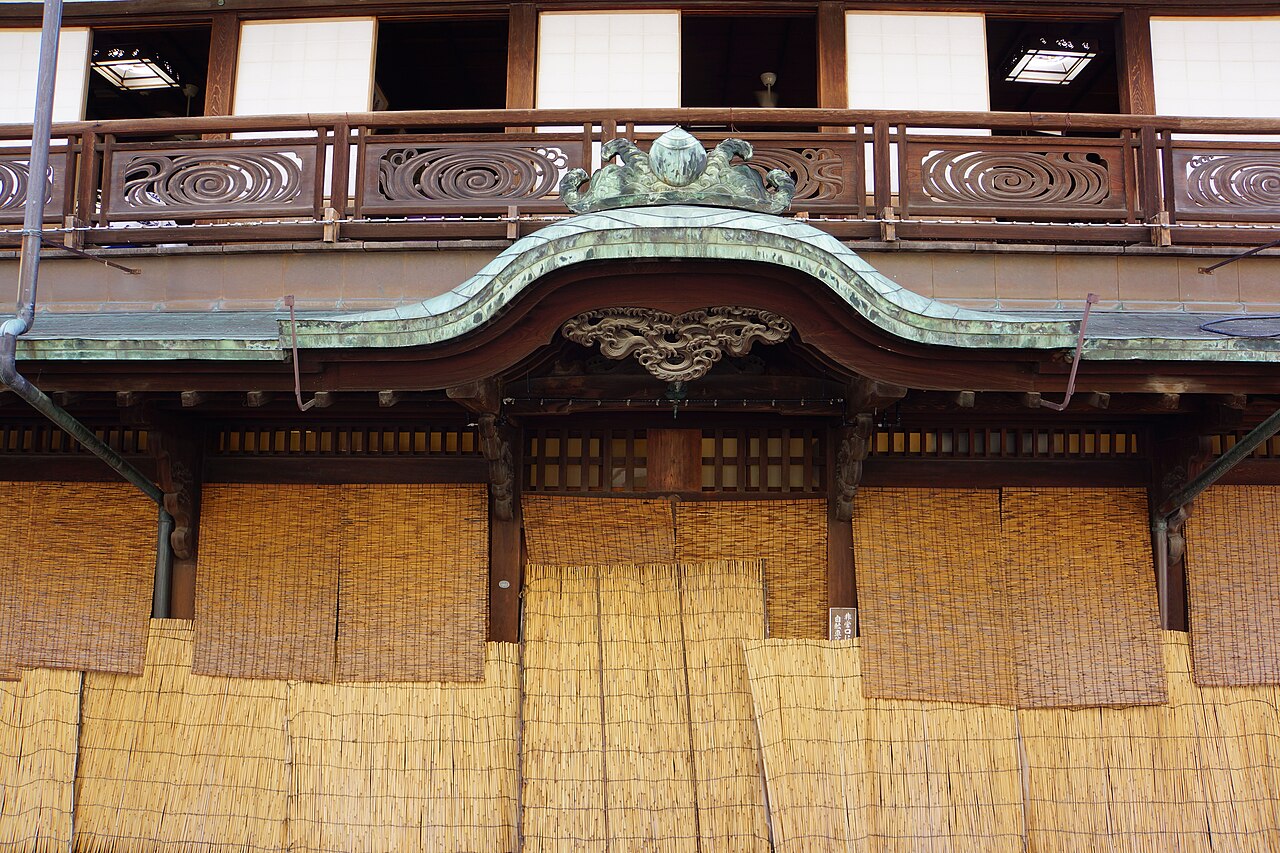
Dogo sits on the eastern rim of Matsuyama, the largest city on the island of Shikoku, and it wears its age lightly. Local tradition gives the spring some three thousand years and counts it, with Arima and Shirahama, among Japan's three ancient bathing places. The Man'yoshu, Japan's oldest anthology of verse, already sings of the water here.
Most visitors arrive for one photograph — the lantern-lit face of the main bathhouse — take it, and leave. Give the town a morning instead. Its pleasures are early ones: steam rising over tiled roofs, a moat with no queue beside it, and a poet's museum that asks nothing of you but slowness.
Start with the water
The main building, Dogo Onsen Honkan, went up in the eighteen-nineties, appears in Natsume Soseki's novel Botchan, and anchors a slope of inns that have gathered around it ever since. Its ground-floor Kami-no-yu bathing course opens at six in the morning and runs until eleven at night. The first hour is the one to take: the town is still asleep, and the water is not.
Two other houses share the spring, and a single ticket ties them together:
- The Kami-no-yu course with a second-floor resting room costs one thousand three hundred yen for adults and six hundred and fifty yen for children.
- The Tama-no-yu second-floor rest-room course, a viewing of the Yushinden imperial suite included, costs two thousand yen for adults and one thousand yen for children.
- A guided viewing of the Yushinden alone costs five hundred yen for adults and two hundred and fifty yen for children.
- Tsubaki-no-yu, the plainer house the neighbourhood itself prefers, opens from half past six in the morning until eleven at night, with last entry at half past ten.
- The Asuka-no-yu annex offers a bath-only course at six hundred and ten yen for adults and three hundred yen for children; its ground-floor bath opens from six in the morning until eleven at night.
- The Meguriyu ticket covers all three houses at one thousand four hundred and forty yen for adults and six hundred and eighty yen for children.
If you would rather have the logistics handled — a guided soak-and-stroll, or a wider Matsuyama circuit — you can browse local tours and tickets before you go.
A moat instead of a queue
A few minutes on foot from the bathhouse crowds, Dogo Park keeps the remains of Yuzuki Castle, the seat of the Kono clan who once governed Iyo province; a double ring of moats and earthen ramparts still circles the hill, a small museum on the grounds explains it, and in spring the park fills with cherry blossom. The still water of the outer moat is the calmest mirror in town.
Inside the same park stands the Shiki Memorial Museum, given over to the life, friendships and work of the haiku poet Masaoka Shiki; an upper floor holds a reconstruction of Gudabutsu-an, the lodging he shared for a time with Soseki. It is the rare museum whose subject — seventeen syllables at a time — teaches you the pace at which to walk back out.
The footbath above the rooftops
For the classic full view of the Honkan, climb to the Sora no Sanpomichi, a walkway whose footbath looks down over the bathhouse; it is the spot where the whole building fits in one frame. Come at dusk, when the lamps go on and the coach parties have gone to dinner.
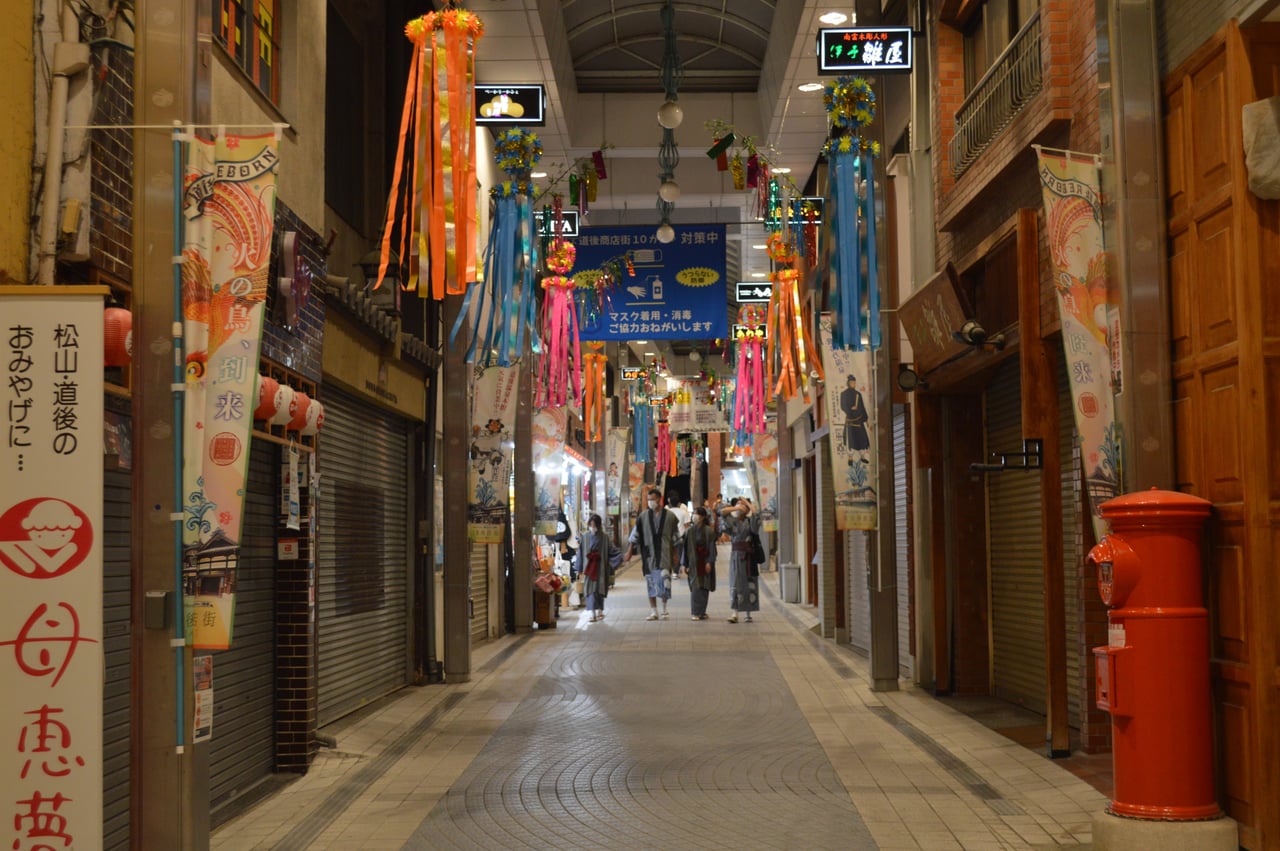
Between the tram terminus and the Honkan runs the Dogo Haikara-dori, an arcade of souvenir and food shops. Walk it once for the pleasure of it, then take the parallel back lanes, which stay quiet even when the arcade does not.
Getting there on the mikan tram
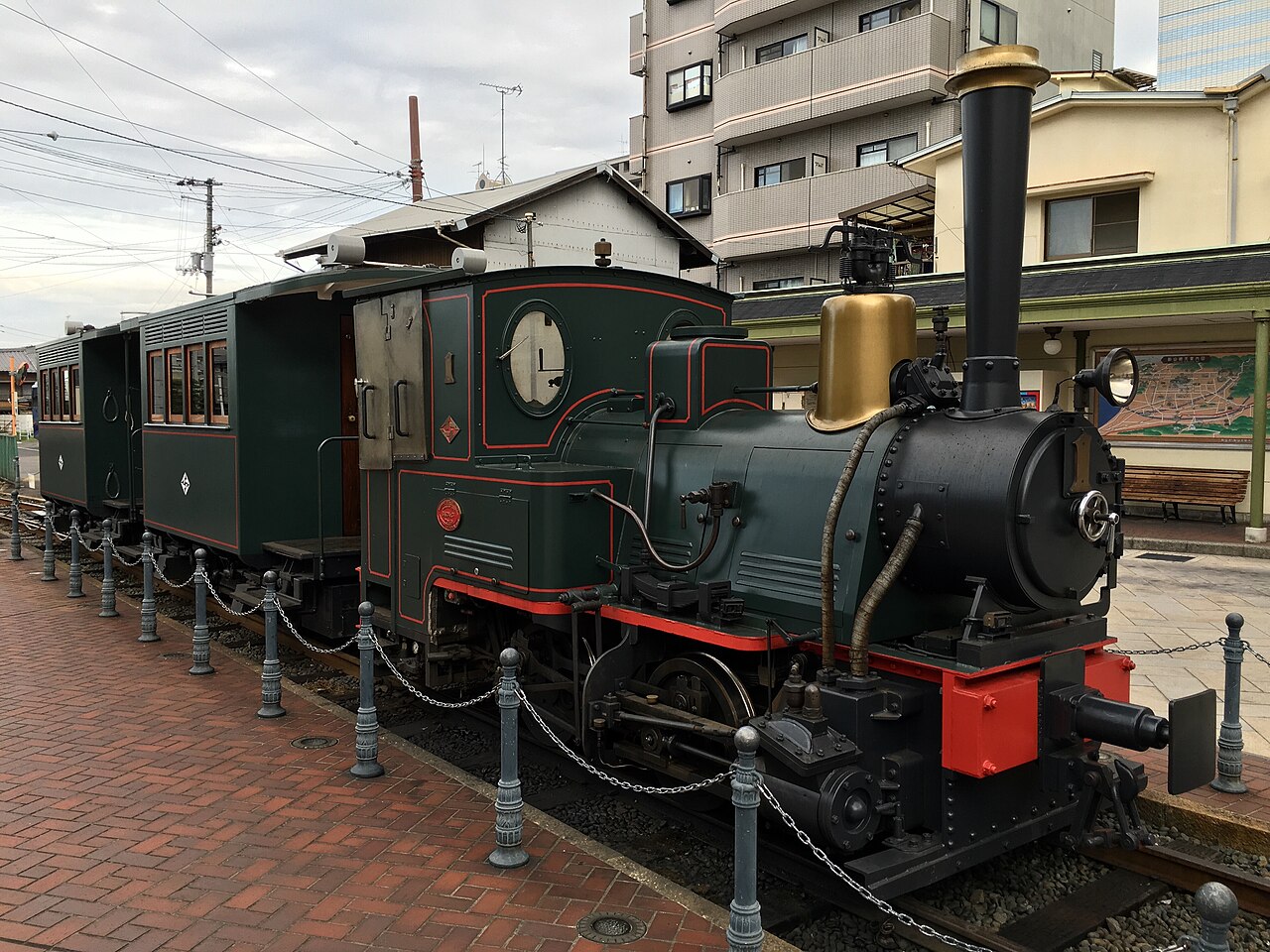
The Iyotetsu streetcar bound for Dogo Onsen takes about twenty-five minutes from JR Matsuyama Station to the Dogo Onsen terminus. The cars are painted mikan orange, and the fleet has its characters — one carriage decorated in nothing but mikan, another wrapped in Tobe-yaki porcelain patterns. The steam-locomotive-style sightseeing car known as the Botchan Ressha takes its name from Soseki's novel, which likened the town's carriages to matchboxes.
Riding is simple, with a few local rules worth knowing:
- Board by the rear door and leave by the front one; the fare is flat, so no numbered slip is needed, and you press the button by your seat as your stop nears.
- Transit cards issued in other regions, Suica and ICOCA among them, are not accepted; Iyotetsu issues a card of its own.
- A ride-all-day ticket can be bought from the driver, at the Iyotetsu ticket centre at the Matsuyama-shi terminus, or at the counter beside the Dogo Onsen terminus.
Where to stay
Places to stay near Dogo Onsen →
Disclosure: This post may contain affiliate links. If you book through them, we may earn a commission at no extra cost to you.
If the town fills up
Matsuyama keeps a spare quiet room. Koshin-an, a thatched hermitage in the city built at the turn of the nineteenth century by the haiku poet Kurita Chodo for verse-making and steeped tea, is now a historic site anyone may enter, and entry costs nothing. Tea gatherings and small concerts are held there, and the garden is loveliest when the wisteria blooms.
That is the shape of a Dogo day: water at six, a moat by mid-morning, a footbath at dusk, and a page of Shiki somewhere in between. For a guided detour along the coast or help with the wider island, see what is running in Matsuyama — then let the orange tram set the tempo.
Prices and opening arrangements shift with the seasons, so check official information before visiting.