This guide covers a slow day in Karatsu on the Saga coast: how to reach the castle from Karatsu Station on foot or by bus, the hours and admission of the castle keep and the Kunchi float hall, the hours of the Former Takatori Residence, and the hilltop view; food, shopping and side trips are not covered.
Getting to Karatsu Castle from the station
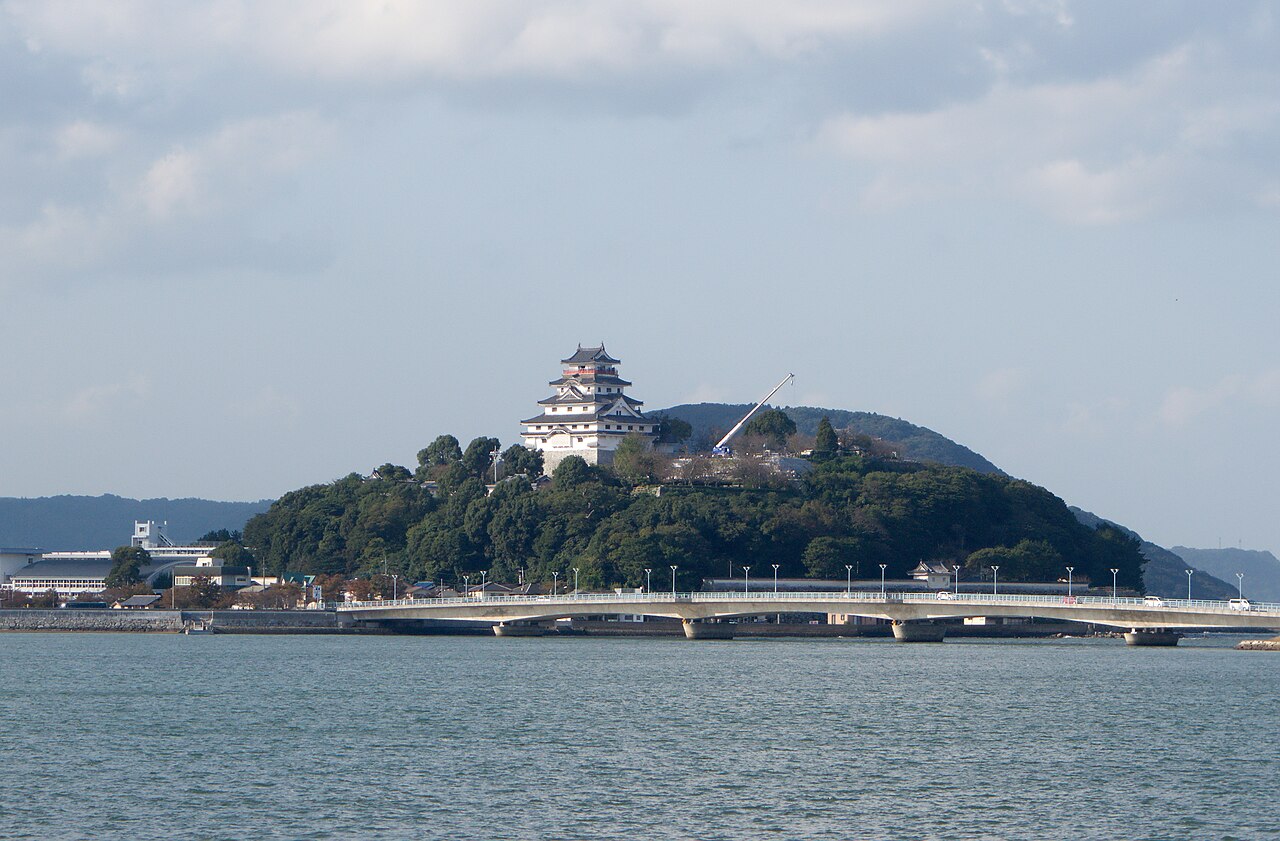
Karatsu Castle stands on a wooded hill where the town meets the bay, and its white keep shows above the trees from across the water. From Karatsu Station there are two straightforward ways to reach it: a walk through the town, or a short ride on a Showa Bus service that stops at the castle entrance.
- On foot: from the north exit of Karatsu Station, the castle is about twenty-five minutes' walk.
- By bus: the Showa Bus Kara One Line runs from the north exit of Karatsu Station, or from the Oteguchi Bus Center, to the Karatsu Castle Entrance stop in about ten minutes.
Which you choose depends on the weather and how much walking you want later. The walk gives a better sense of the size of the town; the bus keeps your legs fresh for the hill. If you would rather leave the connections to someone else, day tours around Karatsu can be booked before you arrive.
Karatsu Castle: hours and admission
Seen from across the bay, the keep sits on top of its hill with the trees closing in around it and Maizuru Bridge stretching across the water below. The admission below is for going inside the keep; the hill it stands on is laid out as a park, and the climb is part of the visit.
| Item | Detail |
|---|---|
| Admission to the keep, adults | five hundred yen |
| Admission to the keep, elementary and junior high school students | two hundred and fifty yen |
| Open | nine in the morning to five in the afternoon |
| Closed | the twenty-ninth to the thirty-first of December |
A morning visit to the keep leaves the afternoon free for the rest of the town, in the order the sections below follow. In late December, check the closing days above: the exhibition hall keeps the same dates, while the Takatori Residence stays shut longer into January. Hours and admission can change, so check official information before visiting.
How the castle and its town came to be
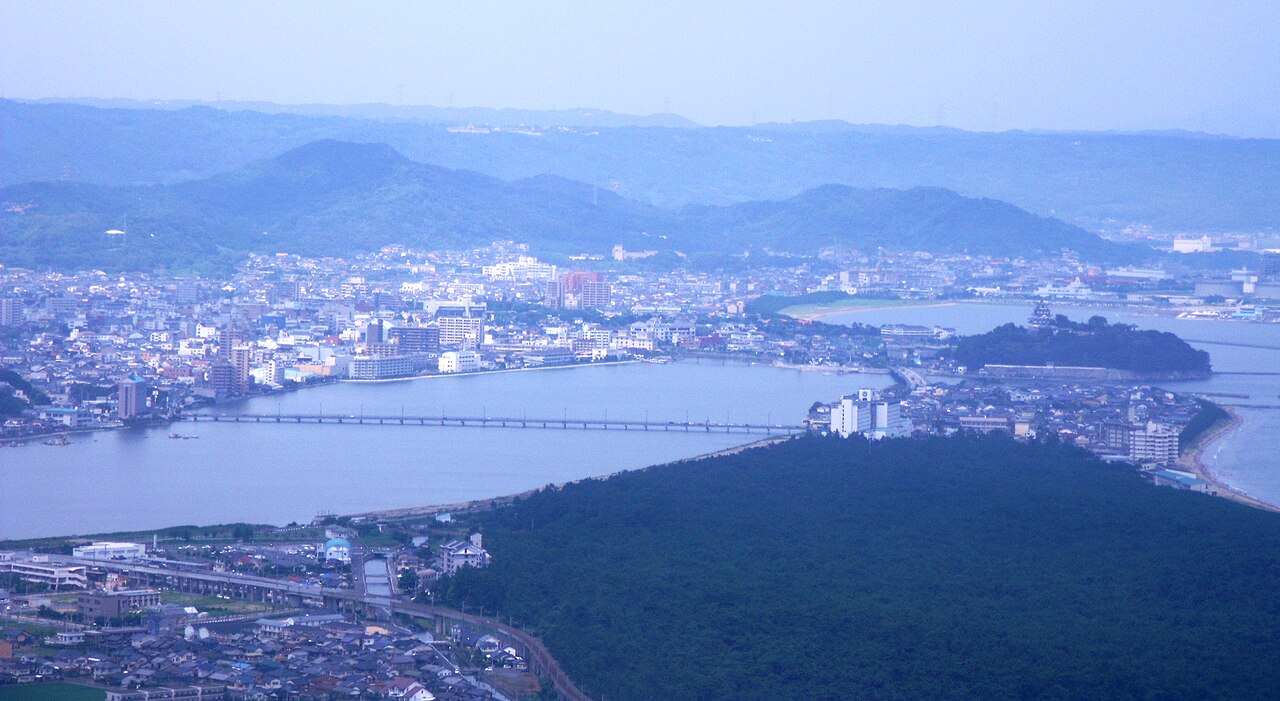
According to a Meiji-era gazetteer of famous places, Toyotomi Hideyoshi took the Hata clan's old domain in the Keicho era and gave it to Terazawa Hirotaka, who in sixteen oh two moved the old castle at Hizen Nagoya here to build Karatsu Castle; its timbers, the gazetteer says, were kept for more than two hundred years.
The same source lists the later lords, Terazawa, Okubo, Matsudaira, Doi, Mizuno and Ogasawara, who came from Tanagura in the Bunsei era and held sixty thousand koku at the Meiji Restoration. The nickname Maizuru, the dancing crane, is said to come from Niji-no-Matsubara and Nishi-no-Matsubara as its wings and a small island off the beach as its head.
Where to stay
Disclosure: This post may contain affiliate links. If you book through them, we may earn a commission at no extra cost to you.
The view from the hilltop
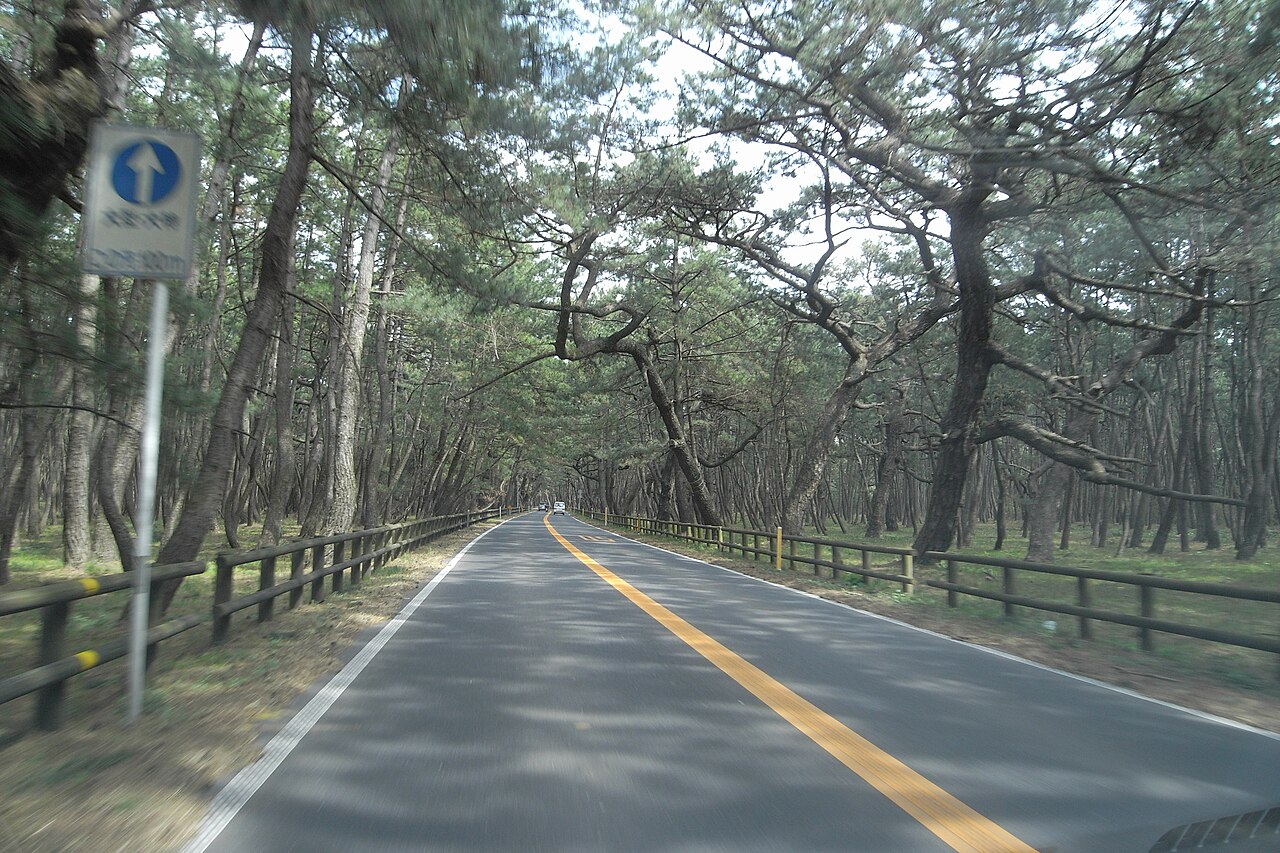
The hilltop under the keep is laid out as a park, and a Meiji-era gazetteer describes what you see from it: Karatsu Bay opening on every side, the islands of Kashiwajima, Oshima, Torishima and Takashima seeming to float on the waves, and to the south Kagamiyama rising behind the town like a castle wall.
Closer in, the same description picks out the rows of houses at Mitsushima and the Matsuura Bridge, and to the east the sand of Niji-no-Matsubara curving away like a drawn bow. Down at shore level, the road through those pines runs under a roof of branches, with wooden fences on either side and the trees pressing close.
The Former Takatori Residence
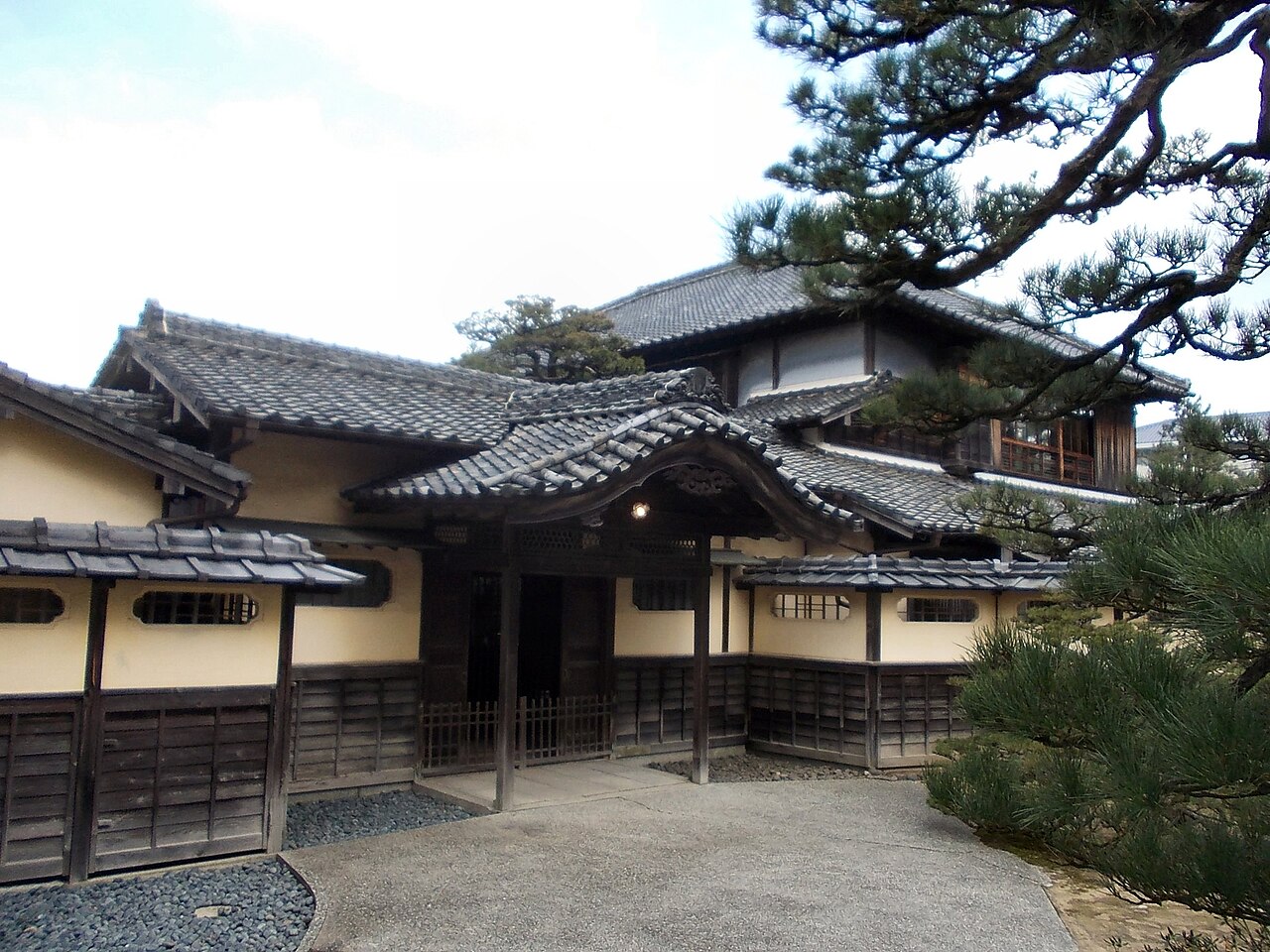
The Former Takatori Residence is a large house behind a tiled-roof gate, with a curved gable over the entrance, wooden lattice along the wall and a pine leaning in from the garden. It keeps a fixed timetable for visitors, so slot it between the castle and the float hall and keep an eye on the last entry.
- Open: half past nine in the morning to five in the afternoon
- Last entry: half past four in the afternoon
- Closed: the twenty-ninth of December to the third of January
The last entry comes half an hour before the doors close, so an afternoon visit needs a little margin. The New Year break here runs into the first days of January, a few days longer than the castle keep's, which matters if you are in Karatsu between the years and want to see both.
The Kunchi floats at the exhibition hall
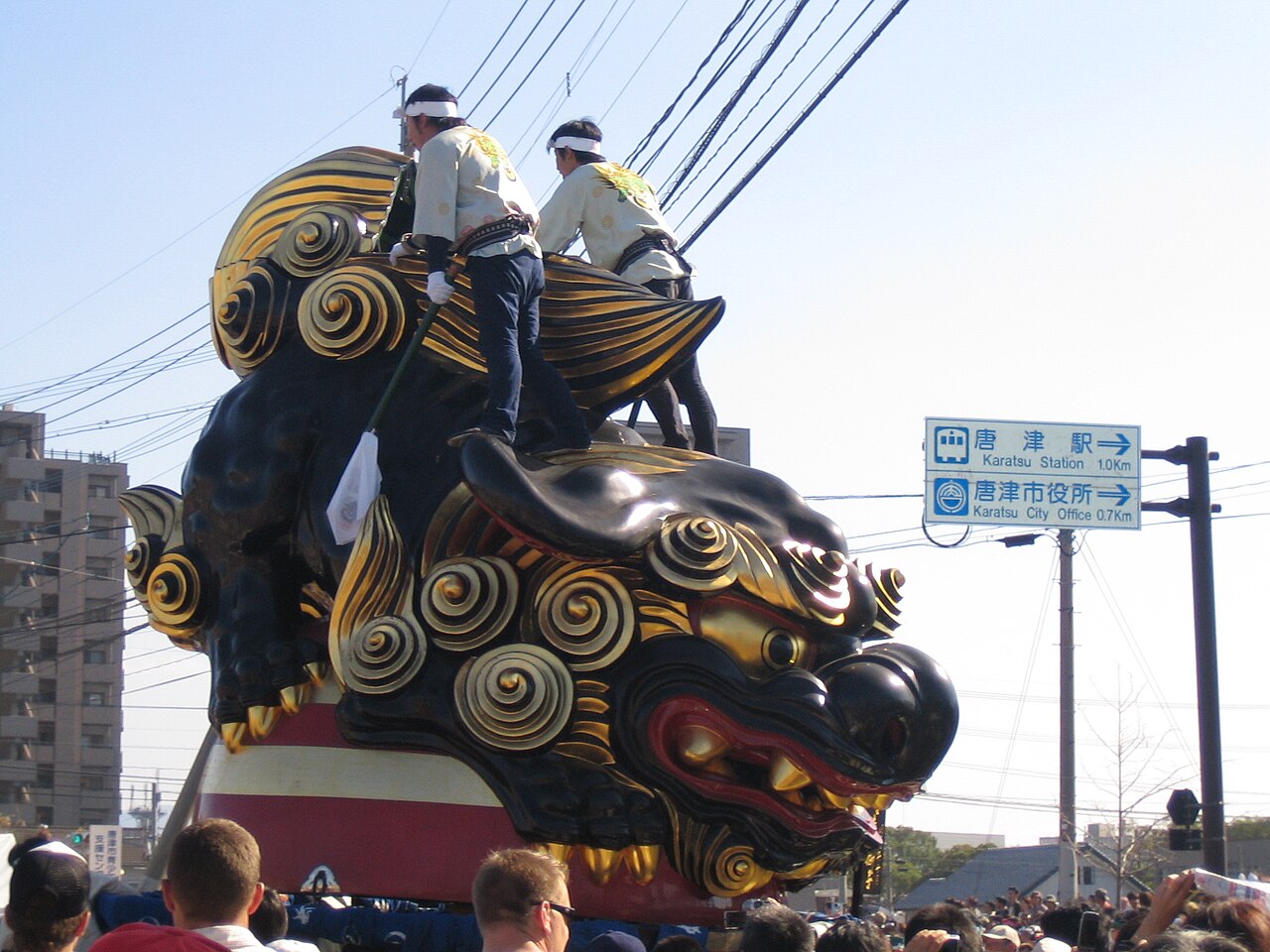
The floats of Karatsu Kunchi are the boldest objects in town: in the photograph a black lion head with gold swirls and a red mouth is being pulled along a street near Karatsu Station, with two riders in white festival jackets on top holding the ropes. The Hikiyama Exhibition Hall is where the floats are kept on show.
| Item | Detail |
|---|---|
| Admission, adults | three hundred and ten yen |
| Admission, elementary and junior high school students | one hundred and fifty yen |
| Open | nine in the morning to five in the afternoon |
| Last entry | twenty to five in the afternoon |
| Closed | the twenty-ninth to the thirty-first of December |
The hall keeps the same opening hours and year-end closing days as the castle keep, with a last entry twenty minutes before closing, so the two fit together in one day. If the floats leave you wanting a slower look at the town, places to stay in Karatsu turn the day trip into an overnight one.