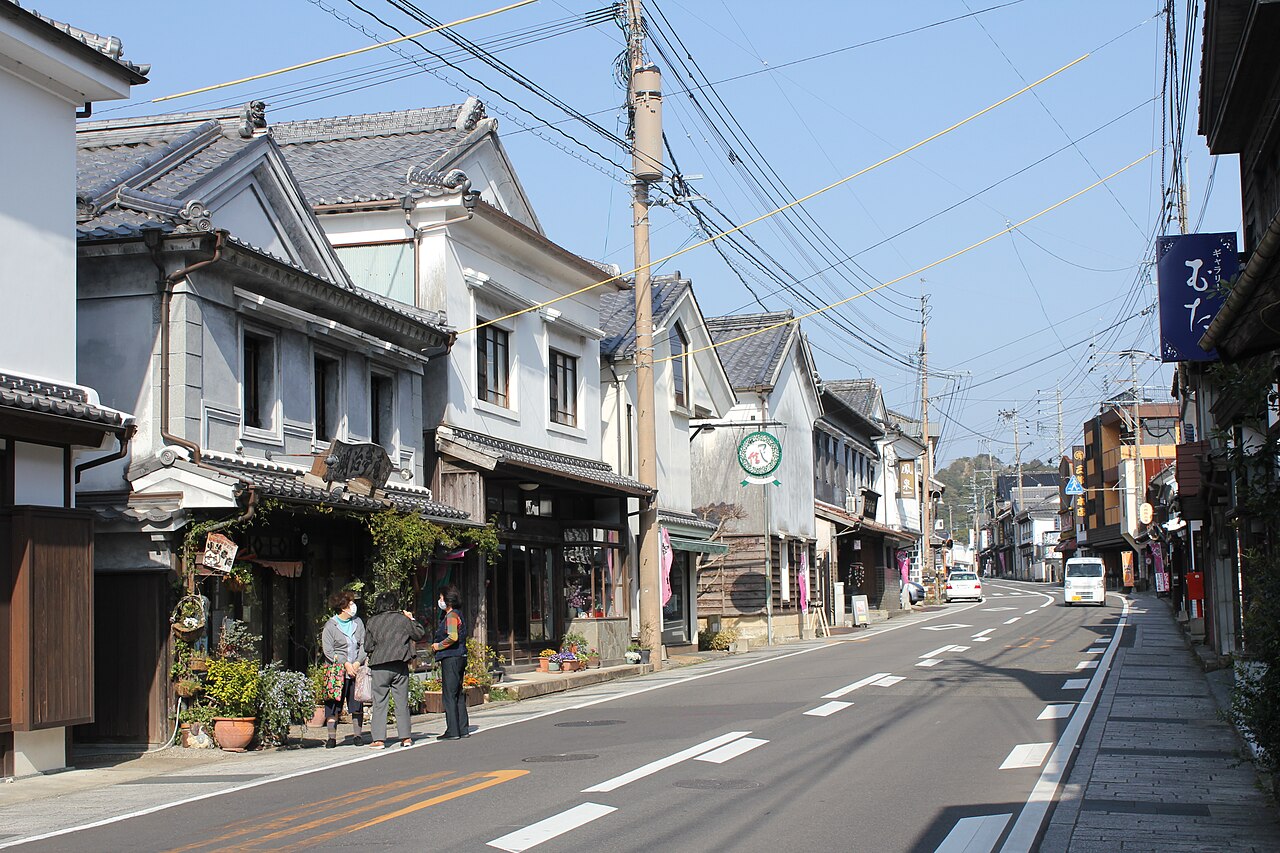
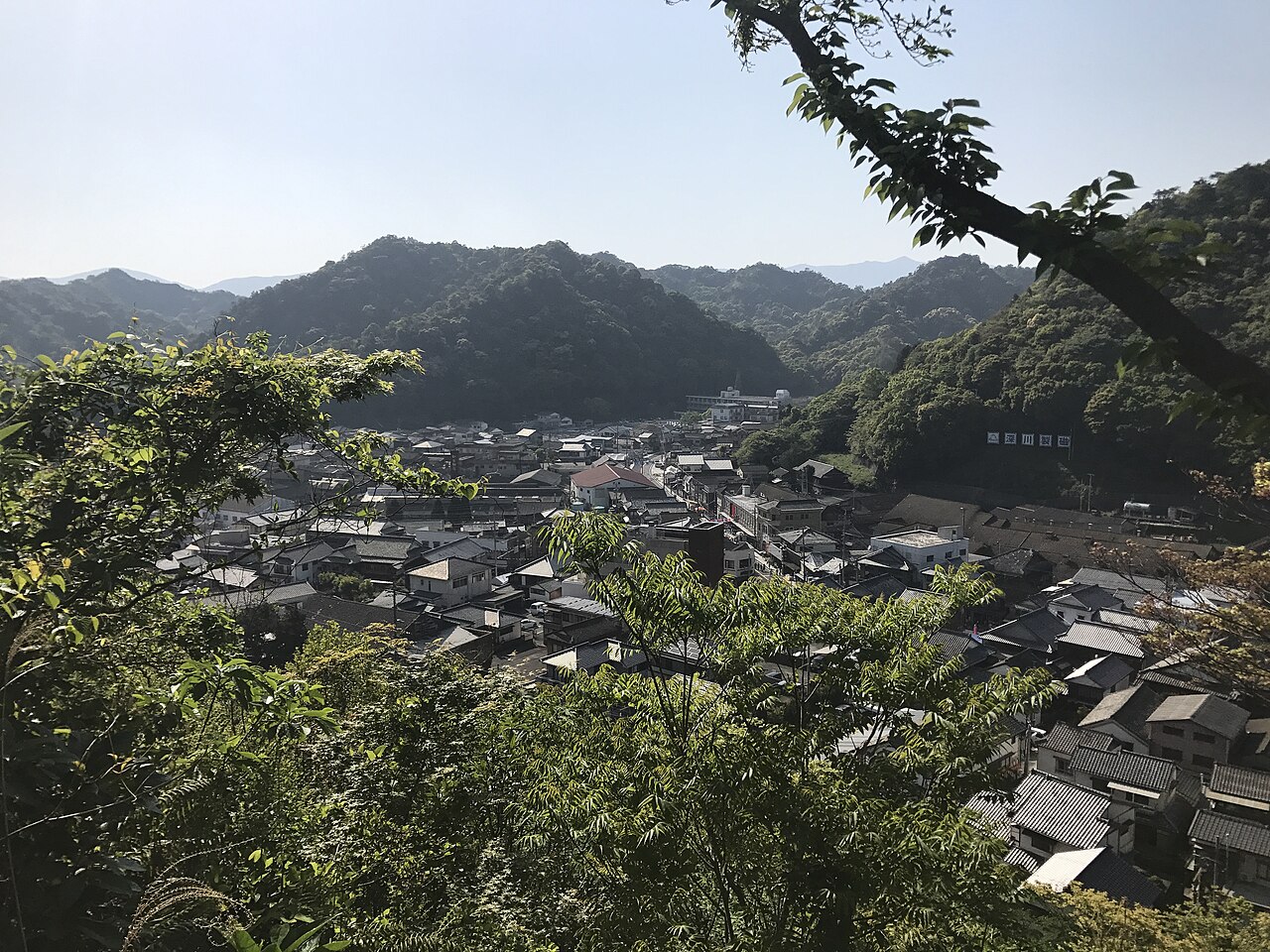
Arita, in Saga Prefecture, is said to be where porcelain was first fired in Japan, after porcelain stone was found at Izumiyama. Centuries on, the town still reads as a place built around one craft: tile-roofed merchant houses along the old streets, lanes walled with spent kiln bricks, and a hilltop shrine whose fittings are described as being made of porcelain.
It also works well as a day trip. The JR limited express brings you in from Hakata in Fukuoka or from Saga, the main sights sit within walking range of JR Arita Station and JR Kami-Arita Station, and lunch can be the local set meal served on the town's own ware.
Getting There from Hakata, Saga and the Airport
From Hakata Station in Fukuoka, the JR limited express reaches Arita Station in ninety minutes. From Saga Station the same train takes forty minutes.
Flying into Kyushu Saga International Airport instead, allow about an hour and fifteen minutes by car or taxi to the Kyushu Ceramic Museum.
| Leg | Time or fare |
|---|---|
| Hakata Station to Arita Station, JR limited express | 90 minutes |
| Saga Station to Arita Station, JR limited express | 40 minutes |
| Kyushu Saga International Airport to the Kyushu Ceramic Museum, by car or taxi | About 1 hour 15 minutes |
| Saga Airport shared limousine taxi to or from Arita | 4,000 yen for the first passenger, 2,000 yen for each additional passenger |
| Arita community bus, single ride | 200 yen for adults, 100 yen for elementary school children |
| Arita community bus, one-day pass | 500 yen for adults, 250 yen for children |
Compare options and book guided experiences in and around the porcelain town: See Arita tours and activities.
A Walking Order for One Day
The town is easiest to take in two halves. Begin at JR Arita Station: the Kyushu Ceramic Museum is about a twelve-minute walk from the station. By car or taxi it is about four minutes. Seeing the collection first makes everything afterwards easier to read.
Then move to the other end of town. From JR Kami-Arita Station, Izumiyama Jisekiba, the old quarry and a national historic site, is about a fifteen-minute walk. Sueyama Shrine is about a twenty-minute walk from the same station. If you would rather ride, a car from JR Arita Station takes about eight minutes to the quarry. The same drive to Sueyama Shrine is about seven minutes.
Between the two ends, the old streets reward slow walking. Tile-roofed merchant houses face each other across the road, and in the Kami-Kohei district you pass walls built from spent kiln bricks, known as tonbai walls, with white-walled houses behind them. If the walking adds up, the Arita community bus and taxis from JR Arita Station fill in the gaps.
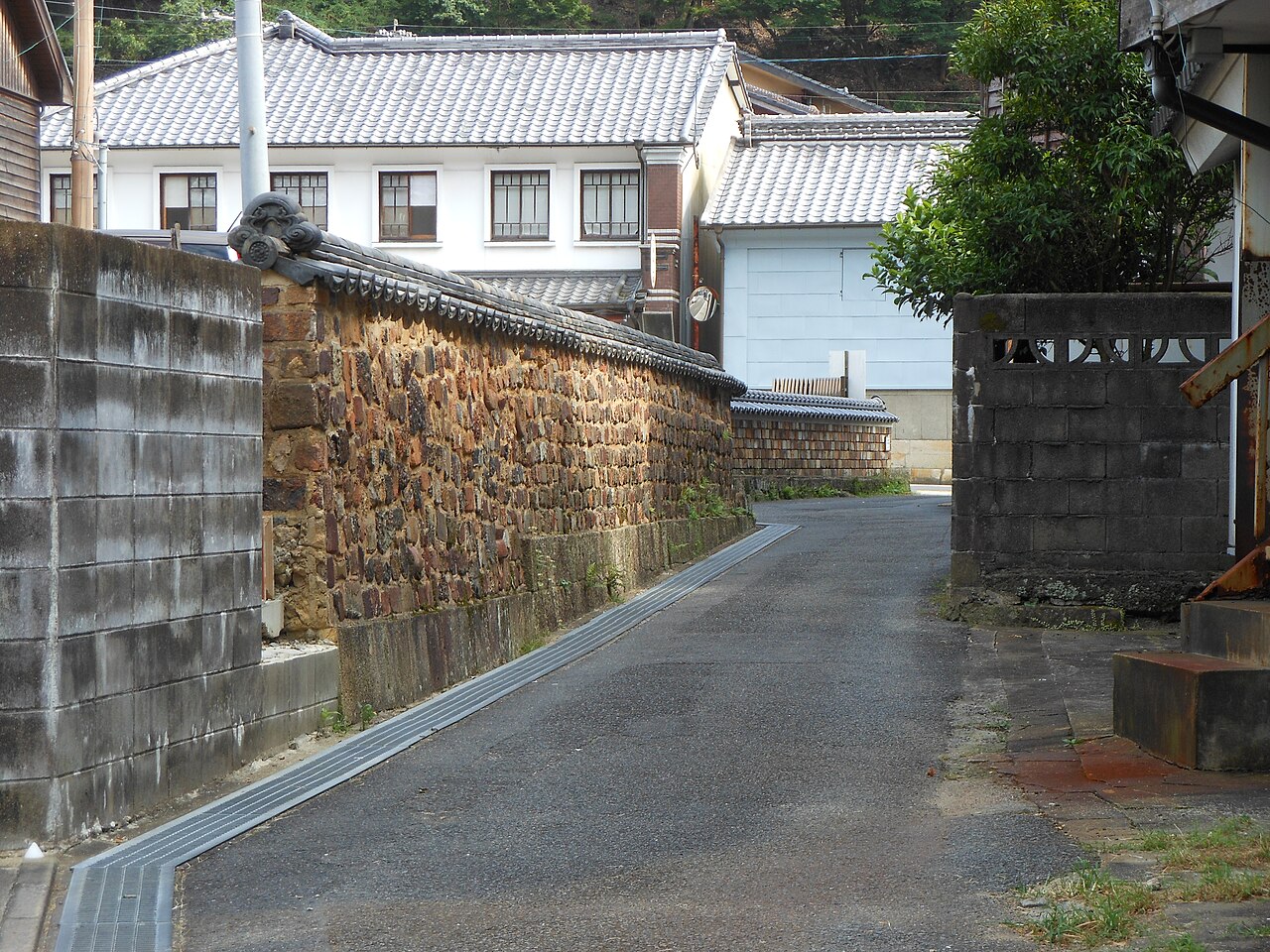
A workable order: the museum first, the old streets and tonbai walls before lunch, the set meal at midday, then the quarry and the shrine in the afternoon light, finishing back at JR Arita Station with a curry bento for the ride home.
Three Museums, and When They Open
The Kyushu Ceramic Museum, the first stop, is open from nine in the morning to five in the afternoon. It closes on Mondays, or the next weekday when a national holiday falls on a Monday, and over the New Year from December twenty-ninth to January third.
Arita Toji Museum is open from nine in the morning to half past four in the afternoon. It is closed on Mondays too, or the following day when Monday is a national holiday, but stays open during the Arita Ceramic Fair, April twenty-ninth to May fifth.
Imaemon Old Ceramics Museum is open from ten in the morning to half past four in the afternoon. Admission is five hundred yen, or four hundred yen per person for groups of fifteen or more.
| Museum | Detail |
|---|---|
| Kyushu Ceramic Museum | Open 9:00 to 17:00 |
| Kyushu Ceramic Museum | Last entry 16:30 |
| Kyushu Ceramic Museum | Closed Mondays (the next weekday when a holiday falls on Monday) and December 29 to January 3 |
| Arita Toji Museum | Open 9:00 to 16:30 |
| Arita Toji Museum | Closed Mondays (the following day when Monday is a holiday), but open during the Arita Ceramic Fair, April 29 to May 5 |
| Imaemon Old Ceramics Museum | Open 10:00 to 16:30 |
| Imaemon Old Ceramics Museum | Admission 500 yen; 400 yen per person for groups of 15 or more |
Where to stay
Places to stay near Arita, Saga, Japan →
Disclosure: This post may contain affiliate links. If you book through them, we may earn a commission at no extra cost to you.
Sueyama Shrine and the Izumiyama Quarry
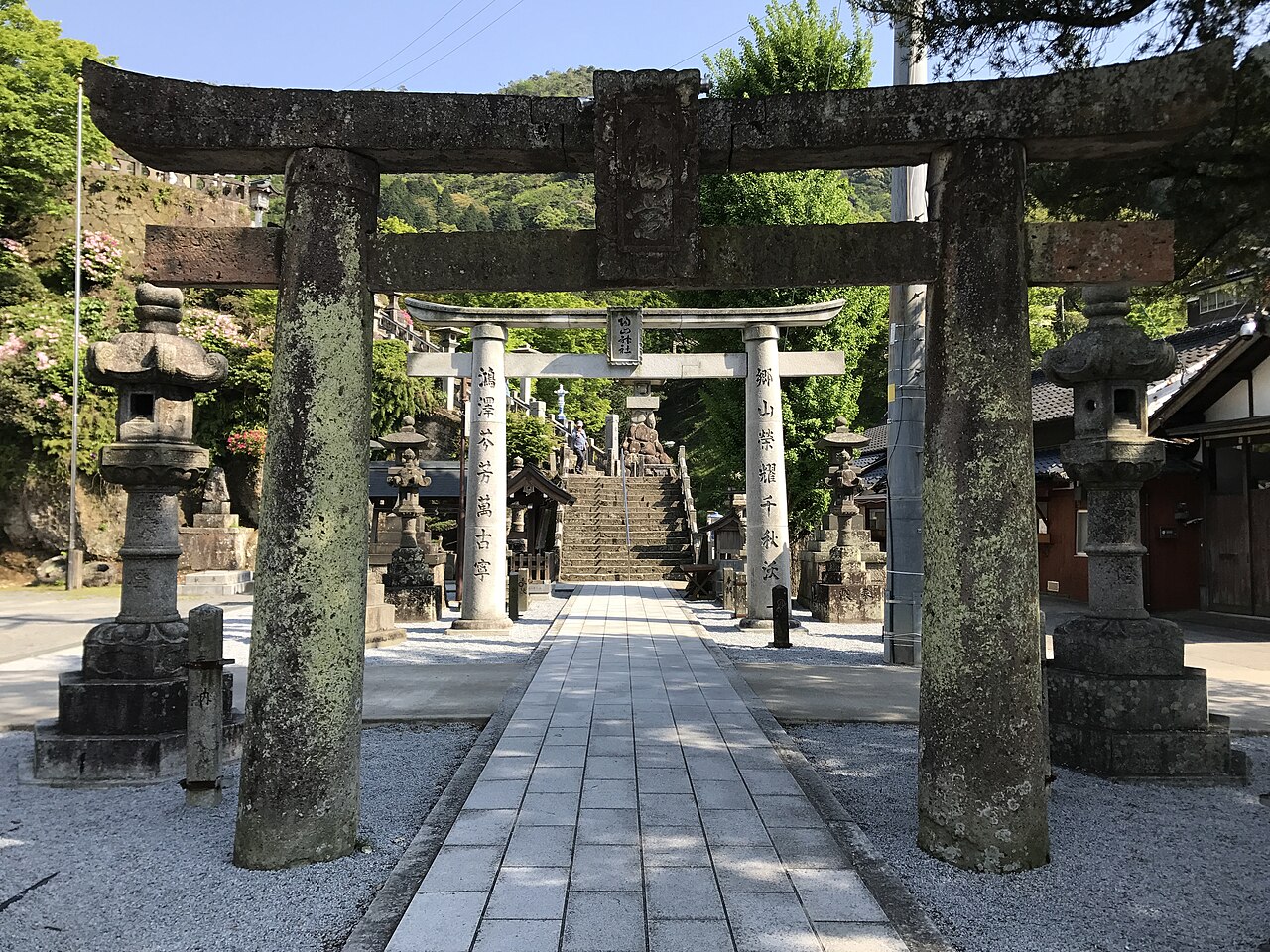
Sueyama Shrine is described in guidebooks as the potters' shrine: it enshrines Yi Sam-pyeong, regarded as the founder of Arita ware. Emperor Ojin, too, is said to be enshrined there. It stands on a rise described as looking out over the town, and guidebooks describe it as the shrine of the kiln god, closely tied to Arita ware and well loved by people here.
The approach climbs stone steps through a row of stone torii. Elsewhere in the grounds, guidebooks describe many of the fittings, from torii to guardian dogs to lanterns, as made of porcelain, some of them registered tangible cultural properties. With porcelain pieces placed around the grounds, the shrine is described as something of an outdoor museum. On New Year's Eve it is said to hold Arita Wantō, when about a thousand porcelain lamps are set out to light the grounds.
Izumiyama Jisekiba, the porcelain stone quarry, is where the story starts. Yi Sam-pyeong is said to have set up a kiln at Kami-Shirakawa after the porcelain stone was found here, and to have fired the first porcelain from it. In an old gazetteer the quarry is described as a place where white rock faces call snow to mind, with pillars, hollows, pools, ravines and natural bridges tangled together, a sight that drew poets and writers in numbers. A little north of town, the Shirakawa valley is described as a winding, secluded stream valley and a spot for cherry blossom in March and April.
In the old sources, Nabeshima Naoshige is said to have brought potters back from the campaigns in Korea and settled them across Hizen, and Yi Sam-pyeong, one of them, is said to have moved from Taku to Arita and started potting here. Arita ware is also known as Imari ware; the name is said to come from the port of Imari, where the finished pieces were gathered and shipped out. Sakaida Kakiemon, described as the originator of overglaze enamel decoration, is said to have come from Nangawara.
Where to Eat: Arita-yaki Gozen, Godofu and a Curry in a Bowl You Keep
Guidebooks describe the Arita-yaki Gozen as the town's signature meal: locally raised Arita-dori chicken and local vegetables served on Arita ware, the chicken prepared five ways, fried, simmered, steamed and more. The full set, with rice, godofu, pickles, soup, a drink and dessert, comes to two thousand two hundred yen including tax. It is said to be served at partner restaurants in town, and booking ahead is described as the sensible move. At Yogen Cafe Laugh Laugh, an Arita Gozen set lunch is listed at one thousand yen including tax, limited to ten servings.
Godofu, the local tofu, is set with kuzu and starch added to soy milk rather than with the usual nigari. Guidebooks describe it as soft and chewy, usually eaten with sesame-soy sauce, though a sweet version with brown-sugar syrup and kinako is also popular. Another local dish, yukinotsuyu, is a miso soup with daikon grated coarsely on a bamboo grater, grilled round mochi and thin fried tofu, sometimes with whale meat added.
For the ride home, guidebooks describe Arita-yaki curry as Saga beef simmered with twenty-eight spices, served in an Arita-ware bowl, topped with cheese and baked, and the bowl goes home with you to use. It is said to be sold at JR Arita Station as a bento too.
Azumaya, which takes one group per day at lunch and one at dinner by advance booking only, is the choice if you want the slow version of the meal.
| Place | Detail |
|---|---|
| Azumaya | Lunch 12:00 to 14:30 (last orders 14:00), dinner 18:00 to 21:30 (last orders 21:00); advance booking only, one group per day at lunch and one at dinner |
| Azumaya | Irregular days off; closed January 1 |
| Arita Terrace, Arita Meihinkan inside JR Arita Station | Open 10:00 to 16:00, with a break from 10:45 to 11:45 |
| Arita Porcelain Lab Cafe | Open 11:00 to 16:00; lunch 11:00 to 14:00 |
| Café Restaurant Copan | Open 11:00 to 21:00 (last orders 20:00); closed Thursdays, Fridays and January 1 to 2 |
| Yogen Cafe Laugh Laugh | Arita Gozen set lunch 1,000 yen including tax, limited to 10 servings |
Before You Go
Times and days off in this guide are as each place publishes them, and they shift with holidays and events, so check official information before visiting. Book the set meal before you travel rather than on the day, and give the shrine and the quarry the unhurried end of the afternoon.
Arita is a quiet day in the plainest sense: a museum, a hill, a hole in the ground where the whole craft began, and lunch on plates made a few streets away. Compare options and book guided experiences before you go: Browse Arita tours and activities.