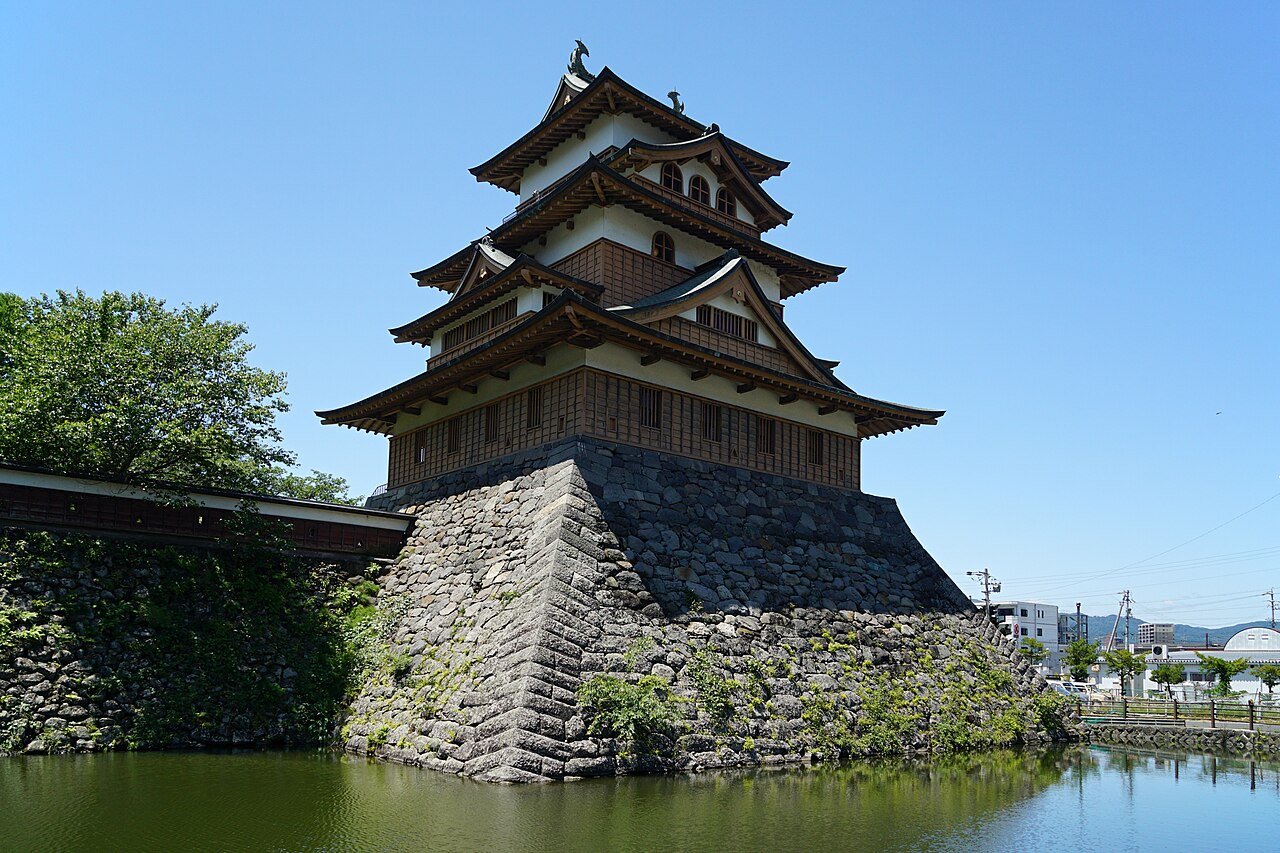
On the sake brewery walk in Suwa, visitors buy a set and walk from brewery to brewery, drinking each brewery's sake. The keep of Takashima Castle holds archive rooms on its first two floors and an observation room on the third. At Suwa Taisha, large onbashira trees stand at the four corners of the shrine buildings, and Suwa's miso tendon is tempura with miso sauce poured over it.
This route suits visitors who want to taste sake brewery by brewery, see inside a castle keep and visit a shrine with no main hall, and it is built around the five breweries that line the national highway in Suwa City.
| Time guide | Place | What you do | Walk or stay |
|---|---|---|---|
| Morning | Shimo-Suwa, Kami-Suwa or Chino | Arrive from Shinjuku Station by limited express Azusa | About two hours thirty-five minutes |
| Morning | Takashima Castle | Keep with archive rooms and an observation room | Twenty to thirty minutes |
| Midday | Restaurants in Suwa | Miso tendon or hand-made soba | Served at several restaurants |
| Afternoon | Five sake breweries | Tasting, brewery by brewery | On foot between breweries |
| Afternoon | Suwa Taisha Kamisha Honmiya | Worship halls and two thatched buildings | About six kilometres from Kami-Suwa Station |
| Evening | Katakura-kan | Standing bath over pebbles | Eight minutes on foot from Kami-Suwa Station |
Takashima Castle Keep, Stone Walls and Gate
The keep at Takashima Castle has archive rooms about the local area on its first two floors and an observation room on its third floor. The first floor explains the history of Suwa and Takashima Castle and has a special exhibition corner. The second floor displays historical materials related to the castle, with explanations of the lord, retainers and domain administration.
A keep of three layers and three storeys was built in the main enclosure, and its roofs were shingled rather than tiled. The castle is laid out with its enclosures in a straight line from the north. Traces of the castle's former appearance remain in the stone walls of the main enclosure and in the castle gate.
When it was completed, the castle was surrounded by lake water and wetland, as if floating in Lake Suwa. Takashima Castle was once a water castle jutting out into Lake Suwa, but the lake was reclaimed in the Edo period and that look was lost. The present keep of Takashima Castle is a restoration, built after the water-castle look had gone.
Suwa Miso Tendon and Hand-Made Soba
Miso tendon, the Shinshu Suwa dish at the centre of a meal on this route, is a bowl of tempura with miso sauce poured over it. Several restaurants in Suwa serve miso tendon, which gives visitors a choice of where to eat the bowl.
Miso goes beyond the bowl as well: one miso, developed jointly with another company, blends herbal plants such as goji berries and ginger. Two miso storehouses were moved from Yamanashi and a former shop building was moved from Kiso, and the buildings are registered tangible cultural properties.
A soba shop set back from the Lake Suwa shore is a calm wooden-built shop in a quiet spot. It makes its noodles by hand from soba flour produced at the foot of the Yatsugatake mountains, using a technique handed down in the family.
Five Sake Breweries on the Suwa Brewery Walk
Visitors buy a set and walk from brewery to brewery, drinking each brewery's sake on the sake brewery walk. The five breweries on the walk are Maihime, Reijin, Honkin, Yokobue and Masumi. The sake rests on high-quality subsoil water from the Kirigamine Plateau, clear air and a cold climate.
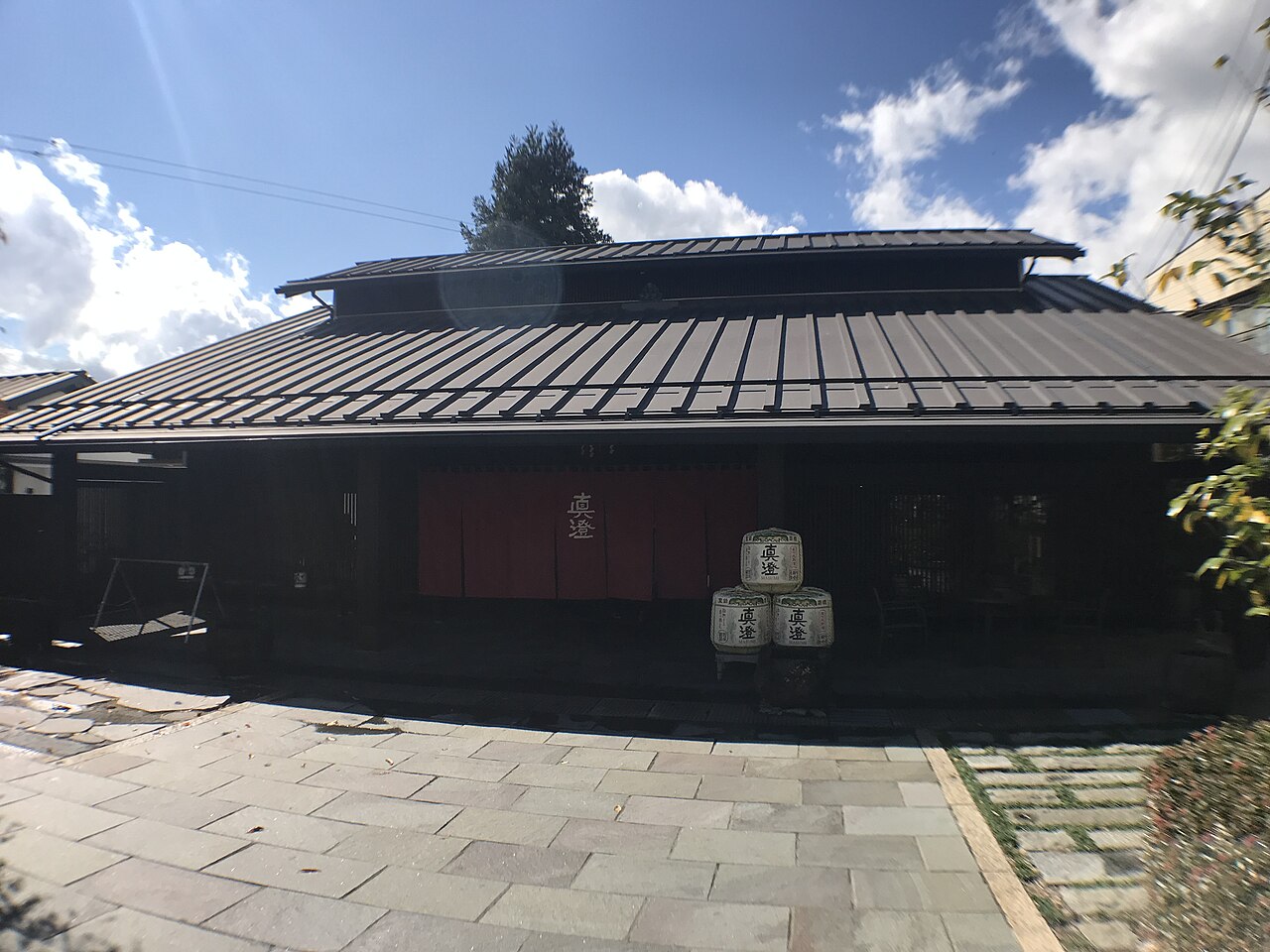
At Reijin, a main pillar from the time of its founding still remains, bearing the inscription of Matsunoo Taisha in Kyoto. A commemorative tray at Maihime is painted in the style of a landscape picture, with Mt. Fuji and a sailboat crossing the lake at its foot. Two Maihime sakes have high acidity, sweetness and umami that suit inari sushi and fried tofu.
Reijin also brews a local beer, using Suwa hot spring water and Kirigamine Plateau subsoil water as brewing water. The brewing water of Masumi's Suwa brewery is subterranean seepage water that originates in the Kirigamine mountain range. A brewery buys rice of clear origin and variety as unpolished brown rice and polishes it at its own rice-polishing plant.
The Suwa toji, the brewers, know the water, air and climate well and carry on traditional skill and spirit. A yeast strain found in fermenting moromi at the Masumi Suwa brewery spread to sake breweries across the country. A brewery turned toward making fine sake to be drunk with meals, which brings out the flavour of the food.
Suwa Taisha Kamisha Honmiya Worship Halls
Visitors who stay in Suwa can get up early to visit the shrine in the clear, crisp air. Suwa Taisha consists of four shrines, and Kamisha Honmiya is one of the two on the south side of Lake Suwa. Kamisha Maemiya stands on the same south side, while Shimosha Harumiya and Shimosha Akimiya stand on the north side.
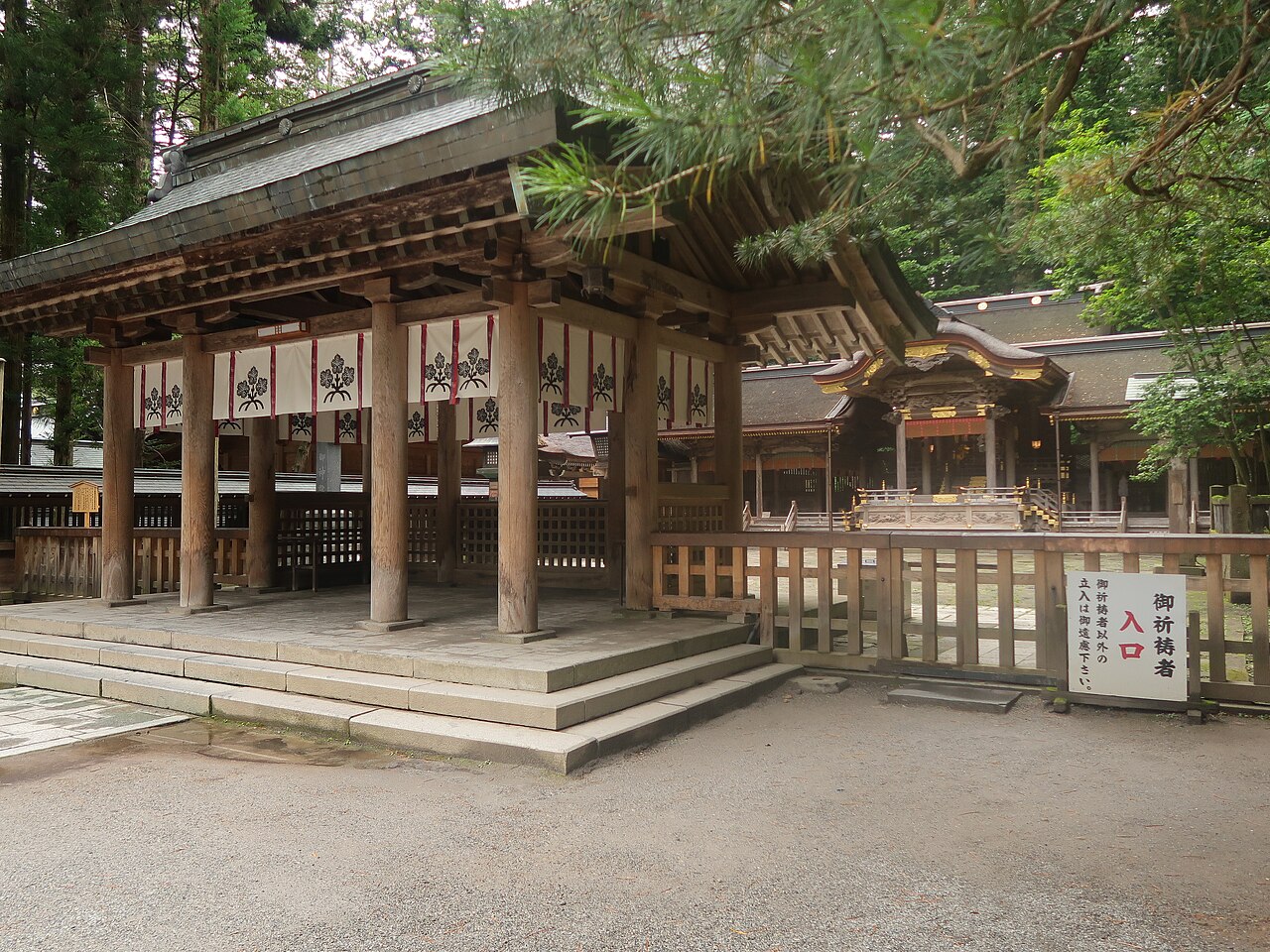
Large trees called onbashira stand at the four corners of the shrine buildings, and the heihaiden and side worship halls line up side by side. There is no main hall, and two thatched buildings stand near the middle of the precinct. Drops of water come down from the roof of the thatched buildings even in dry weather, counted among the Seven Wonders of Suwa.
Beside the hand-washing pavilion runs the stream where people anciently purified body and mind before worship. A hall that houses votive tablets and ema holds what worshippers offered as prayers and thanks. The thatched buildings house the portable shrine of Oshiwasama and correspond to the main hall of an ordinary shrine.
A small shrine just left after the torii gate is said to be the gatekeeper deity of Osuwa-sama. The left building and the right building of the thatched pair are rebuilt alternately at the Onbashira festival. Kamisha Honmiya has the special feature of worshipping the sacred mountain, which draws attention in the study of rituals.
Katakura-kan Standing Bath and Lakeside Foot Baths
Bathers stand in a large bath one point one metres deep at Katakura-kan, and the pebbles on the floor stimulate the soles of the feet. One hundred people can bathe at once in the natural hot spring bath, which is kept as it was in its original period. Katakura-kan was built by the Katakura zaibatsu as a place for local residents' welfare and socializing.
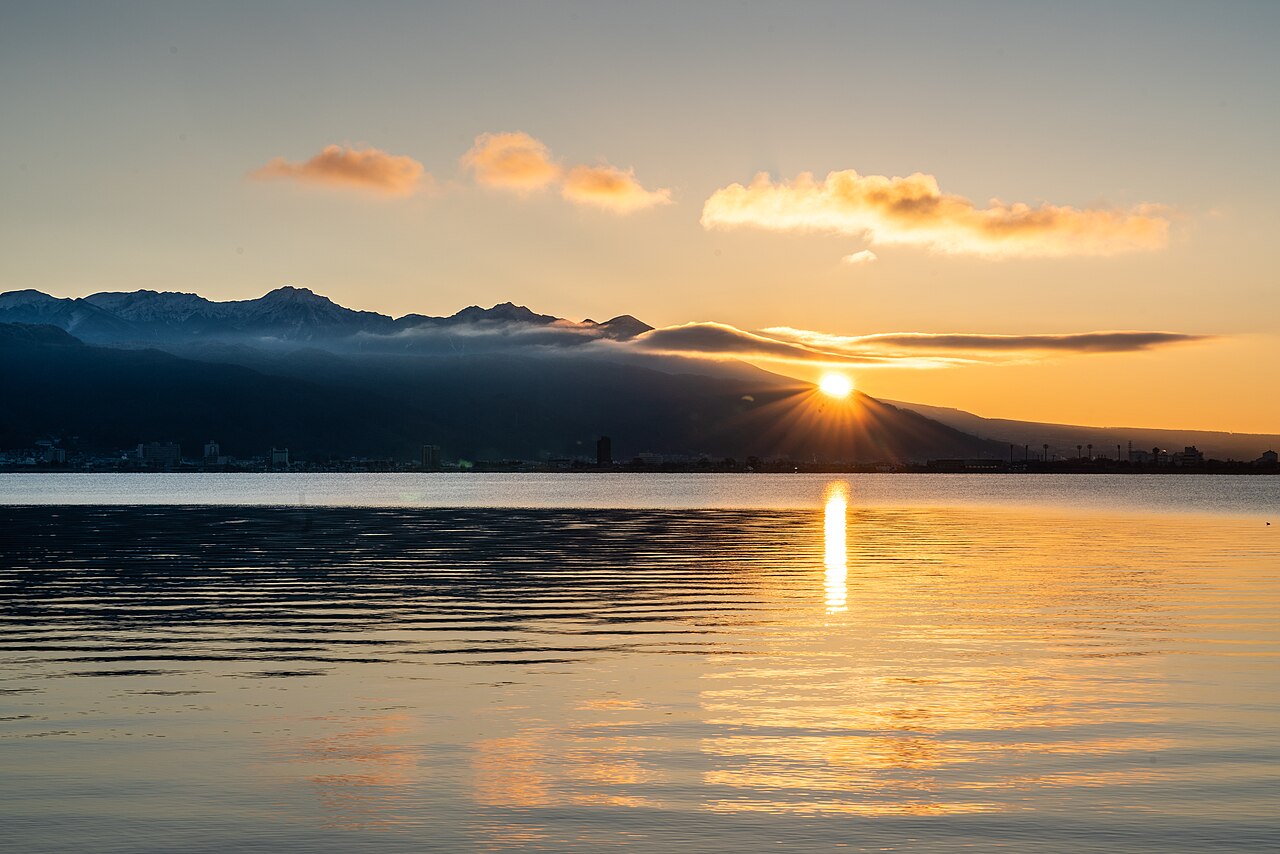
About forty people can sit at once in a wide foot bath beside Lake Suwa. The foot bath draws on the Kamisuwa Onsen Nanatsugama source and is a natural hot spring foot bath. From the foot bath, visitors look at Lake Suwa and the mountains of the northern and southern Alps.
Right next to the foot bath is a path that stimulates the pressure points on the soles of the feet. Another foot bath is attached to a museum near Suwa Taisha, where many people are seen using it after worshipping. Visitors to Suwa can also see naturally gushing hot spring water and the steam that comes with it.
Getting to Suwa
New to rural buses and one-man trains? See how to ride them, step by step.
| Route | Item | Detail |
|---|---|---|
| Shinjuku Station, Chuo Line Azusa | To Shimo-Suwa, Kami-Suwa, Chino | About two hours thirty-five minutes |
| Nagoya Station, Shinano, change at Shiojiri | To Shimo-Suwa, Kami-Suwa, Chino | About two hours forty minutes |
| Nagano Station, Shinano, change at Shiojiri | To Shimo-Suwa, Kami-Suwa, Chino | About one hour ten minutes |
| Shin-Osaka Station, Nozomi, change at Nagoya | To Shimo-Suwa, Kami-Suwa, Chino | About three hours ten minutes |
| Kami-Suwa Station | To Katakura-kan | Eight minutes on foot |
| Kami-Suwa Station | To Kamisha Honmiya | About six kilometres southeast |
| Car from Shinjuku, Chuo Expressway | To Okaya IC or Suwa IC | About two hours thirty minutes |
| Car from Nagoya, Chuo Expressway | To Okaya IC or Suwa IC | About two hours forty minutes |
| Car from Osaka, Meishin Expressway | To Okaya IC or Suwa IC | About four hours ten minutes |
For an overnight stay in the neighbouring city of Okaya, browse places to stay in Okaya.
Hours and Fees
| Place | Item | Time or fee |
|---|---|---|
| Takashima Castle | Hours | Nine hundred to seventeen thirty |
| Takashima Castle | Closing, October to March | Sixteen thirty |
| Takashima Castle | Adult admission | Three hundred ten yen |
| Takashima Castle | Closed, December | Twenty-sixth to thirty-first |
| Takashima Castle | Closed, November | Second Thursday |
| Maihime | Hours | Nine thirty to seventeen hundred |
| Reijin | Hours | Nine hundred to seventeen hundred |
| Reijin | Closed | Sundays |
| Honkin | Hours, weekdays | Nine hundred to seventeen hundred |
| Honkin | Hours, Saturdays and holidays | Ten hundred to seventeen hundred |
| Honkin | Closed | Sundays |
| Yokobue | Hours, weekdays | Eight thirty to seventeen hundred |
| Yokobue | Hours, Saturdays and holidays | Ten hundred to seventeen hundred |
| Masumi | Hours | Ten hundred to seventeen hundred |
| Masumi | Closed | Wednesdays |
| Kamisha Honmiya amulet office | Hours | Eight thirty to seventeen hundred |
| Kamisha Honmiya treasure hall | Hours | Nine hundred to sixteen hundred |
| Kamisha Honmiya treasure hall | Adult admission | Five hundred yen |
| Kamisha Honmiya treasure hall | Combined ticket, adult | Eight hundred yen |
| Katakura-kan | Hours | Ten hundred to twenty hundred |
| Katakura-kan | Bath admission until | Nineteen thirty |
| Katakura-kan | Closed | Second and fourth Tuesdays |
Fees and hours were checked against official sources on 15 November 2026.
Thinking of staying overnight?
Compare places to stay near Okaya →
Disclosure: This post may contain affiliate links. If you book through them, we may earn a commission at no extra cost to you.