The Shioda plain including Bessho came to be called the Kamakura of Shinshu, having flourished under the Hojo clan. Many historic buildings, including national treasures and important cultural properties, can be visited on foot from the hot spring town. The spring is said to date back fourteen hundred years, discovered during Yamato Takeru's eastern expedition in Emperor Keiko's era.
Kitamuki Kannon: the Temple That Faces North
The Kitamuki Kannon hall has its main hall built facing north, which is rarely seen; it faces Zenko-ji in Nagano City, which faces south, hence the name. Visiting only one of Kitamuki Kannon and Zenko-ji is said to be a one-sided visit; visiting both is called a double pilgrimage.
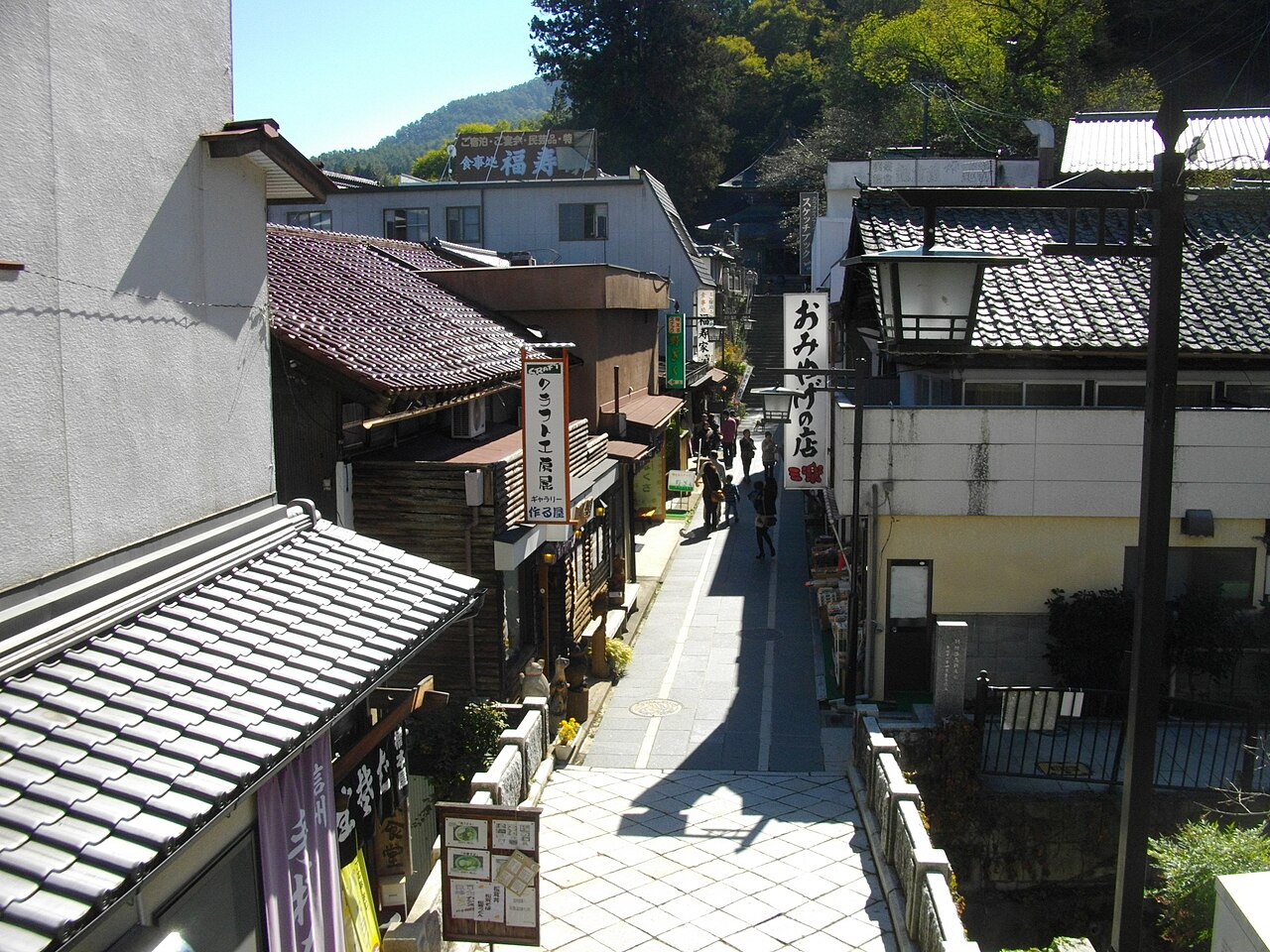
A retro-style approach street in town is lined with souvenir shops, cafés and soba restaurants. Inside the Aizen hall, the enshrined deity has long been worshipped as one governing love, matchmaking and family harmony. In the precinct grows the Aizen katsura, twelve hundred years old and said to be a sacred tree where a Kannon appeared.
Young people know the Aizen katsura as a sacred tree of matchmaking. It buds from the end of March to the beginning of April. In the goma ritual, offerings go into a fire burnt before the Buddha, with prayers to remove misfortune, increase happiness and subdue evil. A prayer service of sutra chanting in the main hall alone is offered.
Anrakuji's Pagoda, Jorakuji and the Goshuin Stamps
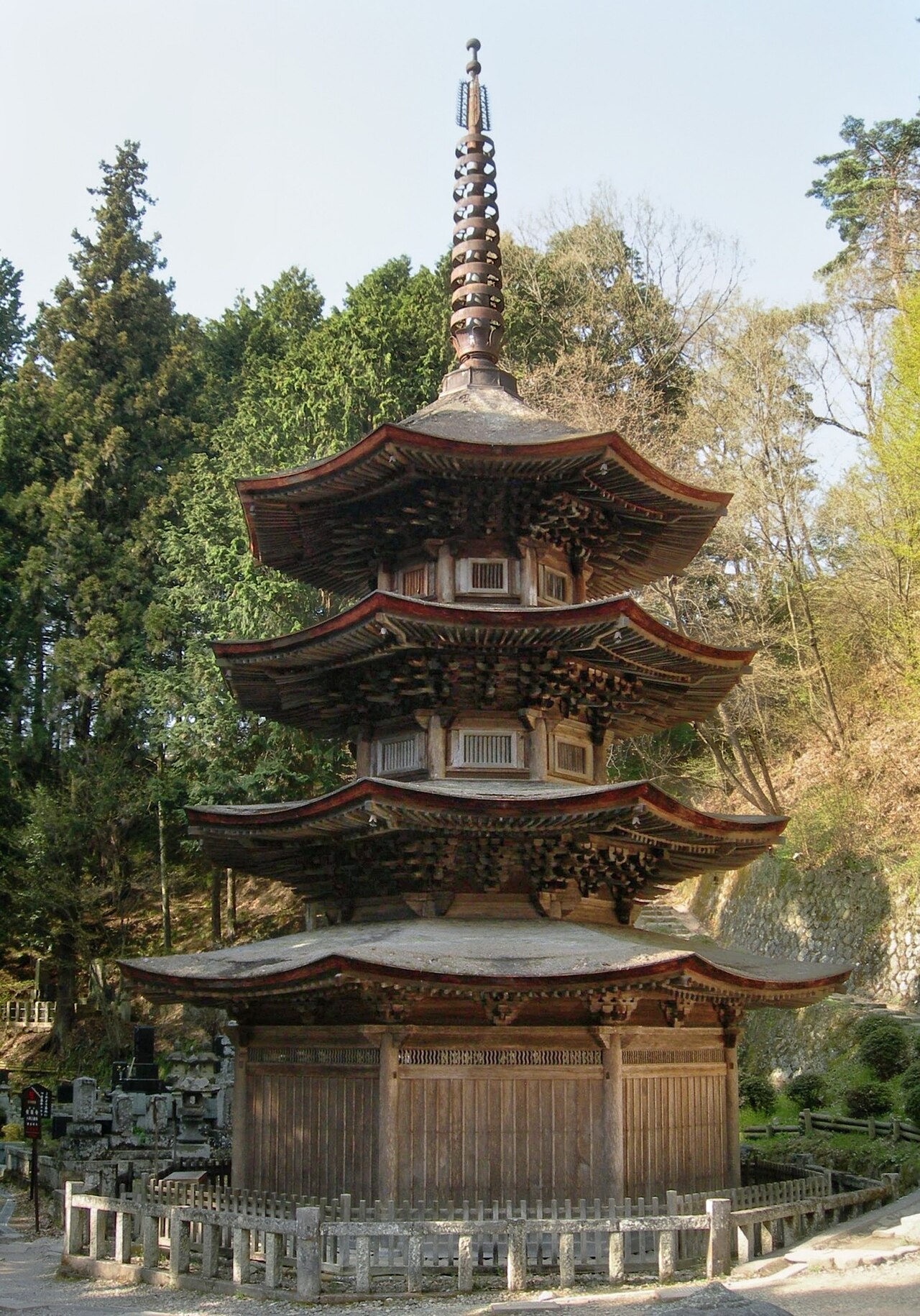
Anrakuji's octagonal three-storied pagoda dates from the Kamakura period and carries the designation of national treasure. In the same era, troops sent by Kiso Yoshinaka burned Bessho's temple buildings, yet the Daihiden and this octagonal pagoda escaped the fire. The burned temples were built anew by Minamoto no Yoritomo and afterwards by the Hojo clan.
A pond on the approach to Anrakuji is the main spot for photographing lotus flowers. Zazen at Anrakuji runs from six to seven in the morning, with applications to Anrakuji due five days ahead. Within Bessho Onsen, Anrakuji, Kitamuki Kannon and Oyu are the three pilgrimage stops.
Jorakuji's grounds hold a stone Tahoto pagoda, a national important cultural property, and the Mifune pine, three hundred and fifty years old and one of the Bessho five trees. Goshuin stamps come from three places on a stroll through Bessho Onsen, Kitamuki Kannon, Anrakuji and Jorakuji, and goshuin books are sold at the temples and shrines.
The Soft Spring Water and the Public Baths
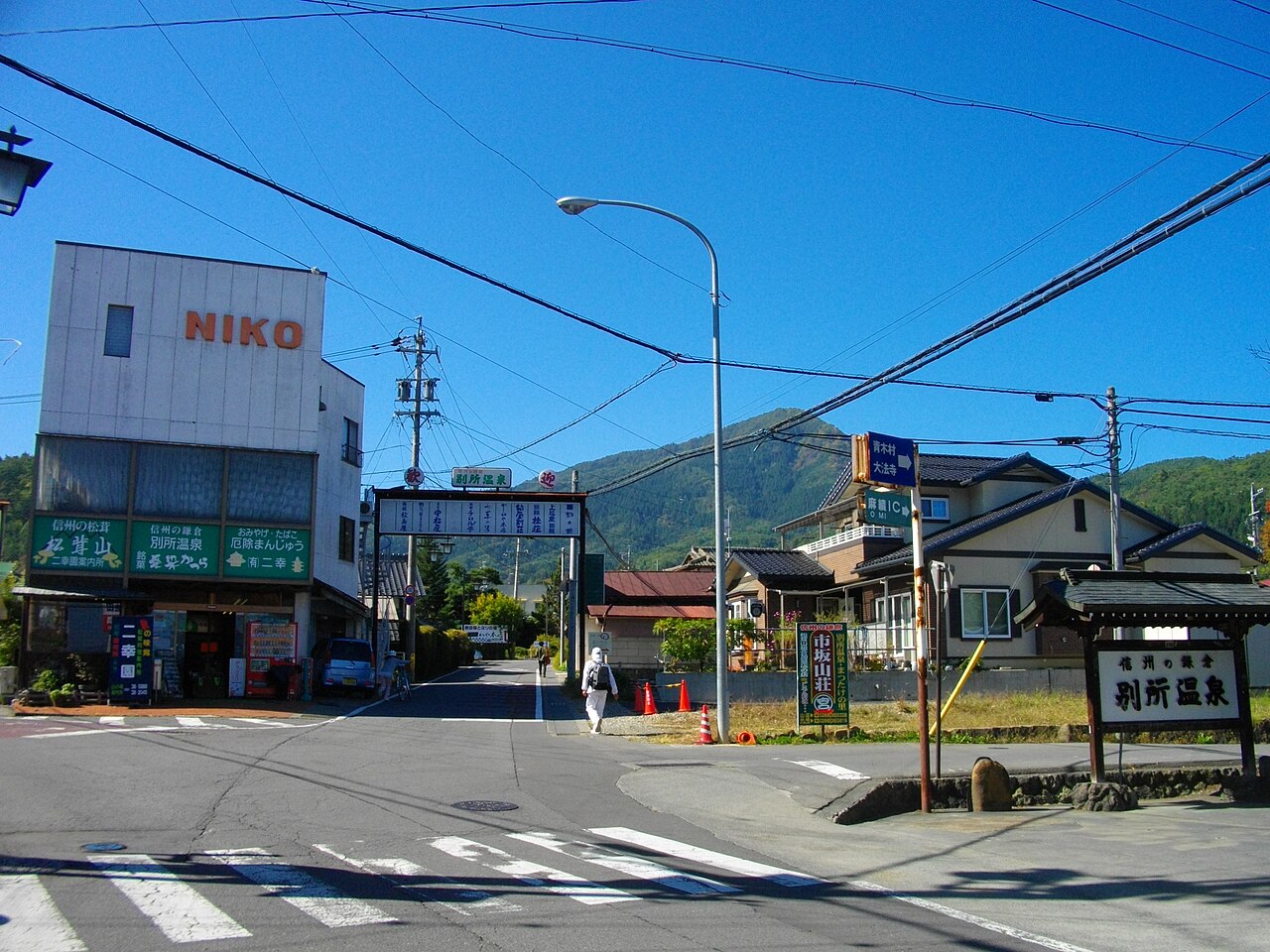
The spring water is very soft in quality, a weakly alkaline simple sulphide spring. Three dragon-shaped drinking fountain towers stand in Bessho Onsen, and you can drink the spring water from them freely and taste it for yourself. Bessho Onsen has three public baths and two foot baths.
Aisome-no-yu offers indoor baths, an outdoor bath and a bedrock sauna room, with floors and walls of hinoki cypress. Up a side road beside Oyu, a Yakushi hall enshrines Yakushi Nyorai as its principal image, the twelve divine generals, the mortuary tablets of successive head priests and statues of the founders.
Bessho Onsen was known as a spa along the Tosando, where officials, merchants, border guards and travellers rested from the fatigue of travel, and its source appears in records from the Heian period onward.
Food and the Seasons in Bessho Onsen
In horse-meat udon, the meat is simmered by a special method until it turns soft, and the broth is richly flavoured and tastes like sukiyaki. Nagano-grown soba has a strong aroma. Ueda has five sake breweries, and each inn stocks local sake to match dishes made with Shinshu ingredients.
In autumn, specialty matsutake shops are set up mainly around the Shioda plain, and local matsutake can be eaten at inns and at these shops. Nagano Purple grapes are seedless with thin skin, so you can eat them skin and all. The main spot for photographing cosmos flowers lies below Bessho Onsen Station.
The seasons around Bessho Onsen each have their own ingredients: mountain vegetables in spring; sweetfish and summer vegetables in summer; matsutake and other mushrooms, Kyoho grapes, apples and chestnuts in autumn; new-crop soba, nozawana greens, spicy radish and Shinshu beef in winter. The Take no Nobori rain-prayer festival takes place on the Sunday nearest July fifteenth.
The Shioda Plain: a Ley Line and Old Temples
The Shioda plain story was selected as a Japan Heritage story. A ley line, a straight line drawn by the summer solstice sunrise and the winter solstice sunset, links its sites.
At one shrine the summer solstice sunrise comes through the centre of the east torii gate, and at the winter solstice the sun sets into the centre of the west torii gate. A temple's three-storied pagoda, in the Muromachi style, is said to have been rebuilt on the order of Minamoto no Yoritomo.
A rounded thatched-roof Yakushi hall is presumed to have been built about eight hundred years ago. A temple on the plain is said to have been founded by Kobo Daishi Kukai as a sacred site for goma practice. The Shioda castle site began when Hojo Yoshimasa, a senior retainer of the Kamakura shogunate, settled and built a residence.
Getting to Bessho Onsen
New to rural buses and one-man trains? See how to ride them, step by step.
| Leg | How | Time |
|---|---|---|
| Tokyo Station to Ueda Station | Hokuriku Shinkansen | About 1 hour 30 minutes |
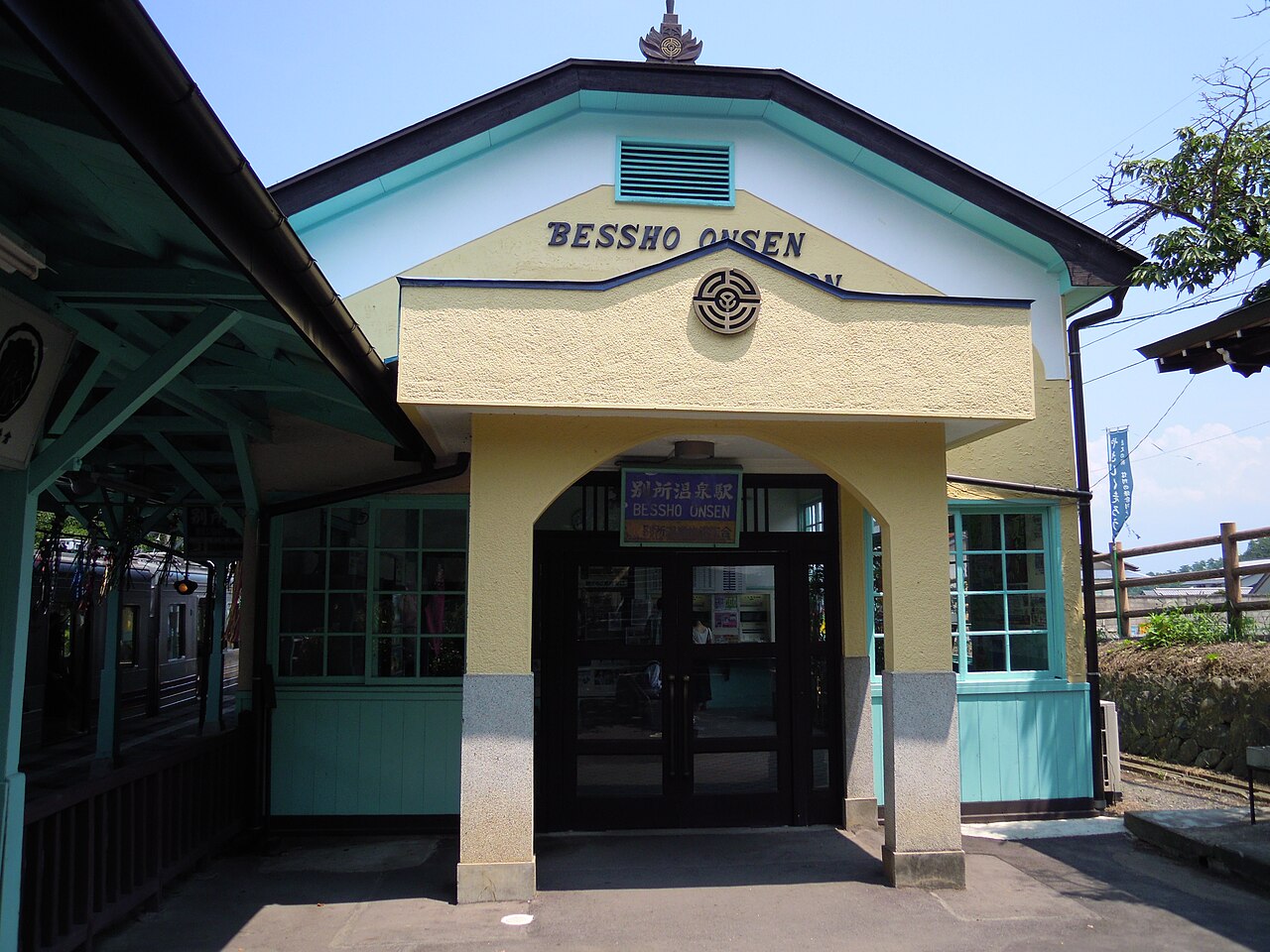
| Ueda Station to Bessho Onsen Station | Ueda Electric Railway Bessho Line | About 30 minutes |
| Bessho Onsen Station to Anrakuji | On foot | About 10 minutes |
| Bessho Onsen Station to the hot spring town | Shuttle bus (free; no booking needed) | Timed to train arrivals, 14:00–18:00, on Saturdays, Sundays, days before holidays and in October and November |
| Bessho Line and Ueda city buses | QR code payment | Held over the reader when boarding and when getting off; no numbered ticket |
| Bessho Line and Ueda city buses | Cash | If the QR code cannot be displayed |
| Bessho Line | One-day free ticket, unlimited rides | 1,180 yen adult, 600 yen child |
Riders hold the QR code over the reader when boarding and when getting off, and pay in cash if the code cannot be displayed.
Hours and Fees
| What | Hours or fare | Note |
|---|---|---|
| Anrakuji admission | 300 yen adult; 100 yen elementary and junior high school | |
| Anrakuji (March to October) | 8:00–17:00 | Last entry 16:45 |
| Anrakuji (November to February) | 8:00–16:00 | Last entry 15:45 |
| Kitamuki Kannon hall (May to September) | 7:00–17:00 | |
| Kitamuki Kannon hall (November to March) | 7:00–16:00 | |
| Jorakuji opening and goshuin reception | 9:00–16:00 | Year-round |
| Jorakuji entrance fee | 100 yen | |
| Oyu (public bath) | 6:30–21:30 | Last entry 21:00; closed Wednesdays |
| Ishi-yu (public bath) | 6:30–21:30 | Last entry 21:00; closed Tuesdays |
| Daishi-yu (public bath) | 6:00–21:00 | Last entry 20:30; closed Thursdays |
| Public baths bathing fee | 300 yen each | Foot baths free |
| Zazen at Anrakuji | 500 yen per person |
Fees and hours were checked against official sources between 13 October 2026 and 8 November 2026.
Anrakuji's entry times shift with the season, and each public bath is closed on a different weekday.
If you would like more time in town, browse places to stay in Bessho Onsen.
Thinking of staying overnight?
Compare places to stay near Bessho Onsen, Ueda, Nagano →
Disclosure: This post may contain affiliate links. If you book through them, we may earn a commission at no extra cost to you.