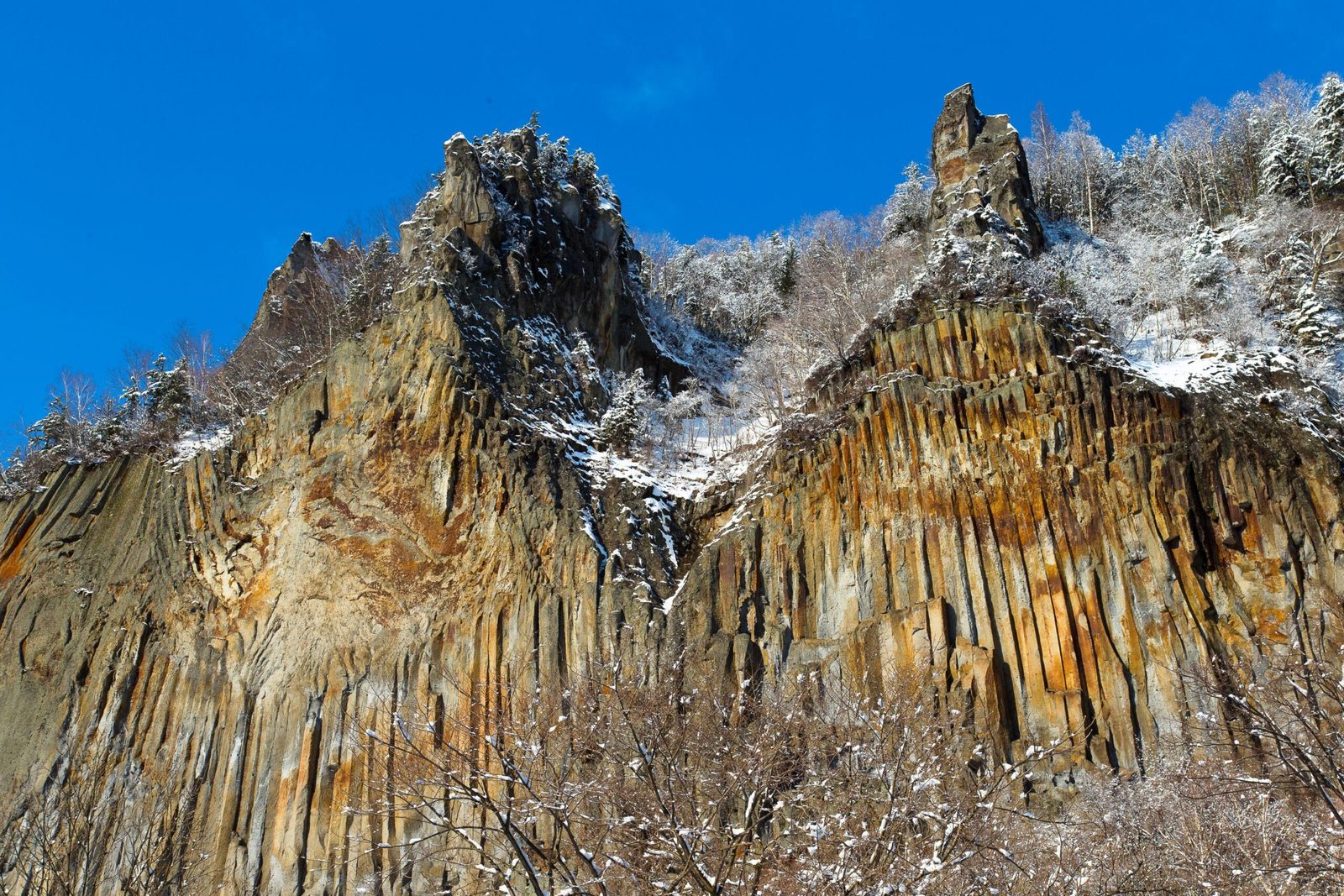
At Sounkyo Gorge, Ginga Falls comes down as a delicate stream like thread and Ryusei Falls as a single thick waterfall, and a viewing platform shows the pair at once. The inn baths let bathers listen to the murmur of the canyon stream, catch a faint sulfur scent and look out at snowy winter scenery. Winter adds an ice tunnel hung with icicles, an ice shrine and the Kurodake Ropeway.
Looking at the Columnar Cliffs and the Twin Waterfalls of Sounkyo Gorge
For a view of Ginga Falls and Ryusei Falls together, head for the twin-waterfall viewing platform, where they flow down on the left and right of a rock pillar.
Looking at the pair before the climb shows how differently they behave. Ginga Falls comes down as a thin, delicate stream like white thread, while Ryusei Falls drops as a single thick waterfall. The rock wall of the gorge continues along the Ishikari River.
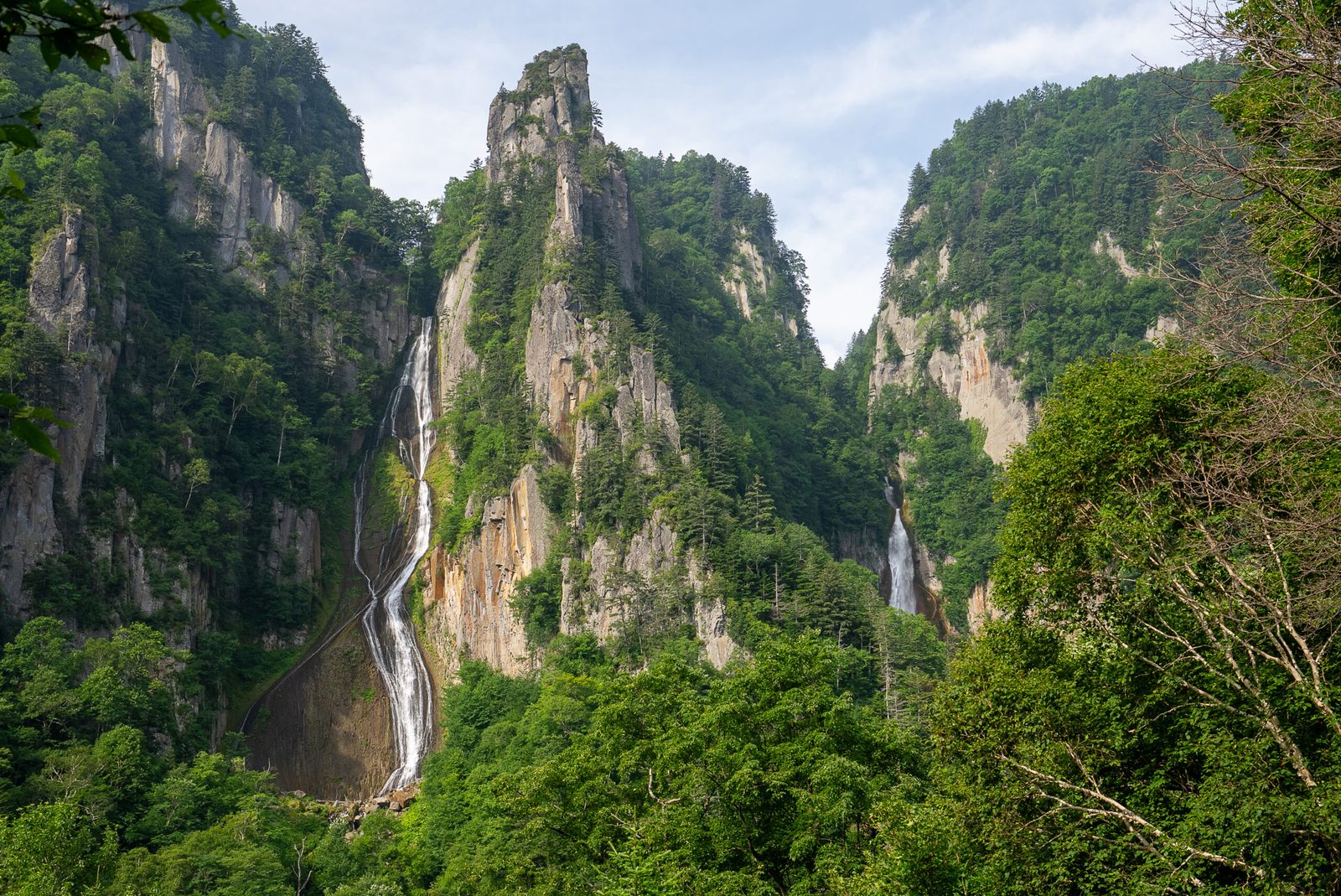
Climbing the slope with the waterfalls behind brings walkers to the twin-waterfall viewing platform. From there, both waterfalls can be seen at the same time. They flow down on the left and right of a rock pillar.
Stepping into the visitor center gives a look at the seasons of Daisetsuzan through video and dioramas. The Momijidani trail is listed for June to early November, so it belongs to the green season. A bell tower observation deck is listed among the sights, and its bells ring at set intervals each day.
Soaking in Sounkyo Hot Spring Inn Baths: Sulfur Scent, Stream Sounds and Snow Views
Choosing a bath at Asahi Resort Hotel comes down to spring type: a sulfur spring that calls for a shower afterwards, or a sodium bicarbonate spring described as having a cleansing texture.
Soaking in either spring comes with a faint sulfur scent. The sulfur spring is listed with a weak hydrogen sulfide odor, and the other with a very weak one. A shower after the sulfur spring is recommended, because that water is strongly stimulating. After the sodium bicarbonate spring, measures against dryness are advised.
Stepping into the hotel's large baths brings another choice, between the wood-themed bath and the rock-themed bath. Saunas are provided in both, and bird calls may be heard at the wood-themed open-air bath. Yu-no-hana, formed when spring components crystallize as the water cools, sticks to or floats in the bath.
Listening to the murmur of the canyon stream is part of bathing at Hotel Taisetsu. The Chinita no Yu bath has a brick-style and stained-glass design. The observation large bath has a sauna built in, and its open-air bath has deck chairs for taking outside air.
Looking out from the open-air bath at the inn with the Marumo large bath, visitors see deep green in summer, colorful leaves in autumn and snowy scenery in winter. Water is added there because the source spring is high in temperature. Kurodake-no-Yu, a day-use bath, adds a sauna and a cold plunge to its large baths and open-air bath.
Riding the Kurodake Ropeway and Lift into the Winter Mountain
Without skis or a snowboard, plan on the Kurodake Ropeway to the fifth station as the top of a winter visit, because the winter lift takes riders carrying gliding equipment and no one else.
Riding the Kurodake Ropeway takes visitors from the hot spring town up to the Kurodake fifth station. Riders can then transfer to the Kurodake Lift and go up to the seventh station. The ropeway is listed as suspended for maintenance until December. A special early-morning run for the New Year sunrise is scheduled for New Year's Day.
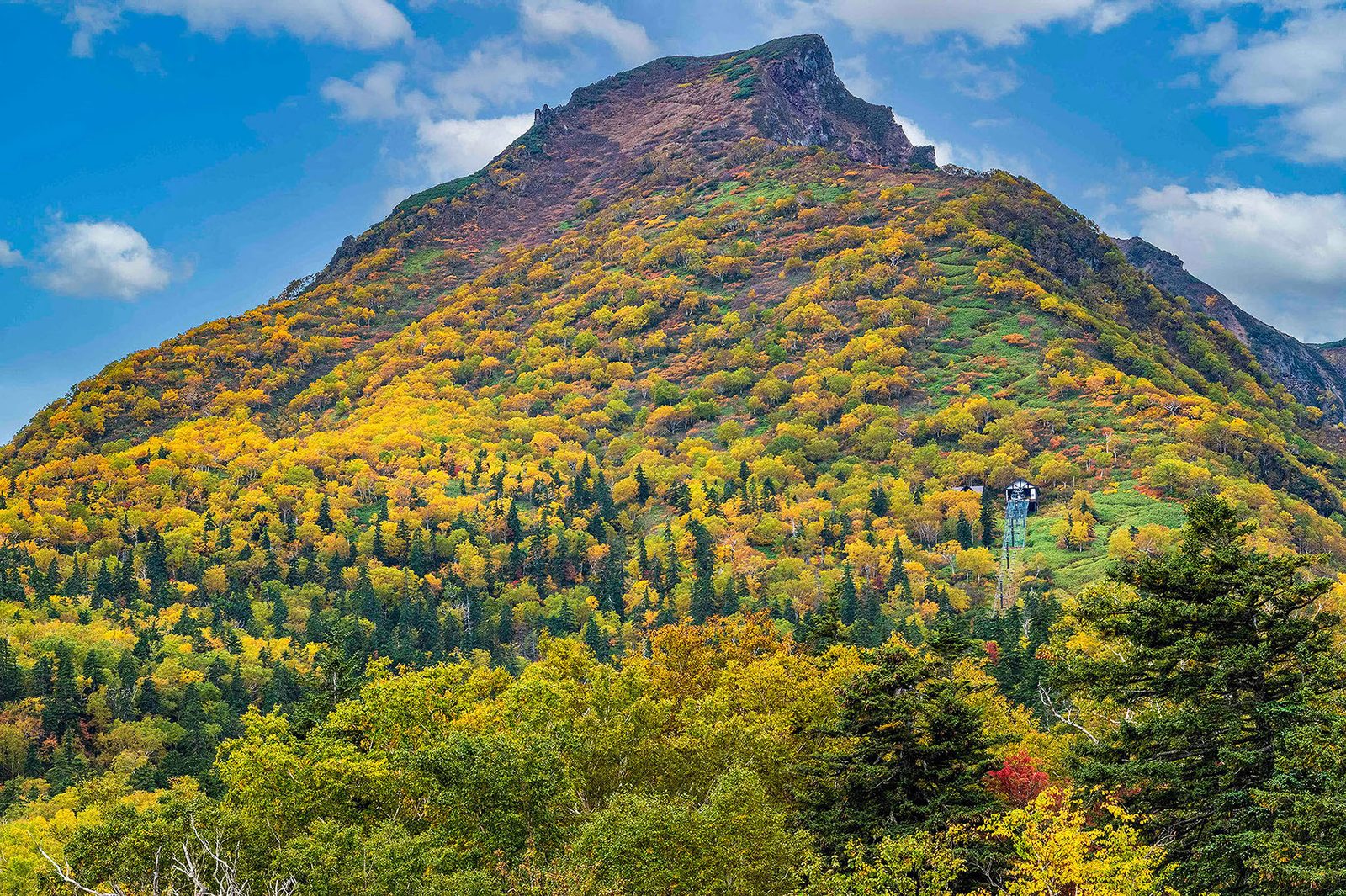
Boarding the winter lift is reserved for people carrying skis, snowboards or similar gliding equipment, and the descending line cannot be boarded. The ski area day pass is a set of a ropeway round trip and a day on the lift. The season is scheduled to start in early December, depending on snow conditions, and runs until around Golden Week.
Joining the Kurodake snowshoe hiking tour starts at the ropeway's base counter, where the long course and the short course both meet in the morning. The tour is listed for a set period in the deep winter months. The long course is for middle school age and over, and the short course takes less time.
Walking Through the Ice Festival Venue at the Gorge
The venue suits visitors who want to walk under icicles in an ice tunnel, leave a coin at the ice shrine and drink sake in an ice room.
Walking into the ice tunnel at The White Core Daisetsu, visitors look up to see icicles of various sizes. Next comes the ice shrine, marked by a torii gate. There, visitors place offering coins onto the ice spirit.
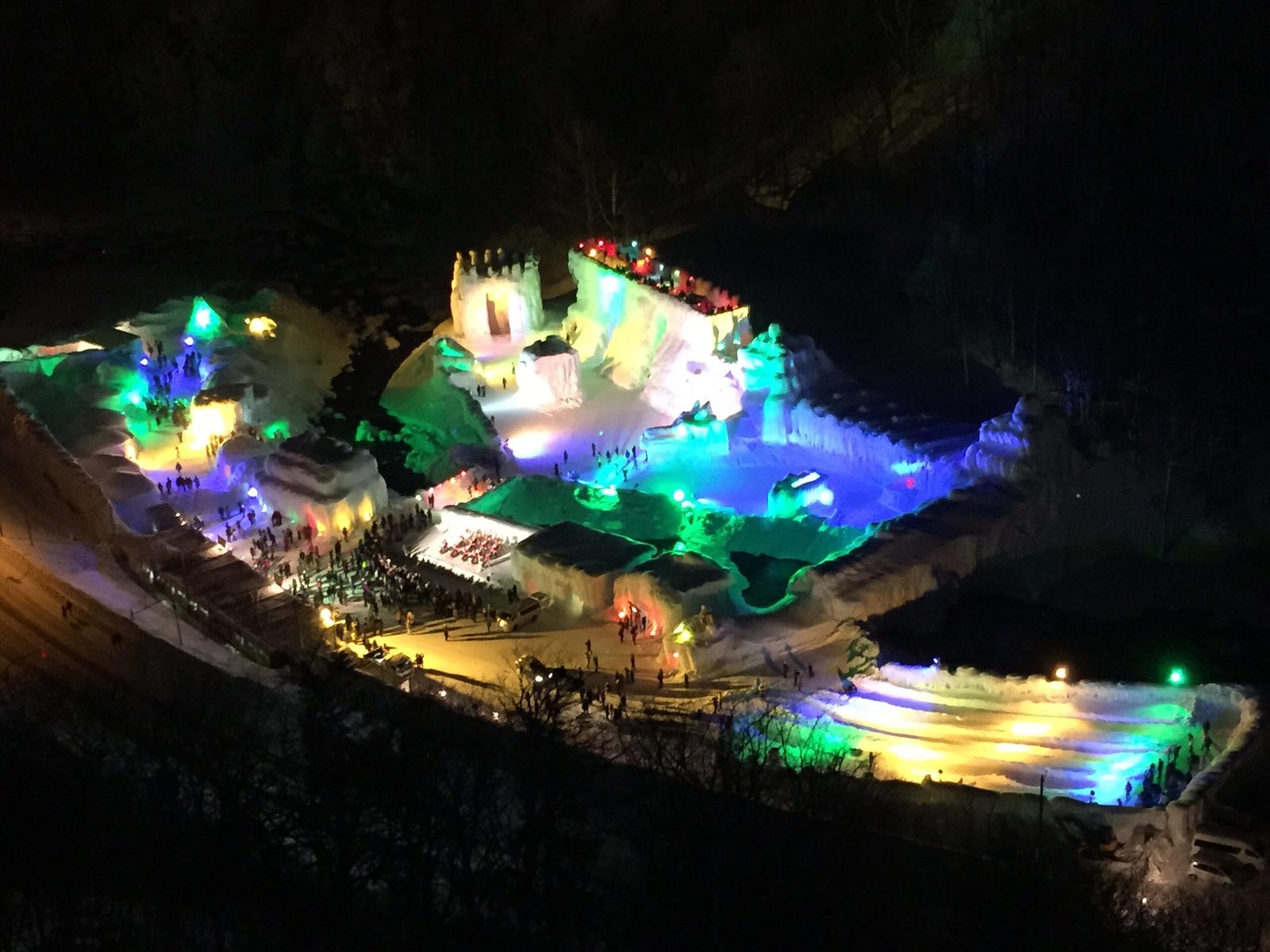
Watching the stage, which is made of snow, visitors see local drum performances and Ainu dance. The countdown to the fireworks launch is held from that stage too. In a room made of ice, sake from a local brewery can be drunk.
Renting a tube slider is done at the office next to the rest house. The venue is very cold, and warm clothes are advised. Gloves are sold at the rest area inside the venue.
Eating Ramen, Dal Bhat and Cafe Sweets in Sounkyo
Ramen at Tozanken or Taisetsuzan Shokudo is the pick for a bowl built on a simmered soup, dal bhat for a set meal of rice and bean soup, and Taisetsu Bakery Café & Bar for a seat in a wood-framed room.
Eating ramen starts with a choice of shop. The Sounkyo branch of Tozanken serves orthodox Asahikawa ramen with a double soup of pork bone and chicken bone. Taisetsuzan Shokudo simmers its soup over high heat for many hours. Its noodles have a low water content and are kneaded with subterranean water from Taisetsuzan.
Ordering dal bhat brings a Nepalese home-style set meal to the table. Rice, the bhat, is the staple, and the side dishes center on a bean soup, the dal. The dal is made by simmering lentils and chickpeas, and the bhat uses aromatic basmati rice.
Sitting down at Taisetsu Bakery Café & Bar, inside a hotel, puts visitors in a room built with wooden frames. Daytime sun shines in, and at night the interior is lit by warm bracket light. A bookshelf is provided at the back. Coffee is also served at BLACK MOUNTAIN COFFEE by Columbia in the Kurodake Ropeway base building.
Tasting sake lees is possible at the Midorigaoka cafe in Asahigaoka. It offers light meals made with them and gelato made with Kamikawa town milk. The Ryusei-Ginga Falls rest house offers souvenirs, soft serve ice cream and seasonal fruit.
Getting to Sounkyo Gorge, Ropeway Hours and Ice Festival Hours
New to rural buses and one-man trains? See how to ride them, step by step.
Rooms in the gorge's hot spring town are listed in places to stay in Sounkyo. The visitor center is closed on Mondays in winter.
| Item | Details (as listed) |
|---|---|
| By car from Sapporo | about two and a half hours by expressway to the Kamikawa-Sounkyo exit, then National Route thirty-nine; two hundred five kilometers in all |
| Train and bus | limited express to Asahikawa one hour twenty-five minutes; onward to Kamikawa forty-five minutes; Dohoku Bus from Kamikawa about thirty minutes |
| By air | Tokyo to Asahikawa about ninety-five minutes; Dohoku Bus from Asahikawa to Sounkyo about one hundred ten minutes |
| Kurodake Ropeway | seven minutes one way, every twenty minutes; eight to sixteen through December; maintenance break to November thirtieth; adults three thousand yen round trip |
| Winter lift and ski area | ski area scheduled from December first, depending on snow; adult one-day ticket five thousand two hundred yen; lift reserved for riders carrying skis or snowboards |
| Ice festival venue | weekdays five to nine-thirty in the evening, weekends and holidays eleven to nine-thirty; last entry nine-fifteen; one thousand yen cooperation fee |
| Kurodake-no-Yu day-use bath | eleven to nine-thirty, November first to April thirtieth; eight hundred yen for adults; two large baths, open-air bath, sauna |
Thinking of staying overnight?
Compare places to stay near Sounkyo, Kamikawa, Hokkaido, Japan →
Disclosure: This post may contain affiliate links. If you book through them, we may earn a commission at no extra cost to you.