This guide is built from a pre-war Japanese handbook to the hot springs of Izu, read alongside current information published by the Hako-yu bathhouse, the Niji-no-Sato park and the Izuhakone Railway.
Shuzenji has long been recommended as a place to sit out the seasons. The pre-war handbook praised a climate that stayed mild through the year: summers that never turned oppressive, winters that seldom turned bitter, little rain and few sudden changes in the weather. That reputation is a good reason to give the valley a whole, unhurried day.
This guide keeps to what can be planned before you leave: the train from Mishima, where the hot water comes from, what a public bath costs, and the admission and hours of the Niji-no-Sato park. The prices and times below come from the operators' own published information, so the day can be shaped on the spot.
Where the valley sits
Shuzenji Onsen lies close to the middle of the Izu peninsula, in what was then the village of Shuzenji in Tagata district. Mountains close it in to the north and south, and the ground opens only a little to the east and west, so the town is really a valley with the Katsura River running down its centre.
The Katsura is a tributary. The larger river is the Kano, the biggest in Izu, which rises on Mount Amagi and flows north, gathering the Omi and the Katsura on the way before it reaches the sea at Numazu. Knowing that helps with orientation: the water beside you is on its way north to the coast.
In the handbook's day the Sunzu Railway ended at Ohito, and the baths were a further journey to the south-west. That is no longer so: the line now runs through to a terminus at Shuzenji Station, which is what makes a day trip from Mishima realistic.
Getting there from Mishima
Whichever way you reach Mishima, the last leg is the same. Transfer there to the Izuhakone Railway's Sunzu Line and ride it to the end: Shuzenji is the terminus, so there is no stop to watch for. The operator describes the run as about thirty minutes. The more exact figure it also gives is thirty-two minutes.
That half hour is the only fixed piece of transport in this plan. Everything after the station, the bath, the river and the park, can be taken in whatever order the weather suggests. Arriving by late morning leaves room for all three in daylight, with the park's closing time as the one clock to watch.
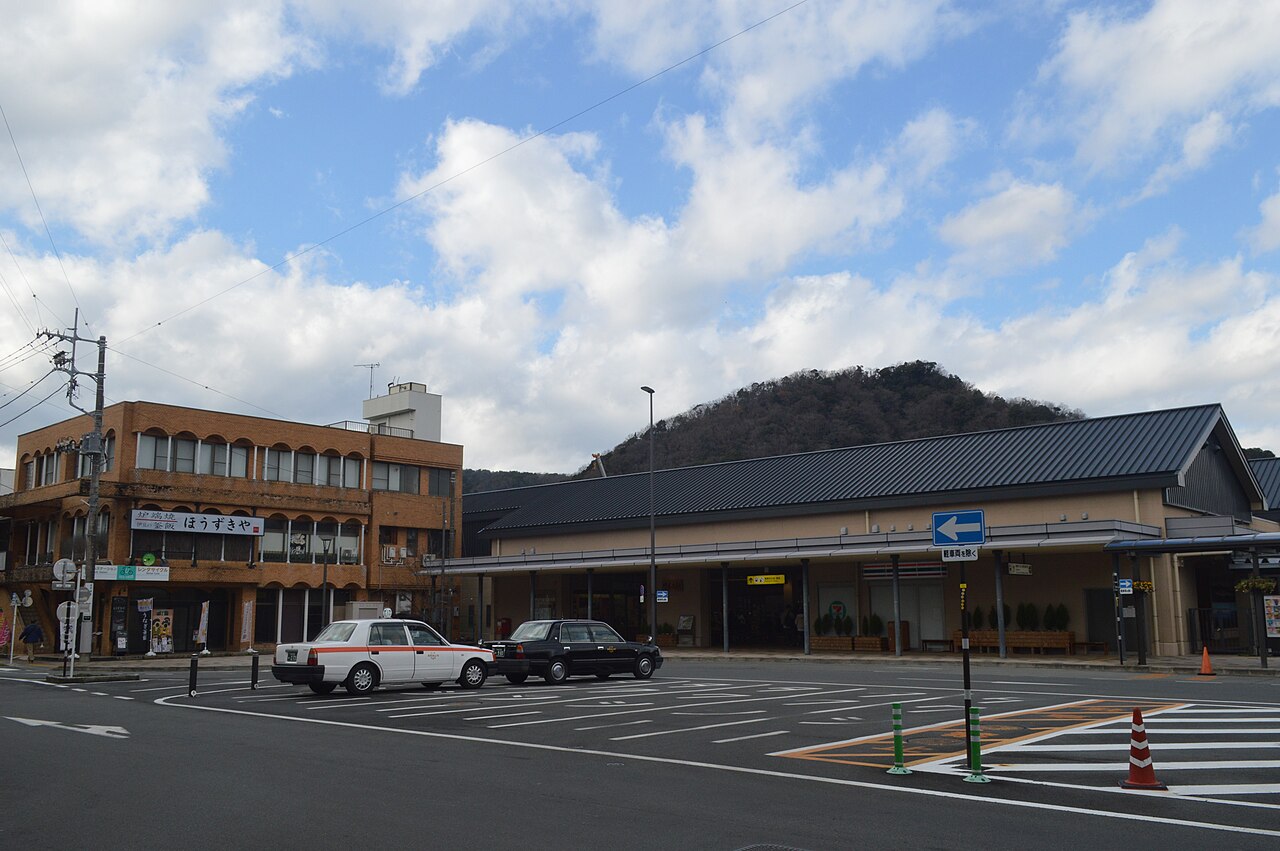
The station building is low and dark-roofed, with wooded slopes rising immediately behind it, and taxis wait in the forecourt. If you would rather hand the connections to someone else, a small number of guided tours start in the area; see day tours around Shuzenji for what is currently running.
Where to stay
Places to stay near Shuzenji →
Disclosure: This post may contain affiliate links. If you book through them, we may earn a commission at no extra cost to you.
The water in the riverbed
What makes Shuzenji unusual is where the water comes up: not from a hillside but from the bed of the Katsura River itself. The water was known as clear, colourless, tasteless and odourless, a weakly alkaline salt spring, and some of the town's shared baths ran hot enough to be remarked on.
The bath that stood for the whole town was Tokko-no-yu, a tub cut straight into the rock of the riverbed. Scattered through the town were other shared baths with plain names: Ma-yu, Kawara-yu, Hako-yu, Ishi-yu, Sugi-no-yu. That was the pattern then: a spread of public tubs rather than one big bathhouse, with the river as the common source.
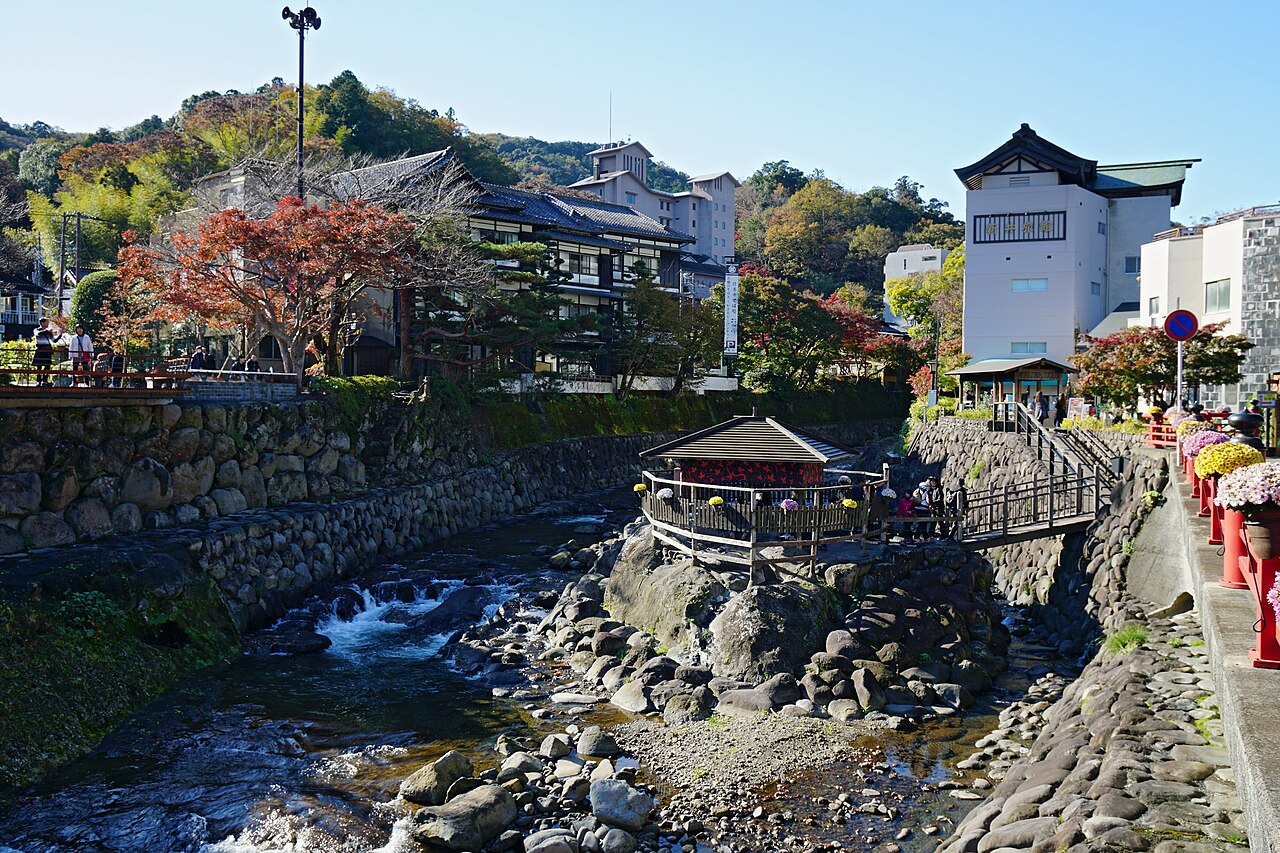
Whatever the baths' present arrangements, the riverbed itself rewards a slow look. Stone embankments hold both banks, wooden inns and trees in autumn colour stand over the water, and a small roofed pavilion sits on a rock in the shallows. Walk the river first; it is the spine of the town and the easiest way to learn its shape.
Hako-yu, and what a bath costs
Of the old names, Hako-yu is the one this guide can price, because the bathhouse publishes its fees. An adult ticket, which means anyone of junior-high age or older, is seven hundred yen. A child of elementary-school age pays four hundred yen. Those two figures cover most day visitors, and they are the ones to budget for.
Two reduced rates exist, both three hundred and fifty yen. One is for people who live or work in Izu City, from elementary age up, with proof. The other is for guests of an inn belonging to the Shuzenji Onsen Ryokan Cooperative or the Shuzenji branch of the Izu City Tourism Association, and only while they are staying.
That second discount is the practical argument for staying the night rather than going back to Mishima. It halves the bath price, and it gives you the river in the evening and again in the morning. Ask the inn whether it belongs to the cooperative before you book; places to stay in Shuzenji is where to start.
Niji-no-Sato, and when the valley fills up
Shuzenji Niji-no-Sato is the second place in this guide with a published price list, and it is where an afternoon can go. Adult admission, again from junior-high age, is one thousand two hundred and twenty yen including tax. Children from four years old up to elementary age pay six hundred and ten yen, also including tax.
The hours move with the season. From March through September the park is open from ten in the morning until five in the afternoon. From October through February it closes an hour earlier, at four. In winter that makes the park the thing to fix first. Hours and fees can change, so check official information before visiting.
The valley was never empty. The pre-war handbook counted more than one hundred and fifty thousand bathers a year and noted the figure rising year on year. A quiet day is not about finding nobody; it is about timing. Arrive on a morning train, take the river before the bath, and let the park's closing hour end the day.