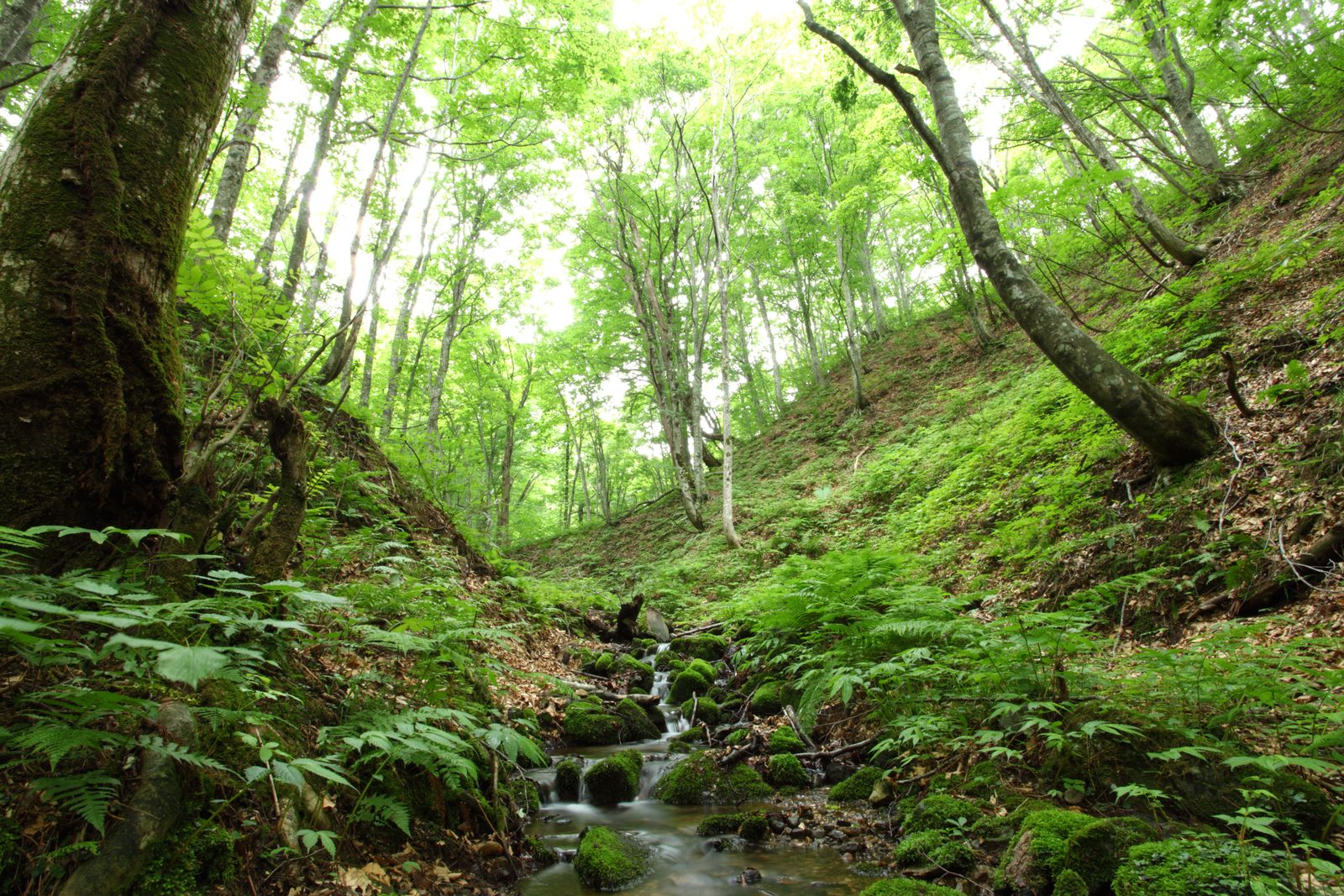
Shirakami-Sanchi lets walkers of all ages take the Beech Forest Trail, a course of maintained walkways and stairs that can be walked casually. Three large waterfalls lie in a row along the Anmon River, a tributary of the Iwaki River. At Aoike, strong sunlight reaches the lakebed in the daytime, when the sun is directly above, and the water shines bright blue. Daketai has walking paths through primeval beech forest that pass moss-covered giant trees and boulders.
Walkers can pick among three sets of paths in Shirakami-Sanchi: the maintained trail and the three Anmon waterfalls, the Juniko course that loops around Aoike, and the Daketai paths among moss-covered giant trees.
Beech Forest Trail and Anmon Falls: Walks from Aqua Green Village ANMON
The Beech Forest Trail leads through the deep beech forest of Shirakami-Sanchi in about one hour. Humus formed from piled-up fallen leaves keeps the path soft underfoot. Water flowing in a nearby stream, the calls of wild birds and frogs, and the rustle of leaves in the wind can be heard in the forest. The trail is open from early May to mid-November (guideline).
Anmon Falls has three waterfalls that are reached in order on the maintained stream-side path from the falls entrance: the Third Falls first, then the Second Falls, and the First Falls at the top. Beech forests of Shirakami-Sanchi and old pine trees can be seen along the way. Rock walls surround the waterfalls, where old beech and pine grow thickly.
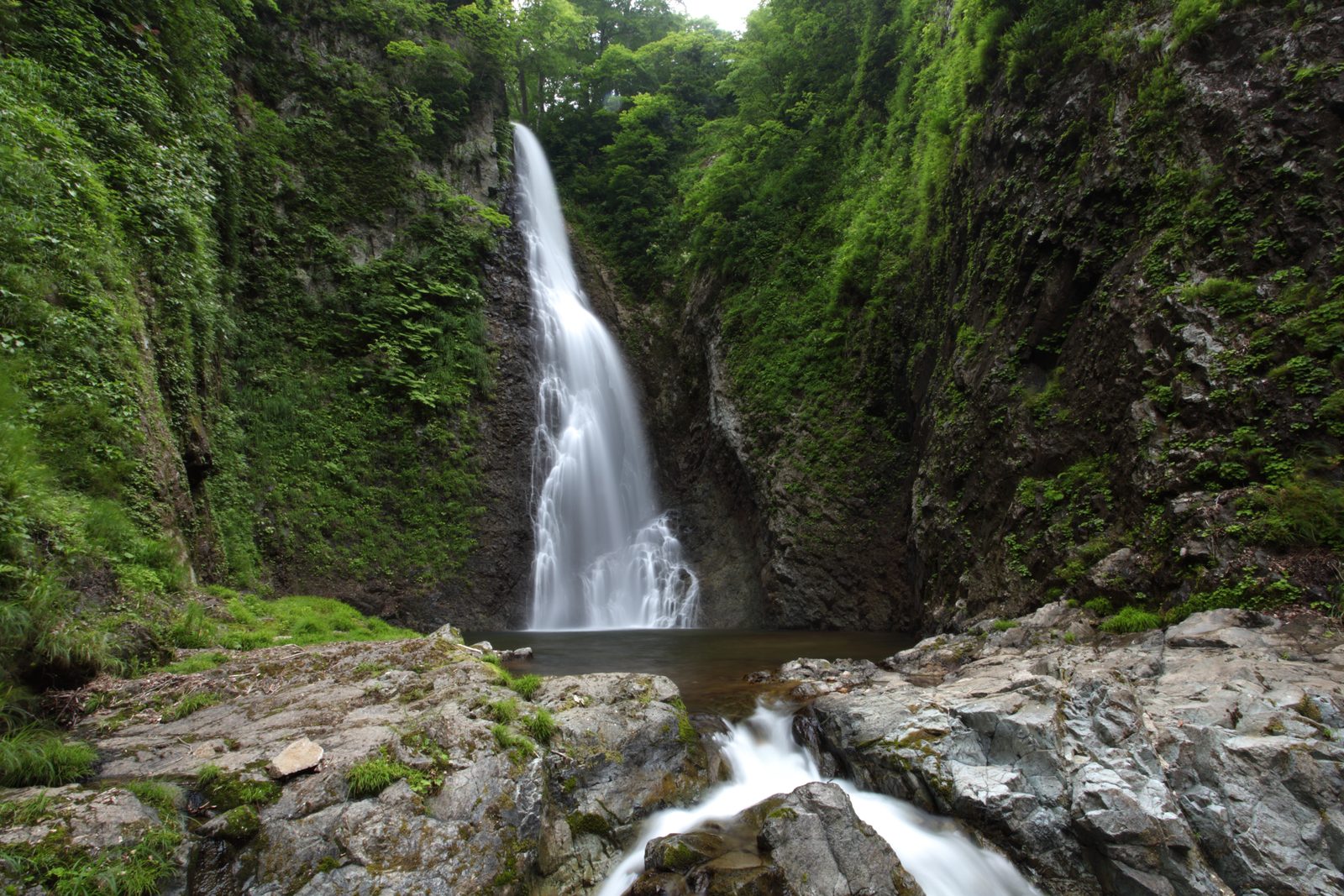
The Anmon Gorge route follows the Anmon River upstream from the Anmon Falls entrance to the same three waterfalls. It is not maintained as a walking path and involves crossing a river waist-deep or higher, so it is for advanced hikers. Beyond the Second Falls, passage is possible only when accompanied by a guide, because rockfalls are frequent. This route is open from early July to early November (guideline).
Aqua Green Village ANMON is the starting point of both the Beech Forest Trail and the Anmon Gorge route. Visitors can do beech forest trekking, bird watching, river play, insect collecting, BBQ and stargazing there. The snack stand in front of it serves iwana caught that morning and slowly grilled with salt.
The Shirakami Visitor Center has an exhibition hall that presents beech forests of the world, natural heritage and ecosystems. Models and panels in the hall show the nature of Shirakami-Sanchi theme by theme.
If a casual walk is the aim, the trail with maintained walkways and stairs is the one to take, while the gorge route with its river crossing belongs to advanced hikers who have a guide for the upper part.
Juniko and Aoike: Thirty-Three Lakes in the Beech Forest, in Summer and in Winter
Juniko is the collective name for thirty-three lakes and ponds surrounded by beech forest in the western part of Shirakami-Sanchi. Visitors can walk Juniko in winter accompanied by a local guide, although the Juniko area is closed to traffic during the winter period. Juniko is said to have got its name because twelve lakes could be seen from Mount Kuzure.
Aoike has an observation deck built around it, from which shadows of river fish such as iwana show in the water. Fallen trees can be seen through the water. Aoike looks black in winter.
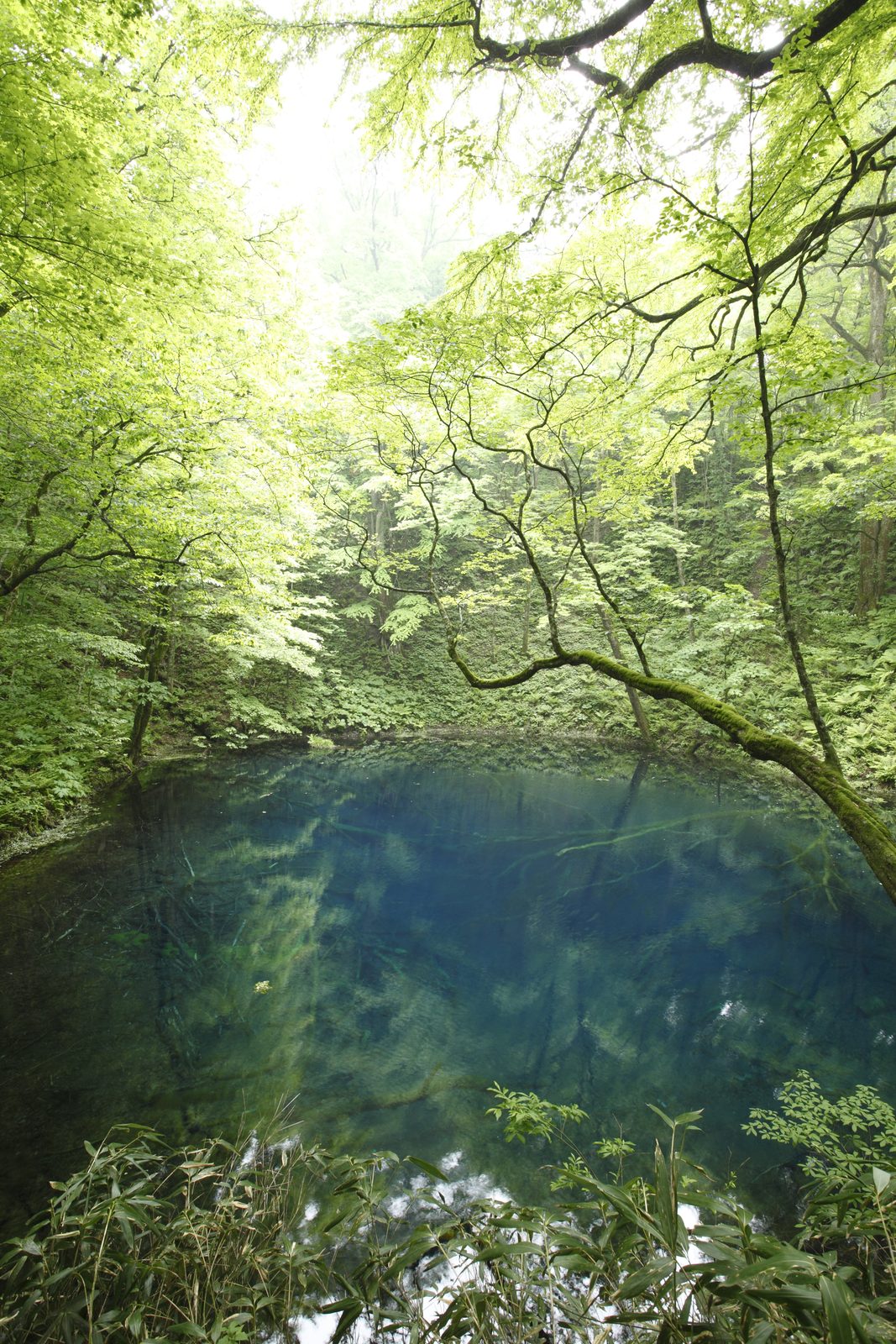
The Juniko walking course loops around several ponds, Aoike among them, and the natural beech forest in about forty minutes. Beyond Aoike, the walking path continues to a primeval beech forest. A distinctive call is heard in the forest from time to time.
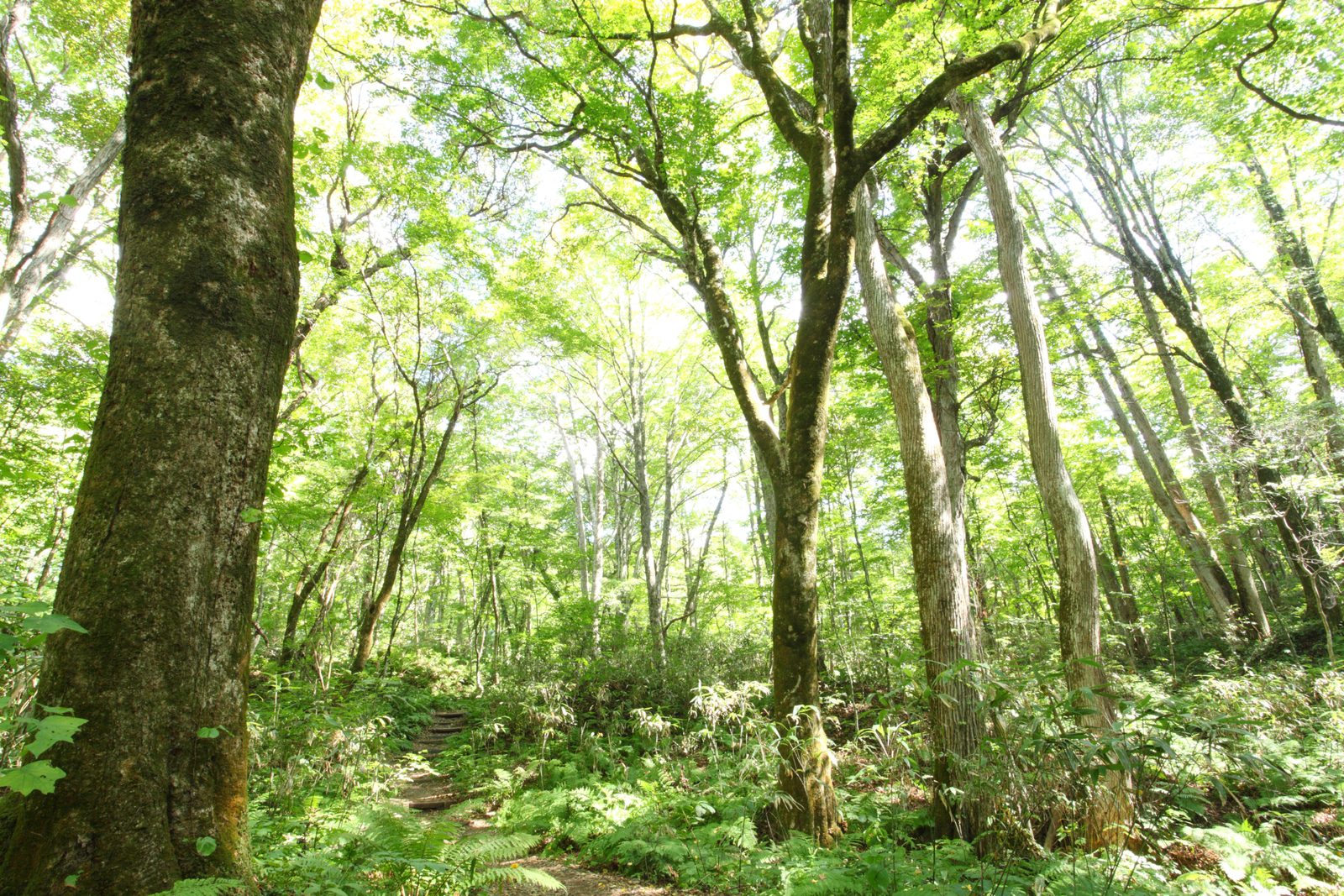
Aoike comes ahead of the forest beyond it on the Juniko path, so the pond and its observation deck are followed by the forest walk; in winter, when the pond looks black, Juniko is walked with a local guide.
Fujisato Side: Daketai, Tanashiro Wetland, Two Waterfalls and the Onodai Ranch
Daketai has Japanese serow, Japanese macaque, Japanese tree frog, Japanese black salamander and Ezo spring cicada among its observable animals. Large beech trees, Itaya maple and other trees are there to view up close. Eggs of the Japanese tree frog are found on branch tips at the pond along the wooden boardwalk.
Tanashiro Wetland has a boardwalk installed inside it. Alpine plants such as skunk cabbage and Asian day lilies bloom there from spring to summer.
Garo Otaki has a torii gate and a shrine standing before its plunge pool.
Choshi no Taki lets visitors walk around the plunge pool and look at the back of the waterfall.
The Onodai ranch has a walking path and an observation deck where visitors can see sheep walking about up close. Newborn lambs appear there from late February to April.
Fujisato Komagatake has two climbing trails, the Kuroishi course and the Kabadai course. The summit gives a wide view of Shirakami-Sanchi, the Tsugaru Plain and the Sea of Japan.
The Fujisato building is the visitor center for the Akita side of Shirakami-Sanchi, an area that straddles Aomori and Akita prefectures. It has exhibits in Japanese and English on the ecosystem. The core area was registered as a World Natural Heritage site in December nineteen ninety-three.
Daketai is a beech-forest walk past moss-covered boulders, whereas Tanashiro Wetland is a boardwalk among flowering wetland plants; Garo Otaki and Choshi no Taki each centre on a plunge pool, and the Onodai ranch on its sheep.
One Day Around Anmon, from the Beech Forest Trail to the Third Falls
A day around Anmon can start at Aqua Green Village ANMON, where both walks begin.
The turn for the forest walk comes before the waterfalls: the Beech Forest Trail is reached by going up to the left just before the entrance to the Anmon Falls promenade.
From the falls entrance, the stream-side path then leads to the Third Falls, and the two upper waterfalls lie further up for those who continue. The way back ends at the starting point, where the snack stand is.
Rooms in Hirosaki city are listed on a booking site: places to stay in Hirosaki. Guided options under Hirosaki and Shirakami are listed on a tour site: tours listed for Hirosaki and Shirakami.
Getting to Shirakami-Sanchi
New to rural buses and one-man trains? See how to ride them, step by step.
| From | To | By car |
|---|---|---|
| JR Hirosaki Station | the Shirakami Visitor Center | about forty minutes |
| Owani-Hirosaki IC on the Tohoku Expressway | the Shirakami Visitor Center | about sixty minutes |
| Arrival by car | the Shirakami Visitor Center car park | sixty spaces for regular cars and five for large vehicles |
Hours and Fees
| Place | Detail | Season or days |
|---|---|---|
| the Shirakami Visitor Center, hours | April first to October thirty-first: eight thirty in the morning to five in the afternoon. November first to March thirty-first: nine in the morning to four thirty in the afternoon. | changes by season |
| the Shirakami Visitor Center, closing days | the second Monday (the next day if it is a holiday), in August the fourth Monday; every Monday and Thursday (the next day if it is a holiday); the year-end and New Year period | April to December; January to March; December twenty-eighth to January fourth |
| the Shirakami Visitor Center, admission and video hall | admission free; large-screen video free for high school students and younger, three hundred yen for adults | adults pay for the video hall |
| Beech Forest Trail, walking season | open (guideline) | early May to mid-November |
| Anmon Gorge route, walking season | open (guideline) | early July to early November |
| Juniko in winter | closed to traffic; walks accompanied by a local guide | the winter period |
Fees and hours were checked against official sources on 21 November 2026.
Thinking of staying overnight?
Compare places to stay near Hirosaki →
Disclosure: This post may contain affiliate links. If you book through them, we may earn a commission at no extra cost to you.