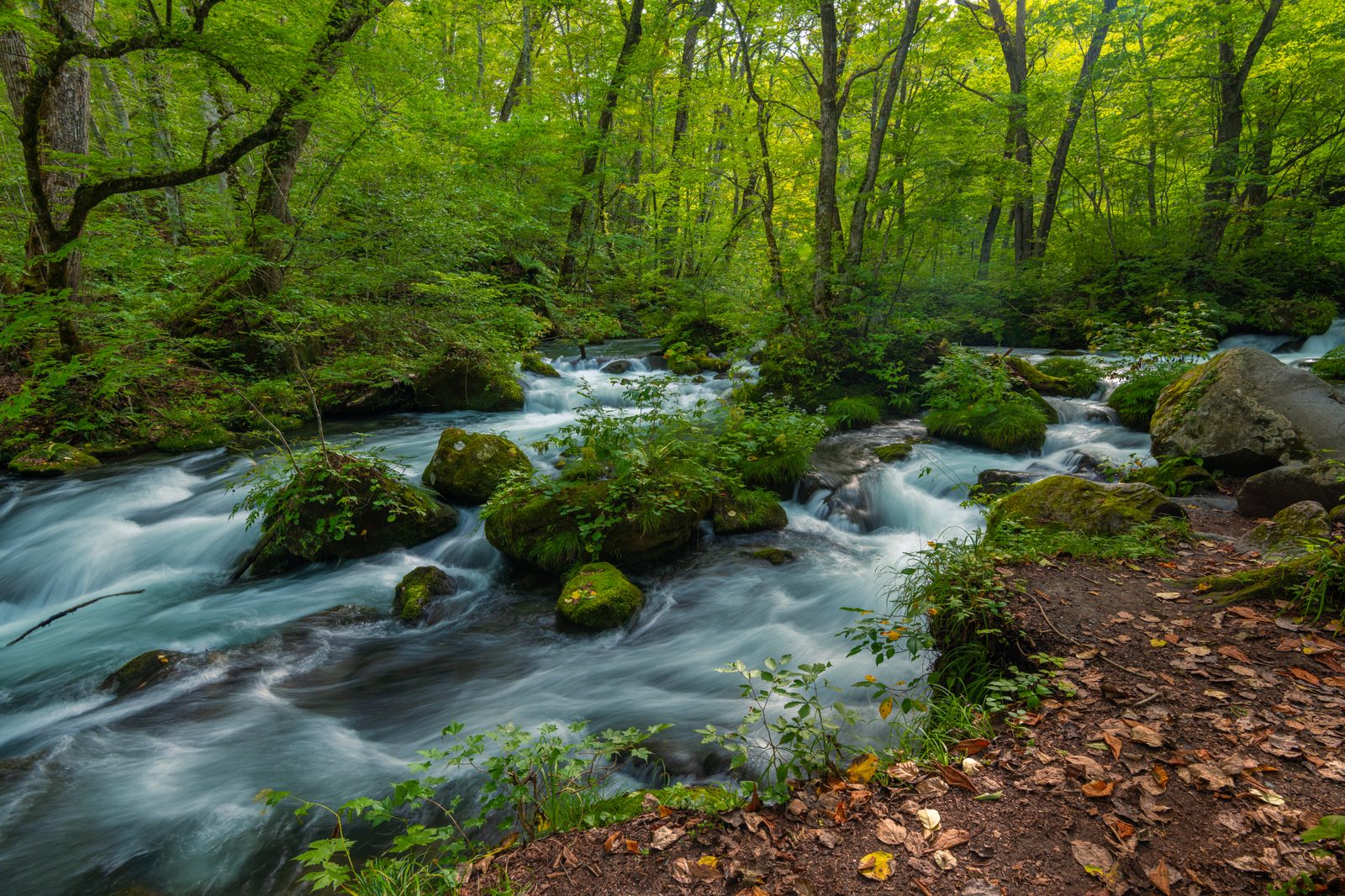
Oirase Gorge is a wooded river valley in Aomori Prefecture, in northern Japan, where the outflow of Lake Towada runs between mossy rocks and old trees. This guide covers how to reach it today, the routes an old guidebook once recommended, the walk from Makado to Nenokuchi with its waterfalls and mossy islands, and where to stay by the lake.
Getting to Oirase Gorge Today
JR Bus Tohoku links Aomori Station, Shin-Aomori Station, and Hachinohe Station with the gorge and with Lake Towada at Yasumiya. Several stops on the way carry the names of places you will meet on foot, among them Ishigedo, Makado Rock (Makadoiwa), Kumoi-no-taki, Choshi-Otaki, and Nenokuchi. Fares depend on where you board and where you get off.
| From | To | Fare |
|---|---|---|
| Aomori Station or Shin-Aomori Station | Ishigedo bus stop | 2,820 yen |
| Aomori Station or Shin-Aomori Station | Makado Rock (Makadoiwa) bus stop | 2,880 yen |
| Aomori Station or Shin-Aomori Station | Kumoi-no-taki bus stop | 2,930 yen |
| Aomori Station or Shin-Aomori Station | Choshi-Otaki bus stop | 3,020 yen |
| Aomori Station or Shin-Aomori Station | Lake Towada (Yasumiya) | 3,480 yen |
| Hachinohe Station | Ishigedo bus stop | 2,380 yen |
| Hachinohe Station | Makado Rock (Makadoiwa) bus stop | 2,380 yen |
| Hachinohe Station | Kumoi-no-taki bus stop | 2,490 yen |
| Hachinohe Station | Choshi-Otaki bus stop | 2,600 yen |
| Hachinohe Station | Nenokuchi bus stop | 2,600 yen |
| Hachinohe Station | Lake Towada (Yasumiya) | 3,050 yen |
| Extra | Fee |
|---|---|
| Advance online seat booking | 300 yen per seat |
The fee for booking a seat online in advance is charged per seat, on top of the fare. If you would rather have the whole day arranged for you, there is a full-day tour of Oirase Stream and Lake Towada to consider.
A Historic Route to Lake Towada
A prewar guidebook described several ways in to Lake Towada. The approach past Oirase, the Sanbongi road, left the main railway partway along, switched to a private railway for the town of Sanbongi, and continued to the lake from there. Of the approaches described, it was the only one a motor car could follow all the way to the shore.
An Akita-side route ran from Odate through Kemanai and past Oyu Onsen, a hot spring, ending with a climb the guide judged unsuited to families. Two paths were deemed manageable for strong walkers: one from the town of Kuroishi, one from Aomori City over Mount Hakkoda via Sukayu Onsen and Tsuta Onsen, praised for grand views and recommended for students.
The road forked at Yakeyama: one branch toward Tsuta Onsen, the other toward the lakeshore at Nenokuchi. A motor coach ran on to Nenokuchi, while the Tsuta branch had no road for vehicles and had to be walked. The writer Omachi Keigetsu loved Tsuta Onsen so much that he ended his days at its inn, built of prized local timber.
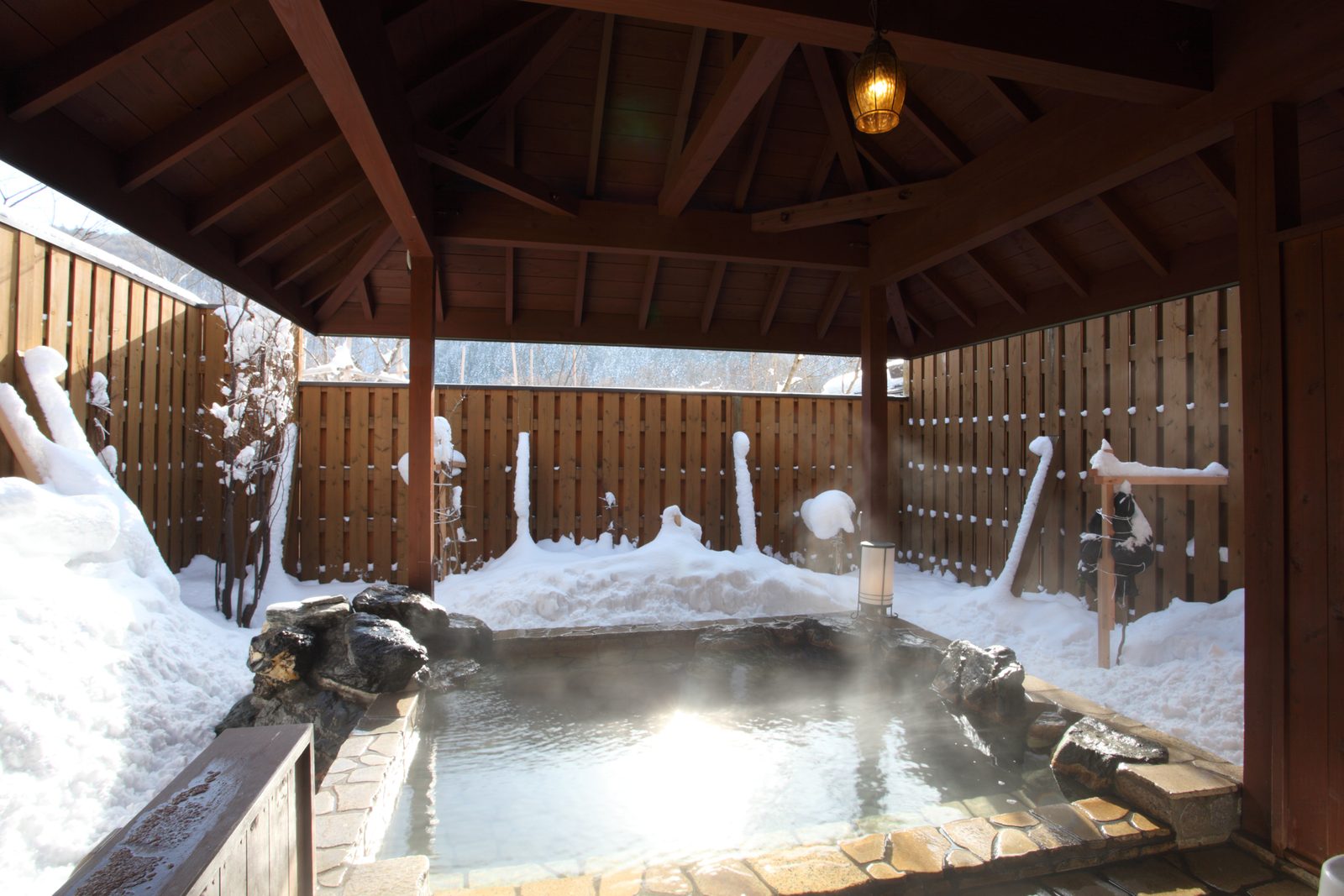
Where to stay
Places to stay near Towada, Aomori →
Disclosure: This post may contain affiliate links. If you book through them, we may earn a commission at no extra cost to you.
Walking the Trail from Makado to Nenokuchi
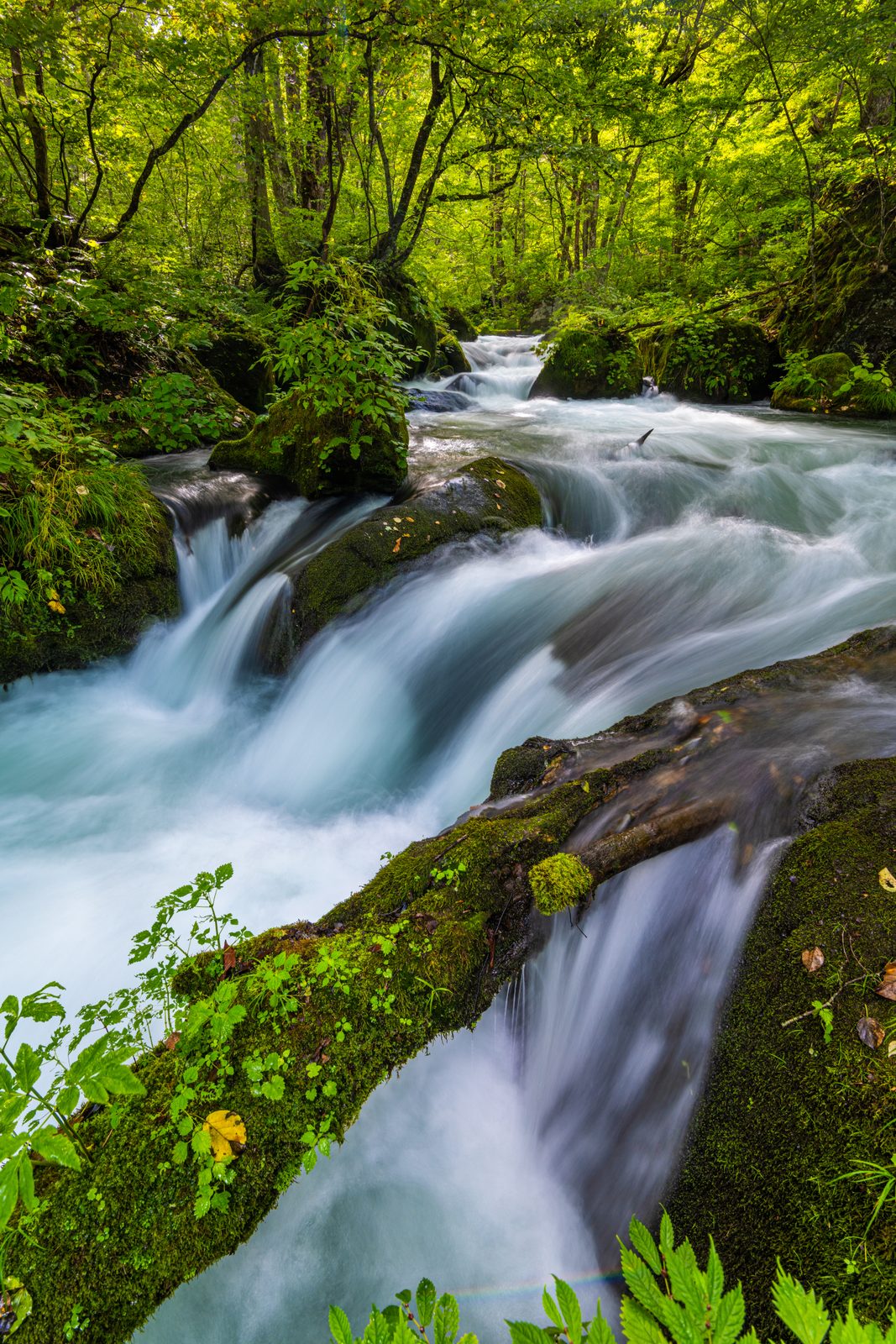
An old guide argued that no car could reveal the true wonder of Oirase, and urged visitors to walk instead. Makado, a rocky spot on the trail beyond Yakeyama, was recommended as the place to start taking photographs, and it is the stretch from there upstream to Nenokuchi that this walk follows.
At Makado there was once a teahouse where walkers could eat grilled river charr, a specialty of the Oirase river. In the old guide's description, the path beyond runs beneath beech, katsura, oak, and horse chestnut trees so dense that it stays cool even in high summer, with a canopy thick enough to hide the sky.
Small islands of rock rise from the middle of the stream, each thick with trees and moss, and the guide counted them among the gorge's most distinctive features. Anyone who stops to photograph or sketch will find the scene changing with every step, so allow more time for the walk than usual.
Waterfalls and Legends Along the Way
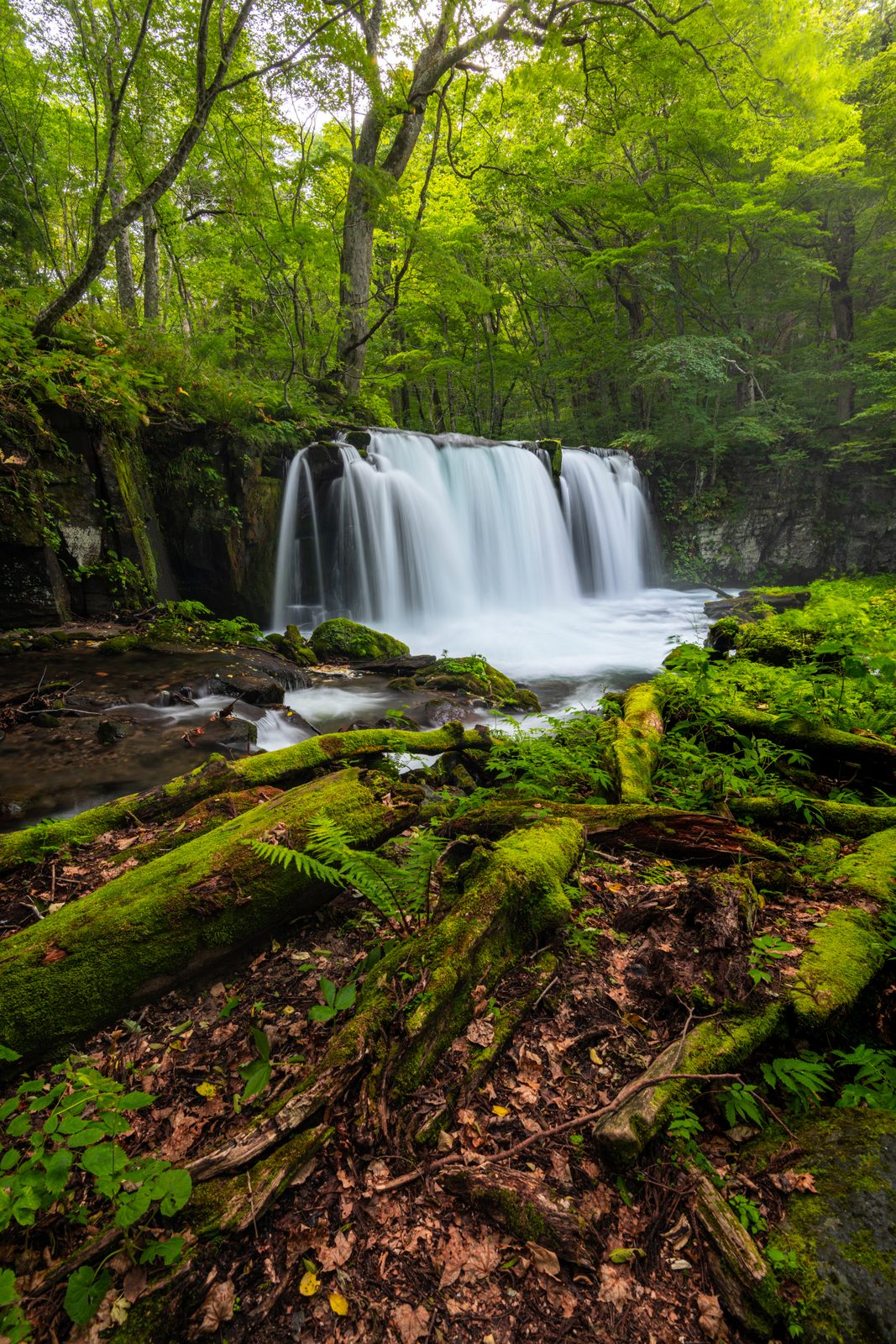
Among the many falls along the gorge, an early guide singled out four as especially celebrated: Tana-no-taki, Kumoi-no-taki, Shimai-no-taki, and Shiraito-no-taki. Kumoi-no-taki was described as the first large one travelers met heading upstream from the Yakeyama side, a tall cascade said to throw up enough spray in a gust of wind to dampen anyone standing nearby.
In the old account, Shiranuno-no-taki is a quiet, narrow waterfall that seems to pour from a hollow partway up the rock face; branches always screen part of it, and the glimpses through the leaves were said only to add to its charm. Upstream, a spot called Tomoe-ga-fuchi was known for a swirling eddy beside an oddly shaped maple.
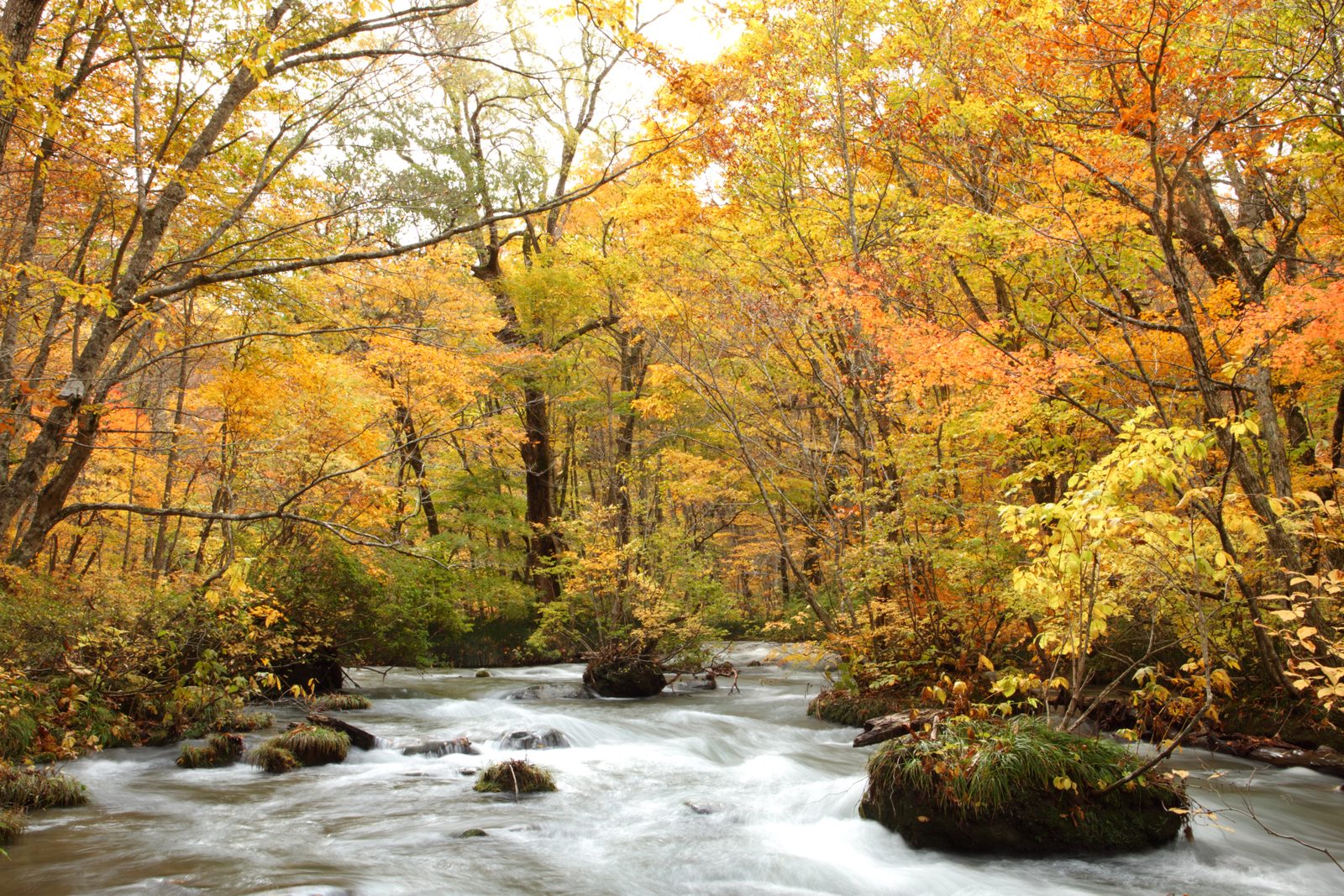
In autumn the maples along this stretch turn a fiery red, and the gorge was said to look more striking then than in any other season. The trail has its legends as well: a rock shelter called Ishigedo is said to have hidden Oni-no-Matsu, a female bandit chief, for years while she evaded capture.
Near Nenokuchi, Choshi-no-taki was described as a broad waterfall where the lake's entire outflow plunges at once, said to shake the ground with its roar. The name Choshi-no-kuchi is said to liken the lake to a sake decanter, with the outflow here as its spout. The shore lies beyond, with places to stay near Lake Towada for a slow evening.