Shirahama, on the Wakayama coast, is where a legend and the sea share the same spot. Sandanbeki Cave is said to have been where the Kumano navy hid its boats, and below ground the waves still roll in for visitors to watch. Above ground come the white rock shelf of Senjojiki, the sunset at Engetsu-jima, the white sand of Shirarahama, and kue and kenken katsuo on the table. One way to work through Shirahama is to begin with the legend at Sandanbeki Cave, then Senjojiki and the Engetsu-jima sunset, then Shirarahama, and finish with a seafood meal.
Sandanbeki Cave: the Kumano Navy Legend and the Rock Wall Above It
Sandanbeki Cave is said to have been used by the Kumano navy, known from the Genpei war, to hide its boats. The legend has a place to walk into: inside, impressive wave spray can be seen. Waves rolling in can be watched at close range.
An elevator takes visitors down to the cave, where a brick-coloured path loops past a guard house rebuilt from records. Inside, waves sound as if approaching from far away, and the deity of the cave shrine is said to grant wishes.
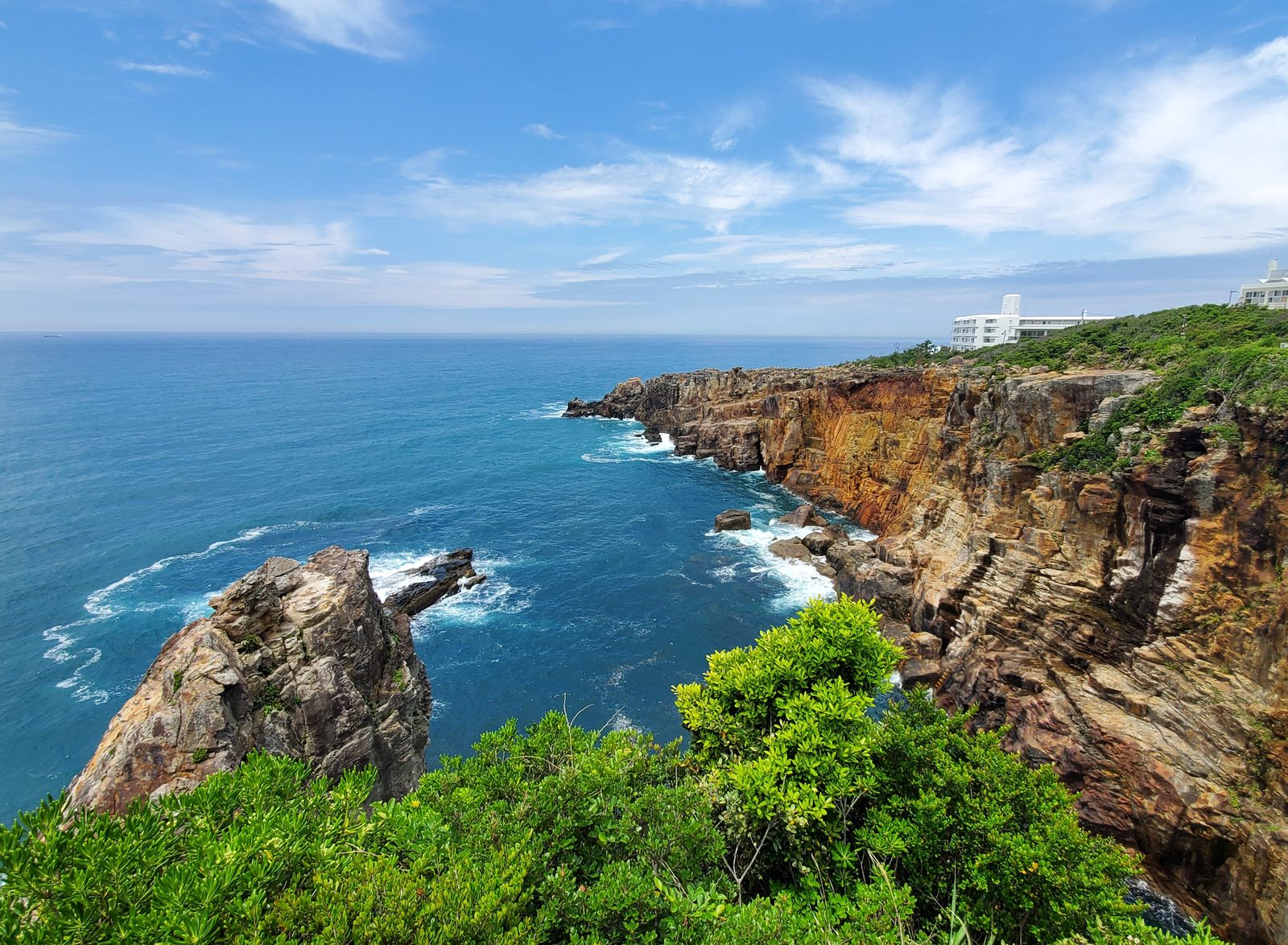
Above ground, the rock wall is said to take its name from a place where fishermen once watched passing boats and schools of fish. It rises on the south coast of Senjojiki and runs north to south, with the Kuroshio striking its rock face.
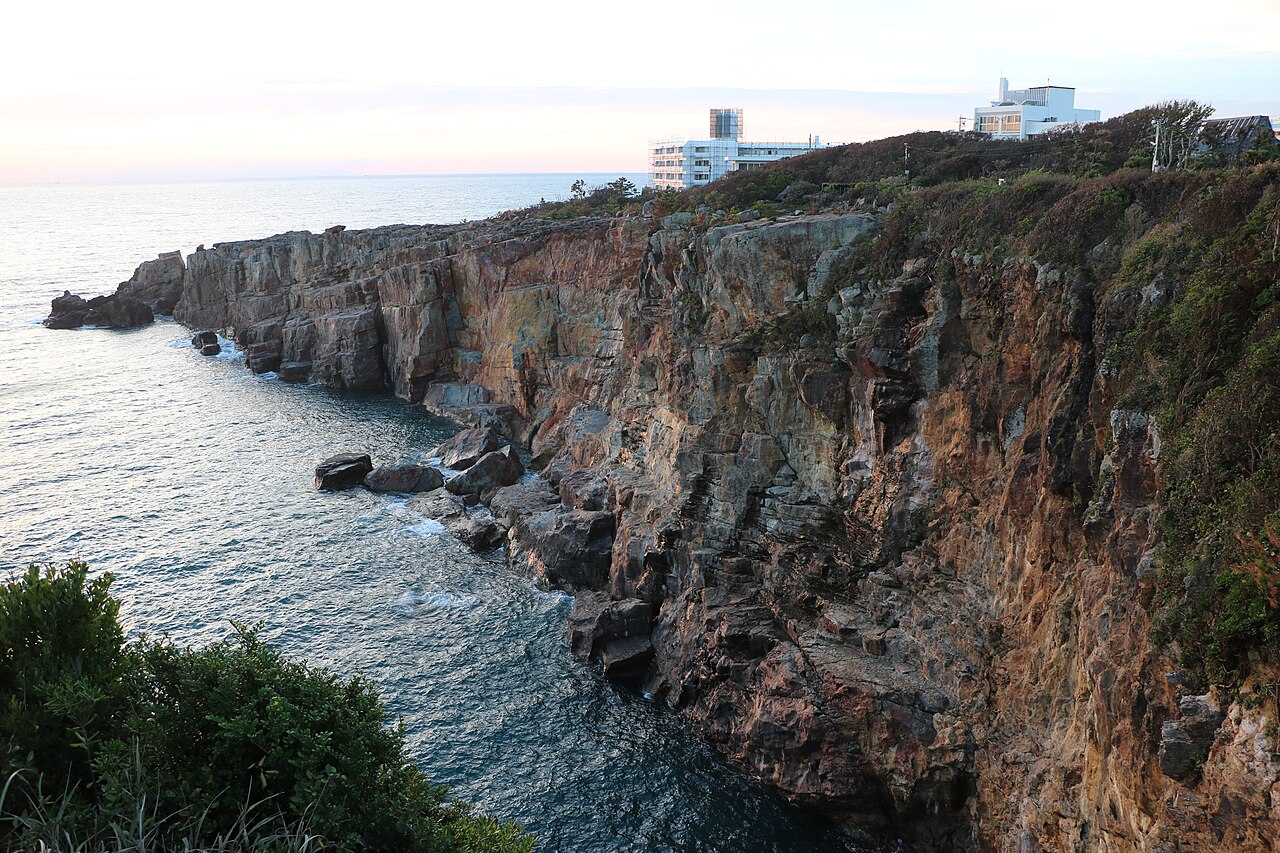
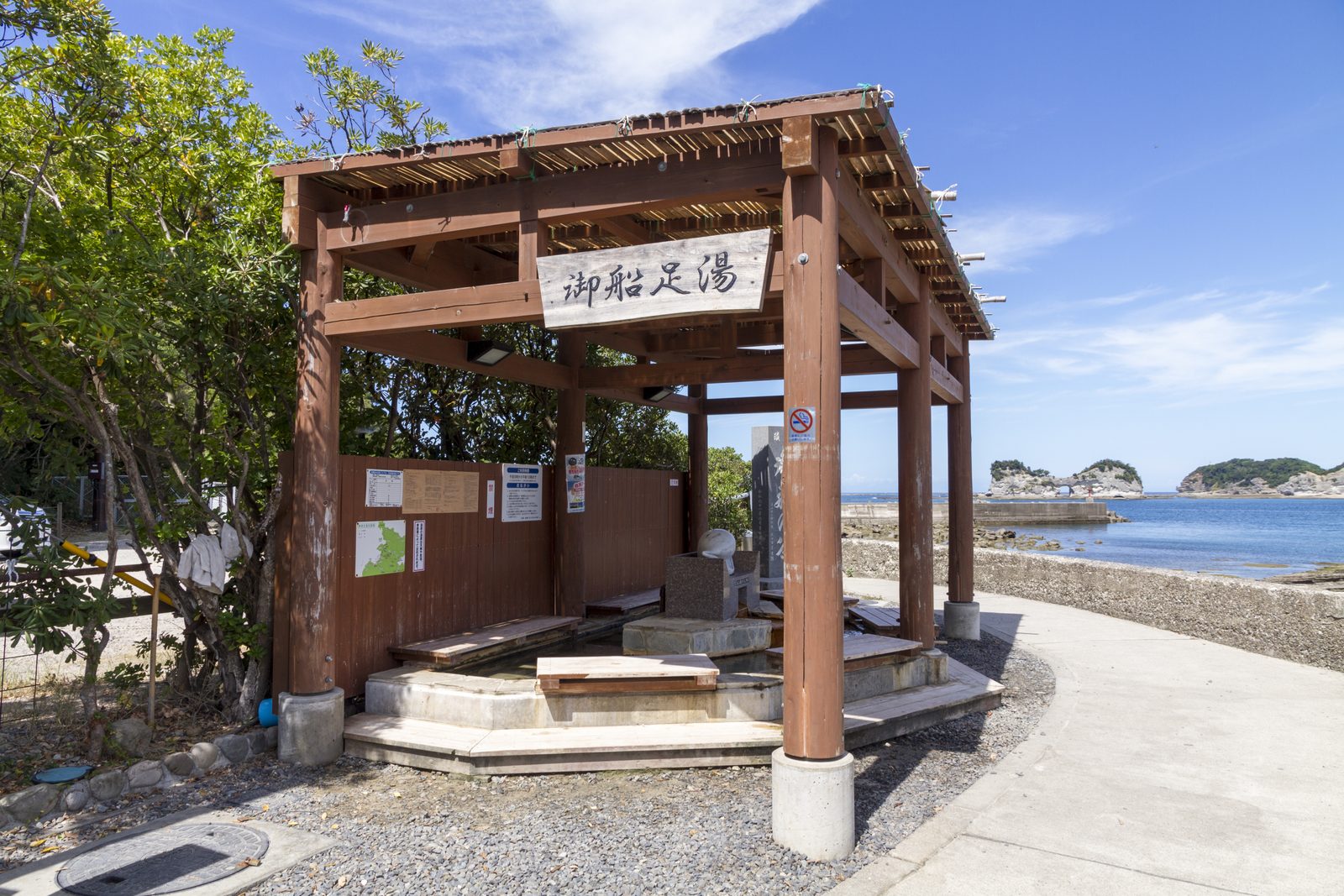
Back up top, the promenade carries sea breeze and the sound of waves. Near the lookout, visitors can attach a padlock to a heart-shaped monument, and there is a pink postbox and a foot bath. The cave can be seen in about fifteen to twenty minutes. To follow the story in order, start with the cave and end at the lookout.
Senjojiki Rock Shelf, Engetsu-jima and the Sunset Coast
Senjojiki is said to take its name from a rock shelf so wide that a thousand tatami mats could be laid on it. It is a large white rock formation spreading against the blue Pacific, eroded by waves over a long time into tatami-like rock. White and soft, it spreads out toward the Pacific.
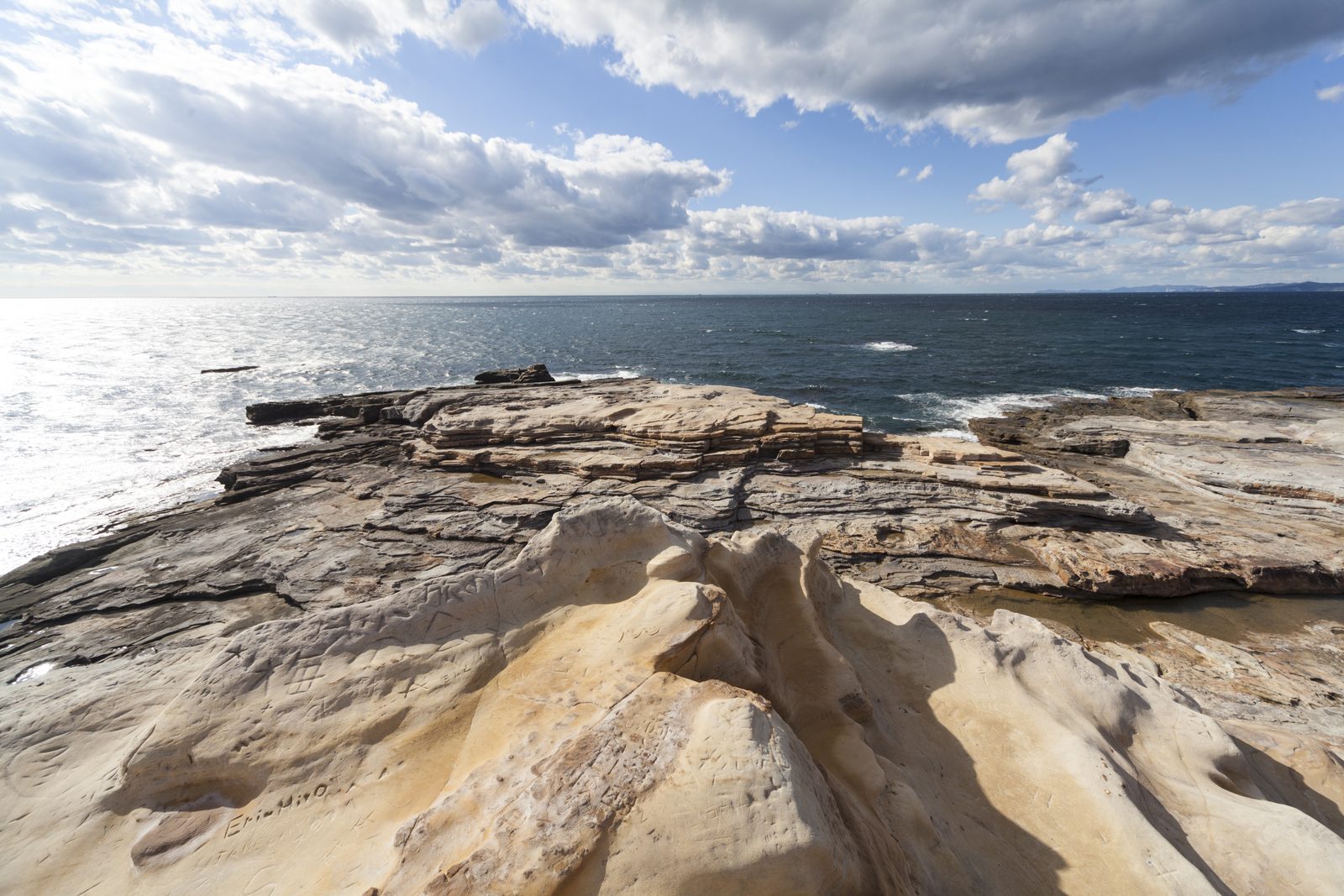
Wave spray and the whiteness of the rock make a contrast. A seafood restaurant at Senjojiki serves meals facing the shelf and the Pacific, and a souvenir shop sells Nanki Shirahama souvenirs.
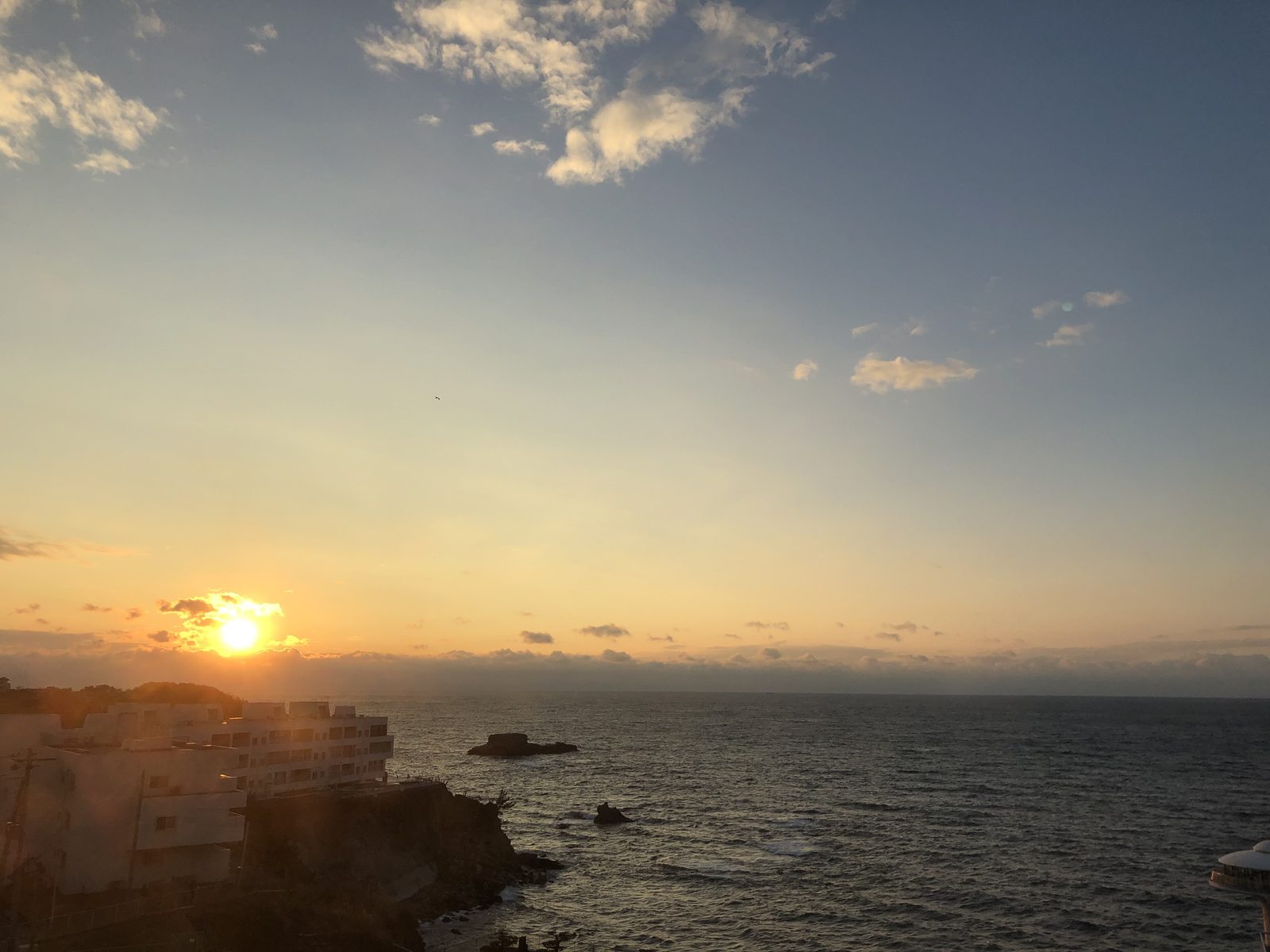
Engetsu-jima, a small island off Shirahama, has a formal name of its own but is called Engetsu-jima for the round-moon-shaped hole through its middle. Waves are thought to have cut it into shape over long years. Especially in spring and autumn, the sunset can be seen fitting into the hole, and dusk is recommended for photographs.
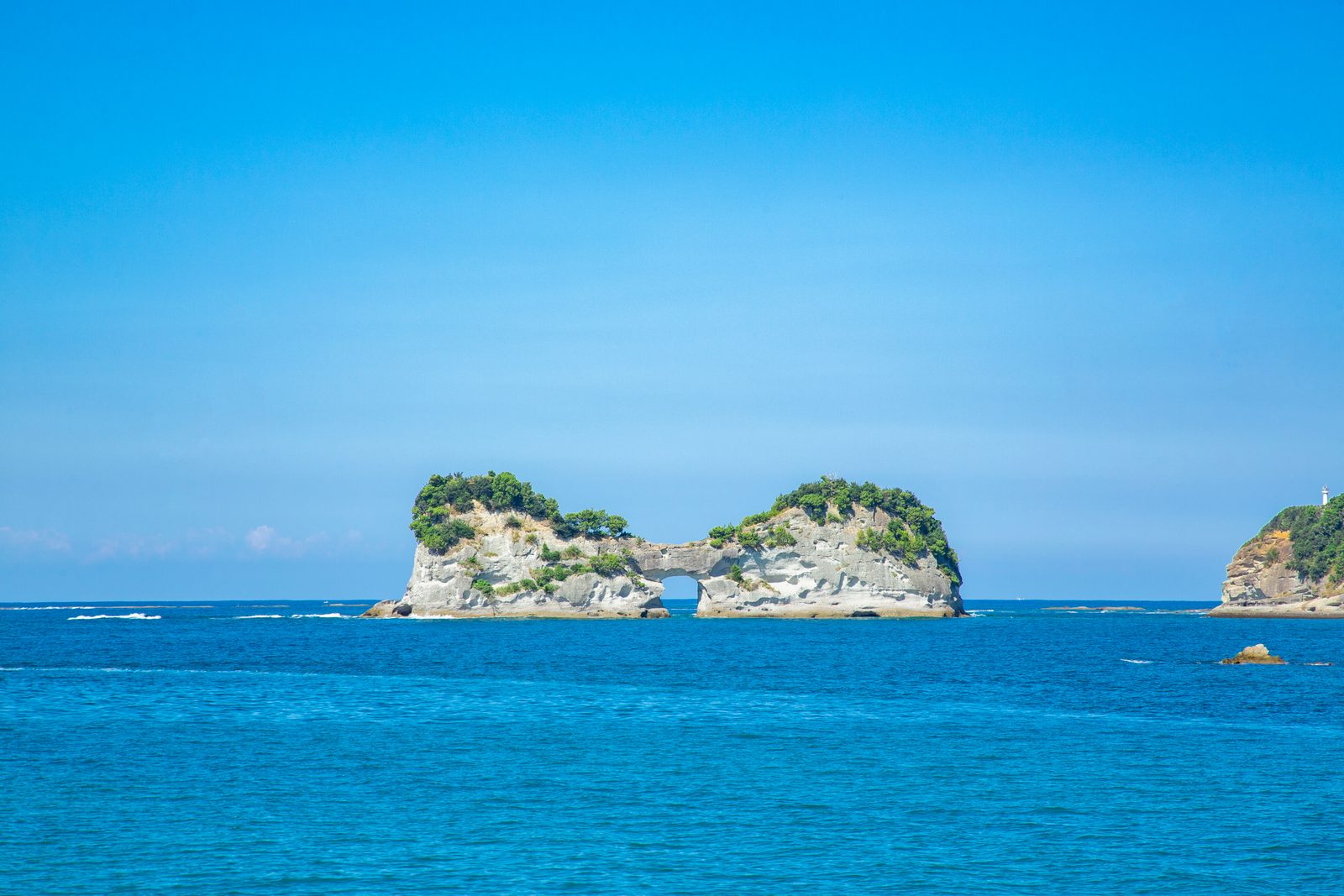
At Sandanbeki the sunset is seen with the rock wall and waves breaking spray against it. To watch the sun go down, choose the hole of Engetsu-jima in spring and autumn or the rock wall of Sandanbeki. Guided tours in and around Shirahama are listed under experiences around Shirahama.
Kue, Katsuo, Ise-ebi and Seafood in Shirahama
Katsuo here is bled alive right after it is caught, kept at ice temperature and brought to the market the same day. The kue is a fish of the grouper family that lives from central Honshu southward, and it sits alongside ise-ebi spiny lobster, mochigatsuo, tokobushi and moray eel among the seasonal sea food of Shirahama.
Katsuo caught one by one on a hand line by the kenken pull-line method, off this Kuroshio-facing coast, are called kenken katsuo. The typical ways to eat it are sashimi, tataki and namaribushi.
Ise-ebi is said to be in season in winter, when the sea is rough, and its fishing season is set from October to April. Kue arrives in small quantities, so check with the shop beforehand. If you want a meal that comes from this coast, look for kue and katsuo dishes.
Shirarahama Beach and the Public Hot Spring Baths
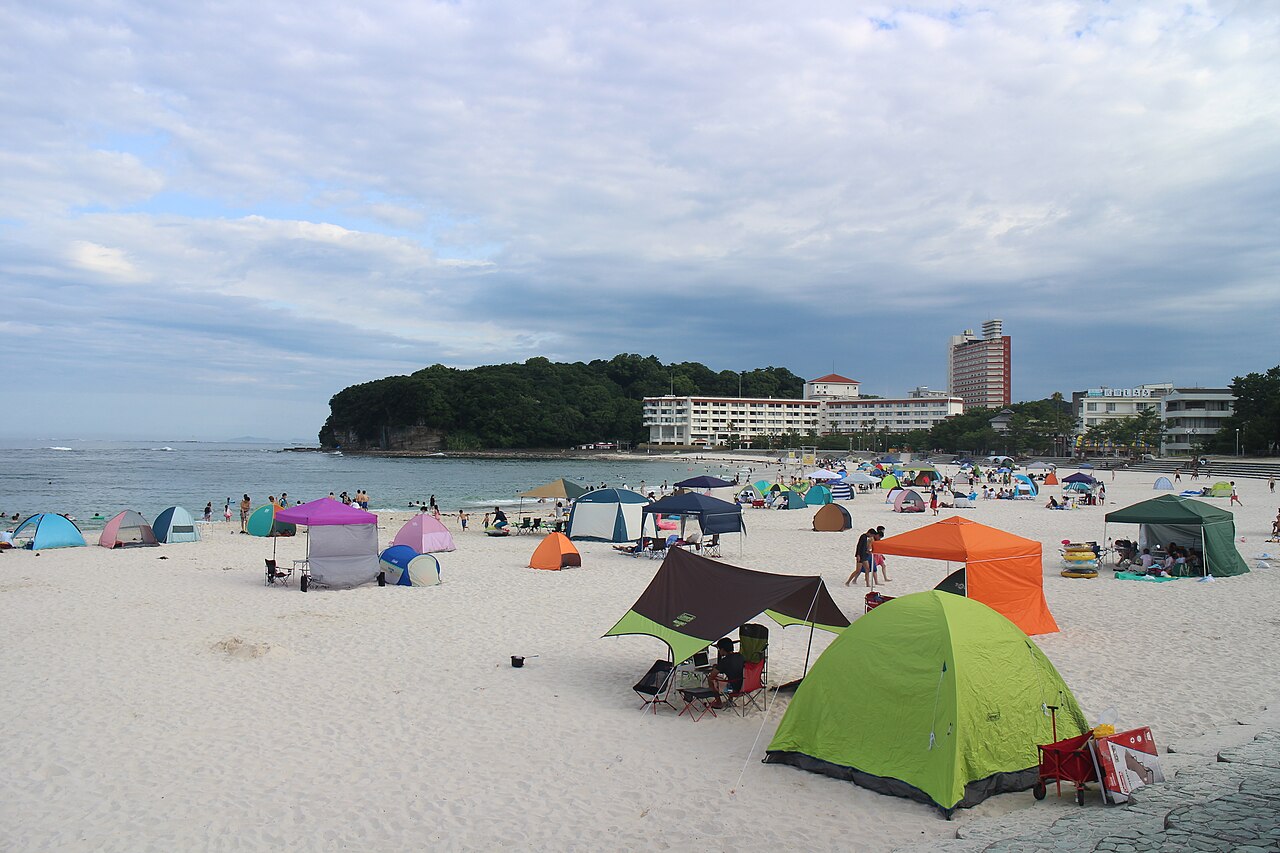
Shirarahama is a white sand beach, and it is the beach that gave Shirahama its name. The scenery there is white sand, an emerald green sea and a row of palm trees. From the window of the Shirara-yu bath, the pure white beach of Shirarahama, the blue sea and the blue sky can be seen.
Shirara-yu itself is a public hot spring with an attendant's counter, reminiscent of an old-style public bath. Muro-no-yu draws its water from two kinds of spring sources, so two kinds of water are available at one time.
Saki-no-yu is an outdoor bath, where the hot spring air carries the scent of sulfur and the sea, the sound of waves, and the sight of ships slowly crossing the Pacific.
If you want to see the sea from the water, Saki-no-yu gives you the sound of waves while you soak, and Shirara-yu frames the beach in its window. If you would rather stay overnight in Shirahama, places to stay in Shirahama is a place to start.
Getting to Shirahama
| Leg | How | Time or fare |
|---|---|---|
| Shirahama Station to Sandanbeki Cave | Bus | About 25 minutes |
| Shirahama Station to Sandanbeki Cave | Taxi | About 15 minutes |
| Nanki-Shirahama IC to Sandanbeki Cave | Car | About 15 minutes |
| Shirahama Station and the Sandanbeki stop | Meiko Bus fare | 480 yen |
| Shirahama Station and the stop for Senjojiki | Meiko Bus fare | 450 yen |
| Shirahama Station and the stop for Engetsu-jima | Meiko Bus fare | 340 yen |
| Shirahama Station and the Shirarahama stop | Meiko Bus fare | 340 yen |
| Shirahama Station and the stop for Saki-no-yu | Meiko Bus fare | 400 yen |
| The stop for Senjojiki to Senjojiki | On foot | About 5 minutes |
| Sandanbeki to Senjojiki | On foot | About 15 minutes |
New to rural buses and one-man trains? See how to ride them, step by step.
Hours and Fees
| Place | What | Hours or fee |
|---|---|---|
| Sandanbeki Cave | Hours | 8:00 to 17:00, last entry 16:50 |
| Sandanbeki Cave | Adult admission | 1,500 yen |
| Sandanbeki Cave | Child admission, elementary school | 750 yen |
| Sandanbeki Cave | Regular closing day | None |
| Sandanbeki foot bath | Hours | 9:00 am to 4:30 pm, closed in rain |
| Saki-no-yu | Admission, age 3 and over | 500 yen |
| Saki-no-yu | Hours, July and August | 7:00 to 19:00 |
| Saki-no-yu | Hours, October to March | 8:00 to 17:00 |
| Saki-no-yu | Hours, April to June and September | 8:00 to 18:00 |
| Shirara-yu | Adult bath fee | 420 yen |
| Muro-no-yu | Adult bath fee | 420 yen |
Where to stay
Places to stay near Shirahama, Wakayama, Japan →
Disclosure: This post may contain affiliate links. If you book through them, we may earn a commission at no extra cost to you.