High in the forested mountains of Wakayama, south of Osaka, Koyasan is not a sight to be ticked off but a working monastic town. Pilgrims have climbed to this plateau for centuries, and the rhythm of temple life still sets the pace of the place. Come up in the afternoon, sleep in a temple, and give the early morning to the great cemetery path of Okunoin. That order, more than any list of monuments, is what makes a visit here feel different.
A mountain that is one temple
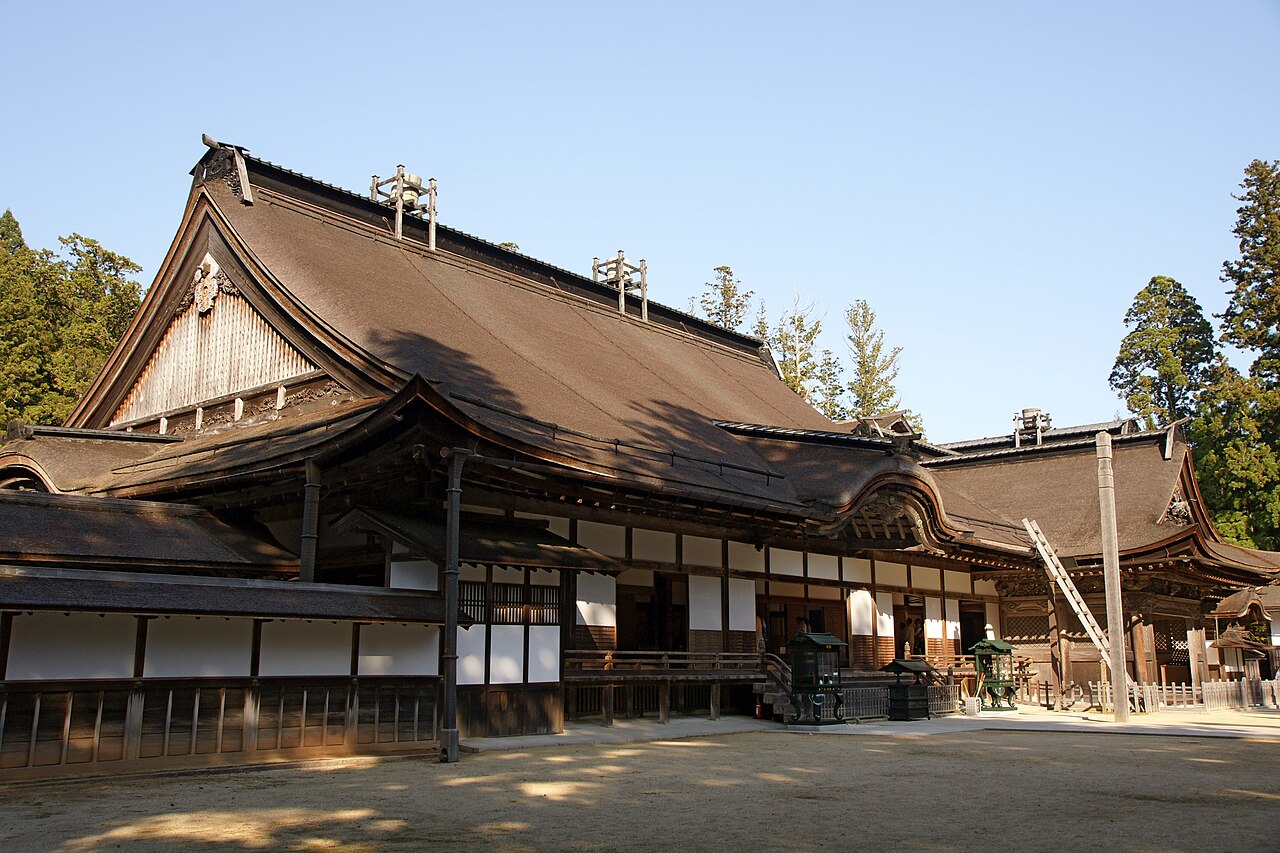
The whole mountain is treated as a single sacred precinct, and it has grown as a religious city drawing believers of every rank since the Heian period. At its heart, Kongobuji serves as the central temple for well over a hundred temples gathered on the mountain. The Danjo Garan is held to be the first monastic complex laid out here, its halls arranged to embody a mandala. The Great Pagoda that anchors it was completed in the late ninth century, and its interior is composed as a mandala in three dimensions. The main hall of Kongobuji, rebuilt in the middle of the nineteenth century, is counted as the largest building on the mountain, and its inner rooms keep sliding-door paintings of the four seasons by the painter Moriya Tadashi. Behind the halls spreads a broad stone garden, laid out to mark a memorial anniversary of the founder. Near the pagoda, an old pine is said to mark the spot where a ritual implement thrown from the continent came to rest, and visitors keep the custom of taking home one of its rare three-needled leaves.
Okunoin before the day begins
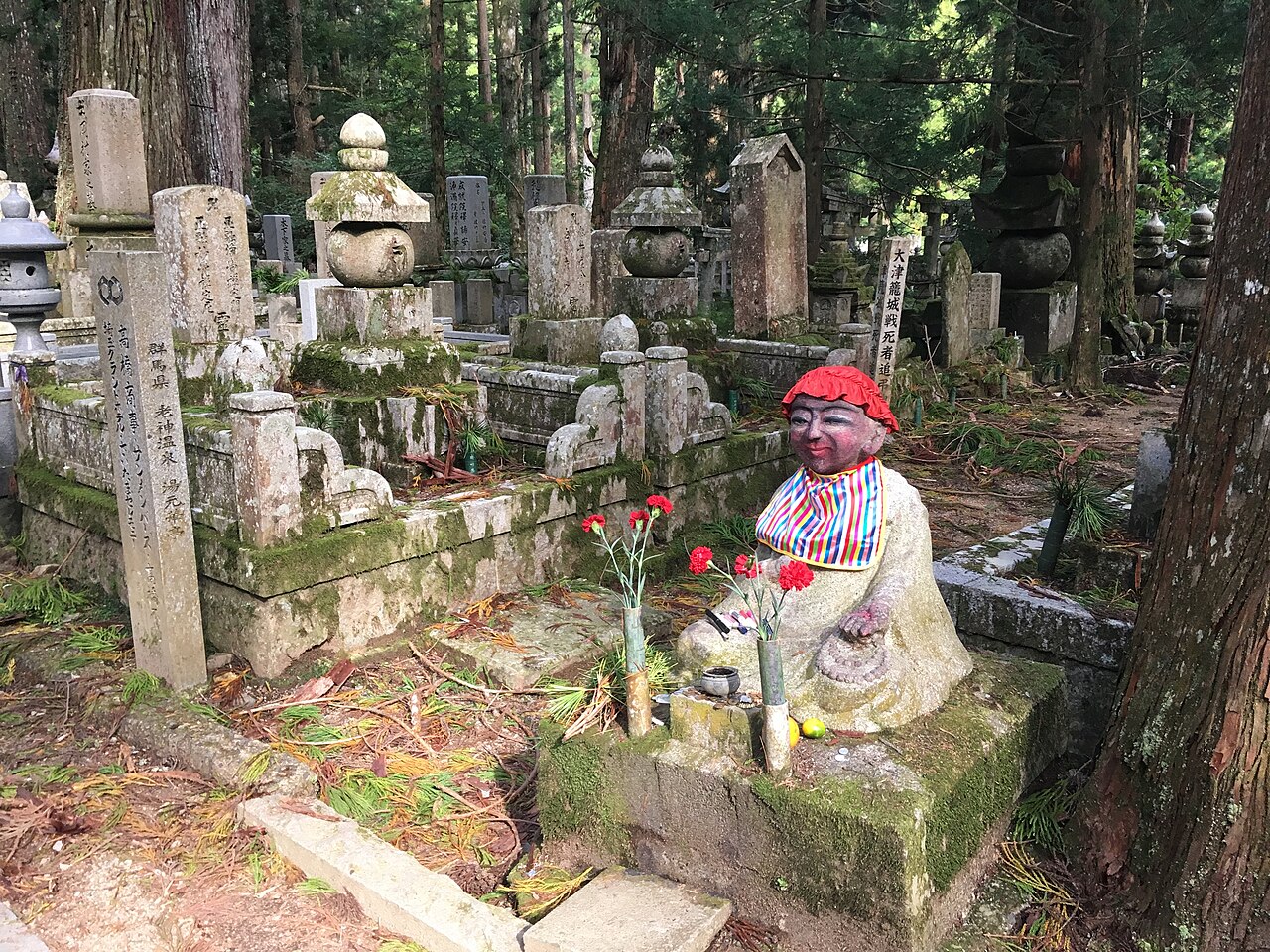
Go early if you can. From the first bridge at Ichinohashi, the approach to the mausoleum of Kobo Daishi runs about two kilometres through the forest. Some two hundred thousand memorial stones stand in ranks beneath cedars that have grown old over the centuries. Beyond the innermost bridge the mood turns solemn, and visitors are expected to straighten their posture as they walk the final stretch. Crossing Ichinohashi, walkers are said to be welcomed and later seen off by Kobo Daishi himself, so people bow once before stepping onto the bridge. None of this requires a guide or a plan. The path asks only that you walk it slowly.
Staying the night, and the morning reward
The deepest way in is to sleep in one of the temple lodgings. Temple cuisine here is built without meat or fish around seasonal vegetables, and it is offered together with practices such as seated meditation and sutra copying as a way for guests to reset body and mind. The local speciality is sesame tofu, made from arrowroot, mountain spring water, and the heart of the sesame seed, and specialty shops serve it freshly made. The founder is said to remain in meditation in his mausoleum, and a meal is still carried to him there each morning and midday, a practice kept for well over a thousand years. Even the name of the gateway below the mountain carries the idea of a threshold: Gokurakubashi, the bridge of paradise, marks the old boundary between the everyday world and the sacred ground above. If a night on the mountain is not possible, an early start from Osaka still leaves a full and unhurried day.
Getting there and paying your way
The limited express from Namba in Osaka reaches Gokurakubashi in about an hour and a half. From Namba, Shin-Imamiya, Tengachaya, or Sakai-Higashi, the adult limited express ticket to Gokurakubashi costs eleven hundred yen, in addition to the base fare. Buying that ticket on board instead adds a flat three hundred yen surcharge. From Gokurakubashi a funicular carries you up the final rise to the mountaintop, where local shuttles connect the temple quarter.
Admission to Kongobuji is one thousand yen for visitors of junior high school age and older. Entry to the Kondo, the main hall of the Danjo Garan, is five hundred yen for the same ages. At the Reihokan museum, which keeps the mountain's treasures, general admission is thirteen hundred yen. The museum is open year-round from nine in the morning until five in the afternoon, with last entry half an hour before closing. Details like these change with the seasons, so please check official information before visiting.
If you would rather have the logistics handled for you, you can browse guided visits and day trips to Koyasan and compare what suits your pace.
Compare options
See partner pricing and availability →
Disclosure: This post may contain affiliate links. If you book through them, we may earn a commission at no extra cost to you.