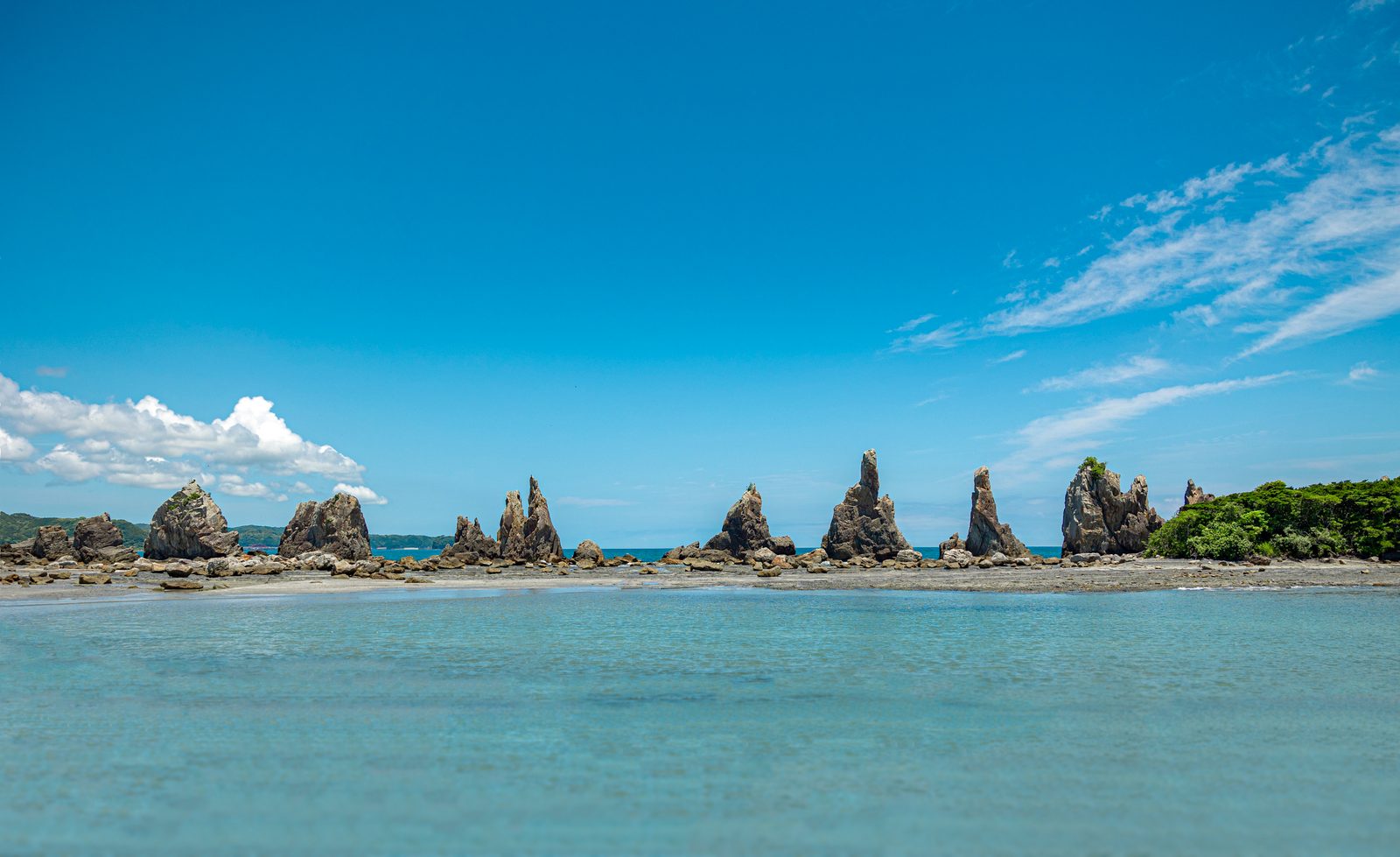
Kushimoto in Wakayama is a town you visit for what stands in its sea: a row of about forty rock pillars, large and small, running out from the shore toward Kii-Oshima. Off another stretch of coast, the undersea tower of the Kushimoto Marine Park stands offshore with its windows below the surface, so you look at coral and fish from inside the sea. At the cape, the deck of the Shionomisaki Kanko Tower turns a full circle high above the water, over green lawn and deep blue sea. And the town feeds you: farmed tuna as sashimi and shabu-shabu, and a sweet potato with moist flesh sold under the Nantan Mitsuhime name.
Hashigui-iwa: Rock Pillars and a Morning Paddle
Hashigui-iwa is that row of about forty rock pillars, standing in a long line in the sea and heading from Kushimoto toward Kii-Oshima. The name comes from the way the regularly spaced rocks resemble the piles of a bridge. Sea erosion stripped away all but the hard parts of the rock, leaving what looks like a bridge with nothing standing but its piles.
A legend says Kobo Daishi and an Amanojaku made a wager to build a bridge in one night, and the rocks went up in that single night. The site lies within the Yoshino-Kumano National Park area and holds a national designation as a place of scenic beauty and a natural monument. Hashigui-iwa is also certified as a Japan Night View Heritage site, and when the rocks are lit up they look different from usual.
If you would rather see the pillars from the water than from the shore, take the sea kayak tour: you paddle out through the clear sea of the morning calm. A separate guided tour meets at Hashigui beach and starts with reception, a guide introduction and an explanation of the day. On that tour you can watch both the creatures of the sandy beach and those of the tidal flat and rocky shore. Local sweets come with that tour, so you get a taste of the town as well as a look at it.
Under the Sea at Kushimoto Marine Park
At the Kushimoto Marine Park, the undersea tower stands offshore beyond the aquarium, and from inside it you look straight at the underwater scene. Observation windows line the tower all the way around, and through them you watch corals centred on table coral, schools of rudderfish with damselfish and butterflyfish, and whatever creatures the season brings. The seabed here is a blue, clear sea of corals where tropical and subtropical creatures live.
Hundreds of rudderfish gather in schools around the tower, which juts out into the coral-colonised sea, as they search for food. Back on land, the aquarium shows about four hundred species and four thousand animals from the sea around Kushimoto.
A semi-submersible undersea sightseeing boat also operates here, sea conditions permitting. Climb down into the tower for the corals, or add the boat if you want to see the same sea from a moving deck.
Cape Shionomisaki: Lawn, Lighthouse and Tuna Bowls
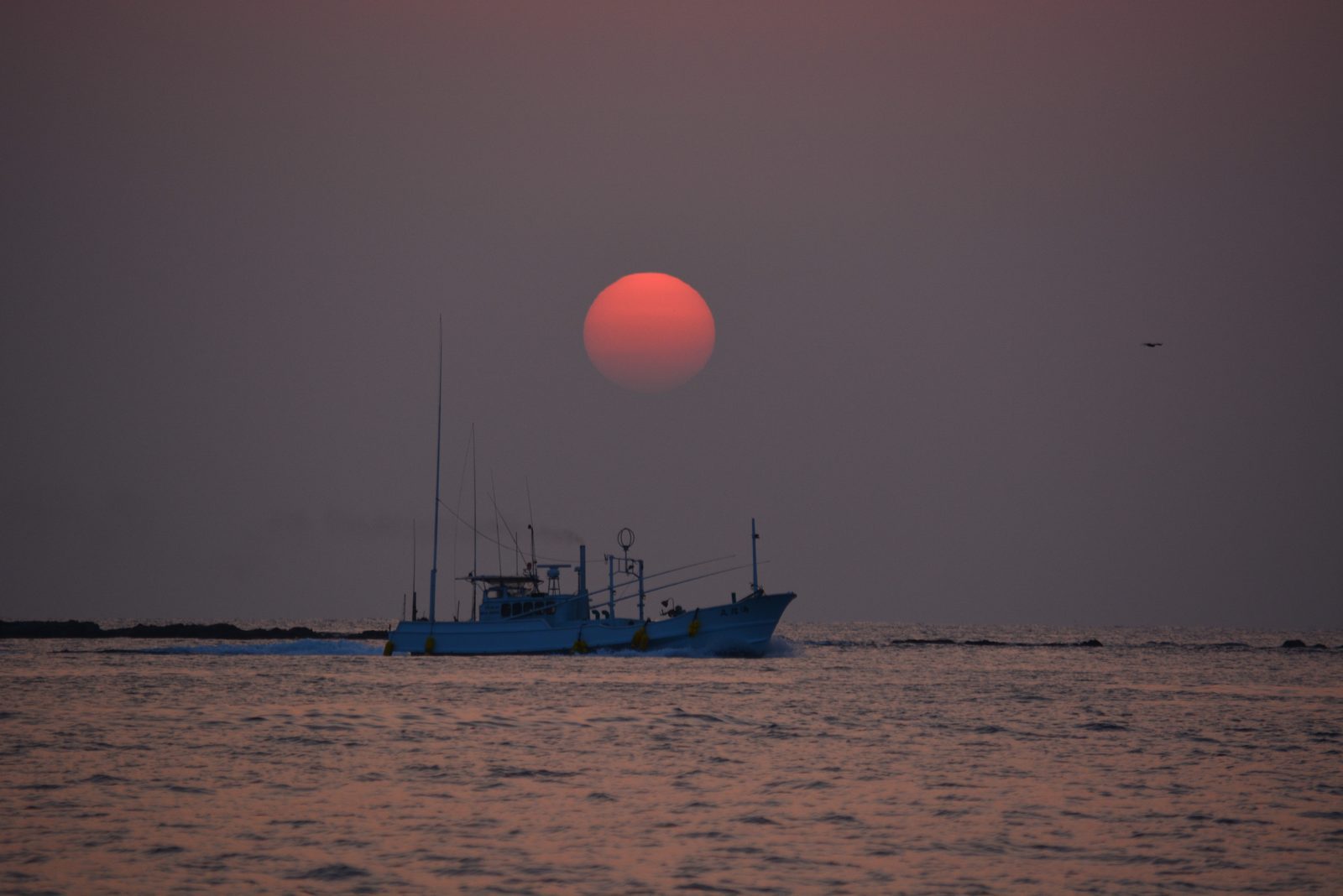
At Cape Shionomisaki, the observation deck of the Shionomisaki Kanko Tower sits high above sea level and turns a full circle over the green lawn and the deep blue sea, with Nachi mountain in the distance on a clear day. For a certain stretch of winter, you can watch the sun that came up out of the horizon go back down into the same horizon.
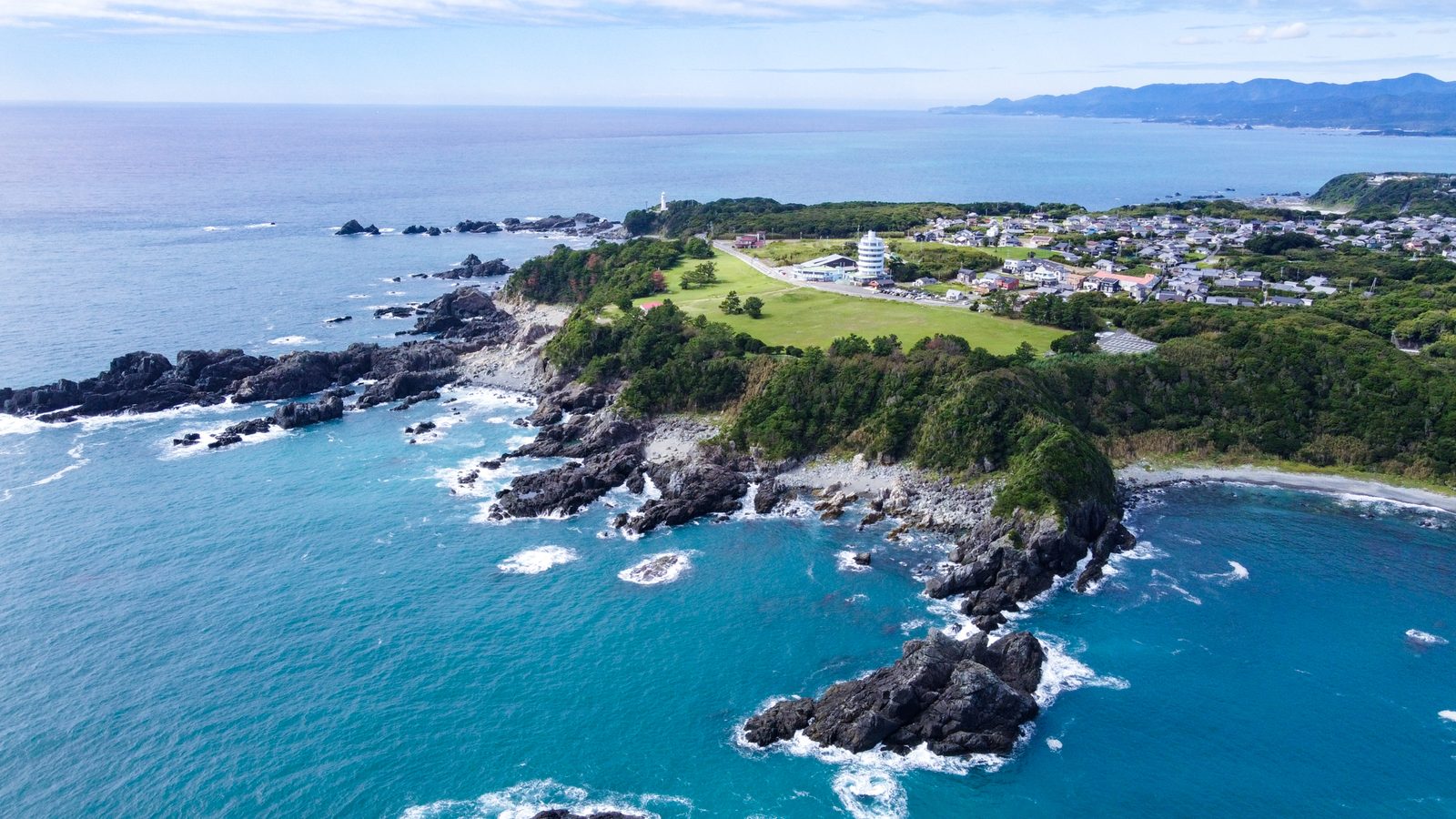
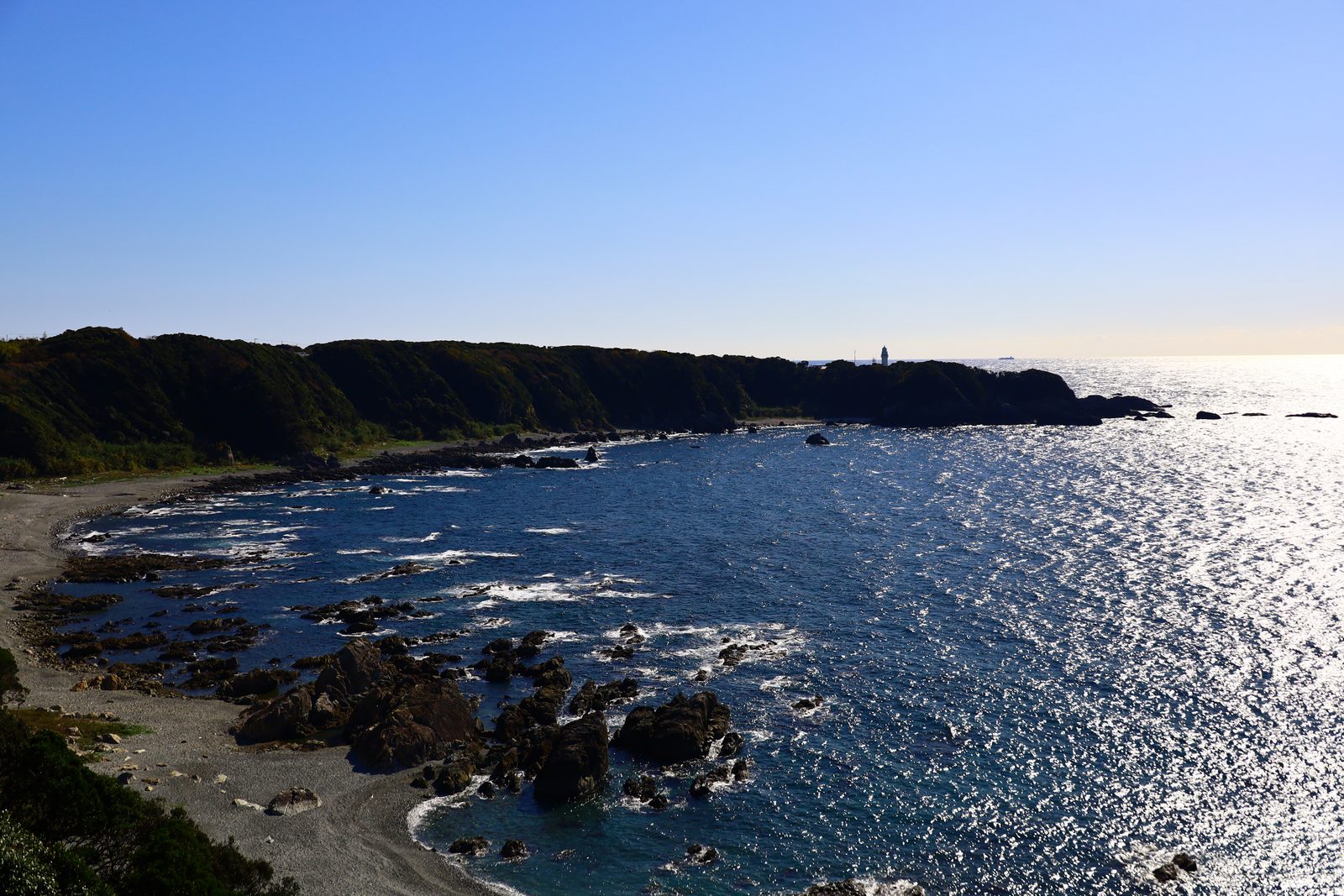
The cape's lighthouse was designed by a British engineer, and you climb a spiral staircase of sixty-eight stone steps to its platform, with the Pacific Ocean spreading out below. Every year on the third Saturday of January comes the Honshu Southernmost Fire Festival, when the dead lawn grass is burned to clear out pests and bring on new shoots.
If you come for the festival, you eat Shorasan hot pot and imo-mochi, and a fire arrow ceremony, fireworks and the lighting of the lawn mark the evening. Outside January, the lawn is simply the green foreground to the view from the deck.
At the Shionomisaki Kanko Tower restaurant you can order a Kindai tuna bowl, a Kishu ume madai bowl, a shirasu bowl or an anago rocket bowl. A rocket dog is on the menu too. If you plan to climb the lighthouse, the tower's restaurant is the natural place to eat first.
Kii-Oshima: Daffodils, Ertugrul and the Old Lighthouse
On the island of Kii-Oshima, the Kashinozaki lighthouse and its former keeper's house were built in eighteen seventy to a design by a British engineer. The lighthouse itself now lights automatically, has no keeper and does not admit visitors, so the keeper's house is where you go indoors: a single-storey stone building with a hip roof whose interior has been restored for visits. Come in winter and the grounds are wrapped in a sweet scent: a British engineer once posted here planted daffodils, and they still grow in clusters.
The Turkish Memorial Museum shows materials, relics, models and photographs from the time of the wreck of the Ertugrul, so you can see what the wreck was like and follow the exchange that grew out of it. A statue of Kemal Ataturk stands facing the Pacific Ocean.
The island has an older foreign landing to remember too: in seventeen ninety-one, two American merchant ships, the Lady Washington and the Grace, landed on Kii-Oshima, sixty-two years before Perry's black ships arrived.
Tuna, Citrus and Sweet Potatoes of Kushimoto
Kushimoto is where the Kenken method of fishing for skipjack tuna began, and the town's skipjack is shipped across the country under the Shorasan name. A set meal of farmed tuna raised in Kushimoto's sea gives you lean, medium-fatty and fatty tuna as sashimi and as shabu-shabu.
You can eat a Kushimoto kumquat whole, skin and all, and the flesh inside is sweet as well. Ponkan grown in Kushimoto has a rich taste, and you can drink it as freshly squeezed juice or eat it as ponkan soft ice cream. Bite into a sweet potato sold under the Nantan Mitsuhime name and you get bright yellow, moist flesh with a high sweetness, grown in well-drained soil.
On the bluefin tuna farming experience, several hundred bluefin tuna compete with each other for the feed. The strange-fish fishing experience needs no tackle, so you come empty-handed. After the fishing there are talks about the fish and the sea of Kushimoto, that day's prize is awarded, and the fish you caught go back into the sea alive. Anyone who wants to taste the sea rather than just look at it can build a day around the tuna meal, the fruit and these two outings.
Getting to Kushimoto
| Leg | How | Time and estimate |
|---|---|---|
| Shin-Osaka to Kushimoto Station | Limited Express Kuroshio | About 3 hours 30 minutes or more |
| Nagoya Station to Kushimoto Station | Limited Express Wide View Nanki | About 4 hours 30 minutes or more |
| Haneda Airport to Nanki-Shirahama Airport | By air | About 80 minutes |
| JR Shirahama Station to Kushimoto | Limited Express Kuroshio | About 55 minutes |
| Nanki-Shirahama Airport to Kushimoto | By rental car on the Kisei Expressway | About 1 hour (about 55 km) |
| Community bus stop (Oshima line) to the bluefin tuna farming experience | On foot | 3 minutes |
New to rural buses and one-man trains? See how to ride them, step by step.
Hours and Fees
| Place | What | Hours or fee |
|---|---|---|
| Marine Park aquarium and undersea tower | Hours | 9:00-16:30 |
| Marine Park semi-submersible boat | Departures | 10:00, 11:00, 12:00, 13:30, 14:30, 15:30 |
| Marine Park semi-submersible boat | Extra fare, regular route | Adult 1,300 yen; elementary and junior high 1,000 yen; age 3 and over 600 yen |
| Shionomisaki Kanko Tower | Hours | 9:00-17:00 |
| Shionomisaki Kanko Tower restaurant | Hours | 10:30-15:30, last order 15:00 |
| Shionomisaki Kanko Tower restaurant | Kindai tuna bowl | 1,900 yen (tax included) |
| Shionomisaki Kanko Tower restaurant | Kishu ume madai bowl | 1,300 yen (tax included) |
| Shionomisaki Kanko Tower restaurant | Shirasu bowl | 1,300 yen (tax included) |
| Shionomisaki Kanko Tower restaurant | Anago rocket bowl | 1,000 yen (tax included) |
| Shionomisaki Kanko Tower restaurant | Rocket dog | 500 yen (tax included) |
| The Turkish Memorial Museum | Closed | Tuesdays |
| The memorial hall for the American landing | Hours | 9:00-17:00 |
| The memorial hall for the American landing | Admission, adult | 250 yen |
| Kashinozaki lighthouse | Parking | 84 vehicles |
| Sea kayak tour | Adult | 5,500 yen |
| Sea kayak tour | Elementary school | 4,500 yen |
| Guided tour from Hashigui beach | Adult | 5,000 yen |
| Guided tour from Hashigui beach | Elementary school and under | 3,000 yen |
| Hashigui beach | Parking | 1,000 yen for a car; 2,000 yen for a micro bus |
| Strange-fish fishing experience | Fare | Adult 5,000 yen; junior high and under 4,000 yen |
| Community bus | Per ride | 200 yen |
| Community bus | Per ride between Kushimoto Station and the town office | 100 yen |
For a night in town, see places to stay in Kushimoto.
Where to stay
Places to stay near Kushimoto, Wakayama, Japan →
Disclosure: This post may contain affiliate links. If you book through them, we may earn a commission at no extra cost to you.