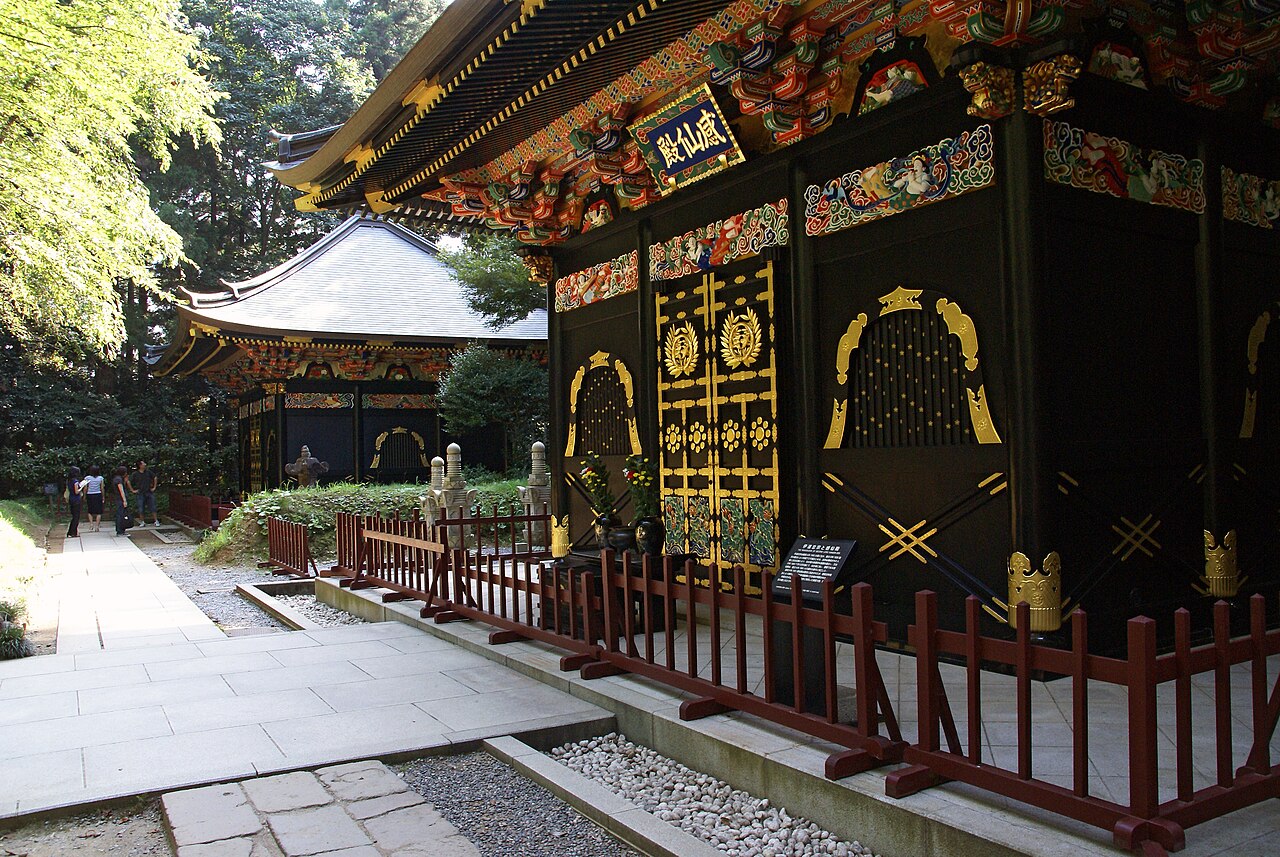
Sendai holds the mausoleum of Date Masamune, founder of the Sendai domain, a shrine whose buildings set black lacquer beneath polychrome carving, and a temple with a Zen garden made for strolling, and it serves grilled beef tongue and zunda mochi to go with them. One way to work through the area is to begin with the mausoleum at Zuihoden, take in the vermilion torii and wide stone steps of Osaki Hachimangu, then walk the stroll garden at Rinno-ji before sitting down to beef tongue and zunda. Each of the three rewards close looking, from a carved cypress gate to a statue with crystal eyes, and the food is as much a reason to come as the buildings.
Zuihoden: The Mausoleum of Date Masamune Among Old Cedars
At Zuihoden, visitors walk into grounds surrounded by old cedar trees, where the richly coloured Kansen-den of the second lord Tadamune and Zen-no-den of the third lord Tsunamune stand with the mausoleum of Date Masamune. Beside the hand-washing pavilion, maple leaves turn bright red. Zuihoden was built by Masamune's will and is reached by crossing the Otamayabashi bridge over the Hirose River.
The front gate, the Nehan-mon, takes its name from nehan, a state of enlightenment with worldly desires removed, and is built of Aomori hiba cypress several hundred years old, carved with a kirin, peonies and Chinese lions. The museum, a rebuilt hall, shows burial goods, portrait statues of the three lords and a video of the excavation survey. If you would like more ideas for spending time in the city, you can browse Sendai experiences on GetYourGuide. If you want to see how three generations are remembered, give Kansen-den and Zen-no-den the same attention as Masamune's hall.
Osaki Hachimangu: Black Lacquer, Vermilion and Plain Wood
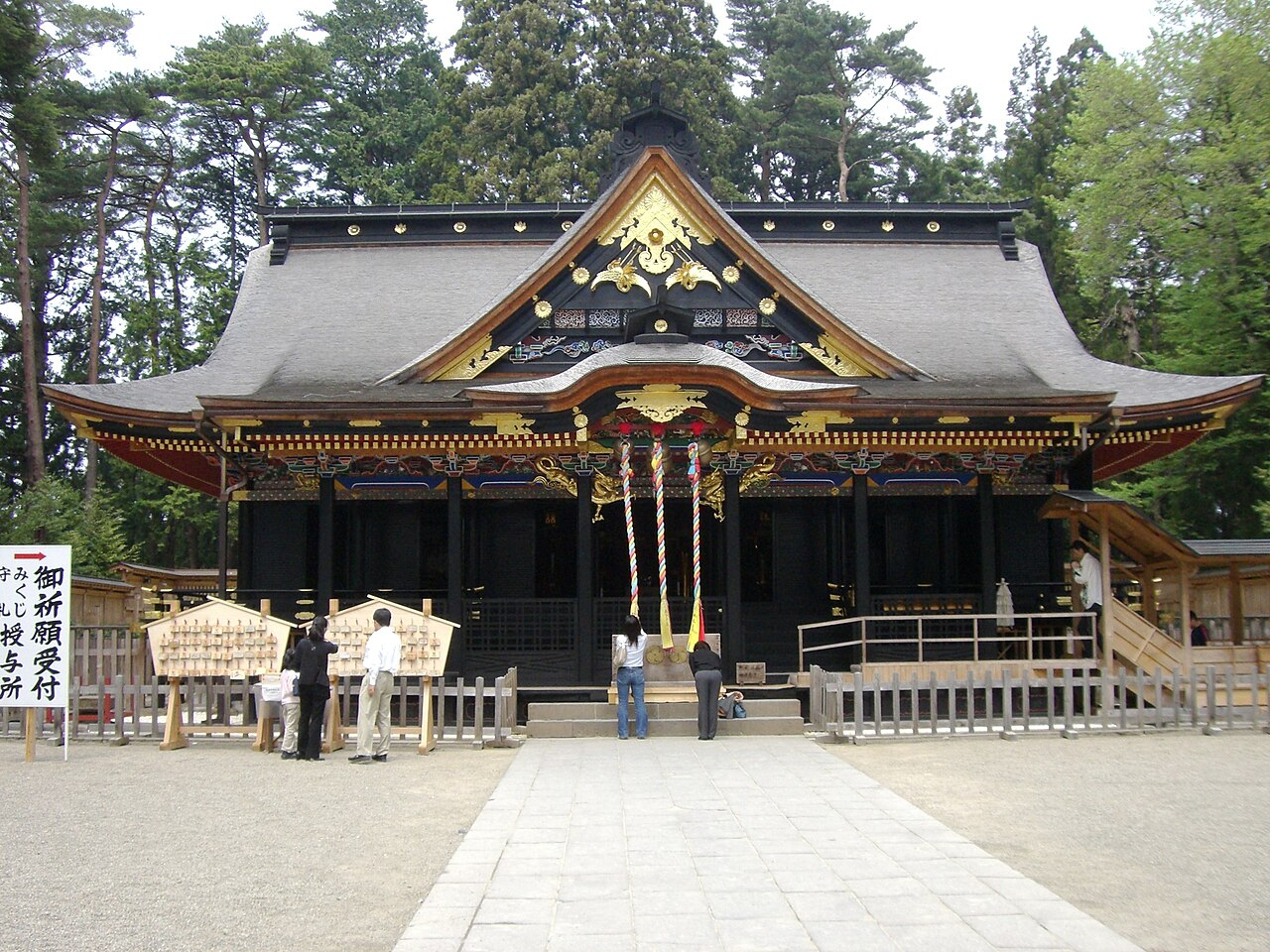
At Osaki Hachimangu, visitors find a large vermilion torii, wide stone steps and a cedar grove within the precinct. The shrine buildings carry polychrome brackets and carvings on their upper exterior, while the lower part is entirely black lacquer. They are in the gongen-zukuri style, the front worship hall and rear main hall joined into one by a connecting room.
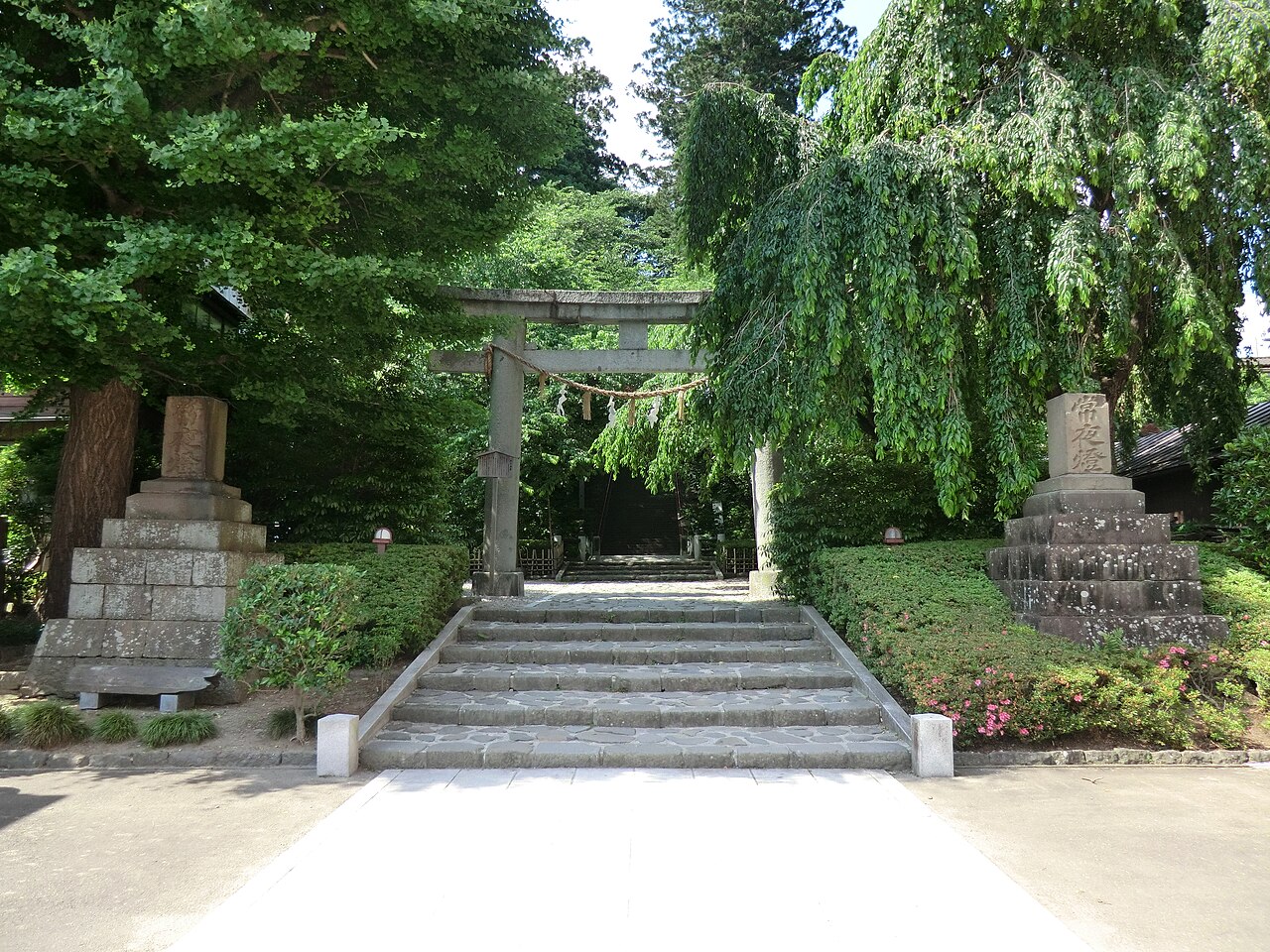
In front of the shrine buildings stands the long hall, an Important Cultural Property built in plain unpainted wood, in contrast to the lacquered buildings behind it. If you like to compare how buildings are finished, look from the bare wood of the long hall to the lacquer behind it.
Rinno-ji: A Stroll Garden and Saturday Zazen
At Rinno-ji, visitors walk a stroll-style Zen garden. Cherry, azalea, satsuki, iris and hydrangea colour it from spring to summer, and the leaves colour in autumn. In early summer the path from the Nio gate to the main hall becomes a green tunnel of shade. In late autumn, snow fences are set in the garden.
In the garden's three-storied pagoda sits a Shakyamuni figure of joined cypress with crystal eyes and gold leaf on its robe.
Saturday zazen at Rinno-ji is held in the evening, and participants are asked to come in loose clothes easy to sit in. Before the start a drum and a bell sound and everyone moves to the hall, then a stillness bell sounds and zazen begins. During the sesshin period in December there is also a morning session of zazen and morning service. If you prefer an evening at a temple to a daytime walk, plan your Saturday around the zazen.
Sendai Beef Tongue and Sasa-kamaboko
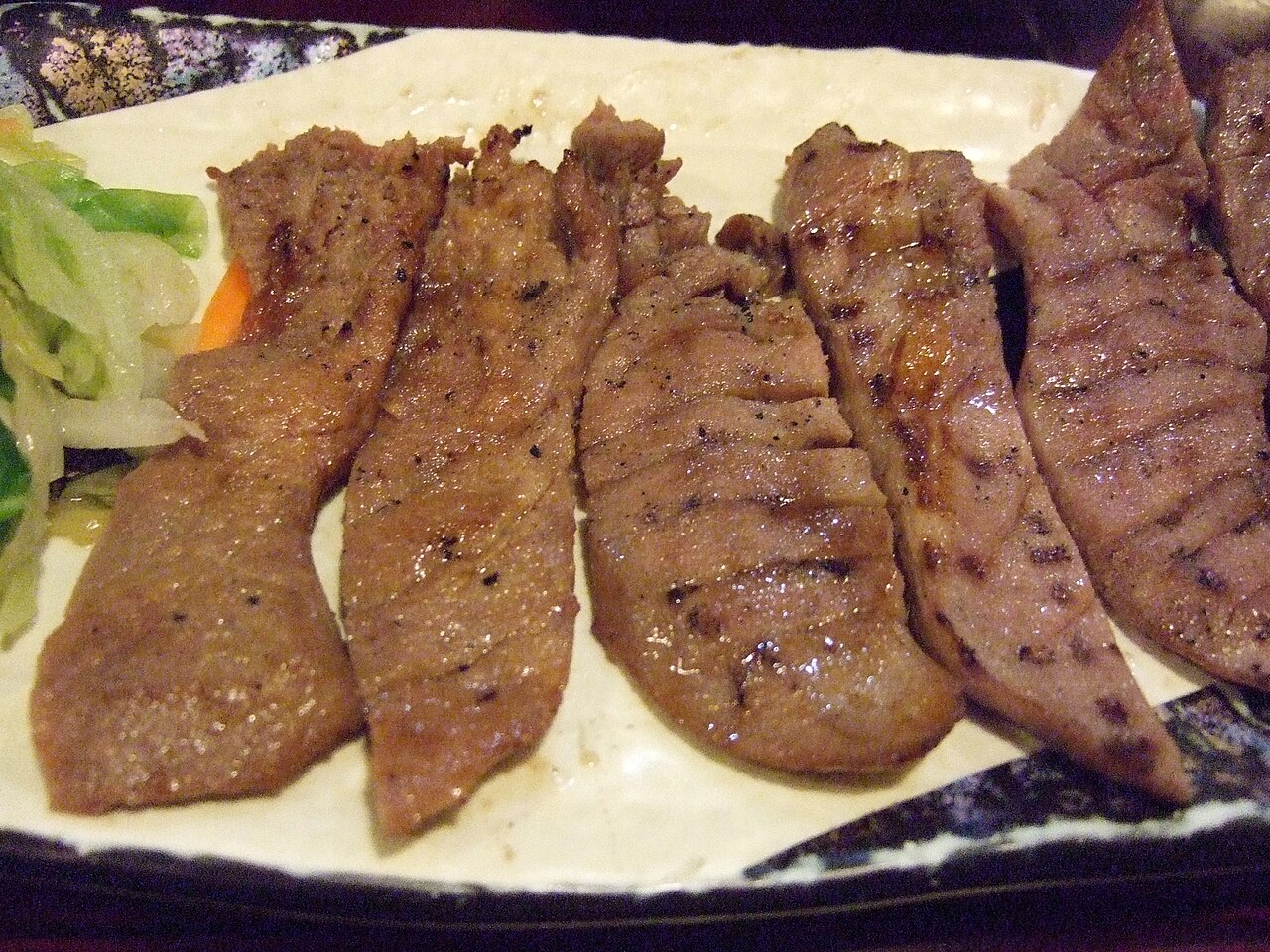
In Sendai, visitors eat beef tongue that has been well aged, grilled quickly on a wire grid over charcoal and served piping hot. It has a moderate chewiness, and the juices fill the mouth as you bite. The standard set adds barley rice, tail soup, salted Chinese cabbage and cucumber, and miso-pickled green chili.
Sasa-kamaboko, the city's other grilled specialty, has the simple flavour of lightly browned white fish and a distinctive chewy texture. The springy bite of good kamaboko, known in the trade by a word meaning foot, grows stronger with quality and bites off crisply. It can be eaten with wasabi soy sauce, ginger soy sauce or mayonnaise. One charcoal grill serves tongue with a firm texture and a savoury aroma, while at another the flavour spreads the more you chew. If you want to compare two grilled dishes, start with the beef tongue set, then sasa-kamaboko.
Imoni, Zunda and the Morning Market
Sendai imoni is a miso-flavoured pork stew close to tonjiru, unlike Yamagata's beef and soy sauce version. In September and October, riverside imoni gatherings are wrapped in the smell of burning firewood and the scent of miso. Large triangular fried tofu, crisp outside and moist inside, is another dish worth naming.
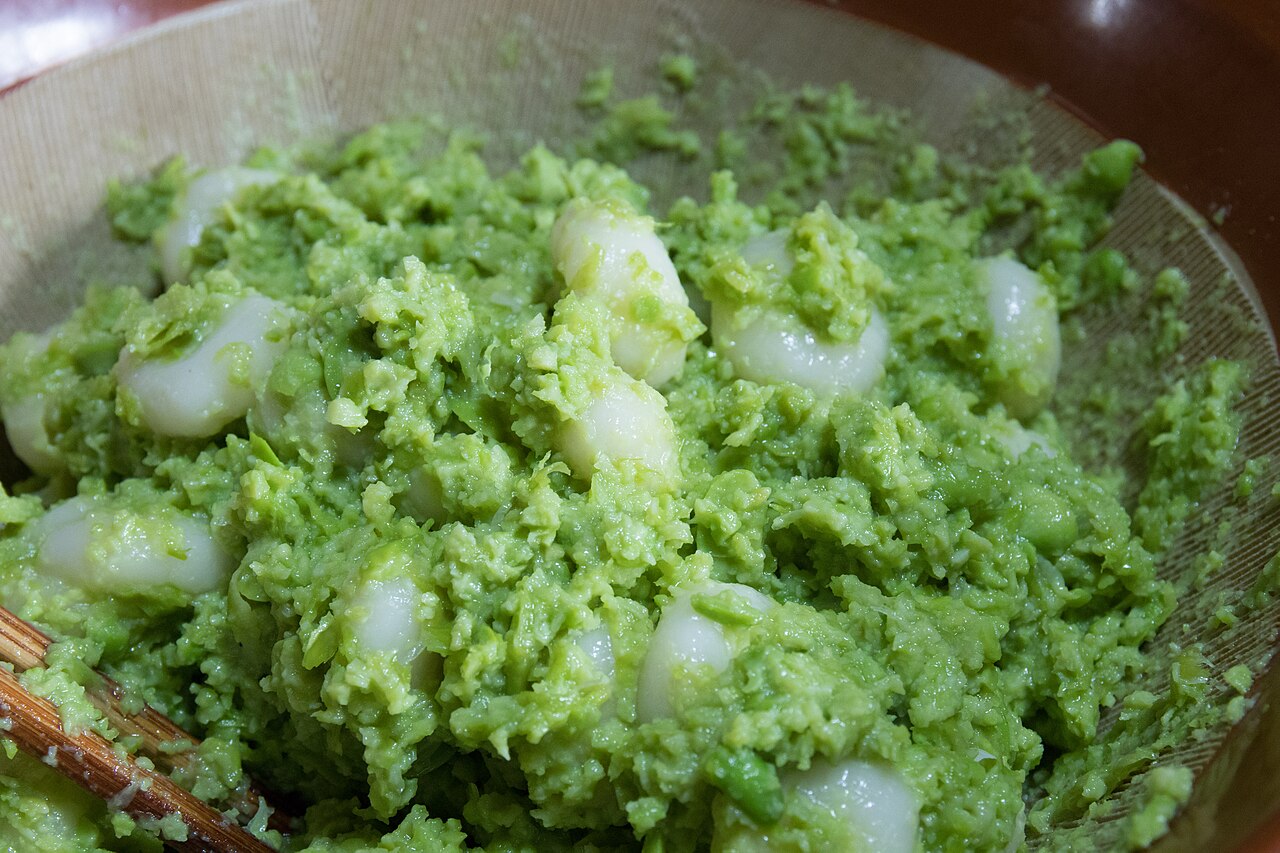
The word zunda is said to come from an older word for mashing beans, though another theory has Date Masamune crushing edamame with a sword in camp. Zunda mochi is made by boiling and peeling edamame, mashing them with sugar and coating mochi.
Around seventy shops line the Sendai Morning Market, seasonal fish, fresh vegetables and fruit packed tightly on display. If you want local food first thing, the market's name says when to come. To plan a morning that takes in the market and a garden, places to stay in Sendai can make an early start easier.
Getting to Sendai
| Leg | How | Time |
|---|---|---|
| Sendai Station to Zuihoden | Loople Sendai sightseeing bus | About 15 minutes |
| Zuihoden-mae bus stop to Zuihoden | On foot | About 5 minutes |
| Sendai Station to Rinno-ji | City bus | About 26 minutes |
| Sendai Station to Rinno-ji | Taxi | About 15 minutes |
| Kita-Sendai Station to Rinno-ji | On foot | About 15 minutes |
| Osaki Hachimangu and Sendai Station | Loople Sendai | About 27 minutes |
| Loople Sendai from Sendai Station | First and last departures | 9:00 and 16:00 |
| Loople Sendai | One loop | About 70 minutes |
| Loople Sendai | Weekday interval | Every 20 minutes |
| Loople Sendai | Interval on Saturdays, Sundays and holidays | Every 15 minutes |
The Sendai Morning Market is about a five-minute walk from Sendai Station. IC cards such as Suica can be used to pay the single-ride fare on Loople Sendai.
New to rural buses and one-man trains? See how to ride them, step by step.
Hours and Fees
| Place | What | Hours or fee |
|---|---|---|
| Zuihoden | Admission hours, February to November | 9:00 to 16:50, last admission 16:30 |
| Zuihoden | Admission hours, December to January | 9:00 to 16:20, last admission 16:00 |
| Zuihoden | Closed | December 31 |
| Zuihoden | Adult admission | 570 yen |
| Rinno-ji | Admission hours | 8:00 to 17:00, last entry 16:30, every day |
| Rinno-ji | Admission | 300 yen; children below elementary-school age are free |
| Rinno-ji | Saturday zazen | Every Saturday, 18:25 to 20:00 |
| Rinno-ji | Sesshin morning zazen, December 1 to 7 | 5:55 to 7:00 |
| Rinno-ji | Seated Shakyamuni viewing | 1st and 15th of each month |
| Sendai Morning Market | Hours | 8:00 to 18:00 |
| Sendai Morning Market | Closed | Sundays and national holidays |
Where to stay
Places to stay near Sendai, Miyagi, Japan →
Disclosure: This post may contain affiliate links. If you book through them, we may earn a commission at no extra cost to you.