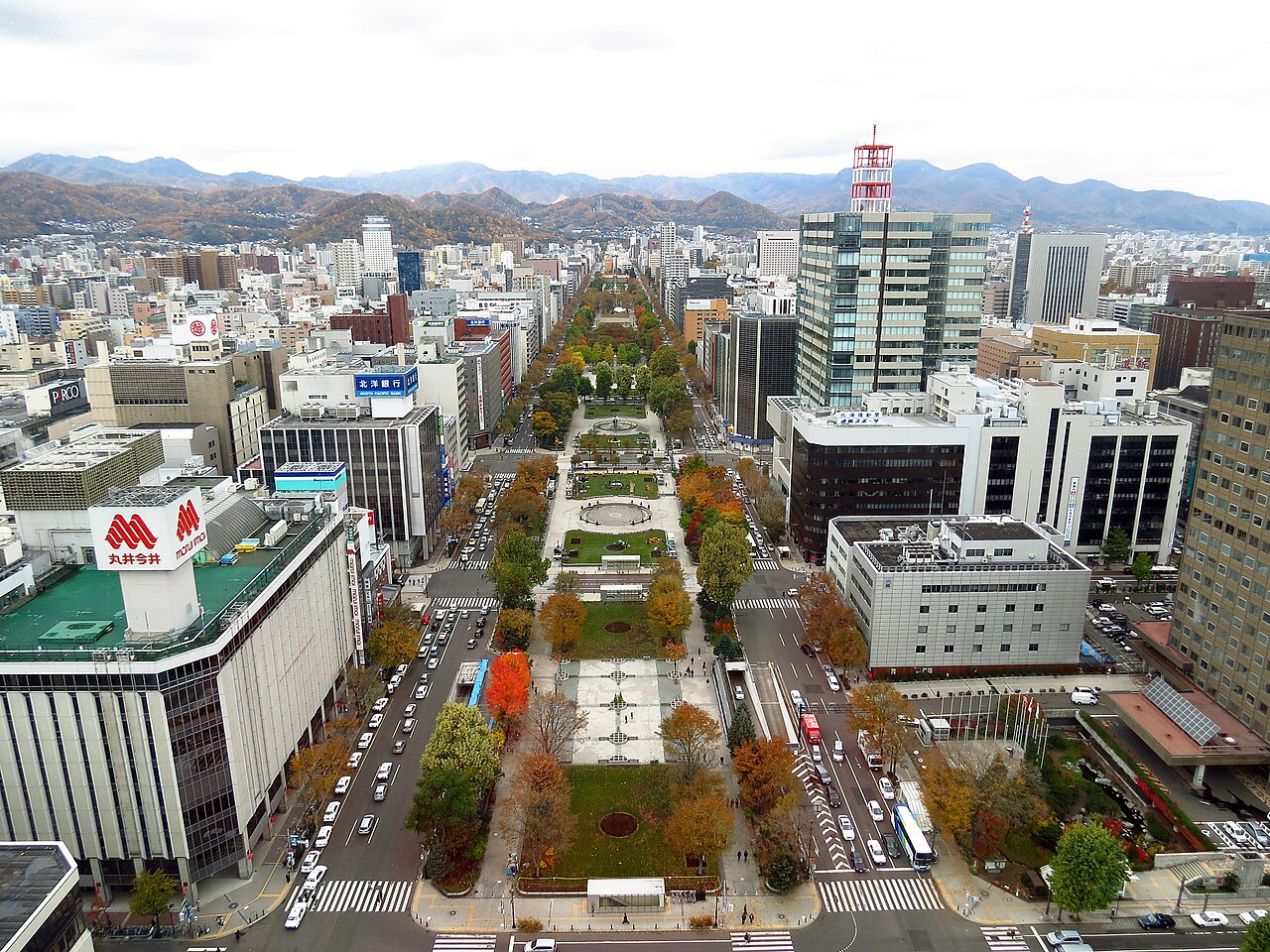
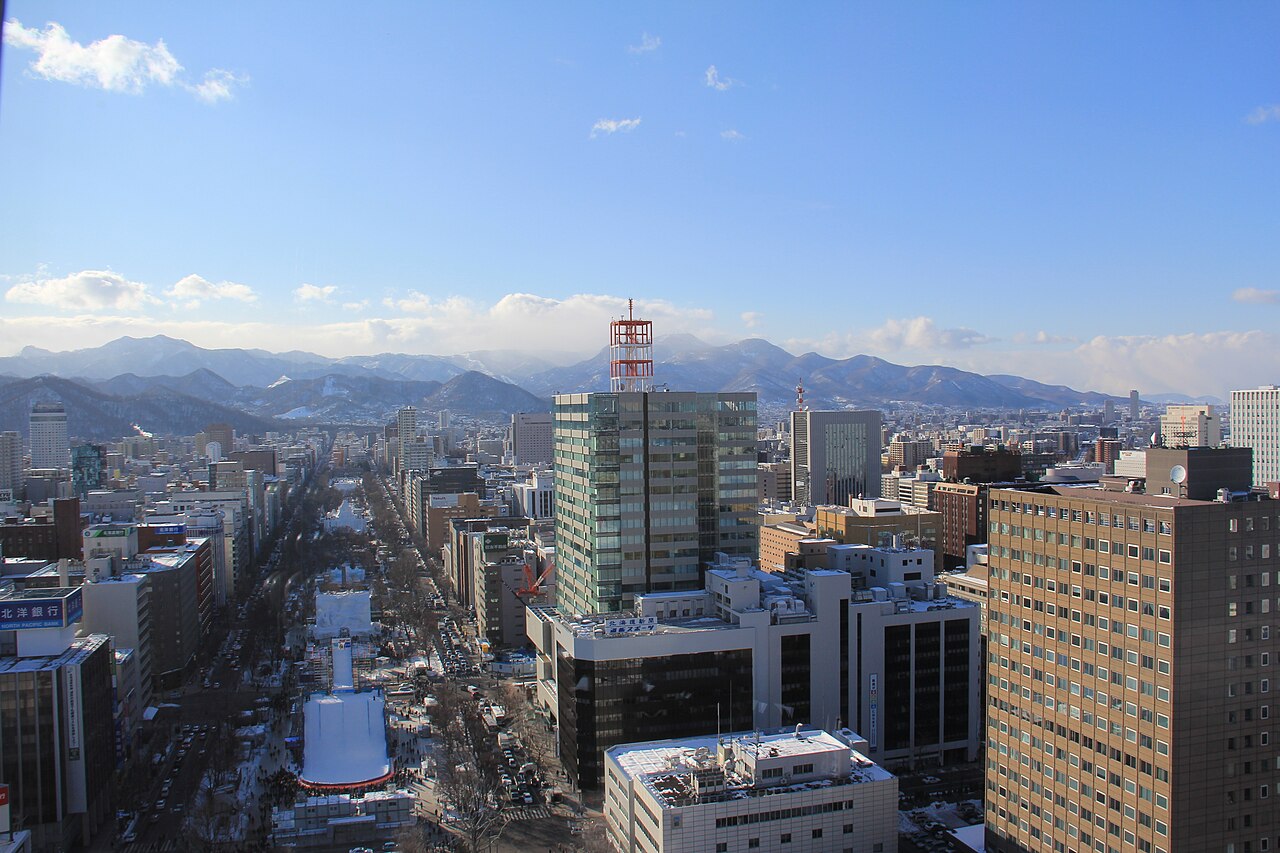
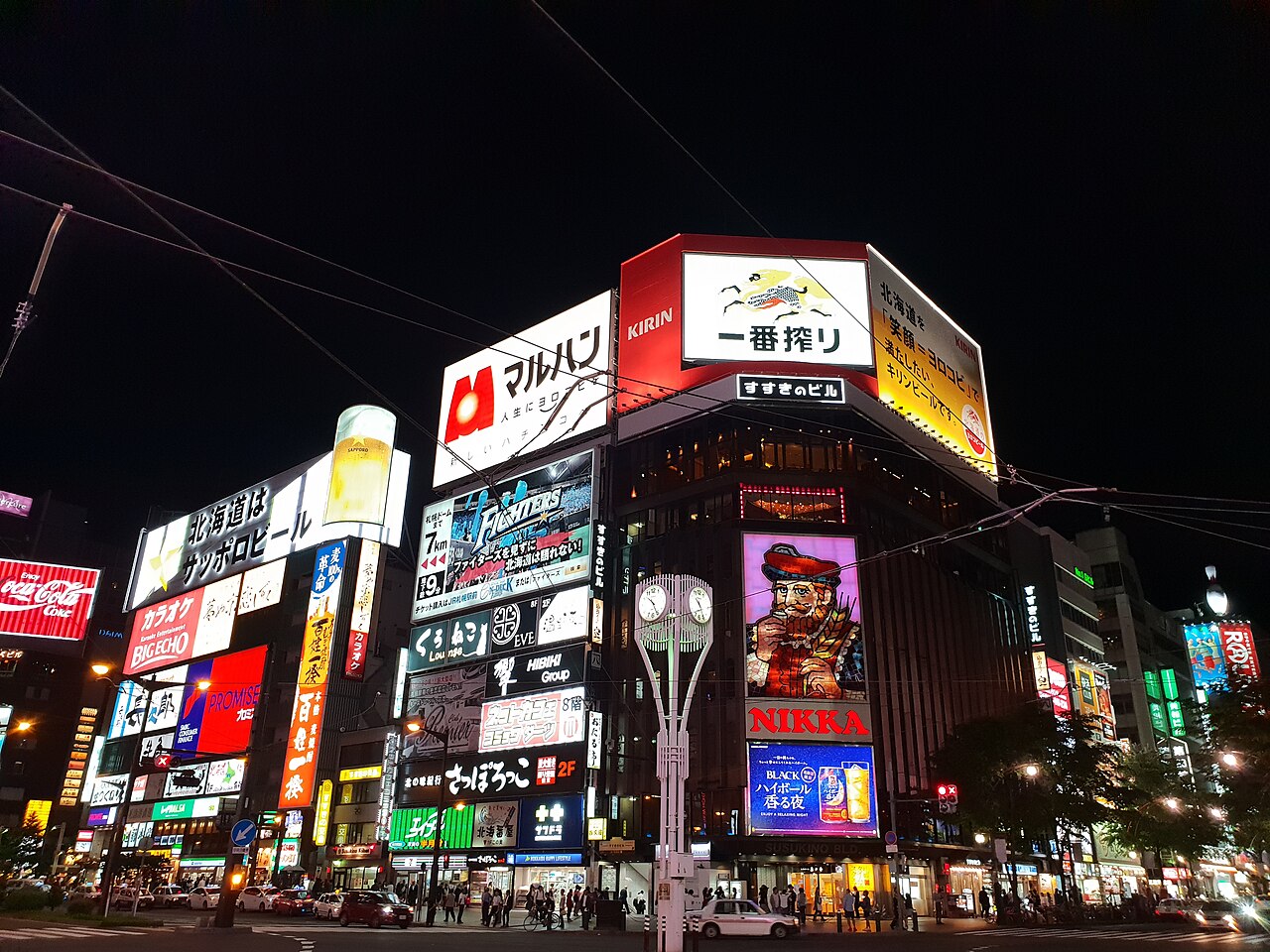
Sapporo is the birthplace of miso ramen, and Odori Park, at the centre of a day here, is a road despite being called a park. At night, the view from the Sapporo TV Tower observation deck turns orange under the sodium lamps typical of Hokkaido. In winter, snow scenery covers the whole town.
With a single day, start at the markets in the morning, when the Jogai Market displays its goods as soon as the auction ends, and keep the TV Tower for the night, when the orange view from the sodium lamps appears.
Strolling Odori Park to the Clock Tower Bell and the Former Hokkaido Government Office Building
Walking Odori Park from one end to the other covers about one and a half kilometres, because the park is in fact a road. It is divided into twelve blocks, and each block is separated from the next by a pedestrian crossing. About ninety kinds of trees, some four thousand seven hundred in all, surround the park, among them lilacs and Japanese elms. The Autumn Fest, a food event, is held in Odori Park.
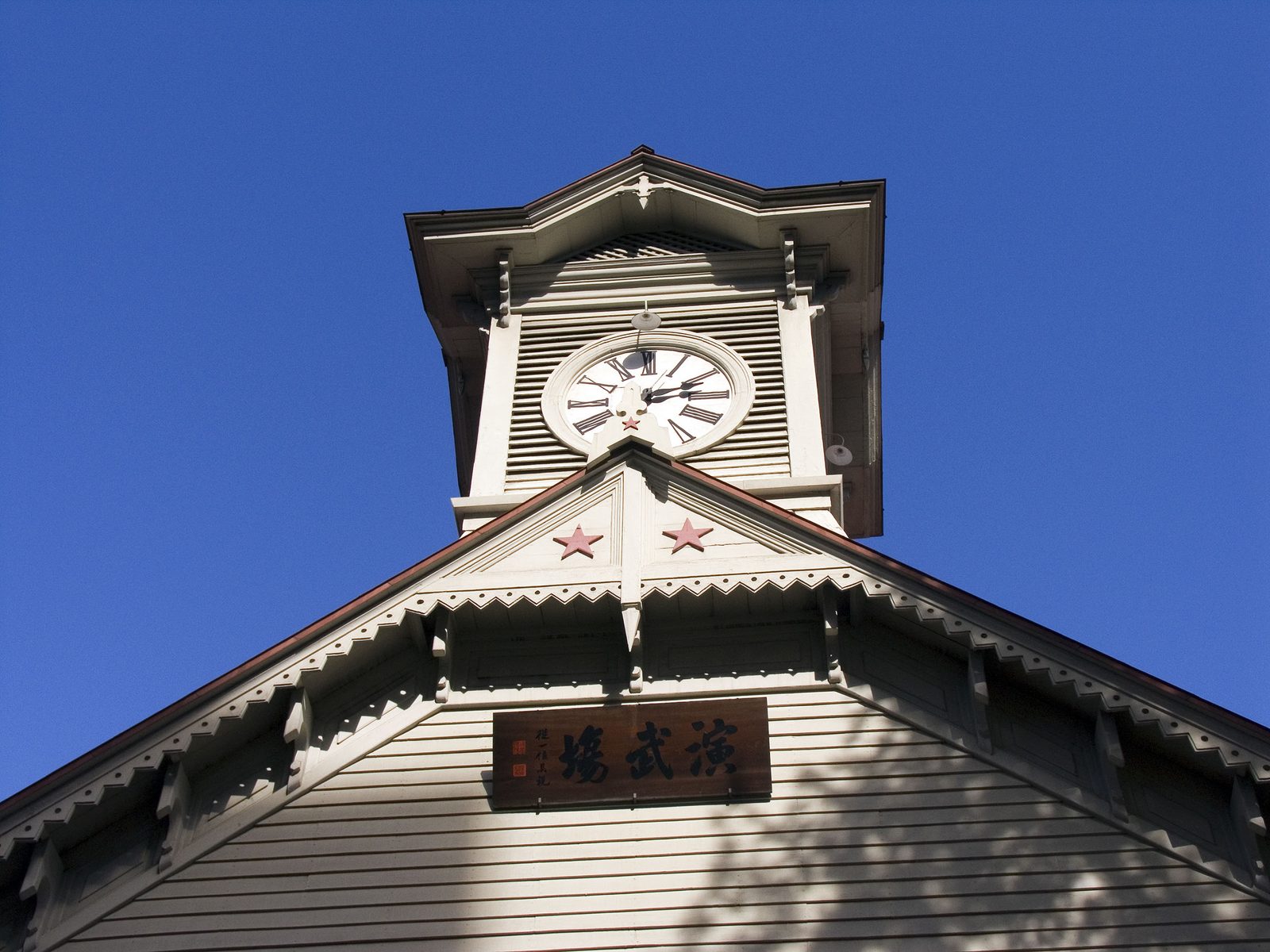
Sapporo Clock Tower has a red roof and white walls, and its bell strikes at every hour on the hour to mark the time. The building has no soundproofing, so the tower bell and outside sounds such as car sirens and horns can be heard inside. Through headphones, the exhibition plays the sounds of the Sapporo clock tower and of clocks and church bells from twelve places around the world.
On the second floor of the Clock Tower, the hall is about two hundred square metres and has a capacity of one hundred fifty people. The floor recreates the lecture hall scene of the celebration for the doctoral degrees awarded to Satō Shōsuke, Minami Takajirō and Miyabe Kingo. A guide tour explains the history of the tower, which was built in eighteen seventy-eight as the drill hall of Sapporo Agricultural College, the predecessor of Hokkaido University. After sunset, the Clock Tower is lit up.
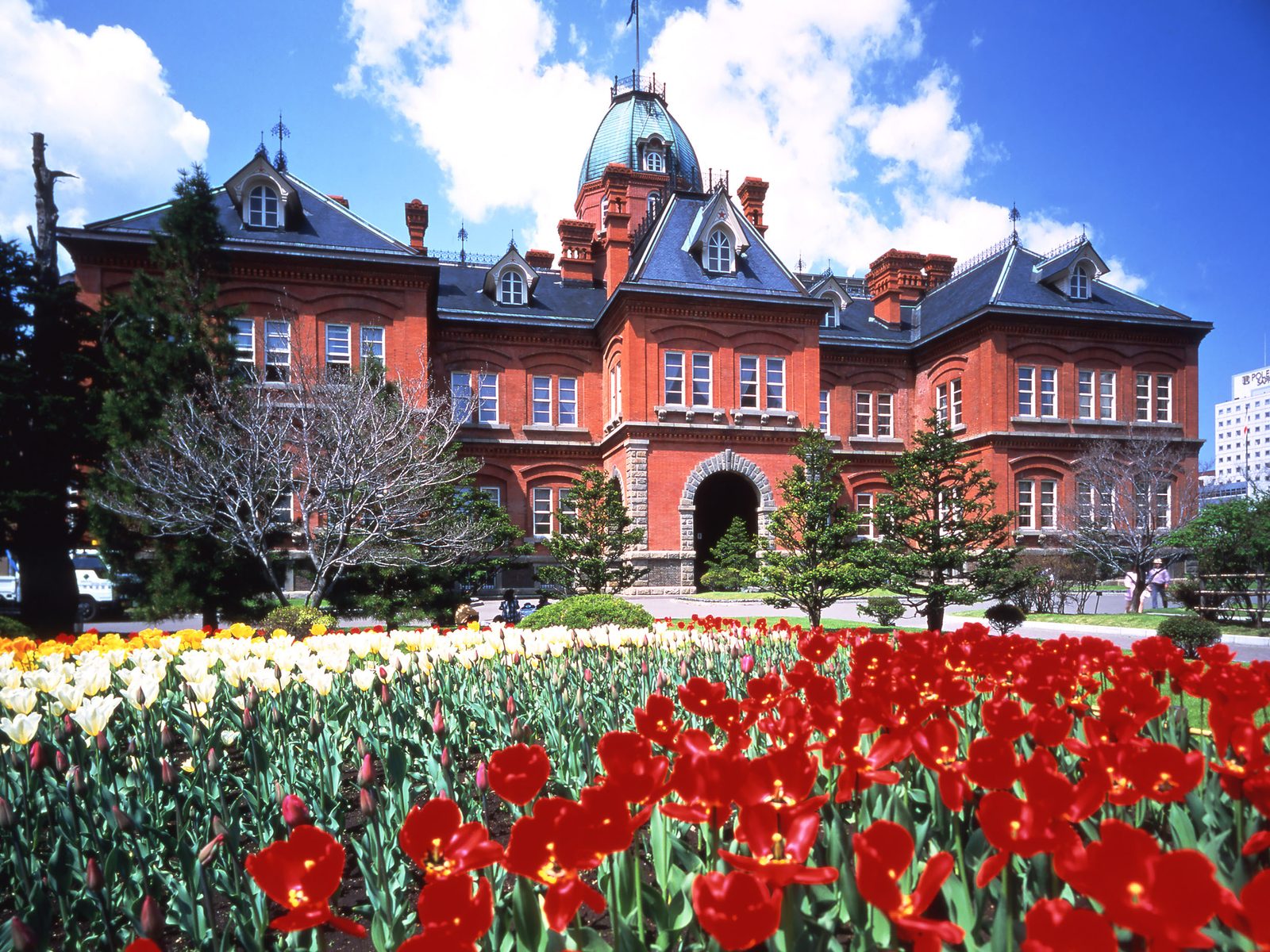
At the Former Hokkaido Government Office Building, the five-pointed star symbol of the Pioneer Commission is designed into many places on the building. Its first floor houses Akarenga sweets labo, a sweets shop run by ISHIYA, and HOUSE.H, which serves bistro dishes made with Hokkaido ingredients and select drinks. A shop in the building sells original sweets and goods and Hokkaido-specific merchandise. Travellers looking for sweets or Hokkaido goods can find them in this building, while those who came for the bell should be at the Clock Tower on the hour.
Looking Out From the TV Tower and Mount Moiwa After Dark
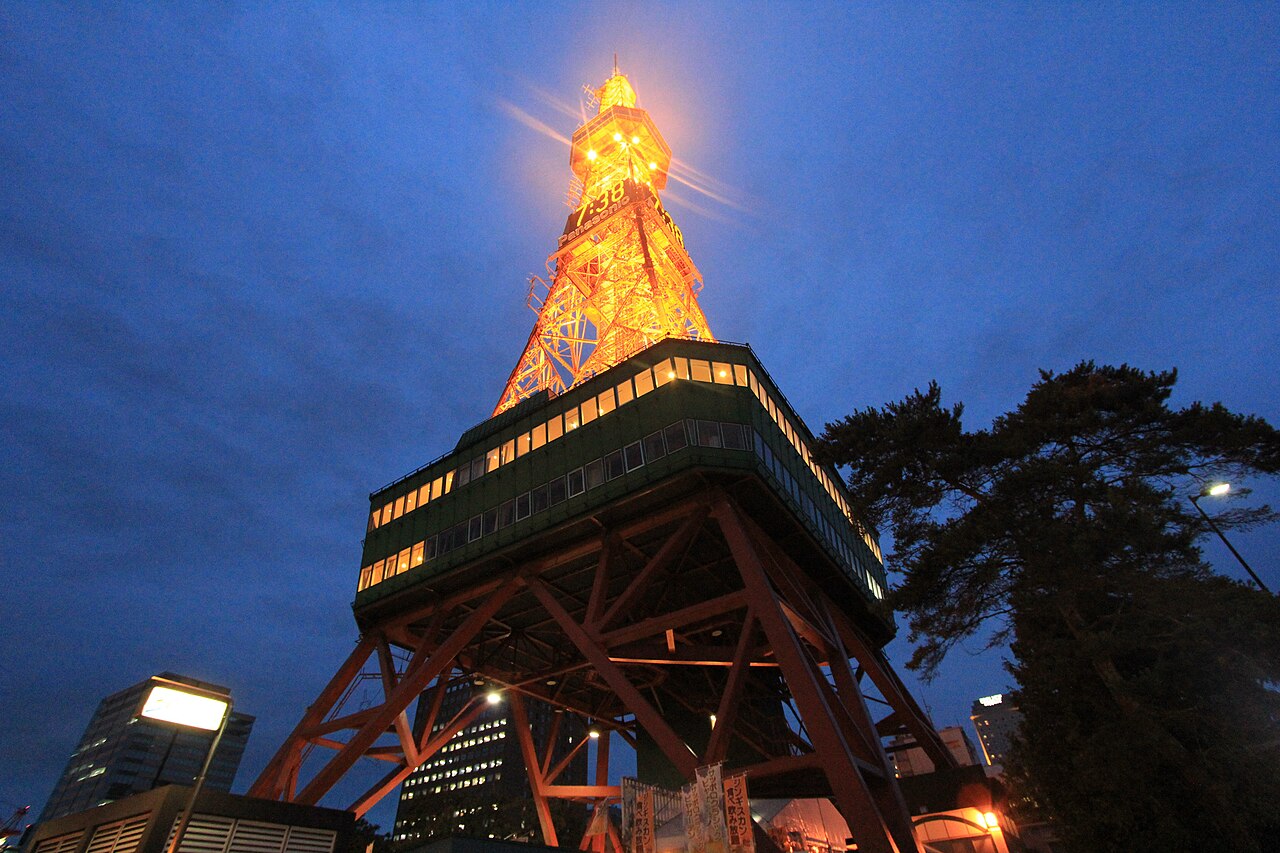
The observation deck of the Sapporo TV Tower is reached by elevator in about sixty seconds. At night, the view from the deck is orange, the colour of the sodium lamps typical of Hokkaido, and in winter snow scenery covers the whole town. Three panes on the southeast side of the deck are single sheets of glass running from the feet to the ceiling. On clear days, the sea of Ishikari and wind power turbines can be seen from the deck.
The Sapporo TV Tower was designed by a man who was called the Tower Doctor. It was a single silver metallic colour when it opened, and the silver quickly turned grey because of the heavy soot in Sapporo at the time. The electric clock on the tower was created after Sapporo citizens asked for one, saying a clock on the tower would be convenient. One face of that clock uses one thousand six hundred thirteen LEDs.
Mount Moiwa stands almost in the centre of Sapporo, and the ropeway ride up it takes five minutes. The observation deck on the summit gives a three-hundred-sixty-degree panorama of the night view of the city centre. From the summit, the Sapporo cityscape, Ishikari Bay on the Sea of Japan and a wide panorama reaching Mashike-Shokanbetsu-dake can be seen.
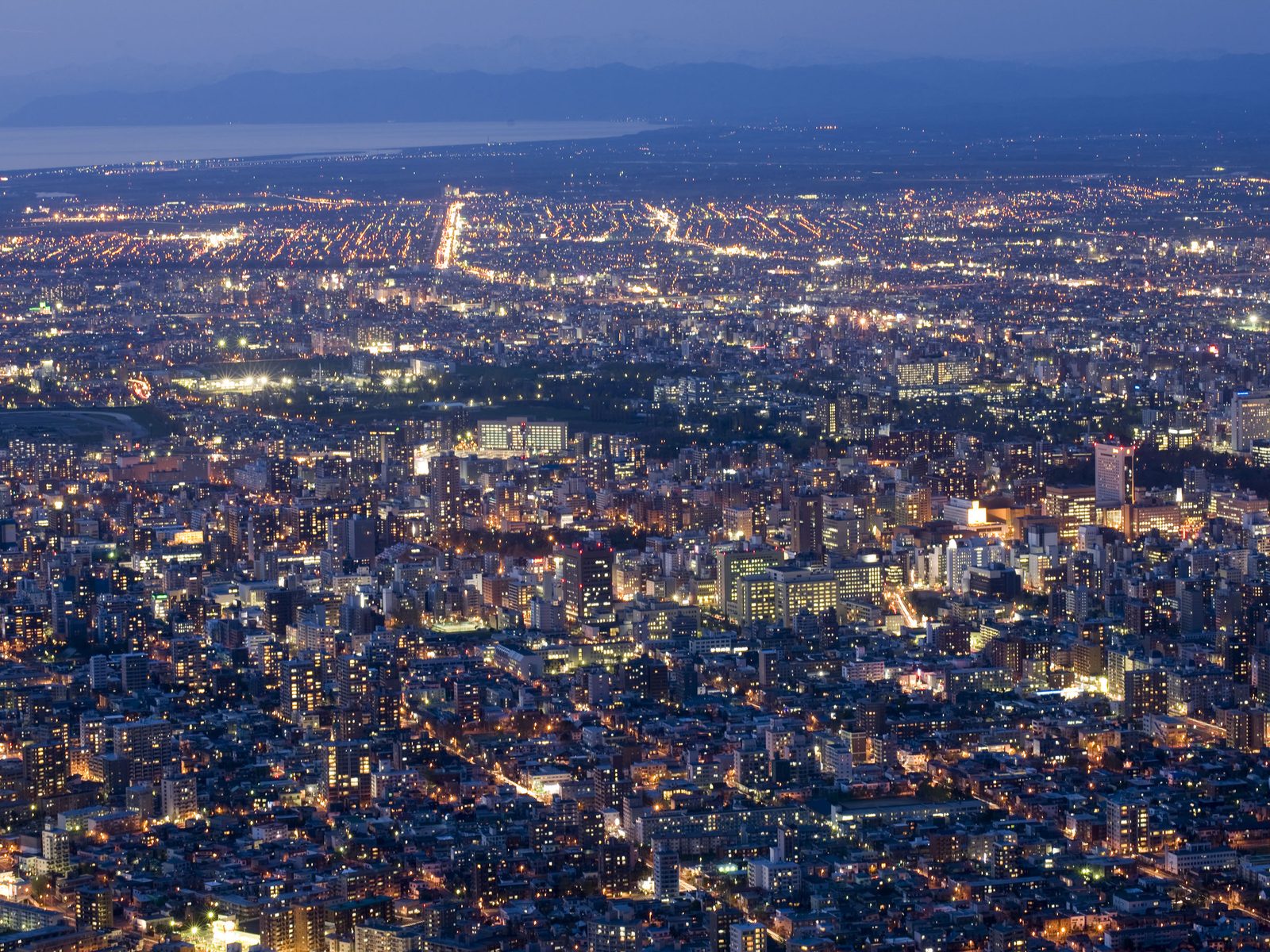
Sapporo is surrounded by mountains, and its night view can be seen from various elevations, with Mount Moiwa the higher and the Sapporo TV Tower the lower of these two. With one evening, choose by height: Mount Moiwa for the panorama from the summit, or the TV Tower for the orange view reached by elevator.
Eating Fresh Seafood at Nijo Market and the Jogai Market in the Morning
Nijo Market has about twenty-five fisheries companies and fresh fish shops, which sell the fish stocked that day. Other shops sell dried fish and processed seafood, or handle vegetables and fruit, and some offer tasting at the shop front. Lighting made with floats hangs from the ceiling. In summer, sweet corn from Hokkaido is displayed in front of shops, and in winter there are kerosene stoves in places along the street.
Eating at Nijo Market means choosing among about ten restaurants, including sushi shops, seafood bowl shops and grilled-food shops, and some fresh fish shops have an eat-in corner. Many shops at Nijo Market arrange shipping.
The Jogai Market of the Sapporo Central Wholesale Market has about sixty shops in a row, including fresh fish shops, greengrocers, dried goods shops and salted and dried fish shops. Goods go on display as soon as the auction at the market ends, and most fresh fish shops have tanks where the fish and shellfish bought that day are displayed. Sushi shops and set-meal restaurants at the Jogai Market use the market's ingredients, and the seafood bowl menu differs from shop to shop. Shops can arrange shipping for items requiring refrigeration or freezing, and many processed seafood products can be carried home at room temperature.
Nijo Market and the Jogai Market both serve seafood bowls and sushi made with plenty of fresh seafood bought that morning from across Hokkaido. Go in the morning for either market, and expect the Jogai Market to be crowded with many people from morning to lunchtime.
Sapporo Miso Ramen and Genghis Khan Lamb
Sapporo is the birthplace of miso ramen, and ramen stalls appeared around Nijo Market and the Tanukikoji shopping street just after the war. The basic style of Sapporo ramen is a broth based on pork bones and vegetables with yellow, medium-thick curly noodles. For the soup, vegetables are stir-fried in a wok, then sauce and soup are added and simmered briefly. At one miso ramen shop, a garlic-flavoured, rich and spicy soup is served with medium-thick curly noodles, and at one miso ramen shop a special miso sauce and a clear pork bone broth are combined into a simple flavour.
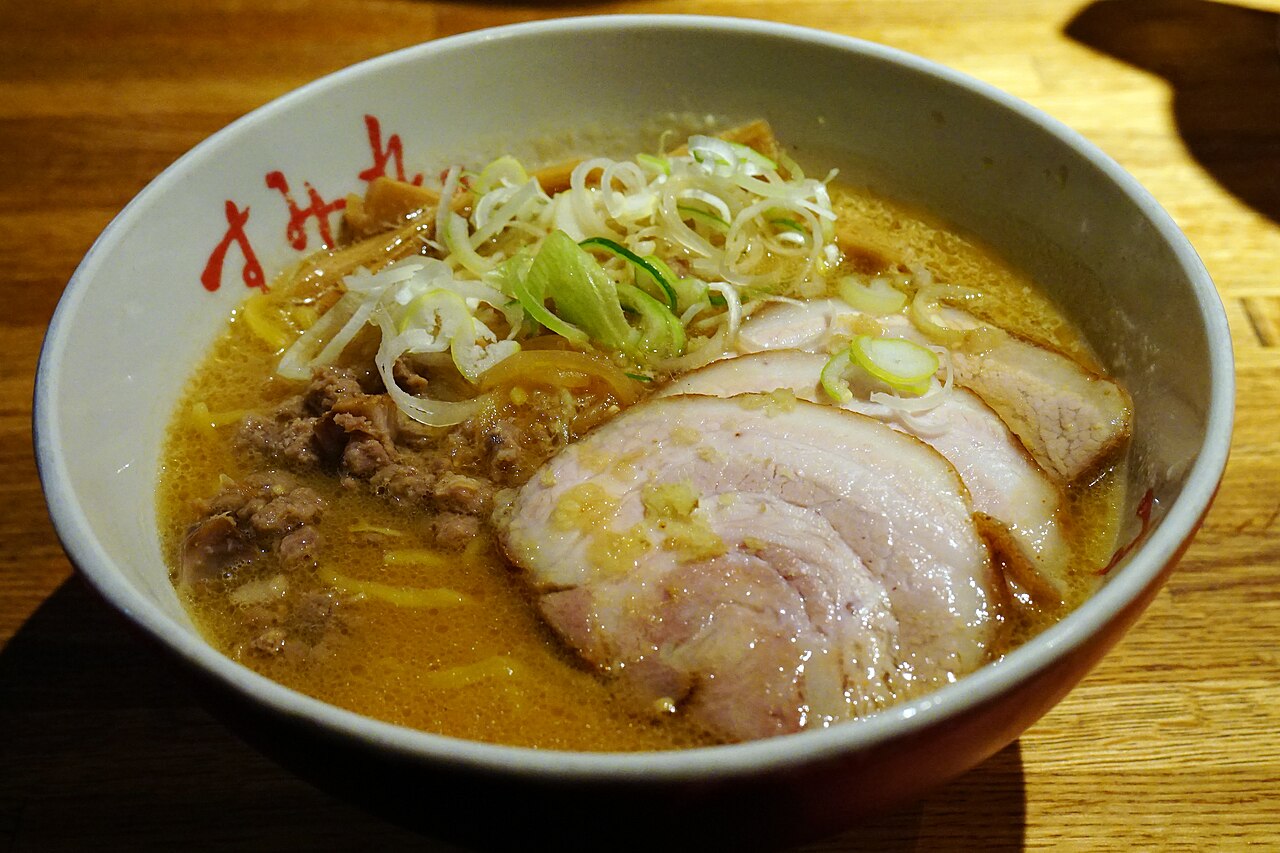
Sapporo ramen noodles turn pale yellow when alkaline kansui reacts with the pigment in wheat flour, and the yellow curly noodles are high-moisture noodles with a firm, chewy texture. At that time just after the war, one serving of Sapporo ramen used one hundred forty to one hundred fifty grams of raw noodles. With about eight hundred to one thousand ramen specialty shops in Sapporo, a second bowl at a different shop is a way to compare the garlic-flavoured soup with the simple one. At one Genghis Khan restaurant in Sapporo, lamb is cut by hand to a thickness of one centimetre or more and marinated in a special sauce.
Snow Festival, White Illumination and Nakajima Park Through the Seasons
The Sapporo Snow Festival began in nineteen fifty, when local junior high and high school students displayed six snow statues in Odori Park. The festival is held at three venues that differ in character, with snow sculptures, ice sculptures and a giant slide. The Tsudome venue has a food booth and rest area in its indoor space, along with attractions where children can play, so families with children have a reason to add it. The White Illumination began in nineteen eighty-one as the first illumination in Japan.
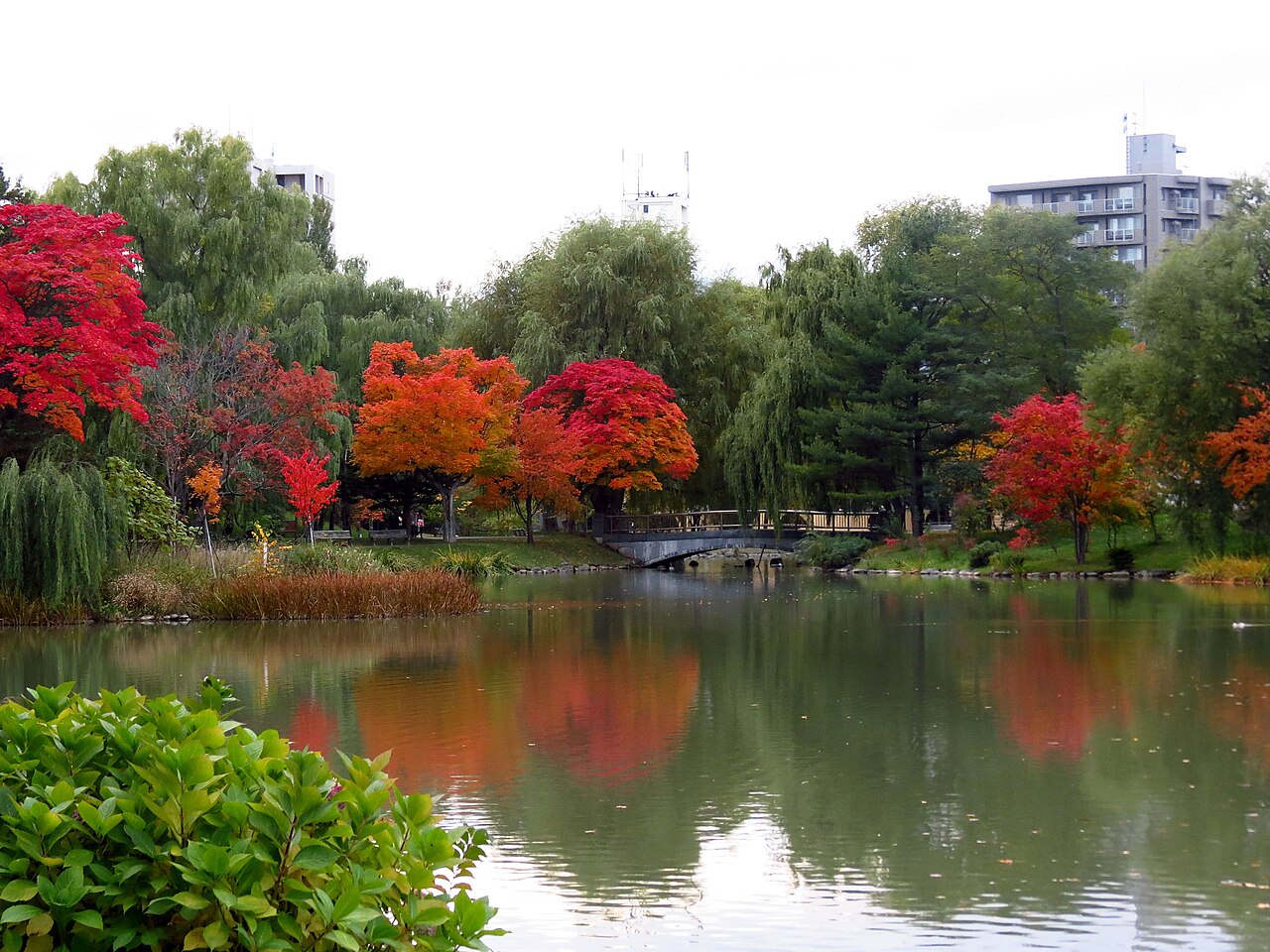
Nakajima Park has an iris pond where boating is available from late spring to early autumn. In winter, the park offers cross-country skiing, and ski equipment can be rented. The Japanese garden in Nakajima Park has a sound of flowing water. Pick the park by season: the boats on the pond from late spring, or the cross-country skiing in winter.
Getting to Odori Park, the Clock Tower and the TV Tower
New to rural buses and one-man trains? See how to ride them, step by step.
| Route | Item | Detail |
|---|---|---|
| New Chitose Airport to Sapporo Station | Rapid Airport and Special Rapid Airport | About thirty-seven minutes by Rapid Airport; about thirty-three minutes by Special Rapid Airport |
| New Chitose Airport to Sapporo Station | Airport bus | About seventy minutes |
| Odori Station to Sapporo TV Tower | Sapporo Municipal Subway, Exit Twenty-seven | The exit is right next to the tower |
| Odori Station to Sapporo Clock Tower | City hall side exit | About a five-minute walk |
| JR Sapporo Station to Sapporo Clock Tower | South exit | About a ten-minute walk |
| Sapporo Clock Tower to Sapporo TV Tower | On foot | Five to seven minutes, not including viewing time |
| Sapporo Municipal Subway | Fare and one-day ticket | Fare two hundred ten to three hundred eighty yen for adults; subway-only one-day ticket eight hundred thirty yen for adults and four hundred twenty yen for children |
| Streetcar | Fare per ride | Two hundred thirty yen for adults and one hundred twenty yen for children |
For an overnight stay in Sapporo, browse places to stay in Sapporo.
Hours and Fees
| Place | Item | Time or fee |
|---|---|---|
| Sapporo Clock Tower | Admission | Adults three hundred fifty yen; university students with student ID one hundred fifty yen |
| Sapporo Clock Tower | Hours | Eight forty-five to ten past five in the afternoon, with admission until five; closed from January first to January third |
| Sapporo Clock Tower | Clock-winding demonstration | Once a day from ten thirty; the full course through all the exhibits takes one and a half to two hours |
| Sapporo TV Tower observation deck | Hours | Open nine in the morning to ten at night, with last observation entry at nine fifty; closed all day on January first, two thousand twenty-seven |
| Mount Moiwa | Round-trip fare to the observation deck | Ropeway plus mini cable car two thousand one hundred yen for adults and one thousand fifty yen for children; ropeway one thousand four hundred yen for adults and seven hundred yen for children |
| Mount Moiwa ropeway | Hours | April to November ten thirty to ten at night; December to March eleven to ten at night; last ascent at nine thirty |
| Jogai Market | Hours | Open from six (seven for restaurants) to three in the afternoon (five for large stores); hours differ by shop |
| Nakajima Park Japanese garden | Hours | Open from nine to five; closed in winter, from early November to late April |
| Sapporo Snow Festival, Odori Park | Dates | February fourth to February eleventh, two thousand twenty-seven |
| White Illumination and Munich Christmas Market | Dates | White Illumination at the Odori venue from November twentieth, two thousand twenty-six to March fourteenth, two thousand twenty-seven; Munich Christmas Market from November twentieth to December twenty-fifth, two thousand twenty-six |
Fees and hours were checked against official sources on 18 November 2026.
Thinking of staying overnight?
Compare places to stay near Sapporo →
Disclosure: This post may contain affiliate links. If you book through them, we may earn a commission at no extra cost to you.