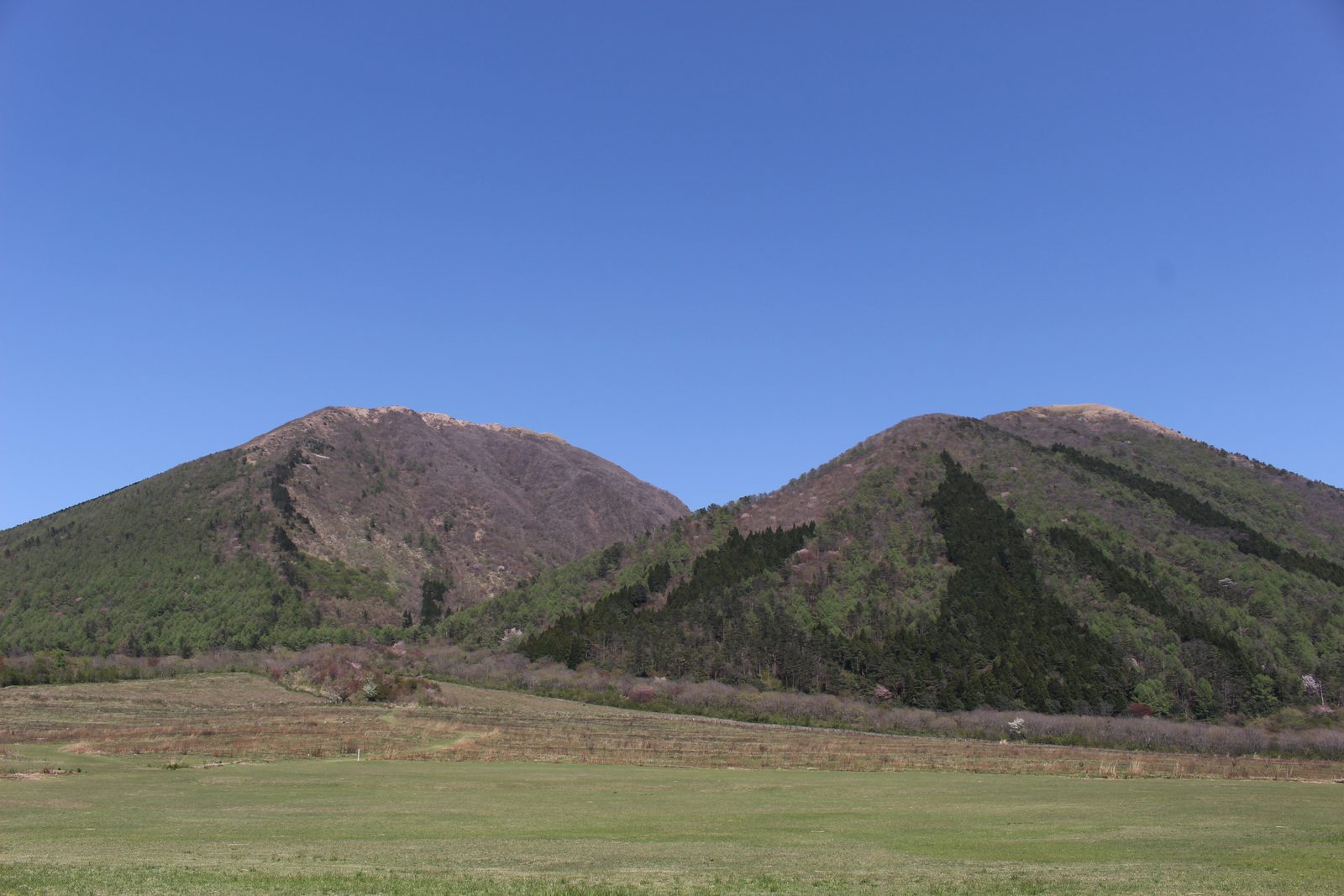
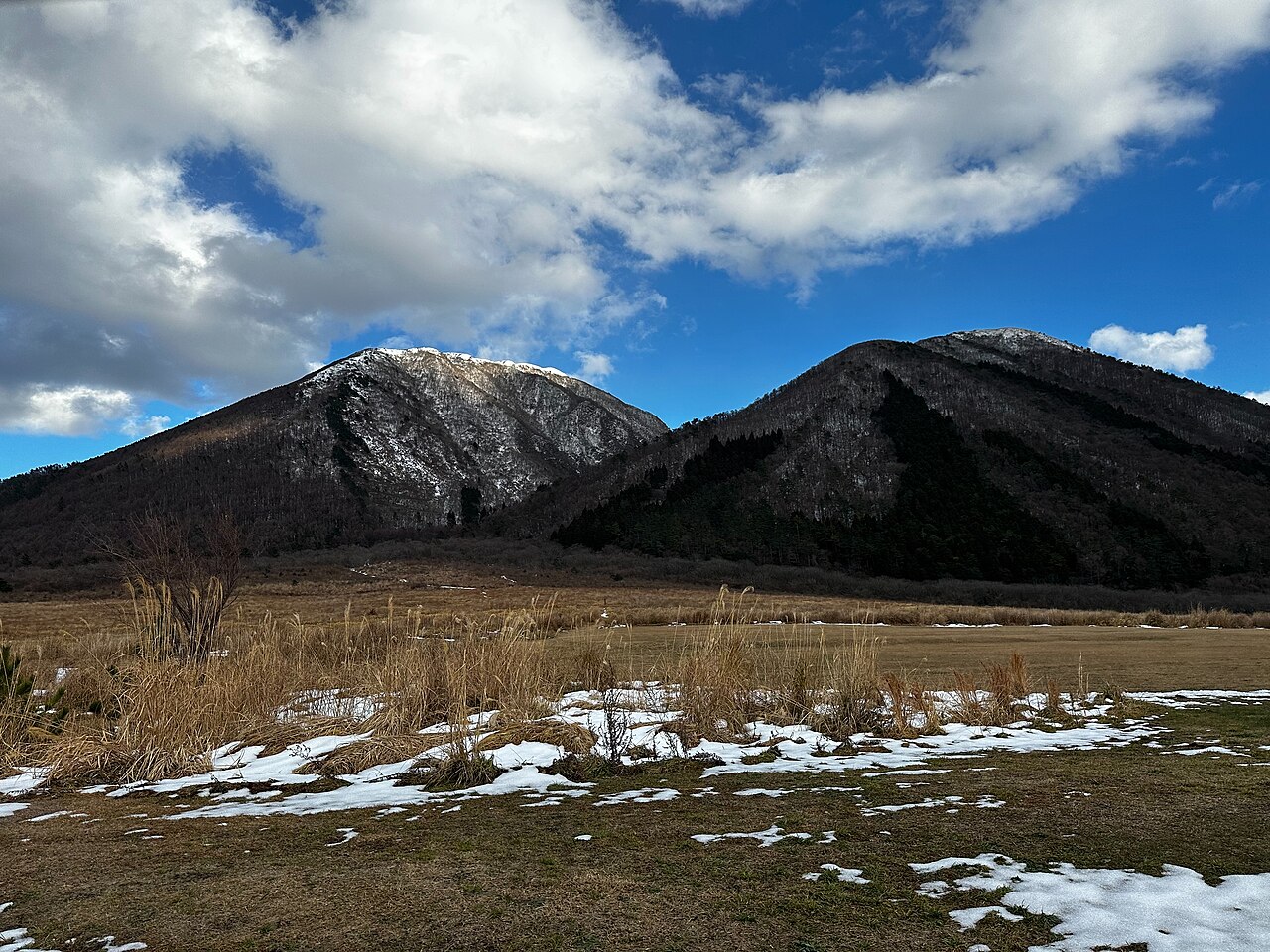
Multiple peaks of Mount Sanbe are lined up so that they surround a hollow. At the foot of the mountain, cattle pasture and grassland spread across Kitanohara, Nishinohara and Higashinohara. From the summit, the Sea of Japan, the mountains of the Chugoku range and Mount Daisen in Tottori Prefecture can be seen in a view of three hundred sixty degrees.
Grassland Burning and Summer Flowers
With the arrival of spring, the dead susuki grass across the Nishinohara grassland is set on fire and burned off. Flames spread across the whole grassland during the burning. The spring burning maintains the Nishinohara grassland by preventing wildfires and afforestation, and burning the grassland lets new grass sprout.
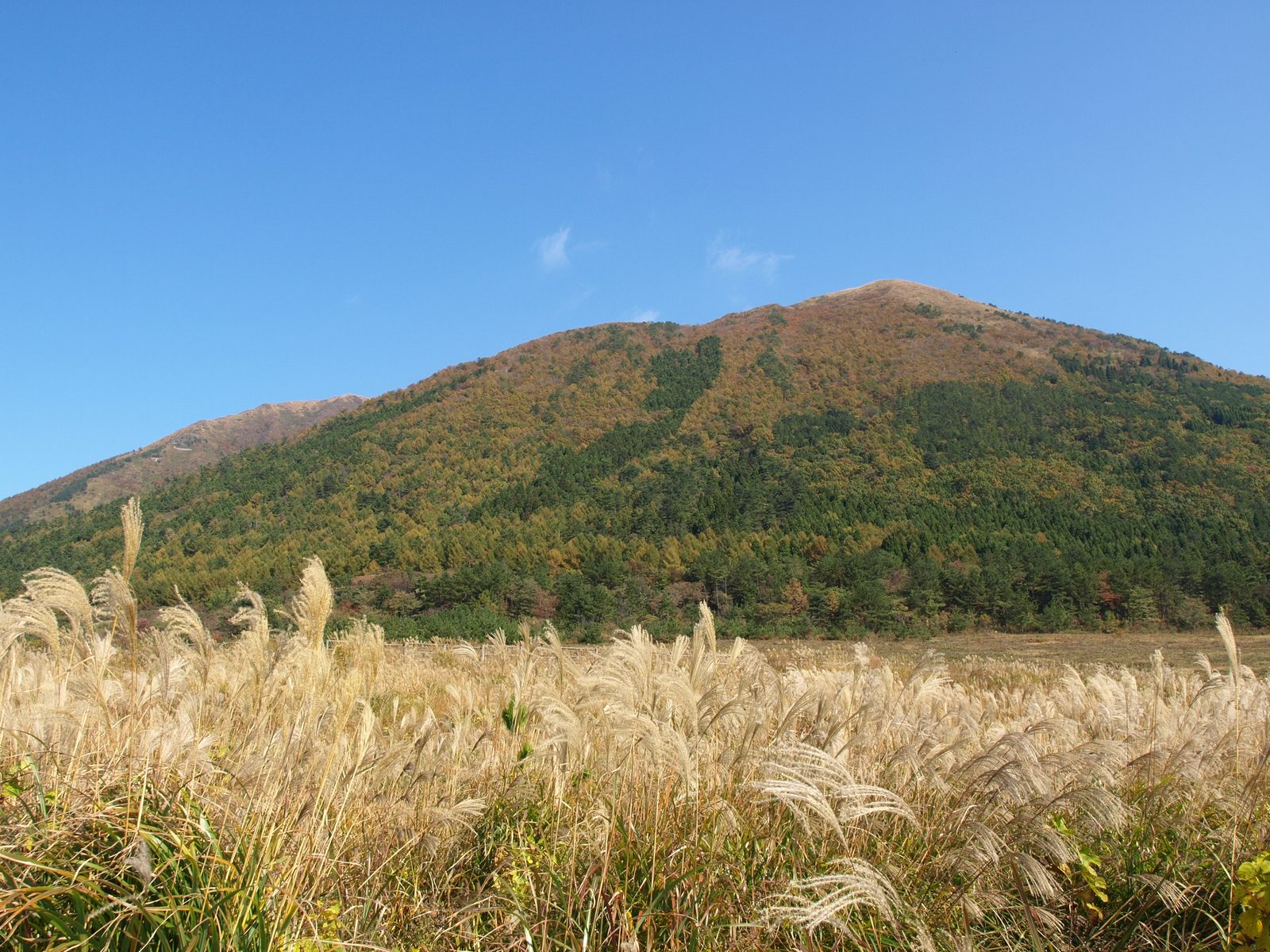
At Nishinohara, young grass sprouts after the burning, fresh green follows in early summer, autumn colours and golden susuki grass spread across the grassland, and winter brings white snow scenery. Yama-no-Eki Sanbe, located at Nishinohara, serves menus and sweets made with local ingredients.
The yusuge day-lily is a perennial of the lily family with lemon-coloured flowers, opening in the evening and withering by the next morning. The yusuge flowers at Nishinohara are at their peak from early to late July. On the north foot of Mount Sanbe, thousands of kakitsubata bloom in early summer at Himenigeike pond. The Kitanohara walking tour introduces the nature of the grassland, such as seasonal flowers and scenery, at the Kitanohara grassland and other places.
Trails, the Lift and the Old Crater
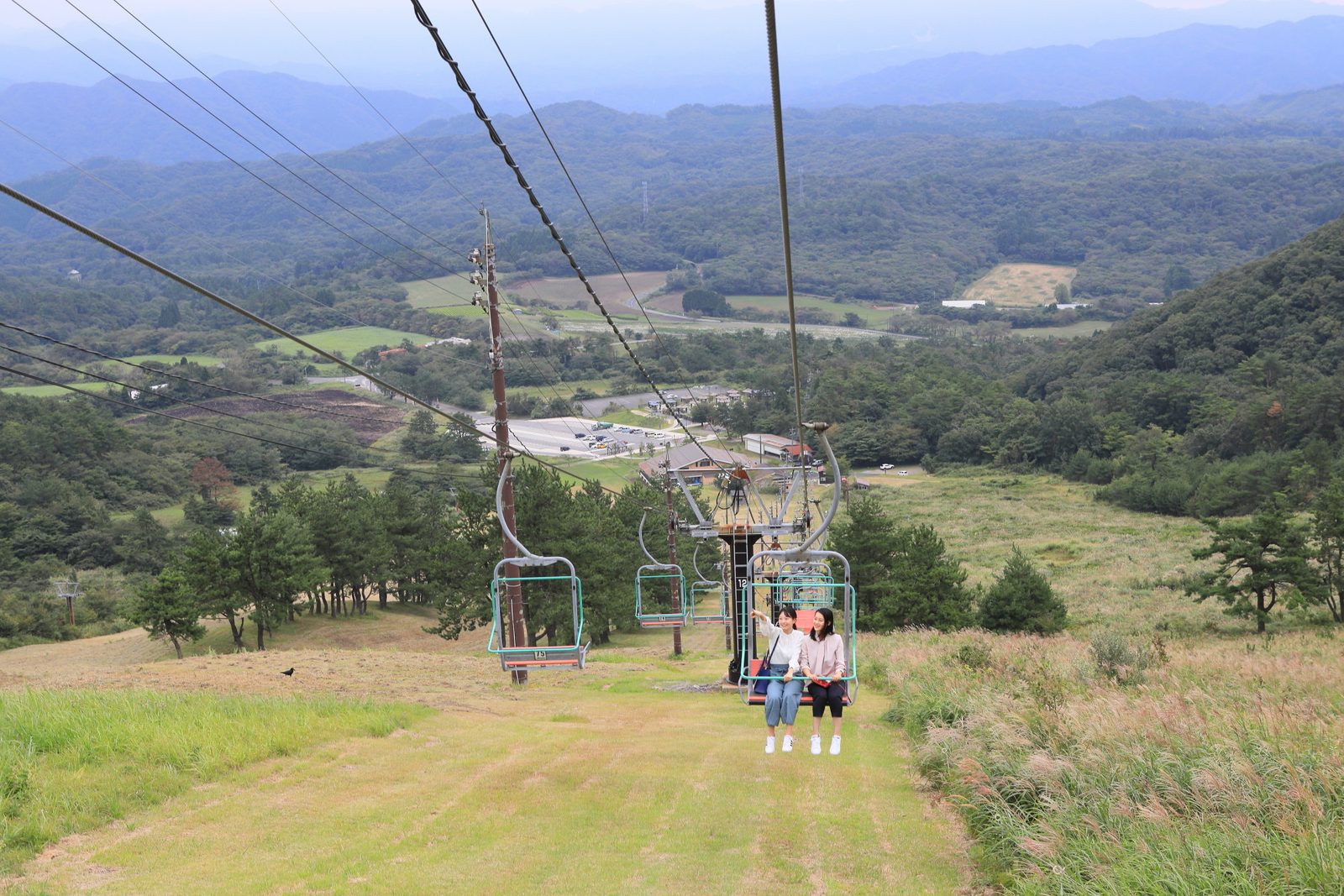
After getting off the sightseeing lift, a walk leads up to the viewing terrace on the summit of Mount Oodaira. The walking trail climbs through light that filters through the trees, and then a gentle uphill slope continues toward the summit.
Around the crater Muronouchi, six peaks form a ring, and visitors can descend into Muronouchi or walk the ring ridge. To the north below the Osanbe summit, the Sea of Japan spreads out and the mountain ranges of the Shimane peninsula can be seen.
The Himenigeike course runs from Kitanohara to the summit of Osanbe. The course passes through the Sanbe natural forest, where the woods are cool in summer and show autumn colour, and a shelter comes into view after a few minutes of climbing.
The Nishinohara course has few trees and little shade, so visitors are warned to watch for strong sun and wind. The Myogo trail goes through the Mount Sanbe natural forest to the summit of Osanbe.
Forests, Birds and Autumn Colour
Mount Sanbe has natural forest centred on beech, ponds and marshes such as Himenigeike, and grasslands spreading across the foothills. The natural forest seen when climbing from the Kitanohara trail toward the summit is a nationally designated natural monument. Many kinds of wild birds, dragonflies and plants live in the grasslands and forests of Mount Sanbe.
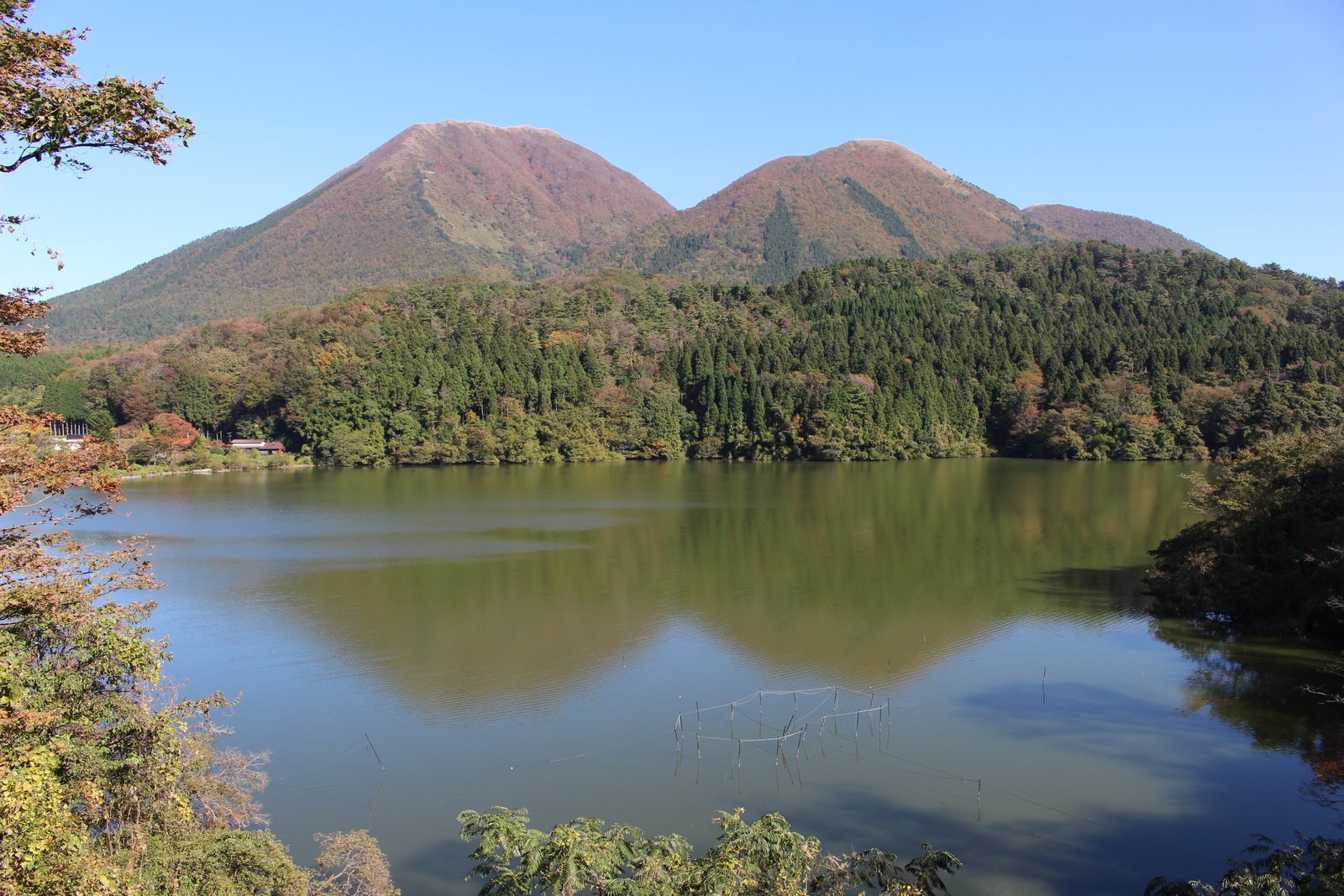
Oak and maple trees are seen in the forest, and susuki pampas grass and hagi bush clover, two of the autumn seven herbs, are seen in the grassland. The usual peak period for autumn leaves at Sanbe-san national park is late October to mid-November.
Sahimel, Meteorites and Stargazing
At Sanbe Nature Museum Sahimel, the stairway walls display actual peeled-off strata specimens that tell the volcanic history of Mount Sanbe. At the astronomy floor with a large telescope, visitors can lift a meteorite to check its weight.
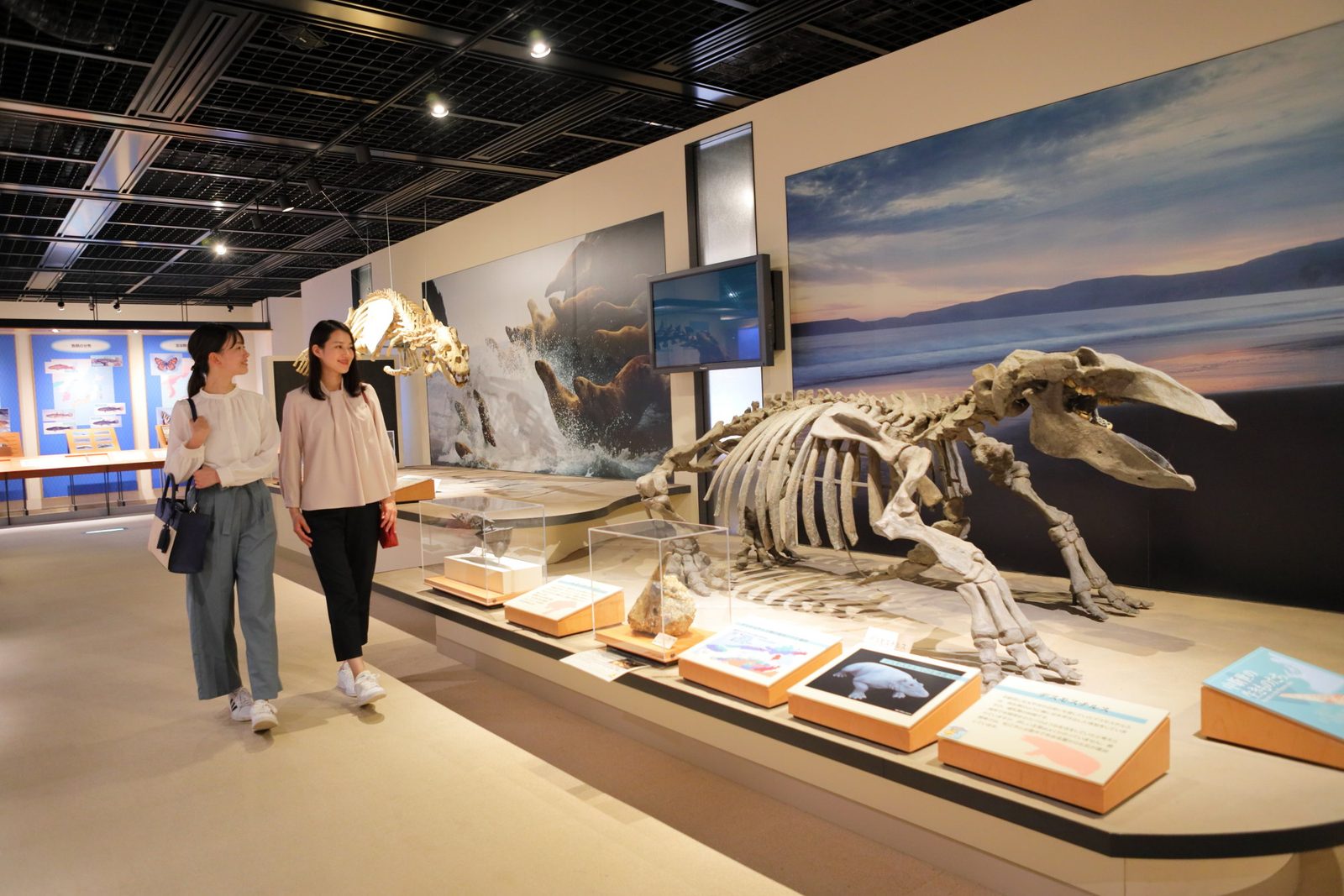
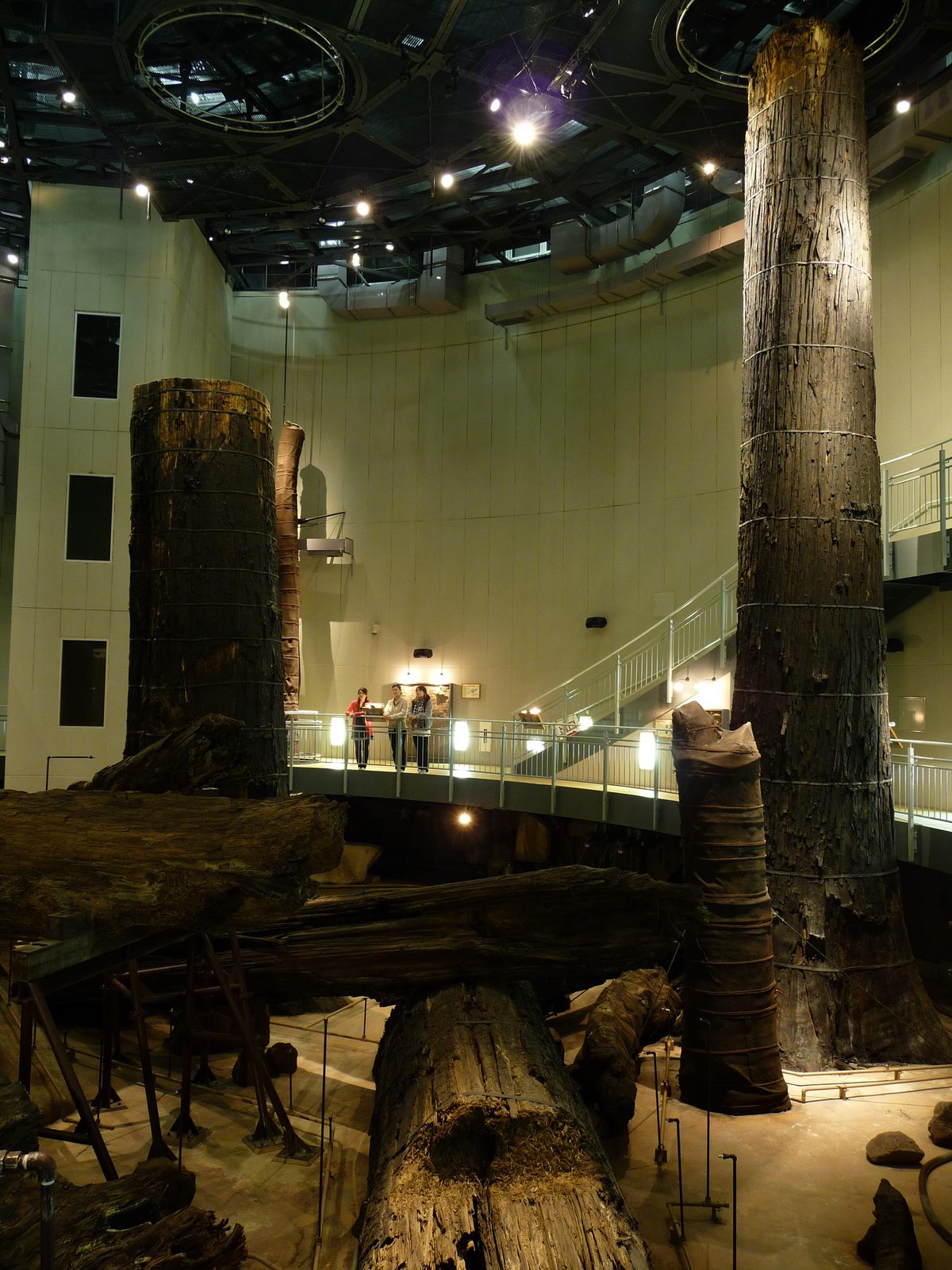
The new building displays cedar about four thousand years old, excavated from the Sanbe Azukihara Buried Forest. The museum doubles as a public observatory, with a reflecting telescope of sixty centimetres and a Coudé-type refracting telescope of twenty centimetres, and holds a stargazing session every Saturday night.
At the Saturday stargazing session, visitors can lie down to look at the stars. In the Sliding Roof observation room the large roof opens, and visitors can look at the sky lying down in addition to observing with the large telescope.
Camping and the Open-air Baths
The Kitanohara campsite is an auto campsite on the northern foot of Mount Sanbe. At the auto camp, visitors can drive to the place where the tent is pitched, and some sites have tents already set up.
At the general camp, the sites are only levelled ground.
The outdoor baths at Sanbe-so total sixteen kinds for men and women combined. The two baths at the back right, a sake barrel and a kettle, hold unheated flowing spring water and become as cold as water in the cold season.
Getting to Mount Sanbe
New to rural buses and one-man trains? See how to ride them, step by step.
| From and to | By | Time |
|---|---|---|
| Yonago to JR Oda-shi Station | JR | One hour fifteen minutes |
| Okayama to JR Oda-shi Station | JR | Three hours thirty minutes |
| Hakata to JR Oda-shi Station | JR | Three hours forty minutes |
| Hiroshima city to JR Oda-shi Station | Bus | Three hours thirty minutes |
| JR Oda-shi Station to the Sanbe-so area | Bus | Fifty minutes |
| JR Oda-shi Station to the Sanbe-so area | Taxi | Twenty-five minutes |
| Oda-Chuo-Sanbesan IC to Sahimel, from the Matsue and Izumo direction | Car | Thirty minutes |
Route bus service from JR Oda-shi Station is limited to two to three services a day.
Hours and Fees
| What | Detail |
|---|---|
| Sightseeing lift hours | Half past eight in the morning to half past four in the afternoon |
| Sightseeing lift closing days | Closed on Tuesdays, with a winter closure from December to March |
| Sightseeing lift adult fare | Nine hundred yen round trip, five hundred yen one way |
| Sahimel opening hours | Half past nine in the morning to five in the afternoon, with last admission at half past four |
| Sahimel closing days | Closed every Tuesday (the next weekday if Tuesday is a national holiday); open daily from July twentieth to August thirty-first |
| Sahimel admission | Outside special exhibition periods, five hundred yen for adults and two hundred fifty yen for elementary, junior high and high school students |
| Sanbe-so day-use hot spring hours | Half past ten in the morning to eight in the evening (closing at nine in the evening) |
Fees and hours were checked against official sources between 14 October 2026 and 17 November 2026.
Guides to Iwami Ginzan and Izumo Taisha are also on this site. If you would like more time around Mount Sanbe, browse places to stay around Oda.
Thinking of staying overnight?
Compare places to stay near Oda, Shimane, Japan →
Disclosure: This post may contain affiliate links. If you book through them, we may earn a commission at no extra cost to you.