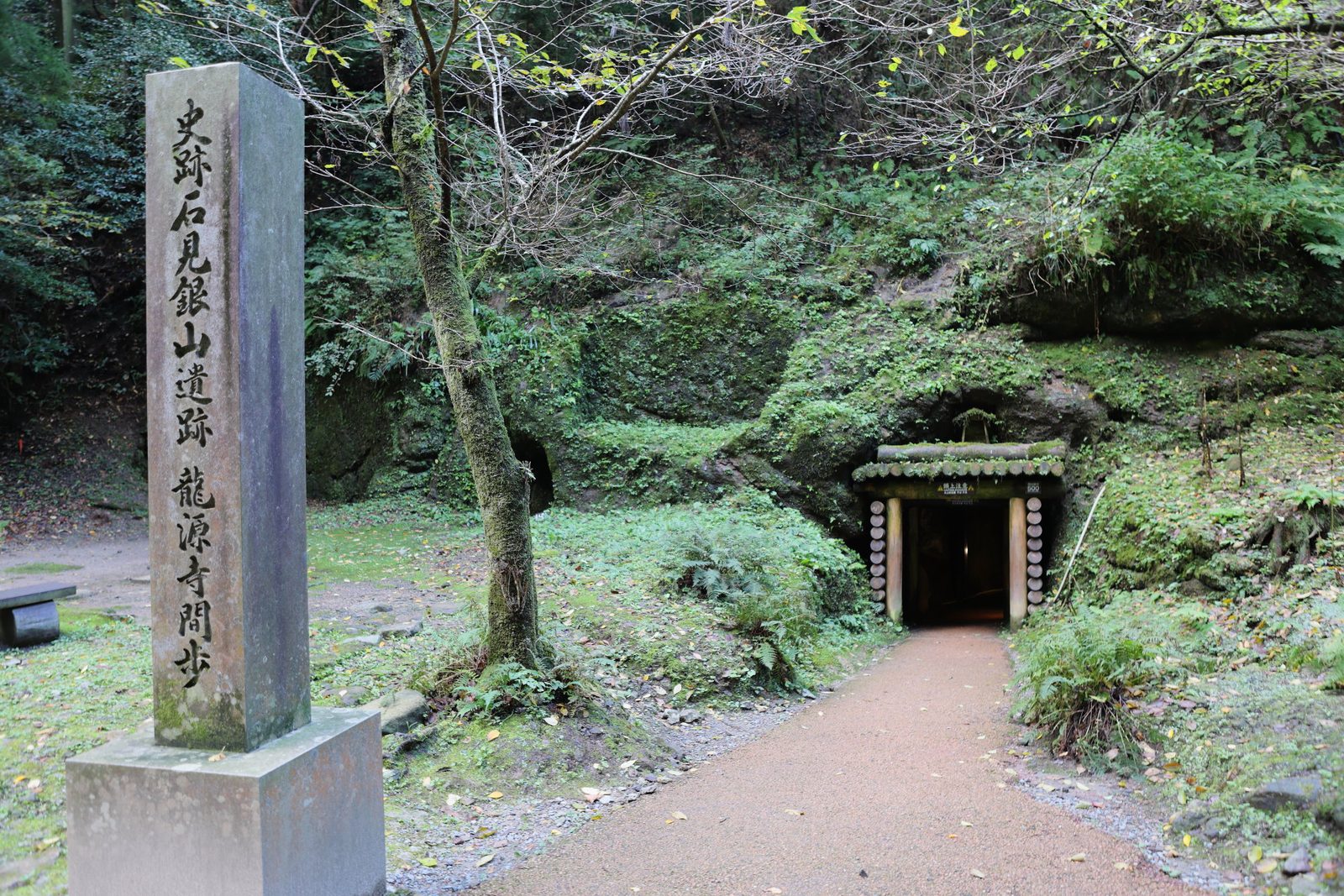
Iwami Ginzan is a historic silver mine in Shimane Prefecture, and Omori is the old mining town in the same valley. This page lays out one day on foot: the ride in from Odashi, the walk to the Ryugenji Mabu tunnel, what each sight charges, and the day of the week the museum shuts.
The bus from Odashi Station (大田市駅) to the Omori Daikansho-ato (大森代官所跡) stop costs six hundred and forty yen, and every fare below starts there. Where you begin is your choice; the steps give the stop and the walk for each sight. If one day feels short, there are places to stay in Omori to split the walk in two.
Getting there from Odashi Station
Every item below is one leg, either a fare or a walk, so you can add up only the legs you plan to use. The fares are given for three different stops, and each stop pairs with a different first sight, so match the stop to where you want to begin before you pay.
- From Odashi Station (大田市駅), take the bus to the Omori Daikansho-ato (大森代官所跡) stop; the fare is 640 yen.
- Daikansho-mae Hiroba is listed as about a 0-minute walk (1 m) from the Omori Daikansho-ato stop, so you are there as soon as you step off.
- The Kumagai family residence, an Important Cultural Property, is about a 2-minute walk (180 m) from the same Omori Daikansho-ato stop.
- For Ryugenji Mabu on foot, ride instead to the Omori (大森) stop; the bus fare from Odashi Station to Omori is 680 yen.
- From the Omori stop, Ryugenji Mabu is about 35 minutes on foot (2,500 m).
- If you would rather not walk, the Ginzan Cart to Ryugenji Mabu costs 500 yen one-way.
- For the Iwami Ginzan World Heritage Center, ride to the World Heritage Center (世界遺産センター) stop; the bus fare from Odashi Station is 760 yen.
- From the 世界遺産センター bus stop, the Iwami Ginzan World Heritage Center is about a 1-minute walk (13 m).
- From the World Heritage Center, the walk to the townscape area is about 30 minutes (2 kilometers).
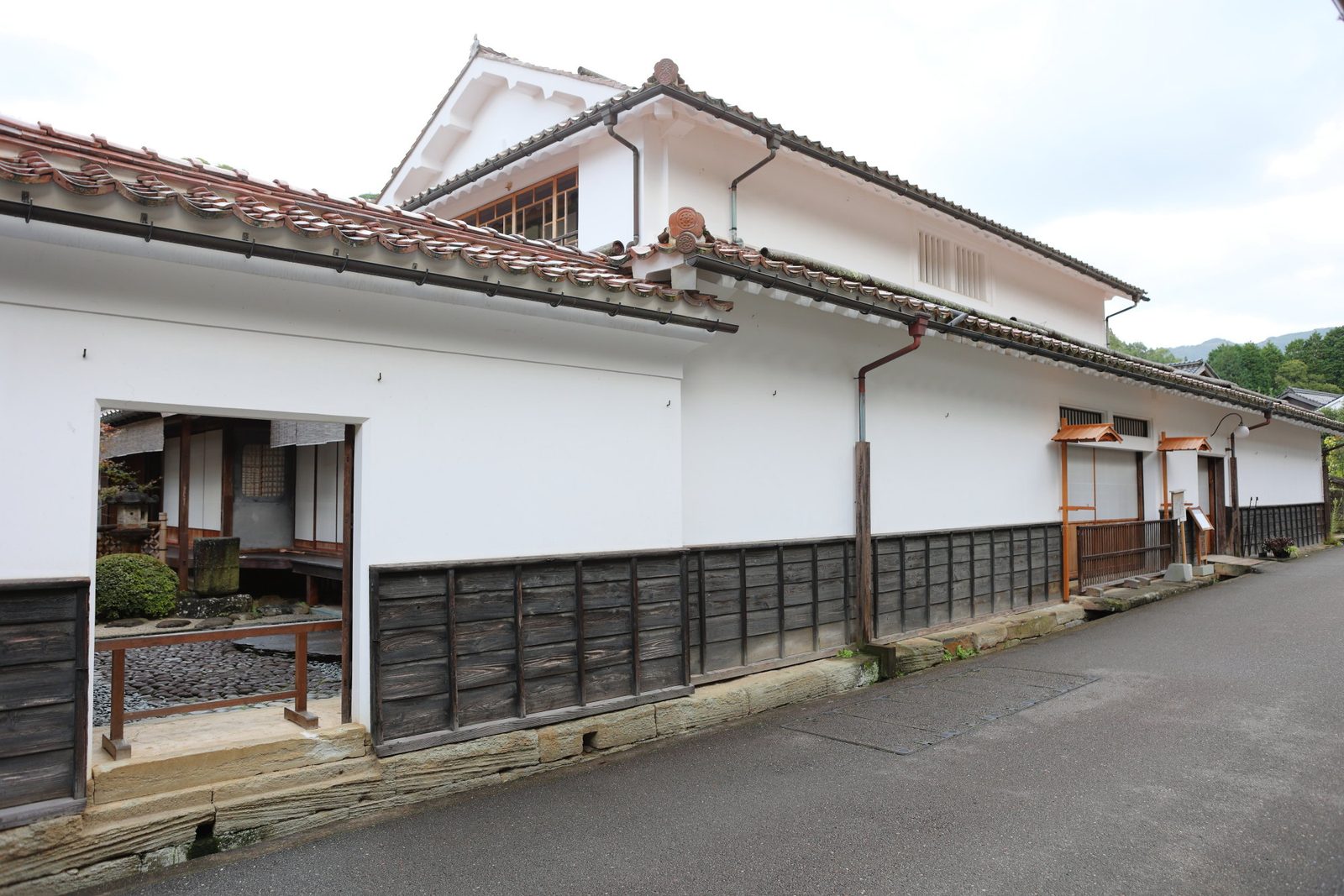
The white-plastered house in the photo above, with its red-tiled roof and dark lower walls, stands on a street in Omori. Departure times are not listed on this page, so leave slack at both ends of the day and take the longest walk, the one to Ryugenji Mabu, while the light is still with you.
Ryugenji Mabu and the Ginzan Cart
Ryugenji Mabu is the mine tunnel at the far end of the day, about thirty-five minutes on foot from the Omori bus stop. The photo at the top of this page shows the stone marker on the forest path that leads to its dark mouth, and the one below is taken inside.
| Ryugenji Mabu | Detail |
|---|---|
| Admission | Adults (high school and older) 500 yen; children (elementary and junior high) 250 yen |
| Opening hours | 9:00 to 17:00; until 16:00 from December to February |
| Last admission | Up to 10 minutes before closing |
| Ginzan Cart | 500 yen one-way to Ryugenji Mabu |
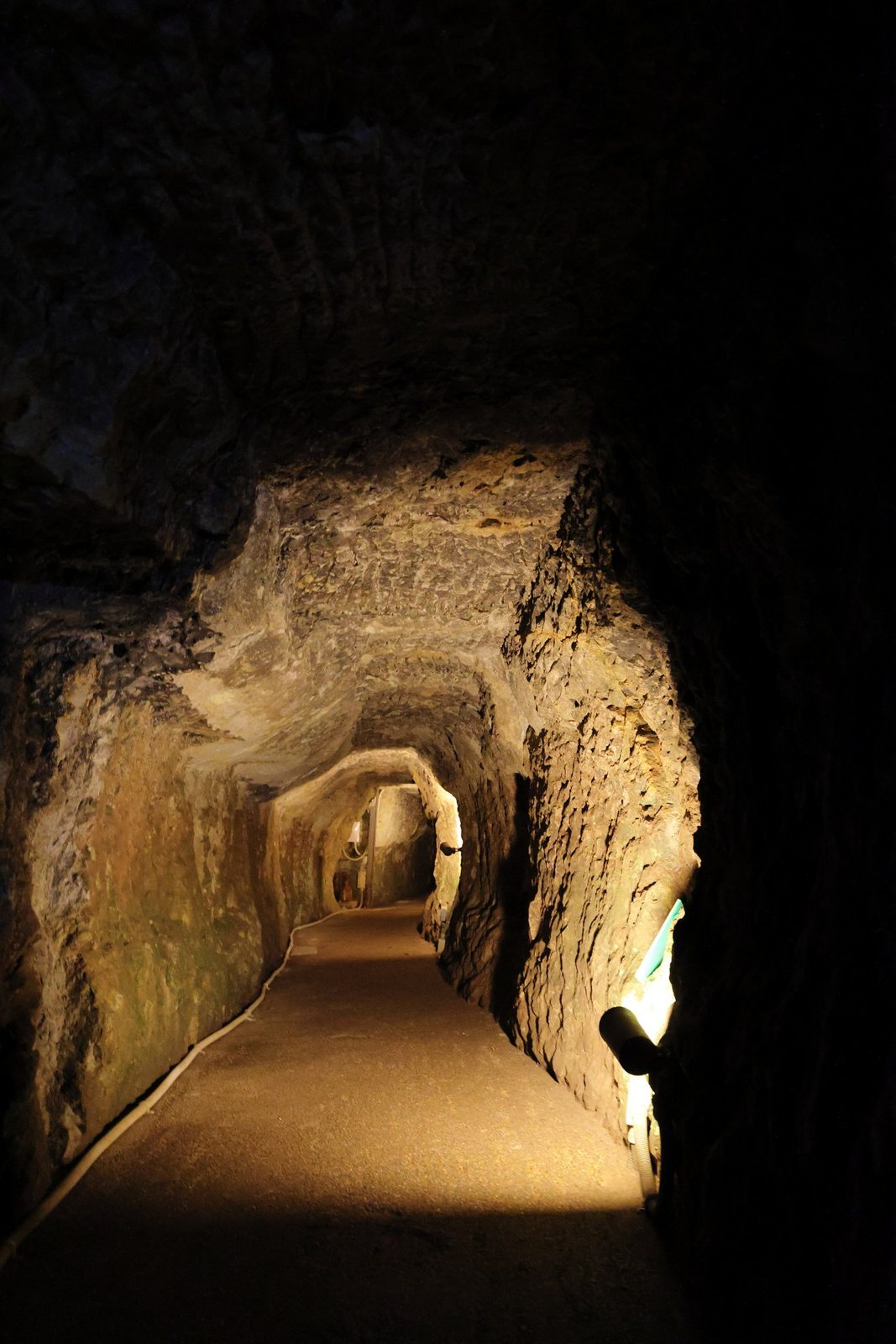
Adults of high-school age and older pay five hundred yen, and children of elementary and junior-high age pay two hundred and fifty yen. Ryugenji Mabu is open from nine in the morning until five in the afternoon, and only until four in the afternoon from December to February. Last admission is up to ten minutes before closing.
If the walk is not for you, the Ginzan Cart to Ryugenji Mabu costs five hundred yen one-way. Either way, it is worth settling the tunnel first and letting the townscape take the rest of the afternoon at whatever pace the street sets.
Where to stay
Places to stay near Oda, Shimane, Japan →
Disclosure: This post may contain affiliate links. If you book through them, we may earn a commission at no extra cost to you.
Walking the Omori townscape
Back at the Omori Daikansho-ato bus stop, Daikansho-mae Hiroba is listed as a zero-minute walk, which is to say the square is the stop. The Kumagai family residence, an Important Cultural Property, is about a two-minute walk from the same stop. Begin there and let the street set the order of everything else.
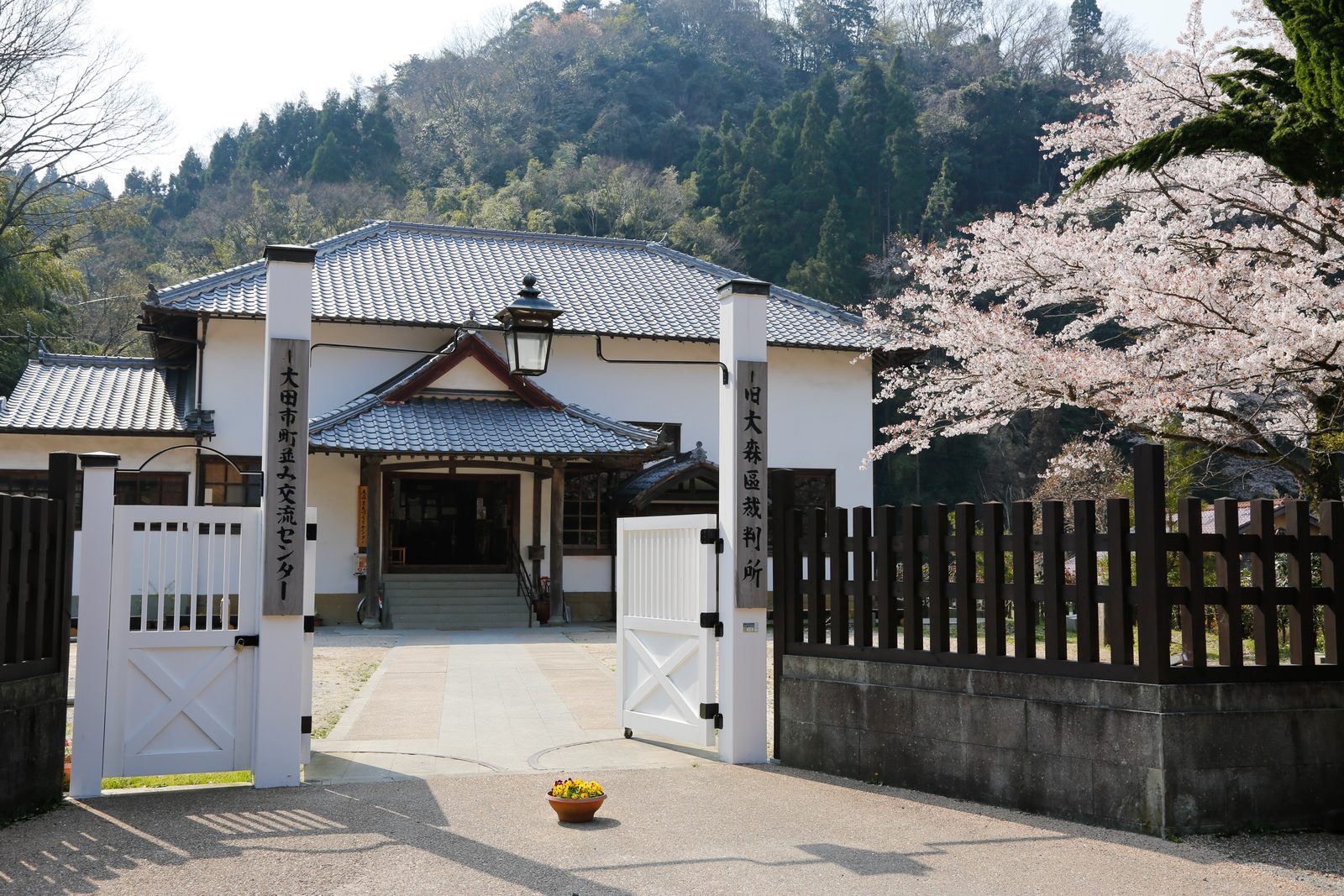
The photo above shows the former Omori district court building through its white gate, with cherry blossoms beside it. Together with the white-plastered house earlier, it shows the mix of homes and public buildings in the townscape. Two indoor stops with a ticket are the Iwami Ginzan Museum and the paid exhibition room at the World Heritage Center.
The Iwami Ginzan Museum (石見銀山資料館) charges six hundred yen for adults and three hundred yen for elementary and junior-high students. It is open from half past nine in the morning until five in the afternoon. It is closed on Tuesdays, or the next day when Tuesday is a holiday, and from the twenty-ninth of December to the fourth of January.
| Townscape sights | Detail |
|---|---|
| Iwami Ginzan Museum, admission | Adults 600 yen; elementary and junior-high students 300 yen |
| Iwami Ginzan Museum, hours | 9:30 to 17:00 |
| Iwami Ginzan Museum, closed | Tuesdays (the following day if Tuesday is a public holiday) and December 29 to January 4 |
| World Heritage Center, paid exhibition room | General 400 yen |
| World Heritage Center, paid exhibition room for foreign visitors | 300 yen; elementary and junior-high students 150 yen |
At the Iwami Ginzan World Heritage Center, the paid exhibition room is four hundred yen for general visitors. Foreign visitors pay three hundred yen, with elementary and junior-high students at one hundred and fifty yen. From the Center, the walk to the townscape area is about thirty minutes, so it fits at either end of the day.
What an old gazetteer says about the mine
An old gazetteer records that the Iwami silver mine is said to have been first worked under Ouchi Hiroyuki, lord of Suo, and later held by Ashikaga Tadafuyu in the Nanboku-cho period. The gazetteer lists the lords that followed, Ouchi Yoshioki, the Ogasawara, the Amago, and the Mori, before the Tokugawa shogunate took the mine under direct control.
In the sixth year of Keicho, the shogunate is said to have made Okubo Nagayasu mine magistrate and begun digging in earnest. At the Keicho and Kan'ei peak, two hundred thousand people are said to have been tied to the mine, over fifteen hundred koku of rice went down each day, and carts and horses never stopped, day or night.
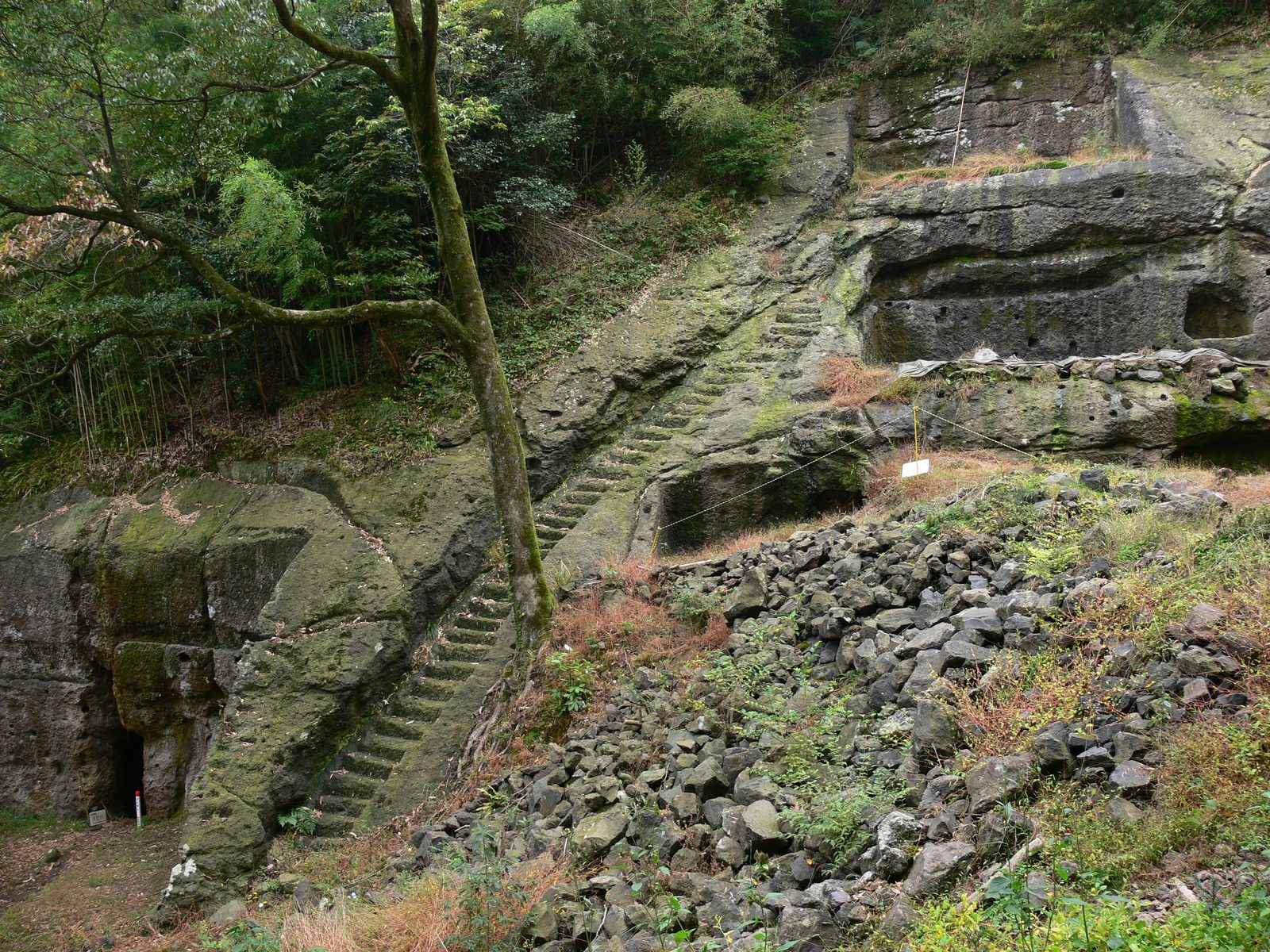
The gazetteer places Rakanji by the national road, a stone bridge leading to a hillside cave that holds five hundred carved stone rakan. The same record states that Ido Shrine honors Ido Heizaemon Masatomo, a Kyoho-era magistrate who sent to Satsuma for sweet-potato seed against lean years and is remembered by memorial stones in many places.
Lunch, timing, and when to skip
At lunch, the dish to know is the box sushi and square sushi of Iwami, a pressed sushi that uses no fish or meat: vinegared rice layered with carrot, burdock, and shiitake simmered sweet and salty in soy sauce and sugar, topped with shredded egg, sakura denbu, sansho leaves, or carrot leaves in whatever pattern the household likes.
The only difference is the wooden frame: square sushi uses a small mold about five centimetres a side, in square, flower, or pine-bamboo-plum shapes, while box sushi uses a bigger frame and is cut into portions. Lately more districts choose the quick, small square version, though some still keep box sushi as their hometown dish.
Skip it if about thirty-five minutes on foot between the Omori bus stop and Ryugenji Mabu is more walking than you want; the Ginzan Cart to Ryugenji Mabu is the alternative. Skip it if your day lands on a Tuesday and the museum was the point, since the Iwami Ginzan Museum is closed that day.
Fares and times above are the figures as of this writing and do change, so re-check them close to your date. If the walking leaves you wanting more, the activities listed for Iwami Ginzan give an idea of what else a second day in the valley could hold.