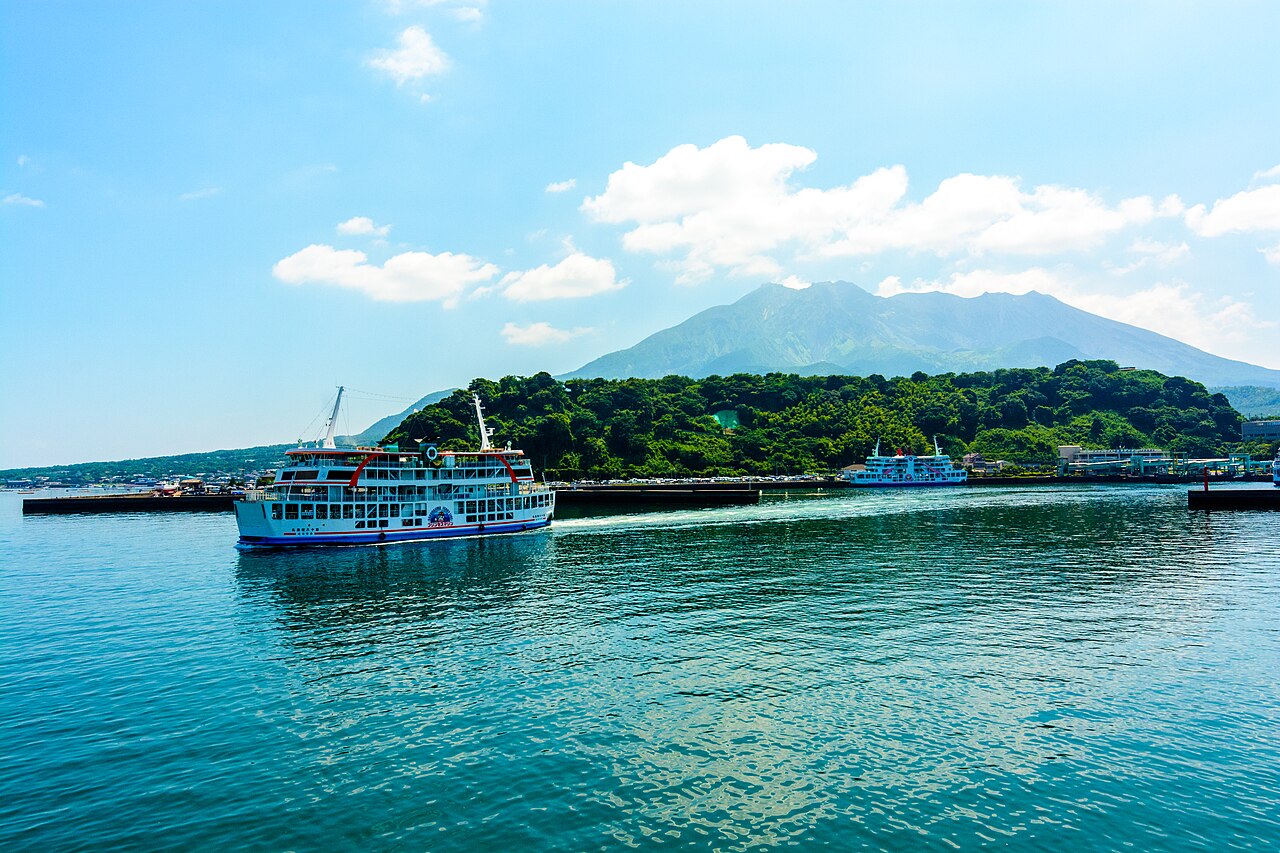
Sakurajima is a volcano reached by ferry across Kinko Bay, and the crossing is part of the day: a bowl of udon from Yabukin, the shop aboard the Sakurajima Ferry, and the chance of seeing wild dolphins from the deck. On the island, black pines grow on the lava field left by the Taisho eruption, and in the Kurokami area a shrine gate buried under pumice and ash within a single day has been left as it was. A foot bath fed by natural hot spring water from deep underground rounds off the walking.
Ferry Decks, Udon and Dolphins
Yabukin, the udon and soba shop aboard the Sakurajima Ferry, serves bowls that are ready right after ordering, so one can be finished before the boat docks, and the udon can also be eaten indoors. The menu runs from plain udon and soba to mountain-vegetable noodles with a hot-spring egg and a heaped burdock-tempura version.
Wild dolphins live in Kinko Bay, and pods of them are sometimes seen from the ferry deck. Each Sakurajima Ferry carries special dolphin-sighting report forms, and a passenger who spots a pod can record the encounter on board.
The ferry Sakura Angel is electric-powered and very quiet, and it has a flat seat where children can sit. For a crossing with small children, a quiet boat and a place for them to settle make it a practical choice.
Viewpoints, Lights and the Rumble of the Crater
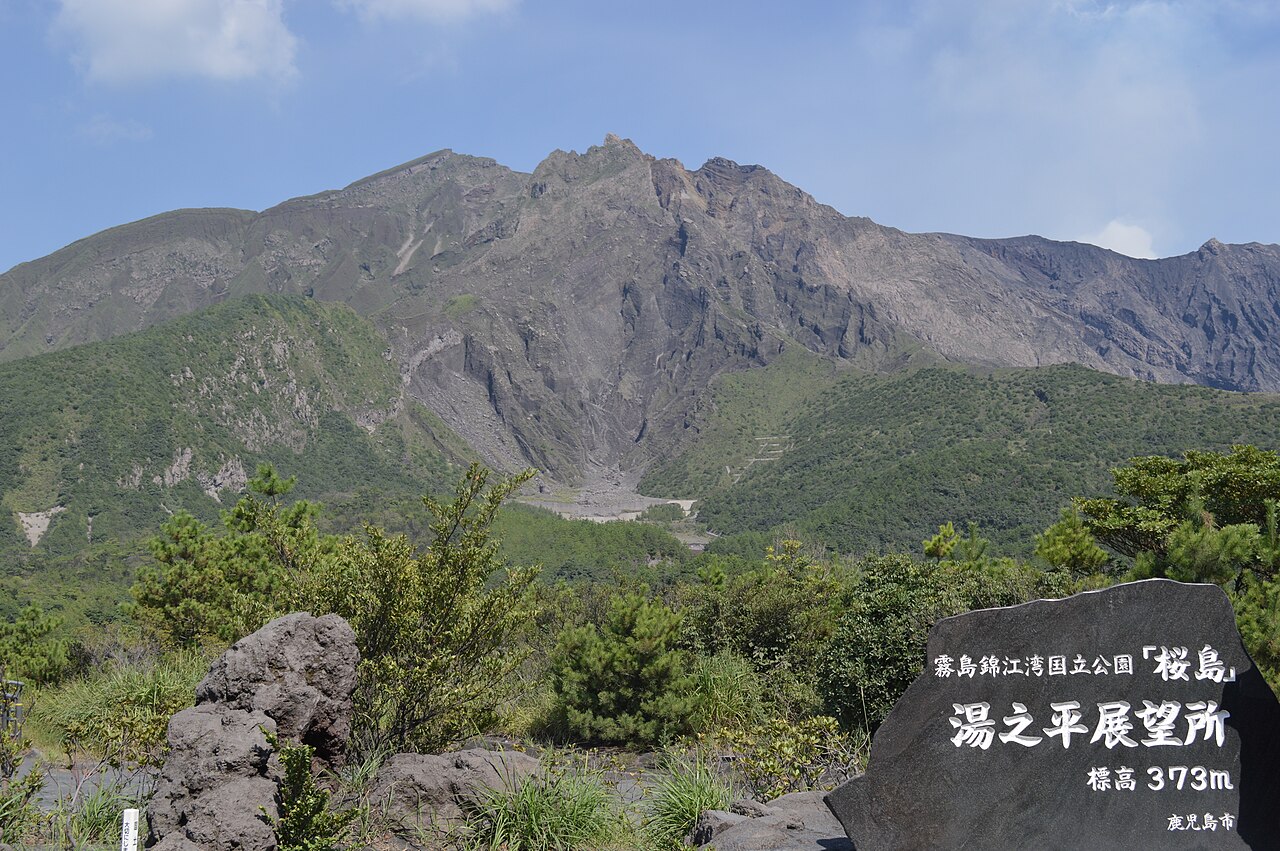
From Yunohira Observatory, the Kirishima mountains to the north and Kaimondake to the south come into view when the weather is clear. As magic hour arrives, lights come on in Kagoshima city's urban area. The observatory's stone wall holds a small game as well: heart-shaped stones are embedded in it at seven places in total.
At Arimura Lava Observatory, the lava field of the Taisho eruption spreads out in front of the viewpoint with black pines rooted on it, and the mountain shows a conical shape rather than its familiar long, horizontal outline. A walking path gives views of Kinko Bay and the mountain, with Kaimondake when the weather is fine, and haiku and tanka monuments related to Sakurajima are scattered along it.
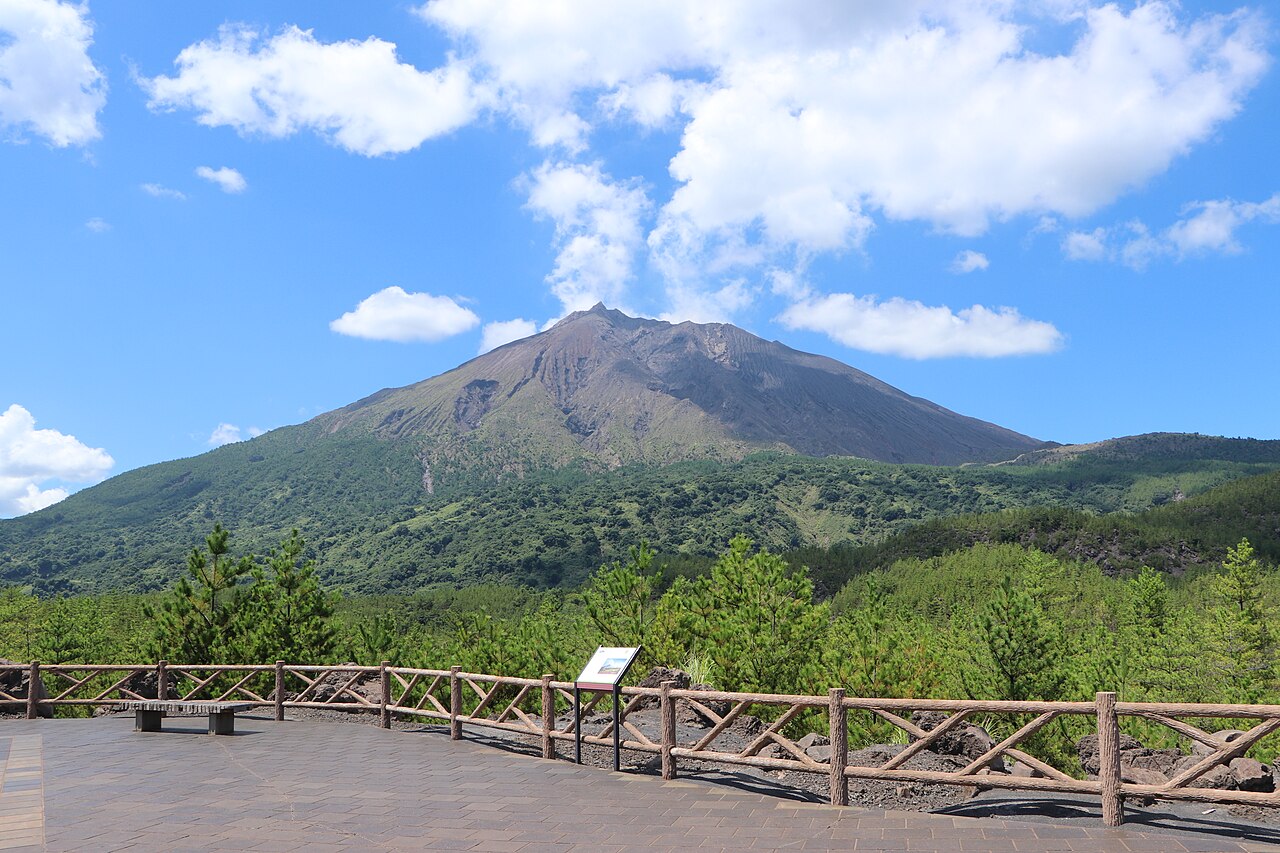
At Arimura, the rumbling and explosion sounds that accompany eruptions from the Minamidake summit crater can often be heard. In a town close to the crater, a low rumbling sound is heard from time to time, and high-temperature volcanic rocks look red at night. Akamizu viewing square, built on the site of a concert venue, holds a monument made from Sakurajima lava.
Lava Walks, a Buried Gate and Stone Walls
The Lava Nagisa Promenade is a walk on the lava that flowed in the Taisho eruption, and black lava appears as soon as the walk begins. Along it the return of life can be read: moss grows on the rock, grass puts down roots, the two gradually make soil, and sun-loving trees such as black pines take hold and form a woodland, greening lava where nothing grew to begin with.
In the Kurokami area, where ash and pumice from the Taisho eruption piled up deep, the torii of a shrine was buried within a single day. Today just the upper part shows above ground: the top crossbeam that would normally pass overhead sits below eye level, and a single carved character stands where the shrine's name would usually be. Residents tried to dig it out, but the gate has been left as the eruption left it.
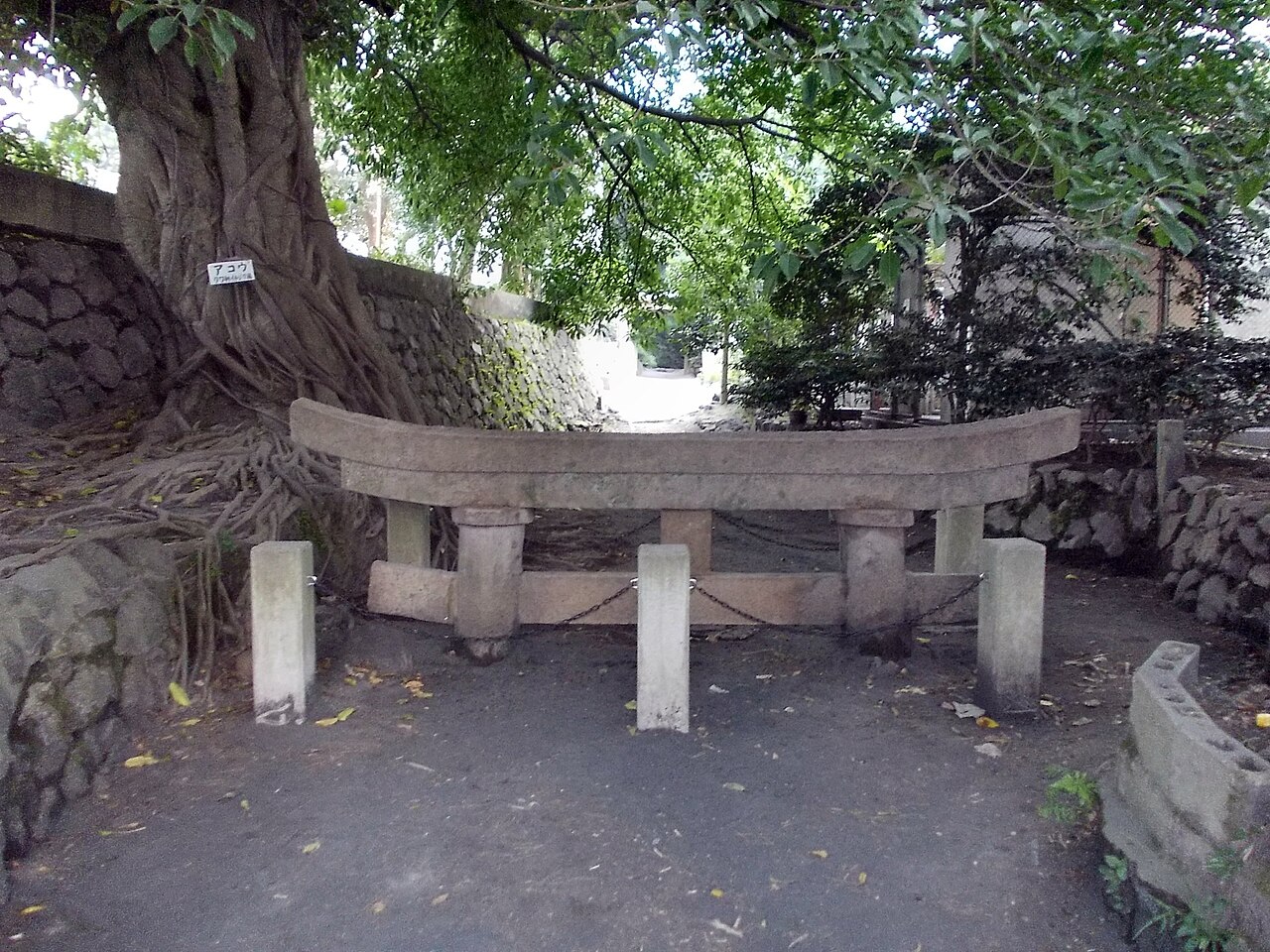
A shrine building stands beyond the torii, and a little further along a narrow path the main hall appears, built sturdily of concrete like many shrines on Sakurajima. Lava stone walls are shared by the island's settlements: along the roads they rise from about knee-height to well above a person's height, the stones differ slightly in size and shape from wall to wall, and many more stand on the farmland extending to the mountainside.
Foot Baths, Hot Springs and the Roadside Market
The foot bath at Lava Nagisa Park uses natural hot spring water that wells up from deep underground, and the water is reddish-brown. The park has a wide lawn, and original towels are sold at the Sakurajima Visitor Center for anyone who arrives without one.
Arimura beach looks like an ordinary sandy beach, but natural hot spring water wells up along this coastline: dig a little into the sand at the water's edge and warm water rises right away. The Sakurajima Shirahama Onsen Center draws deep-ochre water from deep underground and runs it source-flowing through an outdoor bath, sauna, cold-water bath, electric bath and lying-down bath, and it has a large rest room.
Michi-no-Eki Sakurajima Hinoshima Megumikan has a direct-sales hall where seasonal vegetables and fruit grown by local farmers are lined up, and a restaurant that cooks with Sakurajima specialty products. Its small-mandarin udon is made with noodles kneaded with the peel of Sakurajima small mandarins, and alongside the local set meal there is a seasonal limited menu that changes every two months.
Radishes, Mandarins and Hands-On Days
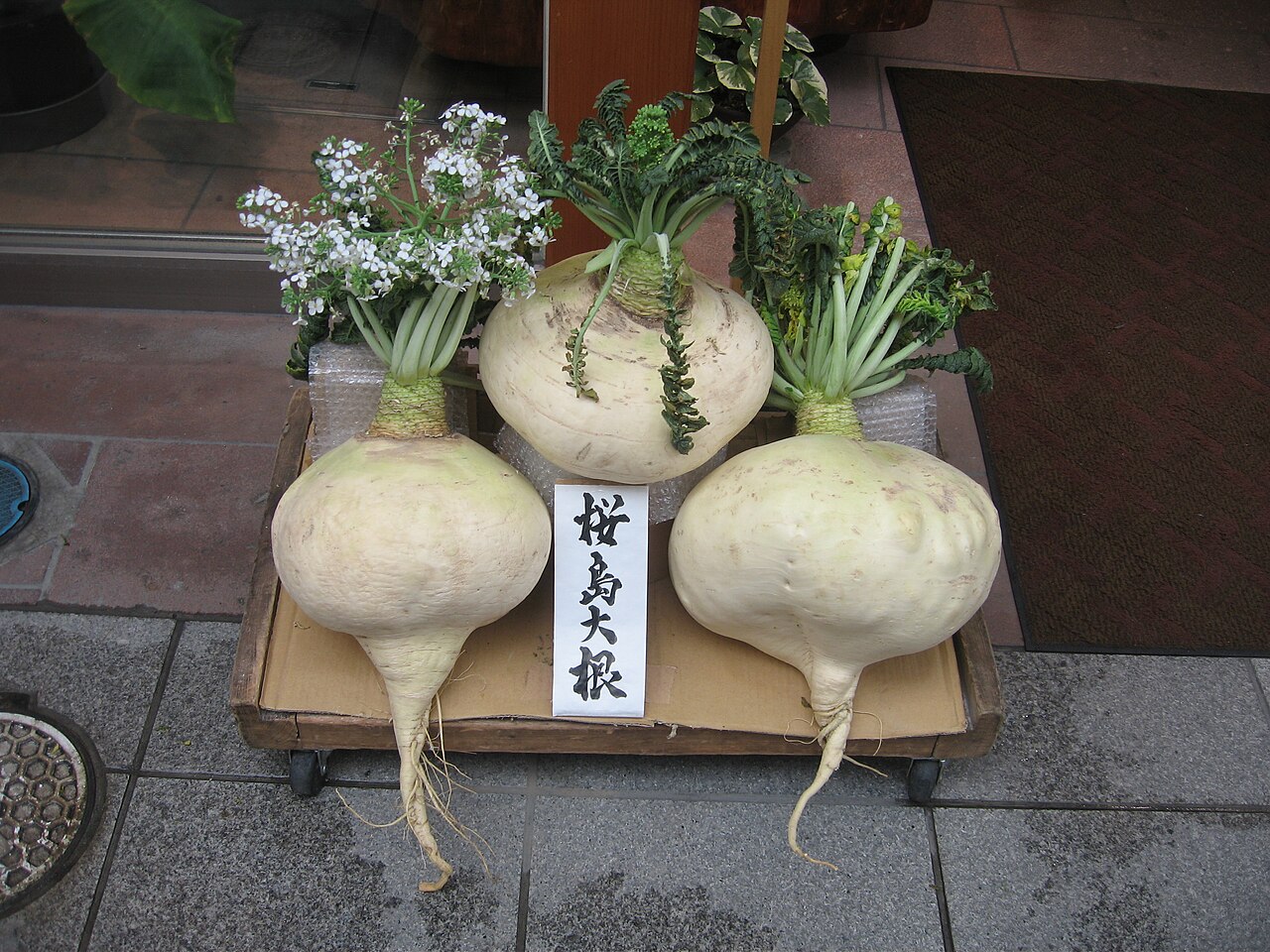
Sakurajima daikon takes close to half a year from sowing to harvest, with thinning, extra fertilising and dealing with volcanic ash along the way. At harvest each radish is hand-washed one by one in a large water-filled tub under a cold sky, and as the soil comes off it shows white, fine-textured skin. The flesh has little fibre and a strong sweetness, and shipping starts from January.
Sakurajima small mandarins are cut with scissors twice, one cut separating branch and fruit and a second trimming close to the calyx. Fruits of similar colour differ slightly in shade, so picking starts from the darkest and runs in several rounds at staggered times even on one tree, amid a sweet scent; on old trees it means climbing the tree or a ladder and twisting to reach the fruit. The mandarins are sweet with a fragrant peel that can be dried as chinpi, and shipping starts from early December; Sakurajima loquat ships from late April to around May.
Sakurajima lava ware uses the island's volcanic ash in its glaze, and sand art uses volcanic ash coloured in various colours, with the finished piece going home. A morning E-bike tour around Sakurajima takes in the "Sakurajima Diamond", an event of roughly three minutes at sunrise. A sea kayak tour passes lava flows, corals living with the volcano and hot springs welling up in the sea, snorkelling accepts participants from six years old, and a farm visit lets visitors harvest Sakurajima daikon grown without agricultural chemicals and eat a lunch made from the harvest at a cafe.
Getting to Sakurajima
New to rural buses and one-man trains? See how to ride them, step by step.
| From | To | Time |
|---|---|---|
| Kagoshima Port | Sakurajima Port | about 15 minutes by Sakurajima Ferry; around 20 minutes depending on weather and sea conditions |
| Sakurajima Ferry | daytime frequency | every 15 to 20 minutes; runs 24 hours a day, all year without holidays |
| Adult fare | Sakurajima Ferry | 250 yen |
| Child fare | Sakurajima Ferry | 130 yen |
| Kagoshima-Chuo Station | Kagoshima Port ferry terminal | city tram about 15 minutes, then 8 minutes on foot |
| Kagoshima-Chuo Station | Kagoshima Port ferry terminal | bus about 14 minutes, then 1 minute on foot |
| Sakurajima Port | Yunohira Observatory | Sakurajima Island View bus about 40 minutes |
| Sakurajima Island View bus | departures | every 30 minutes, from 9:30 to 16:30 |
| Sakurajima Ferry toll gate | Yunohira Observatory | about 11 minutes by car |
| Sakurajima Ferry toll gate | Arimura Lava Observatory | about 13 minutes by car |
| Sakurajima Ferry toll gate | Kurokami Buried Torii | about 22 minutes by car |
| Sakurajima Ferry toll gate | Sakurajima Shirahama Onsen Center | about 13 minutes by car |
The ferry keeps sailing through the night, and the Sakurajima Island View bus links the port with Yunohira Observatory. For a day arranged in advance, there are tours that include Sakurajima.
Hours and Fees
| What | Fare or time | Note |
|---|---|---|
| Yabukin on the ferry, weekdays | 8:00 to 16:40 | sailings from Kagoshima Port |
| Yabukin on the ferry, weekends and holidays | 8:00 to 17:00 | sailings from Kagoshima Port |
| Yunohira Observatory | 9:00 to 17:00 | free to visit; shop open 9:00 to 17:00 |
| Foot bath at Lava Nagisa Park | 9:00 to sunset | free of charge |
| Sakurajima Shirahama Onsen Center | 10:00 to 21:00 | welfare bath until 17:00; closed on the 10th of each month, or the next day if the 10th is a Saturday, Sunday or public holiday |
| Sakurajima Magma Onsen | 11:00 to 21:00; Wednesdays 13:00 to 21:00 | Wednesdays start at 13:00 |
| Sakurajima Magma Onsen, adult admission | 460 yen | |
| Michi-no-Eki Sakurajima Hinoshima Megumikan, product hall | 9:00 to 17:00 | closed on the 3rd Monday (the next day if it is a public holiday) and on New Year's Day |
| Michi-no-Eki Sakurajima Hinoshima Megumikan, restaurant | 11:00 to 14:30 on weekdays (last order 14:00); 11:00 to 15:00 on weekends and holidays (last order 14:30) | same closing days as the product hall |
| Sakurajima Visitor Center | 9:00 to 17:00 | sells original towels; rents tablet video guides |
| Tablet video guide at Sakurajima Visitor Center | 500 yen per unit | about 30 minutes, Japanese and English |
| Cross-bike rental at Sakurajima Visitor Center | 3,300 yen for up to 3 hours | tax and helmet included; for riders aged eighteen or older |
Fees and hours were checked against official sources between 15 October 2026 and 1 November 2026.
Compare options
See partner pricing and availability →
Disclosure: This post may contain affiliate links. If you book through them, we may earn a commission at no extra cost to you.