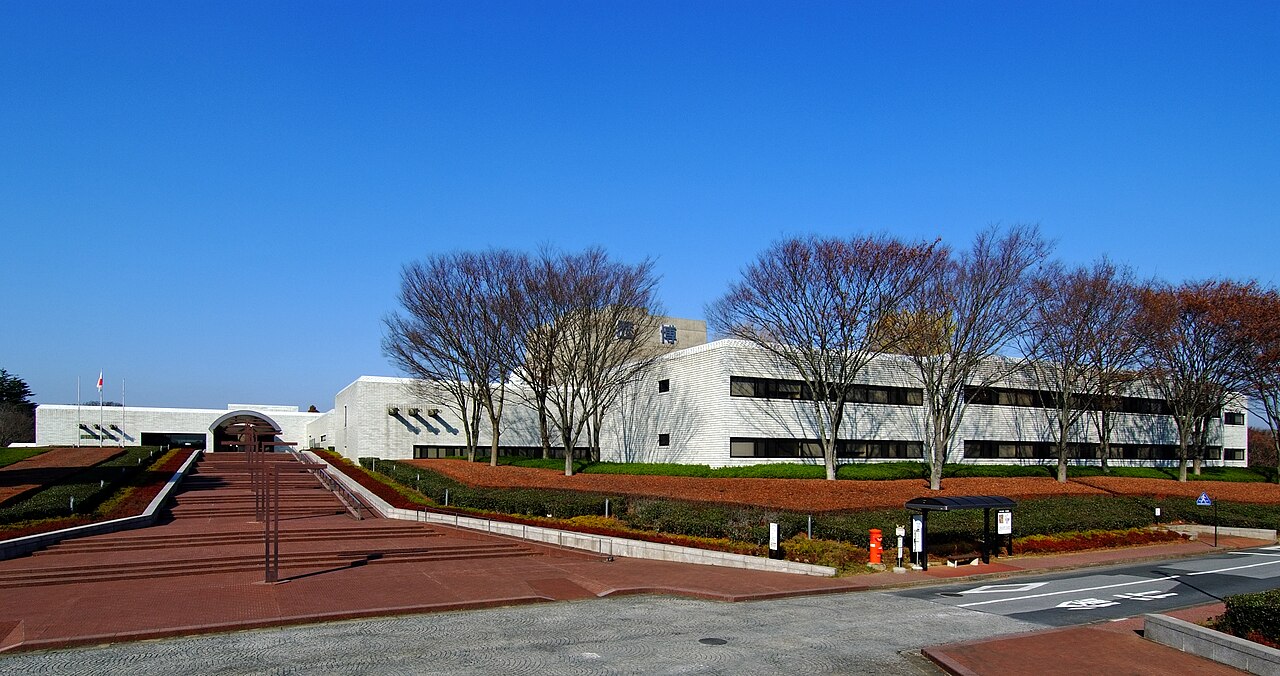
A room in the National Museum of Japanese History holds a life-size reconstruction of the black markets and outdoor stalls that appeared after the war ended, recreated from photographs. Another room displays the huge Japan map and provincial maps made by the Edo shogunate at actual size, so visitors can see and sense how large they are. In Sakura Castle Ruins Park in autumn, the deeply coloured yellow leaves of the ginkgo avenue and the red maple leaves stand out against the green of the evergreen trees.
Life-Size Rooms and Reconstructions at the National Museum of Japanese History
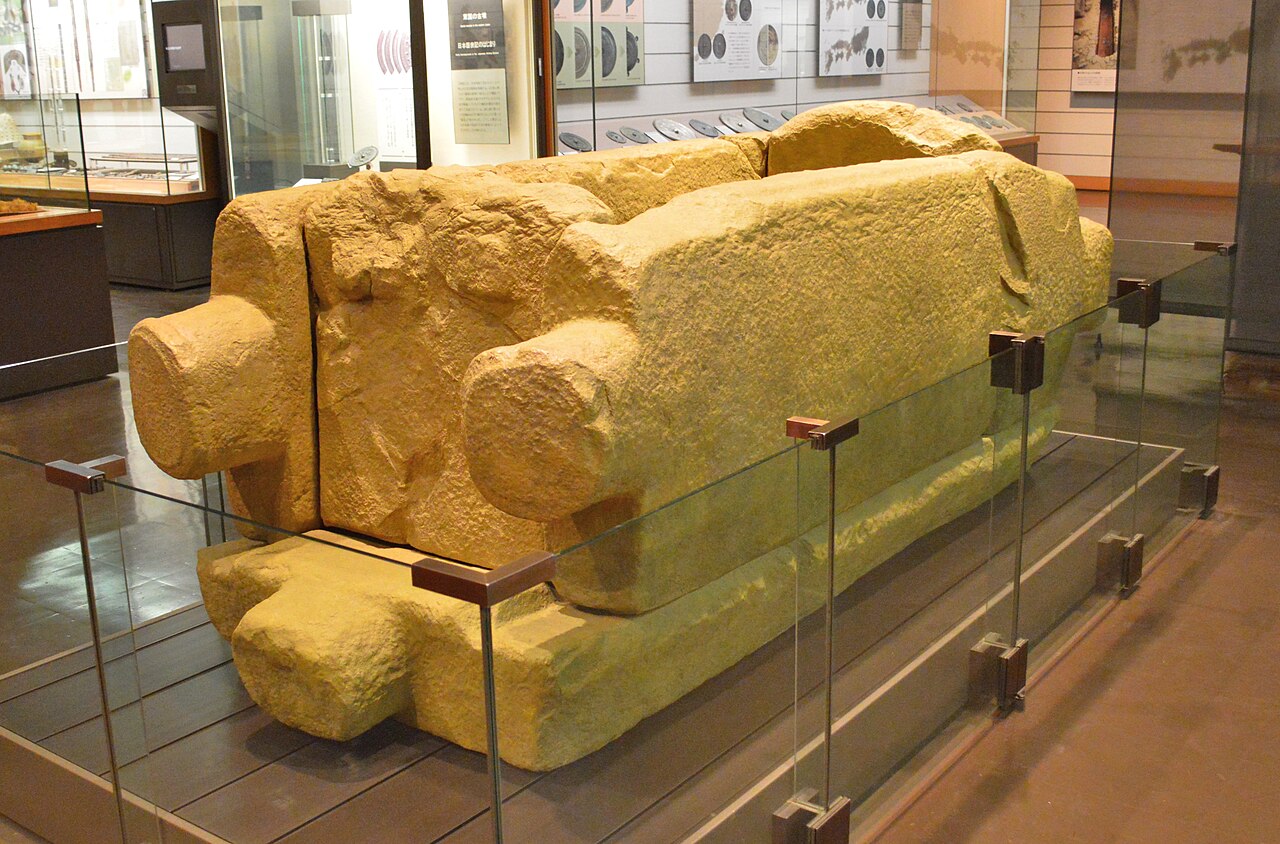
One room of the National Museum of Japanese History is arranged as the sea of East Asia. Visitors can see the links between mainland China, the Korean Peninsula and the regions of the Japanese archipelago. A reconstructed replica of a huge stone structure found at Asuka can be seen in the middle of the room, with replicas of Shosoin documents on view in themed groups.
A Kamakura model rebuilds the townscape on terrain with mountains on three sides. Another shows the residence of Asakura Yoshikage in the castle town of Ichijodani. The streets from Edobashi to around Nihonbashi and the inn Kadoya, busy with Ise pilgrims, can be seen as models. A housing complex dining kitchen is built at life size, and a reconstructed television studio presents commercial footage.
Everyday Life, Hands-On Corners and a Meal Inside the Museum
The osechi dish on display in Room Four is a replica of one sold at a department store. The room takes up hunting in the Shirakami mountains, carried on in the Matagi tradition and restricted after the area became a World Heritage site. The reconstructed Ogata house stands with surviving real items, and school lunches are lined up to see side by side.
Room Five, the modern history room, has been renewed on a large scale after about thirty years. On the basement level, ten replicas of ancient Japanese steles stand in the corridor facing the courtyard. People from children to adults can learn about Japanese history and culture through activities that use learning kits.
Visitors can eat and drink on the lawn plaza beside the museum and in its courtyard. After the exhibits, they can rest with a view of Sakura Castle Park. Restaurant Sakura serves meals such as herb-sauce katsu-don, a pork cutlet set, a hamburger set and meat sauce, with coffee. The museum shop carries many original goods of the National Museum of Japanese History.
Scents, Flowers and Plant Stories at the Botanical Garden of Everyday Life
The Botanical Garden of Everyday Life sits in a corner of the former Sakura Castle, with ginkgo, pine and other plants divided into six areas. The dye area grows kuchinashi, mulberry and benibana, and plants to eat include loquat, horse chestnut and udo. The kabukimon gate, the rest house and the planting are meant to evoke scenery from Edo-period samurai residences to mountain fields.
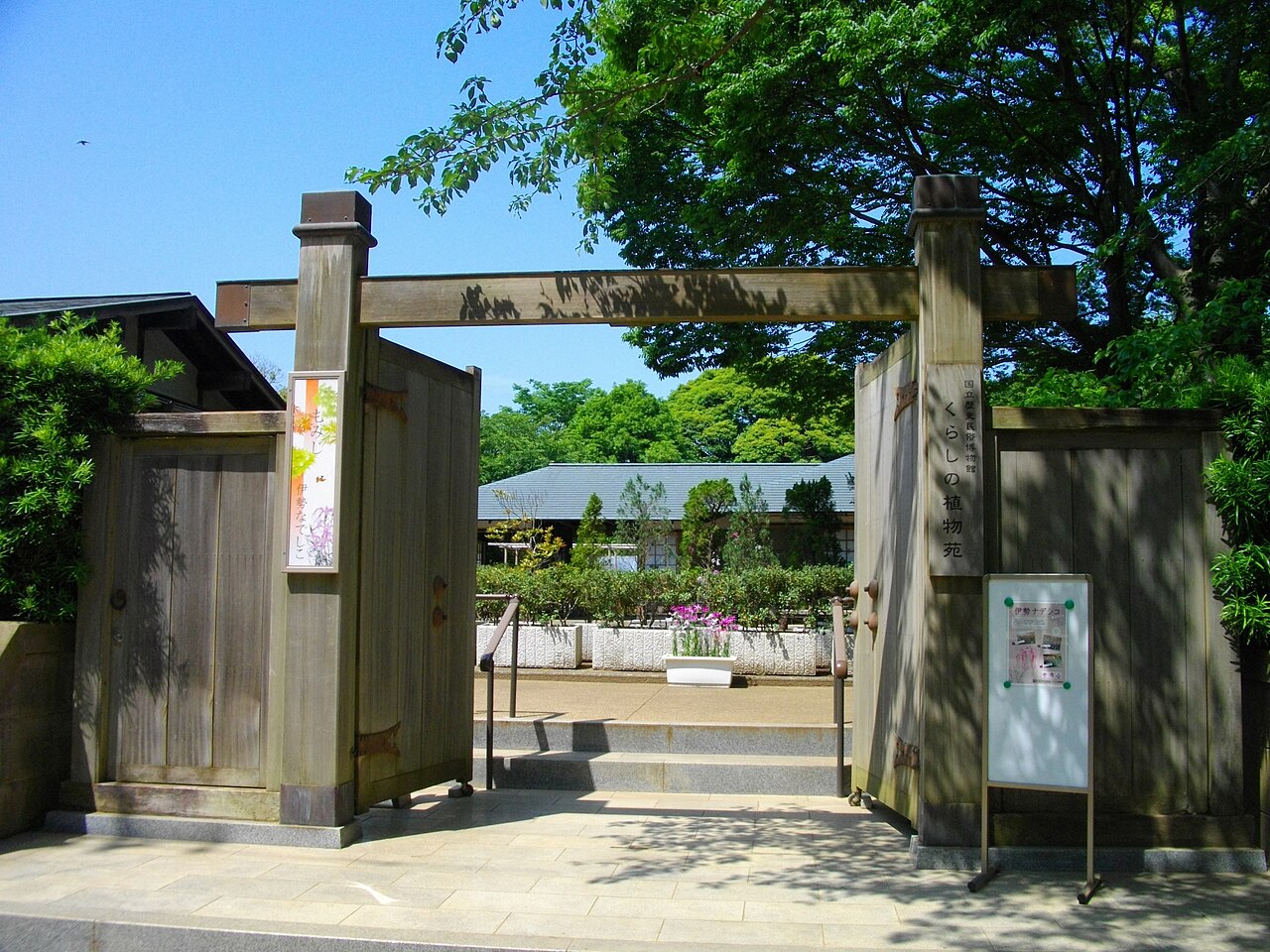
One of the garden's plants smells like cherry rice cake when its stems and leaves are half-dried, and another descends from plants that Siebold took from Japan. Momiji viewing of the Iroha maple was held in the Heian period. Sazanka flowers come in white, pink and red and are strongly scented, and in the classical chrysanthemum display, Saga-giku petals stand straight up like a brush.
Moats, Gate Sites, Statues and Seasons in Sakura Castle Ruins Park
The dry moats and earthworks of the castle can be seen in Sakura Castle Ruins Park. The keep site remains, and large shii, kashi and maple trees grow throughout the park. Visitors pass the sites of the Otemon, Sannomon, Ninomon and Ichinomon gates before coming out at the wide honmaru site. No castle buildings remain other than a small yakui-mon gate in the Nishi-demaru.
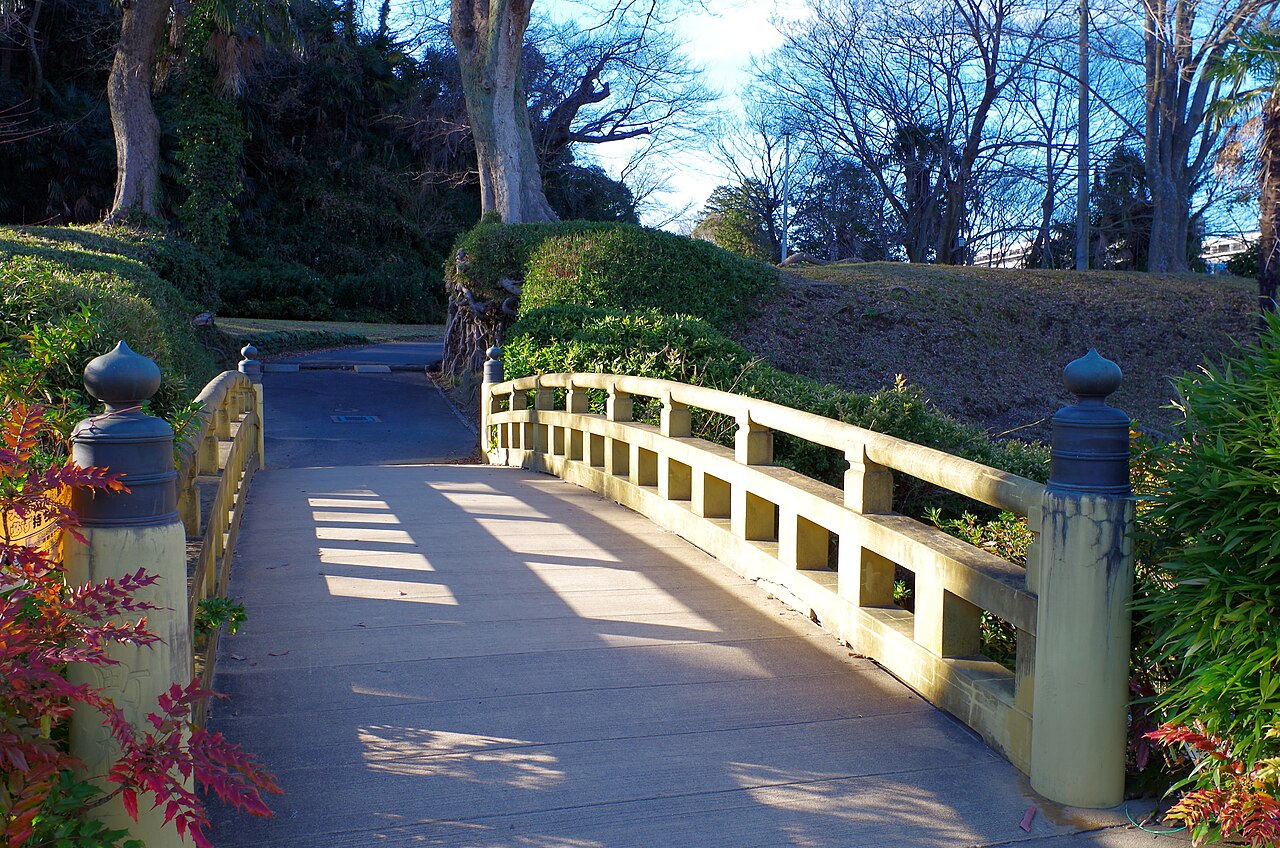
A pond in the park has a sad tale of a nurse who let a child drown at its edge, and families are seen spreading out lunch boxes through the four seasons. Models, old photographs and excavated objects related to Sakura Castle can be seen at a centre at the park's east end. Near the samurai residences, a slope runs through a bamboo grove.
In autumn the ginkgo leaves turn yellow for about two weeks and the Iroha maple shows its autumn colour for about a month, while red and yellow leaves cover the ground like a carpet. Yabutsubaki camellia blooms from winter for about three months. In spring, about fifty varieties of cherry blossoms flower for about two weeks.
A bronze statue of Hotta Masayoshi, the former Sakura domain lord, stands in front of the tea house, and a statue of Harris stands near the Ninomaru entrance. A shogunate senior councillor in the late Edo period, Masayoshi encouraged Western learning in the Sakura domain. Their story is of direct negotiations held many times before the Japan-US Treaty of Amity and Commerce was signed.
Samurai Residences and the Former Hotta Residence
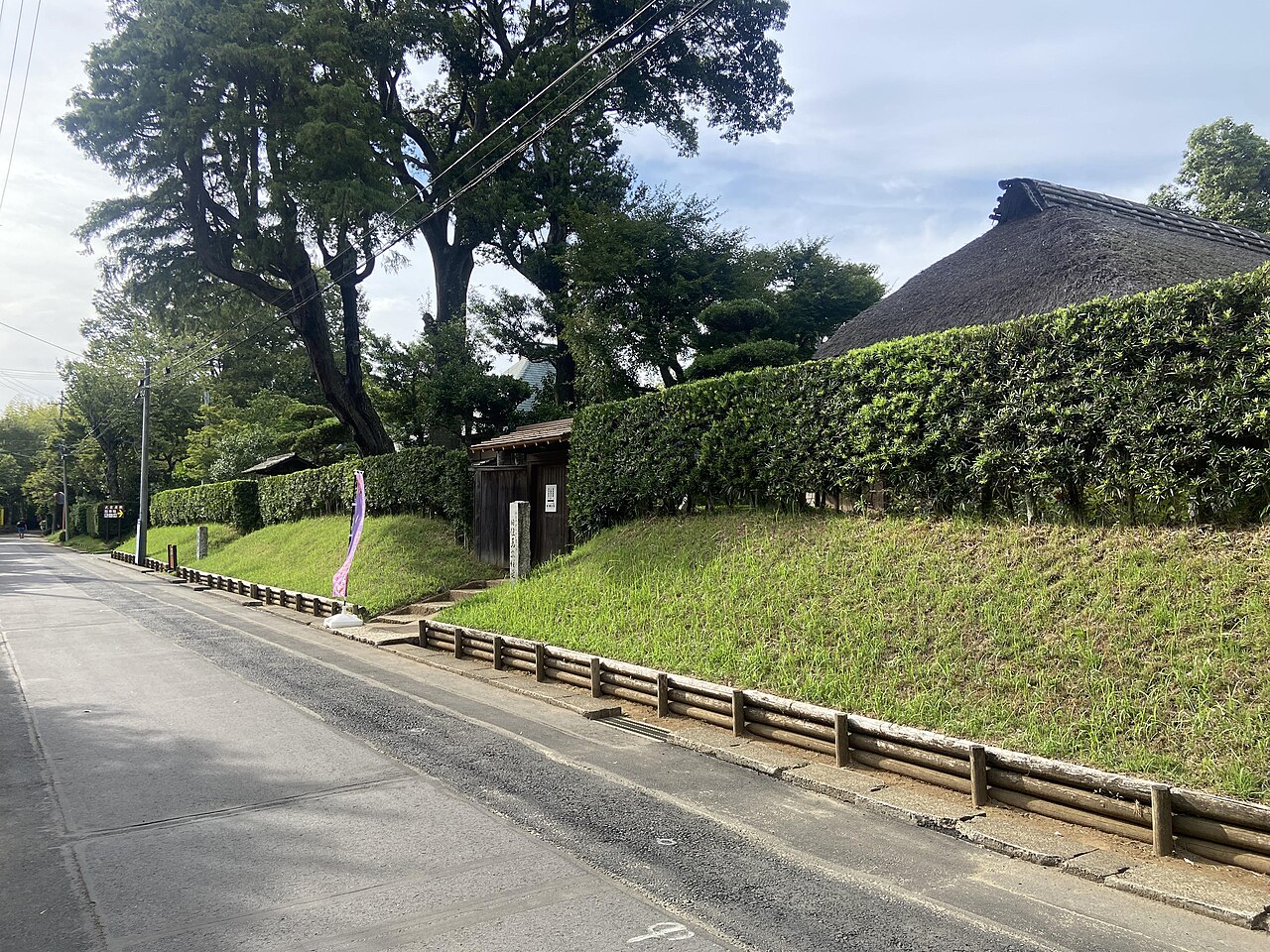
Three samurai residences face a street of earthen ramparts and hedges that keeps the look of the castle town of Sakura. All three were built in the late Edo period and lived in by Sakura domain samurai. Furnishings displayed in the former Kawahara house give a glimpse of the lifestyle of Sakura samurai.
Visitors can tour the interior of the former Tajima house and rest there, and the former Takei house displays materials related to samurai residences that were excavated when the house was relocated. At the former Hotta residence, the entrance building, reception-room building, bath house and garden can be visited. Its study building and gatehouse can be seen on special days held several times a year.
Getting to the National Museum of Japanese History
New to rural buses and one-man trains? See how to ride them, step by step.
| From or item | How | Time |
|---|---|---|
| Tokyo Station | JR Sobu Main Line rapid | About sixty minutes |
| Keisei Ueno Station | Keisei Main Line limited express | About fifty-five minutes |
| Sakura Station to museum | Bus | About fifteen minutes |
| Keisei Sakura Station to museum | Foot or bus | Fifteen on foot, five by bus |
| Toei Asakusa Line through service | Keisei Sakura Station, then foot | About fifteen minutes |
| Keisei Sakura Station to park | On foot | About twenty minutes |
| Sakura Station to park | On foot | About twenty-five minutes |
To stay overnight in Sakura, browse places to stay in Sakura.
Hours and Fees
| Item | Time or fee | Last entry or note |
|---|---|---|
| Museum, March to September | Nine thirty to seventeen hundred | Last entry sixteen thirty |
| Museum, October to February | Nine thirty to sixteen thirty | Last entry sixteen hundred |
| Botanical garden | Nine thirty to sixteen thirty | Last entry sixteen hundred |
| Museum admission, general | Nine hundred yen | Five hundred yen for university students |
| Botanical garden admission | Two hundred yen | Cash only |
| High school students and under | Free | Admission |
| Museum closed day | Every Monday | Next weekday if Monday is a holiday |
Fees and hours were checked against official sources on 13 November 2026.
Thinking of staying overnight?
Compare places to stay near Sakura, Chiba, Japan →
Disclosure: This post may contain affiliate links. If you book through them, we may earn a commission at no extra cost to you.