The southern tip of the Boso Peninsula was once a pilgrim's country. According to the old Kannon engi, a revered monk known as Raigo laid out a circuit of thirty-four temples across Awa Province in the Joei era, and each temple received its own goeika, a short pilgrim's hymn to sing at the gate.
A Taisho-era collection of Awa legends records the rhythm that once governed the province. In every year of the ox the thirty-four halls unveiled their Kannon together, with a lesser unveiling in years of the horse, and custom urged each person to walk the circuit three times in a lifetime — for the ancestors, for the parents, and for oneself.
The walking begins within sight of the sea. Edo-period gazetteers called the water off this shore Kagami-ga-ura, the Mirror Shore, a name said to come from a bay so clear and calm that its surface lay like polished glass, and they used it for the whole sweep of Tateyama Bay.
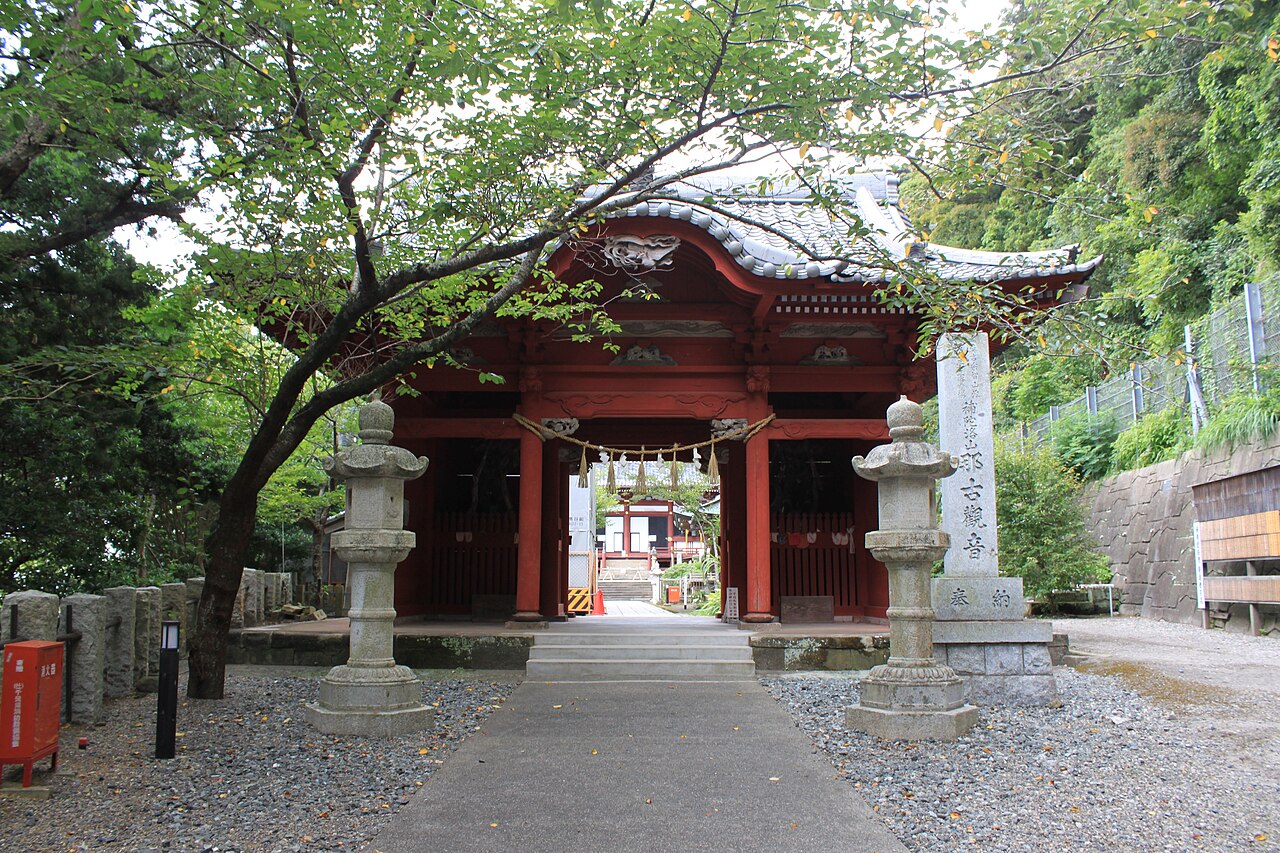
Nago-ji, First Temple of the Awa Pilgrimage
The first seal of the circuit belongs to Nago-ji, formally Fudarakusan Senju-in Nago-ji, on the wooded hill behind Nago. Its engi tells how, when the empress Gensho fell ill in the Yoro era, the monk Gyoki came to this shore, carved a thousand-armed Kannon, and prayed; the empress recovered at once, and the halls were endowed in gratitude.
What stands today is not the first arrangement. The halls once sat higher on the flank of Mount Fudaraku, the rise townspeople call Nago-yama, and were moved to the present grounds after an earthquake in the Genroku era wrecked them. Before the Meiji reforms, records say, the temple also administered the great Tsurugaya Hachimangu shrine, of which more below.
Records from the Taisho period describe a splendid precinct: a Kannon hall facing south beyond the Nio gate, a two-storied hall, a six-sided tower, and many lesser buildings. The same records claim that for worshippers Nago-ji stood second in Awa only to Tanjo-ji at Kominato, and praise the two great cycads in the courtyard, long reputed the finest in Kanto.
The hill above repays a climb. From the top of Nago-yama the Mirror Shore spreads below, a view the old accounts rank above the one from the slope. The travel diary Kaikoku Zakki records its author bowing before the Nago Kannon, then standing wordless before evening waves washing the sinking sun, and the goeika likewise sings of waves on this shore.
The Cliff Kannon: A Hall on the Rock Face
A short way up the coast, above the harbor town of Funakata, the third seal of the pilgrimage hangs in the air. Daifuku-ji — the whole region knows its upper hall as Gake Kannon — is said to have been founded by Jikaku Daishi in the reign of Emperor Ninmyo, and its principal image is the eleven-headed Kannon.
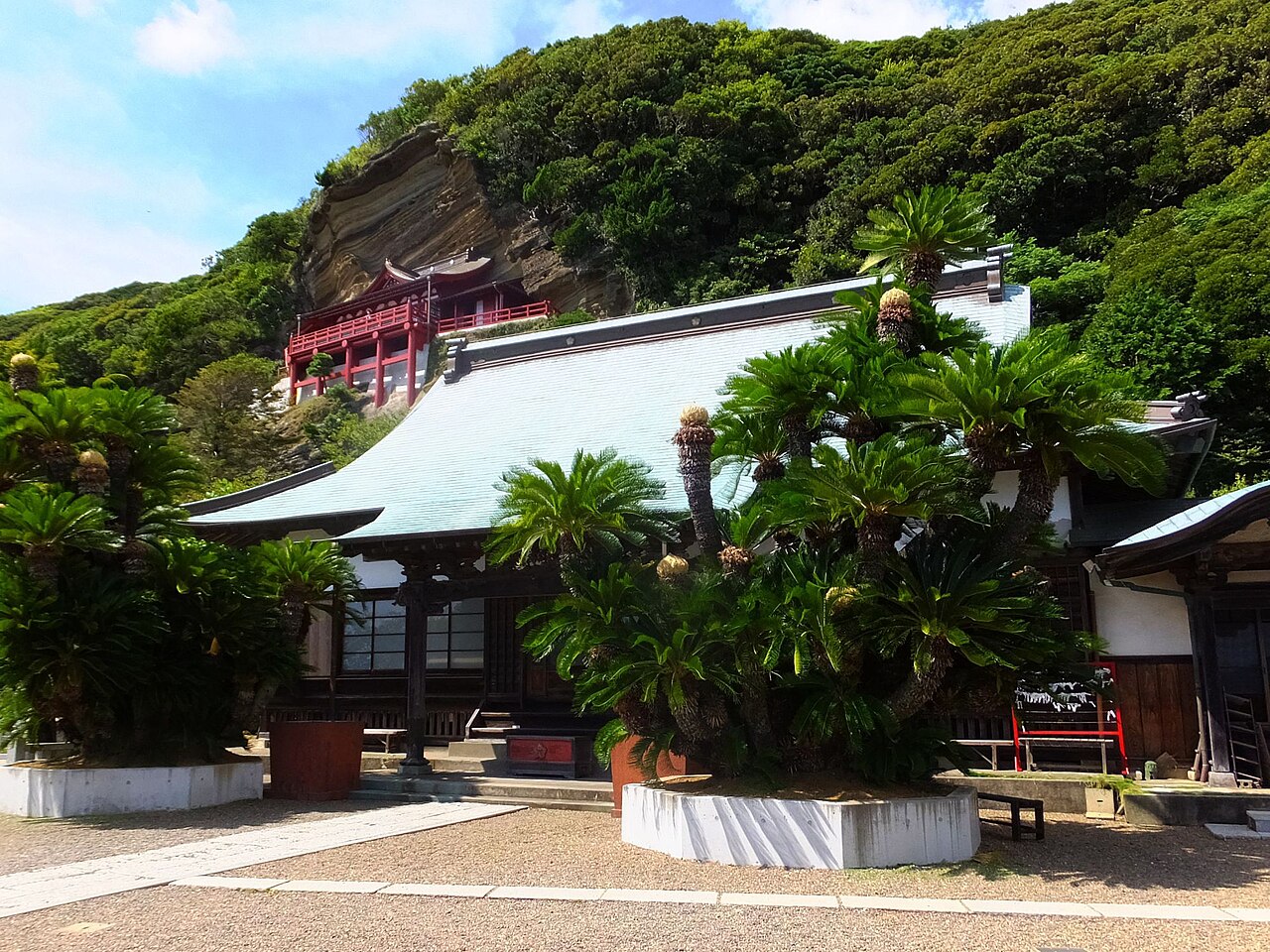
The Taisho-era legend collection lingers on the setting more than the history. It describes the vermilion hall as set against the middle of an immense face of bare rock, and plainly counts it among the strangest and most striking sights in the province. Seen from the main hall below, the red silhouette against the stone stays with a traveler.
Compare options
See partner pricing and availability →
Disclosure: This post may contain affiliate links. If you book through them, we may earn a commission at no extra cost to you.
A Shrine in the Region's Great Festival
Awa Jinja enters the old records in a single, telling role. When Tsurugaya Hachimangu, the great shrine at Hojo near the old provincial seat, held its annual festival, Awa Jinja was counted among the eight outer shrines of old Awa district whose mikoshi were carried in to join the rites.
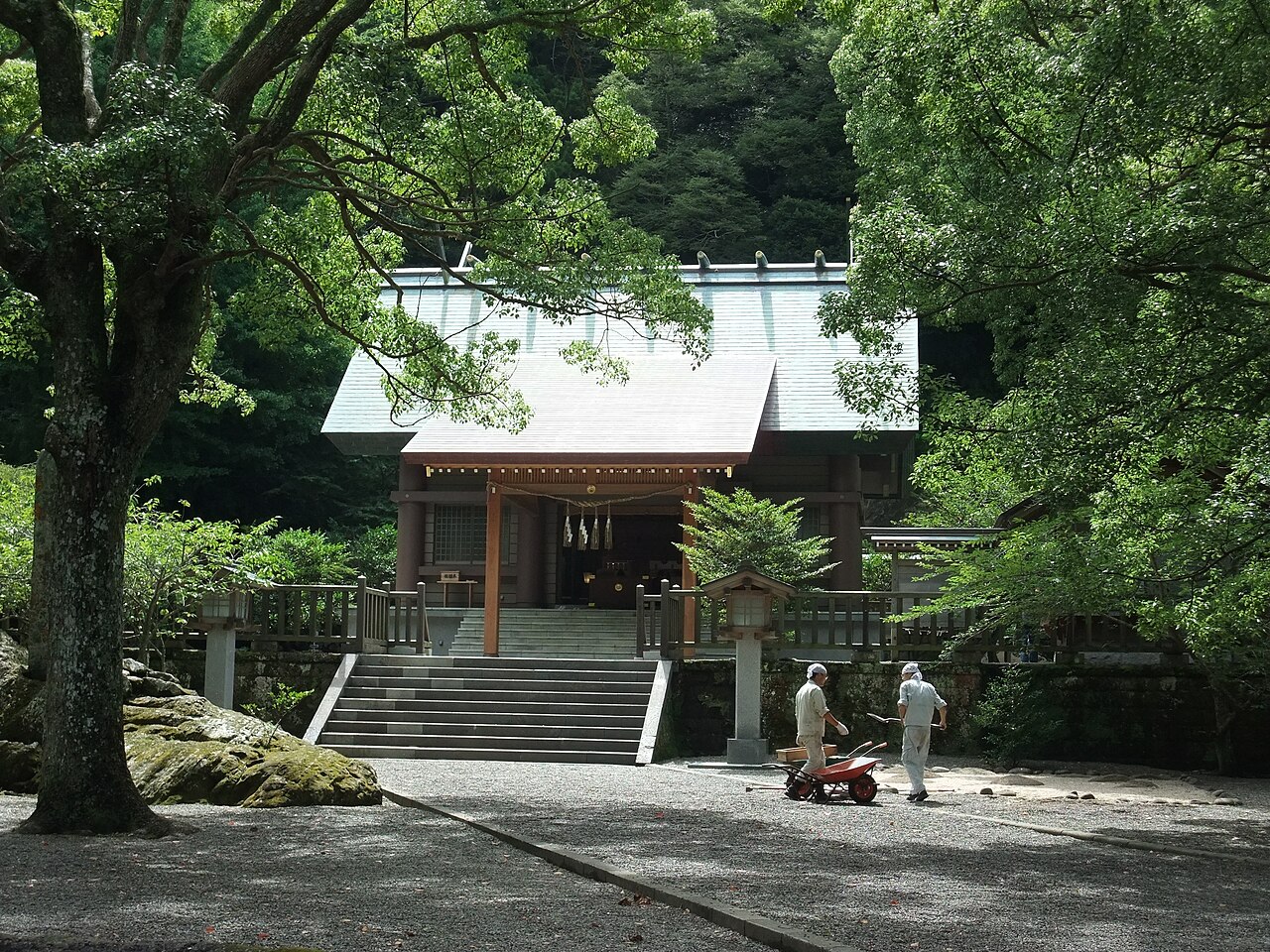
Tsurugaya Hachimangu has a story of its own. Tradition holds that worship of the Usa deity came first to the provincial capital and was enshrined at Hojo in the Yoro era by district leaders led by Ki no Tomohito. Satomi Yoshimichi rebuilt it in the Eisho era; the gazetteer names Emperor Ojin as chief deity, with Chuai and Jingu alongside.
The festival the records remember was held over the fourteenth and fifteenth of September. Mikoshi from the outer shrines of Awa district and from the shrines of neighboring Asai gathered at the Hachimangu, rites were performed on the seashore, and the gazetteer does not hesitate to call it the first festival of all Awa.
Tateyama Castle and Its Museum
On the hill at Shiroyama Park stands a reconstructed keep housing the Satomi Hakkenden Museum, and a single combined ticket covers both the castle and the main building of the Tateyama City Museum. It rounds out the day after the temples, with the bay in view on the way up.
Combined tickets for the museum's main building and the castle:
- Adults, individual: four hundred yen
- Adults, group rate: three hundred yen
- Elementary, junior-high, and high-school students: two hundred yen
Reaching the hill:
- From Tateyama Station, take the JR Bus Susaki Line toward Chisato no Kaze or the Nitto Bus Tateyama City Line toward Kan Kokutai, and get off at Shiroyama Koen-mae; the walk from the stop is about five minutes.
- On foot from Tateyama Station the walk is about thirty minutes, roughly two point two kilometers.
Getting to Tateyama from Tokyo
The simplest approach from the capital is the direct highway coach, and for the temples themselves the JR Uchibo Line and short local services cover the last hops north of the city center. Fares below are one way.
- Nanohana-go highway bus, Tokyo Station to the Tateyama-eki-mae stop: two thousand seven hundred yen, or two thousand six hundred fifty yen when booked through the Kosoku Bus Net site.
- In the busy seasons the same run is two thousand eight hundred yen, or two thousand seven hundred forty yen with the online discount.
- For Nago-ji, Nako-Funakata Station on the JR Uchibo Line is about a fifteen-minute walk from the temple.
- From Tateyama Station, the JR Bus Kanto service stops at Nago, about five minutes on foot from Nago-ji.
A Day Along the Mirror Shore
Taken together the pieces make a well-shaped day: the morning coach from Tokyo, Nago-ji and its hilltop view first, then the rock-face hall at Funakata, with the castle hill and the shrine held for the afternoon. None of it needs hurrying, which is rather the point of Awa.
The old custom asked for three circuits of the province in a lifetime. One unhurried loop is enough to see why people kept coming back. If you would rather hand the logistics to someone else, browse bookable day tours around the Boso Peninsula before you set out.