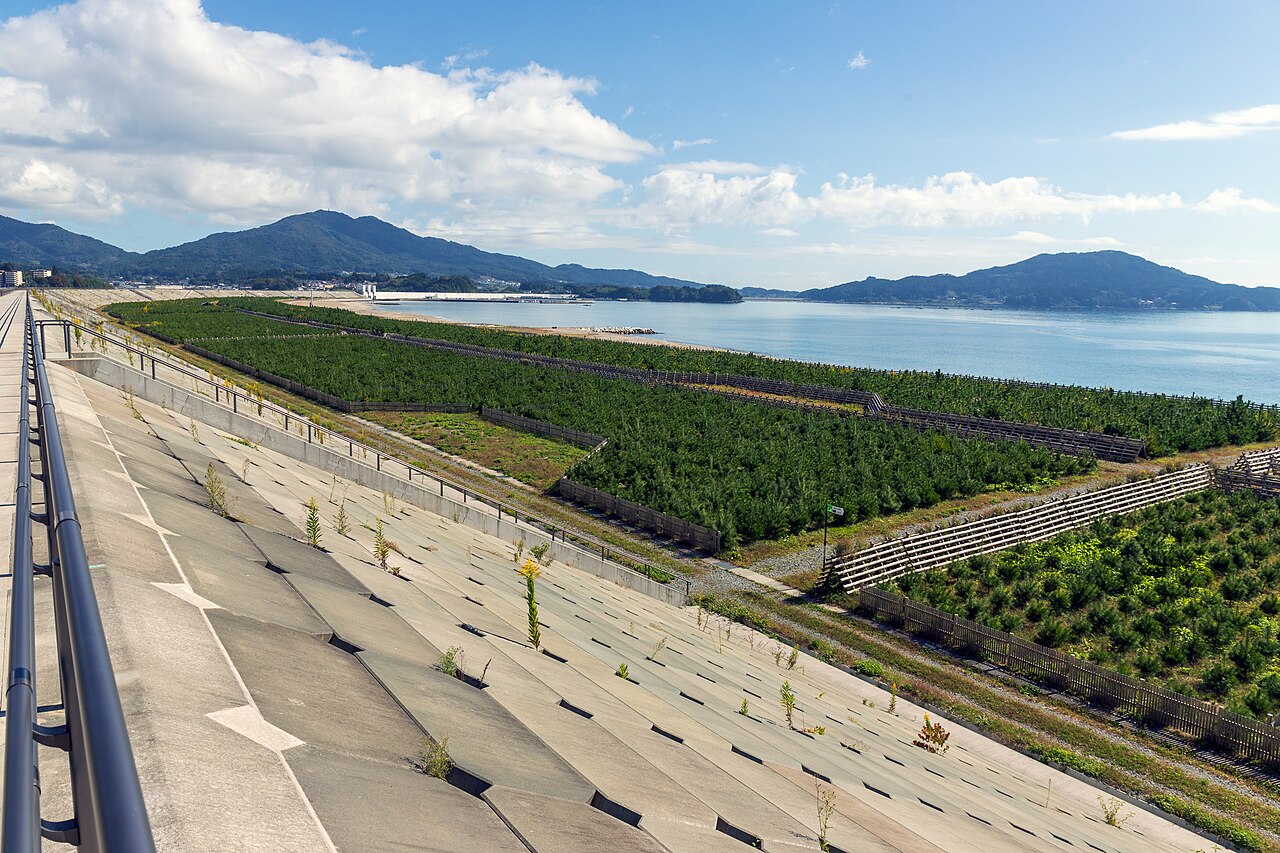
Rikuzentakata keeps the Miracle Pine standing as a monument on the spot where it grew, inside a park built to remember and pray for the people who died in the Great East Japan Earthquake and tsunami. The same city reaches inland to Mt. Hikami and out to the ria coast, where Kurosaki Senkyo Onsen looks over the Sanriku sea. One way to work through the area is to begin at the Miracle Pine and the memorial park, turn to the hills of Mt. Hikami, come back to the sea at Kurosaki Senkyo, and finish with oysters raised in Hirota Bay. Together they show how the town remembers, and how it goes on living with the sea and the mountains.
The Miracle Pine and the Takata-matsubara Memorial Park
Confirmed withered, then preserved, the Miracle Pine stands as a monument on the same spot, and visitors can go right up to its base. Near the foot of the trunk is a mosaic from an illustration by Takashi Yanase, the creator of Anpanman.
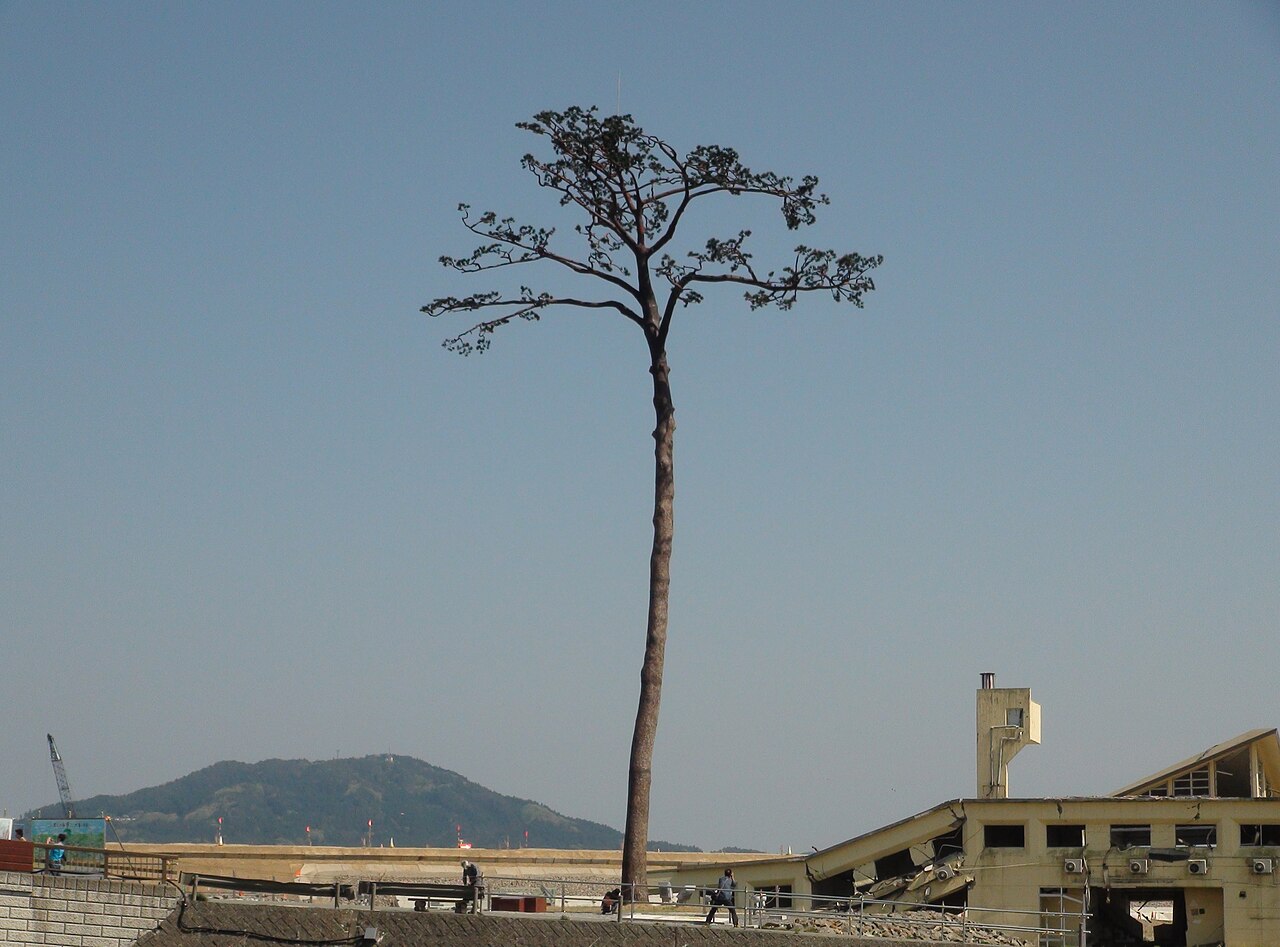
The pine stands within the Takata-matsubara Tsunami Memorial Park, developed to remember and pray for the victims. The park holds the Iwate Tsunami Memorial Museum, whose guidance theatre shows a video, five tsunami remains, and a roadside complex with shops and restaurants. The memorial facility has a monument, a flower-offering table, and a black granite plate engraved with the names of people from the city who died.
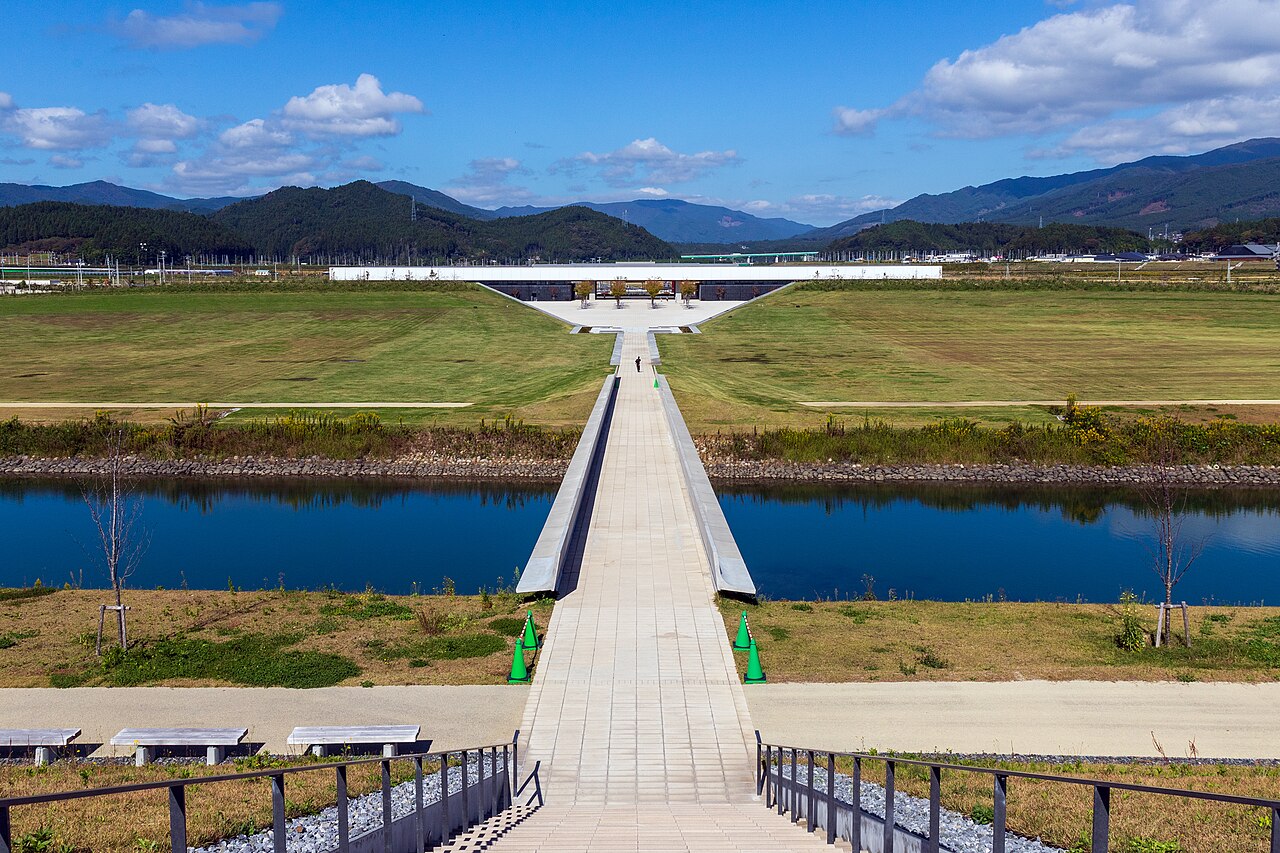
The five remains stand where they stood when the tsunami struck; the former roadside complex among them conveys its force. A green slow mobility cart rides past the Miracle Pine and the Kesen junior high school. To understand what the park remembers, start at the museum and the memorial facility, then walk out to the pine.
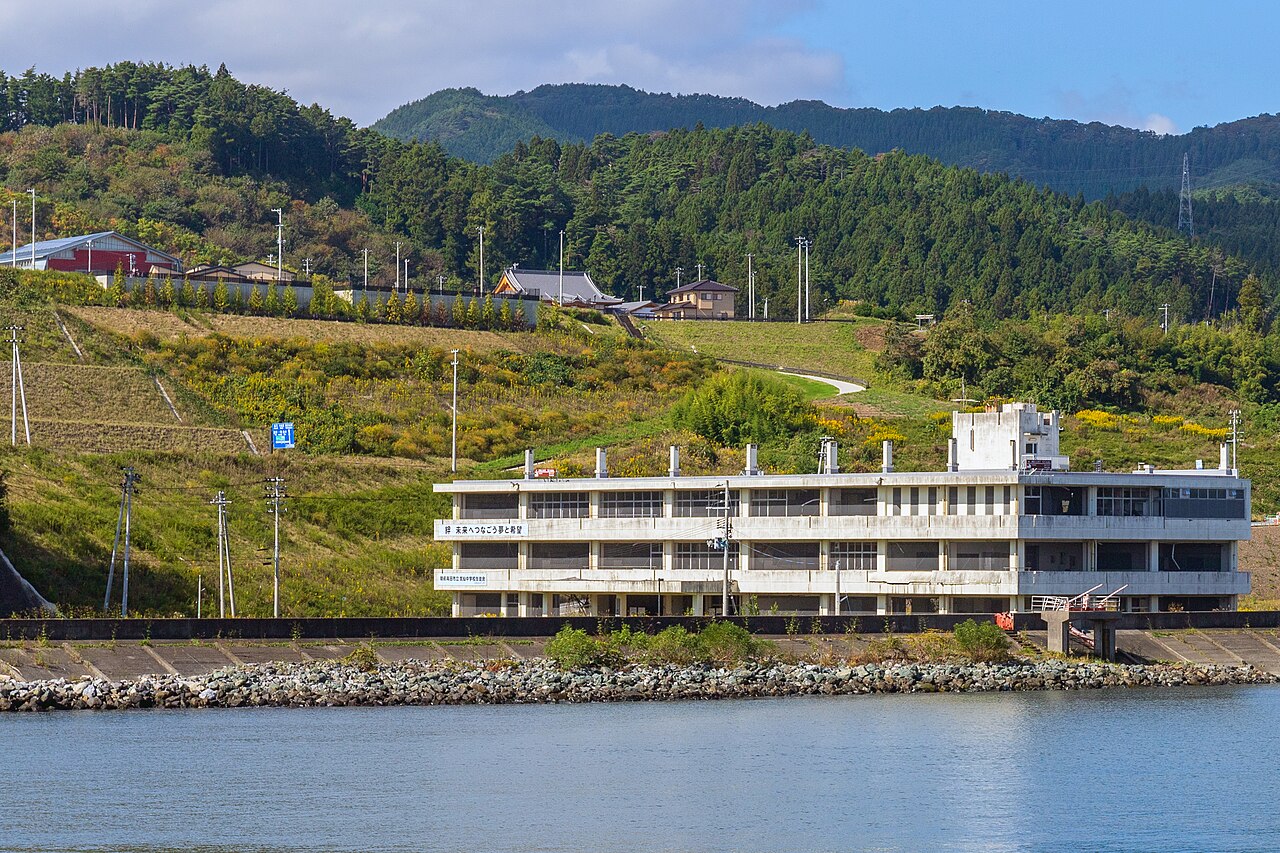
A bicycle course through the town adds a hilltop park looking over the town centre and the site of a former level crossing on the route that linked Kesennuma and Ofunato before the disaster.
Mt. Hikami: Autumn Colour, a Meadow and a Hut with a Wood Stove
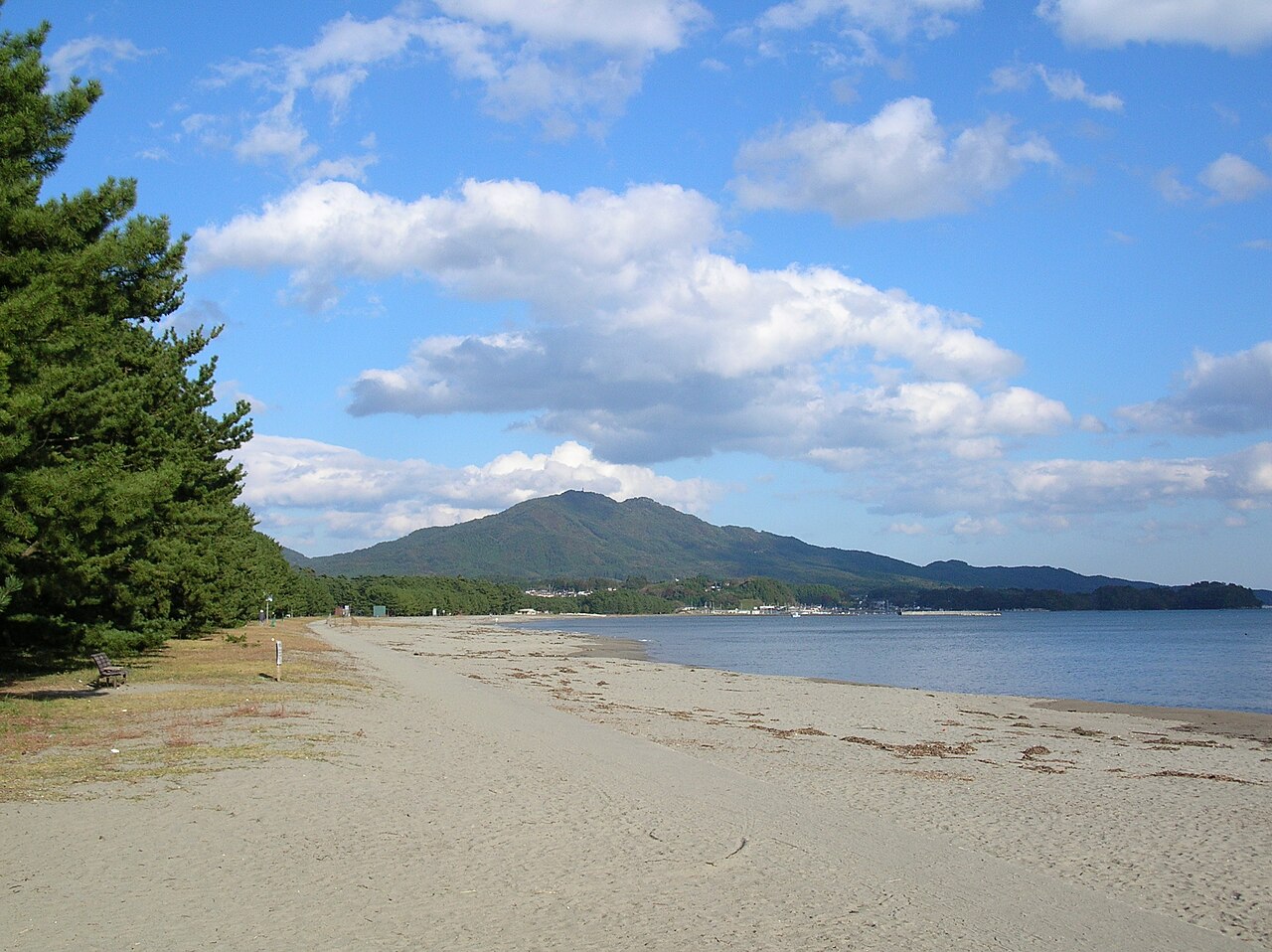
The trees on Mt. Hikami turn to autumn colour around late October to early November in a typical year. In the mountain hut, climbers can warm themselves by a wood stove, talk, and read the diary notebook left by earlier visitors. The mountain straddles Rikuzentakata and Ofunato, and three trails lead to the top.
The central trail takes about an hour to an hour and a half from the trailhead to the summit. High on the way, a meadow lets you lie on the grass and eat a boxed lunch, and each year some people wait in the hut for the first sunrise. For a day outdoors that is not about the shore, the meadow and the autumn colour make Mt. Hikami the one to choose, while Mt. Haratai is climbed for its mountain azaleas and other alpine plants.
Kurosaki Senkyo: Sea Views and the Sound of the Waves
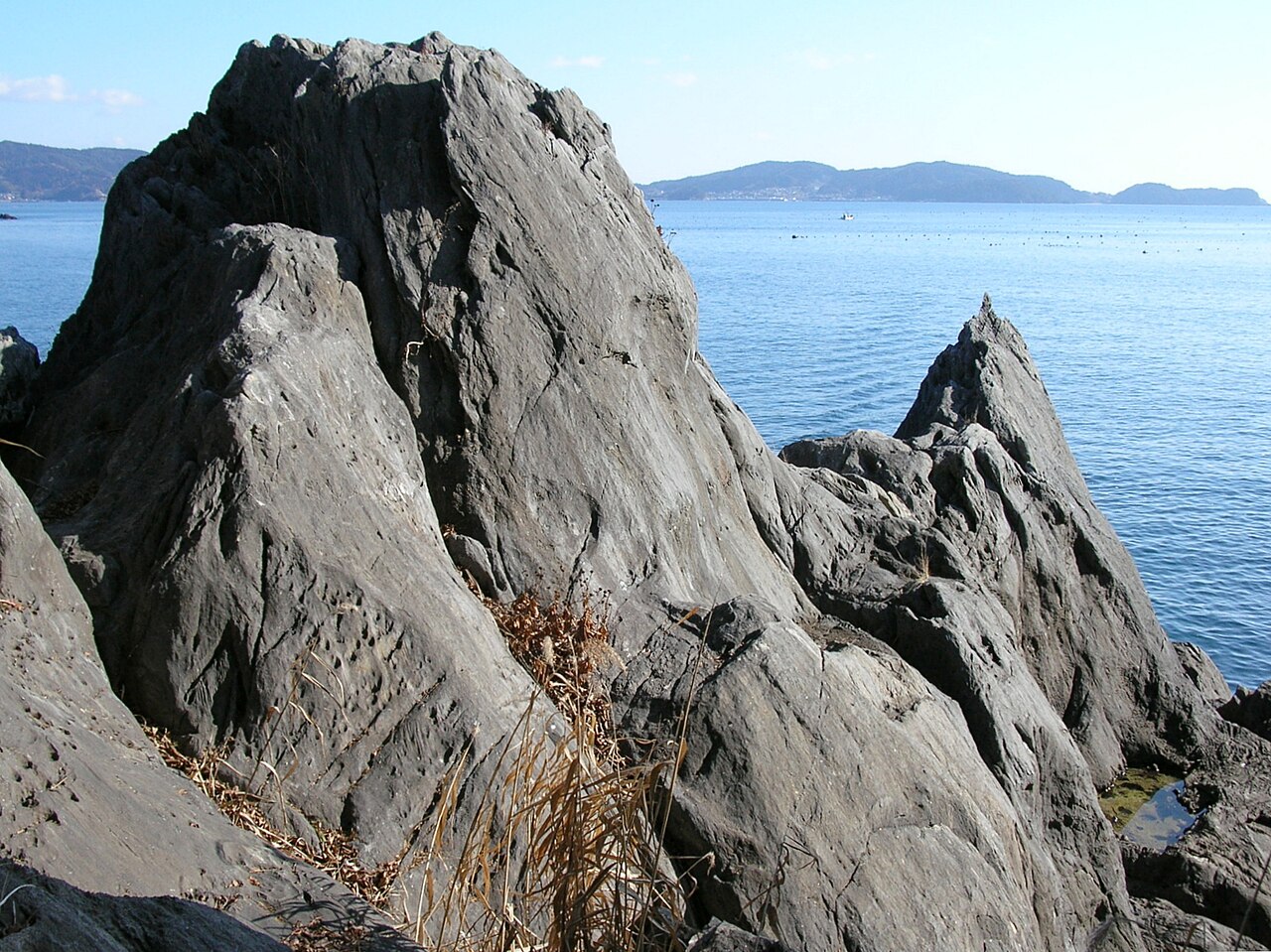
At Kurosaki Senkyo Onsen, rough waves striking the ria coast are heard outside like a roll of thunder. The dining room's winter recommendation, nabeyaki udon, arrives at the counter still bubbling and boiling. From the way in to the bath and dining room, the sea stays in view.
The sea changes greatly with season, weather and time of day, and the men's and women's baths swap each week, so the view differs. At Kurosaki Senkyo itself, rough waves wear at a narrow water channel formed where part of the rock caved in; in summer, yellow flowers bloom along the path to the lookout over Hirota Bay.
Tamanoyu, at the central trailhead of Mt. Hikami, is a bathing place at a gold mine whose hot spring goes back to the Edo period, with a dessert themed on the mine in its dining room. To look at the sea from the water, choose Kurosaki Senkyo Onsen.
Spring Water, Old Beams and a Cafe by the Sea
Shimizu-no-Wakiguchi sits in the mountains of Yahagi-cho, away from the city centre. Beside a single weeping cherry tree, it is quiet enough that the sound of the flowing spring water can be heard. The Yoshida family house in Kesen-cho, once a headman's office under the Sendai domain, has beams partly of timbers recovered after the tsunami, scars and colour differences visible.
In Hirota-cho, a cafe stands in a quiet place from which the sea can be seen, and time flows slowly there. It serves pizza from a handmade oven, lunch dishes and sweets.
On Mt. Hakone in Otomo-cho, where Kesen carpenters are said to have originated, the Kesen Carpenters and Plasterers Hall is built from local materials alone. Beside the hearth, the caretaker tells of the carpenters and the old life with sea and mountains in the Kesen dialect, and matcha is served. To see how a building is put together, pair the hall with the Yoshida family house and its nail-less joints.
Hirota Bay Oysters, Scallops and Seafood Bowls
Oysters raised in Hirota Bay have plump flesh with a substantial bite, and umami and sweetness spread as you chew. They are eaten grilled in the shell with a savoury aroma, steamed until plump, or raw.
Scallops from the bay, sweet-fleshed with large adductor muscles, come as sashimi, seared and in kakiage, while wakame is blanched until bright green and dipped in homemade ponzu. Together they make the Hotawaka set meal, which carries thoughts of recovery from the earthquake and is served at several restaurants in the city.
At the restaurants in the memorial park, a seafood tempura bowl is served in which the conger eel tempura represents the Miracle Pine, alongside a seafood bowl and an oyster rice bowl. After the shore and the hills, start with the oysters grilled in the shell. To spend more than a day on the coast and in the hills, places to stay in Rikuzentakata are worth a look.
Getting to Rikuzentakata
| Leg | How | Time |
|---|---|---|
| Ichinoseki Station to Kesennuma Station | JR Ofunato Line | About 1 hour 20 minutes |
| Kesennuma Station to the Miracle Pine stop | JR Ofunato Line BRT | About 30 minutes |
| The Miracle Pine stop to Rikuzentakata Station | On foot | About 25 minutes |
| The Miracle Pine stop to the roadside station Takata-matsubara | On foot | About 1 minute |
| The roadside station or the museum to the Miracle Pine | On foot through the memorial park | About 10 minutes |
Visitors arriving by public transport can use the shuttle service to the hot springs.
New to rural buses and one-man trains? See how to ride them, step by step.
Hours and Fees
| Place | What | Hours or fee |
|---|---|---|
| Takata-matsubara Tsunami Memorial Park | Hours, April 1 to September 30 | 9:00 to 18:00 |
| Takata-matsubara Tsunami Memorial Park | Hours, October 1 to March 31 | 9:00 to 17:00 |
| Takata-matsubara Tsunami Memorial Park | Admission | Free; no closing days |
| Iwate Tsunami Memorial Museum | Hours | 9:00 to 17:00, last admission 16:30 |
| Iwate Tsunami Memorial Museum | Closed | December 29 to January 3, and on temporary closure days |
| Roadside station Takata-matsubara | Hours, April to September | 9:00 to 18:00 |
| Roadside station Takata-matsubara | Hours, October to March | 9:00 to 17:00 |
| Roadside station car park | Fee | Free; available 24 hours |
| Rental cycle | 2-hour course and 1-day course | 1,000 yen and 2,000 yen, tax included |
| Rental cycle | Loan hours | 8:30 to 17:00 |
| A cafe in Hirota-cho | Hours | Thursday to Sunday, 11:00 to 16:00 |
Where to stay
Places to stay near Rikuzentakata, Iwate, Japan →
Disclosure: This post may contain affiliate links. If you book through them, we may earn a commission at no extra cost to you.