West of Hanamaki, in Iwate, the Toyosawa River comes down out of the hills through a long, wooded gorge. Strung along the water is a chain of hot-spring hamlets, each one smaller than the last. The valley has a simple rule: the deeper you go, the quieter it gets.
This country sits on a belt of volcanoes, and hot water rises all through the foothills around Hanamaki. People have been walking up this river to soak for a very long time — long enough that the nationwide spa guides of about a century ago describe the valley in loving detail. Much of what they describe is still there.
Hanamaki is also the town of Miyazawa Kenji, the poet and children's storyteller, and a visit splits naturally in two: the river valley for the baths, and the town side for his museum. Neither half asks you to hurry.
A valley that empties as it climbs
An old census of Japan's spas lists the Toyosawa springs in walking order — Shidotaira, then Osawa, then Namari, then Nishi-namari — and notes that the inns grow smaller the further upstream they stand. The biggest houses sat at Shidotaira, nearest the town; the single inn at Nishi-namari, at the head of the line, was a fraction of their size.
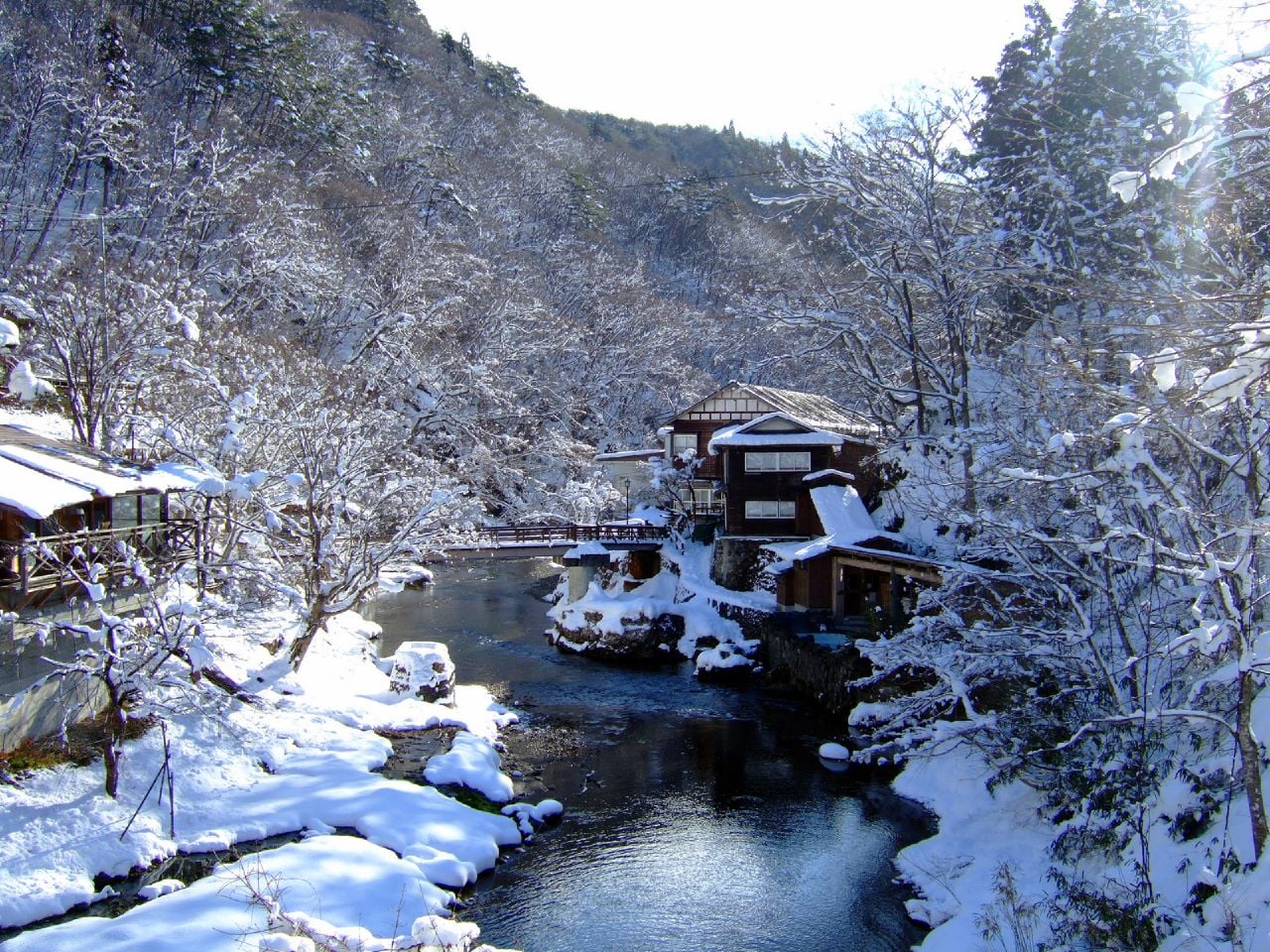
Shidotaira occupies a high, dry terrace, with Matsukura-yama rising beyond and the clear stream running directly in front of the spa; the Usugoromo waterfall is close by. Osawa lies further in, deep in the gorge, a secluded and painterly spot with a colorless salt spring. At Namari the land tightens again: high ground hemmed in by peaks on every side, with many-storied buildings looking over the river. Nishi-namari, a short walk beyond Namari, is the most remote of all — a plain, transparent spring surrounded by mountain views and the sound of water.
The same names are still on the map, in the same order. What the census caught is the valley's character, and that has not changed: each stop upstream sheds a little more noise.
Inns built for staying, not passing through
A second guide from the same era lingers over how these places were used. Osawa, it says, was somewhere bathers settled in for days at a time, drifting between tubs and forgetting the world outside — the word it reaches for is closer to "retreat" than "resort".
Its picture of Osawa is concrete: a row of guest houses facing the gorge, more lodgings under the rock face across the water, an old-fashioned bridge joining the two, and at the foot of the bridge a bathhouse where the spa water tumbled in like a little waterfall, with tubs large and small elsewhere and hot water always in surplus.
Namari was stranger. Its inns kept no baths of their own; guests walked the corridors to a common bathhouse at the centre, the Shirozaru-no-yu, which is said to owe its discovery to a white monkey. Its pull reached a long way: fishermen and farmers from the Sanriku coast crossed the awkward Sennin Pass, a journey of a day or two, to soak here.
Nishi-namari's one inn was a three-storied wooden house on the bank, dark-beamed and massive inside, more like the living quarters of an old temple than a hotel. Its bath was floored with clean pebbles, the spring rising up between the stones, and lying in it is said to let the strength drain out of the whole body.
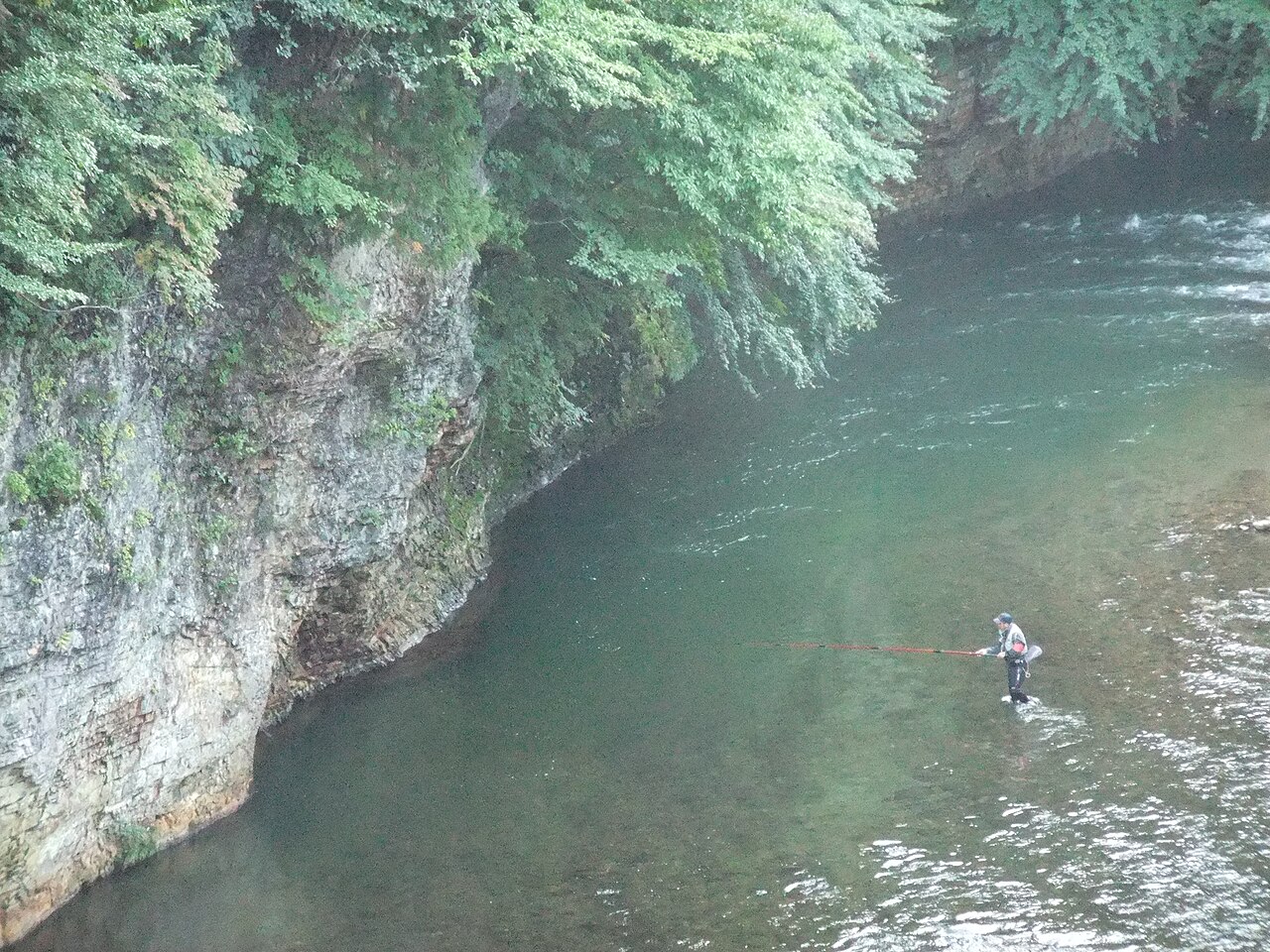
Shidotaira, the valley's front door, had the widest repertoire — sand baths, steam baths, cascade baths — with the Toyosawa running just past the verandas. Guests are said to have cast for river fish directly below the inns.
The book's image of the valley — a lone figure standing quietly in green water below the inns, rod in hand — is one you can still stumble on today. The valley's inns are few, so it is worth lining up a stay or a guided day around Hanamaki before you build the rest of your plan around one small place.
Where to stay
Places to stay near Shidotaira Onsen →
Disclosure: This post may contain affiliate links. If you book through them, we may earn a commission at no extra cost to you.
The waterfall path above the Tai River
On another stream above the town, the story repeats in miniature. Dai Onsen sits a short way up the Tai River where the gorge narrows and the rock walls lean toward each other — a mountain cure-town pressed into a crevice. The murmur of the Tai is said to reach the pillows of the rooms at night, and the scent of spring water hangs in the enclosed stillness.
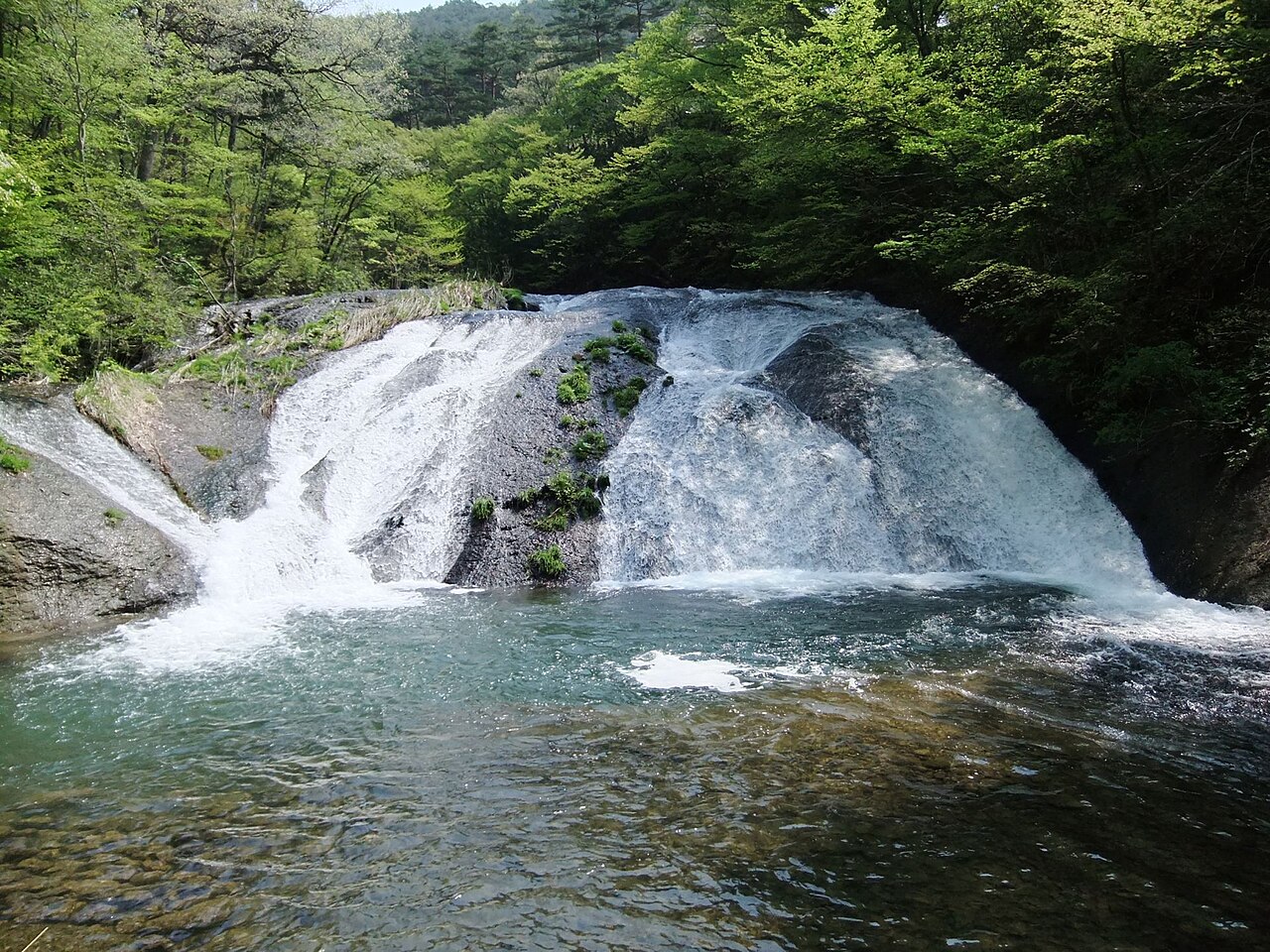
A stroll away is Kamafuchi, a pool below a low, wide waterfall, said to have been a favourite spot for swimmers and anglers in summer, with the Ogase waterfall and a celebrated split pine also near at hand. Kōrinji, an old temple of the Jishū school, keeps a store of treasures close to the springs.
Below all this sits Hanamaki Onsen itself, and it is the one piece of deliberate theatre in the landscape: not an old spa at all, but a resort assembled in the early nineteen-twenties by the local light-railway company, which piped hot water down from Dai to fill its new baths. That engineered resort went on to become the famous face of Hanamaki's hot springs. The gorges kept the quieter one.
The town of Miyazawa Kenji
Across town from the springs, Hanamaki keeps the memory of Miyazawa Kenji, the poet and writer of luminous children's stories who spent his life here. The Miyazawa Kenji Memorial Museum is the anchor of that side of a visit.
Admission for adults is three hundred and fifty yen, with lower rates for students and children. The museum takes Tuesdays off — the following weekday instead, when Tuesday lands on a public holiday — and rests from the twenty-eighth of December to the third of January. The Miyazawa Kenji Ihatov Hall nearby keeps the same New Year pause.
Practical notes for a visit without a car
The valley works without driving. By taxi, the ride from Hanamaki Station on the Tohoku Main Line to Shidotaira Onsen takes about fifteen minutes. From Shin-Hanamaki Station on the Tohoku Shinkansen, the same ride by taxi takes about thirty minutes. The deeper springs lie further along the same valley road.
Hotel Shidotaira staffs its front desk from nine in the morning until six in the evening, which is worth knowing if you plan a late arrival.
If you are stitching the two halves together — a night in the gorge, a morning with Kenji — browse stays and experiences around Hanamaki and let the quiet end of the valley set the pace.