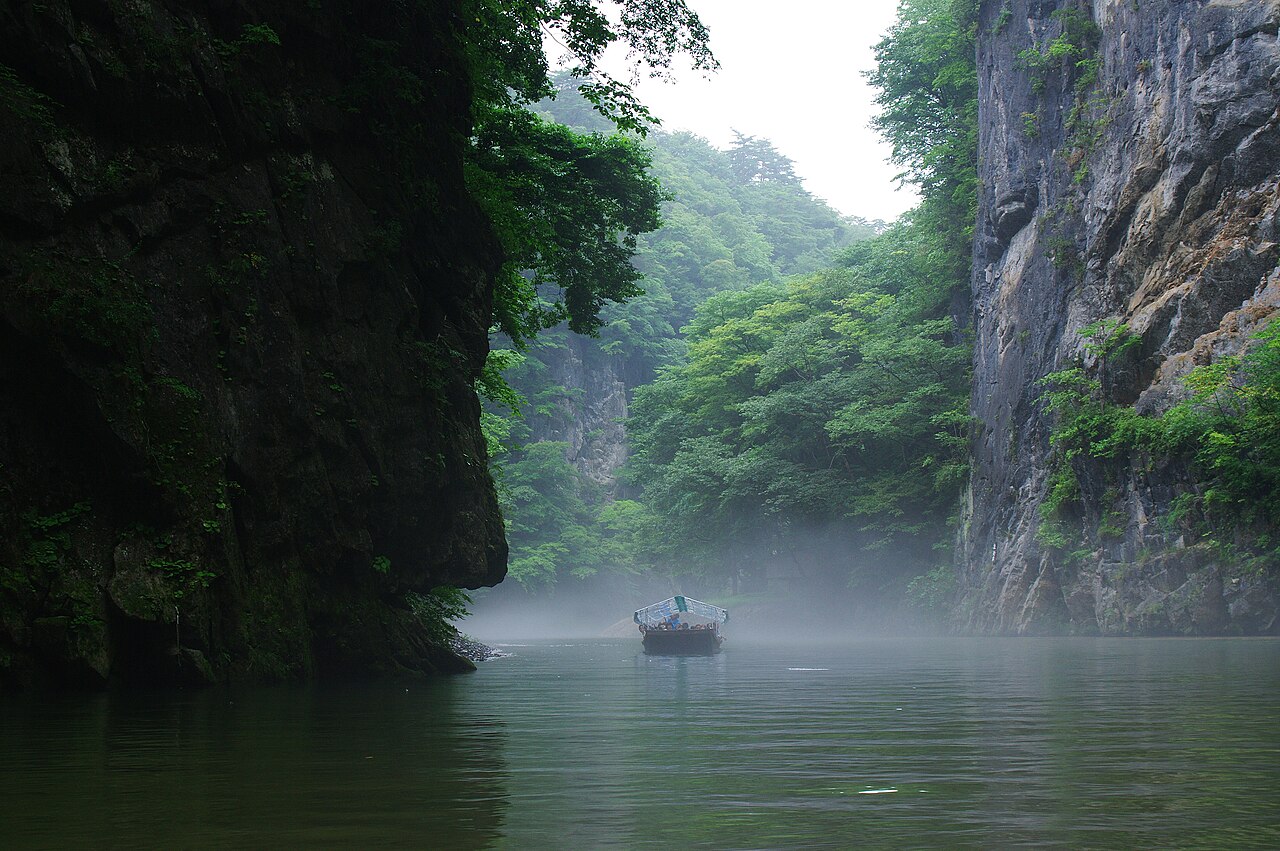
This guide covers how to reach Geibikei from Ichinoseki, the boat ride, the walk at the turnaround, lunch and the sights nearby.
Geibikei is a limestone gorge on the Satetsu River in Iwate. A visit follows a simple order: walk to the landing, ride the boat up the river, step off at the turnaround point, come back down, then have lunch before moving on to the rest of Higashiyama. Each section below puts the practical details in a table.
Getting to Geibikei from Ichinoseki Station
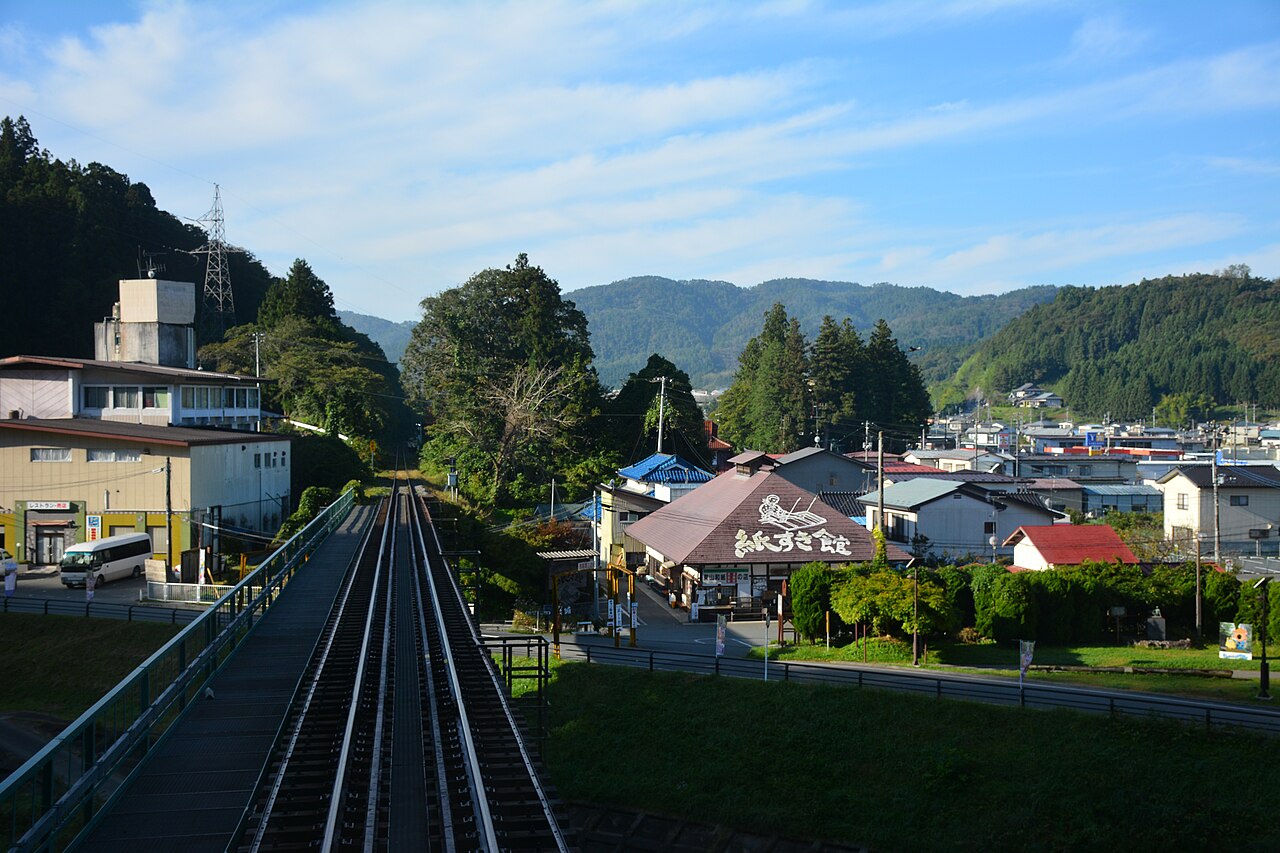
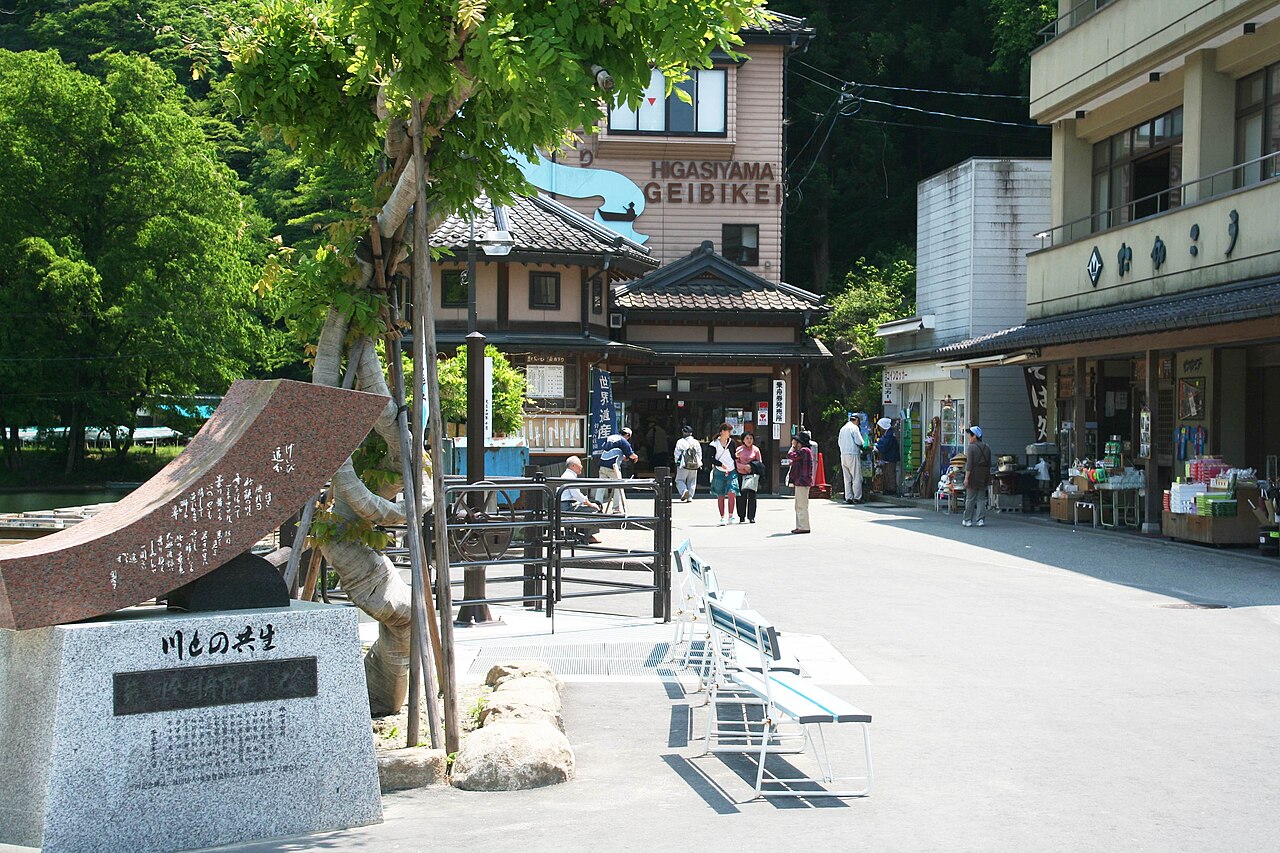
The Shinkansen brings visitors from Tokyo and Sendai to Ichinoseki Station. Change at Ichinoseki Station for the JR Ofunato Line, which runs to Geibikei Station. The Toban Kotsu bus to the Geibii-keiguchi stop leaves from the west exit of the same station. From Geibikei Station, the boat ride area is a short walk.
| From | Line and operator | Change | Time or fare |
|---|---|---|---|
| Tokyo, by Shinkansen | Shinkansen to Ichinoseki Station | Change at Ichinoseki Station | about 2 hours at the shortest |
| Sendai, by Shinkansen | Shinkansen to Ichinoseki Station | Change at Ichinoseki Station | 25 minutes |
| Ichinoseki Station, JR ride time | JR Ofunato Line to Geibikei Station | No change | 30 minutes |
| Ichinoseki Station west exit, bus ride time | Toban Kotsu bus to the Geibii-keiguchi stop | No change | about 42 minutes |
| Ichinoseki Station west exit, bus fare | Toban Kotsu bus to the Geibii-keiguchi stop | No change | 500 yen, paid in cash only when getting off; IC cards are not accepted |
| Ichinoseki IC, by car | Tohoku Expressway | — | about 25 minutes |
| Geibikei Station to the boat ride area, on foot | On foot | — | about 5 minutes |
| Geibii-keiguchi stop to the gorge, on foot | On foot | — | about 5 minutes |
| Geibikei Station area to Yugendo, by bus | Toban Kotsu Natsumatsu line bus | Change to the bus at the Geibikei Station-front stop | 4 minutes |
- The Toban Kotsu bus leaves from stop 3 at the west exit of Ichinoseki Station.
- The tourist information office is a 1-minute walk from the west exit of Ichinoseki Station.
- The tourist information office is open 9:00 to 17:30 and closed over the year-end and New Year period.
- The Natsumatsu line bus stop is in a different place from the Geibii-keiguchi stop.
- Hiraizumi Station is about 25 minutes by car and about 35 minutes by bus from Geibikei.
The Boat Ride on the Satetsu River
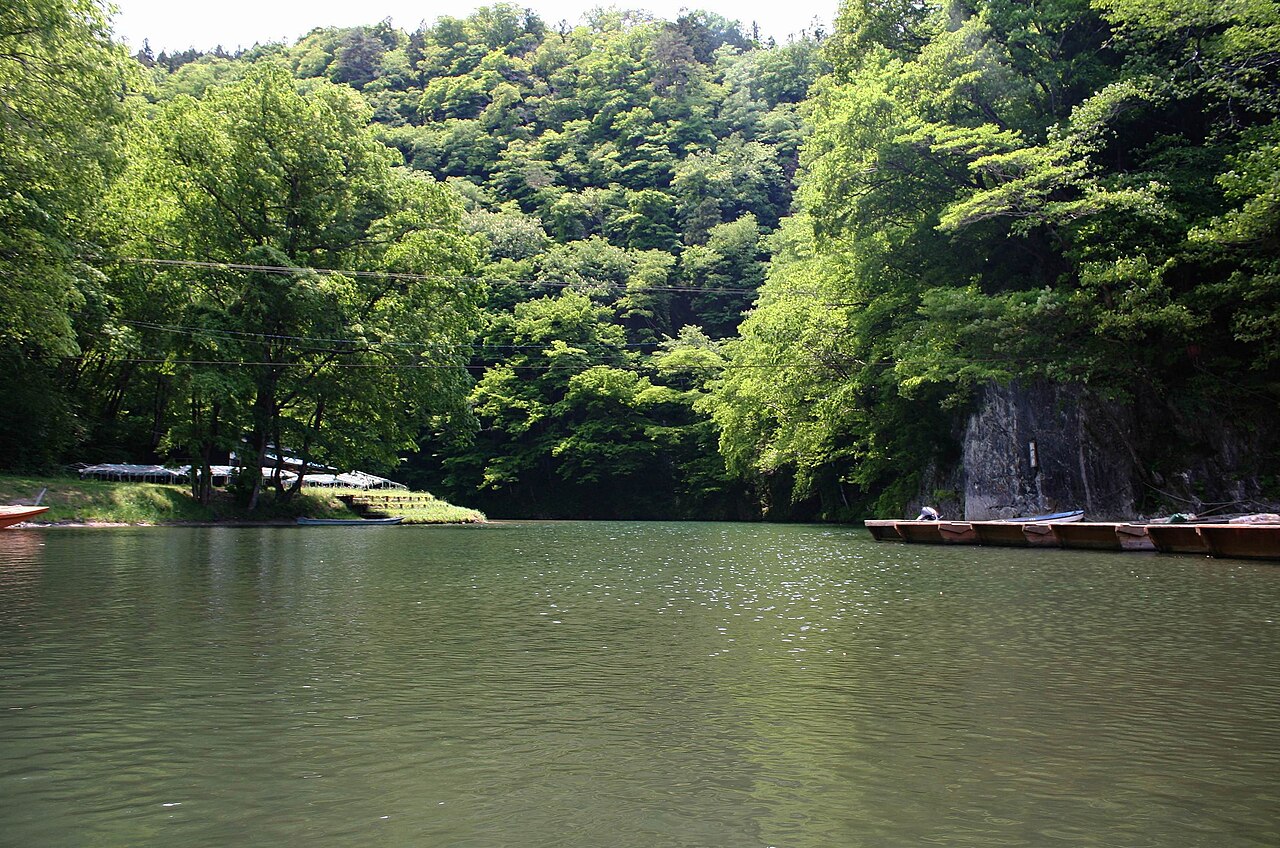
The boat ride is a round trip: the boat goes up the river, passengers get off at the bank, and the boat comes back down, so the departure point and the arrival point are the same. A boatman operates the boat with a pole.
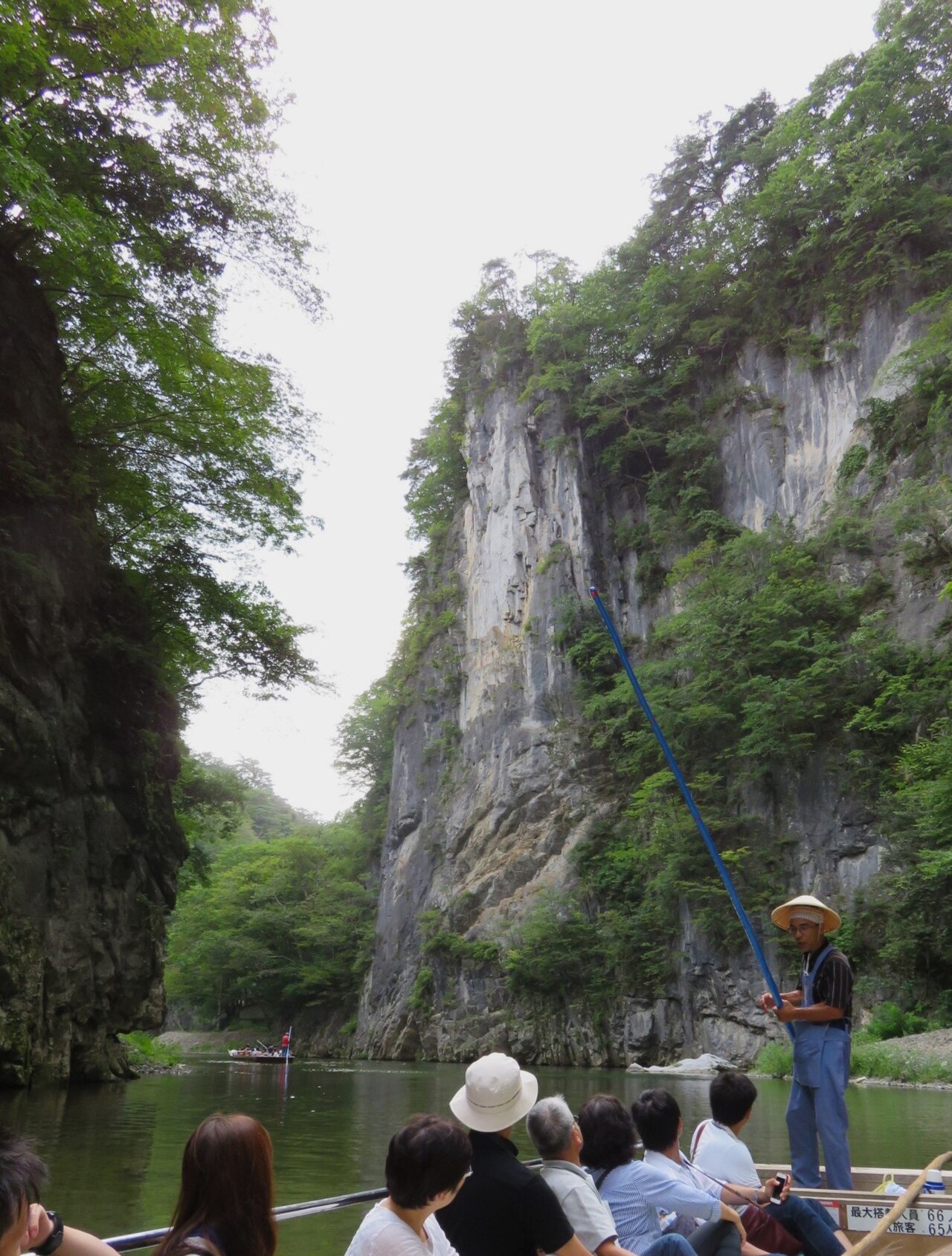
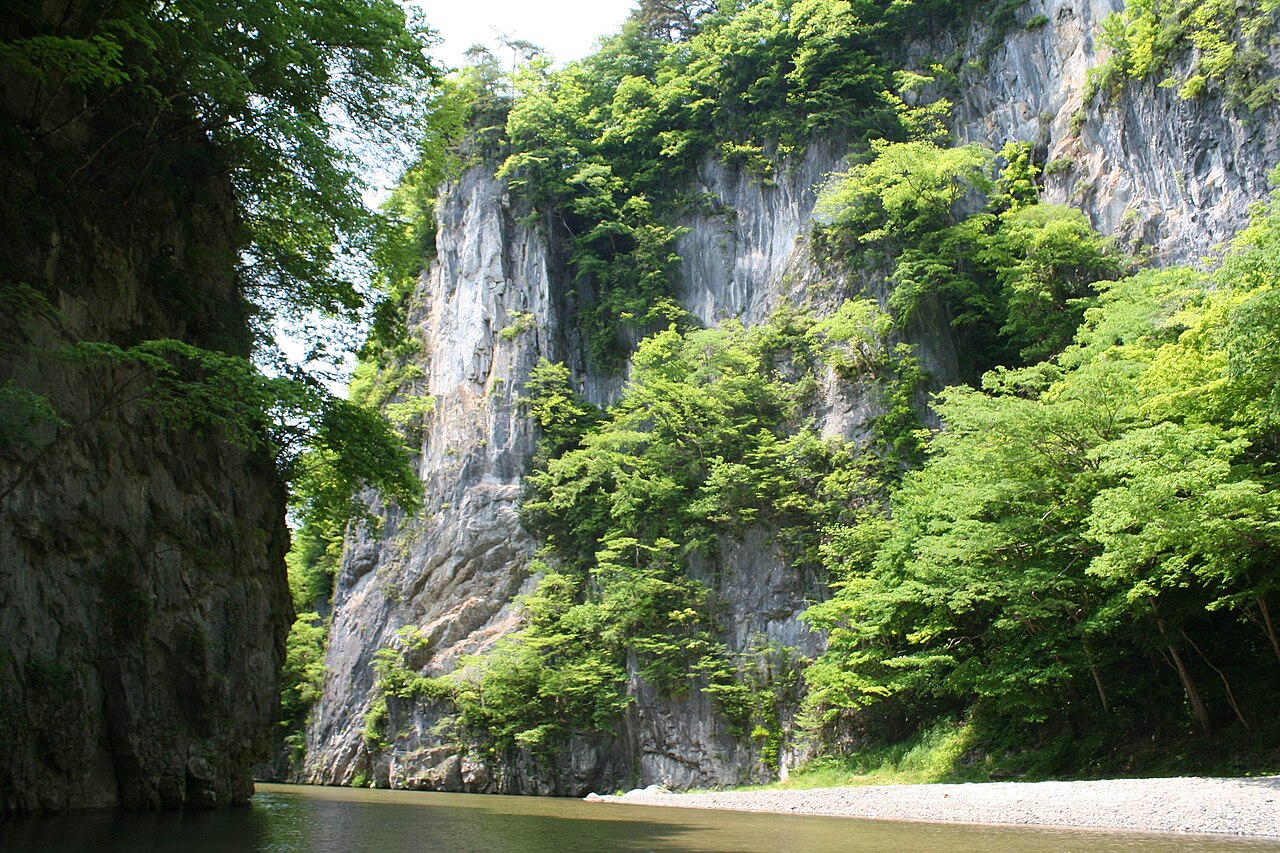
The gorge was formed as the Satetsu River eroded limestone, with rock walls rising on either bank. The current is calm, and on the ride the boatman sings Geibi Oiwake. In winter, a kotatsu boat runs, with kinagashi hot pot served on board.
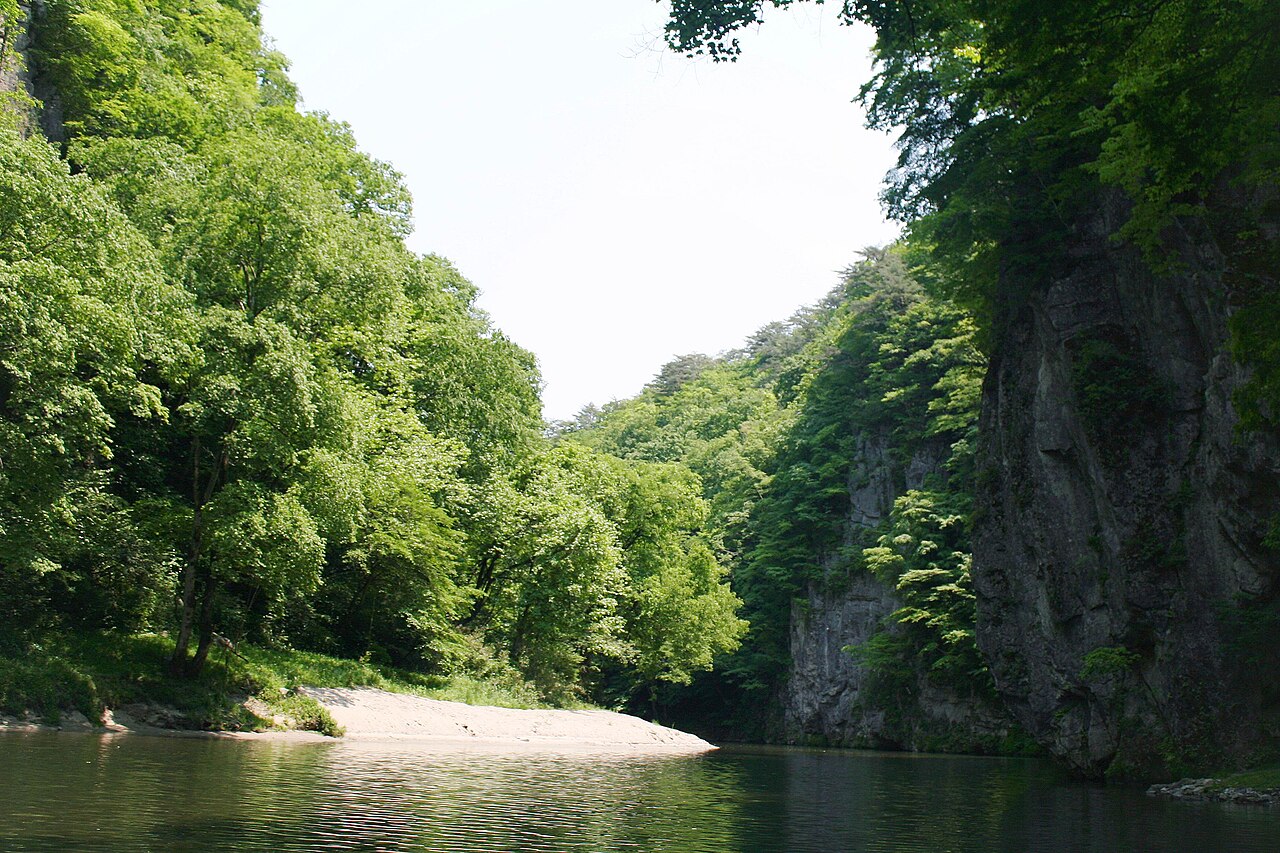
The boat ride runs year-round. The details for the ride are in the table below.
| Item | Detail |
|---|---|
| Boat fare | 2,000 yen for adults, 900 yen for elementary school students and 200 yen for infants |
| Boat ride duration | about 90 minutes round trip |
| Boat ride hours, April 1 to November 5 | 8:30 to 16:00 |
| Boat ride hours, November 6 to November 10 | 8:30 to 15:30 |
| Boat ride hours, November 11 to November 20 | 8:30 to 15:00 |
| Boat type by season | flat boat from April 1 to November 20, covered boat from November 21 to March 31, kotatsu boat from December 1 to the end of February |
| Boat ride for groups | groups of 15 or more people need to book ahead |
| Inquiries to Geibi Kanko Center | 9:00 to 17:00 |
Where to stay
Places to stay near Hiraizumi →
Disclosure: This post may contain affiliate links. If you book through them, we may earn a commission at no extra cost to you.
Shishigahana, the Wish Hole and the Rock Walls
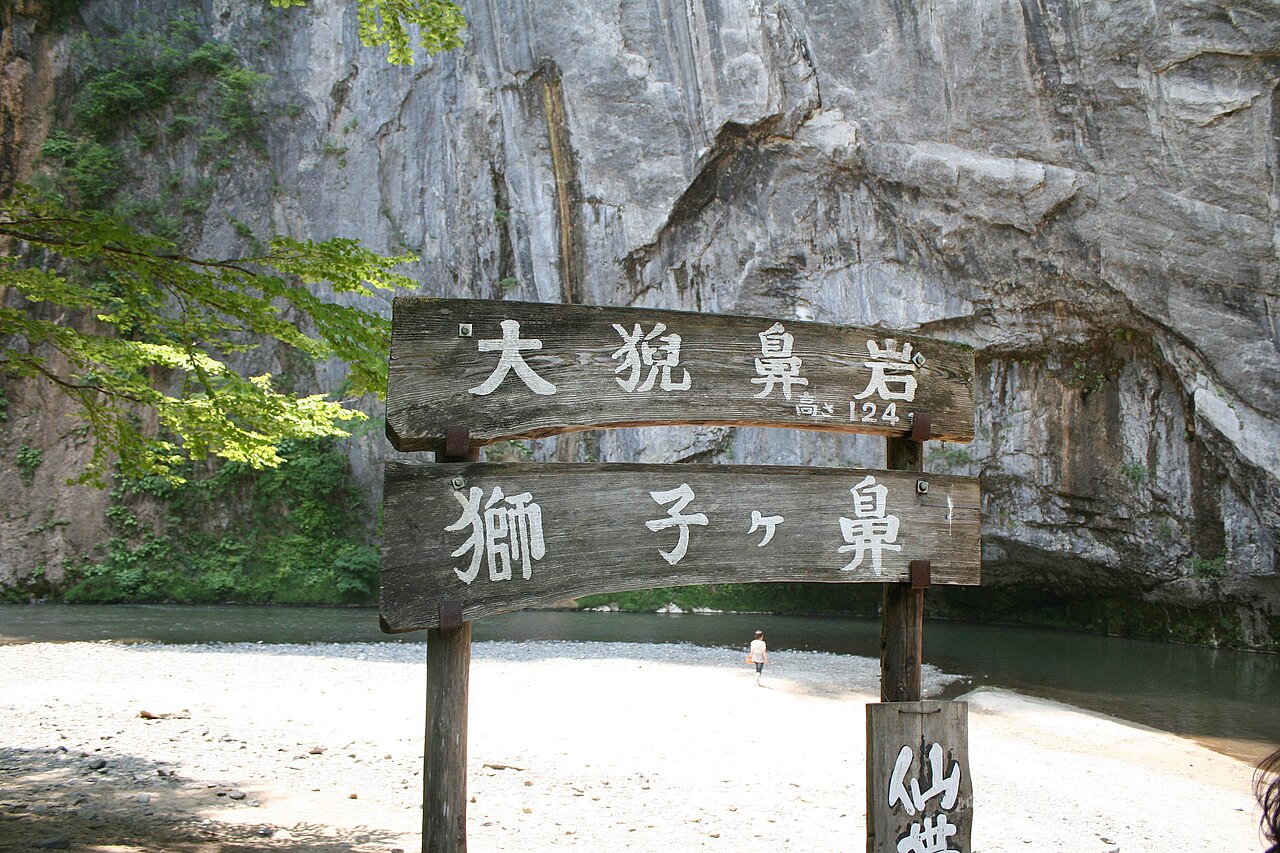
From the boat landing at the turnaround point, a walking path leads to Shishigahana, the strange rock that gave Geibikei its name. The wish hole on Daigeibiiwa rock, also at the turnaround point, is a spot for testing your luck. Luck balls are thrown across the river into the hole.
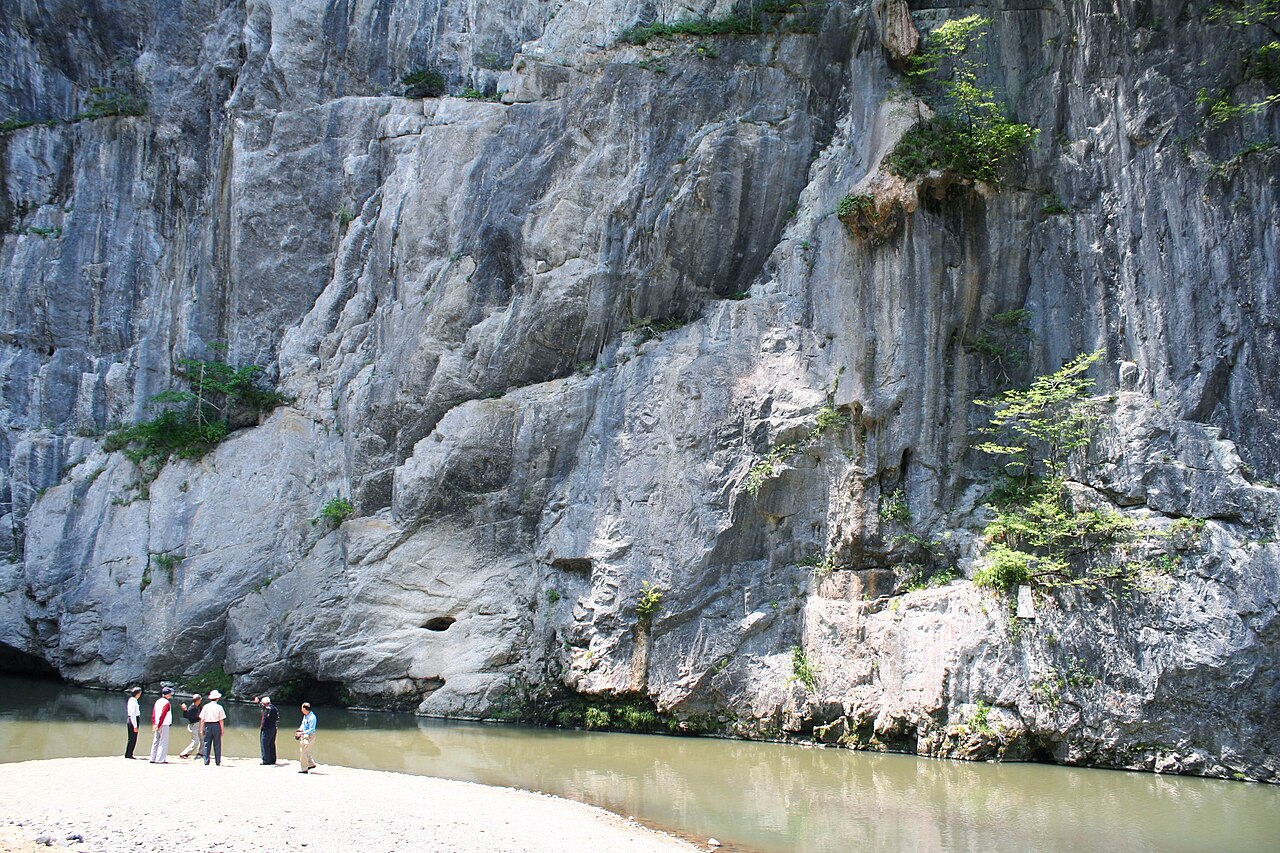
Continuous rock walls run along the gorge.
- Luck balls come in 10 types.
- The rock walls are over 100 m high.
- Cherry blossoms at Geibikei are at their peak in mid-April.
- The wisteria season at Geibikei runs from late May to early June.
Lunch at the Geibi Rest House
Lunch comes after the boat ride and before the rest of Higashiyama. The Geibi Rest House serves tenmori soba. It also serves Geibi soba. A boat-loaded lunch menu is also offered for groups.
| Item | Detail |
|---|---|
| Geibi Rest House hours | 11:30 to 14:00 |
| Tenmori soba price | 1,100 yen, tax included |
| Geibi soba price | 1,100 yen, tax included |
| Boat-loaded lunch menu price | 1,200 yen, tax included, for groups of 5 or more people |
- The lot at the Geibi Rest House and other sites has space for 200 vehicles.
Papermaking, Yugendo and the Stone and Kenji Museum
Higashiyama, the area around Geibikei, also has a papermaking hall, Yugendo and a museum. The former Tohoku Crushed Stone Factory, which brought Kenji to Higashiyama, shares its site with the Stone and Kenji Museum. The museum explains, through letters and photographs, the path that led to "Ame ni mo Makezu". The Higashiyama Washi Papermaking Hall offers a papermaking experience.
The Yugendo shop sells natural stones and Shiun-seki inkstones. Shiun-seki inkstones are a craft of Higashiyama that has been made since the time of the Hiraizumi Fujiwara. The stone is quarried in Higashiyama and in Oshu. The stone is azuki-bean colored or reddish purple, and sometimes has green spots. Brush rests and paperweights are also made from the stone.
| Item | Detail |
|---|---|
| Papermaking experience fee | 1,100 yen for 1 person, 1,700 yen for 2 people and 800 yen per person for 3 or more people |
| Papermaking hall hours, April to November | 9:00 to 17:00 |
| Papermaking hall hours, December to March | 10:00 to 15:00, weekends and holidays only |
| Papermaking hall, on foot from Geibikei Station | about 2 minutes |
| Yugendo admission | 1,100 yen for adults, 600 yen for junior high school students and 400 yen for elementary school students |
| Yugendo hours, April to November | 8:30 to 18:00, until 17:00 in October and November |
| Yugendo hours, December to March | 9:00 to 16:00 |
| Yugendo, by car from Ichinoseki IC | about 30 minutes |
| Yugendo entrance stop, by bus from Ichinoseki Station | 45 minutes |
| Stone and Kenji Museum hours | 10:00 to 17:00 |
| Stone and Kenji Museum admission, adults | 300 yen |
| Stone and Kenji Museum admission, high school and university students | 200 yen |
| Stone and Kenji Museum, by car from Ichinoseki IC | about 20 minutes |
If you would rather have the day arranged for you, look at Geibikei tours and day trips on GetYourGuide.