Takatsuki, in Osaka, folds several kinds of walking into one city: streets of gabled roofs, plastered walls and insect-cage windows in the old brewing district of Tonda, a route that joins the site of its castle to the castle town, and a burial mound where some of the clay haniwa on the embankment can be touched. Beyond the houses, Settsu-kyo is a gorge that is all mountain and forest. What makes the place worth a day is that range, from sake lees in a steamed bun to a keyhole-shaped tomb, without leaving one city.
Two Sake Breweries in Old Tonda
Tonda was a leading sake producer in Osaka in the Edo period, said to have held twenty-four brewers at its peak, and the two breweries that remain, Kiyotsuru Shuzo among them, keep that tradition going in lanes you can walk between.
Tonda became a sake town because it had good rice for brewing, good water flowing down from the nearby mountains, and workers from the Tajima region who came when farm work was slack; the two breweries you pass today are what that combination left behind. Tonda sake is still counted with Ikeda and Itami as a noted trio of brewing towns.
Kiyotsuru Shuzo filters its mash through cloth bags in the old manner and makes its sake by hand rather than in bulk. The other brewery has branched out into a local beer and a shochu distilled from sake lees. In winter both breweries sell new sake in limited quantities. Walk the brewery lanes first, for the buildings, and save the taste of the place for the sake-lees sweets further down.
Keizuiji Temple and the Tonda Townscape
Tonda's townscape is a walk through traditional building styles, with gabled roofs, plastered walls and mushikomado, the insect-cage windows set into the older houses. A local course loops on foot around the district, taking in temples, shrines and sake breweries in one circuit.
Founded by Dosho, the monk remembered for building the Uji Bridge, Keizuiji is now a temple of the Obaku sect with Kannon as its principal image, and its grounds hold a pagoda enshrining a retired emperor's tooth together with Buddha relics. A second hall houses a wooden statue and relics of a later priest, so the circuit of the grounds is short but has two distinct stops.
Eleven walking courses are mapped out across the city, and the Tonda loop is the one that threads the breweries and this temple together. If the breweries are the reason for coming, continue on foot from their lanes to Keizuiji rather than treating the temple as a separate stop; the townscape between them is part of the point.
Takatsuki Castle Park and the Castle Town Museums
Takatsuki Castle Park anchors a walking route around the castle site and castle town; laid out on the ruins, it has stone walls, a pond modelled on the moat, a small plum grove, a babbling stream and a lawn and playground plaza.
Inside the park stand the Historical Folk Museum and a stone statue of Takayama Ukon, the castle lord remembered as a Christian daimyo. The site of the east main gate, where processions to Edo once set out for the old highway and senior retainers and district magistrates lived inside, is now a point on the route.
In a corner of the castle's old outer perimeter, the Shiroato History Museum shows Edo-era documents and models, Takayama Ukon's rosary and material on his life. Its branch, the Historical Folk Museum, is a white-walled, tile-roofed merchant house moved from the castle town and restored, holding household, farm and fishing tools. See the statue of Takayama Ukon before his rosary in the museum, then look at places to stay in Takatsuki if the pond and lawns invite a longer stop.
Touchable Haniwa at the Imashirozuka Burial Mound
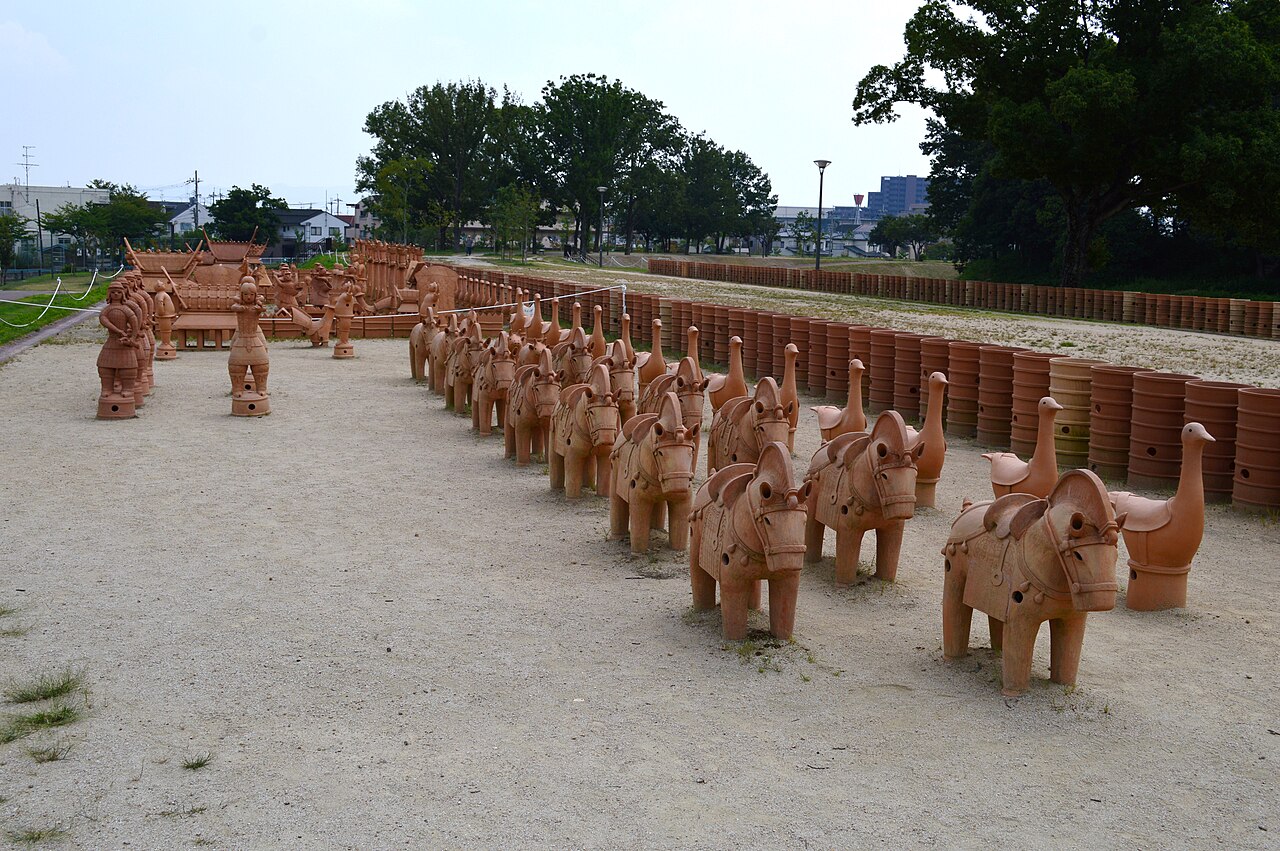
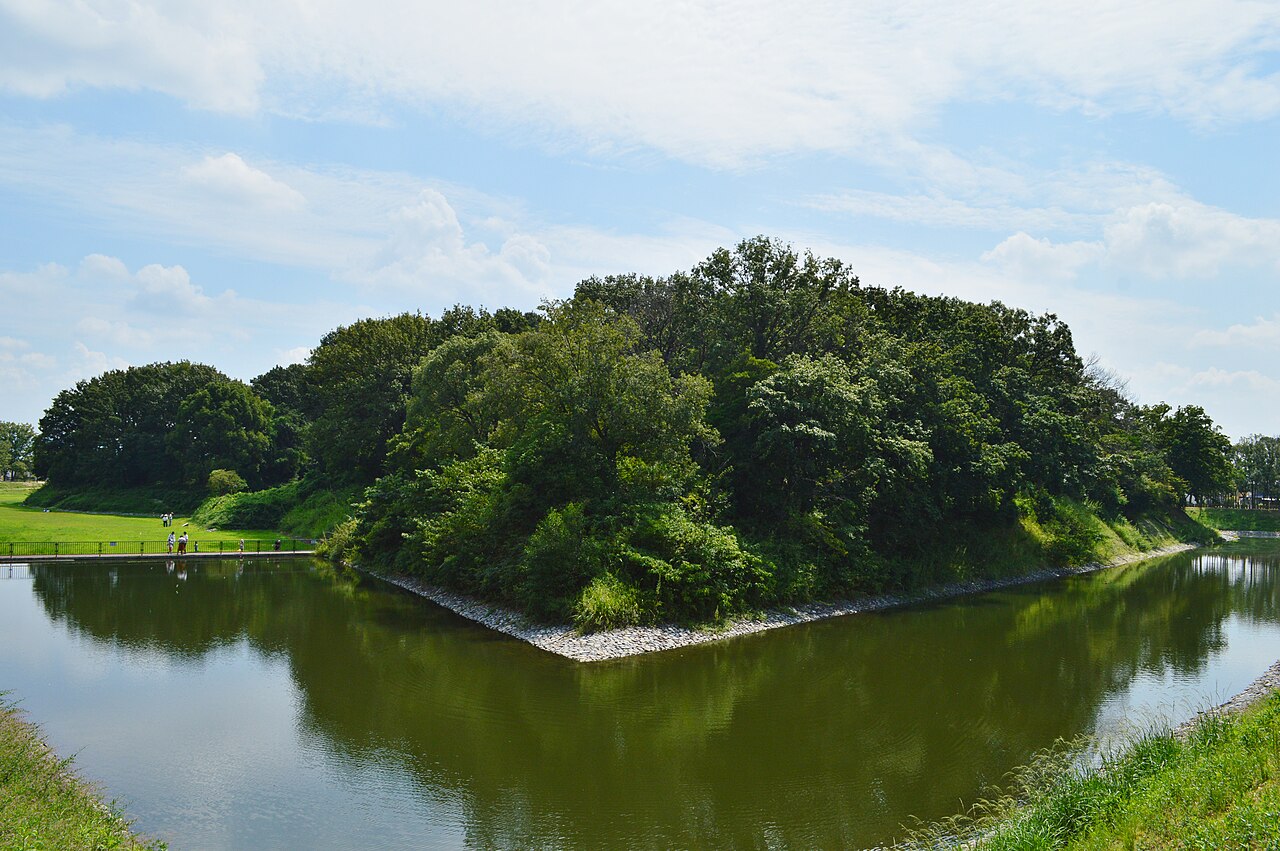
Imashirozuka Kofun is a keyhole-shaped burial mound ringed by a double moat, and on the inner embankment the haniwa ritual site has been reconstructed, with some of the clay figures there able to be touched. Being able to put a hand on the figures is the thing to remember about this site.
One hundred and thirty-six or more figurative haniwa were excavated here, houses, vessel stands, large swords, shields, shrine maidens, warriors, sumo wrestlers and birds among them, and the reconstructed rows on the embankment set that cast out again. The site is now a historical park named Imashiro Daio-no-Mori Park, and visitors can walk around it as they please.
Built as the tomb of the Great King who ruled Japan at that time, the mound and its double moat are now ground that visitors cross at their own pace. Visitors can also climb the mound and see haniwa lined up on top. Start with the touchable figures, then circle the moat, so the shapes you have handled stay in mind when you see the mound whole.
Settsu-kyo Gorge and the Minase Waterfall
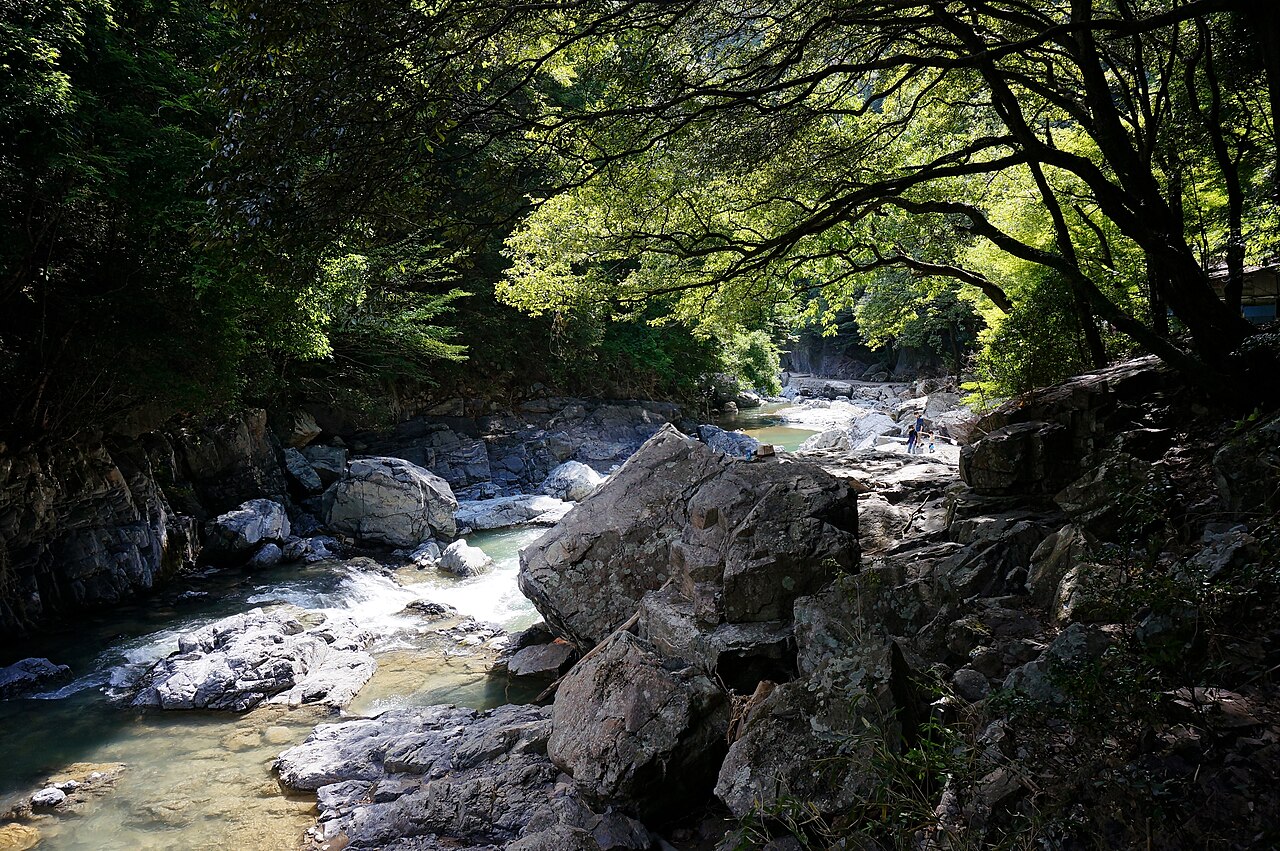
Settsu-kyo is a gorge made entirely of mountains and forest, with wide spaces where children can run around, walking tracks that look onto rocks and waterfalls, and a hiking course up to the mountaintop. One large rock sits at the top of a climb up the path beside a waterfall.
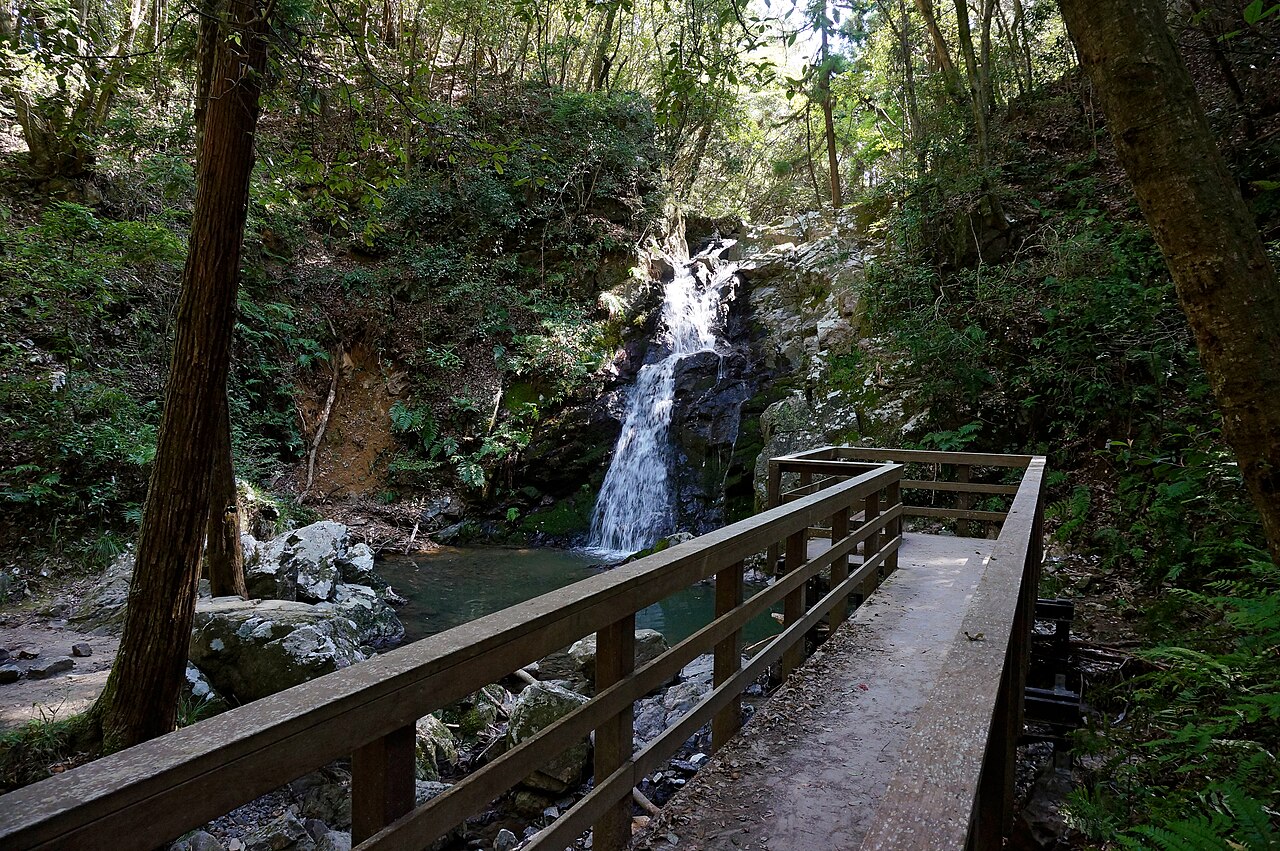
The Minase waterfall was formed where a fault shifted the ground, so the water comes down along a break in the rock itself. At an onsen inn in the gorge the sound of the clear stream through Settsu-kyo can be heard, which makes a bath the natural close of the walk. Two courses suit such a visit, one following the gorge and the other crossing natural forest on the mid-slopes.
The plaza called Sakura Hiroba holds about two hundred and thirty cherry trees. Families with small children can keep to the wide spaces and tracks without the summit course. If the water is the draw, take the gorge course to the waterfall first and keep the onsen inn, with its stream sound, for last.
Sake-Lees Sweets and Agar Treats of Takatsuki
The rice, water and Tajima labor that made Tonda a sake town come back as sake lees: a steamed bun made with lees from Kiyotsuru Shuzo gives off their scent, and local melon kneaded with sake lees, mirin lees and salt becomes a mild pickle. Melon pickled in sake lees is said to have been praised by Tokugawa Ieyasu.
Agar, or kanten, is the other thread: one maker sells string agar made the traditional way, plus zenzai, mizu-yokan, pudding and kanten soup. The agar pudding is slightly firmer and smoother than an ordinary one, and the zenzai is simmered until creamy with agar stirred in.
Other sweets run from a drum-shaped baked cake, made with the moisture of eggs and no water so it comes out fluffy, to a cookie-style rice cracker that melts in the mouth. The breweries themselves offer a daiginjo made by hanging the mash in cloth bags and bottling what drips slowly from them. Begin with the sake-lees bun and the string agar; those two ingredients run through the rest.
Getting to Takatsuki
| Leg | How | Time and estimate |
|---|---|---|
| Hankyu Takatsuki-shi Station to Takatsuki Castle Park and the Shiroato History Museum | On foot | About 10 minutes |
| Hankyu Takatsuki-shi Station to the site of the castle east main gate | On foot | About 15 minutes |
| Hankyu Tonda Station to Kiyotsuru Shuzo | On foot | About 8 minutes |
| Hankyu Tonda Station to Keizuiji | Municipal bus, then on foot | About 10 minutes by bus, then a 3-minute walk |
| JR Settsu-Tonda Station to Imashirozuka Kofun | City bus or on foot | About 6 minutes by bus, or a 25-minute walk |
| JR Takatsuki Station to Settsu-kyo | City bus, then on foot | About 25 minutes by bus, plus a 10-minute walk from the bus stop |
Takatsuki city buses accept PiTaPa, ICOCA and other nationwide transport IC cards.
New to rural buses and one-man trains? See how to ride them, step by step.
Hours and Fees
| Place | What | Hours or fee |
|---|---|---|
| Imashirozuka Ancient History Museum | Hours | 10:00 to 17:00, with admission until 16:30 |
| Imashirozuka Ancient History Museum | Closing days | Mondays (open if a national holiday), the weekday after a national holiday, and December 28 to January 3 |
| Imashirozuka Ancient History Museum | Parking | Free, with space for about 35 cars |
| Imashirozuka Ancient History Museum | Parking hours | 10:00 to 17:30 |
| Shiroato History Museum | Hours | 10:00 to 17:00, with admission until 16:30 |
| Settsu-kyo parking lot near the gorge bus stop | Hours | 9:00 to 17:00 |
Where to stay
Places to stay near Takatsuki, Osaka, Japan →
Disclosure: This post may contain affiliate links. If you book through them, we may earn a commission at no extra cost to you.